"a7cfa646d0d8ae55"{"id":"1001211","slug":"grass-landscape-material-vol-i","title":"Grass Landscape Material Vol. I","category":"Nature \u0026 Terrain","engine":"5.0+","assetVersion":"","engineVersion":"Engine Version: 5.0+","tag":"Nature \u0026 Terrain","accent":"blue","visual":"luts","summary":"Examine Grass Landscape Material Vol. I, featuring photoscanned 3mx3m grass and mud surfaces with multiple displacement methods for realistic terrains.","platform":"Unreal Engine","publishedAt":"2026-09-19T08:44:44.049Z","updatedAt":"2026-09-19T08:44:44.049Z","sourceNotes":[],"fileContents":[],"compatibility":["Unreal Engine","Engine Version: 5.0+"],"featuredImage":{"alt":"Grass Landscape Material Vol. I","src":"/wp-content/uploads/published/2026/09/223a06048e45-13f8af89-33ba-43d2-bfbb-9135eb638f57-b26e938f50.webp"},"hasDownloadLink":true,"downloads":0,"terms":[{"taxonomy":"category","slug":"nature-and-terrain","name":"Nature \u0026 Terrain"}],"galleryImages":[{"src":"/wp-content/uploads/published/2026/09/5a13f54ffdde-ae2d36df-d9e3-46d4-84ae-10a8b89d189f-6c1b1660c0.webp","alt":"Grass Landscape Material Vol. I"},{"src":"/wp-content/uploads/published/2026/09/4f33bf85c5e7-0996fe11-e043-441e-8f5d-debf4663ddca-22134f1004.webp","alt":"Grass Landscape Material Vol. I"},{"src":"/wp-content/uploads/published/2026/09/d0a09c306636-bd0cddc7-ff26-4c23-b6e8-97460076bab8-b970d4a9dc.webp","alt":"Grass Landscape Material Vol. I"},{"src":"/wp-content/uploads/published/2026/09/1ea414c95615-2fded2d0-c3b4-4dca-9bc3-73d8bf736384-eec87da84f.webp","alt":"Grass Landscape Material Vol. I"},{"src":"/wp-content/uploads/published/2026/09/e9dbe68a2e1b-90995a59-6011-446c-b0e5-50761a73fc12-d8aa352573.webp","alt":"Grass Landscape Material Vol. I"},{"src":"/wp-content/uploads/published/2026/09/ffc5f84d2567-103c00b3-6bc1-44f5-8510-ac689ce9b58c-d7c5249c1b.webp","alt":"Grass Landscape Material Vol. I"},{"src":"/wp-content/uploads/published/2026/09/92fff334bddd-fa7f3d77-808d-4377-948c-06e57a43da14-41a6ec004e.webp","alt":"Grass Landscape Material Vol. I"},{"src":"/wp-content/uploads/published/2026/09/532c28def4aa-fb605b28-c45e-4bf6-8d59-3a847f354733-e862fed4f4.webp","alt":"Grass Landscape Material Vol. I"}],"accessPanel":{"kind":"resource","title":"Download this resource","eyebrow":"Free Download","message":"Log in or create a free account to start your download.","fileName":"Content.7z","safetyNote":"Resources are manually reviewed before listing to improve quality and reduce obvious risks.","actionLabel":"Download Free","resourceType":"Resource archive"},"contentHtml":"\u003ch2\u003eGround Surfaces for Temperate Spruce Forest and Grassland Environments\u003c/h2\u003e\u003cp\u003eTerrain design often hinges on how convincingly the floor beneath the player conveys organic irregularities. Natural ground is never uniform; soil gives way to compressed turf, moist earth breaks open into muddy troughs, and dense grasses weave through forest debris. Grass Landscape Material Vol. I targets these specific ground transitions by focusing its palette on grass and mud surfaces suited for temperate forest floors and expansive grassland environments.\u003c/p\u003e\u003cp\u003eIn settings like a temperate spruce forest, the forest floor demands materials that look grounded under dense canopies as well as open clearings. When natural ground elements are built to represent damp, shaded woodland or wind-swept fields, the interaction between vegetative cover and bare earth dictates the realism of the entire scene. By focusing directly on grass and mud, this game-ready collection provides the foundational groundwork necessary to texture vast outdoor landscapes without losing tactile believability.\u003c/p\u003e\u003ch2\u003ePhotoscanned 3m x 3m Capture Scale for Grass and Mud\u003c/h2\u003e\u003cp\u003eOne persistent issue in landscape material production is the noticeable tiling artifact that emerges when small texture patches are tiled across expansive acreage. Repeating a small patch across a broad rolling hill instantly breaks player immersion, producing obvious repeating patterns and artificial grids across the terrain mesh. Grass Landscape Material Vol. I counters this problem by relying on surface data photoscanned from a 3m x 3m square or larger.\u003c/p\u003e\u003cp\u003eCapturing ground samples at three meters square or wider ensures that a substantial area of natural variation is recorded within a single material footprint. Within a 3m x 3m sample, real-world terrain contains subtle micro-slopes, clustered root structures, varied blade distributions, and authentic soil compaction patterns. This large capture boundary preserves broad organic rhythm, allowing artists to paint or apply terrain layers across extensive hillsides and forest floors while maintaining clean tiling quality at both intimate camera distances and wide panoramic vantage points.\u003c/p\u003e\u003ch2\u003eMultiple Displacement Methods Across Realistic Terrain\u003c/h2\u003e\u003cp\u003eSurface detail in terrain rendering cannot rely solely on flat surface shading when steep angles, ground-level camera perspectives, or heavy footwear interactions are involved. Grass Landscape Material Vol. I incorporates realistic displacement derived from the photoscanned source data, backed by the implementation of multiple displacement methods to enhance everyday usability.\u003c/p\u003e\u003cp\u003eDifferent projects demand different computational trade-offs, and terrain topology often requires flexible displacement pipelines:\u003c/p\u003e\u003cul\u003e\u003cli\u003eSelecting between different height-driven rendering workflows allows environment artists to strike an intentional balance between runtime efficiency and extreme geometric depth.\u003c/li\u003e\u003cli\u003eHeavy mud trails, tire ruts, and clumpy grass tufts benefit from physical surface relief that alters the actual silhouette of the landscape mesh.\u003c/li\u003e\u003cli\u003eVarying displacement implementations enable landscape setups to scale smoothly across different hardware constraints without sacrificing the integrity of the captured height profiles.\u003c/li\u003e\u003c/ul\u003e\u003cp\u003eBy including multiple displacement options directly within the material setup, the pack removes the friction of re-authoring height pipelines. Artists can adapt the surfaces to flat plains where subtle relief suffices, or deploy deep, sculpted displacement where mudbanks and grass tussocks require tangible, edge-breaking geometric depth.\u003c/p\u003e\u003ch2\u003eGround Foundations Across Simulation and Industrial Spaces\u003c/h2\u003e\u003cp\u003eWhile natural wilderness is a primary destination for grass and mud assets, these surfaces extend naturally into simulation scenarios and industrial peripheries. Outdoor industrial complexes rarely sit entirely on poured concrete; they border unmanaged lots, perimeter fencing overrun by untamed grass, and heavy-vehicle staging yards where grass gives way to churned mud and packed dirt.\u003c/p\u003e\u003cp\u003eThe material set fits simulation environments that model outdoor vehicle maneuvering, surveying, or open-world navigation. In these projects, the visual feedback of the ground provides immediate context for the terrain’s physical conditions. Clean transitions from lush, undisturbed grassland to wet, rutted earth serve as visual indicators of high-traffic zones or water collection points around drainage ways and unpaved facility roads.\u003c/p\u003e\u003ch2\u003eDeploying Grass Landscape Material Vol. I in Production\u003c/h2\u003e\u003cp\u003eEnvironment artists, level designers, and technical artists working on naturalistic or hybrid industrial landscapes require base ground layers that behave reliably across large-scale procedural generation or manual landscape painting. Grass Landscape Material Vol. I functions as a dedicated ground-plane solution by pairing verified real-world capture dimensions with game-ready integration.\u003c/p\u003e\u003cp\u003eBecause the textures originate from physical three-meter or larger scan footprints, scene builders spend less time setting up complex coordinate masks to disguise small-scale repetition. Instead, effort can shift toward world-building: establishing the damp perimeter of a spruce forest, running footpaths through open meadows, or dirtying the perimeter of an industrial outpost. The pairing of true-to-scale photogrammetry with versatile displacement makes this collection a focused, practical asset for establishing dependable organic ground cover.\u003c/p\u003e\n\n\u003ch2\u003eExplore Similar Assets\u003c/h2\u003e\n\u003cul\u003e\n\u003cli\u003e\u003ca href=\"https://3dcghub.com/forest-landscape-materials-vol-i/\" title=\"Forest Landscape Materials Vol.I\"\u003eForest Landscape Materials Vol.I\u003c/a\u003e\u003c/li\u003e\n\u003cli\u003e\u003ca href=\"https://3dcghub.com/forest-landscape-materials-vol-ii/\" title=\"Forest Landscape Materials Vol. II\"\u003eForest Landscape Materials Vol. II\u003c/a\u003e\u003c/li\u003e\n\u003cli\u003e\u003ca href=\"https://3dcghub.com/stylized-materials-vol-1/\" title=\"Stylized materials VOL.1\"\u003eStylized materials VOL.1\u003c/a\u003e\u003c/li\u003e\n\u003cli\u003e\u003ca href=\"https://3dcghub.com/stylized-nature-vol-1-stylized-environment-bundle/\" title=\"Stylized Nature Vol. 1 | Stylized Environment Bundle\"\u003eStylized Nature Vol. 1 | Stylized Environment Bundle\u003c/a\u003e\u003c/li\u003e\n\u003cli\u003e\u003ca href=\"https://3dcghub.com/foliage-vol-27-beach-grass-low-poly/\" title=\"Foliage VOL.27 - Beach Grass (Low Poly)\"\u003eFoliage VOL.27 - Beach Grass (Low Poly)\u003c/a\u003e\u003c/li\u003e\n\u003c/ul\u003e","contentTextLength":5676,"navigation":{"current":14,"total":3167,"previous":{"id":"1001212","slug":"tree-bark-collection","title":"Tree Bark Collection","category":"Nature \u0026 Terrain","platform":"Unreal Engine","updatedAt":"2026-09-19T08:48:13.068Z"},"next":{"id":"1001210","slug":"forest-landscape-materials-vol-i","title":"Forest Landscape Materials Vol.I","category":"Nature \u0026 Terrain","platform":"Unreal Engine","updatedAt":"2026-09-19T08:43:08.399Z"}},"relatedResources":[{"id":"1001210","slug":"forest-landscape-materials-vol-i","title":"Forest Landscape Materials Vol.I","category":"Nature \u0026 Terrain","engine":"5.0+","assetVersion":"","engineVersion":"Engine Version: 5.0+","tag":"Nature \u0026 Terrain","accent":"blue","visual":"luts","summary":"Examine Forest Landscape Materials Vol.I, featuring 3mx3m photo-scanned coniferous forest surfaces with multiple displacement methods.","platform":"Unreal Engine","publishedAt":"2026-09-19T08:43:08.399Z","updatedAt":"2026-09-19T08:43:08.399Z","sourceNotes":[],"fileContents":[],"compatibility":["Unreal Engine","Engine Version: 5.0+"],"featuredImage":{"alt":"Forest Landscape Materials Vol.I","src":"/wp-content/uploads/published/2026/09/b61bfba68fd5-e493231b-b7cb-4dda-a978-64109746a3b0-09225789f5.webp"},"hasDownloadLink":true,"downloads":0},{"id":"1001209","slug":"forest-landscape-materials-vol-ii","title":"Forest Landscape Materials Vol. II","category":"Nature \u0026 Terrain","engine":"5.0+","assetVersion":"","engineVersion":"Engine Version: 5.0+","tag":"Nature \u0026 Terrain","accent":"blue","visual":"luts","summary":"A detailed look at Forest Landscape Materials Vol. II, featuring 3mx3m photoscanned deciduous forest textures and multiple displacement methods.","platform":"Unreal Engine","publishedAt":"2026-09-19T08:41:22.784Z","updatedAt":"2026-09-19T08:41:22.784Z","sourceNotes":[],"fileContents":[],"compatibility":["Unreal Engine","Engine Version: 5.0+"],"featuredImage":{"alt":"Forest Landscape Materials Vol. II","src":"/wp-content/uploads/published/2026/09/87bf5469786d-c8f44977-9c23-4412-9186-783fc612d0d0-bae97017a8.webp"},"hasDownloadLink":true,"downloads":0},{"id":"12972","slug":"stylized-materials-vol-1","title":"Stylized materials VOL.1","category":"Nature \u0026 Terrain","engine":"4.26+,5.0+","assetVersion":"Engine version: 4.26+,5.0+","engineVersion":"4.20","tag":"Nature \u0026 Terrain","accent":"blue","visual":"luts","summary":"Enhance your project with Stylized materials VOL.1, featuring a comprehensive 15-layer landscape material and a flexible 5-layer vertex painting tool for stylized environments.","platform":"Unreal Engine","publishedAt":"2026-03-09T18:07:56.000Z","updatedAt":"2026-04-19T15:46:34.000Z","sourceNotes":[],"fileContents":[],"compatibility":["Unreal Engine","Engine version: 4.26+,5.0+"],"featuredImage":{"alt":"Stylized materials VOL.1","src":"https://3dcghub.com/wp-content/uploads/2026/03/97eab7a6-3cc9-465b-85c9-a8de441575a1.webp"},"hasDownloadLink":true,"downloads":0}]}
Nature & Terrain
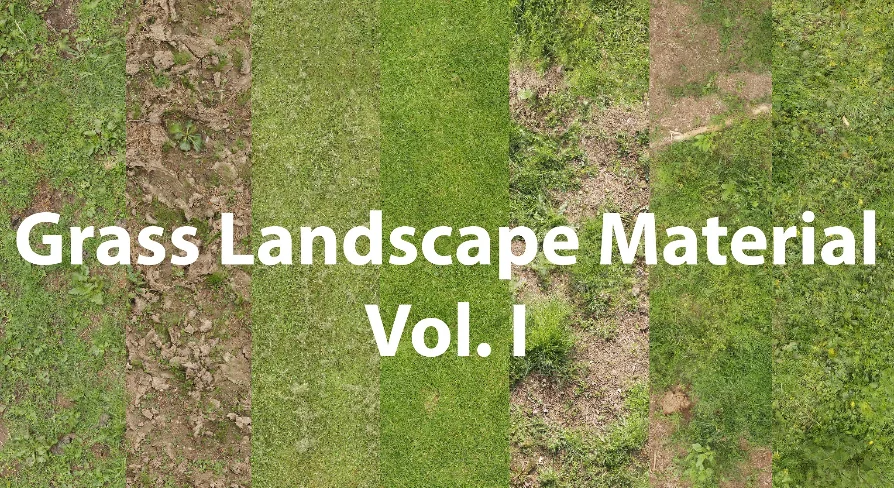
Grass Landscape Material Vol. I
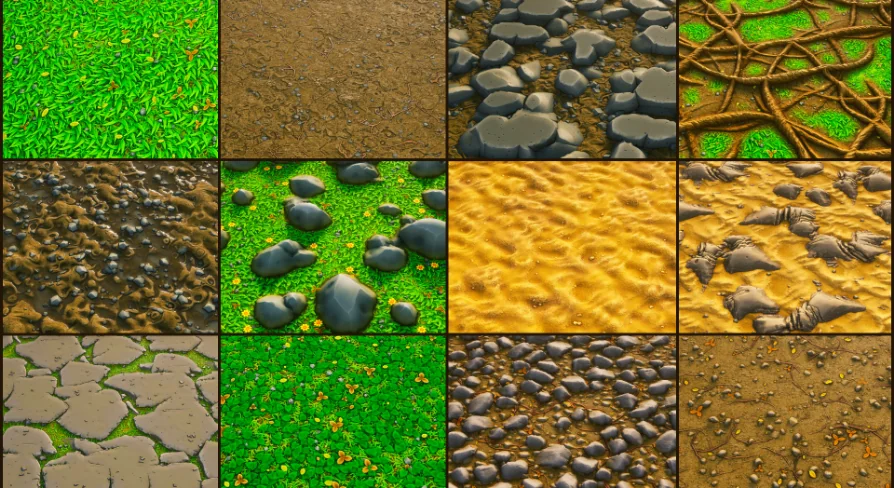
Examine Grass Landscape Material Vol. I, featuring photoscanned 3mx3m grass and mud surfaces with multiple displacement methods for realistic terrains.
Ground Surfaces for Temperate Spruce Forest and Grassland Environments
Terrain design often hinges on how convincingly the floor beneath the player conveys organic irregularities. Natural ground is never uniform; soil gives way to compressed turf, moist earth breaks open into muddy troughs, and dense grasses weave through forest debris. Grass Landscape Material Vol. I targets these specific ground transitions by focusing its palette on grass and mud surfaces suited for temperate forest floors and expansive grassland environments.
In settings like a temperate spruce forest, the forest floor demands materials that look grounded under dense canopies as well as open clearings. When natural ground elements are built to represent damp, shaded woodland or wind-swept fields, the interaction between vegetative cover and bare earth dictates the realism of the entire scene. By focusing directly on grass and mud, this game-ready collection provides the foundational groundwork necessary to texture vast outdoor landscapes without losing tactile believability.
Photoscanned 3m x 3m Capture Scale for Grass and Mud
One persistent issue in landscape material production is the noticeable tiling artifact that emerges when small texture patches are tiled across expansive acreage. Repeating a small patch across a broad rolling hill instantly breaks player immersion, producing obvious repeating patterns and artificial grids across the terrain mesh. Grass Landscape Material Vol. I counters this problem by relying on surface data photoscanned from a 3m x 3m square or larger.
Capturing ground samples at three meters square or wider ensures that a substantial area of natural variation is recorded within a single material footprint. Within a 3m x 3m sample, real-world terrain contains subtle micro-slopes, clustered root structures, varied blade distributions, and authentic soil compaction patterns. This large capture boundary preserves broad organic rhythm, allowing artists to paint or apply terrain layers across extensive hillsides and forest floors while maintaining clean tiling quality at both intimate camera distances and wide panoramic vantage points.
Multiple Displacement Methods Across Realistic Terrain
Surface detail in terrain rendering cannot rely solely on flat surface shading when steep angles, ground-level camera perspectives, or heavy footwear interactions are involved. Grass Landscape Material Vol. I incorporates realistic displacement derived from the photoscanned source data, backed by the implementation of multiple displacement methods to enhance everyday usability.
Different projects demand different computational trade-offs, and terrain topology often requires flexible displacement pipelines:
Selecting between different height-driven rendering workflows allows environment artists to strike an intentional balance between runtime efficiency and extreme geometric depth.
Heavy mud trails, tire ruts, and clumpy grass tufts benefit from physical surface relief that alters the actual silhouette of the landscape mesh.
Varying displacement implementations enable landscape setups to scale smoothly across different hardware constraints without sacrificing the integrity of the captured height profiles.
By including multiple displacement options directly within the material setup, the pack removes the friction of re-authoring height pipelines. Artists can adapt the surfaces to flat plains where subtle relief suffices, or deploy deep, sculpted displacement where mudbanks and grass tussocks require tangible, edge-breaking geometric depth.
Ground Foundations Across Simulation and Industrial Spaces
While natural wilderness is a primary destination for grass and mud assets, these surfaces extend naturally into simulation scenarios and industrial peripheries. Outdoor industrial complexes rarely sit entirely on poured concrete; they border unmanaged lots, perimeter fencing overrun by untamed grass, and heavy-vehicle staging yards where grass gives way to churned mud and packed dirt.
The material set fits simulation environments that model outdoor vehicle maneuvering, surveying, or open-world navigation. In these projects, the visual feedback of the ground provides immediate context for the terrain’s physical conditions. Clean transitions from lush, undisturbed grassland to wet, rutted earth serve as visual indicators of high-traffic zones or water collection points around drainage ways and unpaved facility roads.
Deploying Grass Landscape Material Vol. I in Production
Environment artists, level designers, and technical artists working on naturalistic or hybrid industrial landscapes require base ground layers that behave reliably across large-scale procedural generation or manual landscape painting. Grass Landscape Material Vol. I functions as a dedicated ground-plane solution by pairing verified real-world capture dimensions with game-ready integration.
Because the textures originate from physical three-meter or larger scan footprints, scene builders spend less time setting up complex coordinate masks to disguise small-scale repetition. Instead, effort can shift toward world-building: establishing the damp perimeter of a spruce forest, running footpaths through open meadows, or dirtying the perimeter of an industrial outpost. The pairing of true-to-scale photogrammetry with versatile displacement makes this collection a focused, practical asset for establishing dependable organic ground cover.
 Nature & Terrain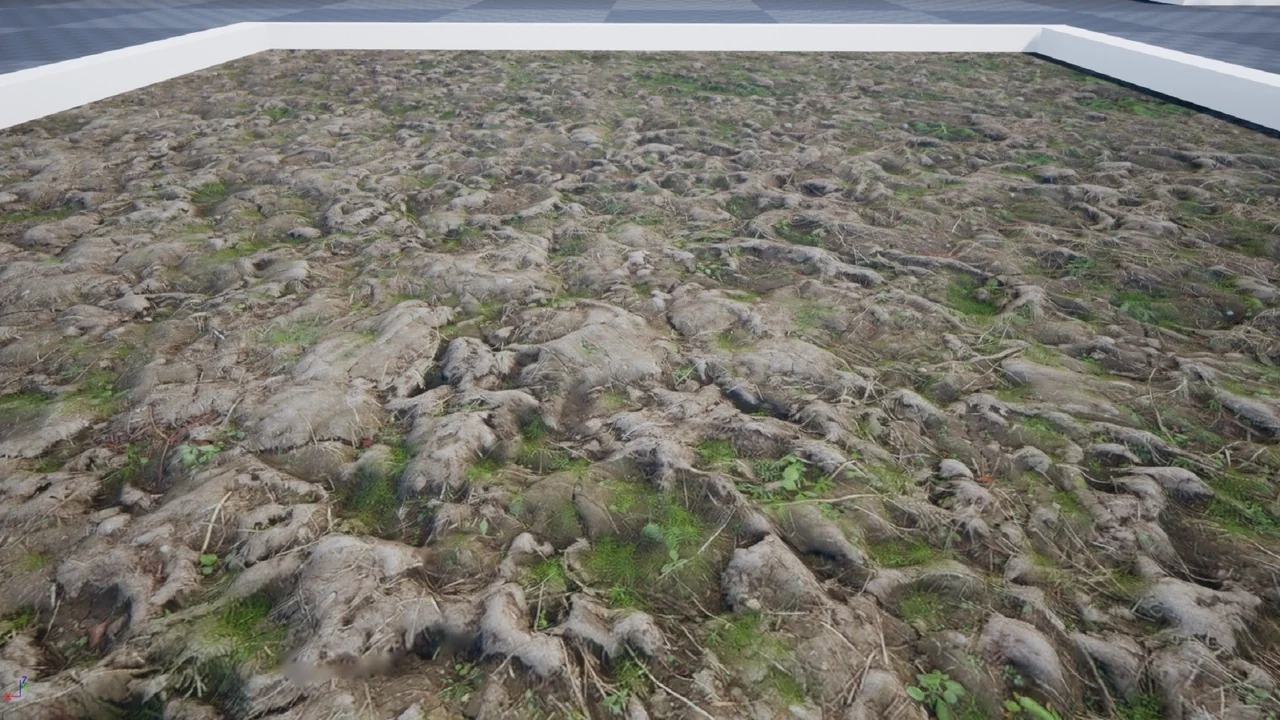
 Nature & Terrain
 Nature & Terrain
 Nature & Terrain