"a7cfa646d0d8ae55"{"id":"1001212","slug":"tree-bark-collection","title":"Tree Bark Collection","category":"Nature \u0026 Terrain","engine":"5.0+","assetVersion":"","engineVersion":"Engine Version: 5.0+","tag":"Nature \u0026 Terrain","accent":"blue","visual":"mech","summary":"A detailed look at the Tree Bark Collection, featuring 32 photoscanned materials across 8 common European tree species with displacement and albedo variations.","platform":"Unreal Engine","publishedAt":"2026-09-19T08:48:13.068Z","updatedAt":"2026-09-19T08:48:13.068Z","sourceNotes":[],"fileContents":[],"compatibility":["Unreal Engine","Engine Version: 5.0+"],"featuredImage":{"alt":"Tree Bark Collection","src":"/wp-content/uploads/published/2026/09/2e7d38e6e10a-88e02d2e-8958-4e8d-9d17-9da8227eb0a3-ca90bf6da3.webp"},"hasDownloadLink":true,"downloads":0,"terms":[{"taxonomy":"category","slug":"nature-and-terrain","name":"Nature \u0026 Terrain"}],"galleryImages":[{"src":"/wp-content/uploads/published/2026/09/62c3fc04aebb-0759858a-1362-4926-9b27-3ad24356fb36-d16b5dcc7f.webp","alt":"Tree Bark Collection"},{"src":"/wp-content/uploads/published/2026/09/9c0a9ad019bf-39bdd7fd-031c-4bda-924b-a21538aecd4f-88c6414baf.webp","alt":"Tree Bark Collection"},{"src":"/wp-content/uploads/published/2026/09/77b7442aee27-3b0c56d0-e7de-4e86-a6f8-3ffc2ed6064e-9896e471d0.webp","alt":"Tree Bark Collection"},{"src":"/wp-content/uploads/published/2026/09/b3e1afbefa54-5e29c1a3-4bf4-4b67-be7f-8dfb5c835f67-96c05f7c95.webp","alt":"Tree Bark Collection"},{"src":"/wp-content/uploads/published/2026/09/c556bf57a6df-8f7c1291-cd8e-410e-94b5-2094ddba402b-0945cbfc3d.webp","alt":"Tree Bark Collection"},{"src":"/wp-content/uploads/published/2026/09/4dc4ce95c92b-253b5e9d-41ce-43f0-b294-0fb96fce57c9-12994872a3.webp","alt":"Tree Bark Collection"},{"src":"/wp-content/uploads/published/2026/09/35b1886de28c-977ee02b-0ba8-4795-9040-deb355e9df6a-960fbcfb01.webp","alt":"Tree Bark Collection"},{"src":"/wp-content/uploads/published/2026/09/612d8698793d-1ecaf977-e3b5-4998-8031-2c3faa99ce37-c19b437f7f.webp","alt":"Tree Bark Collection"},{"src":"/wp-content/uploads/published/2026/09/db31bf29f814-2ab474ed-26e1-4324-9b98-1b177d542861-98e9f3b7a9.webp","alt":"Tree Bark Collection"},{"src":"/wp-content/uploads/published/2026/09/6178904247f2-3cf2660c-aa37-4a5d-b1e9-80077be4fd29-c77b75c59b.webp","alt":"Tree Bark Collection"}],"accessPanel":{"kind":"resource","title":"Download this resource","eyebrow":"Free Download","message":"Log in or create a free account to start your download.","fileName":"Content.7z","safetyNote":"Resources are manually reviewed before listing to improve quality and reduce obvious risks.","actionLabel":"Download Free","resourceType":"Resource archive"},"contentHtml":"\u003ch2\u003ePhotoscanned European Trees in the Tree Bark Collection\u003c/h2\u003e\n\u003cp\u003eNatural woodland environments rely heavily on the visual credibility of tree trunks at eye level. When an environment camera travels through a forest, trunks occupy the primary vertical planes, catching direct light, casting deep cast shadows, and revealing whether an asset uses flat approximations or genuine organic volume. The Tree Bark Collection approaches this requirement by focusing entirely on common European trees, converting physical specimens into surface assets through photogrammetry.\u003c/p\u003e\n\u003cp\u003eComprising 32 different bark materials in total, the collection targets eight representative tree types native to European habitats: Beech, Birch, Cherry, Chestnut, Fir, Oak, Pine, and Populus. Rather than offering a single generic bark pass per tree type, the package provides multiple distinct materials across these species, allowing level designers and environment artists to populate diverse woodland stands without immediate repetition.\u003c/p\u003e \u003ch2\u003eSpecies Breakdown: Beech, Birch, Fir, Pine, and Temperate Flora\u003c/h2\u003e\n\u003cp\u003eThe eight species represented in the library span both broadleaf deciduous trees and evergreen conifers, creating balanced coverage for temperate forest settings.\u003c/p\u003e\n\u003cp\u003eBeech provides the characteristic tight, relatively smooth exterior typical of mature deciduous groves, where subtle horizontal stretching and fine skin-level imperfections dominate the trunk surface. In contrast, Birch introduces stark visual contrast through its bright, papery outer layers marked by dark horizontal lenticels and rough peeling plates along older lower segments. Cherry brings its own distinct banding patterns and rich undertones, giving parklands and mixed woodlands clear visual focal points.\u003c/p\u003e\n\u003cp\u003eChestnut and Oak represent the heavy, deeply furrowed side of temperate hardwoods. Oak bark in particular requires deep structural relief, where thick ridges separate into coarse crags, rough crests, and shadowed crevices that weather over decades. Populus, covering trees such as aspens and cottonwoods, bridges smooth upper trunks with deeply broken lower bases, supplying necessary texture for riparian or transitional woodland zones.\u003c/p\u003e\n\u003cp\u003eFor coniferous settings, Fir and Pine deliver the resinous, plated looks essential to evergreen canopies. Pine trunks exhibit thick, blocky plates broken by deep intersecting channels, while Fir carries dense, scaly, overlapping bark layers. Because these two genera sit naturally alongside spruce forest environments, they allow artists to assemble believable conifer floors and mixed forest edges without stylistic divergence.\u003c/p\u003e \u003ch2\u003eSurface Relief Through Realistic Displacement and Color Map Quality\u003c/h2\u003e\n\u003cp\u003eThe key visual strength of scanned vegetation surfaces lies in capturing accurate light response and genuine physical elevation. All textures in the collection are photoscanned, avoiding synthetic noise patterns or procedural guesses about how real bark splits as a tree grows outward.\u003c/p\u003e\n\u003cp\u003ePhotoscanning secures high color map quality by capturing real organic pigmentation directly from real-world specimens. Trunk surfaces contain delicate shifts in tone caused by natural drying, weather exposure, residual mosses, and embedded dirt within crevices. The color maps preserve these subtle gradations without artificial banding or uniform coloring.\u003c/p\u003e\n\u003cp\u003eDisplacement mapping transforms that scanned visual data into real geometric elevation. Tree trunks are rarely cylindrical in reality; old bark pushes out into heavy ridges that break the outer silhouette of the trunk when viewed from profile angles. By incorporating realistic displacement maps derived directly from scan photogrammetry, the materials deform geometry accurately, giving the deep ruts of Oak and Chestnut genuine depth while retaining the delicate surface variations of young Beech or Birch.\u003c/p\u003e \u003ch2\u003eAlbedo Map Variations Across 32 Bark Materials\u003c/h2\u003e\n\u003cp\u003eEven within a single species, trees display substantial surface variation across a stand. Sun exposure, ground moisture, slope direction, and tree age all alter bark coloration, meaning identical color tones across adjacent trunks quickly ruin environmental immersion.\u003c/p\u003e\n\u003cp\u003eTo mitigate visual repetition, some materials in the collection include alternate albedo maps. These alternate color passes allow creators to maintain the structural relief of a specific bark type while shifting trunk coloration between individual instances. Applying differing albedo maps across shared displacement profiles creates natural variation across dense clusters, enabling scenes to mimic the slight shifts in desaturation, darkening, or tonal warmth observed in real temperate vegetation biomes.\u003c/p\u003e \u003ch2\u003eApplication in Spruce Forest and Simulation Environments\u003c/h2\u003e\n\u003cp\u003eThe material set is configured for integration into temperate vegetation and spruce forest landscapes, matching scenes characterized by variable canopy cover, damp forest floors, and dense timber stands. Beyond traditional natural environment scenes, the pack carries tags for industrial and simulation projects, fitting simulations that demand strict biological accuracy rather than stylized representations.\u003c/p\u003e\n\u003cp\u003eIn simulation workflows, visual realism is not simply an aesthetic preference; it directly impacts depth perception, environmental fidelity, and user immersion. Photoscanned tree surfaces prevent the synthetic sheen often found on algorithmic materials, ensuring that simulated outdoor training spaces or industrial visualization passes accurately reflect physical woodland conditions.\u003c/p\u003e \u003ch2\u003eEvaluating the Collection for Scene Assembly\u003c/h2\u003e\n\u003cp\u003eFor artists assembling temperate woodlands or mixed evergreen environments, the Tree Bark Collection presents a grounded, biologically specific material library. The availability of 32 distinct materials distributed across eight dominant European tree species provides enough variety to build believable stands of Beech, Birch, Cherry, Chestnut, Fir, Oak, Pine, and Populus. Combining photoscanned color fidelity, true displacement maps for silhouette breaking, and selectable albedo alternatives gives environment artists the practical surface tools needed to construct realistic woodland biomes.\u003c/p\u003e\n\n\u003ch2\u003eExplore Similar Assets\u003c/h2\u003e\n\u003cul\u003e\n\u003cli\u003e\u003ca href=\"https://3dcghub.com/dirt-track-general-dirt-decals/\" title=\"Dirt Track \u0026amp; General Dirt Decals\"\u003eDirt Track \u0026amp; General Dirt Decals\u003c/a\u003e\u003c/li\u003e\n\u003cli\u003e\u003ca href=\"https://3dcghub.com/6-stylize-material-grass-and-stone/\" title=\"6 Stylize Material Grass And Stone\"\u003e6 Stylize Material Grass And Stone\u003c/a\u003e\u003c/li\u003e\n\u003cli\u003e\u003ca href=\"https://3dcghub.com/dirt-terrain-pack-2/\" title=\"Dirt Terrain Pack 2\"\u003eDirt Terrain Pack 2\u003c/a\u003e\u003c/li\u003e\n\u003cli\u003e\u003ca href=\"https://3dcghub.com/terrain-materials-vol-2/\" title=\"Terrain Materials VOL.2\"\u003eTerrain Materials VOL.2\u003c/a\u003e\u003c/li\u003e\n\u003cli\u003e\u003ca href=\"https://3dcghub.com/water-stylized-custom/\" title=\"Water Stylized Custom\"\u003eWater Stylized Custom\u003c/a\u003e\u003c/li\u003e\n\u003c/ul\u003e","contentTextLength":6311,"navigation":{"current":13,"total":3167,"previous":{"id":"1001213","slug":"cartoon-water-shader","title":"Cartoon Water Shader","category":"Water","platform":"Unreal Engine","updatedAt":"2026-09-19T08:51:37.588Z"},"next":{"id":"1001211","slug":"grass-landscape-material-vol-i","title":"Grass Landscape Material Vol. I","category":"Nature \u0026 Terrain","platform":"Unreal Engine","updatedAt":"2026-09-19T08:44:44.049Z"}},"relatedResources":[{"id":"12752","slug":"dirt-track-general-dirt-decals","title":"Dirt Track \u0026 General Dirt Decals","category":"Nature \u0026 Terrain","engine":"5.0+","assetVersion":"Engine version: 5.0+","engineVersion":"5.0","tag":"Nature \u0026 Terrain","accent":"blue","visual":"luts","summary":"Enhance your digital environments with this collection of 50 PBR decals. This pack includes dirt tracks, puddles, and erosion channels designed for realistic terrain detailing.","platform":"Unreal Engine","publishedAt":"2026-03-09T16:16:09.000Z","updatedAt":"2026-04-19T15:46:36.000Z","sourceNotes":[],"fileContents":[],"compatibility":["Unreal Engine","Engine version: 5.0+"],"featuredImage":{"alt":"Dirt Track \u0026 General Dirt Decals","src":"https://3dcghub.com/wp-content/uploads/2026/03/61014800-c0b5-4d88-8bec-c988a7b45fa6.webp"},"hasDownloadLink":true,"downloads":3},{"id":"12607","slug":"6-stylize-material-grass-and-stone","title":"6 Stylize Material Grass And Stone","category":"Nature \u0026 Terrain","engine":"5.3+","assetVersion":"Engine version: 5.3+","engineVersion":"5.3","tag":"Nature \u0026 Terrain","accent":"blue","visual":"luts","summary":"Enhance your digital environments with this collection of 6 Stylize Material Grass And Stone. These high-quality PBR textures are designed to suit both realistic and fantasy aesthetics.","platform":"Unreal Engine","publishedAt":"2026-03-07T12:54:54.000Z","updatedAt":"2026-04-19T15:46:38.000Z","sourceNotes":[],"fileContents":[],"compatibility":["Unreal Engine","Engine version: 5.3+"],"featuredImage":{"alt":"6 Stylize Material Grass And Stone","src":"https://3dcghub.com/wp-content/uploads/2026/03/846312d0-c5f2-45f3-b57d-271efb327a6a.webp"},"hasDownloadLink":true,"downloads":0},{"id":"12734","slug":"dirt-terrain-pack-2","title":"Dirt Terrain Pack 2","category":"Nature \u0026 Terrain","engine":"4.26+,5.0+","assetVersion":"Engine version: 4.26+,5.0+","engineVersion":"4.24","tag":"Nature \u0026 Terrain","accent":"blue","visual":"luts","summary":"Enhance your digital environments with Dirt Terrain Pack 2, a collection of eight seamless PBR textures. This pack features a diverse mix of soil, rocks, and mud suitable for various outdoor settings.","platform":"Unreal Engine","publishedAt":"2026-03-09T16:15:08.000Z","updatedAt":"2026-04-19T15:46:37.000Z","sourceNotes":[],"fileContents":[],"compatibility":["Unreal Engine","Engine version: 4.26+,5.0+"],"featuredImage":{"alt":"Dirt Terrain Pack 2","src":"https://3dcghub.com/wp-content/uploads/2026/03/d09e43db-d7fa-4f99-aa60-b5ec09ba73c9.webp"},"hasDownloadLink":true,"downloads":1}]}
Nature & Terrain
Tree Bark Collection
A detailed look at the Tree Bark Collection, featuring 32 photoscanned materials across 8 common European tree species with displacement and albedo variations.
Photoscanned European Trees in the Tree Bark Collection
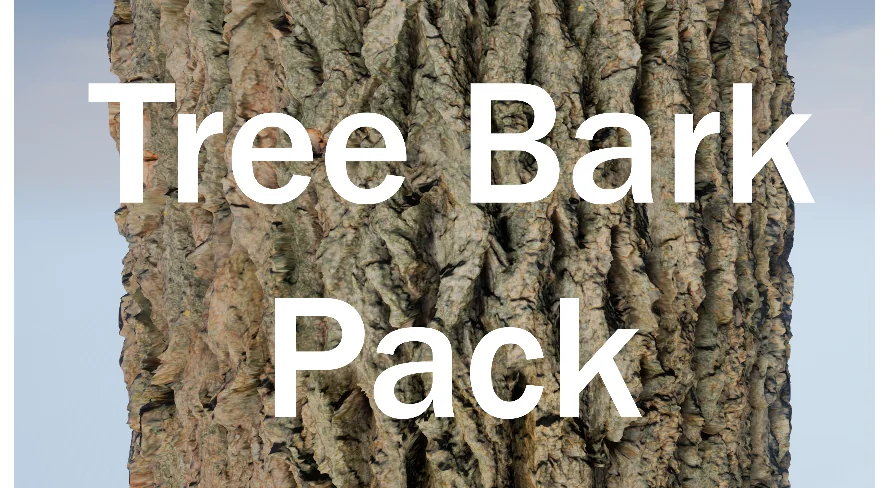
Natural woodland environments rely heavily on the visual credibility of tree trunks at eye level. When an environment camera travels through a forest, trunks occupy the primary vertical planes, catching direct light, casting deep cast shadows, and revealing whether an asset uses flat approximations or genuine organic volume. The Tree Bark Collection approaches this requirement by focusing entirely on common European trees, converting physical specimens into surface assets through photogrammetry.
Comprising 32 different bark materials in total, the collection targets eight representative tree types native to European habitats: Beech, Birch, Cherry, Chestnut, Fir, Oak, Pine, and Populus. Rather than offering a single generic bark pass per tree type, the package provides multiple distinct materials across these species, allowing level designers and environment artists to populate diverse woodland stands without immediate repetition.
Species Breakdown: Beech, Birch, Fir, Pine, and Temperate Flora
The eight species represented in the library span both broadleaf deciduous trees and evergreen conifers, creating balanced coverage for temperate forest settings.
Beech provides the characteristic tight, relatively smooth exterior typical of mature deciduous groves, where subtle horizontal stretching and fine skin-level imperfections dominate the trunk surface. In contrast, Birch introduces stark visual contrast through its bright, papery outer layers marked by dark horizontal lenticels and rough peeling plates along older lower segments. Cherry brings its own distinct banding patterns and rich undertones, giving parklands and mixed woodlands clear visual focal points.
Chestnut and Oak represent the heavy, deeply furrowed side of temperate hardwoods. Oak bark in particular requires deep structural relief, where thick ridges separate into coarse crags, rough crests, and shadowed crevices that weather over decades. Populus, covering trees such as aspens and cottonwoods, bridges smooth upper trunks with deeply broken lower bases, supplying necessary texture for riparian or transitional woodland zones.
For coniferous settings, Fir and Pine deliver the resinous, plated looks essential to evergreen canopies. Pine trunks exhibit thick, blocky plates broken by deep intersecting channels, while Fir carries dense, scaly, overlapping bark layers. Because these two genera sit naturally alongside spruce forest environments, they allow artists to assemble believable conifer floors and mixed forest edges without stylistic divergence.
Surface Relief Through Realistic Displacement and Color Map Quality
The key visual strength of scanned vegetation surfaces lies in capturing accurate light response and genuine physical elevation. All textures in the collection are photoscanned, avoiding synthetic noise patterns or procedural guesses about how real bark splits as a tree grows outward.
Photoscanning secures high color map quality by capturing real organic pigmentation directly from real-world specimens. Trunk surfaces contain delicate shifts in tone caused by natural drying, weather exposure, residual mosses, and embedded dirt within crevices. The color maps preserve these subtle gradations without artificial banding or uniform coloring.
Displacement mapping transforms that scanned visual data into real geometric elevation. Tree trunks are rarely cylindrical in reality; old bark pushes out into heavy ridges that break the outer silhouette of the trunk when viewed from profile angles. By incorporating realistic displacement maps derived directly from scan photogrammetry, the materials deform geometry accurately, giving the deep ruts of Oak and Chestnut genuine depth while retaining the delicate surface variations of young Beech or Birch.
Albedo Map Variations Across 32 Bark Materials
Even within a single species, trees display substantial surface variation across a stand. Sun exposure, ground moisture, slope direction, and tree age all alter bark coloration, meaning identical color tones across adjacent trunks quickly ruin environmental immersion.
To mitigate visual repetition, some materials in the collection include alternate albedo maps. These alternate color passes allow creators to maintain the structural relief of a specific bark type while shifting trunk coloration between individual instances. Applying differing albedo maps across shared displacement profiles creates natural variation across dense clusters, enabling scenes to mimic the slight shifts in desaturation, darkening, or tonal warmth observed in real temperate vegetation biomes.
Application in Spruce Forest and Simulation Environments
The material set is configured for integration into temperate vegetation and spruce forest landscapes, matching scenes characterized by variable canopy cover, damp forest floors, and dense timber stands. Beyond traditional natural environment scenes, the pack carries tags for industrial and simulation projects, fitting simulations that demand strict biological accuracy rather than stylized representations.
In simulation workflows, visual realism is not simply an aesthetic preference; it directly impacts depth perception, environmental fidelity, and user immersion. Photoscanned tree surfaces prevent the synthetic sheen often found on algorithmic materials, ensuring that simulated outdoor training spaces or industrial visualization passes accurately reflect physical woodland conditions.
Evaluating the Collection for Scene Assembly
For artists assembling temperate woodlands or mixed evergreen environments, the Tree Bark Collection presents a grounded, biologically specific material library. The availability of 32 distinct materials distributed across eight dominant European tree species provides enough variety to build believable stands of Beech, Birch, Cherry, Chestnut, Fir, Oak, Pine, and Populus. Combining photoscanned color fidelity, true displacement maps for silhouette breaking, and selectable albedo alternatives gives environment artists the practical surface tools needed to construct realistic woodland biomes.
 Nature & Terrain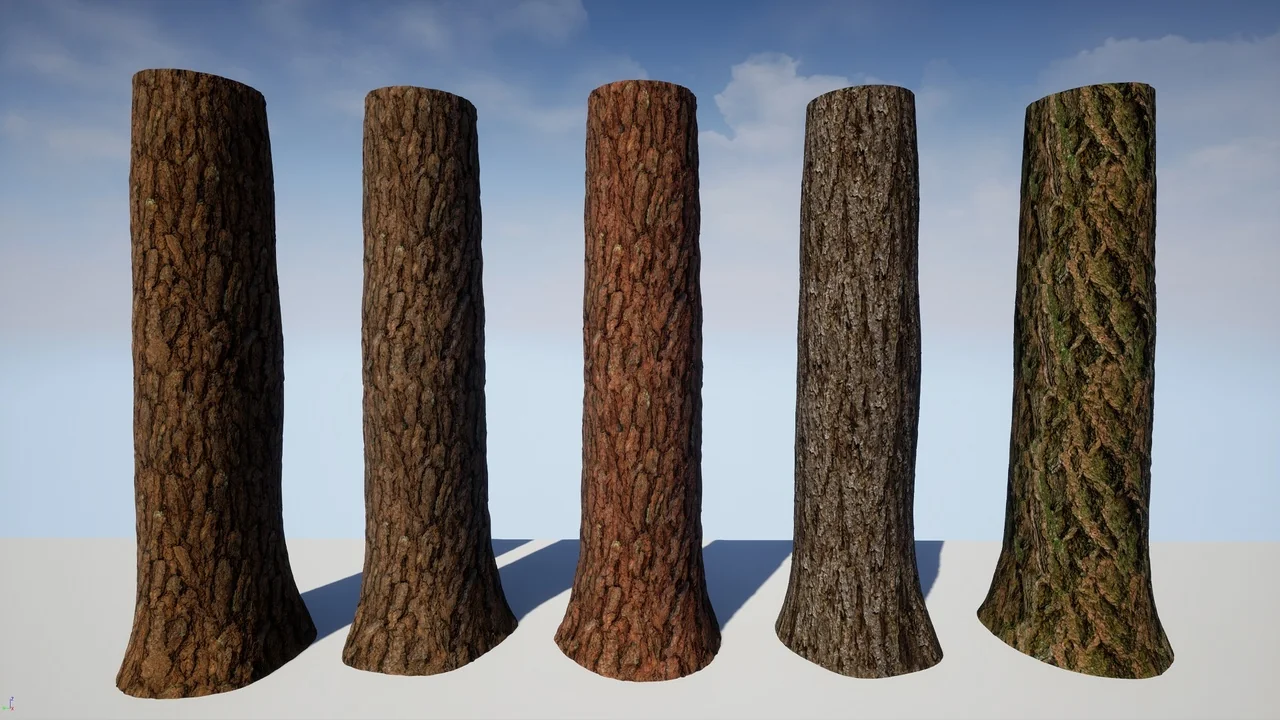
 Nature & Terrain
 Nature & Terrain
 Nature & Terrain