"a7cfa646d0d8ae55"{"id":"1001210","slug":"forest-landscape-materials-vol-i","title":"Forest Landscape Materials Vol.I","category":"Nature \u0026 Terrain","engine":"5.0+","assetVersion":"","engineVersion":"Engine Version: 5.0+","tag":"Nature \u0026 Terrain","accent":"blue","visual":"luts","summary":"Examine Forest Landscape Materials Vol.I, featuring 3mx3m photo-scanned coniferous forest surfaces with multiple displacement methods.","platform":"Unreal Engine","publishedAt":"2026-09-19T08:43:08.399Z","updatedAt":"2026-09-19T08:43:08.399Z","sourceNotes":[],"fileContents":[],"compatibility":["Unreal Engine","Engine Version: 5.0+"],"featuredImage":{"alt":"Forest Landscape Materials Vol.I","src":"/wp-content/uploads/published/2026/09/b61bfba68fd5-e493231b-b7cb-4dda-a978-64109746a3b0-09225789f5.webp"},"hasDownloadLink":true,"downloads":0,"terms":[{"taxonomy":"category","slug":"nature-and-terrain","name":"Nature \u0026 Terrain"}],"galleryImages":[{"src":"/wp-content/uploads/published/2026/09/45a052a2caee-1f4ce200-6c4f-4608-83e2-7ce287afee1d-9443ba4764.webp","alt":"Forest Landscape Materials Vol.I"},{"src":"/wp-content/uploads/published/2026/09/1e66a77f9c6b-602d05f2-5974-4e5a-9bd3-509ba0754193-30fe0aac3e.webp","alt":"Forest Landscape Materials Vol.I"},{"src":"/wp-content/uploads/published/2026/09/48cecce6b500-cc607518-c758-479e-a1ec-874b8fea528c-ff5d59df15.webp","alt":"Forest Landscape Materials Vol.I"},{"src":"/wp-content/uploads/published/2026/09/4b6b07637a67-ed6153d7-4500-4930-a123-cf5de76c80d8-5ba1777d58.webp","alt":"Forest Landscape Materials Vol.I"},{"src":"/wp-content/uploads/published/2026/09/642fbb5e6042-62c5d2f9-9788-4b7e-bd16-198bce460ff1-0959c21048.webp","alt":"Forest Landscape Materials Vol.I"},{"src":"/wp-content/uploads/published/2026/09/109f67422ad7-67a3dc62-6deb-4fe7-9758-3d131110fd6b-5723c21b28.webp","alt":"Forest Landscape Materials Vol.I"},{"src":"/wp-content/uploads/published/2026/09/13008cf24f4a-0132fd40-3c08-4e64-978d-4aa69ab36be7-bae3fa86d7.webp","alt":"Forest Landscape Materials Vol.I"},{"src":"/wp-content/uploads/published/2026/09/148e551a4554-073f745a-f88b-4ae7-a0d1-02c9e67b9a86-63f295b543.webp","alt":"Forest Landscape Materials Vol.I"}],"accessPanel":{"kind":"resource","title":"Download this resource","eyebrow":"Free Download","message":"Log in or create a free account to start your download.","fileName":"Content.7z","safetyNote":"Resources are manually reviewed before listing to improve quality and reduce obvious risks.","actionLabel":"Download Free","resourceType":"Resource archive"},"contentHtml":"\u003ch2\u003eConiferous Forest Ground Complexity in Landscape Production\u003c/h2\u003e\u003cp\u003eTerrain surfaces in dense woodland settings present a persistent challenge when assembling convincing game-ready environments.\u003c/p\u003e\u003cp\u003eReplicating an authentic coniferous forest, particularly a fir forest or spruce forest floor, requires capturing organic matter such as needle beds, damp dirt, scattered debris, and subtle soil shifts without causing immediate visual fatigue across broad playable areas. In typical terrain pipelines, small-scale texture samples repeatedly expose their seams and micro-patterns across expansive terrain coordinates, destroying visual fidelity before foliage passes can even begin. Forest Landscape Materials Vol.I addresses this production bottleneck directly by supplying focused, game-ready landscape surfaces calibrated specifically for temperate vegetation biomes.\u003c/p\u003e\u003ch2\u003e3mx3m Photo-Scanned Surfaces and Tiling Quality\u003c/h2\u003e\u003cp\u003eLarge-area ground textures rely heavily on the initial physical dimension captured during surface scanning.\u003c/p\u003e\u003cp\u003eEvery material in this pack is produced from source data photo-scanned across a square area of at least 3m x 3m, with several passes taken from even larger footprints. Capturing at this physical dimension allows broader structural variance—such as scattered clusters of fir needles, broken bark fragments, and irregular soil grading—to exist within a single map iteration. This scale is vital for achieving maximum tiling quality, as it reduces high-frequency repetition when stretched over extensive hillsides or dense forest clearings. The resulting ground cover maintains its natural rhythm whether viewed from standard ground-level character cameras or sweeping environmental perspectives.\u003c/p\u003e\u003ch2\u003eMultiple Displacement Methods for Diverse Production Pipelines\u003c/h2\u003e\u003cp\u003eTerrain geometry demands adaptable technical workflows to support distinct rendering performance budgets.\u003c/p\u003e\u003cp\u003eTo solve usability limitations across varying project setups, multiple displacement methods are implemented throughout the collection. Coniferous ground surfaces require genuine depth to sell the bulk of needle mulch, small mounds, and damp depressions underfoot. Because target hardware specifications, shader setups, and rendering pipelines differ widely, providing alternative displacement approaches ensures that terrain artists can implement physical relief without being restricted to a single rigid technique. The material setup allows users to select the displacement approach that best balances geometric detail against frame budgets, preserving the tangible feel of realistic displacement across varied scene conditions.\u003c/p\u003e\u003ch2\u003eSimulating Temperate Spruce Forest Biomes\u003c/h2\u003e\u003cp\u003eSpecialized biomes require strict adherence to botanical and geological realism to support coherent environmental context.\u003c/p\u003e\u003cp\u003eTagged for realistic, simulation, and industrial use cases, these materials align directly with the ground profiles found across temperate vegetation and spruce forest locations. Rather than relying on generic woodland dirt textures that could belong to any latitude, the surfaces represent the distinctive soil tones, decayed organic materials, and ground-level textures characteristic of northern fir forest systems. This biome specificity makes the collection immediately applicable to simulations, industrial visual projects, and realistic outdoor titles where ecological plausibility must be established right at the soil level.\u003c/p\u003e\u003ch2\u003eProduction Integration and Material Evaluation\u003c/h2\u003e\u003cp\u003eEvaluating and managing terrain surfaces across iterative production stages requires clear inspection points and consistent technical support.\u003c/p\u003e\u003cp\u003eThe asset package provides multiple preview samples, including individual preview stages and an overview of the full collection, enabling teams to evaluate surface consistency, reflectivity, and displacement response prior to broad deployment across terrain layers. Because the assets are configured as a permanent, game-ready collection, they integrate smoothly into master landscape shaders, layer-blend networks, and multi-biome terrain painting routines. Ongoing technical inquiries and workflow support for this release and related assets are handled via a dedicated Discord community, giving technical artists a dependable channel for operational troubleshooting during production integration.\u003c/p\u003e\n\n\u003ch2\u003eRelated Resources Worth Checking\u003c/h2\u003e\n\u003cul\u003e\n\u003cli\u003e\u003ca href=\"https://3dcghub.com/forest-landscape-materials-vol-ii/\" title=\"Forest Landscape Materials Vol. II\"\u003eForest Landscape Materials Vol. II\u003c/a\u003e\u003c/li\u003e\n\u003cli\u003e\u003ca href=\"https://3dcghub.com/stylized-landscape-5-biomes-stylized-low-poly-forest-orasot-bundle/\" title=\"Stylized Landscape 5 Biomes + Stylized + Low poly forest : Orasot Bundle\"\u003eStylized Landscape 5 Biomes + Stylized + Low poly forest : Orasot Bundle\u003c/a\u003e\u003c/li\u003e\n\u003cli\u003e\u003ca href=\"https://3dcghub.com/stylized-nature-vol-1-stylized-environment-bundle/\" title=\"Stylized Nature Vol. 1 | Stylized Environment Bundle\"\u003eStylized Nature Vol. 1 | Stylized Environment Bundle\u003c/a\u003e\u003c/li\u003e\n\u003cli\u003e\u003ca href=\"https://3dcghub.com/ground-material-texture-pack-advanced-materials-5-variations/\" title=\"Ground Material Texture Pack (Advanced Materials / 5 Variations)\"\u003eGround Material Texture Pack (Advanced Materials / 5 Variations)\u003c/a\u003e\u003c/li\u003e\n\u003cli\u003e\u003ca href=\"https://3dcghub.com/wildlands-stylized-nature-pine-forest-trees-foliage-nature-forest-biome/\" title=\"Wildlands: Stylized Nature (Pine Forest, Trees, Foliage, Nature, Forest, Biome)\"\u003eWildlands: Stylized Nature (Pine Forest, Trees, Foliage, Nature, Forest, Biome)\u003c/a\u003e\u003c/li\u003e\n\u003c/ul\u003e","contentTextLength":4633,"navigation":{"current":15,"total":3167,"previous":{"id":"1001211","slug":"grass-landscape-material-vol-i","title":"Grass Landscape Material Vol. I","category":"Nature \u0026 Terrain","platform":"Unreal Engine","updatedAt":"2026-09-19T08:44:44.049Z"},"next":{"id":"1001209","slug":"forest-landscape-materials-vol-ii","title":"Forest Landscape Materials Vol. II","category":"Nature \u0026 Terrain","platform":"Unreal Engine","updatedAt":"2026-09-19T08:41:22.784Z"}},"relatedResources":[{"id":"1001209","slug":"forest-landscape-materials-vol-ii","title":"Forest Landscape Materials Vol. II","category":"Nature \u0026 Terrain","engine":"5.0+","assetVersion":"","engineVersion":"Engine Version: 5.0+","tag":"Nature \u0026 Terrain","accent":"blue","visual":"luts","summary":"A detailed look at Forest Landscape Materials Vol. II, featuring 3mx3m photoscanned deciduous forest textures and multiple displacement methods.","platform":"Unreal Engine","publishedAt":"2026-09-19T08:41:22.784Z","updatedAt":"2026-09-19T08:41:22.784Z","sourceNotes":[],"fileContents":[],"compatibility":["Unreal Engine","Engine Version: 5.0+"],"featuredImage":{"alt":"Forest Landscape Materials Vol. II","src":"/wp-content/uploads/published/2026/09/87bf5469786d-c8f44977-9c23-4412-9186-783fc612d0d0-bae97017a8.webp"},"hasDownloadLink":true,"downloads":0},{"id":"1001211","slug":"grass-landscape-material-vol-i","title":"Grass Landscape Material Vol. I","category":"Nature \u0026 Terrain","engine":"5.0+","assetVersion":"","engineVersion":"Engine Version: 5.0+","tag":"Nature \u0026 Terrain","accent":"blue","visual":"luts","summary":"Examine Grass Landscape Material Vol. I, featuring photoscanned 3mx3m grass and mud surfaces with multiple displacement methods for realistic terrains.","platform":"Unreal Engine","publishedAt":"2026-09-19T08:44:44.049Z","updatedAt":"2026-09-19T08:44:44.049Z","sourceNotes":[],"fileContents":[],"compatibility":["Unreal Engine","Engine Version: 5.0+"],"featuredImage":{"alt":"Grass Landscape Material Vol. I","src":"/wp-content/uploads/published/2026/09/223a06048e45-13f8af89-33ba-43d2-bfbb-9135eb638f57-b26e938f50.webp"},"hasDownloadLink":true,"downloads":0},{"id":"1000892","slug":"stylized-landscape-5-biomes-stylized-low-poly-forest-orasot-bundle","title":"Stylized Landscape 5 Biomes + Stylized + Low poly forest : Orasot Bundle","category":"Forest \u0026 Jungle","engine":"5.2+","assetVersion":"","engineVersion":"Engine Version: 5.2+","tag":"Forest \u0026 Jungle","accent":"blue","visual":"city","summary":"This bundle merges stylized forest, five-biome landscape, and low-poly forest assets with a practical exposure fix for DefaultEngine.ini and virtual texture set","platform":"Unreal Engine","publishedAt":"2026-08-06T04:37:15.039Z","updatedAt":"2026-08-06T04:37:15.039Z","sourceNotes":[],"fileContents":[],"compatibility":["Unreal Engine","Engine Version: 5.2+"],"featuredImage":{"alt":"Stylized Landscape 5 Biomes + Stylized + Low poly forest : Orasot Bundle","src":"/wp-content/uploads/published/2026/08/d7e4432aba24-96cbb20e-4693-449f-94da-c2b94b1eecfe-b7d03925eb.webp"},"hasDownloadLink":true,"downloads":1}]}
Coniferous Forest Ground Complexity in Landscape Production
Terrain surfaces in dense woodland settings present a persistent challenge when assembling convincing game-ready environments.
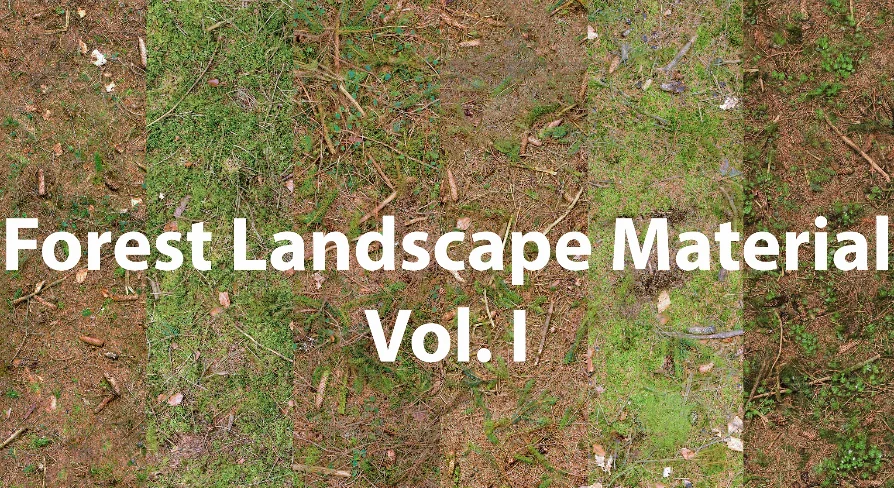
Replicating an authentic coniferous forest, particularly a fir forest or spruce forest floor, requires capturing organic matter such as needle beds, damp dirt, scattered debris, and subtle soil shifts without causing immediate visual fatigue across broad playable areas. In typical terrain pipelines, small-scale texture samples repeatedly expose their seams and micro-patterns across expansive terrain coordinates, destroying visual fidelity before foliage passes can even begin. Forest Landscape Materials Vol.I addresses this production bottleneck directly by supplying focused, game-ready landscape surfaces calibrated specifically for temperate vegetation biomes.
3mx3m Photo-Scanned Surfaces and Tiling Quality
Large-area ground textures rely heavily on the initial physical dimension captured during surface scanning.
Every material in this pack is produced from source data photo-scanned across a square area of at least 3m x 3m, with several passes taken from even larger footprints. Capturing at this physical dimension allows broader structural variance—such as scattered clusters of fir needles, broken bark fragments, and irregular soil grading—to exist within a single map iteration. This scale is vital for achieving maximum tiling quality, as it reduces high-frequency repetition when stretched over extensive hillsides or dense forest clearings. The resulting ground cover maintains its natural rhythm whether viewed from standard ground-level character cameras or sweeping environmental perspectives.
Multiple Displacement Methods for Diverse Production Pipelines
Terrain geometry demands adaptable technical workflows to support distinct rendering performance budgets.
To solve usability limitations across varying project setups, multiple displacement methods are implemented throughout the collection. Coniferous ground surfaces require genuine depth to sell the bulk of needle mulch, small mounds, and damp depressions underfoot. Because target hardware specifications, shader setups, and rendering pipelines differ widely, providing alternative displacement approaches ensures that terrain artists can implement physical relief without being restricted to a single rigid technique. The material setup allows users to select the displacement approach that best balances geometric detail against frame budgets, preserving the tangible feel of realistic displacement across varied scene conditions.
Simulating Temperate Spruce Forest Biomes
Specialized biomes require strict adherence to botanical and geological realism to support coherent environmental context.
Tagged for realistic, simulation, and industrial use cases, these materials align directly with the ground profiles found across temperate vegetation and spruce forest locations. Rather than relying on generic woodland dirt textures that could belong to any latitude, the surfaces represent the distinctive soil tones, decayed organic materials, and ground-level textures characteristic of northern fir forest systems. This biome specificity makes the collection immediately applicable to simulations, industrial visual projects, and realistic outdoor titles where ecological plausibility must be established right at the soil level.
Production Integration and Material Evaluation
Evaluating and managing terrain surfaces across iterative production stages requires clear inspection points and consistent technical support.
The asset package provides multiple preview samples, including individual preview stages and an overview of the full collection, enabling teams to evaluate surface consistency, reflectivity, and displacement response prior to broad deployment across terrain layers. Because the assets are configured as a permanent, game-ready collection, they integrate smoothly into master landscape shaders, layer-blend networks, and multi-biome terrain painting routines. Ongoing technical inquiries and workflow support for this release and related assets are handled via a dedicated Discord community, giving technical artists a dependable channel for operational troubleshooting during production integration.
 Nature & Terrain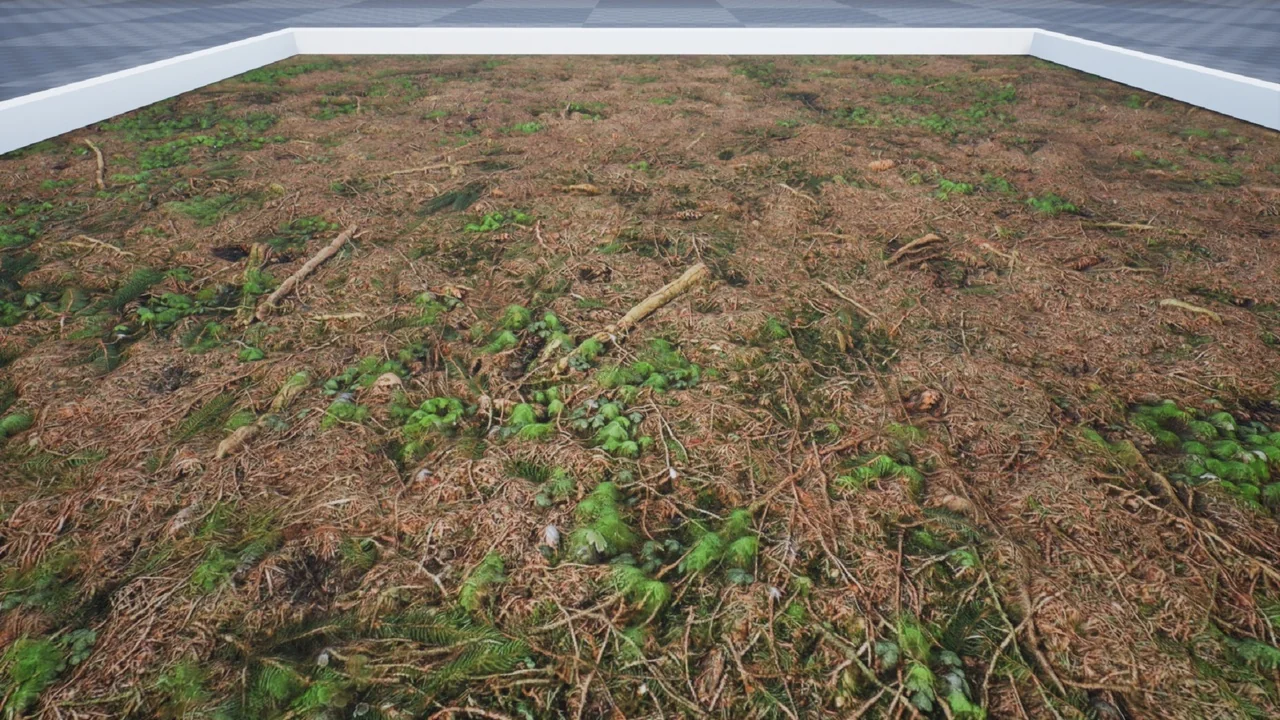
 Nature & Terrain
 Nature & Terrain
 Forest & Jungle