"a7cfa646d0d8ae55"{"id":"1001208","slug":"megascans-asphalt-fine-vol-1","title":"Megascans - Asphalt Fine Vol. 1","category":"Asphalt","engine":"5.0+","assetVersion":"","engineVersion":"Engine Version: 5.0+","tag":"Asphalt","accent":"blue","visual":"mech","summary":"Explore Megascans - Asphalt Fine Vol. 1, featuring high-resolution, consistent PBR calibrated surface 3D scans compatible with forest terrain environments.","platform":"Unreal Engine","publishedAt":"2026-09-19T08:32:19.805Z","updatedAt":"2026-09-19T08:32:19.805Z","sourceNotes":[],"fileContents":[],"compatibility":["Unreal Engine","Engine Version: 5.0+"],"featuredImage":{"alt":"Megascans - Asphalt Fine Vol. 1","src":"/wp-content/uploads/published/2026/09/7d9ce6942fe2-7da9ce37-72df-4788-9b5b-1f3355f0343f-03af3d1cb1.webp"},"hasDownloadLink":true,"downloads":0,"terms":[{"taxonomy":"category","slug":"asphalt","name":"Asphalt"}],"galleryImages":[{"src":"/wp-content/uploads/published/2026/09/68ff8f41a96b-006e91fd-273f-410c-ac2b-1afcd002dad5-6a8097474c.webp","alt":"Megascans - Asphalt Fine Vol. 1"},{"src":"/wp-content/uploads/published/2026/09/672ba0b519c0-979baf9f-b8e6-4e8d-8ac7-51d166064db3-497162e276.webp","alt":"Megascans - Asphalt Fine Vol. 1"},{"src":"/wp-content/uploads/published/2026/09/89e2452ca5e6-1bf34564-fe02-4c8f-9463-01cbad5edaa6-38feed9042.webp","alt":"Megascans - Asphalt Fine Vol. 1"},{"src":"/wp-content/uploads/published/2026/09/8195f7f99927-556b4150-55b2-45ba-88b2-d76437dd3ec2-caecdab525.webp","alt":"Megascans - Asphalt Fine Vol. 1"},{"src":"/wp-content/uploads/published/2026/09/4e5892b0df7d-ec7cea9f-68ab-46d6-8ec3-654468d92029-69ddd2062a.webp","alt":"Megascans - Asphalt Fine Vol. 1"},{"src":"/wp-content/uploads/published/2026/09/3efd007aad05-2eb1b033-4d7f-47ed-b0f5-6f3a36b0cc4c-e964df3b5c.webp","alt":"Megascans - Asphalt Fine Vol. 1"},{"src":"/wp-content/uploads/published/2026/09/77f08bd63683-91c921ed-c00d-4427-b6b6-f236f8eeab2b-e0636dbb51.webp","alt":"Megascans - Asphalt Fine Vol. 1"}],"accessPanel":{"kind":"resource","title":"Download this resource","eyebrow":"Free Download","message":"Log in or create a free account to start your download.","fileName":"Content.7z","safetyNote":"Resources are manually reviewed before listing to improve quality and reduce obvious risks.","actionLabel":"Download Free","resourceType":"Resource archive"},"contentHtml":"\u003cp\u003eA roadway surface changes appearance dramatically depending on how its fine aggregate interacts with ambient light, cast shadows, and surface moisture. When a camera or viewport sweeps low across the ground, the minute peaks and valleys of a compact asphalt layer dictate whether a roadway reads as an authentic physical surface or a flat, artificial plane. Megascans - Asphalt Fine Vol. 1 addresses this ground-level fidelity by providing a collection of high-resolution, consistent PBR calibrated surface 3D scans. The focus rests squarely on fine-grade asphalt, capturing the subtle micro-relief, mineral distribution, and uniform density required for convincing outdoor ground planes.\u003c/p\u003e \u003ch2\u003eHigh-Resolution PBR Calibrated Surface 3D Scans\u003c/h2\u003e \u003cp\u003eSurface scanning at a photogrammetric level requires rigorous control over light interaction to ensure the resulting data functions seamlessly across unpredictable render setups. Megascans - Asphalt Fine Vol. 1 centers on high-resolution scan data that has undergone precise physically based rendering (PBR) calibration. In use, calibrated scans remove baked lighting artifacts, shadows, and inaccurate color shifts from the captured surface. The resulting data represents genuine material properties rather than static photographs of a street under specific midday or overcast sky conditions.\u003c/p\u003e \u003cp\u003eMaintaining optical consistency across surface scans prevents artists from needing to manually recalibrate ground brightness or tweak specular responses when shifting between different digital times of day. Because the fine asphalt surfaces in this collection are calibrated to standardized physical values, they behave predictably when hit by directional sunlight, skylight bounce, artificial streetlamps, or the direct illumination of vehicle headlights. Light reflects off the fine aggregate grains in strict adherence to physically based behavior, giving outdoor roads and paths structural believability at extreme close-up angles as well as broader camera distances.\u003c/p\u003e \u003ch2\u003eFive Years of Scanning and Film Studio Collaboration\u003c/h2\u003e \u003cp\u003eThe assets found within Megascans - Asphalt Fine Vol. 1 represent the culmination of five years of field scanning. Real-world surfaces are subjected to weather, heavy compaction, and chemical wear, resulting in subtle surface variations that are exceptionally difficult to replicate by hand in procedural texture applications. Capturing these micro-details demands sustained scanning expeditions under strictly controlled measurement frameworks.\u003c/p\u003e \u003cp\u003eThroughout this five-year development process, the scanning pipeline was shaped through ongoing collaboration with top game and film studios worldwide. Visual effects facilities and major game development teams require scan data that withstands both tight cinematic close-ups and expansive open-world layout requirements. Studio collaboration ensures that the resulting surface scans meet uncompromising production tolerances. The data must integrate cleanly into complex look-development pipelines, render cleanly under advanced ray-tracing systems, and hold up when viewed from angles that expose the highest-frequency geometric details of the asphalt layer.\u003c/p\u003e \u003ch2\u003eFine Asphalt Textures in Forest Terrain Environments\u003c/h2\u003e \u003cp\u003eWhile asphalt is fundamentally a manufactured civil material, its application extends well beyond urban centers. Megascans - Asphalt Fine Vol. 1 carries verified compatibility with forest terrain environments, opening up specific visual applications where civil infrastructure cuts directly through natural wild landscapes. Paved trails, state park service roads, mountain highways, and remote testing grounds frequently feature fine, tightly packed asphalt surfaces that carve through heavy tree canopy, undergrowth, and soil.\u003c/p\u003e \u003cp\u003eIntegrating a fine asphalt material against forest terrain introduces a sharp, compelling visual contrast. Forest grounds are dominated by organic forms, irregular soil clods, fallen needles, and dense groundcover, while fine asphalt presents a continuous, relatively uniform, man-made foundation. The high-resolution nature of these scans allows artists to blend the asphalt edges smoothly against encroaching dirt, pine debris, and ground foliage without suffering a noticeable drop in surface resolution at the boundary. The fine grain of the asphalt provides the necessary contrast to emphasize the rugged, chaotic textures of surrounding wilderness environments.\u003c/p\u003e \u003ch2\u003eSurface Uniformity and Ground-Plane Continuity\u003c/h2\u003e \u003cp\u003eCreating expansive exterior environments often introduces issues with visible tiling or jarring transitions between adjacent ground surfaces. The fine aggregate structure of the scans in Megascans - Asphalt Fine Vol. 1 helps mitigate these visual artifacts. Coarse asphalt variants with large, distinct stones or heavy damage patterns draw immediate visual attention, making repetition obvious across wide expanses. Fine asphalt, by contrast, presents a subtle, tight aggregate profile that preserves ground-plane continuity across long stretches of pavement.\u003c/p\u003e \u003cp\u003eThis tight surface density proves essential when constructing extensive roadways, parking areas, or maintenance tracks traversing natural topography. Artists can rely on the uniform PBR calibration to maintain consistent color and reflectivity values across multiple meters of terrain. Whether the scene calls for an immaculate stretch of freshly laid secondary road winding through a national forest or a narrow, compacted bike path edging along a woodland boundary, the material retains its structural integrity without distracting the viewer through repetitive high-contrast blemishes.\u003c/p\u003e \u003ch2\u003ePractical Implementation for Environment Artists\u003c/h2\u003e \u003cp\u003eGame and film production teams prioritizing grounded world-building will find Megascans - Asphalt Fine Vol. 1 to be a dependable foundation for naturalistic ground layout. The combination of rigorous PBR calibration, high-resolution scan capture, and extensive industry collaboration delivers a material layer that behaves reliably under any lighting configuration. When deployed in scenes featuring forest terrain, the collection establishes a crisp, believable threshold between human-made infrastructure and natural wilderness, allowing artists to ground their exterior spaces in verifiable real-world detail.\u003c/p\u003e\n\n\u003ch2\u003eContinue Browsing Similar Packs\u003c/h2\u003e\n\u003cul\u003e\n\u003cli\u003e\u003ca href=\"https://3dcghub.com/megascans-asphalt-dried-vol-1/\" title=\"Megascans - Asphalt Dried Vol. 1\"\u003eMegascans - Asphalt Dried Vol. 1\u003c/a\u003e\u003c/li\u003e\n\u003cli\u003e\u003ca href=\"https://3dcghub.com/advanced-road-materials/\" title=\"Advanced road materials\"\u003eAdvanced road materials\u003c/a\u003e\u003c/li\u003e\n\u003cli\u003e\u003ca href=\"https://3dcghub.com/procedural-road-markings/\" title=\"PROCEDURAL ROAD MARKINGS\"\u003ePROCEDURAL ROAD MARKINGS\u003c/a\u003e\u003c/li\u003e\n\u003cli\u003e\u003ca href=\"https://3dcghub.com/snow-vol-1-scanned-materials/\" title=\"Snow Vol. 1 - Scanned Materials\"\u003eSnow Vol. 1 - Scanned Materials\u003c/a\u003e\u003c/li\u003e\n\u003cli\u003e\u003ca href=\"https://3dcghub.com/stylized-nature-vol-1-stylized-environment-bundle/\" title=\"Stylized Nature Vol. 1 | Stylized Environment Bundle\"\u003eStylized Nature Vol. 1 | Stylized Environment Bundle\u003c/a\u003e\u003c/li\u003e\n\u003c/ul\u003e","contentTextLength":6468,"navigation":{"current":17,"total":3167,"previous":{"id":"1001209","slug":"forest-landscape-materials-vol-ii","title":"Forest Landscape Materials Vol. II","category":"Nature \u0026 Terrain","platform":"Unreal Engine","updatedAt":"2026-09-19T08:41:22.784Z"},"next":{"id":"1001207","slug":"megascans-asphalt-dried-vol-1","title":"Megascans - Asphalt Dried Vol. 1","category":"Asphalt","platform":"Unreal Engine","updatedAt":"2026-09-19T08:30:03.899Z"}},"relatedResources":[{"id":"1001207","slug":"megascans-asphalt-dried-vol-1","title":"Megascans - Asphalt Dried Vol. 1","category":"Asphalt","engine":"5.0+","assetVersion":"","engineVersion":"Engine Version: 5.0+","tag":"Asphalt","accent":"blue","visual":"mech","summary":"Megascans - Asphalt Dried Vol. 1 delivers high-resolution, PBR calibrated dried asphalt surface 3D scans developed alongside top game and film studios.","platform":"Unreal Engine","publishedAt":"2026-09-19T08:30:03.899Z","updatedAt":"2026-09-19T08:30:03.899Z","sourceNotes":[],"fileContents":[],"compatibility":["Unreal Engine","Engine Version: 5.0+"],"featuredImage":{"alt":"Megascans - Asphalt Dried Vol. 1","src":"/wp-content/uploads/published/2026/09/cbf7b9807e69-73f65e17-7bea-4a82-a71a-5d373f324693-b228fded48.webp"},"hasDownloadLink":true,"downloads":0},{"id":"27270","slug":"advanced-road-materials","title":"Advanced road materials","category":"Asphalt","engine":"4.26+,5.0+","assetVersion":"Engine version: 4.26+,5.0+","engineVersion":"","tag":"Asphalt","accent":"blue","visual":"luts","summary":"Advanced Road Materials is built for street and road scenes that need adjustable markings, dirt, and wet patches. It combines two master materials, 17 ready-to-use instances, and modular meshes for road building.","platform":"Unreal Engine","publishedAt":"2026-04-23T16:08:11.000Z","updatedAt":"2026-04-23T16:08:13.000Z","sourceNotes":[],"fileContents":[],"compatibility":["Unreal Engine","Engine version: 4.26+,5.0+"],"featuredImage":{"alt":"Advanced road materials","src":"https://3dcghub.com/wp-content/uploads/2026/04/b21517f9dd21_a1bd06f7-1302-4644-9ff3-e21c95cfd189.webp"},"hasDownloadLink":true,"downloads":0},{"id":"12435","slug":"procedural-road-markings","title":"PROCEDURAL ROAD MARKINGS","category":"Asphalt","engine":"4.26+,5.0+","assetVersion":"Engine version: 4.26+,5.0+","engineVersion":"4.19","tag":"Asphalt","accent":"blue","visual":"luts","summary":"Enhance your game environments with a library of 120 unique, fully customizable road markings. This asset pack features advanced weathering, damage controls, and Blueprint support for infinite splines.","platform":"Unreal Engine","publishedAt":"2026-03-07T12:28:13.000Z","updatedAt":"2026-04-19T15:47:57.000Z","sourceNotes":[],"fileContents":[],"compatibility":["Unreal Engine","Engine version: 4.26+,5.0+"],"featuredImage":{"alt":"PROCEDURAL ROAD MARKINGS","src":"https://3dcghub.com/wp-content/uploads/2026/03/7a9cef6d-29ef-4b6f-be3d-5586784c44f4.webp"},"hasDownloadLink":true,"downloads":0}]}
Asphalt
Megascans - Asphalt Fine Vol. 1
Explore Megascans - Asphalt Fine Vol. 1, featuring high-resolution, consistent PBR calibrated surface 3D scans compatible with forest terrain environments.
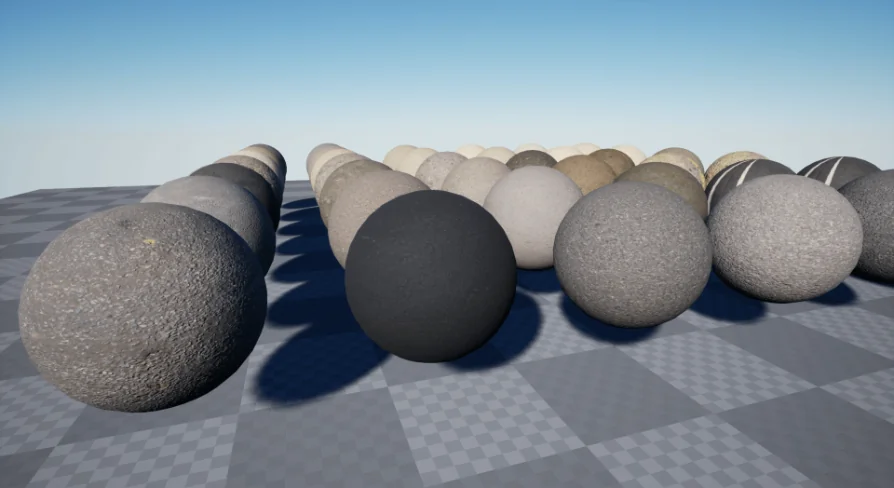
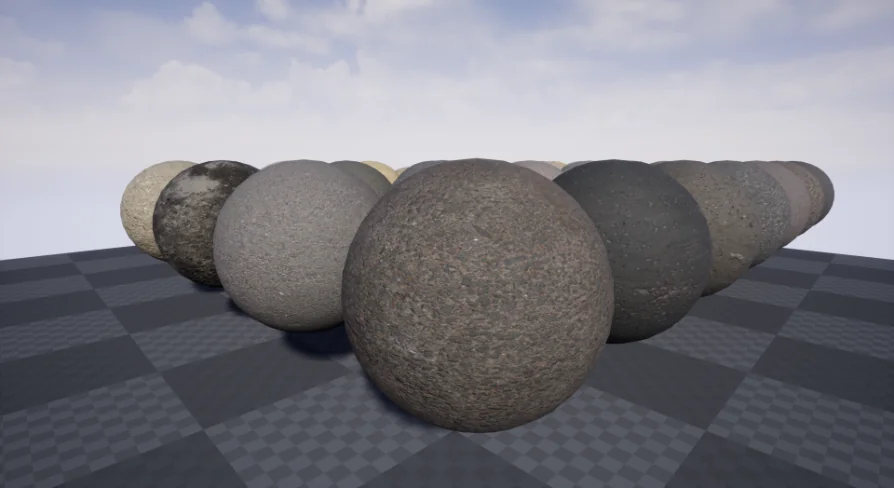
A roadway surface changes appearance dramatically depending on how its fine aggregate interacts with ambient light, cast shadows, and surface moisture. When a camera or viewport sweeps low across the ground, the minute peaks and valleys of a compact asphalt layer dictate whether a roadway reads as an authentic physical surface or a flat, artificial plane. Megascans - Asphalt Fine Vol. 1 addresses this ground-level fidelity by providing a collection of high-resolution, consistent PBR calibrated surface 3D scans. The focus rests squarely on fine-grade asphalt, capturing the subtle micro-relief, mineral distribution, and uniform density required for convincing outdoor ground planes.
High-Resolution PBR Calibrated Surface 3D Scans
Surface scanning at a photogrammetric level requires rigorous control over light interaction to ensure the resulting data functions seamlessly across unpredictable render setups. Megascans - Asphalt Fine Vol. 1 centers on high-resolution scan data that has undergone precise physically based rendering (PBR) calibration. In use, calibrated scans remove baked lighting artifacts, shadows, and inaccurate color shifts from the captured surface. The resulting data represents genuine material properties rather than static photographs of a street under specific midday or overcast sky conditions.
Maintaining optical consistency across surface scans prevents artists from needing to manually recalibrate ground brightness or tweak specular responses when shifting between different digital times of day. Because the fine asphalt surfaces in this collection are calibrated to standardized physical values, they behave predictably when hit by directional sunlight, skylight bounce, artificial streetlamps, or the direct illumination of vehicle headlights. Light reflects off the fine aggregate grains in strict adherence to physically based behavior, giving outdoor roads and paths structural believability at extreme close-up angles as well as broader camera distances.
Five Years of Scanning and Film Studio Collaboration
The assets found within Megascans - Asphalt Fine Vol. 1 represent the culmination of five years of field scanning. Real-world surfaces are subjected to weather, heavy compaction, and chemical wear, resulting in subtle surface variations that are exceptionally difficult to replicate by hand in procedural texture applications. Capturing these micro-details demands sustained scanning expeditions under strictly controlled measurement frameworks.
Throughout this five-year development process, the scanning pipeline was shaped through ongoing collaboration with top game and film studios worldwide. Visual effects facilities and major game development teams require scan data that withstands both tight cinematic close-ups and expansive open-world layout requirements. Studio collaboration ensures that the resulting surface scans meet uncompromising production tolerances. The data must integrate cleanly into complex look-development pipelines, render cleanly under advanced ray-tracing systems, and hold up when viewed from angles that expose the highest-frequency geometric details of the asphalt layer.
Fine Asphalt Textures in Forest Terrain Environments
While asphalt is fundamentally a manufactured civil material, its application extends well beyond urban centers. Megascans - Asphalt Fine Vol. 1 carries verified compatibility with forest terrain environments, opening up specific visual applications where civil infrastructure cuts directly through natural wild landscapes. Paved trails, state park service roads, mountain highways, and remote testing grounds frequently feature fine, tightly packed asphalt surfaces that carve through heavy tree canopy, undergrowth, and soil.
Integrating a fine asphalt material against forest terrain introduces a sharp, compelling visual contrast. Forest grounds are dominated by organic forms, irregular soil clods, fallen needles, and dense groundcover, while fine asphalt presents a continuous, relatively uniform, man-made foundation. The high-resolution nature of these scans allows artists to blend the asphalt edges smoothly against encroaching dirt, pine debris, and ground foliage without suffering a noticeable drop in surface resolution at the boundary. The fine grain of the asphalt provides the necessary contrast to emphasize the rugged, chaotic textures of surrounding wilderness environments.
Surface Uniformity and Ground-Plane Continuity
Creating expansive exterior environments often introduces issues with visible tiling or jarring transitions between adjacent ground surfaces. The fine aggregate structure of the scans in Megascans - Asphalt Fine Vol. 1 helps mitigate these visual artifacts. Coarse asphalt variants with large, distinct stones or heavy damage patterns draw immediate visual attention, making repetition obvious across wide expanses. Fine asphalt, by contrast, presents a subtle, tight aggregate profile that preserves ground-plane continuity across long stretches of pavement.
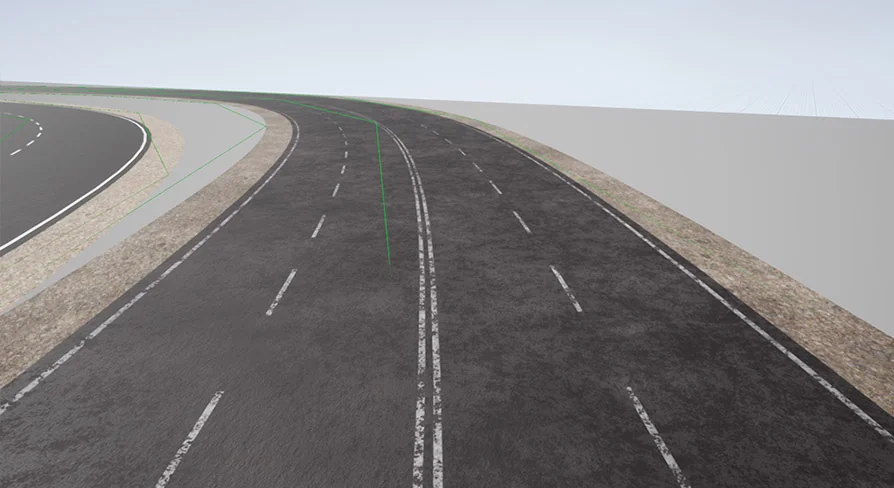
This tight surface density proves essential when constructing extensive roadways, parking areas, or maintenance tracks traversing natural topography. Artists can rely on the uniform PBR calibration to maintain consistent color and reflectivity values across multiple meters of terrain. Whether the scene calls for an immaculate stretch of freshly laid secondary road winding through a national forest or a narrow, compacted bike path edging along a woodland boundary, the material retains its structural integrity without distracting the viewer through repetitive high-contrast blemishes.
Practical Implementation for Environment Artists
Game and film production teams prioritizing grounded world-building will find Megascans - Asphalt Fine Vol. 1 to be a dependable foundation for naturalistic ground layout. The combination of rigorous PBR calibration, high-resolution scan capture, and extensive industry collaboration delivers a material layer that behaves reliably under any lighting configuration. When deployed in scenes featuring forest terrain, the collection establishes a crisp, believable threshold between human-made infrastructure and natural wilderness, allowing artists to ground their exterior spaces in verifiable real-world detail.
 Asphalt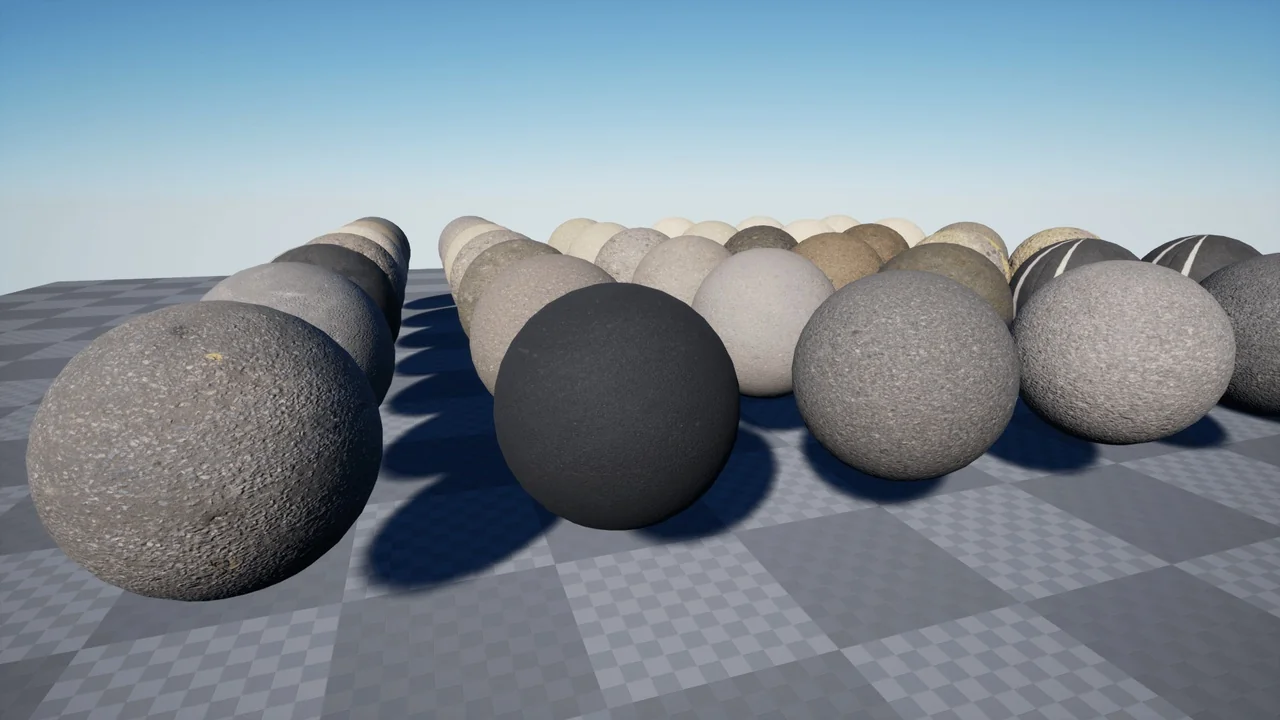
 Asphalt
 Asphalt
 Asphalt