"6c6413bef81af556"{"id":"1000787","slug":"tempered-glass-destructible-glass-system","title":"Tempered Glass – Destructible Glass System","category":"Gameplay Features","engine":"5.1 - 5.8","assetVersion":"Asset Version: 1.0 - 1.2","engineVersion":"Engine Version: 5.1 - 5.8","tag":"Gameplay Features","accent":"blue","visual":"mech","summary":"Destructible tempered glass system with optimized C++ core, Niagara VFX, network replication, Blender glass generation, and presets for desktop, mobile, and VR","platform":"Unreal Engine","publishedAt":"2026-07-30T12:21:44.631Z","updatedAt":"2026-07-30T12:21:44.631Z","sourceNotes":[],"fileContents":[],"compatibility":["Unreal Engine","Asset Version: 1.0 - 1.2","Engine Version: 5.1 - 5.8"],"featuredImage":{"alt":"Tempered Glass – Destructible Glass System","src":"/wp-content/uploads/published/2026/07/b544efb9c63a-5b03fcc3-2a4f-4193-a572-b973af4304b2-0bc71de65e.webp"},"hasDownloadLink":true,"downloads":1,"terms":[{"taxonomy":"category","slug":"gameplay-features-tools-and-plugins","name":"Gameplay Features"}],"galleryImages":[{"src":"/wp-content/uploads/published/2026/07/e0413667f89a-90244ccf-4af1-4ccf-b28b-1f95aa73ae2d-beea4fc82e.webp","alt":"Tempered Glass – Destructible Glass System"},{"src":"/wp-content/uploads/published/2026/07/9dc0e60f7632-ee8c842a-2669-4ccf-b3c7-66515e0b4f63-033beb94c3.webp","alt":"Tempered Glass – Destructible Glass System"},{"src":"/wp-content/uploads/published/2026/07/09f0bcccbe26-e90977de-e2fb-4694-8e3c-a9103a95ed62-b526d2a75f.webp","alt":"Tempered Glass – Destructible Glass System"},{"src":"/wp-content/uploads/published/2026/07/9e3839a21b8f-016909e3-8776-43ca-9268-52cb0f480790-c80484eb18.webp","alt":"Tempered Glass – Destructible Glass System"},{"src":"/wp-content/uploads/published/2026/07/317246809fe4-616a3d86-79e6-4762-87fe-6ace06e9c004-c6b47c67e1.webp","alt":"Tempered Glass – Destructible Glass System"},{"src":"/wp-content/uploads/published/2026/07/50757fba1314-68612000-b6f2-47fb-84ac-0f79bd8c5641-404abb9ccf.webp","alt":"Tempered Glass – Destructible Glass System"},{"src":"/wp-content/uploads/published/2026/07/fdd9f4c81f0d-f6bdbc6f-2cb4-43b4-a23e-c3f382dec224-555436f0a9.webp","alt":"Tempered Glass – Destructible Glass System"},{"src":"/wp-content/uploads/published/2026/07/8ac6c264f365-7f1df9b0-7f53-466a-a848-de368dc96db7-7cef0a8082.webp","alt":"Tempered Glass – Destructible Glass System"},{"src":"/wp-content/uploads/published/2026/07/2c87932aa354-13f42be3-de7c-412a-93cd-9fc0e6334209-94dfcdfeda.webp","alt":"Tempered Glass – Destructible Glass System"},{"src":"/wp-content/uploads/published/2026/07/7e380c7c72f4-770a19d9-f75a-45d6-b9ec-4c921bc2d2b0-9f4cec6833.webp","alt":"Tempered Glass – Destructible Glass System"}],"accessPanel":{"kind":"resource","title":"Download this resource","eyebrow":"Free Download","message":"Log in or create a free account to start your download.","fileName":"Tempered Glass – Destructible Glass System.7z","safetyNote":"Resources are manually reviewed before listing to improve quality and reduce obvious risks.","actionLabel":"Download Free","resourceType":"Resource archive"},"contentHtml":"\u003ch2\u003eSolving believable tempered glass fracture in real-time\u003c/h2\u003e\n\u003cp\u003eCreating breakable glass that holds up under interactive gameplay requires more than a static shattered material. Tempered Glass – Destructible Glass System addresses this by combining a high-optimized C++ core with pre-calculated shattering patterns and GPU Niagara VFX. The system is designed to function both as an eye-catching visual effect and as a gameplay blocker for players or NPCs, integrating the visual fidelity of breaking glass with functional gameplay mechanics.\u003c/p\u003e\n\u003cp\u003eExtensively tested and production-ready, the asset suits a range of project types including action games, shooters, horror environments, simulations, VR, and architectural visualization. Its underlying simulation mimics the specific behavior of tempered glass, ensuring that fractures and destruction events read as authentic. Update 1.2 brings significant performance improvements for Unreal Engine 5.6 and above, while Update 1.1 introduced improvements to the cracked glass material.\u003c/p\u003e \u003ch2\u003eIntegrating damage types and hit detection\u003c/h2\u003e\n\u003cp\u003eImplementation focuses on connecting the glass fracture simulation directly to Unreal Engine's existing damage frameworks. The system supports UE Point damage, accommodating weapons such as rifles, shotguns, and pistols, with compatibility for both simple and complex trace modes. UE Radial damage is also fully supported, allowing the glass to react appropriately to grenades, explosions, and shockwaves.\u003c/p\u003e\n\u003cp\u003eBeyond specific damage types, the system features broad hit detection capable of registering impacts from any Pawn, projectile, or physics object. A Shoot/Hit Detection Event Dispatcher is included, which is Blueprint bindable, giving developers a direct hook to trigger custom gameplay logic or audio cues whenever the glass is struck. These features allow the glass to be implemented seamlessly into existing combat or interaction systems without requiring bespoke trace logic for every scenario.\u003c/p\u003e \u003ch3\u003eDesktop presets and mobile-optimized glass variants\u003c/h3\u003e\n\u003cp\u003eThe asset provides a wide array of starting points to fit different platform targets. For desktop environments, the system includes over 30 ready-to-use glass presets. When developing for mobile or handheld consoles, 30 optimized low-poly glass variants are available to ensure performance remains acceptable on lower-powered hardware.\u003c/p\u003e\n\u003cp\u003eVisual cohesion is maintained across platforms through GPU-driven Niagara particles that utilize Distance Field collisions. This approach is specifically noted to keep performance stable even when simulating massive glass surfaces. Quality sound effects are included, pairing with the visual destruction to complete the sensory feedback of shattering glass.\u003c/p\u003e \u003ch3\u003eProgressive destruction and pre-cracked states\u003c/h3\u003e\n\u003cp\u003eNot all glass breaks the same way upon impact. The system employs smart weak-segment detection alongside progressive destruction, allowing panels to degrade realistically rather than simply disappearing or instantly shattering into uniform pieces. Developers can set a pre-cracked state, defining it either randomly or manually, to establish environmental storytelling or weakened structural integrity before the player interacts with the surface.\u003c/p\u003e\n\u003cp\u003eFor scenarios requiring absolute obliteration, a one-shot destruction mode is available, destroying the entire glass mesh within a single shot. Further visual refinement is possible through dirt and grime mask support, adding surface imperfections that affect how the glass catches light and how fractures might propagate through obscured areas.\u003c/p\u003e \u003ch2\u003eNetwork replication and pipeline integration\u003c/h2\u003e\n\u003cp\u003eMultiplayer environments are supported through full network replication, compatible with both dedicated and listen servers. This ensures that shattering events synchronize correctly across all clients, maintaining consistent gameplay and visual states regardless of network architecture.\u003c/p\u003e\n\u003cp\u003eThe package also extends into external content creation tools via a complete studio-grade glass creation pipeline for Blender 4.x. This pipeline includes a Blender glass generation tool written in Python, enabling creators to generate unlimited unique glass variations in minutes. Over 60 glass sources, complete with glass generator settings, are included in Blender format. The system ships with a demo map, practical examples, and supplementary documentation to guide implementation.\u003c/p\u003e \u003ch3\u003eMaterial improvements and upcoming considerations\u003c/h3\u003e\n\u003cp\u003eRecent updates to the system have focused on both the structural performance and the surface quality of the glass. The performance improvements introduced in Update 1.2 target Unreal Engine 5.6 and above, ensuring efficient CPU usage through the optimized C++ core. The cracked glass material improvements from Update 1.1 enhance the visual fidelity of damaged but unshattered panes.\u003c/p\u003e\n\u003cp\u003eDevelopers evaluating this resource for their production pipeline should consider their target platform balance between desktop and mobile presets, CPU overhead limitations, and the need for multiplayer replication, leveraging the included Blender tools to author project-specific glass configurations.\u003c/p\u003e\n\n\u003ch2\u003eMore From The Same Workflow\u003c/h2\u003e\n\u003cul\u003e\n\u003cli\u003e\u003ca href=\"https://3dcghub.com/advanced-fade-objects-pro-object-fading-with-tags-colors-and-multiplayer/\" title=\"Advanced Fade Objects PRO – Object Fading with Tags, Colors and Multiplayer\"\u003eAdvanced Fade Objects PRO – Object Fading with Tags, Colors and Multiplayer\u003c/a\u003e\u003c/li\u003e\n\u003cli\u003e\u003ca href=\"https://3dcghub.com/auto-mesh-outline/\" title=\"Auto Mesh Outline\"\u003eAuto Mesh Outline\u003c/a\u003e\u003c/li\u003e\n\u003cli\u003e\u003ca href=\"https://3dcghub.com/gbwflowmove-high-speed-movement-system-multiplayer-ready/\" title=\"GBWFlowMove - High-speed Movement system, Multiplayer Ready!\"\u003eGBWFlowMove - High-speed Movement system, Multiplayer Ready!\u003c/a\u003e\u003c/li\u003e\n\u003cli\u003e\u003ca href=\"https://3dcghub.com/tile-based-minimap/\" title=\"Tile Based Minimap\"\u003eTile Based Minimap\u003c/a\u003e\u003c/li\u003e\n\u003cli\u003e\u003ca href=\"https://3dcghub.com/ultimate-gameplay-camera/\" title=\"Ultimate Gameplay Camera\"\u003eUltimate Gameplay Camera\u003c/a\u003e\u003c/li\u003e\n\u003c/ul\u003e","contentTextLength":5339,"navigation":{"current":437,"total":3140,"previous":{"id":"1000788","slug":"advanced-interact-foliage-replace-instances-with-interactive-actors-and-effects","title":"Advanced Interact Foliage – Replace Instances with Interactive Actors \u0026 Effects","category":"Gameplay Features","platform":"Unreal Engine","updatedAt":"2026-07-30T12:27:45.556Z"},"next":{"id":"1000786","slug":"advanced-game-logging-gls","title":"Advanced Game Logging (GLS)","category":"Engine Tools","platform":"Unreal Engine","updatedAt":"2026-07-30T12:01:20.707Z"}},"relatedResources":[{"id":"14967","slug":"advanced-fade-objects-pro-object-fading-with-tags-colors-and-multiplayer","title":"Advanced Fade Objects PRO – Object Fading with Tags, Colors and Multiplayer","category":"Gameplay Features","engine":"4.26 - 5.8","assetVersion":"Asset Version: 1.1 - 1.4.1","engineVersion":"Engine version: 4.26 - 5.8","tag":"Gameplay Features","accent":"blue","visual":"audio","summary":"Enhance your game's visibility with Advanced Fade Objects PRO. This C++ powered plugin automates object transparency between the camera and character for a smoother player experience.","platform":"Unreal Engine","publishedAt":"2026-03-12T07:09:41.000Z","updatedAt":"2026-07-29T12:55:52.438Z","sourceNotes":[],"fileContents":[],"compatibility":["Unreal Engine","Asset Version: 1.1 - 1.4.1","Engine version: 4.26 - 5.8"],"featuredImage":{"alt":"Advanced Fade Objects PRO – Object Fading with Tags, Colors and Multiplayer","src":"https://3dcghub.com/wp-content/uploads/2026/03/b42cd28c-8fea-4b0f-a37a-48aa5fe8a212.webp"},"hasDownloadLink":true,"downloads":1},{"id":"14982","slug":"auto-mesh-outline","title":"Auto Mesh Outline","category":"Gameplay Features","engine":"4.27,5.0 - 5.7","assetVersion":"Engine version:4.27,5.0 - 5.7","engineVersion":"Asset Version:1.1","tag":"Gameplay Features","accent":"blue","visual":"character","summary":"Streamline your 3D workflow with Auto Mesh Outline, a tool designed to apply consistent visual outlines via component tags. It features runtime update capabilities and full network support for multi-part character meshes.","platform":"Unreal Engine","publishedAt":"2026-03-12T07:13:53.000Z","updatedAt":"2026-04-25T11:35:59.000Z","sourceNotes":[],"fileContents":[],"compatibility":["Unreal Engine","Engine version: 4.27,5.0 - 5.7"],"featuredImage":{"alt":"Auto Mesh Outline","src":"https://3dcghub.com/wp-content/uploads/2026/03/80591b4e-2023-47e9-8211-58ca4b02a293.webp"},"hasDownloadLink":true,"downloads":0},{"id":"1000831","slug":"generic-movement-system-a-powerful-movement-control-and-locomotion-system","title":"Generic Movement System - A powerful movement control and locomotion system","category":"Gameplay Features","engine":"5.6","assetVersion":"Asset Version: 1.4","engineVersion":"Engine Version: 5.6","tag":"Gameplay Features","accent":"blue","visual":"animation","summary":"A modular Unreal Engine movement and locomotion framework utilizing components, Animation Blueprint Templates, and data assets for flexible, network-synchronize","platform":"Unreal Engine","publishedAt":"2026-08-03T12:42:58.679Z","updatedAt":"2026-08-03T12:42:58.679Z","sourceNotes":[],"fileContents":[],"compatibility":["Unreal Engine","Asset Version: 1.4","Engine Version: 5.6"],"featuredImage":{"alt":"Generic Movement System - A powerful movement control and locomotion system","src":"/wp-content/uploads/published/2026/08/ab5b72fb8ee3-ede99ba3-5604-482c-a348-e5623ee74ff9-2698172b92.webp"},"hasDownloadLink":true,"downloads":3}]}
Gameplay Features
Tempered Glass – Destructible Glass System
Destructible tempered glass system with optimized C++ core, Niagara VFX, network replication, Blender glass generation, and presets for desktop, mobile, and VR
Solving believable tempered glass fracture in real-time
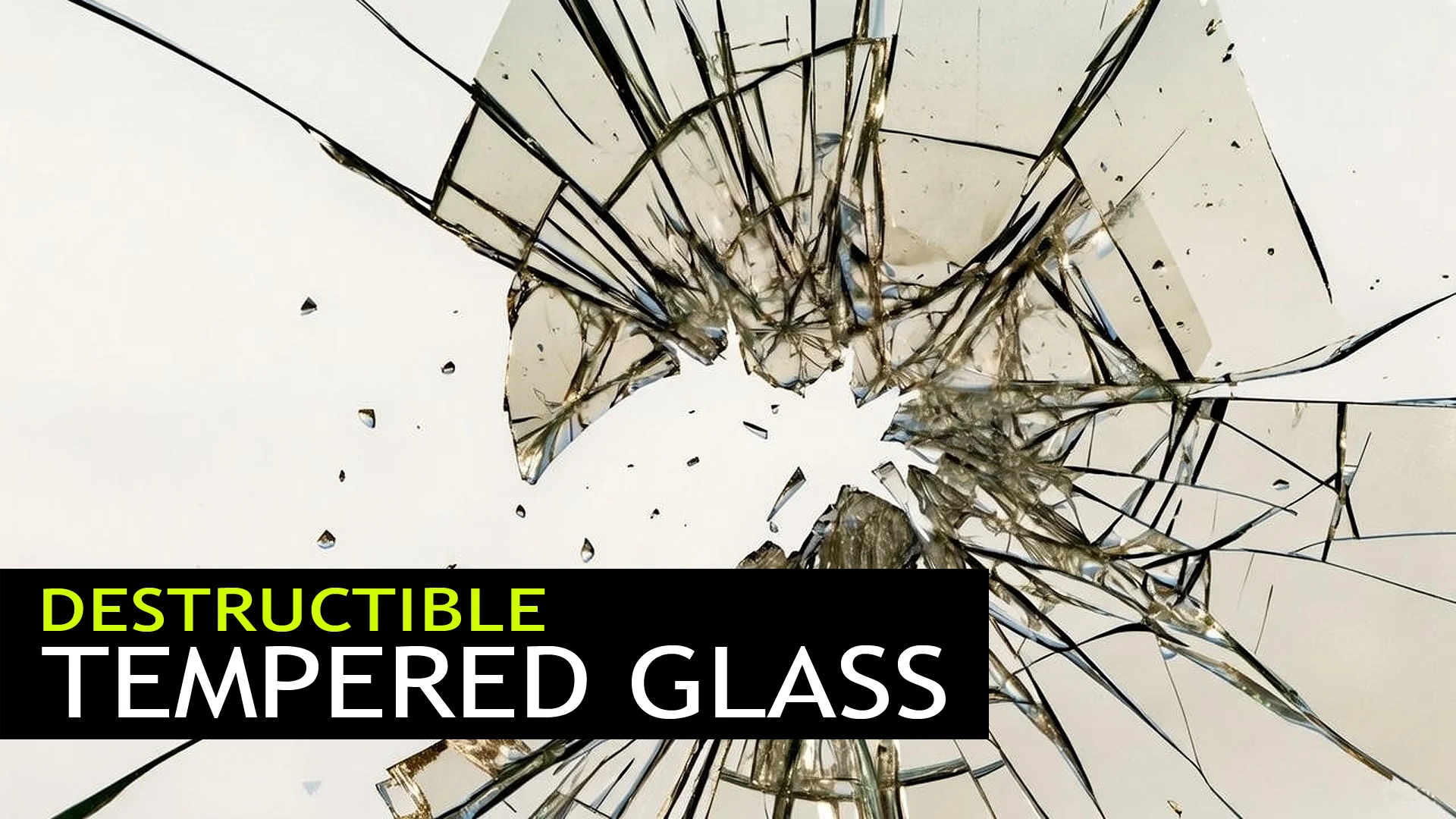
Creating breakable glass that holds up under interactive gameplay requires more than a static shattered material. Tempered Glass – Destructible Glass System addresses this by combining a high-optimized C++ core with pre-calculated shattering patterns and GPU Niagara VFX. The system is designed to function both as an eye-catching visual effect and as a gameplay blocker for players or NPCs, integrating the visual fidelity of breaking glass with functional gameplay mechanics.
Extensively tested and production-ready, the asset suits a range of project types including action games, shooters, horror environments, simulations, VR, and architectural visualization. Its underlying simulation mimics the specific behavior of tempered glass, ensuring that fractures and destruction events read as authentic. Update 1.2 brings significant performance improvements for Unreal Engine 5.6 and above, while Update 1.1 introduced improvements to the cracked glass material.
Integrating damage types and hit detection
Implementation focuses on connecting the glass fracture simulation directly to Unreal Engine's existing damage frameworks. The system supports UE Point damage, accommodating weapons such as rifles, shotguns, and pistols, with compatibility for both simple and complex trace modes. UE Radial damage is also fully supported, allowing the glass to react appropriately to grenades, explosions, and shockwaves.
Beyond specific damage types, the system features broad hit detection capable of registering impacts from any Pawn, projectile, or physics object. A Shoot/Hit Detection Event Dispatcher is included, which is Blueprint bindable, giving developers a direct hook to trigger custom gameplay logic or audio cues whenever the glass is struck. These features allow the glass to be implemented seamlessly into existing combat or interaction systems without requiring bespoke trace logic for every scenario.
Desktop presets and mobile-optimized glass variants
The asset provides a wide array of starting points to fit different platform targets. For desktop environments, the system includes over 30 ready-to-use glass presets. When developing for mobile or handheld consoles, 30 optimized low-poly glass variants are available to ensure performance remains acceptable on lower-powered hardware.
Visual cohesion is maintained across platforms through GPU-driven Niagara particles that utilize Distance Field collisions. This approach is specifically noted to keep performance stable even when simulating massive glass surfaces. Quality sound effects are included, pairing with the visual destruction to complete the sensory feedback of shattering glass.
Progressive destruction and pre-cracked states
Not all glass breaks the same way upon impact. The system employs smart weak-segment detection alongside progressive destruction, allowing panels to degrade realistically rather than simply disappearing or instantly shattering into uniform pieces. Developers can set a pre-cracked state, defining it either randomly or manually, to establish environmental storytelling or weakened structural integrity before the player interacts with the surface.
For scenarios requiring absolute obliteration, a one-shot destruction mode is available, destroying the entire glass mesh within a single shot. Further visual refinement is possible through dirt and grime mask support, adding surface imperfections that affect how the glass catches light and how fractures might propagate through obscured areas.
Network replication and pipeline integration
Multiplayer environments are supported through full network replication, compatible with both dedicated and listen servers. This ensures that shattering events synchronize correctly across all clients, maintaining consistent gameplay and visual states regardless of network architecture.
The package also extends into external content creation tools via a complete studio-grade glass creation pipeline for Blender 4.x. This pipeline includes a Blender glass generation tool written in Python, enabling creators to generate unlimited unique glass variations in minutes. Over 60 glass sources, complete with glass generator settings, are included in Blender format. The system ships with a demo map, practical examples, and supplementary documentation to guide implementation.
Material improvements and upcoming considerations
Recent updates to the system have focused on both the structural performance and the surface quality of the glass. The performance improvements introduced in Update 1.2 target Unreal Engine 5.6 and above, ensuring efficient CPU usage through the optimized C++ core. The cracked glass material improvements from Update 1.1 enhance the visual fidelity of damaged but unshattered panes.
Developers evaluating this resource for their production pipeline should consider their target platform balance between desktop and mobile presets, CPU overhead limitations, and the need for multiplayer replication, leveraging the included Blender tools to author project-specific glass configurations.
 Gameplay Features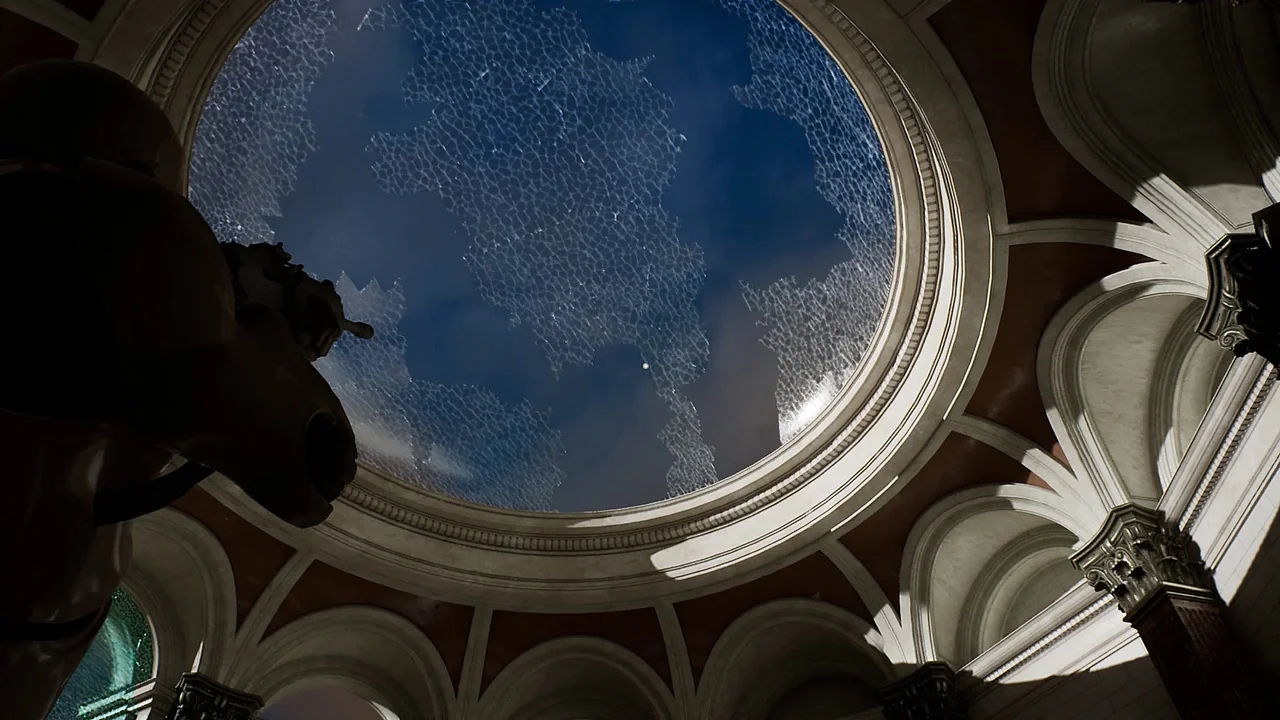
 Gameplay Features
 Gameplay Features
 Gameplay Features