"efaa631e936fd3ee"{"id":"1002228","slug":"target-lock-system","title":"Target Lock System","category":"Gameplay Features","engine":"4.26+,5.0+","assetVersion":"","engineVersion":"Engine Version: 4.26+,5.0+","tag":"Gameplay Features","accent":"blue","visual":"mech","summary":"Explore the Blueprint-based Target Lock System for Unreal Engine, featuring multiplayer replication, Souls-like targeting logic, and a basic damage setup.","platform":"Unreal Engine","publishedAt":"2026-10-29T15:27:07.100Z","updatedAt":"2026-10-29T15:27:07.100Z","sourceNotes":[],"fileContents":[],"compatibility":["Unreal Engine","Engine Version: 4.26+,5.0+"],"featuredImage":{"alt":"Target Lock System","src":"/wp-content/uploads/published/2026/10/5649fa496f95-c155a574-3d0b-4c3a-8a6d-9a6e0ce45b2c-8bf36d7b80.webp"},"hasDownloadLink":true,"downloads":0,"terms":[{"taxonomy":"category","slug":"gameplay-features","name":"Gameplay Features"}],"galleryImages":[{"src":"/wp-content/uploads/published/2026/10/3445fec7baa1-81bf27da-4475-4cc3-9249-357af79a19fd-fc5672565a.webp","alt":"Target Lock System"},{"src":"/wp-content/uploads/published/2026/10/5ebc70171aac-3aa66e90-8b4e-43ad-813f-cecf6eb62d13-bfc01f6125.webp","alt":"Target Lock System"},{"src":"/wp-content/uploads/published/2026/10/7ec0a19507ea-2f1cfd63-d7a9-4645-84f7-f251e1e7efa3-fe3468166e.webp","alt":"Target Lock System"},{"src":"/wp-content/uploads/published/2026/10/4d598c2cc879-1ff2a876-051b-4410-86c6-dc6d4ecaaca2-14697d3fc8.webp","alt":"Target Lock System"},{"src":"/wp-content/uploads/published/2026/10/b9a218be65e9-d9cce311-2392-4e44-8c14-f2f056c5be02-a4f69e1c89.webp","alt":"Target Lock System"},{"src":"/wp-content/uploads/published/2026/10/271532155bc6-a2b1ee87-2c7d-437c-bed9-f0b6efd6ec0a-a6156557f5.webp","alt":"Target Lock System"},{"src":"/wp-content/uploads/published/2026/10/e49aff642adb-aa3b0480-26e1-4698-9edd-5528351e2240-025a1c2140.webp","alt":"Target Lock System"},{"src":"/wp-content/uploads/published/2026/10/86b7d5f47a16-69b67b41-4f95-428a-ba65-b34ad4fa072a-9346905253.webp","alt":"Target Lock System"},{"src":"/wp-content/uploads/published/2026/10/f6114a40fae7-704ac55f-1c78-42e0-a4b9-bc8dd8635b80-16f508c94e.webp","alt":"Target Lock System"}],"accessPanel":{"kind":"resource","title":"Download this resource","eyebrow":"Free Download","message":"Log in or create a free account to start your download.","fileName":"Content.7z","safetyNote":"Resources are manually reviewed before listing to improve quality and reduce obvious risks.","actionLabel":"Download Free","resourceType":"Resource archive"},"contentHtml":"\u003ch2\u003eAction RPG Combat Dynamics and Souls-Like Encounters\u003c/h2\u003e\u003cp\u003eThird-person combat encounters in titles like \u003cem\u003eDark Souls\u003c/em\u003e Or \u003cem\u003eElden Ring\u003c/em\u003e Rely heavily on focused camera tracking and deliberate pawn orientation. When building high-stakes arenas, boss chambers, or tight dungeon corridors, players need a dependable mechanism to track threats without wrestling with manual view rotation during melee strikes or evasion. The Target Lock System provides this exact foundational interaction, enabling characters to acquire, cycle, and track hostile pawns smoothly across dynamic fight spaces.\u003c/p\u003e\u003cp\u003eRather than requiring developers to engineer complex spatial tracing and state management routines from scratch, the system establishes a combat-ready baseline tailored for action RPG frameworks. It stabilizes camera orientation toward selected adversaries, helping creators construct intense combat encounters where precision positioning and deliberate timing define the gameplay loop.\u003c/p\u003e\u003ch2\u003eBlueprint Architecture Without Casting Overhead\u003c/h2\u003e\u003cp\u003eA notable technical characteristic of the Target Lock System is its pure Blueprint construction, entirely accessible without C++ knowledge. Modifying underlying parameters, extending logic pathways, or integrating the system into pre-existing character pawns takes place directly inside visual scripting graphs.\u003c/p\u003e\u003cp\u003eThe architecture deliberately avoids casting. By omitting cast nodes during runtime queries, the system reduces cross-blueprint dependencies and limits hard reference coupling between character classes, targeting components, and incoming projectiles. This modular setup allows developers to retrofit the system into bespoke character architectures, third-person controllers, or hybrid gameplay frameworks without needing to restructure existing class hierarchies or deal with the compilation dependencies common to heavily cast networks.\u003c/p\u003e\u003ch2\u003eTarget Selection Controls and Input Schemes\u003c/h2\u003e\u003cp\u003eCombat pacing hinges on responsive input handling, and the system offers distinct selection models to accommodate diverse gameplay preferences. Central to this adaptability is the \u003ccode\u003eUseAlternativeTargetSelection\u003c/code\u003e Configuration, which standardizes multi-press and context-specific key assignments:\u003c/p\u003e\u003cul\u003e\u003cli\u003e\u003cstrong\u003eInitial Target Acquisition:\u003c/strong\u003e A single press of the primary binding (configured by default to keys such as 'Q', or mapped to any custom input) immediately locks the player view onto an available adversary.\u003c/li\u003e\u003cli\u003e\u003cstrong\u003eSubsequent Target Cycling:\u003c/strong\u003e Successive presses of the same primary key swap the current lock to the nearest adjacent enemy, allowing rapid focus shifts in group battles.\u003c/li\u003e\u003cli\u003e\u003cstrong\u003eTarget Deselection:\u003c/strong\u003e A dedicated alternate key (defaulted to 'C', or remappable to suit user layouts) breaks the active lock, returning the camera to free-look movement instantly.\u003c/li\u003e\u003c/ul\u003e\u003cp\u003eBeyond digital key presses, the asset incorporates a dedicated switch for mouse-driven focus changes (\u003ccode\u003eChanging Target by Mouse\u003c/code\u003e). Swiping or flicking the mouse allows players to pivot their active target smoothly between foes without resetting their camera orientation, matching modern action RPG standards.\u003c/p\u003e\u003ch2\u003eSpatial Distance Calculations with ClosestTargetToPlayer\u003c/h2\u003e\u003cp\u003eEvaluating which adversary should inherit the lock-on reticle depends on spatial context. The system addresses this with the \u003ccode\u003eClosestTargetToPlayer\u003c/code\u003e Switcher, giving creators granular control over sorting priority during dynamic encounters.\u003c/p\u003e\u003cp\u003eWhen switching targets, the logic can evaluate candidates based on two distinct reference points: proximity relative to the player pawn itself, or proximity relative to the currently targeted adversary. Prioritizing candidates relative to the existing target produces smooth, natural stepping across enemy formations. Conversely, prioritizing proximity to the player guarantees that an immediate threat approaching from behind or the flank takes precedence when cycling inputs.\u003c/p\u003e\u003cp\u003eLine of sight is equally regulated through automated recovery logic. Through the \u003ccode\u003eUseAutoChangingAfterUntargeting\u003c/code\u003e Switch, developers can determine whether the system automatically seeks out and acquires an alternative target if the active entity breaks lock by darting behind an obstacle, passing through sight-blocking geometry, or moving out of range. If enabled, this prevents the sudden disorientation of a dropped camera lock in dense environments with columns, trees, or structural debris.\u003c/p\u003e\u003ch2\u003eCombat Flow with the Basic Damage System and Target Switching\u003c/h2\u003e\u003cp\u003eTargeting directly interfaces with combat resolution through an included basic Damage System. While compact enough to remain fully adaptable, this framework manages damage delivery and target health states out of the box, offering a starting point that can be modernized or replaced to fit custom attributes.\u003c/p\u003e\u003cp\u003eWhen an active adversary is eliminated, target continuity is preserved via the \u003ccode\u003eAuto Changing After Kill\u003c/code\u003e Toggle. Rather than abruptly disengaging the player and snapping the third-person view to a neutral resting state upon enemy defeat, the system immediately cascades the lock onto the next valid hostile entity. This automated handoff maintains combat momentum during multi-target encounters. Furthermore, the system supports compatibility with magic projectiles, ensuring guided spells or ranged munitions integrate smoothly into the locked targeting pipeline.\u003c/p\u003e\u003ch2\u003eMultiplayer Replication and Project Integration\u003c/h2\u003e\u003cp\u003eExpanding combat systems into networked environments presents synchronization hurdles, particularly with pawn rotations, active targeting vectors, and line-of-sight checks. The Target Lock System features native replication support, enabling deployment across multiplayer environments.\u003c/p\u003e\u003cp\u003eReplicated states ensure targeting status and associated damage events synchronize consistently between the server and connected clients. Whether structuring cooperative boss encounters, team-based arena battles, or multiplayer action RPGs, developers can employ the system's selection switches, distance evaluations, and target transfers across network sessions without building bespoke network serialization layers from the ground up.\u003c/p\u003e\n\n\u003ch2\u003eExplore Similar Assets\u003c/h2\u003e\n\u003cul\u003e\n\u003cli\u003e\u003ca href=\"https://3dcghub.com/advanced-lock-on-system/\" title=\"Advanced Lock-on System\"\u003eAdvanced Lock-on System\u003c/a\u003e\u003c/li\u003e\n\u003cli\u003e\u003ca href=\"https://3dcghub.com/simple-radial-scan/\" title=\"Simple Radial Scan\"\u003eSimple Radial Scan\u003c/a\u003e\u003c/li\u003e\n\u003cli\u003e\u003ca href=\"https://3dcghub.com/lock-on-targeting-system/\" title=\"Lock-on Targeting System\"\u003eLock-on Targeting System\u003c/a\u003e\u003c/li\u003e\n\u003cli\u003e\u003ca href=\"https://3dcghub.com/rpg-compass-ui-system/\" title=\"RPG Compass UI System\"\u003eRPG Compass UI System\u003c/a\u003e\u003c/li\u003e\n\u003cli\u003e\u003ca href=\"https://3dcghub.com/advanced-multiplayer-lobby-system-v2/\" title=\"Advanced Multiplayer Lobby System V2\"\u003eAdvanced Multiplayer Lobby System V2\u003c/a\u003e\u003c/li\u003e\n\u003c/ul\u003e","contentTextLength":6182,"navigation":{"current":57,"total":4209,"previous":{"id":"1002229","slug":"tattoo-and-makeup-layer-system","title":"Tattoo \u0026 Makeup Layer System","category":"Variety","platform":"Unreal Engine","updatedAt":"2026-10-29T15:27:59.468Z"},"next":{"id":"1002227","slug":"sword-animset-pro","title":"Sword Animset Pro","category":"Combat","platform":"Unreal Engine","updatedAt":"2026-10-29T15:26:02.245Z"}},"relatedResources":[{"id":"1000935","slug":"advanced-lock-on-system","title":"Advanced Lock-on System","category":"Gameplay Features","engine":"5.1+","assetVersion":"","engineVersion":"Engine Version: 5.1+","tag":"Gameplay Features","accent":"blue","visual":"mech","summary":"Shooter toolkit with Tracking, Lock-on, and Prediction Systems. Targets any Actor, displays markers and info, supports auto aim and homing projectiles.","platform":"Unreal Engine","publishedAt":"2026-08-10T02:44:44.426Z","updatedAt":"2026-08-10T02:44:44.426Z","sourceNotes":[],"fileContents":[],"compatibility":["Unreal Engine","Engine Version: 5.1+"],"featuredImage":{"alt":"Advanced Lock-on System","src":"/wp-content/uploads/published/2026/08/a65d18b23b10-defd2078-21d1-4fb9-b55a-97cf5a676530-0a400ee090.webp"},"hasDownloadLink":true,"downloads":0},{"id":"1002202","slug":"simple-radial-scan","title":"Simple Radial Scan","category":"Gameplay Features","engine":"4.26+,5.0+","assetVersion":"","engineVersion":"Engine Version: 4.26+,5.0+","tag":"Gameplay Features","accent":"blue","visual":"mech","summary":"Explore Simple Radial Scan, a modular Blueprint tool featuring 5 scanner effects and 4 target highlight types for detecting objects, enemies, and NPCs.","platform":"Unreal Engine","publishedAt":"2026-10-29T14:46:05.933Z","updatedAt":"2026-10-29T14:46:05.933Z","sourceNotes":[],"fileContents":[],"compatibility":["Unreal Engine","Engine Version: 4.26+,5.0+"],"featuredImage":{"alt":"Simple Radial Scan","src":"/wp-content/uploads/published/2026/10/1a9ee8fca66d-5c5388a3-136c-4b11-89c9-65cfebcab13a-0b8c44eff9.webp"},"hasDownloadLink":true,"downloads":0},{"id":"1002092","slug":"lock-on-targeting-system","title":"Lock-on Targeting System","category":"Gameplay Features","engine":"4.27+,5.0+","assetVersion":"","engineVersion":"Engine Version: 4.27+,5.0+","tag":"Gameplay Features","accent":"blue","visual":"mech","summary":"Explore the multi-perspective architecture, component design, ALSV4 integration, and version history of the Unreal Engine Lock-on Targeting System.","platform":"Unreal Engine","publishedAt":"2026-10-29T08:38:16.858Z","updatedAt":"2026-10-29T08:38:16.858Z","sourceNotes":[],"fileContents":[],"compatibility":["Unreal Engine","Engine Version: 4.27+,5.0+"],"featuredImage":{"alt":"Lock-on Targeting System","src":"/wp-content/uploads/published/2026/10/037777339a70-5c412253-a505-42e0-9a09-9d2e9422e3a6-2210d303b0.webp"},"hasDownloadLink":true,"downloads":0}]}
Gameplay Features
Target Lock System
Explore the Blueprint-based Target Lock System for Unreal Engine, featuring multiplayer replication, Souls-like targeting logic, and a basic damage setup.
Action RPG Combat Dynamics and Souls-Like Encounters
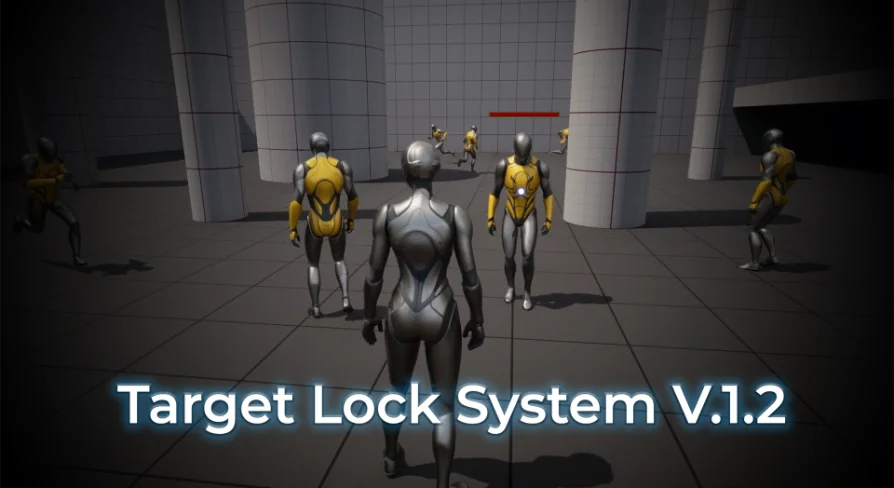
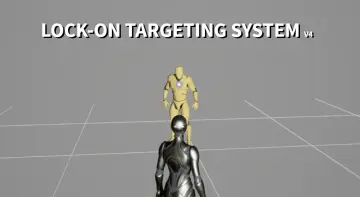
Third-person combat encounters in titles like Dark Souls Or Elden Ring Rely heavily on focused camera tracking and deliberate pawn orientation. When building high-stakes arenas, boss chambers, or tight dungeon corridors, players need a dependable mechanism to track threats without wrestling with manual view rotation during melee strikes or evasion. The Target Lock System provides this exact foundational interaction, enabling characters to acquire, cycle, and track hostile pawns smoothly across dynamic fight spaces.
Rather than requiring developers to engineer complex spatial tracing and state management routines from scratch, the system establishes a combat-ready baseline tailored for action RPG frameworks. It stabilizes camera orientation toward selected adversaries, helping creators construct intense combat encounters where precision positioning and deliberate timing define the gameplay loop.
Blueprint Architecture Without Casting Overhead
A notable technical characteristic of the Target Lock System is its pure Blueprint construction, entirely accessible without C++ knowledge. Modifying underlying parameters, extending logic pathways, or integrating the system into pre-existing character pawns takes place directly inside visual scripting graphs.
The architecture deliberately avoids casting. By omitting cast nodes during runtime queries, the system reduces cross-blueprint dependencies and limits hard reference coupling between character classes, targeting components, and incoming projectiles. This modular setup allows developers to retrofit the system into bespoke character architectures, third-person controllers, or hybrid gameplay frameworks without needing to restructure existing class hierarchies or deal with the compilation dependencies common to heavily cast networks.
Target Selection Controls and Input Schemes
Combat pacing hinges on responsive input handling, and the system offers distinct selection models to accommodate diverse gameplay preferences. Central to this adaptability is the UseAlternativeTargetSelection Configuration, which standardizes multi-press and context-specific key assignments:
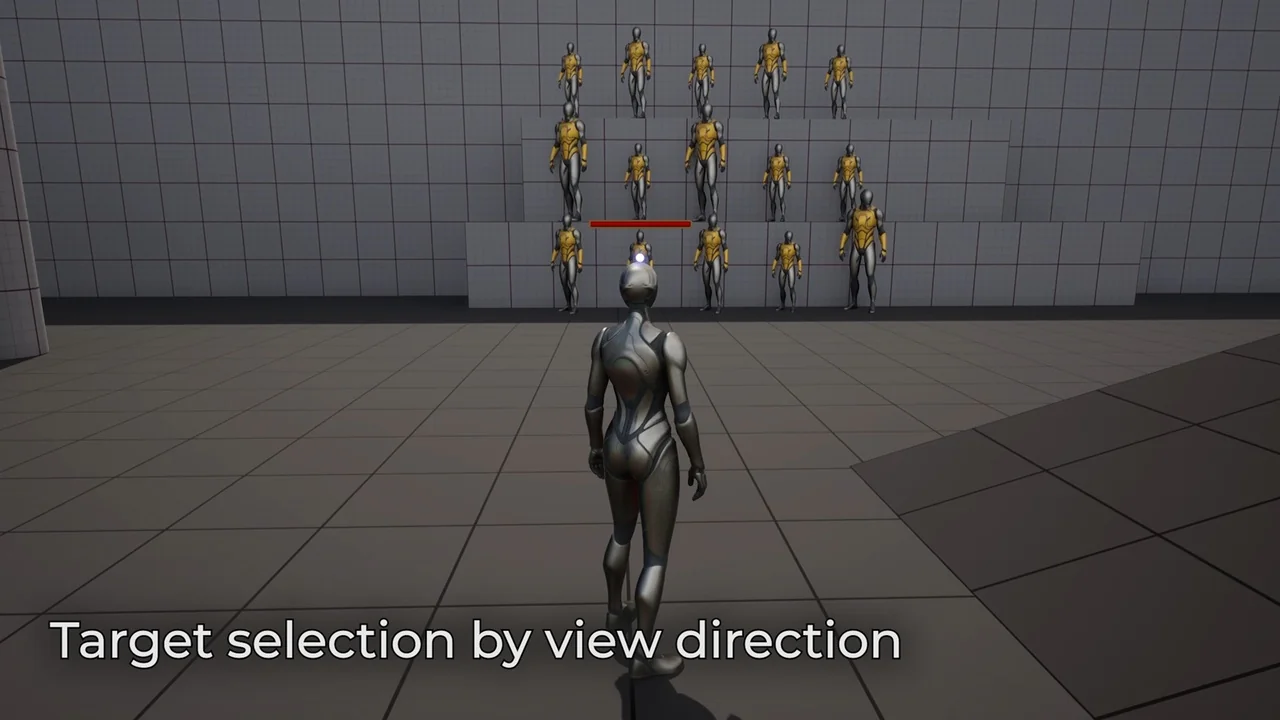
Initial Target Acquisition: A single press of the primary binding (configured by default to keys such as 'Q', or mapped to any custom input) immediately locks the player view onto an available adversary.
Subsequent Target Cycling: Successive presses of the same primary key swap the current lock to the nearest adjacent enemy, allowing rapid focus shifts in group battles.
Target Deselection: A dedicated alternate key (defaulted to 'C', or remappable to suit user layouts) breaks the active lock, returning the camera to free-look movement instantly.
Beyond digital key presses, the asset incorporates a dedicated switch for mouse-driven focus changes (Changing Target by Mouse). Swiping or flicking the mouse allows players to pivot their active target smoothly between foes without resetting their camera orientation, matching modern action RPG standards.
Spatial Distance Calculations with ClosestTargetToPlayer
Evaluating which adversary should inherit the lock-on reticle depends on spatial context. The system addresses this with the ClosestTargetToPlayer Switcher, giving creators granular control over sorting priority during dynamic encounters.
When switching targets, the logic can evaluate candidates based on two distinct reference points: proximity relative to the player pawn itself, or proximity relative to the currently targeted adversary. Prioritizing candidates relative to the existing target produces smooth, natural stepping across enemy formations. Conversely, prioritizing proximity to the player guarantees that an immediate threat approaching from behind or the flank takes precedence when cycling inputs.
Line of sight is equally regulated through automated recovery logic. Through the UseAutoChangingAfterUntargeting Switch, developers can determine whether the system automatically seeks out and acquires an alternative target if the active entity breaks lock by darting behind an obstacle, passing through sight-blocking geometry, or moving out of range. If enabled, this prevents the sudden disorientation of a dropped camera lock in dense environments with columns, trees, or structural debris.
Combat Flow with the Basic Damage System and Target Switching
Targeting directly interfaces with combat resolution through an included basic Damage System. While compact enough to remain fully adaptable, this framework manages damage delivery and target health states out of the box, offering a starting point that can be modernized or replaced to fit custom attributes.
When an active adversary is eliminated, target continuity is preserved via the Auto Changing After Kill Toggle. Rather than abruptly disengaging the player and snapping the third-person view to a neutral resting state upon enemy defeat, the system immediately cascades the lock onto the next valid hostile entity. This automated handoff maintains combat momentum during multi-target encounters. Furthermore, the system supports compatibility with magic projectiles, ensuring guided spells or ranged munitions integrate smoothly into the locked targeting pipeline.
Multiplayer Replication and Project Integration
Expanding combat systems into networked environments presents synchronization hurdles, particularly with pawn rotations, active targeting vectors, and line-of-sight checks. The Target Lock System features native replication support, enabling deployment across multiplayer environments.
Replicated states ensure targeting status and associated damage events synchronize consistently between the server and connected clients. Whether structuring cooperative boss encounters, team-based arena battles, or multiplayer action RPGs, developers can employ the system's selection switches, distance evaluations, and target transfers across network sessions without building bespoke network serialization layers from the ground up.
 Gameplay Features
 Gameplay Features
 Gameplay Features
 Gameplay Features