"a338a1d501976271"{"id":"1001361","slug":"sci-fi-interior-04","title":"Sci-Fi Interior 04","category":"Sci-Fi","engine":"4.22+,5.0+","assetVersion":"","engineVersion":"Engine Version: 4.22+,5.0+","tag":"Sci-Fi","accent":"blue","visual":"mech","summary":"Build realistic modular space stations, laboratories, and spaceship hallways with Sci-Fi Interior 04, built for first-person and third-person games.","platform":"Unreal Engine","publishedAt":"2026-10-04T10:30:22.274Z","updatedAt":"2026-10-04T10:30:22.274Z","sourceNotes":[],"fileContents":[],"compatibility":["Unreal Engine","Engine Version: 4.22+,5.0+"],"featuredImage":{"alt":"Sci-Fi Interior 04","src":"/wp-content/uploads/published/2026/10/227f8afb6a21-1e05b1f9-7420-4157-a2eb-b997a8576ea9-f5763f8566.webp"},"hasDownloadLink":true,"downloads":0,"terms":[{"taxonomy":"category","slug":"sci-fi","name":"Sci-Fi"}],"galleryImages":[{"src":"/wp-content/uploads/published/2026/10/4e7f9ab230d2-b9893875-59f4-426b-9eb9-5a68ddb3e303-565f029ed4.webp","alt":"Sci-Fi Interior 04"},{"src":"/wp-content/uploads/published/2026/10/6c0370ab1cd1-2e0a1832-e094-4183-9546-0d2f59f003ea-0fa29c1b50.webp","alt":"Sci-Fi Interior 04"},{"src":"/wp-content/uploads/published/2026/10/046bd26cc508-44af17b6-eaea-4b69-8180-57dd781a774a-2dade58bde.webp","alt":"Sci-Fi Interior 04"},{"src":"/wp-content/uploads/published/2026/10/231c1ae1fd9c-7c880b8f-c640-4055-bb9e-cade6aec226d-c80cc22c84.webp","alt":"Sci-Fi Interior 04"},{"src":"/wp-content/uploads/published/2026/10/0b55aeb16afe-ee3b43f2-dade-4de2-aabb-a1d84982cced-af564fa035.webp","alt":"Sci-Fi Interior 04"},{"src":"/wp-content/uploads/published/2026/10/3b2a51e21654-ce3e437b-78be-4be0-86d2-3335923d35eb-5bf7160357.webp","alt":"Sci-Fi Interior 04"},{"src":"/wp-content/uploads/published/2026/10/6a0e20b09ffe-b54f9e49-186e-45a7-80d2-7fb8459871ca-4039c3a9bb.webp","alt":"Sci-Fi Interior 04"},{"src":"/wp-content/uploads/published/2026/10/4f9f4d4921e8-921cc045-3ae7-4e64-9a61-5a0a47dbd21a-15e8057ed7.webp","alt":"Sci-Fi Interior 04"},{"src":"/wp-content/uploads/published/2026/10/431b74203433-98f5786d-6741-4fa2-b6df-14b621260f2a-2ec4ef7534.webp","alt":"Sci-Fi Interior 04"},{"src":"/wp-content/uploads/published/2026/10/7efa1324255b-ec52823a-4a87-465b-939f-233c0ede341f-9b8757d710.webp","alt":"Sci-Fi Interior 04"}],"accessPanel":{"kind":"resource","title":"Download this resource","eyebrow":"Free Download","message":"Log in or create a free account to start your download.","fileName":"Content.7z","safetyNote":"Resources are manually reviewed before listing to improve quality and reduce obvious risks.","actionLabel":"Download Free","resourceType":"Resource archive"},"contentHtml":"\u003ch2\u003eModular Spatial Assembly for Futuristic Stations and Vessels\u003c/h2\u003e\u003cp\u003eConstructing believable internal architecture for future-focused environments hinges on how cleanly individual components tile, intersect, and establish spatial rhythm. Sci-Fi Interior 04 operates as a system of modular parts built specifically to construct interior spaces across multiple science fiction sub-genres. Whether a level takes place inside an orbital spacestation, a long-range spaceship, or a planetary laboratory, the modularity of the kit dictates how rooms connect, how corridors turn, and how structural boundaries separate interior zones.\u003c/p\u003e\u003cp\u003eModular level creation demands assets that solve spatial puzzles rather than dictate a rigid, single-purpose floor plan. In complex game environments, designers must rapidly alter room footprints, lengthen hallways, or insert technical alcoves without breaking the structural logic of the scene. Sci-Fi Interior 04 approaches interior construction by letting structural sections act as repeatable building blocks. Corridors can stretch into lengthy transit arteries aboard a starship or break off into compact research cells inside a futuristic laboratory. The realistic treatment applied across these elements supports grounded world-building, where architectural components feel purpose-built for life in isolated space installations.\u003c/p\u003e\u003ch2\u003eBalancing First-Person and Third-Person Gameplay Perspectives\u003c/h2\u003e\u003cp\u003eCamera placement alters how modular environments must be assembled. A hallway or room built exclusively for a first-person perspective often fails when adapted to a third-person camera, just as oversized third-person chambers can dilute the claustrophobic tension required in first-person survival or exploration scenarios. Sci-Fi Interior 04 is built to accommodate both viewpoints, solving critical framing challenges common to sci-fi level design.\u003c/p\u003e\u003cp\u003eIn a first-person setup, player proximity to surrounding geometry is constant. Walls, door frames, and bulkheads pass immediately beside the player camera, demanding crisp surface definition and believable architectural proportion. Tight hallway segments, atmospheric laboratory corners, and pressurized station airlocks gain immediacy in first person because the player directly confronts the physical scale of the architecture.\u003c/p\u003e\u003cp\u003eThird-person titles introduce an entirely different technical consideration: the orbiting spring-arm camera. Narrow corridors in third-person games frequently suffer from camera clipping, erratic collisions against low-hanging structural beams, or awkward framing that cuts off player avatars. Sci-Fi Interior 04 addresses this balance by providing the spatial clearance needed for an external camera rig to track smoothly behind a character. Designers can assemble interconnected station networks that maintain clear sightlines and fluid player tracking while preserving the dense, realistic futuristic style expected of high-end sci-fi interiors.\u003c/p\u003e\u003ch2\u003eDesigning Realistic Sci-Fi Hallway and Laboratory Flow\u003c/h2\u003e\u003cp\u003eInterior sci-fi environments generally divide into two spatial categories: functional arteries and destination chambers. The hallway serves as the primary tool for pacing, transition, and spatial orientation, while laboratories and command decks function as hubs for player interaction, objective staging, and narrative progression.\u003c/p\u003e\u003cp\u003eUsing the modular elements within Sci-Fi Interior 04, developers can systematically establish level pacing through architectural shifts:\u003c/p\u003e\u003cul\u003e\u003cli\u003e\u003cstrong\u003eLong-Form Transit Corridors:\u003c/strong\u003e Straightforward hallway runs allow for high-speed traversal, stealth routing, or tense pauses between heavy gameplay beats within a spaceship or space station.\u003c/li\u003e\u003cli\u003e\u003cstrong\u003ePerpendicular Junctions and Corners:\u003c/strong\u003e Segmented corner elements break sightlines, forcing players to approach intersections cautiously and supporting tactical movement in action-oriented levels.\u003c/li\u003e\u003cli\u003e\u003cstrong\u003eDedicated Laboratory Spaces:\u003c/strong\u003e Expanding the modular footprint horizontally creates wide testing chambers, containment stations, or technical bays where research equipment and objectives reside.\u003c/li\u003e\u003cli\u003e\u003cstrong\u003eMulti-Room Station Hubs:\u003c/strong\u003e Interlocking modular pieces allow open-ended room planning where multiple hallways converge into central common spaces or airlock checkpoints.\u003c/li\u003e\u003c/ul\u003e\u003cp\u003eThe visual execution emphasizes a realistic, functional aesthetic. Rather than abstract fantasy architecture, the kit reflects the pragmatic structural requirements of space environments, where modular panels, structural bracing, and durable wall sections suggest genuine industrial manufacturing.\u003c/p\u003e\u003ch2\u003eCross-Kit Interoperability with Sci-Fi Interior 01\u003c/h2\u003e\u003cp\u003eConsistency across multi-stage game environments often breaks down when attempting to bridge different asset packs. Sci-Fi Interior 04 maintains direct compatibility with Sci-Fi Interior 01, resolving continuity problems when expanding an existing sci-fi level or building distinct connected zones across a wider complex.\u003c/p\u003e\u003cp\u003eCompatibility between these two packs gives level designers freedom to diversify their environments without introducing visual dissonance. A project can utilize one kit to establish the core structural shell of a vessel while deploying the other to build specialized offshoots, specialized laboratory wings, or service hallways. Because the two collections share an underlying architectural and aesthetic alignment, transitions between sections built from Sci-Fi Interior 01 and Sci-Fi Interior 04 feel coherent. The structural components fit together naturally, allowing environment teams to assemble expansive multi-tier space stations or sprawling derelict starships that retain architectural harmony from the entry dock to the deepest research deck.\u003c/p\u003e\u003ch2\u003ePractical Utility for Futuristic Environment Pipelines\u003c/h2\u003e\u003cp\u003eThe utility of Sci-Fi Interior 04 lies in its flexibility across different game scales. Solo creators and environment artists can rapidly prototype complete playable levels without having to custom-model every wall segment, ceiling support, or hallway transition. At the same time, technical level designers gain a modular toolset capable of adhering to rigorous collision, sightline, and movement mechanics across both first-person and third-person camera frameworks.\u003c/p\u003e\u003cp\u003eBy unifying modular assembly, dual-perspective gameplay support, realistic sci-fi styling, and native compatibility with Sci-Fi Interior 01, the pack serves as a reliable architectural foundation for any project requiring detailed, immersive interior spaces across the reaches of future space exploration.\u003c/p\u003e\n\n\u003ch2\u003eExplore Similar Assets\u003c/h2\u003e\n\u003cul\u003e\n\u003cli\u003e\u003ca href=\"https://3dcghub.com/modular-underground-environment/\" title=\"Modular Underground Environment\"\u003eModular Underground Environment\u003c/a\u003e\u003c/li\u003e\n\u003cli\u003e\u003ca href=\"https://3dcghub.com/cyberpunk-street-assets/\" title=\"Cyberpunk street assets\"\u003eCyberpunk street assets\u003c/a\u003e\u003c/li\u003e\n\u003cli\u003e\u003ca href=\"https://3dcghub.com/modular-sci-fi-station/\" title=\"Modular Sci-Fi Station\"\u003eModular Sci-Fi Station\u003c/a\u003e\u003c/li\u003e\n\u003cli\u003e\u003ca href=\"https://3dcghub.com/modular-sci-fi-quarry-environment/\" title=\"Modular Sci-Fi Quarry Environment\"\u003eModular Sci-Fi Quarry Environment\u003c/a\u003e\u003c/li\u003e\n\u003cli\u003e\u003ca href=\"https://3dcghub.com/spectrum-galaxy-modular-sci-fi-environment-kit/\" title=\"Spectrum Galaxy | Modular Sci-Fi Environment Kit\"\u003eSpectrum Galaxy | Modular Sci-Fi Environment Kit\u003c/a\u003e\u003c/li\u003e\n\u003c/ul\u003e","contentTextLength":6656,"navigation":{"current":41,"total":3338,"previous":{"id":"1001362","slug":"shooter-rifle-animations","title":"Shooter Rifle Animations","category":"Combat","platform":"Unreal Engine","updatedAt":"2026-10-04T10:31:18.353Z"},"next":{"id":"1001360","slug":"sci-fi-observation-station-kit","title":"Sci Fi Observation Station Kit","category":"Sky \u0026 Space","platform":"Unreal Engine","updatedAt":"2026-10-04T10:29:34.335Z"}},"relatedResources":[{"id":"1001366","slug":"starcluster-pack","title":"StarCluster Pack","category":"Sci-Fi","engine":"4.18+,5.0+","assetVersion":"","engineVersion":"Engine Version: 4.18+,5.0+","tag":"Sci-Fi","accent":"blue","visual":"mech","summary":"StarCluster Pack provides simulation-based FBX star clusters with embedded attributes, color ramps, and NeuroFractals Pack compatibility for space levels.","platform":"Unreal Engine","publishedAt":"2026-10-04T10:34:32.280Z","updatedAt":"2026-10-04T10:34:32.280Z","sourceNotes":[],"fileContents":[],"compatibility":["Unreal Engine","Engine Version: 4.18+,5.0+"],"featuredImage":{"alt":"StarCluster Pack","src":"/wp-content/uploads/published/2026/10/2f740ed7ead3-3c44b2cd-45fe-4b72-a2ca-d33ff1743043-e9ba075c24.webp"},"hasDownloadLink":true,"downloads":0},{"id":"1001354","slug":"modular-underground-environment","title":"Modular Underground Environment","category":"Sci-Fi","engine":"4.16+,5.0+","assetVersion":"","engineVersion":"Engine Version: 4.16+,5.0+","tag":"Sci-Fi","accent":"blue","visual":"city","summary":"Build realistic lowpoly subterranean levels, bunkers, and research facilities in UE4 with the Modular Underground Environment modular asset pack.","platform":"Unreal Engine","publishedAt":"2026-10-04T10:22:21.557Z","updatedAt":"2026-10-04T10:22:21.557Z","sourceNotes":[],"fileContents":[],"compatibility":["Unreal Engine","Engine Version: 4.16+,5.0+"],"featuredImage":{"alt":"Modular Underground Environment","src":"https://media.fab.com/image_previews/gallery_images/a4276c3d-bd23-4728-b71c-dd59c5233301/d5ac6d9e-332f-4edc-ab24-7743dbad862e.png"},"hasDownloadLink":true,"downloads":0},{"id":"1001341","slug":"cyberpunk-street-assets","title":"Cyberpunk street assets","category":"Sci-Fi","engine":"4.24+,5.0+","assetVersion":"","engineVersion":"Engine Version: 4.24+,5.0+","tag":"Sci-Fi","accent":"blue","visual":"mech","summary":"Cyberpunk street assets provides modular realistic models, customizable high-resolution materials, lightmap-ready setups, and background buildings.","platform":"Unreal Engine","publishedAt":"2026-10-04T10:06:00.352Z","updatedAt":"2026-10-04T10:06:00.352Z","sourceNotes":[],"fileContents":[],"compatibility":["Unreal Engine","Engine Version: 4.24+,5.0+"],"featuredImage":{"alt":"Cyberpunk street assets","src":"/wp-content/uploads/published/2026/10/b21c86d198e3-cf00083c-0876-4a8f-8435-4058452cad5d-bb48e0137d.webp"},"hasDownloadLink":true,"downloads":0}]}
Sci-Fi
Sci-Fi Interior 04
Build realistic modular space stations, laboratories, and spaceship hallways with Sci-Fi Interior 04, built for first-person and third-person games.
Category:Unreal Engine,Sci-FiPlatform: Unreal EngineEngine Version: 4.22+,5.0+Published: Oct 4, 2026
Sci-Fi
Resource overview
Modular Spatial Assembly for Futuristic Stations and Vessels
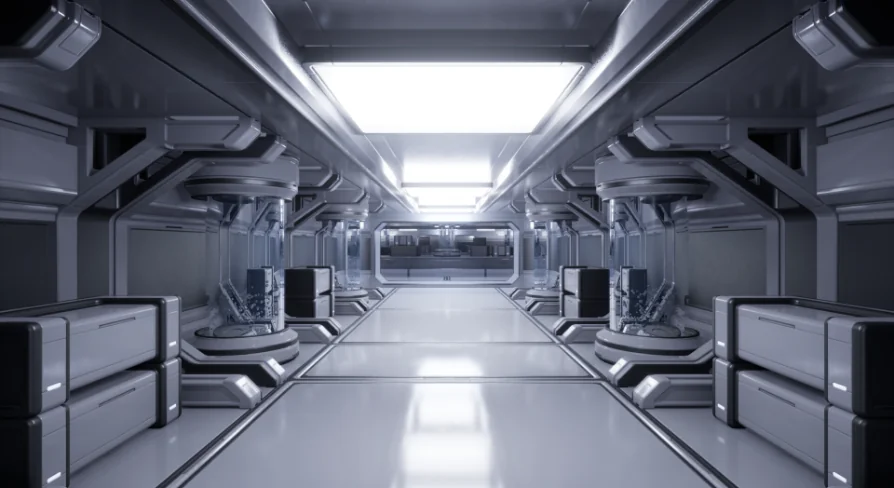
Constructing believable internal architecture for future-focused environments hinges on how cleanly individual components tile, intersect, and establish spatial rhythm. Sci-Fi Interior 04 operates as a system of modular parts built specifically to construct interior spaces across multiple science fiction sub-genres. Whether a level takes place inside an orbital spacestation, a long-range spaceship, or a planetary laboratory, the modularity of the kit dictates how rooms connect, how corridors turn, and how structural boundaries separate interior zones.
Modular level creation demands assets that solve spatial puzzles rather than dictate a rigid, single-purpose floor plan. In complex game environments, designers must rapidly alter room footprints, lengthen hallways, or insert technical alcoves without breaking the structural logic of the scene. Sci-Fi Interior 04 approaches interior construction by letting structural sections act as repeatable building blocks. Corridors can stretch into lengthy transit arteries aboard a starship or break off into compact research cells inside a futuristic laboratory. The realistic treatment applied across these elements supports grounded world-building, where architectural components feel purpose-built for life in isolated space installations.
Balancing First-Person and Third-Person Gameplay Perspectives
Camera placement alters how modular environments must be assembled. A hallway or room built exclusively for a first-person perspective often fails when adapted to a third-person camera, just as oversized third-person chambers can dilute the claustrophobic tension required in first-person survival or exploration scenarios. Sci-Fi Interior 04 is built to accommodate both viewpoints, solving critical framing challenges common to sci-fi level design.
In a first-person setup, player proximity to surrounding geometry is constant. Walls, door frames, and bulkheads pass immediately beside the player camera, demanding crisp surface definition and believable architectural proportion. Tight hallway segments, atmospheric laboratory corners, and pressurized station airlocks gain immediacy in first person because the player directly confronts the physical scale of the architecture.
Third-person titles introduce an entirely different technical consideration: the orbiting spring-arm camera. Narrow corridors in third-person games frequently suffer from camera clipping, erratic collisions against low-hanging structural beams, or awkward framing that cuts off player avatars. Sci-Fi Interior 04 addresses this balance by providing the spatial clearance needed for an external camera rig to track smoothly behind a character. Designers can assemble interconnected station networks that maintain clear sightlines and fluid player tracking while preserving the dense, realistic futuristic style expected of high-end sci-fi interiors.
Designing Realistic Sci-Fi Hallway and Laboratory Flow
Interior sci-fi environments generally divide into two spatial categories: functional arteries and destination chambers. The hallway serves as the primary tool for pacing, transition, and spatial orientation, while laboratories and command decks function as hubs for player interaction, objective staging, and narrative progression.
Using the modular elements within Sci-Fi Interior 04, developers can systematically establish level pacing through architectural shifts:
Long-Form Transit Corridors: Straightforward hallway runs allow for high-speed traversal, stealth routing, or tense pauses between heavy gameplay beats within a spaceship or space station.
Perpendicular Junctions and Corners: Segmented corner elements break sightlines, forcing players to approach intersections cautiously and supporting tactical movement in action-oriented levels.
Dedicated Laboratory Spaces: Expanding the modular footprint horizontally creates wide testing chambers, containment stations, or technical bays where research equipment and objectives reside.
Multi-Room Station Hubs: Interlocking modular pieces allow open-ended room planning where multiple hallways converge into central common spaces or airlock checkpoints.
The visual execution emphasizes a realistic, functional aesthetic. Rather than abstract fantasy architecture, the kit reflects the pragmatic structural requirements of space environments, where modular panels, structural bracing, and durable wall sections suggest genuine industrial manufacturing.
Cross-Kit Interoperability with Sci-Fi Interior 01
Consistency across multi-stage game environments often breaks down when attempting to bridge different asset packs. Sci-Fi Interior 04 maintains direct compatibility with Sci-Fi Interior 01, resolving continuity problems when expanding an existing sci-fi level or building distinct connected zones across a wider complex.
Compatibility between these two packs gives level designers freedom to diversify their environments without introducing visual dissonance. A project can utilize one kit to establish the core structural shell of a vessel while deploying the other to build specialized offshoots, specialized laboratory wings, or service hallways. Because the two collections share an underlying architectural and aesthetic alignment, transitions between sections built from Sci-Fi Interior 01 and Sci-Fi Interior 04 feel coherent. The structural components fit together naturally, allowing environment teams to assemble expansive multi-tier space stations or sprawling derelict starships that retain architectural harmony from the entry dock to the deepest research deck.
Practical Utility for Futuristic Environment Pipelines
The utility of Sci-Fi Interior 04 lies in its flexibility across different game scales. Solo creators and environment artists can rapidly prototype complete playable levels without having to custom-model every wall segment, ceiling support, or hallway transition. At the same time, technical level designers gain a modular toolset capable of adhering to rigorous collision, sightline, and movement mechanics across both first-person and third-person camera frameworks.
By unifying modular assembly, dual-perspective gameplay support, realistic sci-fi styling, and native compatibility with Sci-Fi Interior 01, the pack serves as a reliable architectural foundation for any project requiring detailed, immersive interior spaces across the reaches of future space exploration.
 Sci-Fi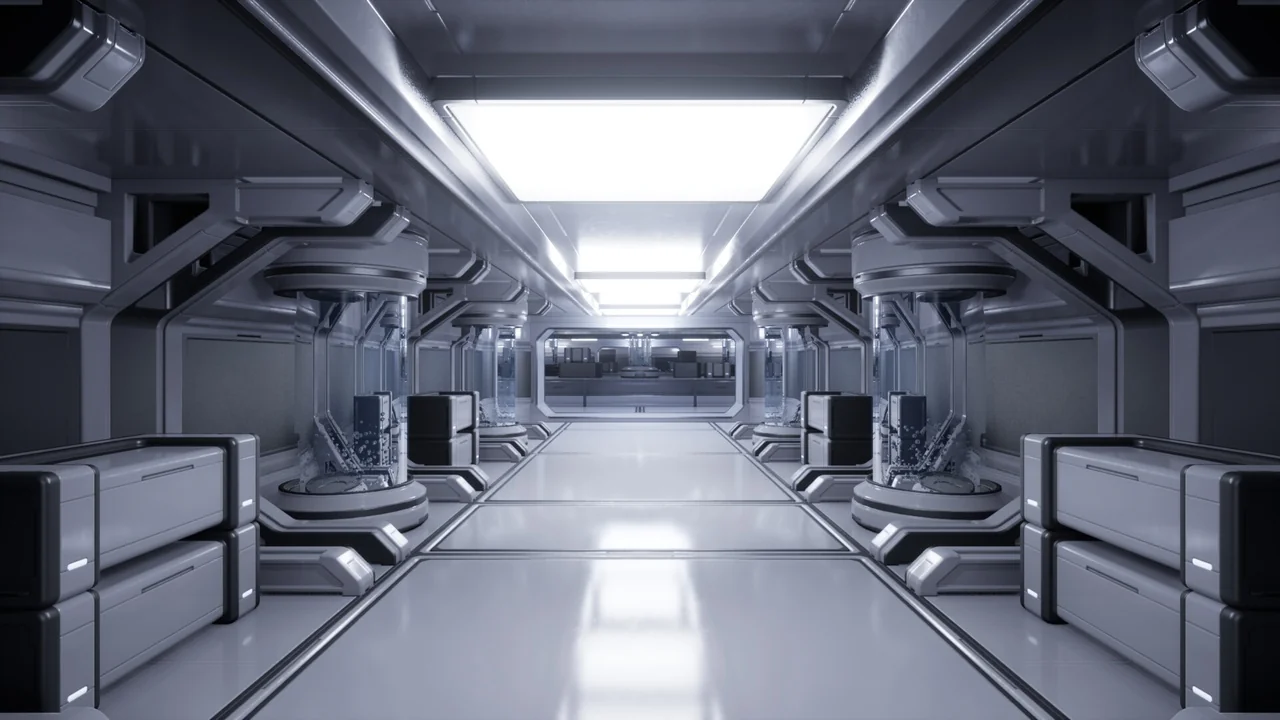
 Sci-Fi
 Sci-Fi
 Sci-Fi