"c14ff6bd758dadb1"{"id":"24733","slug":"post-apocalyptic-melee-weapons","title":"Post Apocalyptic Melee Weapons","category":"Weapons \u0026 Combat","engine":"4.26+,5.0+","assetVersion":"Engine version: 4.26+,5.0+","engineVersion":"","tag":"Weapons \u0026 Combat","accent":"blue","visual":"character","summary":"Post Apocalyptic Melee Weapons brings melee gear with variations, emissive burning detail, blood textures, and a flame particle system into one package. It also includes a blueprint that changes flame direction with the weapon swing, plus meshes in static a...","platform":"Unreal Engine","publishedAt":"2026-04-16T17:22:08.000Z","updatedAt":"2026-04-20T06:12:38.000Z","sourceNotes":[],"fileContents":[],"compatibility":["Unreal Engine","Engine version: 4.26+,5.0+"],"featuredImage":{"alt":"Post Apocalyptic Melee Weapons","src":"https://3dcghub.com/wp-content/uploads/2026/04/1b0251452b2d_d0788fbb-54ce-4971-bb94-2906f7da430c.webp"},"hasDownloadLink":true,"downloads":1,"terms":[{"taxonomy":"category","slug":"weapons-and-combat","name":"Weapons \u0026 Combat"},{"taxonomy":"post_tag","slug":"unreal-engine-5","name":"Unreal Engine 5"},{"taxonomy":"post_tag","slug":"vfx","name":"VFX"},{"taxonomy":"post_tag","slug":"weapons","name":"Weapons"}],"galleryImages":[{"src":"https://3dcghub.com/wp-content/uploads/2026/04/7bfa7c1125cd_7acc92d9-41d6-4bc3-84b5-c1a9fb201ea8.webp","alt":"Post Apocalyptic Melee Weapons"},{"src":"https://3dcghub.com/wp-content/uploads/2026/04/09e5e2540bb5_a6db5a40-9688-478e-b257-76a20e2e772c.webp","alt":"Post Apocalyptic Melee Weapons"},{"src":"https://3dcghub.com/wp-content/uploads/2026/04/c146cf1fd063_cdd671b1-8802-460d-b421-4e3507e1bd5f.webp","alt":"Post Apocalyptic Melee Weapons"},{"src":"https://3dcghub.com/wp-content/uploads/2026/04/80feedf4526e_8d532c2f-e065-4018-bbf2-9a522242f253.webp","alt":"Post Apocalyptic Melee Weapons"},{"src":"https://3dcghub.com/wp-content/uploads/2026/04/036b9b2f9bcd_7631da64-b718-42d1-878b-16a48d67ae69.webp","alt":"Post Apocalyptic Melee Weapons"},{"src":"https://3dcghub.com/wp-content/uploads/2026/04/08227b0613c3_39fe73a3-7bbc-4fd7-84b8-8f390095c7c9.webp","alt":"Post Apocalyptic Melee Weapons"},{"src":"https://3dcghub.com/wp-content/uploads/2026/04/cca2a8cca2bf_5abbc293-59db-4571-bfb3-ef5fc8f8a89b.webp","alt":"Post Apocalyptic Melee Weapons"},{"src":"https://3dcghub.com/wp-content/uploads/2026/04/b8f469fe7f98_8e0f8494-03b7-4f10-b9da-6dac02b2edb5.webp","alt":"Post Apocalyptic Melee Weapons"},{"src":"https://3dcghub.com/wp-content/uploads/2026/04/57ac2dbd34d0_ef244443-a10b-45c5-a60c-e8052349ec29.webp","alt":"Post Apocalyptic Melee Weapons"},{"src":"https://3dcghub.com/wp-content/uploads/2026/04/0ed0cb744532_d103e5e8-29b7-4488-97c1-b76f648925f4.webp","alt":"Post Apocalyptic Melee Weapons"}],"accessPanel":{"kind":"resource","title":"Access this resource","eyebrow":"Free Download","message":"Log in or create a free account to start your download.","fileName":"Content.7z","safetyNote":"All resources are 100% manually reviewed to eliminate all risks.","actionLabel":"Download Free","resourceType":"Resource archive"},"contentHtml":"\u003ch2\u003eClose-quarters weapons for ruined-world scenes\u003c/h2\u003e\u003cp\u003ePost-apocalyptic projects often need weapons that feel rough, improvised, and close to the action. This package fits that kind of scene with melee weapons and visible variations, making it useful for environments where ranged gear is not the only focus and the combat sits at armâs length. The material lands in the space between prop work and gameplay-ready setup, which makes it relevant for scenes that need more than a simple static weapon model.\u003c/p\u003e\u003cp\u003eThe theme is direct from the name and the included tags: post, weapon, melee, and apocalyptic. That gives the package a clear place in a production workflow for ruined settings, survival-heavy encounters, or any combat sequence where the weapon itself needs to carry part of the sceneâs tone.\u003c/p\u003e\u003ch2\u003eBurning detail and bloodied surfaces\u003c/h2\u003e\u003cp\u003eOne of the most noticeable parts of the package is the visual treatment. The weapons include emissive material for a burning effect, along with blood textures. Those two details push the assets beyond plain melee props and give them a stronger on-screen presence during combat, aftermath shots, or any moment where damage needs to read clearly.\u003c/p\u003e\u003cp\u003eThe emissive look can help a weapon stand out in darker scenes, especially when fire or heat is part of the action. Blood textures add another layer of wear and conflict without needing extra prop work. Together, these details support a more aggressive and distressed look that fits the post-apocalyptic theme without relying on generic surface treatment.\u003c/p\u003e\u003cp\u003eBecause the package focuses on these effects directly, it is useful when a scene needs weapons that already carry signs of use. That can matter in gameplay scenes, cinematic shots, or environment setups where the weapon is meant to look active rather than cleanly stored.\u003c/p\u003e\u003ch2\u003eFlame particle behavior tied to the swing\u003c/h2\u003e\u003cp\u003eThe package also includes a flame particle system and a blueprint that modifies its direction with the swing of the weapon. That makes the fire element more than a fixed effect attached to the mesh. Instead, the direction changes with motion, which gives the weapon a more connected visual response during action.\u003c/p\u003e\u003cp\u003eThis is a practical detail for melee combat presentation. When a weapon moves through the scene, the flame direction can follow that motion instead of sitting still. In a production workflow, that means the flame effect is not just decorative; it is linked to the action and can help the swing read more clearly on screen.\u003c/p\u003e\u003cp\u003eFor scenes that use burning weapons, this kind of setup supports motion and impact at the same time. It is especially relevant when the weapon needs to feel alive during animation or gameplay rather than remain a static prop with attached fire.\u003c/p\u003e\u003ch2\u003eStatic and skeletal mesh formats in the same package\u003c/h2\u003e\u003cp\u003eAnother practical part of the package is that the meshes are available in both static mesh and skeletal mesh format. That gives the resource two clear ways to fit into a production pipeline. A static mesh version is useful when the weapon is treated as a prop, while the skeletal mesh version opens the door to setups that need movement tied to a rigged structure.\u003c/p\u003e\u003cp\u003eHaving both formats available reduces the need to force one asset into every situation. A team can treat the weapon as a scene prop in one context and use the skeletal version in another where animation or dynamic setup matters. That flexibility is valuable in post-apocalyptic production because the same weapon may appear in a level, a cutscene, and a combat sequence.\u003c/p\u003e\u003cp\u003eThe package does not try to overcomplicate the setup. Instead, it gives a practical choice between two mesh formats and lets the rest of the scene determine which one is the better fit.\u003c/p\u003e\u003ch2\u003eHow it fits into a real workflow\u003c/h2\u003e\u003cp\u003eThis kind of resource fits where melee weapons need to do more than sit in a characterâs hand. The variations help with scene variety, the emissive burning effect and blood textures support visible damage, and the flame particle system adds motion-driven energy. The blueprint that changes the flame direction with the swing ties the visual effect to the action, which is useful when the weapon is part of an animated sequence or a gameplay moment.\u003c/p\u003e\u003cp\u003eIn a workflow, that means the package can support several stages at once: prop placement, combat presentation, and effect-driven action. It suits a pipeline that needs weapons with a strong post-apocalyptic tone and a built-in fire treatment rather than a plain melee model that still needs extra visual work.\u003c/p\u003e\u003cp\u003eThe included preview video also helps show the package in motion, which matters for a resource centered on flames, swing direction, and melee variation. For teams working on ruined-world combat scenes, the package is a straightforward match when the weapon needs burning detail, blood textures, and mesh options that can be handled in more than one way.\u003c/p\u003e\u003cp\u003eIt will be most useful for creators building post-apocalyptic melee encounters, especially when the scene depends on visible fire effects and weapons that hold up in both prop and animated setups.\u003c/p\u003e\u003c/h2\u003e\n\n\u003ch2\u003eRelated Resources Worth Checking\u003c/h2\u003e\n\u003cul\u003e\n\u003cli\u003e\u003ca href=\"https://3dcghub.com/advanced-unreal-engine-5-multiplayer-gameplay-programming/\" title=\"Advanced Unreal Engine 5 Multiplayer Gameplay Programming\"\u003eAdvanced Unreal Engine 5 Multiplayer Gameplay Programming\u003c/a\u003e\u003c/li\u003e\n\u003cli\u003e\u003ca href=\"https://3dcghub.com/niagara-beginners-to-advanced-in-unreal-engine-5/\" title=\"Niagara Beginners to advanced in Unreal Engine 5\"\u003eNiagara Beginners to advanced in Unreal Engine 5\u003c/a\u003e\u003c/li\u003e\n\u003cli\u003e\u003ca href=\"https://3dcghub.com/create-zelda-like-skills-with-c-in-unreal-engine-5-2/\" title=\"Create Zelda-like skills with C++ in unreal engine 5\"\u003eCreate Zelda-like skills with C++ in unreal engine 5\u003c/a\u003e\u003c/li\u003e\n\u003cli\u003e\u003ca href=\"https://3dcghub.com/main-menus-beginner-class-unreal-engine-5/\" title=\"Main Menus Beginner Class – Unreal Engine 5\"\u003eMain Menus Beginner Class – Unreal Engine 5\u003c/a\u003e\u003c/li\u003e\n\u003cli\u003e\u003ca href=\"https://3dcghub.com/create-zelda-like-skills-with-c-in-unreal-engine-5/\" title=\"Create Zelda-like skills with C++ in unreal engine 5\"\u003eCreate Zelda-like skills with C++ in unreal engine 5\u003c/a\u003e\u003c/li\u003e\n\u003c/ul\u003e","contentTextLength":5372,"navigation":{"current":2052,"total":3719,"previous":{"id":"24746","slug":"particle-rings","title":"Particle Rings","category":"Variety","platform":"Unreal Engine","updatedAt":"2026-04-20T06:12:38.000Z"},"next":{"id":"24836","slug":"realistic-water-vfx","title":"Realistic Water VFX","category":"Liquid","platform":"Unreal Engine","updatedAt":"2026-04-20T06:12:37.000Z"}},"relatedResources":[{"id":"28100","slug":"post-apocalyptic-melee-weapons-vol-2-post-apocalyptic-melee-weapons-weapon-old","title":"Post Apocalyptic Melee Weapons VOL.2 (Post Apocalyptic Melee Weapons Weapon Old)","category":"Weapons \u0026 Combat","engine":"4.26+,5.0+","assetVersion":"Engine version: 4.26+,5.0+","engineVersion":"","tag":"Weapons \u0026 Combat","accent":"blue","visual":"city","summary":"Post Apocalyptic Melee Weapons VOL.2 brings together the pictured assets, maps, and materials in an Unreal Engine project. Its stated focus is realistic AAA-quality visuals, with compatibility noted for the Ultimate Level Art Tool.","platform":"Unreal Engine","publishedAt":"2026-05-04T08:21:39.000Z","updatedAt":"2026-05-04T08:21:40.000Z","sourceNotes":[],"fileContents":[],"compatibility":["Unreal Engine","Engine version: 4.26+,5.0+"],"featuredImage":{"alt":"Post Apocalyptic Melee Weapons VOL.2 (Post Apocalyptic Melee Weapons Weapon Old)","src":"https://3dcghub.com/wp-content/uploads/2026/05/1f2485f883aa_16c8546e-3b13-454e-bb27-7b23a3cbdac7.webp"},"hasDownloadLink":true,"downloads":0},{"id":"1000725","slug":"axes-pack","title":"Axes Pack","category":"Weapons \u0026 Combat","engine":"4.26+,5.0+","assetVersion":"","engineVersion":"Engine Version: 4.26+,5.0+","tag":"Weapons \u0026 Combat","accent":"blue","visual":"mech","summary":"Axes Pack delivers five ready-for-battle melee axes with rigged versions, PBR materials, four texture resolutions, and 17 Blueprints for Unreal Engine workflows","platform":"Unreal Engine","publishedAt":"2026-07-26T15:29:31.703Z","updatedAt":"2026-07-26T15:55:51.664Z","sourceNotes":[],"fileContents":[],"compatibility":["Unreal Engine","Engine Version: 4.26+,5.0+"],"featuredImage":{"alt":"Axes Pack","src":"/wp-content/uploads/published/2026/07/6183996495d5-3e87e9af-7afa-4979-98e1-e5a25d473023-16fc163f21.webp"},"hasDownloadLink":true,"downloads":0},{"id":"5340","slug":"10-fantasy-stylish-weapon","title":"10 Fantasy Stylish Weapon","category":"Weapons \u0026 Combat","engine":"4.26+,5.0+","assetVersion":"Engine version: 4.26+,5.0+","engineVersion":"4.12","tag":"Weapons \u0026 Combat","accent":"blue","visual":"character","summary":"Boost your game's visuals with 10 stylized fantasy melee weapons. Low-poly and mobile-ready assets featuring PBR and Unlit materials for maximum performance.","platform":"Unreal Engine","publishedAt":"2026-02-15T14:21:16.000Z","updatedAt":"2026-04-19T15:56:58.000Z","sourceNotes":[],"fileContents":[],"compatibility":["Unreal Engine","Engine version: 4.26+,5.0+"],"featuredImage":{"alt":"10 Fantasy Stylish Weapon","src":"https://3dcghub.com/wp-content/uploads/2026/02/339235d3-6a76-470d-91df-0acbb4df5e2a.webp"},"hasDownloadLink":true,"downloads":0}]}
Weapons & Combat
Post Apocalyptic Melee Weapons
Post Apocalyptic Melee Weapons brings melee gear with variations, emissive burning detail, blood textures, and a flame particle system into one package. It also includes a blueprint that changes flame direction with the weapon swing, plus meshes in static a...
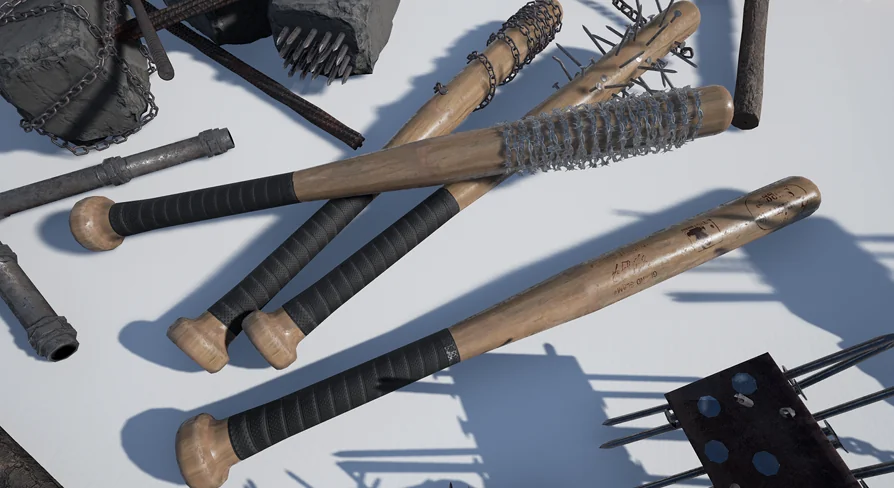
Post-apocalyptic projects often need weapons that feel rough, improvised, and close to the action. This package fits that kind of scene with melee weapons and visible variations, making it useful for environments where ranged gear is not the only focus and the combat sits at armâs length. The material lands in the space between prop work and gameplay-ready setup, which makes it relevant for scenes that need more than a simple static weapon model.
The theme is direct from the name and the included tags: post, weapon, melee, and apocalyptic. That gives the package a clear place in a production workflow for ruined settings, survival-heavy encounters, or any combat sequence where the weapon itself needs to carry part of the sceneâs tone.
Burning detail and bloodied surfaces
One of the most noticeable parts of the package is the visual treatment. The weapons include emissive material for a burning effect, along with blood textures. Those two details push the assets beyond plain melee props and give them a stronger on-screen presence during combat, aftermath shots, or any moment where damage needs to read clearly.
The emissive look can help a weapon stand out in darker scenes, especially when fire or heat is part of the action. Blood textures add another layer of wear and conflict without needing extra prop work. Together, these details support a more aggressive and distressed look that fits the post-apocalyptic theme without relying on generic surface treatment.
Because the package focuses on these effects directly, it is useful when a scene needs weapons that already carry signs of use. That can matter in gameplay scenes, cinematic shots, or environment setups where the weapon is meant to look active rather than cleanly stored.
Flame particle behavior tied to the swing
The package also includes a flame particle system and a blueprint that modifies its direction with the swing of the weapon. That makes the fire element more than a fixed effect attached to the mesh. Instead, the direction changes with motion, which gives the weapon a more connected visual response during action.
This is a practical detail for melee combat presentation. When a weapon moves through the scene, the flame direction can follow that motion instead of sitting still. In a production workflow, that means the flame effect is not just decorative; it is linked to the action and can help the swing read more clearly on screen.
For scenes that use burning weapons, this kind of setup supports motion and impact at the same time. It is especially relevant when the weapon needs to feel alive during animation or gameplay rather than remain a static prop with attached fire.
Static and skeletal mesh formats in the same package
Another practical part of the package is that the meshes are available in both static mesh and skeletal mesh format. That gives the resource two clear ways to fit into a production pipeline. A static mesh version is useful when the weapon is treated as a prop, while the skeletal mesh version opens the door to setups that need movement tied to a rigged structure.
Having both formats available reduces the need to force one asset into every situation. A team can treat the weapon as a scene prop in one context and use the skeletal version in another where animation or dynamic setup matters. That flexibility is valuable in post-apocalyptic production because the same weapon may appear in a level, a cutscene, and a combat sequence.
The package does not try to overcomplicate the setup. Instead, it gives a practical choice between two mesh formats and lets the rest of the scene determine which one is the better fit.
How it fits into a real workflow
This kind of resource fits where melee weapons need to do more than sit in a characterâs hand. The variations help with scene variety, the emissive burning effect and blood textures support visible damage, and the flame particle system adds motion-driven energy. The blueprint that changes the flame direction with the swing ties the visual effect to the action, which is useful when the weapon is part of an animated sequence or a gameplay moment.
In a workflow, that means the package can support several stages at once: prop placement, combat presentation, and effect-driven action. It suits a pipeline that needs weapons with a strong post-apocalyptic tone and a built-in fire treatment rather than a plain melee model that still needs extra visual work.
The included preview video also helps show the package in motion, which matters for a resource centered on flames, swing direction, and melee variation. For teams working on ruined-world combat scenes, the package is a straightforward match when the weapon needs burning detail, blood textures, and mesh options that can be handled in more than one way.
It will be most useful for creators building post-apocalyptic melee encounters, especially when the scene depends on visible fire effects and weapons that hold up in both prop and animated setups.
 Weapons & Combat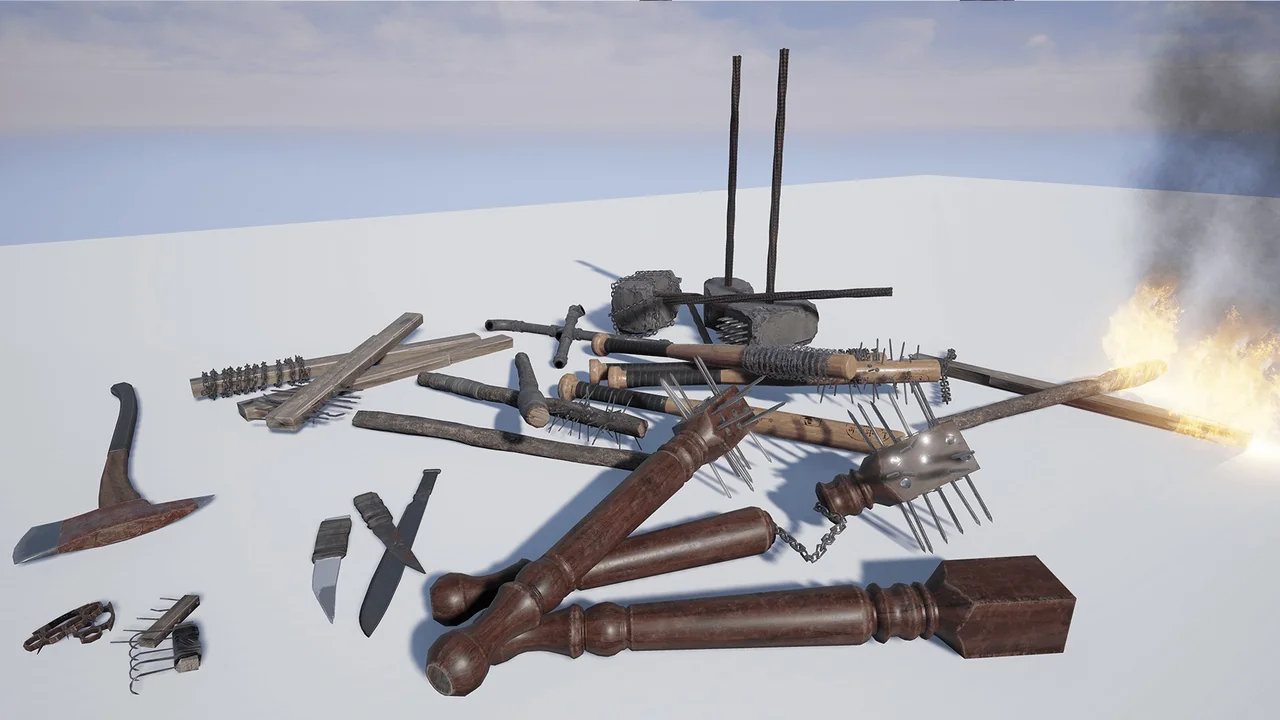
 Weapons & Combat
 Weapons & Combat
 Weapons & Combat