"7b46a695175d8694"{"id":"1001541","slug":"orc-collection","title":"Orc Collection","category":"Creatures \u0026 Monsters","engine":"4.18+,5.0+","assetVersion":"","engineVersion":"Engine Version: 4.18+,5.0+","tag":"Creatures","accent":"blue","visual":"character","summary":"A technical breakdown of the Orc Collection featuring five modular character models, Epic Skeleton rigs, texture setups, and engine cloth configurations.","platform":"Unreal Engine","publishedAt":"2026-10-09T17:34:05.651Z","updatedAt":"2026-10-09T17:34:05.651Z","sourceNotes":[],"fileContents":[],"compatibility":["Unreal Engine","Engine Version: 4.18+,5.0+"],"featuredImage":{"alt":"Orc Collection","src":"/wp-content/uploads/published/2026/10/9ff3bb5a9361-628d553e-be49-4cb9-9960-86f1d5ed21f2-13ae042025.webp"},"hasDownloadLink":true,"downloads":0,"terms":[{"taxonomy":"category","slug":"creatures-and-monsters","name":"Creatures \u0026 Monsters"}],"galleryImages":[{"src":"/wp-content/uploads/published/2026/10/a1b963793175-973172c3-2910-4cdf-acda-2fcf5b8794cd-5c3e289f09.webp","alt":"Orc Collection"},{"src":"/wp-content/uploads/published/2026/10/cd6d0c2560ea-be57dc32-bff2-4eac-a8b7-fc14207a5986-b39081d3ee.webp","alt":"Orc Collection"},{"src":"/wp-content/uploads/published/2026/10/d51fae7fc342-b1cfc4d7-f58b-43af-b2cc-80301665ba28-80ee134102.webp","alt":"Orc Collection"},{"src":"/wp-content/uploads/published/2026/10/375675648ec4-f6b8b636-fbee-496a-a2a6-97abcdbce8ec-e2151084cc.webp","alt":"Orc Collection"},{"src":"/wp-content/uploads/published/2026/10/e03eea969960-cb375920-d47f-4ccf-97a6-0e06e45b9422-871d83b5e1.webp","alt":"Orc Collection"},{"src":"/wp-content/uploads/published/2026/10/35817b8b1f16-7e47e9f7-aedb-4038-99fa-ea9817404ca4-12bf9723c5.webp","alt":"Orc Collection"},{"src":"/wp-content/uploads/published/2026/10/de7bee4e2df4-d055f13b-b7e7-4ab9-b6e8-a398c9a9020f-71801ba61c.webp","alt":"Orc Collection"},{"src":"/wp-content/uploads/published/2026/10/bc1400ab4771-3fabf9c1-951b-4673-9be6-6eb3763224de-474cedf9b2.webp","alt":"Orc Collection"},{"src":"/wp-content/uploads/published/2026/10/50c895ea2e16-e3e3355c-25ab-4d42-a85f-10ab17fa4bbf-4453528789.webp","alt":"Orc Collection"}],"accessPanel":{"kind":"resource","title":"Download this resource","eyebrow":"Free Download","message":"Log in or create a free account to start your download.","fileName":"Content.7z","safetyNote":"Resources are manually reviewed before listing to improve quality and reduce obvious risks.","actionLabel":"Download Free","resourceType":"Resource archive"},"contentHtml":"\u003ch2\u003eConstructing Fantasy Strongholds and Hostile Encounters\u003c/h2\u003e\u003cp\u003eDark fantasy dungeons, ruined medieval battlegrounds, and monster-infested forest trails rely heavily on imposing enemy archetypes. The Orc Collection delivers a cohesive faction of five distinct modular character models designed to fill frontlines, ranged outposts, and spellcasting backlines. Rather than relying on static single-mesh adversaries, the pack supplies specialized variations structured around modular equipment, dedicated material setups, and native rigging aligned with the Epic Skeleton. These assets allow developers to stage everything from standard tribal guards to terrifying boss-tier encounters across fantasy, horror, and medieval RPG projects.\u003c/p\u003e\u003ch2\u003eThe Vanguard: Orc Berserker and Orc Hunter Specs\u003c/h2\u003e\u003cp\u003eThe aggressive melee and ranged roles within the collection are spearheaded by the Orc Berserker and the Orc Hunter. Both models are modularly assembled, allowing armor, body elements, and secondary pieces to be adapted while retaining distinct silhouette profiles.\u003c/p\u003e\u003cp\u003eThe Orc Berserker features a dense, aggressive build tuned for close-quarters combat:\u003c/p\u003e\u003cul\u003e\u003cli\u003eFaces: 42,822\u003c/li\u003e\u003cli\u003eVertices: 50,864\u003c/li\u003e\u003cli\u003eTriangles: 85,015\u003c/li\u003e\u003cli\u003eMaterials: 20\u003c/li\u003e\u003cli\u003eMaterial Instances: 20\u003c/li\u003e\u003cli\u003eTexture Count: 53\u003c/li\u003e\u003cli\u003eRig: Epic Skeleton\u003c/li\u003e\u003c/ul\u003e\u003cp\u003eBy balancing 42,822 faces across 85,015 triangles, the Berserker provides high visual fidelity across musculature and armor without overwhelming real-time render pipelines. Its parity between master materials and material instances—20 of each—enables fine control over surface parameters across its 53 bundled textures.\u003c/p\u003e\u003cp\u003eRanged combat needs are handled by the Orc Hunter, which represents the highest geometric density in the entire roster:\u003c/p\u003e\u003cul\u003e\u003cli\u003eFaces: 70,225\u003c/li\u003e\u003cli\u003eVertices: 85,320\u003c/li\u003e\u003cli\u003eTriangles: 137,929\u003c/li\u003e\u003cli\u003eMaterials: 20\u003c/li\u003e\u003cli\u003eMaterial Instances: 18\u003c/li\u003e\u003cli\u003eTexture Count: 47\u003c/li\u003e\u003cli\u003eRig: Epic Skeleton\u003c/li\u003e\u003c/ul\u003e\u003cp\u003eCarrying 137,929 triangles and 85,320 vertices, the Orc Hunter accommodates detailed leather strapping, bow equipment, and modular hunting gear. Its visual presentation relies on 47 textures mapped across 20 core materials and 18 instances, maintaining material flexibility whether configured as an agile scout or a heavily geared elite archer.\u003c/p\u003e\u003ch2\u003eHeavy Armor and Core Infantry: Orc Tank and Base Modular Orc\u003c/h2\u003e\u003cp\u003eFrontline defense and versatile rank-and-file troops rely on the Orc Tank and the foundational Orc (Modular) asset. The Tank model is structured to absorb visual focus, acting as a defensive anchor or a designated boss creature within armored squads.\u003c/p\u003e\u003cp\u003eTechnical specifications for the Orc Tank (Modular) include:\u003c/p\u003e\u003cul\u003e\u003cli\u003eFaces: 46,688\u003c/li\u003e\u003cli\u003eVertices: 55,660\u003c/li\u003e\u003cli\u003eTriangles: 91,737\u003c/li\u003e\u003cli\u003eMaterials: 21\u003c/li\u003e\u003cli\u003eMaterial Instances: 19\u003c/li\u003e\u003cli\u003eTexture Count: 49\u003c/li\u003e\u003cli\u003eRig: Epic Skeleton\u003c/li\u003e\u003c/ul\u003e\u003cp\u003eThe Orc Tank leverages 91,737 triangles to define heavy armor plates and fortified defensive equipment. Its surface definition is driven by 49 individual textures linked to 21 materials and 19 instances, maintaining sharp fidelity during close-up camera angles and combat hit reactions.\u003c/p\u003e\u003cp\u003eServing as the baseline warrior of the clan, the standard Orc (Modular) carries a complex surface configuration:\u003c/p\u003e\u003cul\u003e\u003cli\u003eFaces: 62,736\u003c/li\u003e\u003cli\u003eVertices: 74,867\u003c/li\u003e\u003cli\u003eTriangles: 123,941\u003c/li\u003e\u003cli\u003eMaterials: 30\u003c/li\u003e\u003cli\u003eMaterial Instances: 21\u003c/li\u003e\u003cli\u003eTexture Count: 68\u003c/li\u003e\u003cli\u003eRig: Epic Skeleton\u003c/li\u003e\u003c/ul\u003e\u003cp\u003eWith 68 textures, 30 base materials, and 21 instances, the base Orc features the most extensive material variety in the pack. Its 123,941 triangles support a wide array of modular attachment points, enabling developers to build varied rank-and-file grunt armies without noticeable repetition.\u003c/p\u003e\u003ch2\u003eCloth Simulation Tuning for the Orc Warlock\u003c/h2\u003e\u003cp\u003eSpellcasting roles are fulfilled by the Orc Warlock (Modular), which brings arcane and dark fantasy elements into the pack with flowing garments and ritualistic gear:\u003c/p\u003e\u003cul\u003e\u003cli\u003eFaces: 38,759\u003c/li\u003e\u003cli\u003eVertices: 41,427\u003c/li\u003e\u003cli\u003eTriangles: 78,457\u003c/li\u003e\u003cli\u003eMaterials: 19\u003c/li\u003e\u003cli\u003eMaterial Instances: 15\u003c/li\u003e\u003cli\u003eTexture Count: 53\u003c/li\u003e\u003cli\u003eRig: Epic Skeleton\u003c/li\u003e\u003c/ul\u003e\u003cp\u003eWhile the Warlock is the leanest model geometrically at 78,457 triangles and 38,759 faces, dynamic garments introduce specific physics requirements between engine generations. In the 4th engine version, dynamic cloth runs smoothly under default settings without stability faults.\u003c/p\u003e\u003cp\u003eWhen working within the 5th engine version, dynamic cloth processing on the Orc Warlock can cause viewport stuttering or simulation slowdowns. Resolving this performance hitch requires opening the cloth simulation settings on the character mesh and reducing the Self Collision Thickness value. Lowering this collision parameter eliminates the physics calculation bottlenecks, restoring standard frame rates while preserving dynamic garment movement.\u003c/p\u003e\u003ch2\u003eManaging Map Folder Scenes and Viewport Performance\u003c/h2\u003e\u003cp\u003eThe collection provides preview environments organized inside dedicated Map folders. Developers can access a master Map folder that gathers the entire orc warband into a unified staging scene, as well as separate Map folders located within each individual character directory.\u003c/p\u003e\u003cp\u003eLoading the collective assembly scene can strain system resources on hardware that struggles with multiple high-density meshes running simultaneously in the viewport. When viewport frame rates drop or loading hangs occur in the master Map scene, opening the individual Map folders located inside each character directory resolves the issue. Staging models one at a time minimizes memory overhead, isolates material shaders during compilation, and ensures responsive performance when inspecting mesh topology or testing individual animation retargets.\u003c/p\u003e\u003ch2\u003eSkeleton Retargeting and Project Integration\u003c/h2\u003e\u003cp\u003eEvery character in the Orc Collection is rigged directly to the Epic Skeleton, simplifying the implementation process for animation pipelines. Standard locomotion sets, attack sequences, and combat state machines shaped by default animation blueprints can be assigned directly across the Berserker, Hunter, Tank, Warlock, and base Orc meshes without manual bone remapping. Projects spanning realistic action RPGs, medieval horde defense games, and creature-heavy boss encounters can deploy these modular fighters straight into active gameplay loops while utilizing the individual modular parts to generate broad visual variety across hostile factions.\u003c/p\u003e\n\n\u003ch2\u003eMore From The Same Workflow\u003c/h2\u003e\n\u003cul\u003e\n\u003cli\u003e\u003ca href=\"https://3dcghub.com/orc-warrior/\" title=\"Orc Warrior\"\u003eOrc Warrior\u003c/a\u003e\u003c/li\u003e\n\u003cli\u003e\u003ca href=\"https://3dcghub.com/otherside-beast/\" title=\"Otherside beast\"\u003eOtherside beast\u003c/a\u003e\u003c/li\u003e\n\u003cli\u003e\u003ca href=\"https://3dcghub.com/ork-rogue-2/\" title=\"Ork Rogue\"\u003eOrk Rogue\u003c/a\u003e\u003c/li\u003e\n\u003cli\u003e\u003ca href=\"https://3dcghub.com/monsters-wraith/\" title=\"Monsters - Wraith\"\u003eMonsters - Wraith\u003c/a\u003e\u003c/li\u003e\n\u003cli\u003e\u003ca href=\"https://3dcghub.com/ocean-monster-fish-pack-part-2-underwater-creatures-fish-low-poly-11/\" title=\"Ocean Monster Fish Pack - Part 2 - Underwater Creatures - Fish low poly - #11\"\u003eOcean Monster Fish Pack - Part 2 - Underwater Creatures - Fish low poly - #11\u003c/a\u003e\u003c/li\u003e\n\u003c/ul\u003e","contentTextLength":6274,"navigation":{"current":3,"total":3481,"previous":{"id":"1001542","slug":"niagara-toon-projectiles-2","title":"Niagara Toon Projectiles 2","category":"Spells \u0026 Combat","platform":"Unreal Engine","updatedAt":"2026-10-09T17:35:04.454Z"},"next":{"id":"1001540","slug":"niagara-ambiance-fx-pack-1","title":"Niagara Ambiance Fx Pack 1","category":"Game Development Resource","platform":"Unreal Engine","updatedAt":"2026-10-09T17:33:09.019Z"}},"relatedResources":[{"id":"1001005","slug":"orc-warrior","title":"Orc Warrior","category":"Creatures \u0026 Monsters","engine":"4.26+,5.0+","assetVersion":"","engineVersion":"Engine Version: 4.26+,5.0+","tag":"Creatures","accent":"blue","visual":"character","summary":"A rigged low-poly orc with a weapon, 11 animations, a control rig, plus 4096x4096 Color, Normal, and AORM textures for real-time fantasy work.","platform":"Unreal Engine","publishedAt":"2026-08-22T10:59:41.214Z","updatedAt":"2026-08-22T10:59:41.214Z","sourceNotes":[],"fileContents":[],"compatibility":["Unreal Engine","Engine Version: 4.26+,5.0+"],"featuredImage":{"alt":"Orc Warrior","src":"/wp-content/uploads/published/2026/08/07a81bcdb165-a721db55-38ea-4d04-a1d7-b62b48c726b0-dc71636e7b.webp"},"hasDownloadLink":true,"downloads":2},{"id":"2074","slug":"otherside-beast","title":"Otherside beast","category":"Creatures \u0026 Monsters","engine":"4.26+,5.0+","assetVersion":"Engine version: 4.26+,5.0+","engineVersion":"4.25","tag":"Creatures","accent":"blue","visual":"character","summary":"Enhance your horror or fantasy game with the Otherside Beasts collection. These 4K PBR creatures feature 18 animations and high-detail textures for immersive ga","platform":"Unreal Engine","publishedAt":"2026-02-06T23:08:25.000Z","updatedAt":"2026-04-19T15:58:25.000Z","sourceNotes":[],"fileContents":[],"compatibility":["Unreal Engine","Engine version: 4.26+,5.0+"],"featuredImage":{"alt":"Otherside beast","src":"https://3dcghub.com/wp-content/uploads/2026/02/54b25d13-7baf-4519-adac-9117da9f3cbf.webp"},"hasDownloadLink":true,"downloads":0},{"id":"1001006","slug":"ork-rogue-2","title":"Ork Rogue","category":"Creatures \u0026 Monsters","engine":"4.26+,5.0+","assetVersion":"","engineVersion":"Engine Version: 4.26+,5.0+","tag":"Creatures","accent":"blue","visual":"character","summary":"Ork Rogue is a ready-made lowpoly orc with a blueprint-connected weapon, 4096 to 512 UV sets, and poly counts suited for game projects.","platform":"Unreal Engine","publishedAt":"2026-08-22T11:04:26.209Z","updatedAt":"2026-08-22T11:04:26.209Z","sourceNotes":[],"fileContents":[],"compatibility":["Unreal Engine","Engine Version: 4.26+,5.0+"],"featuredImage":{"alt":"Ork Rogue","src":"/wp-content/uploads/published/2026/08/e1b3f07042d3-d3ef89db-f3ec-4c73-bddf-edba852e9eb8-e4e0eed622.webp"},"hasDownloadLink":true,"downloads":0}]}
Creatures
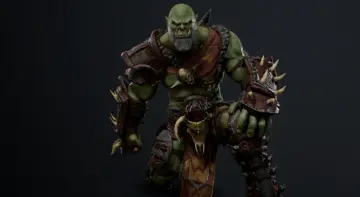
Orc Collection
A technical breakdown of the Orc Collection featuring five modular character models, Epic Skeleton rigs, texture setups, and engine cloth configurations.
Constructing Fantasy Strongholds and Hostile Encounters
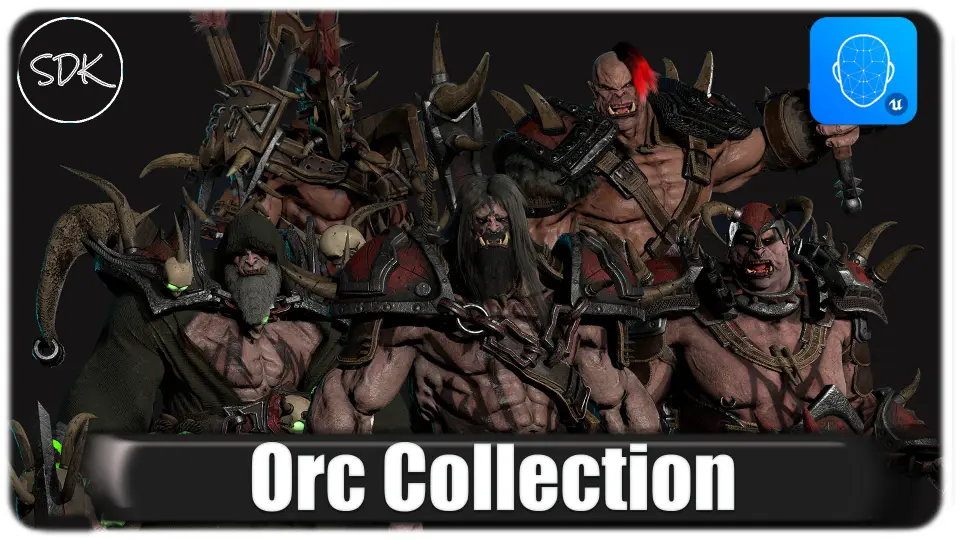
Dark fantasy dungeons, ruined medieval battlegrounds, and monster-infested forest trails rely heavily on imposing enemy archetypes. The Orc Collection delivers a cohesive faction of five distinct modular character models designed to fill frontlines, ranged outposts, and spellcasting backlines. Rather than relying on static single-mesh adversaries, the pack supplies specialized variations structured around modular equipment, dedicated material setups, and native rigging aligned with the Epic Skeleton. These assets allow developers to stage everything from standard tribal guards to terrifying boss-tier encounters across fantasy, horror, and medieval RPG projects.
The Vanguard: Orc Berserker and Orc Hunter Specs
The aggressive melee and ranged roles within the collection are spearheaded by the Orc Berserker and the Orc Hunter. Both models are modularly assembled, allowing armor, body elements, and secondary pieces to be adapted while retaining distinct silhouette profiles.
The Orc Berserker features a dense, aggressive build tuned for close-quarters combat:
Faces: 42,822
Vertices: 50,864
Triangles: 85,015
Materials: 20
Material Instances: 20
Texture Count: 53
Rig: Epic Skeleton
By balancing 42,822 faces across 85,015 triangles, the Berserker provides high visual fidelity across musculature and armor without overwhelming real-time render pipelines. Its parity between master materials and material instances—20 of each—enables fine control over surface parameters across its 53 bundled textures.
Ranged combat needs are handled by the Orc Hunter, which represents the highest geometric density in the entire roster:
Faces: 70,225
Vertices: 85,320
Triangles: 137,929
Materials: 20
Material Instances: 18
Texture Count: 47
Rig: Epic Skeleton
Carrying 137,929 triangles and 85,320 vertices, the Orc Hunter accommodates detailed leather strapping, bow equipment, and modular hunting gear. Its visual presentation relies on 47 textures mapped across 20 core materials and 18 instances, maintaining material flexibility whether configured as an agile scout or a heavily geared elite archer.
Heavy Armor and Core Infantry: Orc Tank and Base Modular Orc
Frontline defense and versatile rank-and-file troops rely on the Orc Tank and the foundational Orc (Modular) asset. The Tank model is structured to absorb visual focus, acting as a defensive anchor or a designated boss creature within armored squads.
Technical specifications for the Orc Tank (Modular) include:
Faces: 46,688
Vertices: 55,660
Triangles: 91,737
Materials: 21
Material Instances: 19
Texture Count: 49
Rig: Epic Skeleton
The Orc Tank leverages 91,737 triangles to define heavy armor plates and fortified defensive equipment. Its surface definition is driven by 49 individual textures linked to 21 materials and 19 instances, maintaining sharp fidelity during close-up camera angles and combat hit reactions.
Serving as the baseline warrior of the clan, the standard Orc (Modular) carries a complex surface configuration:
Faces: 62,736
Vertices: 74,867
Triangles: 123,941
Materials: 30
Material Instances: 21
Texture Count: 68
Rig: Epic Skeleton
With 68 textures, 30 base materials, and 21 instances, the base Orc features the most extensive material variety in the pack. Its 123,941 triangles support a wide array of modular attachment points, enabling developers to build varied rank-and-file grunt armies without noticeable repetition.
Cloth Simulation Tuning for the Orc Warlock
Spellcasting roles are fulfilled by the Orc Warlock (Modular), which brings arcane and dark fantasy elements into the pack with flowing garments and ritualistic gear:
Faces: 38,759
Vertices: 41,427
Triangles: 78,457
Materials: 19
Material Instances: 15
Texture Count: 53
Rig: Epic Skeleton
While the Warlock is the leanest model geometrically at 78,457 triangles and 38,759 faces, dynamic garments introduce specific physics requirements between engine generations. In the 4th engine version, dynamic cloth runs smoothly under default settings without stability faults.
When working within the 5th engine version, dynamic cloth processing on the Orc Warlock can cause viewport stuttering or simulation slowdowns. Resolving this performance hitch requires opening the cloth simulation settings on the character mesh and reducing the Self Collision Thickness value. Lowering this collision parameter eliminates the physics calculation bottlenecks, restoring standard frame rates while preserving dynamic garment movement.
Managing Map Folder Scenes and Viewport Performance
The collection provides preview environments organized inside dedicated Map folders. Developers can access a master Map folder that gathers the entire orc warband into a unified staging scene, as well as separate Map folders located within each individual character directory.
Loading the collective assembly scene can strain system resources on hardware that struggles with multiple high-density meshes running simultaneously in the viewport. When viewport frame rates drop or loading hangs occur in the master Map scene, opening the individual Map folders located inside each character directory resolves the issue. Staging models one at a time minimizes memory overhead, isolates material shaders during compilation, and ensures responsive performance when inspecting mesh topology or testing individual animation retargets.
Skeleton Retargeting and Project Integration
Every character in the Orc Collection is rigged directly to the Epic Skeleton, simplifying the implementation process for animation pipelines. Standard locomotion sets, attack sequences, and combat state machines shaped by default animation blueprints can be assigned directly across the Berserker, Hunter, Tank, Warlock, and base Orc meshes without manual bone remapping. Projects spanning realistic action RPGs, medieval horde defense games, and creature-heavy boss encounters can deploy these modular fighters straight into active gameplay loops while utilizing the individual modular parts to generate broad visual variety across hostile factions.
 Creatures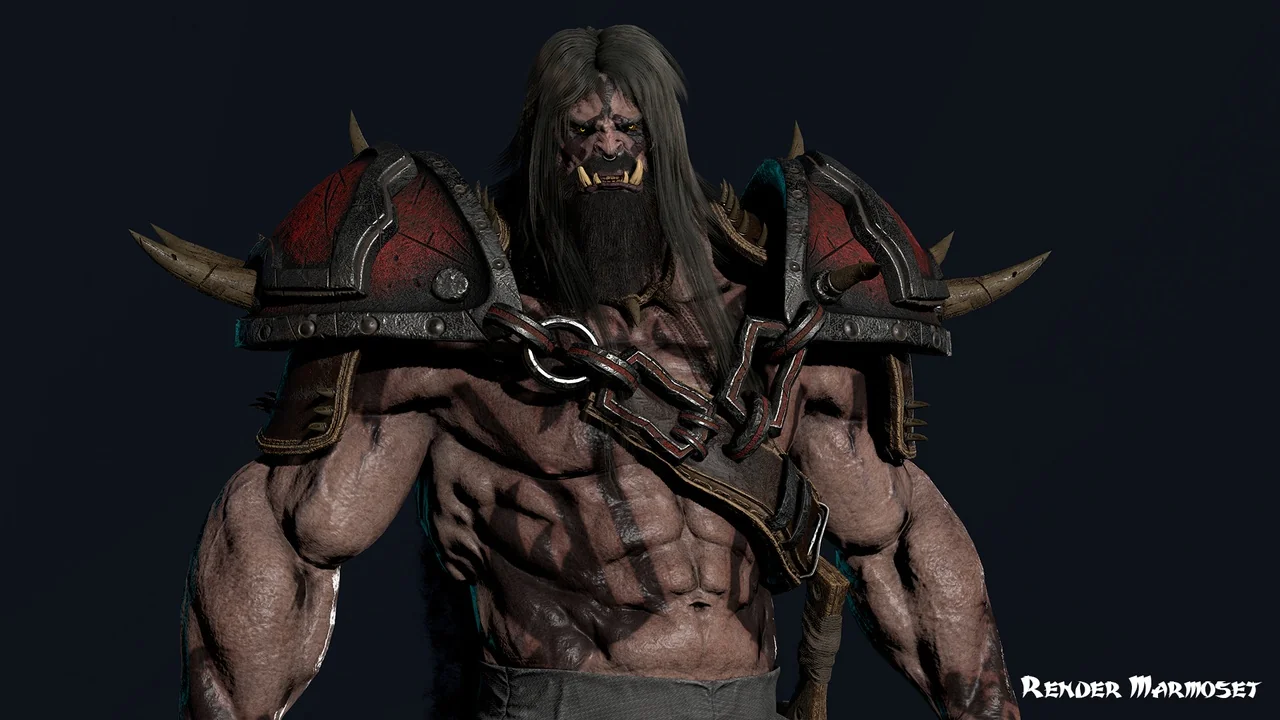
 Creatures
 Creatures
 Creatures