"1a0e4ac4dc71d030"{"id":"1000198","slug":"monsters-wraith","title":"Monsters - Wraith","category":"Creatures \u0026 Monsters","engine":"4.26+,5.0+","assetVersion":"","engineVersion":"Engine Version: 4.26+,5.0+","tag":"Creatures","accent":"blue","visual":"character","summary":"Monsters - Wraith brings a fully rigged horror character with 15 animations, retargeting support, 4K PBR textures, and three LOD stages.","platform":"Unreal Engine","publishedAt":"2026-06-23T11:17:03.690Z","updatedAt":"2026-06-23T11:17:03.690Z","sourceNotes":[],"fileContents":[],"compatibility":["Unreal Engine","Engine Version: 4.26+,5.0+"],"featuredImage":{"alt":"Monsters - Wraith","src":"/wp-content/uploads/published/2026/06/634d5e446402-356eea60-c9a0-47fa-a911-4eeaa36c9538-45f0eb0911.webp"},"hasDownloadLink":true,"downloads":1,"terms":[{"taxonomy":"category","slug":"creatures-and-monsters","name":"Creatures \u0026 Monsters"}],"galleryImages":[{"src":"/wp-content/uploads/published/2026/06/cb9c92cc98ee-5d67ec73-16ac-4ac0-b3a9-328707606dc0-5ff76934bd.webp","alt":"Monsters - Wraith"},{"src":"/wp-content/uploads/published/2026/06/6966120a59ad-ec94a193-451a-45fd-9178-1b8603384fb7-b42c9004c7.webp","alt":"Monsters - Wraith"},{"src":"/wp-content/uploads/published/2026/06/000d0ed6ff37-465c91f0-9712-4f77-861a-db3e49c6515a-1ffc576954.webp","alt":"Monsters - Wraith"},{"src":"/wp-content/uploads/published/2026/06/29db80cc5757-0a5a883e-a999-42ef-861c-98b73b5ef465-bfcc34e614.webp","alt":"Monsters - Wraith"},{"src":"/wp-content/uploads/published/2026/06/717312299148-1d232a2b-fa01-4431-9f87-4bac785fc6a3-599efc2220.webp","alt":"Monsters - Wraith"},{"src":"/wp-content/uploads/published/2026/06/7ba81d38ebd7-24876c31-0de8-420e-8db3-e0a6521d84d1-5fa7f297e3.webp","alt":"Monsters - Wraith"},{"src":"/wp-content/uploads/published/2026/06/7190e79ecdf7-ff5cb805-e42b-4f9a-aa89-bd4d2a9520c2-3f7f0f71e6.webp","alt":"Monsters - Wraith"},{"src":"/wp-content/uploads/published/2026/06/295435cc2995-2efdd0c6-1887-459a-a799-4671ffc57382-28e7622f51.webp","alt":"Monsters - Wraith"}],"accessPanel":{"kind":"resource","title":"Download this resource","eyebrow":"Free Download","message":"Log in or create a free account to start your download.","fileName":"Content.7z","safetyNote":"Resources are manually reviewed before listing to improve quality and reduce obvious risks.","actionLabel":"Download Free","resourceType":"Resource archive"},"contentHtml":"\u003cp\u003eGetting \u003cstrong\u003eMonsters - Wraith\u003c/strong\u003e Into production starts with a straightforward foundation: this is a fully rigged animated character with retargeting support and a set of 15 animations already in place. That immediately makes it easier to think in terms of scene blocking and encounter design rather than treating the creature as a static model. The asset is presented as a horrible wraith meant to populate a world, so its identity is not subtle. It belongs in spaces that need a threatening supernatural presence, whether that presence is constant in the background or saved for a more dramatic reveal.\u003c/p\u003e \u003cp\u003eThe character also arrives with an optimized polygon count across three LOD stages, which helps define how it can be placed and repeated in a project. Instead of being limited to a single hero shot, it has enough structure for broader world use. The technical side is paired with four different 4K PBR textures, giving the creature a visual base that fits horror and fantasy work while still leaving room for artists to decide how prominently it should read in a scene.\u003c/p\u003e \u003ch2\u003ePlacing Monsters - Wraith into a playable scene\u003c/h2\u003e\n\u003cp\u003eThe strongest implementation path for this asset begins with its role as an animated world inhabitant. Because the character is fully rigged and includes 15 animations, it can enter a scene as something active rather than decorative. That matters for pacing. A wraith can be used as a passing threat in a corridor, a spectral figure drifting through a ruined fantasy environment, or a more direct monster encounter where movement is central to the impression it leaves.\u003c/p\u003e \u003cp\u003eThe phrase “populate your world” points toward scale as much as atmosphere. This is not only a singular creature concept. It can support the feeling that a larger region is haunted, cursed, or occupied by hostile supernatural beings. A developer working on a horror setting could use the wraith to make empty spaces feel unstable. A fantasy project could position it as a death-themed enemy that changes the emotional tone of an area without requiring a completely different visual language from the rest of the world.\u003c/p\u003e \u003cp\u003eIts tags reinforce those uses. Horror, fantasy, ghost, death, monster, NPC, and boss all point to different placements along the same spectrum. The same creature can read as a roaming non-player enemy, a named encounter, or a larger set piece depending on how often it appears and how prominently it is framed. The asset’s structure supports that flexibility because it already combines rigging, animation, and material detail in one package.\u003c/p\u003e \u003ch2\u003eAnimations and Retargeting\u003c/h2\u003e\n\u003cp\u003eAnimation is where the character becomes more than a silhouette. \u003cstrong\u003eMonsters - Wraith\u003c/strong\u003e Includes 15 animations, giving it a practical movement library from the start. Even without naming each animation individually, that count signals a usable range of motion states not just one loop. For artists blocking a cinematic or developers shaping enemy behavior, that creates a better starting point for variety in presence and pacing.\u003c/p\u003e \u003cp\u003eRetargeting is also called out directly, and that makes the animation side more adaptable. The asset is not limited to one narrow presentation style if a project has a particular movement language it wants to preserve. Retargeting support gives teams a route to align the creature more closely with the rest of a production while still keeping the core identity of the wraith intact. For a creature asset, that is often the difference between something that only works as a showcase piece and something that can be integrated into a larger cast.\u003c/p\u003e \u003cp\u003eFrom a creative angle, the combination of a full rig and a 15-animation set helps the wraith fit several tones. It can function as a realistic monster presence because motion is essential to how supernatural creatures are perceived on screen. It can also lean harder into boss territory when those animations are used to emphasize anticipation, intimidation, or repetition in combat staging. The asset does not need to be locked into one interpretation. Its existing animation support gives developers room to decide how immediate or theatrical the creature should feel.\u003c/p\u003e \u003ch2\u003eLOD0, LOD1, and LOD2 polygon counts\u003c/h2\u003e\n\u003cp\u003eThe polygon structure is one of the clearest production-ready details in the asset. The character uses three LOD stages: \u003cstrong\u003eLOD0 at 15K tris\u003c/strong\u003e, \u003cstrong\u003eLOD1 at 9K tris\u003c/strong\u003e, and \u003cstrong\u003eLOD2 at 5K tris\u003c/strong\u003e. Those numbers matter because they show an intentional reduction path not just one dense mesh with no scaling strategy. For teams building playable spaces, that helps the creature function at different viewing distances without abandoning the original form entirely.\u003c/p\u003e \u003cp\u003eAt LOD0, the 15K triangle count gives the wraith its fullest on-screen presentation. That is the version to think about when the creature is near the camera or carrying a more important dramatic beat. LOD1 at 9K tris offers a middle step that keeps the character present while lowering complexity, which is useful when the wraith shifts from foreground threat to nearby environmental danger. LOD2 at 5K tris supports distance placement and wider scene dressing, making it easier to imagine several wraiths existing in the same world without every instance demanding the highest-detail presentation.\u003c/p\u003e \u003cp\u003eThis is where the “populate your world” concept becomes more practical. Optimized polygon counts and defined LOD stages support repetition and spread. A supernatural enemy often works best when it feels like part of a larger infestation or haunting rather than a one-off prop. The LOD breakdown gives developers a concrete way to think about that. It encourages the use of the character across a level or region instead of reserving it only for a single isolated room.\u003c/p\u003e \u003ch2\u003e4 different 4K PBR textures\u003c/h2\u003e\n\u003cp\u003eVisual variation comes from \u003cstrong\u003eFour different 4K PBR textures\u003c/strong\u003e. Even in a tightly themed creature asset, texture variety makes a difference because repetition can flatten tension. Four texture options give artists room to adjust how similar or distinct multiple wraiths should appear. If a project uses the creature as a recurring enemy, those textures can help prevent every appearance from reading as an exact duplicate at first glance.\u003c/p\u003e \u003cp\u003eThe 4K resolution also places emphasis on close visual presentation. A wraith is the kind of creature that often depends on surface impression as much as shape, especially in horror. PBR textures support a more grounded material response, which pairs naturally with the tags describing the asset as both realistic and horror-oriented. That does not force one art direction, but it does mean the character has a material setup intended to hold up under lighting rather than relying only on silhouette.\u003c/p\u003e \u003cp\u003eBecause there are four different textures rather than just one, the asset can work for both singular and repeated use. One version might be kept for a boss-like reveal while others are distributed across lesser encounters. In a fantasy scene, texture variety can also help suggest hierarchy or environmental influence without changing the core model. The character remains recognizable as the same kind of monster, but it does not have to appear visually identical every time it enters frame.\u003c/p\u003e \u003ch2\u003eHorror, ghost, NPC, and boss roles\u003c/h2\u003e\n\u003cp\u003eThe resource name gives the creature a direct identity, but its tags widen the way that identity can be applied. Horror and ghost establish its supernatural lane. Fantasy allows it to sit comfortably beside swords, ruins, dark magic, or death-themed regions. NPC and boss point toward two very different scales of use. That range is useful because not every project needs a wraith for the same reason.\u003c/p\u003e \u003cp\u003eAs an NPC-scale threat, the character can be part of ambient danger: a spectral enemy patrolling, appearing in waves, or filling out haunted spaces that would otherwise feel visually empty. As a boss, the same creature benefits from its full rig, animation support, and high-detail LOD0 presentation. The shift from common threat to featured encounter does not require a new asset identity. It only changes the staging around it.\u003c/p\u003e \u003cp\u003e\u003cstrong\u003eMonsters - Wraith\u003c/strong\u003e Is strongest when used as an active creature rather than a passive set dressing piece. The rig, the 15 animations, the retargeting note, the four 4K PBR textures, and the three optimized LOD stages all point in the same direction: this is a world-ready horror monster with enough flexibility to fill repeated enemy roles or carry a more singular supernatural moment.\u003c/p\u003e\n\n\u003ch2\u003eExplore Similar Assets\u003c/h2\u003e\n\u003cul\u003e\n\u003cli\u003e\u003ca href=\"https://3dcghub.com/demon-7/\" title=\"Demon 7\"\u003eDemon 7\u003c/a\u003e\u003c/li\u003e\n\u003cli\u003e\u003ca href=\"https://3dcghub.com/undead-knight/\" title=\"Undead Knight\"\u003eUndead Knight\u003c/a\u003e\u003c/li\u003e\n\u003cli\u003e\u003ca href=\"https://3dcghub.com/stylized-halloween-pack-2/\" title=\"Stylized Halloween Pack #2\"\u003eStylized Halloween Pack #2\u003c/a\u003e\u003c/li\u003e\n\u003cli\u003e\u003ca href=\"https://3dcghub.com/otherside-beast/\" title=\"Otherside beast\"\u003eOtherside beast\u003c/a\u003e\u003c/li\u003e\n\u003cli\u003e\u003ca href=\"https://3dcghub.com/ocean-monster-fish-pack-part-2-underwater-creatures-fish-low-poly-11/\" title=\"Ocean Monster Fish Pack - Part 2 - Underwater Creatures - Fish low poly - #11\"\u003eOcean Monster Fish Pack - Part 2 - Underwater Creatures - Fish low poly - #11\u003c/a\u003e\u003c/li\u003e\n\u003c/ul\u003e","contentTextLength":8542,"navigation":{"current":1104,"total":3200,"previous":{"id":"1000199","slug":"polygon-goblin-war-camp","title":"POLYGON - Goblin War Camp","category":"Towns \u0026 Villages","platform":"Unreal Engine","updatedAt":"2026-06-23T11:24:33.942Z"},"next":{"id":"1000197","slug":"modular-elf-archer-girl","title":"Modular Elf Archer Girl","category":"Humans","platform":"Unreal Engine","updatedAt":"2026-06-23T11:13:13.917Z"}},"relatedResources":[{"id":"1001005","slug":"orc-warrior","title":"Orc Warrior","category":"Creatures \u0026 Monsters","engine":"4.26+,5.0+","assetVersion":"","engineVersion":"Engine Version: 4.26+,5.0+","tag":"Creatures","accent":"blue","visual":"character","summary":"A rigged low-poly orc with a weapon, 11 animations, a control rig, plus 4096x4096 Color, Normal, and AORM textures for real-time fantasy work.","platform":"Unreal Engine","publishedAt":"2026-08-22T10:59:41.214Z","updatedAt":"2026-08-22T10:59:41.214Z","sourceNotes":[],"fileContents":[],"compatibility":["Unreal Engine","Engine Version: 4.26+,5.0+"],"featuredImage":{"alt":"Orc Warrior","src":"/wp-content/uploads/published/2026/08/07a81bcdb165-a721db55-38ea-4d04-a1d7-b62b48c726b0-dc71636e7b.webp"},"hasDownloadLink":true,"downloads":1},{"id":"1000084","slug":"ocean-monster-fish-pack-part-2-underwater-creatures-fish-low-poly-11","title":"Ocean Monster Fish Pack - Part 2 - Underwater Creatures - Fish low poly - #11","category":"Creatures \u0026 Monsters","engine":"Engine Version: 4.26+,5.0+","assetVersion":"Engine Version: 4.26+,5.0+","engineVersion":"","tag":"Creatures","accent":"blue","visual":"character","summary":"Five low poly underwater predators with 4K PBR textures and creature-specific animation sets for Unreal Engine 4.18+ and Unity 2019+.","platform":"Unreal Engine","publishedAt":"2026-06-05T16:10:19.047Z","updatedAt":"2026-06-05T16:10:19.047Z","sourceNotes":[],"fileContents":[],"compatibility":["Unreal Engine","Engine Version: 4.26+,5.0+"],"featuredImage":{"alt":"Ocean Monster Fish Pack - Part 2 - Underwater Creatures - Fish low poly - #11","src":"/wp-content/uploads/published/2026/06/b6571f02d880-f5259706-5176-48e5-9a7a-2b0dce6d60c0-f35957ada4.webp"},"hasDownloadLink":true,"downloads":0},{"id":"27567","slug":"demon-7","title":"Demon 7","category":"Creatures \u0026 Monsters","engine":"4.26+,5.0+","assetVersion":"Engine version: 4.26+,5.0+","engineVersion":"","tag":"Creatures","accent":"blue","visual":"character","summary":"Demon 7 is a demon character built on Epic Skeleton and set up for humanoid animation use. It combines a 4K PBR texture set with material color control, blood coating options, glow options, and a 25-animation package.","platform":"Unreal Engine","publishedAt":"2026-04-26T11:39:48.000Z","updatedAt":"2026-04-26T11:39:49.000Z","sourceNotes":[],"fileContents":[],"compatibility":["Unreal Engine","Engine version: 4.26+,5.0+"],"featuredImage":{"alt":"Demon 7","src":"https://3dcghub.com/wp-content/uploads/2026/04/f01254604ab1_687e78f7-350e-4bb4-99c5-e92514509100.webp"},"hasDownloadLink":true,"downloads":0}]}
Creatures
Monsters - Wraith
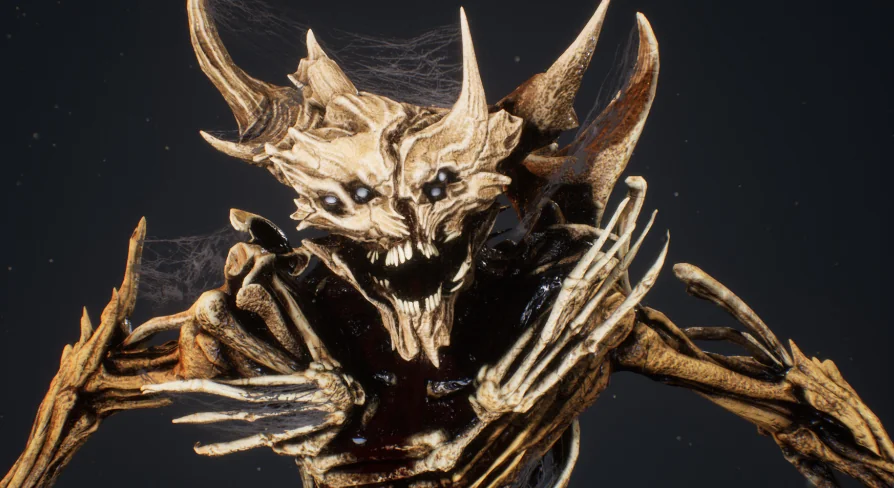
Monsters - Wraith brings a fully rigged horror character with 15 animations, retargeting support, 4K PBR textures, and three LOD stages.
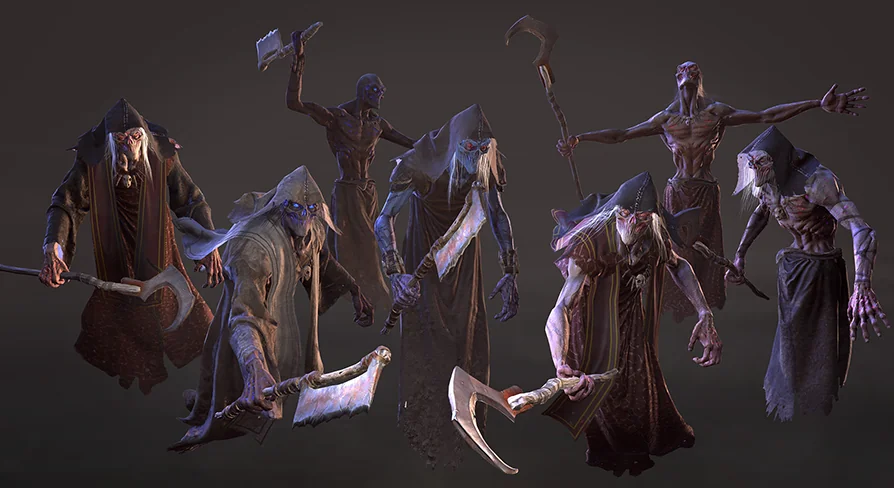
Getting Monsters - Wraith Into production starts with a straightforward foundation: this is a fully rigged animated character with retargeting support and a set of 15 animations already in place. That immediately makes it easier to think in terms of scene blocking and encounter design rather than treating the creature as a static model. The asset is presented as a horrible wraith meant to populate a world, so its identity is not subtle. It belongs in spaces that need a threatening supernatural presence, whether that presence is constant in the background or saved for a more dramatic reveal.
The character also arrives with an optimized polygon count across three LOD stages, which helps define how it can be placed and repeated in a project. Instead of being limited to a single hero shot, it has enough structure for broader world use. The technical side is paired with four different 4K PBR textures, giving the creature a visual base that fits horror and fantasy work while still leaving room for artists to decide how prominently it should read in a scene.
Placing Monsters - Wraith into a playable scene
The strongest implementation path for this asset begins with its role as an animated world inhabitant. Because the character is fully rigged and includes 15 animations, it can enter a scene as something active rather than decorative. That matters for pacing. A wraith can be used as a passing threat in a corridor, a spectral figure drifting through a ruined fantasy environment, or a more direct monster encounter where movement is central to the impression it leaves.
The phrase “populate your world” points toward scale as much as atmosphere. This is not only a singular creature concept. It can support the feeling that a larger region is haunted, cursed, or occupied by hostile supernatural beings. A developer working on a horror setting could use the wraith to make empty spaces feel unstable. A fantasy project could position it as a death-themed enemy that changes the emotional tone of an area without requiring a completely different visual language from the rest of the world.
Its tags reinforce those uses. Horror, fantasy, ghost, death, monster, NPC, and boss all point to different placements along the same spectrum. The same creature can read as a roaming non-player enemy, a named encounter, or a larger set piece depending on how often it appears and how prominently it is framed. The asset’s structure supports that flexibility because it already combines rigging, animation, and material detail in one package.
Animations and Retargeting
Animation is where the character becomes more than a silhouette. Monsters - Wraith Includes 15 animations, giving it a practical movement library from the start. Even without naming each animation individually, that count signals a usable range of motion states not just one loop. For artists blocking a cinematic or developers shaping enemy behavior, that creates a better starting point for variety in presence and pacing.
Retargeting is also called out directly, and that makes the animation side more adaptable. The asset is not limited to one narrow presentation style if a project has a particular movement language it wants to preserve. Retargeting support gives teams a route to align the creature more closely with the rest of a production while still keeping the core identity of the wraith intact. For a creature asset, that is often the difference between something that only works as a showcase piece and something that can be integrated into a larger cast.
From a creative angle, the combination of a full rig and a 15-animation set helps the wraith fit several tones. It can function as a realistic monster presence because motion is essential to how supernatural creatures are perceived on screen. It can also lean harder into boss territory when those animations are used to emphasize anticipation, intimidation, or repetition in combat staging. The asset does not need to be locked into one interpretation. Its existing animation support gives developers room to decide how immediate or theatrical the creature should feel.
LOD0, LOD1, and LOD2 polygon counts
The polygon structure is one of the clearest production-ready details in the asset. The character uses three LOD stages: LOD0 at 15K tris, LOD1 at 9K tris, and LOD2 at 5K tris. Those numbers matter because they show an intentional reduction path not just one dense mesh with no scaling strategy. For teams building playable spaces, that helps the creature function at different viewing distances without abandoning the original form entirely.
At LOD0, the 15K triangle count gives the wraith its fullest on-screen presentation. That is the version to think about when the creature is near the camera or carrying a more important dramatic beat. LOD1 at 9K tris offers a middle step that keeps the character present while lowering complexity, which is useful when the wraith shifts from foreground threat to nearby environmental danger. LOD2 at 5K tris supports distance placement and wider scene dressing, making it easier to imagine several wraiths existing in the same world without every instance demanding the highest-detail presentation.
This is where the “populate your world” concept becomes more practical. Optimized polygon counts and defined LOD stages support repetition and spread. A supernatural enemy often works best when it feels like part of a larger infestation or haunting rather than a one-off prop. The LOD breakdown gives developers a concrete way to think about that. It encourages the use of the character across a level or region instead of reserving it only for a single isolated room.
4 different 4K PBR textures
Visual variation comes from Four different 4K PBR textures. Even in a tightly themed creature asset, texture variety makes a difference because repetition can flatten tension. Four texture options give artists room to adjust how similar or distinct multiple wraiths should appear. If a project uses the creature as a recurring enemy, those textures can help prevent every appearance from reading as an exact duplicate at first glance.
The 4K resolution also places emphasis on close visual presentation. A wraith is the kind of creature that often depends on surface impression as much as shape, especially in horror. PBR textures support a more grounded material response, which pairs naturally with the tags describing the asset as both realistic and horror-oriented. That does not force one art direction, but it does mean the character has a material setup intended to hold up under lighting rather than relying only on silhouette.
Because there are four different textures rather than just one, the asset can work for both singular and repeated use. One version might be kept for a boss-like reveal while others are distributed across lesser encounters. In a fantasy scene, texture variety can also help suggest hierarchy or environmental influence without changing the core model. The character remains recognizable as the same kind of monster, but it does not have to appear visually identical every time it enters frame.
Horror, ghost, NPC, and boss roles
The resource name gives the creature a direct identity, but its tags widen the way that identity can be applied. Horror and ghost establish its supernatural lane. Fantasy allows it to sit comfortably beside swords, ruins, dark magic, or death-themed regions. NPC and boss point toward two very different scales of use. That range is useful because not every project needs a wraith for the same reason.
As an NPC-scale threat, the character can be part of ambient danger: a spectral enemy patrolling, appearing in waves, or filling out haunted spaces that would otherwise feel visually empty. As a boss, the same creature benefits from its full rig, animation support, and high-detail LOD0 presentation. The shift from common threat to featured encounter does not require a new asset identity. It only changes the staging around it.
Monsters - Wraith Is strongest when used as an active creature rather than a passive set dressing piece. The rig, the 15 animations, the retargeting note, the four 4K PBR textures, and the three optimized LOD stages all point in the same direction: this is a world-ready horror monster with enough flexibility to fill repeated enemy roles or carry a more singular supernatural moment.
 Creatures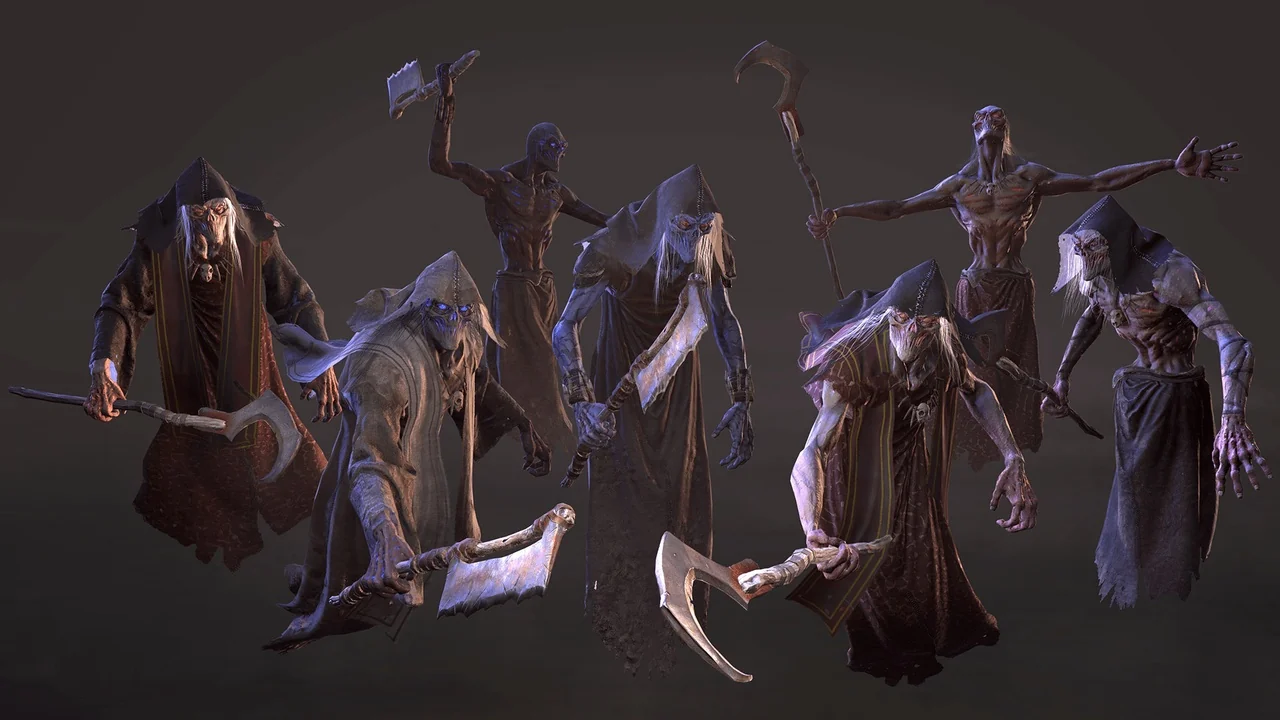
 Creatures
 Creatures
 Creatures