"b00678cacce53329"{"id":"1002819","slug":"niagara-effects05","title":"Niagara Effects05","category":"Variety","engine":"4.25+,5.0+","assetVersion":"","engineVersion":"Engine Version: 4.25+,5.0+","tag":"Variety","accent":"blue","visual":"mech","summary":"Examine Niagara Effects05 for Unreal Engine, featuring 12 Niagara particle systems, 48 materials, 19 meshes, and 44 textures for semi-realistic magic.","platform":"Unreal Engine","indexPolicy":"index","publishedAt":"2026-11-20T07:54:19.847Z","updatedAt":"2026-11-20T07:54:19.847Z","sourceNotes":[],"fileContents":[],"compatibility":["Unreal Engine","Engine Version: 4.25+,5.0+"],"featuredImage":{"alt":"Niagara Effects05","src":"/wp-content/uploads/published/2026/11/a677cd33b076-4c6988fc-45ab-448b-9a73-805b06395a17-5aed1c17d5.webp"},"fileSizeBytes":58390172,"hasDownloadLink":true,"downloads":0,"terms":[{"taxonomy":"category","slug":"variety-vfx","name":"Variety"}],"galleryImages":[{"src":"/wp-content/uploads/published/2026/11/9707e3a4ca85-2e067773-c9ba-432f-be07-c87b902c9769-38fb90e560.webp","alt":"Niagara Effects05"},{"src":"/wp-content/uploads/published/2026/11/f424bde78b7e-808f01cf-5238-402b-bc7c-9ca0fc28aa7a-452d82040b.webp","alt":"Niagara Effects05"},{"src":"/wp-content/uploads/published/2026/11/acdcea752c10-fc684c8f-563b-44e9-99f0-7e36874dcb36-d146117005.webp","alt":"Niagara Effects05"},{"src":"/wp-content/uploads/published/2026/11/4a6611ed10dc-704ec32c-bc6b-43b2-89ec-f4635f71a5df-bc7622aa5e.webp","alt":"Niagara Effects05"},{"src":"/wp-content/uploads/published/2026/11/8bc132487d4f-6ff830ee-273d-4fc3-9c95-06090ffc0f1e-6baf97c26b.webp","alt":"Niagara Effects05"},{"src":"/wp-content/uploads/published/2026/11/0553cf6e4e4d-8d2b6ec8-8ca5-4983-becd-0aee456316cd-bd1dc15fc0.webp","alt":"Niagara Effects05"},{"src":"/wp-content/uploads/published/2026/11/6e020a01bbaa-2d7f60af-df0f-489c-af13-11193660cb3b-d2d780ede5.webp","alt":"Niagara Effects05"},{"src":"/wp-content/uploads/published/2026/11/104d8d3b135f-21fcbe66-6407-4855-b1f1-26a365f014de-d605c3dda8.webp","alt":"Niagara Effects05"},{"src":"/wp-content/uploads/published/2026/11/e62424bcde56-80d1e28b-dac5-40db-b724-09ead05b2cbd-81f5d2dd56.webp","alt":"Niagara Effects05"},{"src":"/wp-content/uploads/published/2026/11/584a49b3ed5c-a096f53b-c237-436e-9f9f-2a8a7c96562e-ece49932a1.webp","alt":"Niagara Effects05"}],"accessPanel":{"kind":"resource","title":"Get this resource","safetyNote":"Resources are manually reviewed before listing to improve quality and reduce obvious risks.","fileName":"Content.7z","resourceType":"Resource archive","versions":[]},"contentHtml":"\u003ch2\u003eSemi-Realistic Magic in Fantasy Combat\u003c/h2\u003e\u003cp\u003eReal-time combat encounters in semi-realistic fantasy games rely heavily on visual cues that convey impact, element type, and physical force without breaking the visual coherence of the scene. Particle effects must balance distinct stylized silhouettes with subtle shading details to integrate properly into grounded environments. Niagara Effects05 occupies this exact space, supplying visual systems intended for spellcasting, elemental strikes, and melee weapon augmentation in semi-realistic game worlds.\u003c/p\u003e\u003cp\u003eWhen constructing fantasy action sequences, visual effects artists frequently require distinct behaviors for offensive bursts, environmental hazards, and ongoing protective barriers. Rather than relying on static or purely sprite-based visuals, projects turning to this collection gain access to systems that incorporate three-dimensional motion, directional slashes, and complex fluid-like energy flows. These elements work together to communicate mechanical states such as poison damage, electrical shock, frozen ground, or localized plasma discharge directly to the player during fast-paced play.\u003c/p\u003e\u003ch2\u003eNiagara Effects05 Combat and Spellcasting Systems\u003c/h2\u003e\u003cp\u003eThe core of Niagara Effects05 consists of twelve individual Niagara particle systems, each calibrated for specific spell types and kinetic feedback. These systems span offensive, defensive, and ambient combat roles:\u003c/p\u003e\u003cul\u003e\u003cli\u003e\u003cstrong\u003eP_FX_Spline01:\u003c/strong\u003e A system constructed to guide particle emission along a spline pathway, enabling guided projectile paths, swirling spell channels, or curving ambient energy trails.\u003c/li\u003e\u003cli\u003e\u003cstrong\u003eP_Ground_Impact01:\u003c/strong\u003e Tailored for heavy landings, earth-shattering strikes, or ground-targeted area spells that produce radial shockwaves and debris dispersion.\u003c/li\u003e\u003cli\u003e\u003cstrong\u003eP_Icicle_Effect01:\u003c/strong\u003e Simulates sharp crystalline cold magic, suitable for frost attacks, glacial shards, or piercing ice missiles.\u003c/li\u003e\u003cli\u003e\u003cstrong\u003eP_Lightning01:\u003c/strong\u003e Generates erratic high-voltage electrical arcs for direct strikes or discharging shock spells.\u003c/li\u003e\u003cli\u003e\u003cstrong\u003eP_Magical_Effect01:\u003c/strong\u003e Provides an all-purpose arcane discharge featuring glowing energy particles for general spell casting and bursts.\u003c/li\u003e\u003cli\u003e\u003cstrong\u003eP_Plasma01 and P_Plasma02:\u003c/strong\u003e Two distinct variations of high-intensity plasma energy, useful for concentrated magical beams, energy orbs, or sci-fantasy fusion magic.\u003c/li\u003e\u003cli\u003e\u003cstrong\u003eP_PoisonEffect01 and P_PoisonEffect02:\u003c/strong\u003e Toxic mist and venomous vapor simulations featuring differing densities and spread patterns for status effects and poison clouds.\u003c/li\u003e\u003cli\u003e\u003cstrong\u003eP_Slash_Blades_Effect01:\u003c/strong\u003e A kinetic melee arc effect delivering weapon trail visualization for bladed weapon swings or air-cleaving martial skills.\u003c/li\u003e\u003cli\u003e\u003cstrong\u003eP_Toon_Fire01:\u003c/strong\u003e A combustion system blending stylized flame shaping with responsive particle movement for fire-based attacks.\u003c/li\u003e\u003cli\u003e\u003cstrong\u003eP_Vortex_shield_Effect02:\u003c/strong\u003e A rotating barrier structure simulating a defensive energy vortex capable of enveloping a character or central ward.\u003c/li\u003e\u003c/ul\u003e\u003ch2\u003eTexture, Mesh, and Material Integration in Effects05\u003c/h2\u003e\u003cp\u003eThe visual quality of the twelve Niagara systems relies on a dedicated supporting library of static assets. Niagara Effects05 includes 48 materials, 19 meshes, and 44 textures that collectively drive particle rendering, alpha shaping, and mesh-based particle behavior.\u003c/p\u003e\u003cp\u003eMesh particles are essential for conveying physical substance within semi-realistic visuals. The 19 included meshes allow systems like the icicle burst, slashing blade trail, and vortex shield to push beyond simple camera-facing planar sprites. By binding particle emitters to true 3D forms, effects such as crystalline structures and sharp crescent slashes maintain correct perspective and volume regardless of camera angle. This geometric depth proves particularly vital in third-person action games where the camera rotates freely around dynamic spell effects.\u003c/p\u003e\u003cp\u003eThe package's 48 materials govern how energy, light, and transparency interact on those surfaces. Textures numbering 44 individual maps feed these materials with specialized noise patterns, gradient ramps, impact masks, and stylized smoke silhouettes. Through this material pipeline, effects like toon fire and plasma can utilize dynamic UV panning, emissive intensity shifts, and opacity masks to produce animated surface movement without inflating memory overhead through pre-baked flipbooks.\u003c/p\u003e\u003ch2\u003eThe Effects_Map Demonstration Environment\u003c/h2\u003e\u003cp\u003eEvaluating real-time VFX outside their target environment often leads to visibility issues and color mismatch. To resolve this, the package includes an environment labeled Effects_Map. This map acts as an organized staging ground where all twelve Niagara systems can be observed and adjusted under consistent lighting conditions.\u003c/p\u003e\u003cp\u003eWorking inside Effects_Map lets technical artists test performance, particle lifetime settings, and spawn rates side by side. Setting up new gameplay triggers or attaching particle components to character skeletons often requires a known baseline. By previewing P_Ground_Impact01 against the ground plane or checking the boundary readability of P_Vortex_shield_Effect02 within a calibrated space, developers can establish timing metrics before migrating elements into production levels.\u003c/p\u003e\u003ch2\u003eUnreal Engine 4 Niagara Beta Architecture\u003c/h2\u003e\u003cp\u003eNiagara Effects05 was authored within Unreal Engine 4 using the Niagara editor during its Beta phase. Epic Games originally noted that backward compatibility is not supported for assets built under beta features, and the underlying Niagara API remained subject to change or functional alterations across subsequent engine revisions.\u003c/p\u003e\u003cp\u003eFor production teams operating within legacy UE4 branches where Niagara was first introduced, these systems serve as ready examples of node-based particle logic, custom material parameters, and emitter staging. Studios maintaining custom engine builds from that era must account for API differences if upgrading to newer engine versions, ensuring that parameter bindings, module scripts, and emitter updates remain functional when translated past the beta implementation stage.\u003c/p\u003e\u003ch2\u003eImplementation Contexts for Real-Time Gameplay\u003c/h2\u003e\u003cp\u003eNiagara Effects05 is most applicable to independent developers, VFX artists, and technical designers building semi-realistic action RPGs, fantasy brawlers, or hero-based combat titles. Because the pack combines physical strikes like P_Slash_Blades_Effect01 with distinct elemental variants like frost, lightning, poison, and fire, it provides the fundamental toolset required to assemble a coherent magic system across multiple character classes.\u003c/p\u003e\n\n\u003ch2\u003eMore From The Same Workflow\u003c/h2\u003e\n\u003cul\u003e\n\u003cli\u003e\u003ca href=\"https://3dcghub.com/niagara-realistic-starter-vfx-pack/\" rel=\"noopener noreferrer\"\u003eNiagara Realistic Starter VFX Pack\u003c/a\u003e\u003c/li\u003e\n\u003cli\u003e\u003ca href=\"https://3dcghub.com/niagara-effects04/\" rel=\"noopener noreferrer\"\u003eNiagara Effects04\u003c/a\u003e\u003c/li\u003e\n\u003cli\u003e\u003ca href=\"https://3dcghub.com/niagara-effects03/\" rel=\"noopener noreferrer\"\u003eNiagara Effects03\u003c/a\u003e\u003c/li\u003e\n\u003cli\u003e\u003ca href=\"https://3dcghub.com/mixed-vfx-pack-3-niagara/\" rel=\"noopener noreferrer\"\u003eMixed Vfx Pack 3 (Niagara)\u003c/a\u003e\u003c/li\u003e\n\u003cli\u003e\u003ca href=\"https://3dcghub.com/niagara-constellations/\" rel=\"noopener noreferrer\"\u003eNiagara Constellations\u003c/a\u003e\u003c/li\u003e\n\u003c/ul\u003e","contentTextLength":6609,"navigation":{"current":61,"total":4797,"previous":{"id":"1002820","slug":"niagara-hologram-aura","title":"Niagara Hologram Aura","category":"Variety","platform":"Unreal Engine","updatedAt":"2026-11-20T07:55:15.549Z"},"next":{"id":"1002818","slug":"niagara-effects04","title":"Niagara Effects04","category":"Variety","platform":"Unreal Engine","updatedAt":"2026-11-20T07:53:31.055Z"}},"relatedResources":[{"id":"1002278","slug":"niagara-realistic-starter-vfx-pack","title":"Niagara Realistic Starter VFX Pack","category":"Variety","engine":"4.25+,5.0+","assetVersion":"","engineVersion":"Engine Version: 4.25+,5.0+","tag":"Variety","accent":"blue","visual":"mech","summary":"Examine the Niagara Realistic Starter VFX Pack, featuring 148 particle systems, transform-based scaling, and comprehensive environmental and combat effects.","platform":"Unreal Engine","indexPolicy":"index","publishedAt":"2026-10-29T16:36:27.991Z","updatedAt":"2026-10-29T16:36:27.991Z","sourceNotes":[],"fileContents":[],"compatibility":["Unreal Engine","Engine Version: 4.25+,5.0+"],"featuredImage":{"alt":"Niagara Realistic Starter VFX Pack","src":"/wp-content/uploads/published/2026/10/926adaa76d87-2c37688c-2dc0-4683-8cf4-d600fcea15d4-f5feac6fed.webp"},"fileSizeBytes":960341083,"hasDownloadLink":true,"downloads":2},{"id":"1002871","slug":"niagara-dissolution-examples","title":"Niagara Dissolution Examples","category":"Variety","engine":"4.26+,5.0+","assetVersion":"","engineVersion":"Engine Version: 4.26+,5.0+","tag":"Variety","accent":"blue","visual":"luts","summary":"Explore practical methods for static and skeletal mesh dissolution in Unreal Engine using Niagara particle systems, Blueprints, and Scene Capture 2D.","platform":"Unreal Engine","indexPolicy":"index","publishedAt":"2026-11-20T16:36:06.698Z","updatedAt":"2026-11-20T16:36:06.698Z","sourceNotes":[],"fileContents":[],"compatibility":["Unreal Engine","Engine Version: 4.26+,5.0+"],"featuredImage":{"alt":"Niagara Dissolution Examples","src":"/wp-content/uploads/published/2026/11/64b1ca88f365-f5399d97-8536-41d5-b3ea-1db17fa2985e-5d821fcbd2.webp"},"fileSizeBytes":239817559,"hasDownloadLink":true,"downloads":0},{"id":"1002868","slug":"fireworks-niagara-fx","title":"Fireworks Niagara FX","category":"Variety","engine":"4.25+,5.0+","assetVersion":"","engineVersion":"Engine Version: 4.25+,5.0+","tag":"Variety","accent":"blue","visual":"mech","summary":"Explore Fireworks Niagara FX, featuring nine shell types, direct and rocket spawn modes, customizable shape effects, and volumetric smoke illumination.","platform":"Unreal Engine","indexPolicy":"index","publishedAt":"2026-11-20T16:31:03.944Z","updatedAt":"2026-11-20T16:31:03.944Z","sourceNotes":[],"fileContents":[],"compatibility":["Unreal Engine","Engine Version: 4.25+,5.0+"],"featuredImage":{"alt":"Fireworks Niagara FX","src":"/wp-content/uploads/published/2026/11/45478d2360d8-3ed009ea-0797-411e-bf5d-e3d5ff0227aa-8c344bc6c5.webp"},"fileSizeBytes":36424846,"hasDownloadLink":true,"downloads":0}]}
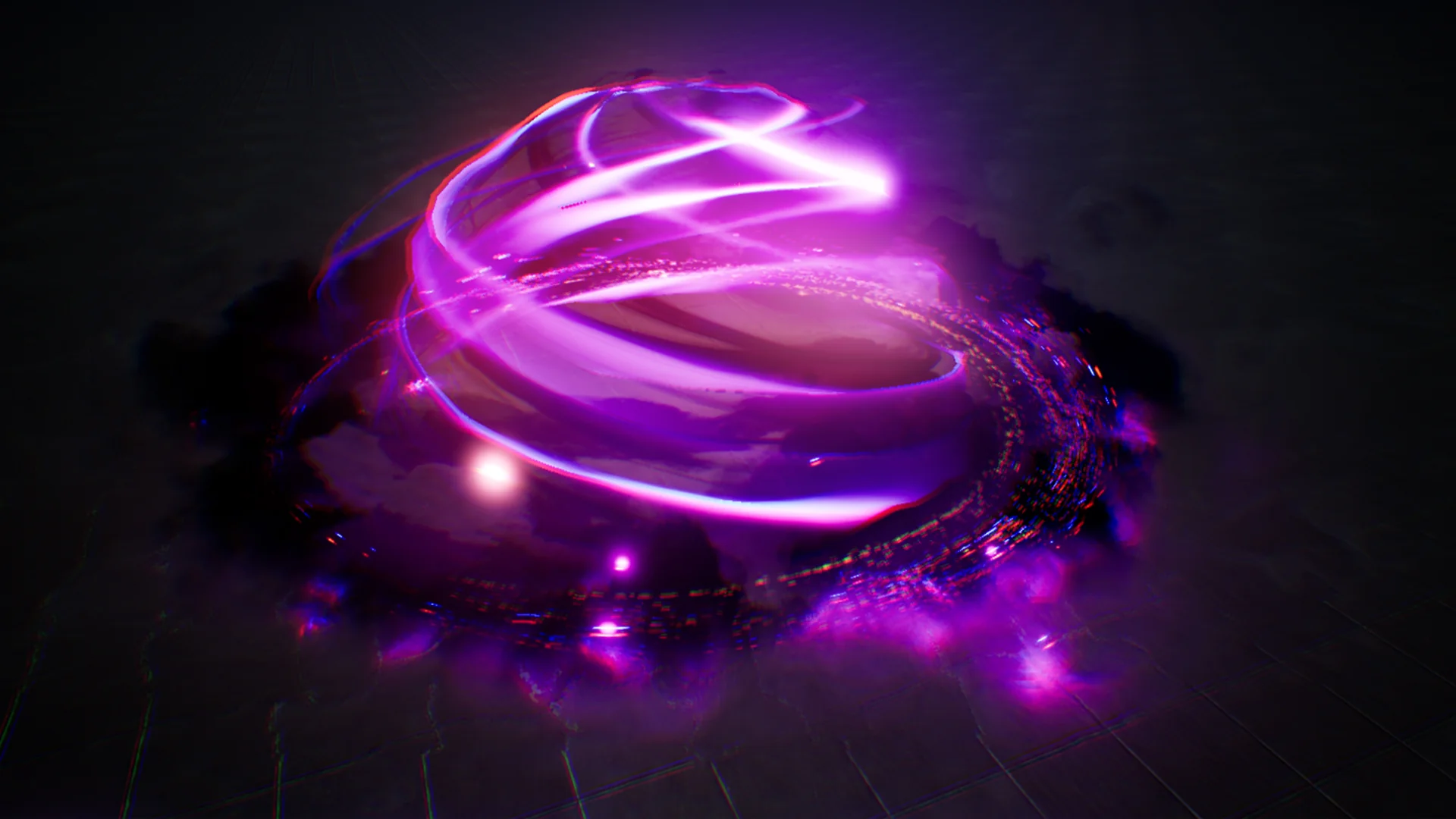
Resource screenshots
1 / 10
Join our channel
Follow 3DCGHUB on Telegram for new resource drops, migration updates, and community notices.
Real-time combat encounters in semi-realistic fantasy games rely heavily on visual cues that convey impact, element type, and physical force without breaking the visual coherence of the scene. Particle effects must balance distinct stylized silhouettes with subtle shading details to integrate properly into grounded environments. Niagara Effects05 occupies this exact space, supplying visual systems intended for spellcasting, elemental strikes, and melee weapon augmentation in semi-realistic game worlds.
When constructing fantasy action sequences, visual effects artists frequently require distinct behaviors for offensive bursts, environmental hazards, and ongoing protective barriers. Rather than relying on static or purely sprite-based visuals, projects turning to this collection gain access to systems that incorporate three-dimensional motion, directional slashes, and complex fluid-like energy flows. These elements work together to communicate mechanical states such as poison damage, electrical shock, frozen ground, or localized plasma discharge directly to the player during fast-paced play.
Niagara Effects05 Combat and Spellcasting Systems
The core of Niagara Effects05 consists of twelve individual Niagara particle systems, each calibrated for specific spell types and kinetic feedback. These systems span offensive, defensive, and ambient combat roles:
P_FX_Spline01: A system constructed to guide particle emission along a spline pathway, enabling guided projectile paths, swirling spell channels, or curving ambient energy trails.
P_Ground_Impact01: Tailored for heavy landings, earth-shattering strikes, or ground-targeted area spells that produce radial shockwaves and debris dispersion.
P_Icicle_Effect01: Simulates sharp crystalline cold magic, suitable for frost attacks, glacial shards, or piercing ice missiles.
P_Lightning01: Generates erratic high-voltage electrical arcs for direct strikes or discharging shock spells.
P_Magical_Effect01: Provides an all-purpose arcane discharge featuring glowing energy particles for general spell casting and bursts.
P_Plasma01 and P_Plasma02: Two distinct variations of high-intensity plasma energy, useful for concentrated magical beams, energy orbs, or sci-fantasy fusion magic.
P_PoisonEffect01 and P_PoisonEffect02: Toxic mist and venomous vapor simulations featuring differing densities and spread patterns for status effects and poison clouds.
P_Slash_Blades_Effect01: A kinetic melee arc effect delivering weapon trail visualization for bladed weapon swings or air-cleaving martial skills.
P_Toon_Fire01: A combustion system blending stylized flame shaping with responsive particle movement for fire-based attacks.
P_Vortex_shield_Effect02: A rotating barrier structure simulating a defensive energy vortex capable of enveloping a character or central ward.
Texture, Mesh, and Material Integration in Effects05
The visual quality of the twelve Niagara systems relies on a dedicated supporting library of static assets. Niagara Effects05 includes 48 materials, 19 meshes, and 44 textures that collectively drive particle rendering, alpha shaping, and mesh-based particle behavior.
Mesh particles are essential for conveying physical substance within semi-realistic visuals. The 19 included meshes allow systems like the icicle burst, slashing blade trail, and vortex shield to push beyond simple camera-facing planar sprites. By binding particle emitters to true 3D forms, effects such as crystalline structures and sharp crescent slashes maintain correct perspective and volume regardless of camera angle. This geometric depth proves particularly vital in third-person action games where the camera rotates freely around dynamic spell effects.
The package's 48 materials govern how energy, light, and transparency interact on those surfaces. Textures numbering 44 individual maps feed these materials with specialized noise patterns, gradient ramps, impact masks, and stylized smoke silhouettes. Through this material pipeline, effects like toon fire and plasma can utilize dynamic UV panning, emissive intensity shifts, and opacity masks to produce animated surface movement without inflating memory overhead through pre-baked flipbooks.
The Effects_Map Demonstration Environment
Evaluating real-time VFX outside their target environment often leads to visibility issues and color mismatch. To resolve this, the package includes an environment labeled Effects_Map. This map acts as an organized staging ground where all twelve Niagara systems can be observed and adjusted under consistent lighting conditions.
Working inside Effects_Map lets technical artists test performance, particle lifetime settings, and spawn rates side by side. Setting up new gameplay triggers or attaching particle components to character skeletons often requires a known baseline. By previewing P_Ground_Impact01 against the ground plane or checking the boundary readability of P_Vortex_shield_Effect02 within a calibrated space, developers can establish timing metrics before migrating elements into production levels.
Unreal Engine 4 Niagara Beta Architecture
Niagara Effects05 was authored within Unreal Engine 4 using the Niagara editor during its Beta phase. Epic Games originally noted that backward compatibility is not supported for assets built under beta features, and the underlying Niagara API remained subject to change or functional alterations across subsequent engine revisions.
For production teams operating within legacy UE4 branches where Niagara was first introduced, these systems serve as ready examples of node-based particle logic, custom material parameters, and emitter staging. Studios maintaining custom engine builds from that era must account for API differences if upgrading to newer engine versions, ensuring that parameter bindings, module scripts, and emitter updates remain functional when translated past the beta implementation stage.
Implementation Contexts for Real-Time Gameplay
Niagara Effects05 is most applicable to independent developers, VFX artists, and technical designers building semi-realistic action RPGs, fantasy brawlers, or hero-based combat titles. Because the pack combines physical strikes like P_Slash_Blades_Effect01 with distinct elemental variants like frost, lightning, poison, and fire, it provides the fundamental toolset required to assemble a coherent magic system across multiple character classes.
 Variety
 Variety
 Variety