"b00678cacce53329"{"id":"1002817","slug":"niagara-effects03","title":"Niagara Effects03","category":"Variety","engine":"4.23+,5.0+","assetVersion":"","engineVersion":"Engine Version: 4.23+,5.0+","tag":"Variety","accent":"blue","visual":"mech","summary":"Examine Niagara Effects03 for Unreal Engine 4, covering its advanced particle systems, accompanying materials, and beta-era API considerations.","platform":"Unreal Engine","indexPolicy":"index","publishedAt":"2026-11-20T07:52:25.132Z","updatedAt":"2026-11-20T07:52:25.132Z","sourceNotes":[],"fileContents":[],"compatibility":["Unreal Engine","Engine Version: 4.23+,5.0+"],"featuredImage":{"alt":"Niagara Effects03","src":"/wp-content/uploads/published/2026/11/b515a2536fe9-6a50c5d8-4027-4c55-bfe5-323b46e8e11b-d9a26c9876.webp"},"fileSizeBytes":338042926,"hasDownloadLink":true,"downloads":0,"terms":[{"taxonomy":"category","slug":"variety-vfx","name":"Variety"}],"galleryImages":[{"src":"/wp-content/uploads/published/2026/11/04d02c34ec4a-98a37518-03ce-4b0d-bd6b-ed55d5655631-277cd2e5d2.webp","alt":"Niagara Effects03"},{"src":"/wp-content/uploads/published/2026/11/4c0792de54ed-d15d5911-08c6-4442-9e23-1d2bc5b20068-b6604a46ee.webp","alt":"Niagara Effects03"},{"src":"/wp-content/uploads/published/2026/11/ec09bb3bc8b0-8b7d85d7-3174-4afd-a92c-af1130188690-85bb9f3431.webp","alt":"Niagara Effects03"},{"src":"/wp-content/uploads/published/2026/11/e554acadb819-bace7716-aa08-4f98-a7e5-c778fa37d472-1b1bc47d8e.webp","alt":"Niagara Effects03"},{"src":"/wp-content/uploads/published/2026/11/b4c1420715ae-88973fd1-d0da-4203-a051-2e03b81c36d5-31ecd6e6b1.webp","alt":"Niagara Effects03"},{"src":"/wp-content/uploads/published/2026/11/9cc5f90605c3-154a2eec-7852-4161-9341-63e9d008dd5f-bf849ef3d3.webp","alt":"Niagara Effects03"},{"src":"/wp-content/uploads/published/2026/11/fdc1fdea855e-bb577d16-5823-4596-afe4-47c6f6097857-c7e51f465b.webp","alt":"Niagara Effects03"},{"src":"/wp-content/uploads/published/2026/11/f979d5a0faea-8709ca03-5503-48d7-a343-f72c4cdd3caf-9510f60fc3.webp","alt":"Niagara Effects03"},{"src":"/wp-content/uploads/published/2026/11/636d735eddb7-88d23cd9-8466-476c-b3ff-c5aa9287f655-fbf60b14b5.webp","alt":"Niagara Effects03"}],"accessPanel":{"kind":"resource","title":"Get this resource","safetyNote":"Resources are manually reviewed before listing to improve quality and reduce obvious risks.","fileName":"Content.7z","resourceType":"Resource archive","versions":[]},"contentHtml":"\u003ch2\u003eAdvanced Particle Motion in Niagara Effects03\u003c/h2\u003e\n\u003cp\u003eReal-time visual effects depend on the precise coordination of emitter math, spatial forces, and particle lifespans. Niagara Effects03 operates within Unreal Engine's Niagara visual effects architecture, deploying advanced particle systems structured around modular simulation stacks. Rather than relying on rigid, pre-baked animation cycles, the systems use Niagara's node-based logic to regulate spawn counts, velocity vectors, directional acceleration, and particle boundaries directly within the scene coordinate space.\u003c/p\u003e\n\u003cp\u003eBecause the pack focuses on advanced particle behaviors, the systems manage complex motion paths and high-density simulation data. Dynamic forces within each emitter govern how individual particles interact with world parameters, adjusting travel speed, drag, and dissipation over their lifespans. Controlling visual effects through granular system parameters allows technical artists to tune density, scale, and dispersal patterns to suit distinct environmental scales, whether framing tight cinematic sequences or broad atmospheric events across a level.\u003c/p\u003e\n\u003cp\u003eSystem-level configuration also dictates how separate particle emitters synchronize with one another. In complex real-time setups, an effect rarely consists of a single isolated burst. Instead, secondary emitters trigger based on primary particle lifetimes, velocity thresholds, or termination events. Niagara Effects03 builds on this multi-emitter paradigm, executing layered particle visual effects that rely on strict module hierarchies to keep systemic overhead predictable during active runtime playback.\u003c/p\u003e \u003ch2\u003eMaterial Systems within Niagara Effects03 Pipeline\u003c/h2\u003e\n\u003cp\u003eA particle simulation relies entirely on shading networks to establish its final visual identity on screen. Niagara Effects03 couples its advanced particle systems with dedicated materials designed to interpret continuous simulation data. These materials receive variable feeds from Niagara module parameters, translating numbers like normalized particle age, dynamic parameter curves, velocity vectors, and opacity curves into concrete surface rendering.\u003c/p\u003e\n\u003cp\u003eThe materials included in the pack interface directly with system-level particle attributes. When a Niagara emitter updates particle attributes on the CPU or GPU, the attached material evaluates those values per vertex or per pixel. This communication enables smooth transitions across an effect's lifespan, shifting coloration, masking erosion thresholds, and tuning emissive brightness without introducing hitching or shader execution bottlenecks. Coordinated material setups ensure that high-velocity bursts or slow-moving dissipation phases maintain visual fidelity regardless of viewing distance.\u003c/p\u003e\n\u003cp\u003eHandling dynamic visual effects through custom materials also provides greater control over scene blending. Transparent and additive rendering states require deliberate balancing to prevent overdraw penalties in performance-critical scenes. The materials packaged in Niagara Effects03 are calibrated against the particle system's emission rates, ensuring that dense particle clusters maintain appropriate visual depth without collapsing into solid color washouts or overloading render passes.\u003c/p\u003e \u003ch2\u003eUE4 Beta Framework Constraints and API Lifecycle\u003c/h2\u003e\n\u003cp\u003eTechnical evaluation of Niagara Effects03 requires an understanding of its underlying development environment. This product was built using the Niagara feature while it was still classified as a Beta toolset in Unreal Engine 4. Engine tools in beta undergo continuous architectural refactoring, meaning that foundational classes, namespace declarations, and execution nodes can shift considerably between sequential engine builds.\u003c/p\u003e\n\u003cp\u003eEpic Games explicitly states that backward compatibility is not supported for assets built under beta features. As development on the engine progresses, legacy APIs remain subject to fundamental revisions, refactoring, and outright removal at Epic's discretion. When importing a beta-built Niagara system into an evolving production environment, developers must account for the fact that underlying parameter names, script interfaces, and emitter modules may not automatically translate into newer engine versions.\u003c/p\u003e\n\u003cp\u003eThis technical boundary places specific maintenance requirements on production teams. An asset pack constructed during the beta phase of UE4 Niagara relies on specific data layouts that existed at that precise point in the engine's development. If an update eliminates a specific calculation node or alters the way particle attributes pass from emitter graphs to render modules, the affected systems will require manual auditing and graph updates to remain functional.\u003c/p\u003e \u003ch2\u003eCompatibility Management and Production Stability\u003c/h2\u003e\n\u003cp\u003eIntegrating assets with beta heritage into active production pipelines requires methodical verification. Rather than introducing Niagara Effects03 straight into primary level maps or shared project branches, establishing an isolated staging environment is the safest path forward. Setting up a dedicated test sandbox allows technical artists to verify that every emitter script, system parameter, and material assignment compiles cleanly under the studio's designated engine version.\u003c/p\u003e\n\u003cp\u003eInspecting the emitter stack in the Niagara Editor helps identify any obsolete nodes or broken module dependencies. In instances where the host engine version has changed or deprecated functions present in the asset's original beta implementation, developers must replace outdated math operations with their modern, stable equivalents. Verifying parameter mappings between the particle systems and accompanying materials ensures that dynamic inputs continue to drive shader properties as intended.\u003c/p\u003e\n\u003cp\u003eEvaluating simulation cost is equally critical when adapting beta-era visual effects systems. While the Niagara architecture provides exceptional control over system mechanics, older module setups may not take full advantage of subsequent GPU compute optimizations or modern data-pruning techniques. Profiling emitter performance, draw calls, and vertex overhead within target lighting environments ensures that Niagara Effects03 runs predictably alongside gameplay mechanics, physics calculations, and broad level geometry.\u003c/p\u003e\n\n\u003ch2\u003eMore From The Same Workflow\u003c/h2\u003e\n\u003cul\u003e\n\u003cli\u003e\u003ca href=\"https://3dcghub.com/niagara-realistic-starter-vfx-pack/\" rel=\"noopener noreferrer\"\u003eNiagara Realistic Starter VFX Pack\u003c/a\u003e\u003c/li\u003e\n\u003cli\u003e\u003ca href=\"https://3dcghub.com/mixed-vfx-pack-3-niagara/\" rel=\"noopener noreferrer\"\u003eMixed Vfx Pack 3 (Niagara)\u003c/a\u003e\u003c/li\u003e\n\u003cli\u003e\u003ca href=\"https://3dcghub.com/niagara-constellations/\" rel=\"noopener noreferrer\"\u003eNiagara Constellations\u003c/a\u003e\u003c/li\u003e\n\u003cli\u003e\u003ca href=\"https://3dcghub.com/mixed-vfx-pack-4-niagara/\" rel=\"noopener noreferrer\"\u003eMixed Vfx Pack 4 (Niagara)\u003c/a\u003e\u003c/li\u003e\n\u003cli\u003e\u003ca href=\"https://3dcghub.com/rock-fall-niagara-with-sound/\" rel=\"noopener noreferrer\"\u003eRock Fall Niagara with Sound\u003c/a\u003e\u003c/li\u003e\n\u003c/ul\u003e","contentTextLength":6428,"navigation":{"current":63,"total":4797,"previous":{"id":"1002818","slug":"niagara-effects04","title":"Niagara Effects04","category":"Variety","platform":"Unreal Engine","updatedAt":"2026-11-20T07:53:31.055Z"},"next":{"id":"1002816","slug":"niagara-effects","title":"Niagara Effects","category":"Spells \u0026 Combat","platform":"Unreal Engine","updatedAt":"2026-11-20T07:51:27.842Z"}},"relatedResources":[{"id":"1002278","slug":"niagara-realistic-starter-vfx-pack","title":"Niagara Realistic Starter VFX Pack","category":"Variety","engine":"4.25+,5.0+","assetVersion":"","engineVersion":"Engine Version: 4.25+,5.0+","tag":"Variety","accent":"blue","visual":"mech","summary":"Examine the Niagara Realistic Starter VFX Pack, featuring 148 particle systems, transform-based scaling, and comprehensive environmental and combat effects.","platform":"Unreal Engine","indexPolicy":"index","publishedAt":"2026-10-29T16:36:27.991Z","updatedAt":"2026-10-29T16:36:27.991Z","sourceNotes":[],"fileContents":[],"compatibility":["Unreal Engine","Engine Version: 4.25+,5.0+"],"featuredImage":{"alt":"Niagara Realistic Starter VFX Pack","src":"/wp-content/uploads/published/2026/10/926adaa76d87-2c37688c-2dc0-4683-8cf4-d600fcea15d4-f5feac6fed.webp"},"fileSizeBytes":960341083,"hasDownloadLink":true,"downloads":2},{"id":"1002871","slug":"niagara-dissolution-examples","title":"Niagara Dissolution Examples","category":"Variety","engine":"4.26+,5.0+","assetVersion":"","engineVersion":"Engine Version: 4.26+,5.0+","tag":"Variety","accent":"blue","visual":"luts","summary":"Explore practical methods for static and skeletal mesh dissolution in Unreal Engine using Niagara particle systems, Blueprints, and Scene Capture 2D.","platform":"Unreal Engine","indexPolicy":"index","publishedAt":"2026-11-20T16:36:06.698Z","updatedAt":"2026-11-20T16:36:06.698Z","sourceNotes":[],"fileContents":[],"compatibility":["Unreal Engine","Engine Version: 4.26+,5.0+"],"featuredImage":{"alt":"Niagara Dissolution Examples","src":"/wp-content/uploads/published/2026/11/64b1ca88f365-f5399d97-8536-41d5-b3ea-1db17fa2985e-5d821fcbd2.webp"},"fileSizeBytes":239817559,"hasDownloadLink":true,"downloads":0},{"id":"1002868","slug":"fireworks-niagara-fx","title":"Fireworks Niagara FX","category":"Variety","engine":"4.25+,5.0+","assetVersion":"","engineVersion":"Engine Version: 4.25+,5.0+","tag":"Variety","accent":"blue","visual":"mech","summary":"Explore Fireworks Niagara FX, featuring nine shell types, direct and rocket spawn modes, customizable shape effects, and volumetric smoke illumination.","platform":"Unreal Engine","indexPolicy":"index","publishedAt":"2026-11-20T16:31:03.944Z","updatedAt":"2026-11-20T16:31:03.944Z","sourceNotes":[],"fileContents":[],"compatibility":["Unreal Engine","Engine Version: 4.25+,5.0+"],"featuredImage":{"alt":"Fireworks Niagara FX","src":"/wp-content/uploads/published/2026/11/45478d2360d8-3ed009ea-0797-411e-bf5d-e3d5ff0227aa-8c344bc6c5.webp"},"fileSizeBytes":36424846,"hasDownloadLink":true,"downloads":0}]}
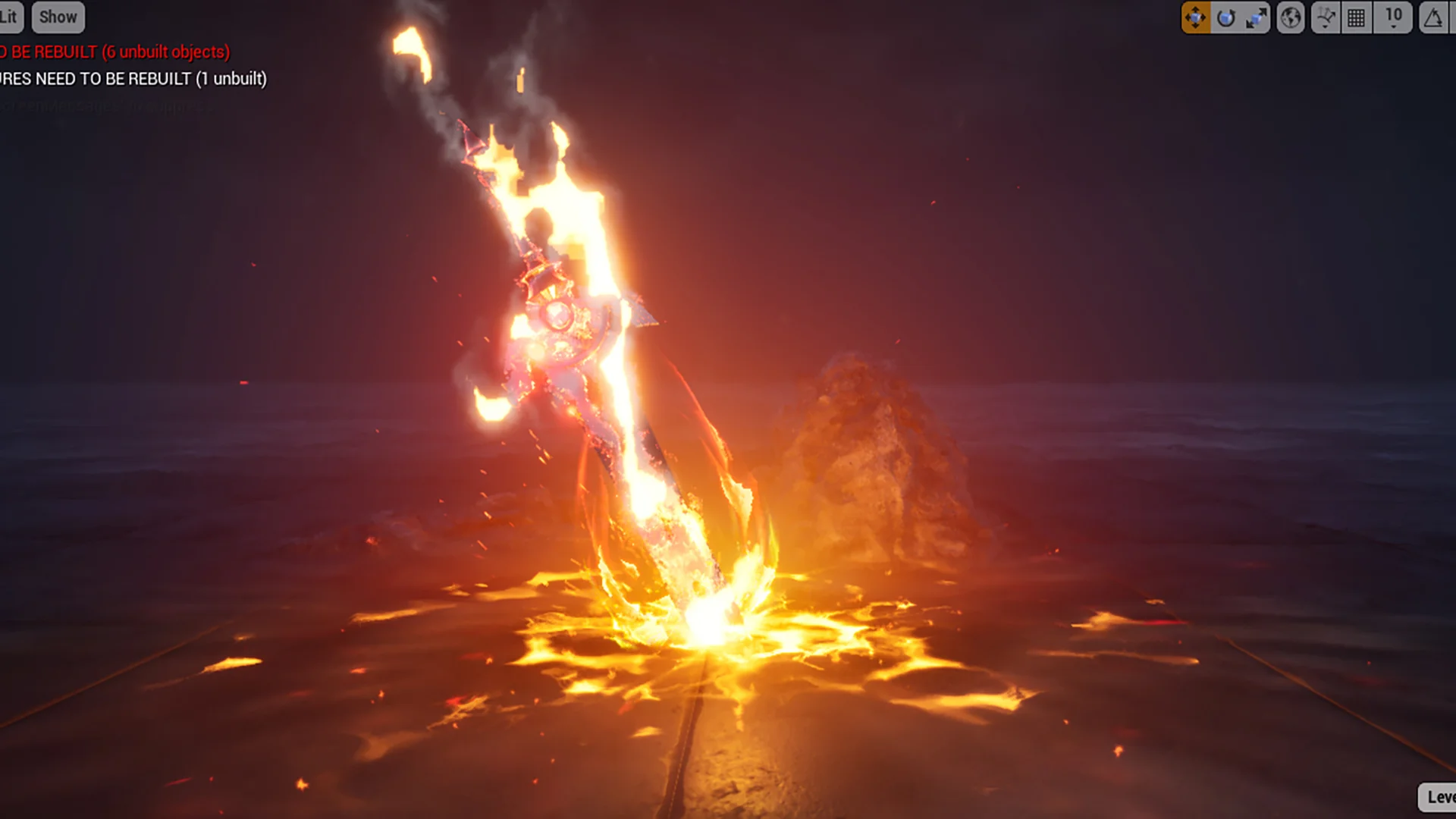
Resource screenshots
1 / 9
Join our channel
Follow 3DCGHUB on Telegram for new resource drops, migration updates, and community notices.
Real-time visual effects depend on the precise coordination of emitter math, spatial forces, and particle lifespans. Niagara Effects03 operates within Unreal Engine's Niagara visual effects architecture, deploying advanced particle systems structured around modular simulation stacks. Rather than relying on rigid, pre-baked animation cycles, the systems use Niagara's node-based logic to regulate spawn counts, velocity vectors, directional acceleration, and particle boundaries directly within the scene coordinate space.
Because the pack focuses on advanced particle behaviors, the systems manage complex motion paths and high-density simulation data. Dynamic forces within each emitter govern how individual particles interact with world parameters, adjusting travel speed, drag, and dissipation over their lifespans. Controlling visual effects through granular system parameters allows technical artists to tune density, scale, and dispersal patterns to suit distinct environmental scales, whether framing tight cinematic sequences or broad atmospheric events across a level.
System-level configuration also dictates how separate particle emitters synchronize with one another. In complex real-time setups, an effect rarely consists of a single isolated burst. Instead, secondary emitters trigger based on primary particle lifetimes, velocity thresholds, or termination events. Niagara Effects03 builds on this multi-emitter paradigm, executing layered particle visual effects that rely on strict module hierarchies to keep systemic overhead predictable during active runtime playback.
Material Systems within Niagara Effects03 Pipeline
A particle simulation relies entirely on shading networks to establish its final visual identity on screen. Niagara Effects03 couples its advanced particle systems with dedicated materials designed to interpret continuous simulation data. These materials receive variable feeds from Niagara module parameters, translating numbers like normalized particle age, dynamic parameter curves, velocity vectors, and opacity curves into concrete surface rendering.
The materials included in the pack interface directly with system-level particle attributes. When a Niagara emitter updates particle attributes on the CPU or GPU, the attached material evaluates those values per vertex or per pixel. This communication enables smooth transitions across an effect's lifespan, shifting coloration, masking erosion thresholds, and tuning emissive brightness without introducing hitching or shader execution bottlenecks. Coordinated material setups ensure that high-velocity bursts or slow-moving dissipation phases maintain visual fidelity regardless of viewing distance.
Handling dynamic visual effects through custom materials also provides greater control over scene blending. Transparent and additive rendering states require deliberate balancing to prevent overdraw penalties in performance-critical scenes. The materials packaged in Niagara Effects03 are calibrated against the particle system's emission rates, ensuring that dense particle clusters maintain appropriate visual depth without collapsing into solid color washouts or overloading render passes.
UE4 Beta Framework Constraints and API Lifecycle
Technical evaluation of Niagara Effects03 requires an understanding of its underlying development environment. This product was built using the Niagara feature while it was still classified as a Beta toolset in Unreal Engine 4. Engine tools in beta undergo continuous architectural refactoring, meaning that foundational classes, namespace declarations, and execution nodes can shift considerably between sequential engine builds.
Epic Games explicitly states that backward compatibility is not supported for assets built under beta features. As development on the engine progresses, legacy APIs remain subject to fundamental revisions, refactoring, and outright removal at Epic's discretion. When importing a beta-built Niagara system into an evolving production environment, developers must account for the fact that underlying parameter names, script interfaces, and emitter modules may not automatically translate into newer engine versions.
This technical boundary places specific maintenance requirements on production teams. An asset pack constructed during the beta phase of UE4 Niagara relies on specific data layouts that existed at that precise point in the engine's development. If an update eliminates a specific calculation node or alters the way particle attributes pass from emitter graphs to render modules, the affected systems will require manual auditing and graph updates to remain functional.
Compatibility Management and Production Stability
Integrating assets with beta heritage into active production pipelines requires methodical verification. Rather than introducing Niagara Effects03 straight into primary level maps or shared project branches, establishing an isolated staging environment is the safest path forward. Setting up a dedicated test sandbox allows technical artists to verify that every emitter script, system parameter, and material assignment compiles cleanly under the studio's designated engine version.
Inspecting the emitter stack in the Niagara Editor helps identify any obsolete nodes or broken module dependencies. In instances where the host engine version has changed or deprecated functions present in the asset's original beta implementation, developers must replace outdated math operations with their modern, stable equivalents. Verifying parameter mappings between the particle systems and accompanying materials ensures that dynamic inputs continue to drive shader properties as intended.
Evaluating simulation cost is equally critical when adapting beta-era visual effects systems. While the Niagara architecture provides exceptional control over system mechanics, older module setups may not take full advantage of subsequent GPU compute optimizations or modern data-pruning techniques. Profiling emitter performance, draw calls, and vertex overhead within target lighting environments ensures that Niagara Effects03 runs predictably alongside gameplay mechanics, physics calculations, and broad level geometry.
 Variety
 Variety
 Variety