"b00678cacce53329"{"id":"1002816","slug":"niagara-effects","title":"Niagara Effects","category":"Spells \u0026 Combat","engine":"4.22+,5.0+","assetVersion":"","engineVersion":"Engine Version: 4.22+,5.0+","tag":"Spells \u0026 Combat","accent":"blue","visual":"mech","summary":"An analysis of Niagara Effects in UE4, examining advanced particle systems, accompanying materials, beta API volatility, and pipeline integration.","platform":"Unreal Engine","indexPolicy":"index","publishedAt":"2026-11-20T07:51:27.842Z","updatedAt":"2026-11-20T07:51:27.842Z","sourceNotes":[],"fileContents":[],"compatibility":["Unreal Engine","Engine Version: 4.22+,5.0+"],"featuredImage":{"alt":"Niagara Effects","src":"/wp-content/uploads/published/2026/11/66c48e050980-481f3037-76eb-4f6b-a974-ab991a0def5b-863cecde4a.webp"},"fileSizeBytes":52537340,"hasDownloadLink":true,"downloads":0,"terms":[{"taxonomy":"category","slug":"spells-and-combat","name":"Spells \u0026 Combat"}],"galleryImages":[{"src":"/wp-content/uploads/published/2026/11/e59d45a20ac4-885a9209-78b6-499f-b4ba-79c3114053b6-3c1467cc1f.webp","alt":"Niagara Effects"},{"src":"/wp-content/uploads/published/2026/11/84570b2dbec5-b44d05cc-78b3-4e7a-b598-1a517e6af546-e59907976d.webp","alt":"Niagara Effects"},{"src":"/wp-content/uploads/published/2026/11/52ce45e7bb5a-fa62f2c5-bfcb-453d-b095-0a95dd839035-92a3ecaecb.webp","alt":"Niagara Effects"},{"src":"/wp-content/uploads/published/2026/11/524e4821d458-74152431-c2bb-476b-a508-57f4e8a7ae49-2e76c6f2b6.webp","alt":"Niagara Effects"},{"src":"/wp-content/uploads/published/2026/11/55874cbdb412-159bff7c-c23e-4f4a-8939-b9faace72488-5055f6c05c.webp","alt":"Niagara Effects"},{"src":"/wp-content/uploads/published/2026/11/265b199ceda7-4000051e-5c79-476f-b2c4-7c59eabe96a1-b149bffa64.webp","alt":"Niagara Effects"},{"src":"/wp-content/uploads/published/2026/11/2b3de61b2310-939ee581-f795-4baf-8643-1bcc2abe7e56-55749a65d3.webp","alt":"Niagara Effects"},{"src":"/wp-content/uploads/published/2026/11/2d0a641b62b1-0e473107-85bb-4398-a6e7-fb6e98a4b7b4-67c3dd20f6.webp","alt":"Niagara Effects"},{"src":"/wp-content/uploads/published/2026/11/26a3eecc06f7-b9dabc7b-4276-4310-991e-85d413f06eca-f396207065.webp","alt":"Niagara Effects"},{"src":"/wp-content/uploads/published/2026/11/eb9581bb3626-2c97ace7-417f-4105-88f0-1f28ec94d156-bff1ef2f6e.webp","alt":"Niagara Effects"}],"accessPanel":{"kind":"resource","title":"Get this resource","safetyNote":"Resources are manually reviewed before listing to improve quality and reduce obvious risks.","fileName":"Content.7z","resourceType":"Resource archive","versions":[]},"contentHtml":"\u003ch2\u003eVisual Architecture of Niagara Effects\u003c/h2\u003e\n\u003cp\u003eInteractive environments and cinematic sequences in Unreal Engine 4 rely heavily on real-time simulation systems to convey atmospheric density, physical interactions, and spatial energy. Niagara Effects delivers this capability through an advanced particle architecture engineered directly on Epic Games' modernized visual effects pipeline. Designed around the early implementation phases of the framework, the package provides a unified combination of an advanced Niagara particle system and tightly paired materials. Rather than treating visual elements as static overlays, the setup structures particle behaviors so that movement, density, and optical response function as a cohesive visual effect within real-time rendering pipelines.\u003c/p\u003e\n\u003cp\u003eThe core utility of this setup lies in the structural coordination between particle nodes and material graphs. Visual effects in modern real-time rendering cannot succeed on simulation logic alone; they depend fundamentally on the surface shaders and optical properties assigned to each emitter. In Niagara Effects, the integrated materials are authored to read simulation parameters, mapping dynamic attributes directly to render states. This enables visual effects to adapt across varying environmental conditions, allowing motion vectors, opacity shifts, and color gradations to reflect the state of the underlying particle system as simulation steps unfold.\u003c/p\u003e \u003ch2\u003eThe Role of Advanced Particle Systems and Supporting Materials\u003c/h2\u003e\n\u003cp\u003eWithin Unreal Engine 4, the shift toward Niagara represented a fundamental evolution from legacy cascade setups toward fully programmable, modular simulation networks. The advanced Niagara particle system included in this asset takes advantage of that nodal paradigm, executing emission routines, velocity controls, and attribute updates with greater precision. Because the simulation logic is coupled with dedicated materials, the resulting visual assets bypass the visual detachment that often occurs when generic shaders are applied to specialized emitter arrays.\u003c/p\u003e\n\u003cp\u003eMaterials authored for advanced particle systems must resolve complex blending, dynamic parameter handling, and depth interaction. When particles interface with scene geometry, the material logic ensures that clipping, opacity falloff, and color intensity behave consistently. The interplay between particle parameters and material expressions allows artists to achieve nuanced visual continuity. Whether an emitter relies on fine spatial distribution, rapid velocity bursts, or broad volumetric layering, the material instructions define how light, transparency, and texture coordinates express the behavior computed by the particle system.\u003c/p\u003e \u003ch2\u003eNavigating Beta Constraints and Niagara Effects Pipeline Stability\u003c/h2\u003e\n\u003cp\u003eA central technical reality of Niagara Effects is its foundation on Unreal Engine 4's beta-stage feature set. During this phase of engine development, the Niagara framework operated as an experimental architecture. Epic Games explicitly designated that backward compatibility is not supported for assets constructed on this beta version, warning that the API remains subject to structural modifications and that feature functionality can be removed or altered at discretion. Understanding these parameters is essential for any production environment considering these visual effect assets.\u003c/p\u003e\n\u003cp\u003eOperating with a beta API carries immediate implications for long-term project maintenance:\u003c/p\u003e\n\u003cul\u003e \u003cli\u003eAPI updates in subsequent engine revisions may deprecate specific simulation modules, variable bindings, or stack structures within the particle system.\u003c/li\u003e \u003cli\u003eUpgrading engine versions requires auditing particle emitter behaviors to ensure custom parameters still translate across newer emitter stacks.\u003c/li\u003e \u003cli\u003eMaterial parameter collections and dynamic dynamic parameter nodes linked to early beta implementations must be monitored for compatibility shifts.\u003c/li\u003e \u003cli\u003eFeature removals by the engine developer can mandate refactoring emitter logic or rebuilding affected modules from scratch.\u003c/li\u003e\n\u003c/ul\u003e\n\u003cp\u003eBecause backward compatibility is not guaranteed, visual effect teams must approach integration with a clear maintenance strategy. When assets are implemented within a locked engine build, the particle systems and materials operate predictably within the confines of that specific version. Moving the asset forward into subsequent releases, however, demands active profiling and potential node replacement to account for shifts in how the Niagara framework handles execution stacks, particle stages, and shader compilation.\u003c/p\u003e \u003ch2\u003eIntegrating Advanced Systems into Production Pipelines\u003c/h2\u003e\n\u003cp\u003eIn a live game development or real-time simulation pipeline, integrating a visual effect system requires evaluating how easily its logic fits existing asset standards. The Niagara Effects framework provides an advanced system foundation that can serve either as a functional visual component or as a structural reference for authoring custom particle logic. Because Niagara decouples particle simulation into distinct execution phases—system spawn, system update, emitter spawn, emitter update, particle spawn, and particle update—technical artists can inspect each layer of the logic independently.\u003c/p\u003e\n\u003cp\u003eThe materials accompanying the particle systems provide an equally valuable technical footprint. In production environments where real-time performance overhead must be closely monitored, observing how these materials handle instruction counts, texture fetches, and transparency passes provides actionable data. Production teams can isolate the particle system's computational impact on the GPU or CPU, determining whether the advanced simulation logic aligns with the frame budget allocated for visual effect passes across target hardware profiles.\u003c/p\u003e \u003ch2\u003eStrategic Implementation Guidance\u003c/h2\u003e\n\u003cp\u003eDeploying Niagara Effects successfully depends on the lifecycle stage and engine version of the host project. For teams maintaining projects on the specific Unreal Engine 4 beta release branch where Niagara was established, the package offers a cohesive, ready-to-use balance of particle simulation and custom material rendering. Its advanced particle system structures demonstrate how modular emitters communicate with shading logic to deliver dynamic visual effect elements.\u003c/p\u003e\n\u003cp\u003eFor pipelines planning migrations to modern engine branches, the asset functions most effectively as a baseline architecture. While the lack of guaranteed backward compatibility prevents a frictionless, drag-and-drop upgrade path, the underlying operational logic—how the emitters distribute particles, calculate updates, and feed attributes into accompanying materials—remains a clear demonstration of nodal visual effect authoring. Integrating this package requires weighing its immediate visual fidelity against the technical investment of maintaining beta-era API dependencies over the course of production.\u003c/p\u003e\n\n\u003ch2\u003eContinue Browsing Similar Packs\u003c/h2\u003e\n\u003cul\u003e\n\u003cli\u003e\u003ca href=\"https://3dcghub.com/niagara-toon-projectiles-2/\" rel=\"noopener noreferrer\"\u003eNiagara Toon Projectiles 2\u003c/a\u003e\u003c/li\u003e\n\u003cli\u003e\u003ca href=\"https://3dcghub.com/map-track-markers-vfx/\" rel=\"noopener noreferrer\"\u003eMap Track Markers VFX\u003c/a\u003e\u003c/li\u003e\n\u003cli\u003e\u003ca href=\"https://3dcghub.com/m5-vfx-rpg1-sword-trails-niagara/\" rel=\"noopener noreferrer\"\u003eM5 VFX RPG1. Sword Trails(Niagara)\u003c/a\u003e\u003c/li\u003e\n\u003cli\u003e\u003ca href=\"https://3dcghub.com/ky-magic-chant-fx/\" rel=\"noopener noreferrer\"\u003eKY Magic Chant FX\u003c/a\u003e\u003c/li\u003e\n\u003cli\u003e\u003ca href=\"https://3dcghub.com/ky-barrier-shield-fx/\" rel=\"noopener noreferrer\"\u003eKY Barrier Shield FX\u003c/a\u003e\u003c/li\u003e\n\u003c/ul\u003e","contentTextLength":7036,"navigation":{"current":64,"total":4797,"previous":{"id":"1002817","slug":"niagara-effects03","title":"Niagara Effects03","category":"Variety","platform":"Unreal Engine","updatedAt":"2026-11-20T07:52:25.132Z"},"next":{"id":"1002815","slug":"niagara-aura-pack","title":"Niagara Aura Pack","category":"Spells \u0026 Combat","platform":"Unreal Engine","updatedAt":"2026-11-20T07:50:08.010Z"}},"relatedResources":[{"id":"1001542","slug":"niagara-toon-projectiles-2","title":"Niagara Toon Projectiles 2","category":"Spells \u0026 Combat","engine":"4.27+,5.0+","assetVersion":"","engineVersion":"Engine Version: 4.27+,5.0+","tag":"Spells \u0026 Combat","accent":"blue","visual":"mech","summary":"A close look at Niagara Toon Projectiles 2, featuring 15 stylized projectiles, paired hit and flash effects, distance spawning, and child blueprints.","platform":"Unreal Engine","indexPolicy":"index","publishedAt":"2026-10-09T17:35:04.454Z","updatedAt":"2026-10-09T17:35:04.454Z","sourceNotes":[],"fileContents":[],"compatibility":["Unreal Engine","Engine Version: 4.27+,5.0+"],"featuredImage":{"alt":"Niagara Toon Projectiles 2","src":"/wp-content/uploads/published/2026/10/ad84b8acd4a4-a2f1f772-720f-4ee9-9458-9f0a74d9748a-8844d17f77.webp"},"fileSizeBytes":84582552,"hasDownloadLink":true,"downloads":5},{"id":"1002865","slug":"niagara-death-effects-vol-1","title":"Niagara Death Effects Vol.1","category":"Spells \u0026 Combat","engine":"4.25+,5.0+","assetVersion":"","engineVersion":"Engine Version: 4.25+,5.0+","tag":"Spells \u0026 Combat","accent":"blue","visual":"mech","summary":"Explore Niagara Death Effects Vol.1, covering character replacement workflows, realistic VFX design, and static mesh support in the Niagara system.","platform":"Unreal Engine","indexPolicy":"index","publishedAt":"2026-11-20T12:49:12.930Z","updatedAt":"2026-11-20T12:49:12.930Z","sourceNotes":[],"fileContents":[],"compatibility":["Unreal Engine","Engine Version: 4.25+,5.0+"],"featuredImage":{"alt":"Niagara Death Effects Vol.1","src":"/wp-content/uploads/published/2026/11/be51aa5a1c79-f9c58b4f-584f-4892-8dcb-79746dfe37af-aa345572ac.webp"},"fileSizeBytes":193356587,"hasDownloadLink":true,"downloads":0},{"id":"1002851","slug":"toon-projectiles-vol-1","title":"Toon Projectiles Vol. 1","category":"Spells \u0026 Combat","engine":"4.17+,5.0+","assetVersion":"","engineVersion":"Engine Version: 4.17+,5.0+","tag":"Spells \u0026 Combat","accent":"blue","visual":"mech","summary":"A close look at Toon Projectiles Vol. 1, covering its 39 visual effects, modular muzzle and impact pairings, Niagara system updates, and platform targets.","platform":"Unreal Engine","indexPolicy":"index","publishedAt":"2026-11-20T12:33:25.424Z","updatedAt":"2026-11-20T12:33:25.424Z","sourceNotes":[],"fileContents":[],"compatibility":["Unreal Engine","Engine Version: 4.17+,5.0+"],"featuredImage":{"alt":"Toon Projectiles Vol. 1","src":"/wp-content/uploads/published/2026/11/4cbfdea68702-6f187a0e-e128-4ea4-a270-8bab4451bc05-b56e671ba3.webp"},"fileSizeBytes":83438888,"hasDownloadLink":true,"downloads":0}]}
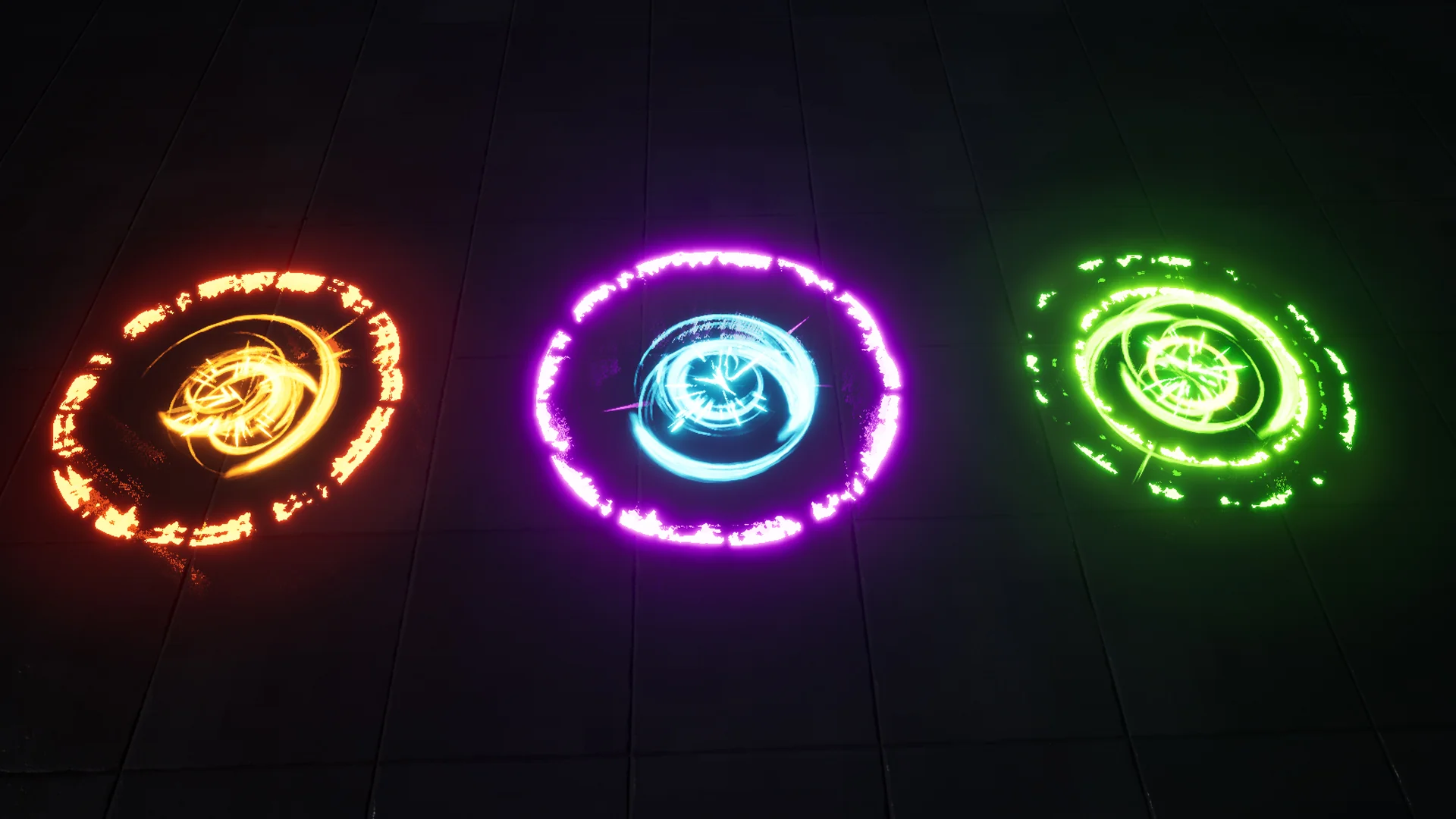
Resource screenshots
1 / 10
Join our channel
Follow 3DCGHUB on Telegram for new resource drops, migration updates, and community notices.
Interactive environments and cinematic sequences in Unreal Engine 4 rely heavily on real-time simulation systems to convey atmospheric density, physical interactions, and spatial energy. Niagara Effects delivers this capability through an advanced particle architecture engineered directly on Epic Games' modernized visual effects pipeline. Designed around the early implementation phases of the framework, the package provides a unified combination of an advanced Niagara particle system and tightly paired materials. Rather than treating visual elements as static overlays, the setup structures particle behaviors so that movement, density, and optical response function as a cohesive visual effect within real-time rendering pipelines.
The core utility of this setup lies in the structural coordination between particle nodes and material graphs. Visual effects in modern real-time rendering cannot succeed on simulation logic alone; they depend fundamentally on the surface shaders and optical properties assigned to each emitter. In Niagara Effects, the integrated materials are authored to read simulation parameters, mapping dynamic attributes directly to render states. This enables visual effects to adapt across varying environmental conditions, allowing motion vectors, opacity shifts, and color gradations to reflect the state of the underlying particle system as simulation steps unfold.
The Role of Advanced Particle Systems and Supporting Materials
Within Unreal Engine 4, the shift toward Niagara represented a fundamental evolution from legacy cascade setups toward fully programmable, modular simulation networks. The advanced Niagara particle system included in this asset takes advantage of that nodal paradigm, executing emission routines, velocity controls, and attribute updates with greater precision. Because the simulation logic is coupled with dedicated materials, the resulting visual assets bypass the visual detachment that often occurs when generic shaders are applied to specialized emitter arrays.
Materials authored for advanced particle systems must resolve complex blending, dynamic parameter handling, and depth interaction. When particles interface with scene geometry, the material logic ensures that clipping, opacity falloff, and color intensity behave consistently. The interplay between particle parameters and material expressions allows artists to achieve nuanced visual continuity. Whether an emitter relies on fine spatial distribution, rapid velocity bursts, or broad volumetric layering, the material instructions define how light, transparency, and texture coordinates express the behavior computed by the particle system.
Navigating Beta Constraints and Niagara Effects Pipeline Stability
A central technical reality of Niagara Effects is its foundation on Unreal Engine 4's beta-stage feature set. During this phase of engine development, the Niagara framework operated as an experimental architecture. Epic Games explicitly designated that backward compatibility is not supported for assets constructed on this beta version, warning that the API remains subject to structural modifications and that feature functionality can be removed or altered at discretion. Understanding these parameters is essential for any production environment considering these visual effect assets.
Operating with a beta API carries immediate implications for long-term project maintenance:
API updates in subsequent engine revisions may deprecate specific simulation modules, variable bindings, or stack structures within the particle system.
Upgrading engine versions requires auditing particle emitter behaviors to ensure custom parameters still translate across newer emitter stacks.
Material parameter collections and dynamic dynamic parameter nodes linked to early beta implementations must be monitored for compatibility shifts.
Feature removals by the engine developer can mandate refactoring emitter logic or rebuilding affected modules from scratch.
Because backward compatibility is not guaranteed, visual effect teams must approach integration with a clear maintenance strategy. When assets are implemented within a locked engine build, the particle systems and materials operate predictably within the confines of that specific version. Moving the asset forward into subsequent releases, however, demands active profiling and potential node replacement to account for shifts in how the Niagara framework handles execution stacks, particle stages, and shader compilation.
Integrating Advanced Systems into Production Pipelines
In a live game development or real-time simulation pipeline, integrating a visual effect system requires evaluating how easily its logic fits existing asset standards. The Niagara Effects framework provides an advanced system foundation that can serve either as a functional visual component or as a structural reference for authoring custom particle logic. Because Niagara decouples particle simulation into distinct execution phases—system spawn, system update, emitter spawn, emitter update, particle spawn, and particle update—technical artists can inspect each layer of the logic independently.
The materials accompanying the particle systems provide an equally valuable technical footprint. In production environments where real-time performance overhead must be closely monitored, observing how these materials handle instruction counts, texture fetches, and transparency passes provides actionable data. Production teams can isolate the particle system's computational impact on the GPU or CPU, determining whether the advanced simulation logic aligns with the frame budget allocated for visual effect passes across target hardware profiles.
Strategic Implementation Guidance
Deploying Niagara Effects successfully depends on the lifecycle stage and engine version of the host project. For teams maintaining projects on the specific Unreal Engine 4 beta release branch where Niagara was established, the package offers a cohesive, ready-to-use balance of particle simulation and custom material rendering. Its advanced particle system structures demonstrate how modular emitters communicate with shading logic to deliver dynamic visual effect elements.
For pipelines planning migrations to modern engine branches, the asset functions most effectively as a baseline architecture. While the lack of guaranteed backward compatibility prevents a frictionless, drag-and-drop upgrade path, the underlying operational logic—how the emitters distribute particles, calculate updates, and feed attributes into accompanying materials—remains a clear demonstration of nodal visual effect authoring. Integrating this package requires weighing its immediate visual fidelity against the technical investment of maintaining beta-era API dependencies over the course of production.
 Spells & Combat
 Spells & Combat
 Spells & Combat