"6ac84fdb0bd06614"{"id":"28163","slug":"nature-set","title":"Nature Set","category":"Nature \u0026 Plants","engine":"4.26+,5.0+","assetVersion":"Engine version: 4.26+,5.0+","engineVersion":"","tag":"Nature \u0026 Plants","accent":"blue","visual":"luts","summary":"Nature Set targets outdoor environments with rocks, trees, grass-related textures, and a range of landscape ground materials. Its focus stays practical: prepared LODs, optimized assets, and texture resolutions suited to assembling realistic terrain scenes.","platform":"Unreal Engine","publishedAt":"2026-05-04T15:50:51.000Z","updatedAt":"2026-05-04T15:50:52.000Z","sourceNotes":[],"fileContents":[],"compatibility":["Unreal Engine","Engine version: 4.26+,5.0+"],"featuredImage":{"alt":"Nature Set","src":"https://3dcghub.com/wp-content/uploads/2026/05/4db63e9ac45d_87baa7be-9d99-4292-a5dc-903912f95d86.webp"},"hasDownloadLink":true,"downloads":0,"terms":[{"taxonomy":"category","slug":"nature-and-plants","name":"Nature \u0026 Plants"},{"taxonomy":"post_tag","slug":"environment","name":"Environment"},{"taxonomy":"post_tag","slug":"materials","name":"Materials"},{"taxonomy":"post_tag","slug":"textures","name":"Textures"}],"galleryImages":[{"src":"https://3dcghub.com/wp-content/uploads/2026/05/7056ca2fe1c9_9187baac-1cb0-405f-a34b-9e9e02d750ac.webp","alt":"Nature Set"},{"src":"https://3dcghub.com/wp-content/uploads/2026/05/60fd2b4f7c40_851131ad-5ed7-44b0-a9be-2c52b2a5b148.webp","alt":"Nature Set"},{"src":"https://3dcghub.com/wp-content/uploads/2026/05/d4cc3ec51654_350c39cc-22b4-459f-9a4a-ce097b7aae22.webp","alt":"Nature Set"},{"src":"https://3dcghub.com/wp-content/uploads/2026/05/f95e76cdc694_6feb66d2-fb62-409d-ac74-6389afbe8385.webp","alt":"Nature Set"},{"src":"https://3dcghub.com/wp-content/uploads/2026/05/2808b4e400dc_1b5dc309-2815-4c64-895f-43ae53940cfd.webp","alt":"Nature Set"},{"src":"https://3dcghub.com/wp-content/uploads/2026/05/603d87df080a_32f4d040-8f66-4f12-bde3-5f7d2a3ddf93.webp","alt":"Nature Set"},{"src":"https://3dcghub.com/wp-content/uploads/2026/05/1aa59c83cf60_cea3e2c0-6449-476b-98b3-93dc77f6f19e.webp","alt":"Nature Set"},{"src":"https://3dcghub.com/wp-content/uploads/2026/05/73d6a7326c3e_fe853631-46a5-42da-99bd-97fd34b2e63f.webp","alt":"Nature Set"},{"src":"https://3dcghub.com/wp-content/uploads/2026/05/e647b2bde989_eda2c19b-b604-4643-8af8-e5f1b4b487ea.webp","alt":"Nature Set"},{"src":"https://3dcghub.com/wp-content/uploads/2026/05/795fed78a721_11260288-0023-41a8-ba94-a016e6b5df9b.webp","alt":"Nature Set"}],"accessPanel":{"kind":"resource","title":"Access this resource","eyebrow":"Free Download","message":"Log in or create a free account to start your download.","fileName":"Content.7z","safetyNote":"All resources are 100% manually reviewed to eliminate all risks.","actionLabel":"Download Free","resourceType":"Resource archive"},"contentHtml":"\u003cp\u003eNature Set fits the kind of production where a scene needs natural ground cover, rocky terrain, and tree variation without treating every piece as a separate problem. It is a grouped collection of environment assets, aimed at games and apps, with attention placed on LOD preparation and optimization rather than on a single hero model.\u003c/p\u003e\u003cp\u003eThat makes it useful at the scene-assembly stage, when terrain, foliage, and surface treatment all need to work together. Instead of only supplying isolated props, it combines models with landscape ground materials so a hillside, meadow edge, stony path, or mixed natural surface can be established from the same package.\u003c/p\u003e\u003ch2\u003eNature Set covers terrain surfaces as well as foliage and rocks\u003c/h2\u003e\u003cp\u003eThe set includes landscape ground materials for rock, mud, stone, asphalt, grass, sand, litter, and leaves. That spread is important in production terms because it supports more than one type of outdoor location. A cleaner grass-and-stone environment can sit alongside rougher patches of mud, sand, or leaf-covered ground without stepping outside the same material library.\u003c/p\u003e\u003cp\u003eRocks are a major part of the package and are described as carefully sculpted and optimized on their LODs. Trees are handled with a different capture approach: they were sculpted and photoscanned, giving the set a clear link to realistic environmental work. Together, those elements place Nature Set in the area between terrain dressing and foliage population, where the look of the ground and the larger natural forms need to stay visually consistent.\u003c/p\u003e\u003cp\u003eThe associated tags point toward realistic landscape use, with references to rocky environments, grass, trees, plants, birch, stone, foliage, terrain, hills, meadows, and willow. Those are not separate promises of content counts or scene presets, but they do show the kind of visual territory the set occupies.\u003c/p\u003e\u003ch2\u003eLODs and optimization are central to Nature Set\u003c/h2\u003e\u003cp\u003eNature Set puts unusual emphasis on level-of-detail preparation. Each asset has a reasonable number of LOD triangles and LODs, which signals a set made for real-time use where the same environment has to hold up both close to the camera and at a distance.\u003c/p\u003e\u003cp\u003eFor rocks, that means sculpted forms that are also optimized through their LOD chain. For trees, the final LOD stage goes to billboard or cross representations. In workflow terms, that matters most in scenes with repeated tree placement or larger outdoor views, where distant vegetation can quickly become expensive if every element stays in a high-detail mesh state.\u003c/p\u003e\u003cp\u003eThis also helps explain where the package belongs during production. It is not just for making a still image of a single patch of ground. The prepared LOD structure points toward broader environment construction, where artists need assets that can populate a scene across multiple viewing distances. A foreground rock, mid-distance tree group, and background vegetation line all benefit from that kind of setup.\u003c/p\u003e\u003ch2\u003eTexture sizes and 10x10k photo material in practice\u003c/h2\u003e\u003cp\u003eThe texture breakdown is clearly split by use. Landscape and grass textures are 2048x2048, while model textures go up to 4096x4096. That gives the set two practical texture tiers: one for broader surface coverage and one for individual environment models that may need more detail.\u003c/p\u003e\u003cp\u003eLandscape textures at 2048x2048 are a natural fit for repeated terrain use, where the goal is coherent surface definition across larger areas. Model textures reaching 4096x4096 put more emphasis on the asset pieces themselves, which is especially relevant for rocks and trees that may be read at closer range.\u003c/p\u003e\u003cp\u003eAll models and textures were made from 10x10k photo material. Combined with the mention of photoscanned trees and the photogrammetry tag, that points to a production approach grounded in photographic available details rather than purely stylized fabrication. The result is a set aligned with realistic outdoor scenes, especially where surface breakup and natural variation are important.\u003c/p\u003e\u003ch2\u003eRocks, trees, and landscape materials in a scene workflow\u003c/h2\u003e\u003cp\u003eNature Set sits comfortably in the middle of environment production: after broad layout decisions are made, but before final polish depends on a coherent asset library. The landscape ground materials establish the base read of the terrain. Rocks then shape elevation changes, edges, and natural clutter. Trees extend the scene vertically and help define depth, especially once their later LOD stages take over in the distance.\u003c/p\u003e\u003cp\u003eBecause the package includes both material-driven terrain surfaces and object-based natural forms, it can support scenes that need more than a flat ground pass. A rocky hill, a grassy meadow border, or a tree-lined stretch of terrain all rely on that combination. The inclusion of asphalt alongside natural materials also opens room for mixed outdoor spaces where nature meets a path or road-like surface.\u003c/p\u003e\u003cp\u003eThe practical takeaway is simple: Nature Set is most useful when a project needs realistic outdoor building blocks that cover ground treatment, rocks, and trees together, with prepared LODs and optimization already treated as part of the asset work rather than an afterthought.\u003c/p\u003e\n\n\u003ch2\u003eExplore Similar Assets\u003c/h2\u003e\n\u003cul\u003e\n\u003cli\u003e\u003ca href=\"https://3dcghub.com/advanced-road-materials/\" title=\"Advanced road materials\"\u003eAdvanced road materials\u003c/a\u003e\u003c/li\u003e\n\u003cli\u003e\u003ca href=\"https://3dcghub.com/galaxy-materials-skybox-update/\" title=\"Galaxy Materials (Skybox Update)\"\u003eGalaxy Materials (Skybox Update)\u003c/a\u003e\u003c/li\u003e\n\u003cli\u003e\u003ca href=\"https://3dcghub.com/master-materials-and-layer-system-for-daz3d-imports/\" title=\"Master Materials and Layer System for Daz3D Imports\"\u003eMaster Materials and Layer System for Daz3D Imports\u003c/a\u003e\u003c/li\u003e\n\u003cli\u003e\u003ca href=\"https://3dcghub.com/realistic-materials-vol-7-water-ice-25-materials/\" title=\"Realistic Materials Vol. 7 – Water \u0026amp;amp; Ice (25+ Materials)\"\u003eRealistic Materials Vol. 7 – Water \u0026amp; Ice (25+ Materials)\u003c/a\u003e\u003c/li\u003e\n\u003cli\u003e\u003ca href=\"https://3dcghub.com/tiles-vol-54-hand-painted-textures/\" title=\"Tiles Vol.54 – Hand Painted Textures\"\u003eTiles Vol.54 – Hand Painted Textures\u003c/a\u003e\u003c/li\u003e\n\u003c/ul\u003e","contentTextLength":5408,"navigation":{"current":1326,"total":3181,"previous":{"id":"28176","slug":"mw-redwood-forest-trees-biome","title":"MW Redwood Forest Trees Biome","category":"Forest \u0026 Jungle","platform":"Unreal Engine","updatedAt":"2026-05-04T16:26:10.000Z"},"next":{"id":"28150","slug":"ue5-spawn-character-mesh-vfx","title":"UE5 Spawn Character/Mesh VFX","category":"Spells \u0026 Combat","platform":"Unreal Engine","updatedAt":"2026-05-04T15:44:11.000Z"}},"relatedResources":[{"id":"12839","slug":"muddy-materials","title":"Muddy Materials","category":"Nature \u0026 Terrain","engine":"4.26+,5.0+","assetVersion":"Engine version: 4.26+,5.0+","engineVersion":"4.19","tag":"Nature \u0026 Terrain","accent":"blue","visual":"luts","summary":"Enhance your game environments with this set of Muddy Materials designed for flexibility across multiple platforms. These adjustable textures include comprehensive maps for color, roughness, and tessellation.","platform":"Unreal Engine","publishedAt":"2026-03-09T17:59:48.000Z","updatedAt":"2026-04-19T15:46:35.000Z","sourceNotes":[],"fileContents":[],"compatibility":["Unreal Engine","Engine version: 4.26+,5.0+"],"featuredImage":{"alt":"Muddy Materials","src":"https://3dcghub.com/wp-content/uploads/2026/03/4e7456ec-fc57-4025-bc40-456556b38a08.webp"},"hasDownloadLink":true,"downloads":0},{"id":"13003","slug":"terrain-vol-56-hand-painted-textures","title":"Terrain Vol.56 - Hand Painted Textures","category":"Nature \u0026 Terrain","engine":"4.26+,5.0+","assetVersion":"Engine version: 4.26+,5.0+","engineVersion":"4.24","tag":"Nature \u0026 Terrain","accent":"blue","visual":"luts","summary":"Enhance your game environments with Terrain Vol.56 - Hand Painted Textures. This professional set includes five unique, tillable textures designed for mobile and PBR workflows.","platform":"Unreal Engine","publishedAt":"2026-03-09T18:11:01.000Z","updatedAt":"2026-04-19T15:46:34.000Z","sourceNotes":[],"fileContents":[],"compatibility":["Unreal Engine","Engine version: 4.26+,5.0+"],"featuredImage":{"alt":"Terrain Vol.56 - Hand Painted Textures","src":"https://3dcghub.com/wp-content/uploads/2026/03/ffc91907-1b83-4dbe-8f01-7f8188a97a99.webp"},"hasDownloadLink":true,"downloads":0},{"id":"12681","slug":"cooled-flowing-lava","title":"Cooled \u0026 Flowing Lava","category":"Nature \u0026 Terrain","engine":"5.0+","assetVersion":"Engine version: 5.0+","engineVersion":"5.0","tag":"Nature \u0026 Terrain","accent":"blue","visual":"luts","summary":"Enhance your digital environments with Cooled \u0026 Flowing Lava. This professional material set offers realistic animations and highly customizable parameters for diverse platforms.","platform":"Unreal Engine","publishedAt":"2026-03-09T16:03:31.000Z","updatedAt":"2026-04-19T15:46:37.000Z","sourceNotes":[],"fileContents":[],"compatibility":["Unreal Engine","Engine version: 5.0+"],"featuredImage":{"alt":"Cooled \u0026 Flowing Lava","src":"https://3dcghub.com/wp-content/uploads/2026/03/d19f8d6d-cdb1-4597-a4a0-0e95481a95d9.webp"},"hasDownloadLink":true,"downloads":0}]}
Nature & Plants
Nature Set
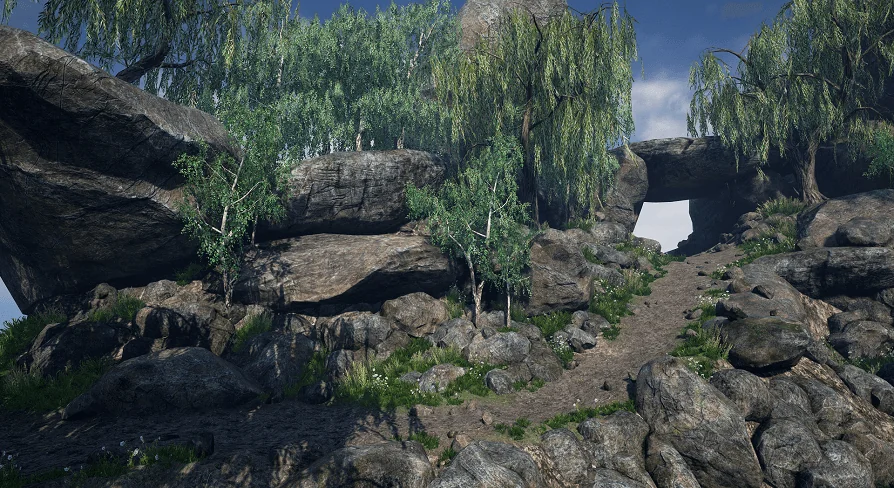
Nature Set targets outdoor environments with rocks, trees, grass-related textures, and a range of landscape ground materials. Its focus stays practical: prepared LODs, optimized assets, and texture resolutions suited to assembling realistic terrain scenes.
Nature Set fits the kind of production where a scene needs natural ground cover, rocky terrain, and tree variation without treating every piece as a separate problem. It is a grouped collection of environment assets, aimed at games and apps, with attention placed on LOD preparation and optimization rather than on a single hero model.
That makes it useful at the scene-assembly stage, when terrain, foliage, and surface treatment all need to work together. Instead of only supplying isolated props, it combines models with landscape ground materials so a hillside, meadow edge, stony path, or mixed natural surface can be established from the same package.
Nature Set covers terrain surfaces as well as foliage and rocks
The set includes landscape ground materials for rock, mud, stone, asphalt, grass, sand, litter, and leaves. That spread is important in production terms because it supports more than one type of outdoor location. A cleaner grass-and-stone environment can sit alongside rougher patches of mud, sand, or leaf-covered ground without stepping outside the same material library.
Rocks are a major part of the package and are described as carefully sculpted and optimized on their LODs. Trees are handled with a different capture approach: they were sculpted and photoscanned, giving the set a clear link to realistic environmental work. Together, those elements place Nature Set in the area between terrain dressing and foliage population, where the look of the ground and the larger natural forms need to stay visually consistent.
The associated tags point toward realistic landscape use, with references to rocky environments, grass, trees, plants, birch, stone, foliage, terrain, hills, meadows, and willow. Those are not separate promises of content counts or scene presets, but they do show the kind of visual territory the set occupies.
LODs and optimization are central to Nature Set
Nature Set puts unusual emphasis on level-of-detail preparation. Each asset has a reasonable number of LOD triangles and LODs, which signals a set made for real-time use where the same environment has to hold up both close to the camera and at a distance.
For rocks, that means sculpted forms that are also optimized through their LOD chain. For trees, the final LOD stage goes to billboard or cross representations. In workflow terms, that matters most in scenes with repeated tree placement or larger outdoor views, where distant vegetation can quickly become expensive if every element stays in a high-detail mesh state.
This also helps explain where the package belongs during production. It is not just for making a still image of a single patch of ground. The prepared LOD structure points toward broader environment construction, where artists need assets that can populate a scene across multiple viewing distances. A foreground rock, mid-distance tree group, and background vegetation line all benefit from that kind of setup.
Texture sizes and 10x10k photo material in practice
The texture breakdown is clearly split by use. Landscape and grass textures are 2048x2048, while model textures go up to 4096x4096. That gives the set two practical texture tiers: one for broader surface coverage and one for individual environment models that may need more detail.
Landscape textures at 2048x2048 are a natural fit for repeated terrain use, where the goal is coherent surface definition across larger areas. Model textures reaching 4096x4096 put more emphasis on the asset pieces themselves, which is especially relevant for rocks and trees that may be read at closer range.
All models and textures were made from 10x10k photo material. Combined with the mention of photoscanned trees and the photogrammetry tag, that points to a production approach grounded in photographic available details rather than purely stylized fabrication. The result is a set aligned with realistic outdoor scenes, especially where surface breakup and natural variation are important.
Rocks, trees, and landscape materials in a scene workflow
Nature Set sits comfortably in the middle of environment production: after broad layout decisions are made, but before final polish depends on a coherent asset library. The landscape ground materials establish the base read of the terrain. Rocks then shape elevation changes, edges, and natural clutter. Trees extend the scene vertically and help define depth, especially once their later LOD stages take over in the distance.
Because the package includes both material-driven terrain surfaces and object-based natural forms, it can support scenes that need more than a flat ground pass. A rocky hill, a grassy meadow border, or a tree-lined stretch of terrain all rely on that combination. The inclusion of asphalt alongside natural materials also opens room for mixed outdoor spaces where nature meets a path or road-like surface.
The practical takeaway is simple: Nature Set is most useful when a project needs realistic outdoor building blocks that cover ground treatment, rocks, and trees together, with prepared LODs and optimization already treated as part of the asset work rather than an afterthought.
 Nature & Plants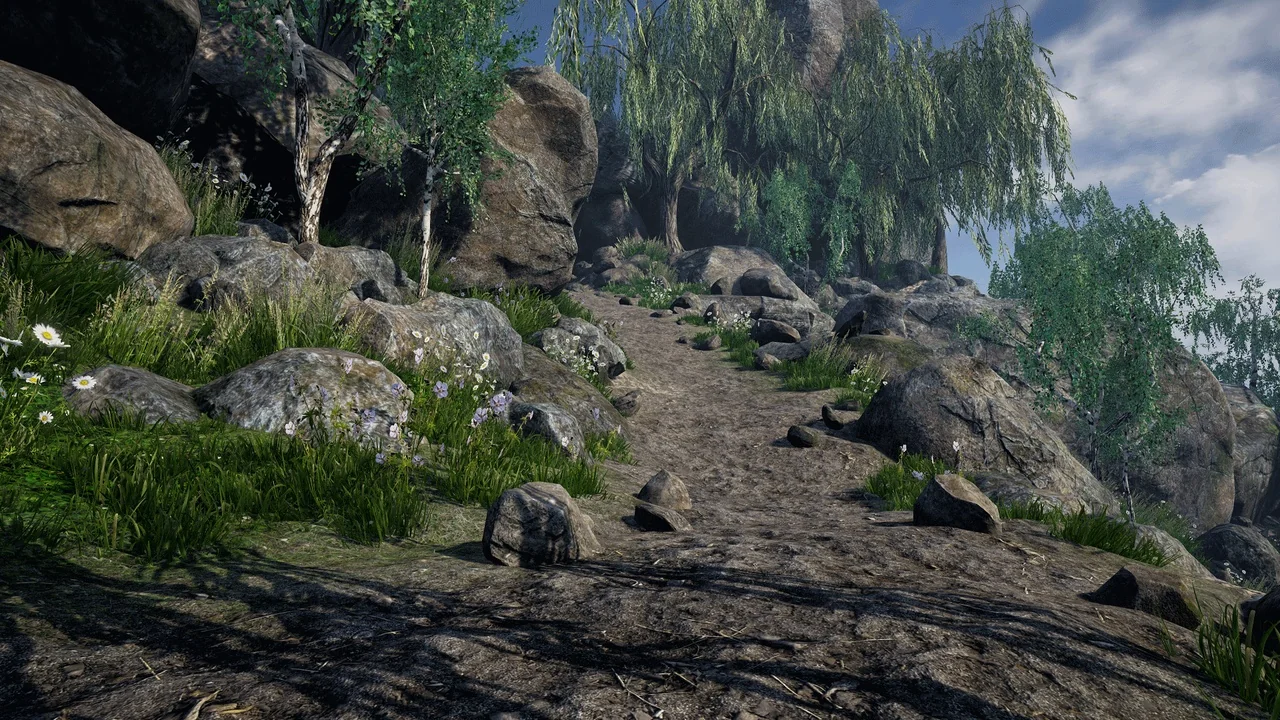
 Nature & Terrain
 Nature & Terrain
 Nature & Terrain