"1a0e4ac4dc71d030"{"id":"1001239","slug":"msl-toolkit","title":"MSL Toolkit","category":"Action-Adventure","engine":"5.0+","assetVersion":"","engineVersion":"Engine Version: 5.0+","tag":"Action-Adventure","accent":"blue","visual":"mech","summary":"Explore the MSL Toolkit for Unreal Engine, featuring folder-based menus, input rebinding, audio localization, and prioritized savegame actor loading.","platform":"Unreal Engine","publishedAt":"2026-09-23T14:43:29.877Z","updatedAt":"2026-09-23T14:43:29.877Z","sourceNotes":[],"fileContents":[],"compatibility":["Unreal Engine","Engine Version: 5.0+"],"featuredImage":{"alt":"MSL Toolkit","src":"/wp-content/uploads/published/2026/09/8c27331a8f43-faf5c4e0-b079-461a-917d-fe933d7f4639-e1c30312ca.webp"},"hasDownloadLink":true,"downloads":0,"terms":[{"taxonomy":"category","slug":"action-adventure","name":"Action-Adventure"}],"galleryImages":[{"src":"/wp-content/uploads/published/2026/09/7614b83b903a-97f53873-ab8d-4243-87ef-844503fc9132-dc613e0c1d.webp","alt":"MSL Toolkit"},{"src":"/wp-content/uploads/published/2026/09/1fdf9ea8afea-f9711e39-d5df-4389-8e80-c6e781267808-df08467149.webp","alt":"MSL Toolkit"},{"src":"/wp-content/uploads/published/2026/09/f68d30128f4c-418c44d1-efc9-427c-af7f-70fb93e314ac-8f1f29065a.webp","alt":"MSL Toolkit"},{"src":"/wp-content/uploads/published/2026/09/62c5879c3873-b45a23aa-223c-433f-a4f8-175d8bf141b7-f689ec48e1.webp","alt":"MSL Toolkit"},{"src":"/wp-content/uploads/published/2026/09/aaf4c07a204d-e243008b-7dc9-4a47-a248-d911cc71bd79-9f72c9120c.webp","alt":"MSL Toolkit"}],"accessPanel":{"kind":"resource","title":"Download this resource","eyebrow":"Free Download","message":"Log in or create a free account to start your download.","fileName":"Content.7z","safetyNote":"Resources are manually reviewed before listing to improve quality and reduce obvious risks.","actionLabel":"Download Free","resourceType":"Resource archive"},"contentHtml":"\u003ch2\u003eBlueprint Foundation and Implementation Workflow\u003c/h2\u003e\u003cp\u003eIntegrating the MSL Toolkit into an Unreal Engine project begins at the Blueprint layer. The architecture relies on visual scripting to connect interface widgets, HUD elements, and player controllers without forcing developers to build complex menu logic from scratch. A baseline understanding of Blueprints is required to work with the system effectively, as configuring custom menus and integrating backend hooks requires navigating established node networks and event dispatches.\u003c/p\u003e\u003cp\u003eRather than functioning as a rigid, monolithic interface, the toolkit is structured around modularity. Developers can deploy its components—Menu, Settings, and Localization—together as a complete package or isolate single elements to suit existing production pipelines. In unified setups, the systems communicate directly to pass configuration data, visual states, and language profiles back and forth cleanly.\u003c/p\u003e\u003ch2\u003eFolder Hierarchy and Interaction Presets in the Menu System\u003c/h2\u003e\u003cp\u003eInterface architecture within the toolkit uses a folder hierarchy approach. Organizing layouts through structured directory-style groupings allows developers to assemble multi-tiered menus, from simple start screens to deep nested submenus, inventory panels, and modal dialogues. This hierarchical grouping keeps complex interface trees manageable during production.\u003c/p\u003e\u003cp\u003eInput handling across the menu framework is unified through interaction presets. Navigating menus with a gamepad, keyboard, or mouse works seamlessly out of the box, eliminating the need to construct separate focus routines or input listeners for different controller types. The interaction presets dictate how buttons, sliders, and focus highlights behave when switching between direct cursor movement and directional pad navigation, ensuring interface responsiveness regardless of the player's control method.\u003c/p\u003e\u003ch2\u003eCustom Settings Configuration and Input Rebinding\u003c/h2\u003e\u003cp\u003eThe Settings component addresses hardware configurations, game preferences, and control schemes. Adding custom parameters to the settings menu is built to be straightforward, allowing teams to expose project-specific variables such as graphical toggles, volume sliders, or gameplay assists directly to user-facing widgets.\u003c/p\u003e\u003cp\u003eInput rebinding forms a core pillar of the settings framework. The system captures runtime key and button presses, reassigning action and axis inputs to match user preferences. These remapped schemes integrate directly with the internal saving and loading mechanics, ensuring custom bindings, audio levels, and display settings persist between game sessions without separate serialization code.\u003c/p\u003e\u003ch2\u003eAudio Archives and Text in the MSL Localization System\u003c/h2\u003e\u003cp\u003eHandling multilingual deployments often introduces friction in Unreal Engine, particularly when managing assets outside standard text strings. The MSL Toolkit provides an alternative localization system structured to handle both text entries and audio archives efficiently. By managing localization assets through this framework, teams can maintain audio dialog, narration, and interface text within a unified workflow that functions with greater direct control than the engine's standard localization dashboard.\u003c/p\u003e\u003cp\u003eLocalized audio archives allow sound cues and voice tracks to swap dynamically based on the active language selection. When paired with the localized text tables, the system ensures that user interface strings, subtitles, and spoken audio maintain consistent language parity across the entire game project.\u003c/p\u003e\u003ch2\u003ePrioritized Actor Loading and Folder-Based Save Data\u003c/h2\u003e\u003cp\u003eData persistence is managed by an upgraded savegame architecture shaped by a folder-based hierarchy. This organizational structure provides precise control over how game state information is written to disk, stored, and cataloged. Saving data across multiple files and directories simplifies profile management and slot-based save systems.\u003c/p\u003e\u003cp\u003eBeyond standard data serialization, the save system incorporates prioritized actor loading. In complex scenes where gameplay systems depend on specific actors existing before others run their setup logic, the loading pipeline can boot and initialize critical actors ahead of secondary objects. This staged initialization prevents reference errors, broken dependencies, and timing issues when restoring intricate world states, quest frameworks, or player stats.\u003c/p\u003e\u003ch2\u003eEngine Version Continuity and Ecosystem Integration\u003c/h2\u003e\u003cp\u003eThe toolkit runs natively across Unreal Engine versions 4.19.2 through 4.24 and above. Projects created in these target versions are generally expected to maintain forward functionality in newer engine releases, though core engine updates may occasionally require minor function adjustments to resolve API changes. The toolkit is also architecturally compatible with adjacent gameplay systems such as AI Easy Toolkit, Locomotion frameworks, and RPG progression systems, operating either as a front-end shell or as an underlying state-saving foundation.\u003c/p\u003e\n\n\u003ch2\u003eMore From The Same Workflow\u003c/h2\u003e\n\u003cul\u003e\n\u003cli\u003e\u003ca href=\"https://3dcghub.com/dynamic-qte-system/\" title=\"Dynamic QTE System\"\u003eDynamic QTE System\u003c/a\u003e\u003c/li\u003e\n\u003cli\u003e\u003ca href=\"https://3dcghub.com/enhanced-movement-system/\" title=\"Enhanced Movement System\"\u003eEnhanced Movement System\u003c/a\u003e\u003c/li\u003e\n\u003cli\u003e\u003ca href=\"https://3dcghub.com/easy-locomotion-toolkit/\" title=\"Easy Locomotion Toolkit\"\u003eEasy Locomotion Toolkit\u003c/a\u003e\u003c/li\u003e\n\u003cli\u003e\u003ca href=\"https://3dcghub.com/easy-ai-toolkit/\" title=\"Easy AI Toolkit\"\u003eEasy AI Toolkit\u003c/a\u003e\u003c/li\u003e\n\u003cli\u003e\u003ca href=\"https://3dcghub.com/point-and-click-adventure-toolkit/\" title=\"Point and Click Adventure Toolkit\"\u003ePoint and Click Adventure Toolkit\u003c/a\u003e\u003c/li\u003e\n\u003c/ul\u003e","contentTextLength":5129,"navigation":{"current":19,"total":3200,"previous":{"id":"1001240","slug":"metahuman-lighting","title":"MetaHuman Lighting","category":"Action-Adventure","platform":"Unreal Engine","updatedAt":"2026-09-23T14:46:05.749Z"},"next":{"id":"1001238","slug":"interaction-system","title":"Interaction System","category":"Action-Adventure","platform":"Unreal Engine","updatedAt":"2026-09-21T03:51:17.965Z"}},"relatedResources":[{"id":"1001233","slug":"dynamic-qte-system","title":"Dynamic QTE System","category":"Action-Adventure","engine":"5.0+","assetVersion":"","engineVersion":"Engine Version: 5.0+","tag":"Action-Adventure","accent":"blue","visual":"mech","summary":"Explore the Dynamic QTE System for Unreal Engine, featuring non-linear cinematic quick time events, MSL toolkit subsystems, and NPC-driven sequences.","platform":"Unreal Engine","publishedAt":"2026-09-21T03:40:52.960Z","updatedAt":"2026-09-21T03:40:52.960Z","sourceNotes":[],"fileContents":[],"compatibility":["Unreal Engine","Engine Version: 5.0+"],"featuredImage":{"alt":"Dynamic QTE System","src":"/wp-content/uploads/published/2026/09/dc69da09122c-09594aa3-a75c-4c31-be50-6d617a4b9e72-24a2b26565.webp"},"hasDownloadLink":true,"downloads":0},{"id":"1000732","slug":"enhanced-movement-system","title":"Enhanced Movement System","category":"Action-Adventure","engine":"5.5+","assetVersion":"","engineVersion":"Engine Version: 5.5+","tag":"Action-Adventure","accent":"blue","visual":"mech","summary":"Unreal Engine character movement toolkit with parkour vaulting, grappling hook, stamina UI, fall damage, footstep SFX, and a built-in tutorial system.","platform":"Unreal Engine","publishedAt":"2026-07-26T16:09:42.506Z","updatedAt":"2026-07-26T16:09:42.506Z","sourceNotes":[],"fileContents":[],"compatibility":["Unreal Engine","Engine Version: 5.5+"],"featuredImage":{"alt":"Enhanced Movement System","src":"/wp-content/uploads/published/2026/07/b8b1ddf5c110-41b67793-7ddd-4d06-a732-99b15b075a9e-8f7eecf2bd.webp"},"hasDownloadLink":true,"downloads":0},{"id":"1001236","slug":"easy-locomotion-toolkit","title":"Easy Locomotion Toolkit","category":"Action-Adventure","engine":"5.0+","assetVersion":"","engineVersion":"Engine Version: 5.0+","tag":"Action-Adventure","accent":"blue","visual":"animation","summary":"A component-based Unreal Engine framework featuring modular locomotion calculations, datatable animset swapping, and structure-driven replication.","platform":"Unreal Engine","publishedAt":"2026-09-21T03:46:32.498Z","updatedAt":"2026-09-21T03:46:32.498Z","sourceNotes":[],"fileContents":[],"compatibility":["Unreal Engine","Engine Version: 5.0+"],"featuredImage":{"alt":"Easy Locomotion Toolkit","src":"/wp-content/uploads/published/2026/09/1c39ce837155-999607d8-b0a8-4400-a6a4-e5ddd2c06569-2ec6a33aef.webp"},"hasDownloadLink":true,"downloads":0}]}
Action-Adventure
MSL Toolkit
Explore the MSL Toolkit for Unreal Engine, featuring folder-based menus, input rebinding, audio localization, and prioritized savegame actor loading.
Integrating the MSL Toolkit into an Unreal Engine project begins at the Blueprint layer. The architecture relies on visual scripting to connect interface widgets, HUD elements, and player controllers without forcing developers to build complex menu logic from scratch. A baseline understanding of Blueprints is required to work with the system effectively, as configuring custom menus and integrating backend hooks requires navigating established node networks and event dispatches.
Rather than functioning as a rigid, monolithic interface, the toolkit is structured around modularity. Developers can deploy its components—Menu, Settings, and Localization—together as a complete package or isolate single elements to suit existing production pipelines. In unified setups, the systems communicate directly to pass configuration data, visual states, and language profiles back and forth cleanly.
Folder Hierarchy and Interaction Presets in the Menu System
Interface architecture within the toolkit uses a folder hierarchy approach. Organizing layouts through structured directory-style groupings allows developers to assemble multi-tiered menus, from simple start screens to deep nested submenus, inventory panels, and modal dialogues. This hierarchical grouping keeps complex interface trees manageable during production.
Input handling across the menu framework is unified through interaction presets. Navigating menus with a gamepad, keyboard, or mouse works seamlessly out of the box, eliminating the need to construct separate focus routines or input listeners for different controller types. The interaction presets dictate how buttons, sliders, and focus highlights behave when switching between direct cursor movement and directional pad navigation, ensuring interface responsiveness regardless of the player's control method.
Custom Settings Configuration and Input Rebinding
The Settings component addresses hardware configurations, game preferences, and control schemes. Adding custom parameters to the settings menu is built to be straightforward, allowing teams to expose project-specific variables such as graphical toggles, volume sliders, or gameplay assists directly to user-facing widgets.
Input rebinding forms a core pillar of the settings framework. The system captures runtime key and button presses, reassigning action and axis inputs to match user preferences. These remapped schemes integrate directly with the internal saving and loading mechanics, ensuring custom bindings, audio levels, and display settings persist between game sessions without separate serialization code.
Audio Archives and Text in the MSL Localization System
Handling multilingual deployments often introduces friction in Unreal Engine, particularly when managing assets outside standard text strings. The MSL Toolkit provides an alternative localization system structured to handle both text entries and audio archives efficiently. By managing localization assets through this framework, teams can maintain audio dialog, narration, and interface text within a unified workflow that functions with greater direct control than the engine's standard localization dashboard.
Localized audio archives allow sound cues and voice tracks to swap dynamically based on the active language selection. When paired with the localized text tables, the system ensures that user interface strings, subtitles, and spoken audio maintain consistent language parity across the entire game project.
Prioritized Actor Loading and Folder-Based Save Data
Data persistence is managed by an upgraded savegame architecture shaped by a folder-based hierarchy. This organizational structure provides precise control over how game state information is written to disk, stored, and cataloged. Saving data across multiple files and directories simplifies profile management and slot-based save systems.
Beyond standard data serialization, the save system incorporates prioritized actor loading. In complex scenes where gameplay systems depend on specific actors existing before others run their setup logic, the loading pipeline can boot and initialize critical actors ahead of secondary objects. This staged initialization prevents reference errors, broken dependencies, and timing issues when restoring intricate world states, quest frameworks, or player stats.
Engine Version Continuity and Ecosystem Integration
The toolkit runs natively across Unreal Engine versions 4.19.2 through 4.24 and above. Projects created in these target versions are generally expected to maintain forward functionality in newer engine releases, though core engine updates may occasionally require minor function adjustments to resolve API changes. The toolkit is also architecturally compatible with adjacent gameplay systems such as AI Easy Toolkit, Locomotion frameworks, and RPG progression systems, operating either as a front-end shell or as an underlying state-saving foundation.
 Action-Adventure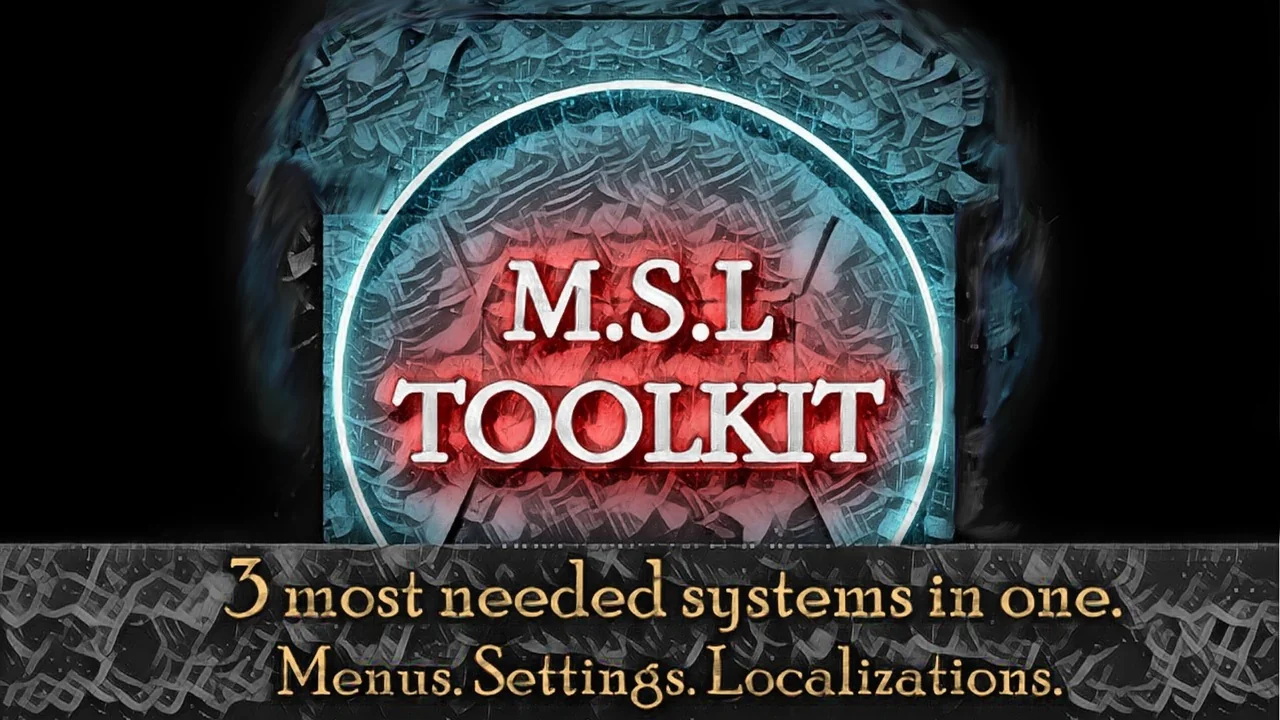
 Action-Adventure
 Action-Adventure
 Action-Adventure