"7066dd76da796369"{"id":"1000732","slug":"enhanced-movement-system","title":"Enhanced Movement System","category":"Action-Adventure","engine":"5.5+","assetVersion":"","engineVersion":"Engine Version: 5.5+","tag":"Action-Adventure","accent":"blue","visual":"mech","summary":"Unreal Engine character movement toolkit with parkour vaulting, grappling hook, stamina UI, fall damage, footstep SFX, and a built-in tutorial system.","platform":"Unreal Engine","publishedAt":"2026-07-26T16:09:42.506Z","updatedAt":"2026-07-26T16:09:42.506Z","sourceNotes":[],"fileContents":[],"compatibility":["Unreal Engine","Engine Version: 5.5+"],"featuredImage":{"alt":"Enhanced Movement System","src":"/wp-content/uploads/published/2026/07/b8b1ddf5c110-41b67793-7ddd-4d06-a732-99b15b075a9e-8f7eecf2bd.webp"},"hasDownloadLink":true,"downloads":0,"terms":[{"taxonomy":"category","slug":"action-adventure","name":"Action-Adventure"}],"galleryImages":[{"src":"/wp-content/uploads/published/2026/07/b6a12550d8e5-f363f70c-74ae-4043-a631-d8e257e64e45-6de37d317c.webp","alt":"Enhanced Movement System"},{"src":"/wp-content/uploads/published/2026/07/2e6470779d5c-b0cc985b-5dae-4edc-a916-fc772c473f7c-0191498bfd.webp","alt":"Enhanced Movement System"},{"src":"/wp-content/uploads/published/2026/07/8c7bff528dbd-7e66f9e0-f0b4-4187-ab34-4b443a83f58d-69089d4b95.webp","alt":"Enhanced Movement System"},{"src":"/wp-content/uploads/published/2026/07/de2797d864a7-ce42ed61-5935-49dc-8a31-4d66b683fafa-9a9e536969.webp","alt":"Enhanced Movement System"},{"src":"/wp-content/uploads/published/2026/07/14f7bcf50e63-7ac1c187-9c86-4469-a096-dbb055f0e0dc-34d1ca01e6.webp","alt":"Enhanced Movement System"},{"src":"/wp-content/uploads/published/2026/07/652f22036a1a-5818079a-9919-494c-b523-e89aaa2fd6e6-e9e5cf69af.webp","alt":"Enhanced Movement System"},{"src":"/wp-content/uploads/published/2026/07/ab3782ee80a9-d82f63d8-6067-4b7f-a6fb-044711626e91-bbca7f88b7.webp","alt":"Enhanced Movement System"},{"src":"/wp-content/uploads/published/2026/07/81dde56bc9ff-b21d1849-486d-4461-b47e-2994d28853a9-c49fd222e4.webp","alt":"Enhanced Movement System"},{"src":"/wp-content/uploads/published/2026/07/f3f13c88100e-938e40aa-ade1-485b-a879-b58e516716e6-e0f016e108.webp","alt":"Enhanced Movement System"},{"src":"/wp-content/uploads/published/2026/07/8da934a112dc-cb152088-2ae6-4afc-a7c7-0470f60eb102-19c9a949a1.webp","alt":"Enhanced Movement System"}],"accessPanel":{"kind":"resource","title":"Download this resource","eyebrow":"Free Download","message":"Log in or create a free account to start your download.","fileName":"EnhancedMovementSystem.7z","safetyNote":"Resources are manually reviewed before listing to improve quality and reduce obvious risks.","actionLabel":"Download Free","resourceType":"Resource archive"},"contentHtml":"\u003ch2\u003eA Blueprint-Driven First-Person Character Controller\u003c/h2\u003e\n\u003cp\u003eCharacters built with the Enhanced Movement System behave more like occupants of a physical space than rigid avatars locked to a NavMesh. The toolkit is Unreal Engine-native and Blueprint-based, built to be dropped into a project and iterated on without requiring source-level engineering. At its core sits the \u003ccode\u003eBP_EnhancedMovementPlayer\u003c/code\u003e Blueprint, which houses the variables, audio triggers, and ability toggles that drive the entire system. First-person comfort and camera behavior take priority throughout: looking around introduces natural camera tilt, collisions and impacts produce physics-based camera shakes, and a subtle dirty-lens effect layers over the view to sell the sense that a real camera occupies the scene rather than a disembodied eye.\u003c/p\u003e\n\n\u003cp\u003eOne setup detail that teams should catch early: the project opens preconfigured for the sandbox level, which means the tutorial level will not function correctly until the developer adjusts the Blueprint. Fixing this involves opening \u003ccode\u003eBP_EnhancedMovementPlayer\u003c/code\u003e, locating the \u003cem\u003eTutorial\u003c/em\u003e variables section, and toggling every default value in that section to \u003ccode\u003eFALSE\u003c/code\u003e. Once that switch is made, the tutorial level becomes the guided onboarding experience it was designed to be, complete with voice effects and ability blockers that gate mechanics until the player learns them.\u003c/p\u003e\n\n\u003ch2\u003eTraversal: Dashing, Vaulting, Grappling Hook, and Ladder Climbing\u003c/h2\u003e\n\u003cp\u003eMovement in the Enhanced Movement System is not limited to walk, run, and jump. The asset packs several advanced traversal mechanics that expand how a player can navigate vertical and obstructed spaces. Dashing delivers a fast, responsive burst suitable for dodging or repositioning. Double jump grants an additional mid-air jump for extended aerial mobility, opening up platforming options that a single-jump controller cannot reach.\u003c/p\u003e\n\n\u003cp\u003eThe vault and climb system lets characters mount and clear obstacles with motion transitions intended to look natural rather than snapping. Wall climbing adheres to the same philosophy, blending into the traversal flow rather than interrupting it. For vertical traversal of a different kind, the grappling hook adds a dynamic mechanism for pulling across or ascending past gaps and obstacles, giving level designers a reason to build spaces that reward creative routing.\u003c/p\u003e\n\n\u003cp\u003eLadders receive their own treatment rather than functioning as simple triggers. The ladder system includes smooth climbing mechanics with transitions and animations intended to feel grounded. A fully integrated door system handles level transitions and door interactions, so the traversal loop extends beyond open terrain into connected interiors.\u003c/p\u003e\n\n\u003ch2\u003eStamina, Health, and Fall Damage Feedback\u003c/h2\u003e\n\u003cp\u003eMovement cost is visible. The radial stamina system depletes and regenerates based on what the character is doing, displayed through a visually engaging radial UI element that communicates exhaustion without forcing the player to read a number. Sprinting ties directly into this system—Field of View (FOV) widens automatically when sprinting to amplify the sense of speed, and sprinting sound effects shift to reflect stamina levels. When stamina runs low, out-of-breath audio cues signal that the character is reaching a physical limit.\u003c/p\u003e\n\n\u003cp\u003eHealth is tracked through an integrated health system with a customizable UI that displays player health status, damage feedback, and recovery. Health pickups exist as interactable Actors that restore health on contact, giving designers a concrete item to place in the world rather than requiring a custom healing solution. A fall damage system automatically calculates damage based on height and impact velocity, pairing the damage event with visual and audio cues so that hard landings register as more than a stat change.\u003c/p\u003e\n\n\u003cp\u003eA simple timer system tracks how long the player has been in the level, which is useful for speedrun-oriented design, challenge scoring, or simply giving designers a metric to observe during playtesting.\u003c/p\u003e\n\n\u003ch3\u003eSurface-Aware Audio and Cinematic Camera Behavior\u003c/h3\u003e\n\u003cp\u003eSound is tightly coupled to movement state. Footstep playback is driven by Physical Materials, so walking across different surface types dynamically changes the footstep sound. The included SFX package contains 15 distinct footstep sounds covering various ground materials, along with additional audio cues for other movement events. Jump sounds vary based on jump height, meaning a small hop produces a different audio response than a full-power leap.\u003c/p\u003e\n\n\u003cp\u003eCamera behavior reinforces the movement audio. Camera zoom is adjustable for framing and cinematic moments. Camera tilt when looking around introduces a subtle rotational lean that reads as natural head movement rather than a fixed-pitch viewport. The dirty-lens effect adds soft particulate texture over the player view, giving a documentary or body-cam impression that pairs well with first-person horror or exploration genres where lens presence sells immersion.\u003c/p\u003e\n\n\u003cp\u003eThe flashlight system follows a similar physical ethos. Rather than locking a light cone rigidly to the camera forward vector, the flashlight includes lag that simulates natural flashlight movement, so the beam lags slightly behind rapid camera rotation. That lag is the kind of detail that reads as a polish pass rather than a default engine behavior.\u003c/p\u003e\n\n\u003ch3\u003eInteraction, UI, and Tutorial-Level Wiring\u003c/h3\u003e\n\u003cp\u003eBeyond raw movement, the Enhanced Movement System covers the connective tissue that makes a first-person character feel present in a level. The interaction system handles smooth, responsive interactions with in-game objects, accompanied by a smooth interaction dot that serves as a dynamic UI indicator for when an interactive target is in range. A fully functional pause menu provides resume, settings, and exit options, so the project ships with a baseline front-end flow that can be themed rather than built from nothing.\u003c/p\u003e\n\n\u003cp\u003eThe tutorial system is integrated directly into the project rather than delivered as a separate plugin. It guides players through movement mechanics using voice effects and ability blockers, so mechanics unlock as the player demonstrates familiarity. Because the project opens sandbox-configured by default, the tutorial variables inside \u003ccode\u003eBP_EnhancedMovementPlayer\u003c/code\u003e must be toggled to \u003ccode\u003eFALSE\u003c/code\u003e before the tutorial level can run its intended guided sequence. Teams evaluating the asset should treat that toggle as a first-day setup task rather than a bug.\u003c/p\u003e\n\n\u003ch3\u003eWhere the Enhanced Movement System Fits in Production\u003c/h3\u003e\n\u003cp\u003eThe asset occupies the space between a raw character controller and a full game-ready player framework. It handles the heavy implementation work for traversal, stamina, health, surface audio, fall damage, and tutorial flow, leaving the creative side—level design, visual theme, encounter tuning—to the team using it. First-person projects that need parkour-style movement, environmental interaction, and physical-feeling camera work can plug the system in and focus on content rather than rewriting locomotion from scratch.\u003c/p\u003e\n\n\u003cp\u003eThe toolkit is tagged across its listed categorization as \u003cem\u003efirst-person\u003c/em\u003e, \u003cem\u003eparkour\u003c/em\u003e, \u003cem\u003emantle\u003c/em\u003e, \u003cem\u003evault\u003c/em\u003e, \u003cem\u003eclimbing\u003c/em\u003e, \u003cem\u003eladder\u003c/em\u003e, and \u003cem\u003eBlueprint-based\u003c/em\u003e, which positions it for projects leaning into traversal-heavy level design. The developer notes that additional engine compatibility is coming, so teams working in versions of Unreal Engine outside the currently supported range should verify support before committing. For teams that need a traversal system with integrated feedback loops—stamina affecting sprint audio, fall damage triggering visual and audio cues, Physical Materials driving footstep playback—the Enhanced Movement System provides a working, extensible baseline rather than a collection of disconnected snippets.\u003c/p\u003e\n\n\u003ch2\u003eExplore Similar Assets\u003c/h2\u003e\n\u003cul\u003e\n\u003cli\u003e\u003ca href=\"https://3dcghub.com/enhanced-locomotion-system-replication/\" title=\"Enhanced Locomotion System (Replication)\"\u003eEnhanced Locomotion System (Replication)\u003c/a\u003e\u003c/li\u003e\n\u003cli\u003e\u003ca href=\"https://3dcghub.com/fantasy-girls-pack-2/\" title=\"Fantasy Girls Pack\"\u003eFantasy Girls Pack\u003c/a\u003e\u003c/li\u003e\n\u003cli\u003e\u003ca href=\"https://3dcghub.com/make-a-2d-action-platformer-in-unreal-engine-5/\" title=\"Make a 2D Action Platformer in Unreal Engine 5\"\u003eMake a 2D Action Platformer in Unreal Engine 5\u003c/a\u003e\u003c/li\u003e\n\u003cli\u003e\u003ca href=\"https://3dcghub.com/unreal-engine-5-c-make-your-own-action-combat-game/\" title=\"Unreal Engine 5 C++: Make Your Own Action Combat Game\"\u003eUnreal Engine 5 C++: Make Your Own Action Combat Game\u003c/a\u003e\u003c/li\u003e\n\u003cli\u003e\u003ca href=\"https://3dcghub.com/vhs-project-2-5/\" title=\"VHS Project 2.5\"\u003eVHS Project 2.5\u003c/a\u003e\u003c/li\u003e\n\u003c/ul\u003e","contentTextLength":7948,"navigation":{"current":1433,"total":4016,"previous":{"id":"1000733","slug":"gothic-exterior-megapack","title":"Gothic Exterior Megapack","category":"Procedural Systems","platform":"Unreal Engine","updatedAt":"2026-07-26T16:23:14.210Z"},"next":{"id":"1000731","slug":"dystopia-soldier","title":"Dystopia Soldier","category":"Characters \u0026 Creatures","platform":"Unreal Engine","updatedAt":"2026-07-26T16:05:13.433Z"}},"relatedResources":[{"id":"1001684","slug":"classic-survival-horror-framework-v2","title":"Classic Survival Horror Framework V2","category":"Action-Adventure","engine":"5.5+","assetVersion":"","engineVersion":"Engine Version: 5.5+","tag":"Action-Adventure","accent":"blue","visual":"mech","summary":"Explore Classic Survival Horror Framework V2, featuring modular Blueprints, MetaHuman skeleton support, flamethrower mechanics, and gamepad UI controls.","platform":"Unreal Engine","publishedAt":"2026-10-14T08:57:28.447Z","updatedAt":"2026-10-14T08:57:28.447Z","sourceNotes":[],"fileContents":[],"compatibility":["Unreal Engine","Engine Version: 5.5+"],"featuredImage":{"alt":"Classic Survival Horror Framework V2","src":"/wp-content/uploads/published/2026/10/69738cdc2258-dd330e3c-bd74-4bde-bfbe-52537e5c8b9a-4db5930fa5.webp"},"hasDownloadLink":true,"downloads":0},{"id":"1001234","slug":"dynamic-ragdoll","title":"Dynamic Ragdoll","category":"Action-Adventure","engine":"5.0+","assetVersion":"","engineVersion":"Engine Version: 5.0+","tag":"Action-Adventure","accent":"blue","visual":"mech","summary":"Explore the Dynamic Ragdoll component for Unreal Engine, blending physics-driven movement with capsule navigation, grabbing, and static mesh grappling.","platform":"Unreal Engine","publishedAt":"2026-09-21T03:43:09.332Z","updatedAt":"2026-09-21T03:43:09.332Z","sourceNotes":[],"fileContents":[],"compatibility":["Unreal Engine","Engine Version: 5.0+"],"featuredImage":{"alt":"Dynamic Ragdoll","src":"/wp-content/uploads/published/2026/09/6824929db97d-78b6c3bc-6964-4151-a8be-5208c1911bd3-2af4fd9652.webp"},"hasDownloadLink":true,"downloads":2},{"id":"1001226","slug":"advanced-locomotion-system-v4","title":"Advanced Locomotion System V4","category":"Action-Adventure","engine":"5.0+","assetVersion":"","engineVersion":"Engine Version: 5.0+","tag":"Action-Adventure","accent":"blue","visual":"animation","summary":"Technical breakdown of Advanced Locomotion System V4 for Unreal Engine 4, covering curve-driven movement, layered AnimBP logic, and dynamic mantling.","platform":"Unreal Engine","publishedAt":"2026-09-21T03:20:36.125Z","updatedAt":"2026-09-21T03:20:36.125Z","sourceNotes":[],"fileContents":[],"compatibility":["Unreal Engine","Engine Version: 5.0+"],"featuredImage":{"alt":"Advanced Locomotion System V4","src":"/wp-content/uploads/published/2026/09/51c36ad1f441-ab404707-41ee-416b-828a-8d4b1f1bf80d-f9556d70e9.webp"},"hasDownloadLink":true,"downloads":0}]}
Action-Adventure
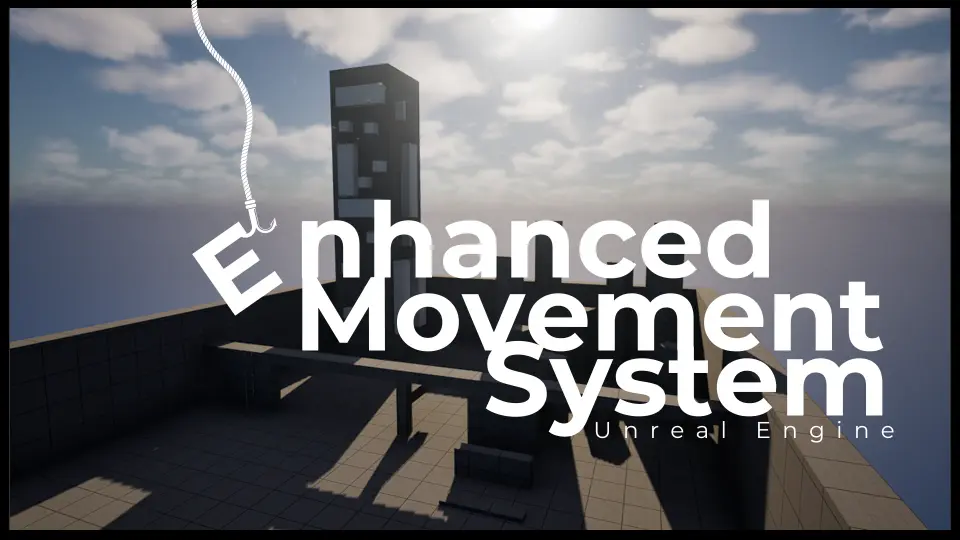
Enhanced Movement System
Unreal Engine character movement toolkit with parkour vaulting, grappling hook, stamina UI, fall damage, footstep SFX, and a built-in tutorial system.
A Blueprint-Driven First-Person Character Controller
Characters built with the Enhanced Movement System behave more like occupants of a physical space than rigid avatars locked to a NavMesh. The toolkit is Unreal Engine-native and Blueprint-based, built to be dropped into a project and iterated on without requiring source-level engineering. At its core sits the BP_EnhancedMovementPlayer Blueprint, which houses the variables, audio triggers, and ability toggles that drive the entire system. First-person comfort and camera behavior take priority throughout: looking around introduces natural camera tilt, collisions and impacts produce physics-based camera shakes, and a subtle dirty-lens effect layers over the view to sell the sense that a real camera occupies the scene rather than a disembodied eye.
One setup detail that teams should catch early: the project opens preconfigured for the sandbox level, which means the tutorial level will not function correctly until the developer adjusts the Blueprint. Fixing this involves opening BP_EnhancedMovementPlayer, locating the Tutorial variables section, and toggling every default value in that section to FALSE. Once that switch is made, the tutorial level becomes the guided onboarding experience it was designed to be, complete with voice effects and ability blockers that gate mechanics until the player learns them.
Traversal: Dashing, Vaulting, Grappling Hook, and Ladder Climbing
Movement in the Enhanced Movement System is not limited to walk, run, and jump. The asset packs several advanced traversal mechanics that expand how a player can navigate vertical and obstructed spaces. Dashing delivers a fast, responsive burst suitable for dodging or repositioning. Double jump grants an additional mid-air jump for extended aerial mobility, opening up platforming options that a single-jump controller cannot reach.
The vault and climb system lets characters mount and clear obstacles with motion transitions intended to look natural rather than snapping. Wall climbing adheres to the same philosophy, blending into the traversal flow rather than interrupting it. For vertical traversal of a different kind, the grappling hook adds a dynamic mechanism for pulling across or ascending past gaps and obstacles, giving level designers a reason to build spaces that reward creative routing.
Ladders receive their own treatment rather than functioning as simple triggers. The ladder system includes smooth climbing mechanics with transitions and animations intended to feel grounded. A fully integrated door system handles level transitions and door interactions, so the traversal loop extends beyond open terrain into connected interiors.
Stamina, Health, and Fall Damage Feedback
Movement cost is visible. The radial stamina system depletes and regenerates based on what the character is doing, displayed through a visually engaging radial UI element that communicates exhaustion without forcing the player to read a number. Sprinting ties directly into this system—Field of View (FOV) widens automatically when sprinting to amplify the sense of speed, and sprinting sound effects shift to reflect stamina levels. When stamina runs low, out-of-breath audio cues signal that the character is reaching a physical limit.
Health is tracked through an integrated health system with a customizable UI that displays player health status, damage feedback, and recovery. Health pickups exist as interactable Actors that restore health on contact, giving designers a concrete item to place in the world rather than requiring a custom healing solution. A fall damage system automatically calculates damage based on height and impact velocity, pairing the damage event with visual and audio cues so that hard landings register as more than a stat change.
A simple timer system tracks how long the player has been in the level, which is useful for speedrun-oriented design, challenge scoring, or simply giving designers a metric to observe during playtesting.
Surface-Aware Audio and Cinematic Camera Behavior
Sound is tightly coupled to movement state. Footstep playback is driven by Physical Materials, so walking across different surface types dynamically changes the footstep sound. The included SFX package contains 15 distinct footstep sounds covering various ground materials, along with additional audio cues for other movement events. Jump sounds vary based on jump height, meaning a small hop produces a different audio response than a full-power leap.
Camera behavior reinforces the movement audio. Camera zoom is adjustable for framing and cinematic moments. Camera tilt when looking around introduces a subtle rotational lean that reads as natural head movement rather than a fixed-pitch viewport. The dirty-lens effect adds soft particulate texture over the player view, giving a documentary or body-cam impression that pairs well with first-person horror or exploration genres where lens presence sells immersion.
The flashlight system follows a similar physical ethos. Rather than locking a light cone rigidly to the camera forward vector, the flashlight includes lag that simulates natural flashlight movement, so the beam lags slightly behind rapid camera rotation. That lag is the kind of detail that reads as a polish pass rather than a default engine behavior.
Interaction, UI, and Tutorial-Level Wiring
Beyond raw movement, the Enhanced Movement System covers the connective tissue that makes a first-person character feel present in a level. The interaction system handles smooth, responsive interactions with in-game objects, accompanied by a smooth interaction dot that serves as a dynamic UI indicator for when an interactive target is in range. A fully functional pause menu provides resume, settings, and exit options, so the project ships with a baseline front-end flow that can be themed rather than built from nothing.
The tutorial system is integrated directly into the project rather than delivered as a separate plugin. It guides players through movement mechanics using voice effects and ability blockers, so mechanics unlock as the player demonstrates familiarity. Because the project opens sandbox-configured by default, the tutorial variables inside BP_EnhancedMovementPlayer must be toggled to FALSE before the tutorial level can run its intended guided sequence. Teams evaluating the asset should treat that toggle as a first-day setup task rather than a bug.
Where the Enhanced Movement System Fits in Production
The asset occupies the space between a raw character controller and a full game-ready player framework. It handles the heavy implementation work for traversal, stamina, health, surface audio, fall damage, and tutorial flow, leaving the creative side—level design, visual theme, encounter tuning—to the team using it. First-person projects that need parkour-style movement, environmental interaction, and physical-feeling camera work can plug the system in and focus on content rather than rewriting locomotion from scratch.
The toolkit is tagged across its listed categorization as first-person, parkour, mantle, vault, climbing, ladder, and Blueprint-based, which positions it for projects leaning into traversal-heavy level design. The developer notes that additional engine compatibility is coming, so teams working in versions of Unreal Engine outside the currently supported range should verify support before committing. For teams that need a traversal system with integrated feedback loops—stamina affecting sprint audio, fall damage triggering visual and audio cues, Physical Materials driving footstep playback—the Enhanced Movement System provides a working, extensible baseline rather than a collection of disconnected snippets.
 Action-Adventure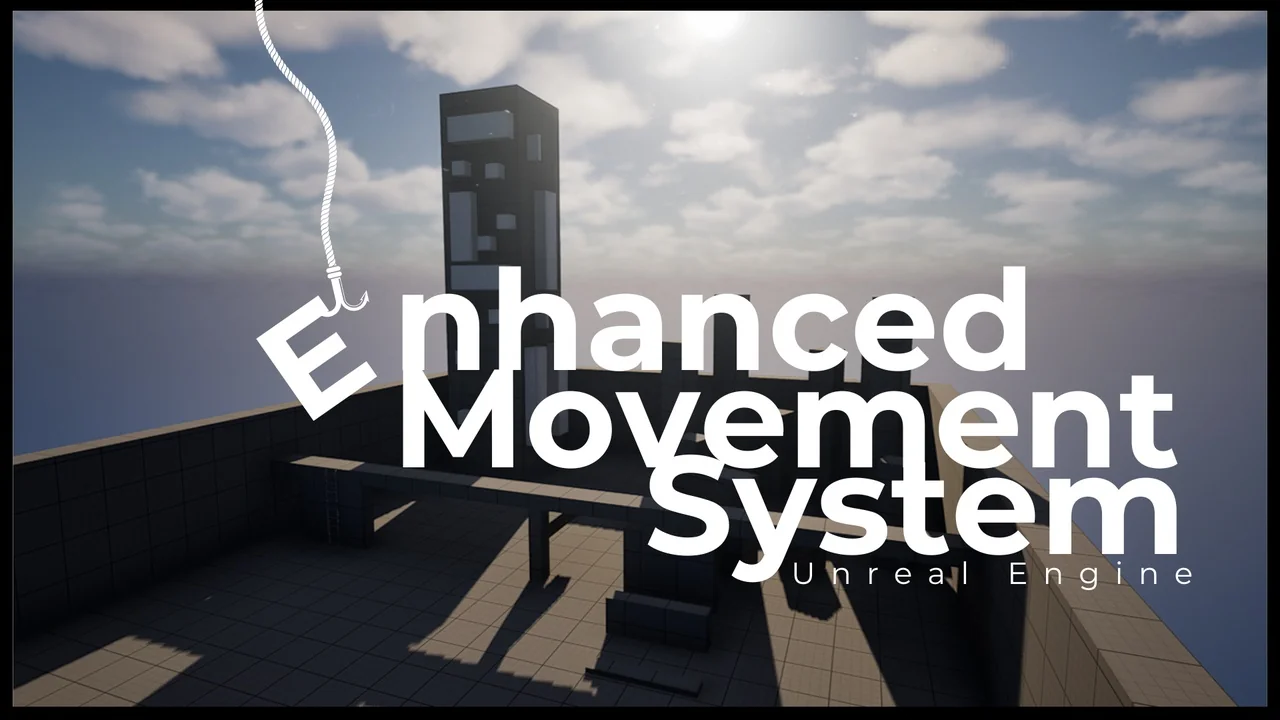
 Action-Adventure
 Action-Adventure
 Action-Adventure