"b00678cacce53329"{"id":"1002807","slug":"magic-fire-spells-with-sounds","title":"Magic Fire Spells with Sounds","category":"Spells \u0026 Combat","engine":"4.25+,5.0+","assetVersion":"","engineVersion":"Engine Version: 4.25+,5.0+","tag":"Spells \u0026 Combat","accent":"blue","visual":"mech","summary":"A technical breakdown of Magic Fire Spells with Sounds, featuring 27 fire particles, Cascade and Niagara versions, 45 shaders, 52 textures, and custom audio.","platform":"Unreal Engine","indexPolicy":"index","publishedAt":"2026-11-20T07:37:46.142Z","updatedAt":"2026-11-20T07:37:46.142Z","sourceNotes":[],"fileContents":[],"compatibility":["Unreal Engine","Engine Version: 4.25+,5.0+"],"featuredImage":{"alt":"Magic Fire Spells with Sounds","src":"/wp-content/uploads/published/2026/11/e48196c7654c-57d7a844-b961-4777-a481-d1fb357f8511-ac05f091a8.webp"},"fileSizeBytes":98783645,"hasDownloadLink":true,"downloads":0,"terms":[{"taxonomy":"category","slug":"spells-and-combat","name":"Spells \u0026 Combat"}],"galleryImages":[{"src":"/wp-content/uploads/published/2026/11/5a3b3f3acf81-c5e62701-32d4-4e9b-a972-be900c4237b0-87243e6479.webp","alt":"Magic Fire Spells with Sounds"},{"src":"/wp-content/uploads/published/2026/11/5c34140e4f7e-d720da8c-7bf2-41f6-abd2-8aaec507f796-9f3b9c0a41.webp","alt":"Magic Fire Spells with Sounds"},{"src":"/wp-content/uploads/published/2026/11/fc5d93b33e00-6e0c0b5b-cce6-4239-9e51-835e8452f1d4-a50276d321.webp","alt":"Magic Fire Spells with Sounds"},{"src":"/wp-content/uploads/published/2026/11/1534f079c264-fdb3563f-5a51-4250-9e66-f4bcefbadb0a-eef4f3e551.webp","alt":"Magic Fire Spells with Sounds"},{"src":"/wp-content/uploads/published/2026/11/7be789ee8d42-9844616e-eed0-4b33-bdf8-24ddc771404f-26cbcf52ed.webp","alt":"Magic Fire Spells with Sounds"},{"src":"/wp-content/uploads/published/2026/11/6ba2ecb8ac58-9e43daac-017a-4250-ac29-95028d36185e-26e3e7a8f3.webp","alt":"Magic Fire Spells with Sounds"},{"src":"/wp-content/uploads/published/2026/11/8f5e8412e99a-ab634b6b-9b2b-439b-bee9-78ca8a6f152f-b6bcc5e1a2.webp","alt":"Magic Fire Spells with Sounds"}],"accessPanel":{"kind":"resource","title":"Get this resource","safetyNote":"Resources are manually reviewed before listing to improve quality and reduce obvious risks.","fileName":"Content.7z","resourceType":"Resource archive","versions":[]},"contentHtml":"\u003ch2\u003eFolder Organization and Dual Setup in Magic Fire Spells\u003c/h2\u003e\u003cp\u003eIntegrating visual effects into an active project pipeline often requires deciding between legacy engine systems and modern simulation frameworks. Magic Fire Spells with Sounds resolves this by splitting its core assets across designated folder hierarchies, separating Cascade particle systems from Niagara particle systems. This structural separation allows developers running older Unreal Engine production branches to implement the Cascade versions directly, while modern projects can route the newly added Niagara versions into their scene architecture without manual conversion.\u003c/p\u003e\u003cp\u003eThe inclusion of Niagara particles in version 5.32 also brought calibrated parameters tailored to recent engine releases. When importing the package, technical artists can immediately locate the dedicated folders for each system type. Having separate directories prevents emitter overlap, keeps asset references clean, and simplifies dependency management when migrating visual assets between testing sandboxes and production builds.\u003c/p\u003e\u003ch2\u003eShader and Texture Foundations for Fire Spells\u003c/h2\u003e\u003cp\u003eBehind the 27 fire spell particles lies a library of 45 shaders and 52 texture files. Flame effects and magical projectiles rely heavily on how shaders manipulate texture noise, masks, and emissive values across particle lifetimes. The asset pack allocates nearly two shaders per particle effect on average, providing distinct material logic across different types of magical fire.\u003c/p\u003e\u003cp\u003eThe 52 textures provide the base visual components needed to build diverse combustive phenomena. Within these textures, procedural fire tongues, concentrated magical cores, expanding smoke plumes, and dispersible embers are defined. Because fire spells range from bright flame bursts to darker, witchcraft-inspired magic, the material shaders process these textures to balance emissive intensity against thick, obscuring smoke. Shaders govern how the flames dissolve, how heat dissipation is read by the camera, and how soft particle blending prevents harsh clipping when magical bursts collide with terrain or character geometry.\u003c/p\u003e\u003ch2\u003eAudio Pairing: 46 Custom Sounds in 27 Sound Cues\u003c/h2\u003e\u003cp\u003eVisual effects in combat systems fall flat without precise acoustic timing. Magic Fire Spells with Sounds addresses this by providing 46 specifically designed sound assets combined into 27 pre-built sound cues. Rather than relying on generic fire loops, each sound cue was crafted exclusively to match one of the 27 particle effects, establishing direct parity between visual milestones and audio events.\u003c/p\u003e\u003cp\u003eA typical spell sequence consists of multiple audio phases: an initial cast or ignition transient, a traveling whoosh or burning hum, and a terminal impact, explosion, or smoke hiss. The 46 raw audio files supply the discrete components necessary to build these layered sound cues. In practice, this 1:1 parity between the 27 spells and the 27 sound cues eliminates the guesswork of balancing pitch, volume, and timing inside the engine. When a spell spawns, calling its corresponding sound cue ensures the ignition crackle aligns with the initial particle flash, and the low-frequency impact boom plays the instant the visual fireball detonates.\u003c/p\u003e\u003ch2\u003eCascade to Niagara Parameter Calibration\u003c/h2\u003e\u003cp\u003eParticle simulation behavior shifts as game engines update their underlying physics and rendering math. In the 5.32 release of the pack, particle parameters were revised to account for updates in modern engine releases. Moving from Cascade to Niagara entails fundamental differences in how particle velocity, drag, scale over life, and light emission are computed.\u003c/p\u003e\u003cp\u003eThe parameter updates ensure that emitters behave consistently across versions. In newer engine builds, legacy Cascade emitters can exhibit timing shifts or visual discrepancies if their spawn rates and curve evaluations interact poorly with updated frame pipelines. The corrected parameters in this release stabilize particle lifespans, smoke billow expansion rates, and particle sizes, ensuring that high-velocity fireballs and sudden magical explosions maintain their intended silhouette and density regardless of which system is deployed.\u003c/p\u003e\u003ch2\u003eDeploying Magic Fire Spells Across Combat Scenarios\u003c/h2\u003e\u003cp\u003eThe thematic scope of the pack covers witchcraft, dark magic, traditional fireballs, rapid casts, heavy explosions, and lingering smoke. Because combat systems demand varied gameplay roles for magic, the 27 distinct particle configurations can be mapped across standard ability sets:\u003c/p\u003e\u003cul\u003e\u003cli\u003e\u003cstrong\u003eTargeted Projectiles:\u003c/strong\u003e High-velocity fireball bursts with distinct front-facing flame tips and trailing smoke plumes for standard ranged attacks.\u003c/li\u003e\u003cli\u003e\u003cstrong\u003eImpact Explosions:\u003c/strong\u003e Wide-radius blast effects that emphasize instantaneous flash, shockwave dissipation, and heavy smoke development for area-of-effect spells.\u003c/li\u003e\u003cli\u003e\u003cstrong\u003eCast and Ignition Markers:\u003c/strong\u003e Concentrated magical fire coalescing at a character's hands or staff base, serving as the tell for incoming witchcraft spells.\u003c/li\u003e\u003cli\u003e\u003cstrong\u003eDark and Witchcraft Fire:\u003c/strong\u003e Effects styled with deeper hues and prolonged dissipation phases, suitable for dark magic abilities and hexes.\u003c/li\u003e\u003c/ul\u003e\u003cp\u003eImplementing these assets into character blueprints or animation notifies requires pairing the particle spawn node with the matching sound cue node. Because each of the 27 sound cues is specifically tailored to its corresponding particle system, sequencing ability events remains straightforward. Developers can trigger the visual particle at a socket location on a skeletal mesh while simultaneously playing the assigned sound cue at the same world coordinates. The resulting sync between the shader-driven fire textures and the custom audio transient delivers a complete combat ability interaction right out of the box.\u003c/p\u003e\n\n\u003ch2\u003eExplore Similar Assets\u003c/h2\u003e\n\u003cul\u003e\n\u003cli\u003e\u003ca href=\"https://3dcghub.com/ky-magic-chant-fx/\" rel=\"noopener noreferrer\"\u003eKY Magic Chant FX\u003c/a\u003e\u003c/li\u003e\n\u003cli\u003e\u003ca href=\"https://3dcghub.com/ky-barrier-shield-fx/\" rel=\"noopener noreferrer\"\u003eKY Barrier Shield FX\u003c/a\u003e\u003c/li\u003e\n\u003cli\u003e\u003ca href=\"https://3dcghub.com/fantasy-rpg-vfx-pack/\" rel=\"noopener noreferrer\"\u003eFantasy RPG VFX Pack\u003c/a\u003e\u003c/li\u003e\n\u003cli\u003e\u003ca href=\"https://3dcghub.com/advancedmagicfx19/\" rel=\"noopener noreferrer\"\u003eAdvancedMagicFX19\u003c/a\u003e\u003c/li\u003e\n\u003cli\u003e\u003ca href=\"https://3dcghub.com/advancedmagicfx18/\" rel=\"noopener noreferrer\"\u003eAdvancedMagicFX18\u003c/a\u003e\u003c/li\u003e\n\u003c/ul\u003e","contentTextLength":5855,"navigation":{"current":73,"total":4797,"previous":{"id":"1002808","slug":"magic-sigil-vfx-material-pack","title":"Magic Sigil VFX/Material Pack","category":"Variety","platform":"Unreal Engine","updatedAt":"2026-11-20T07:38:46.587Z"},"next":{"id":"1002806","slug":"magic-explosions","title":"Magic Explosions","category":"Variety","platform":"Unreal Engine","updatedAt":"2026-11-20T07:36:38.300Z"}},"relatedResources":[{"id":"1002869","slug":"advanced-magic-fx-14","title":"Advanced Magic FX 14","category":"Spells \u0026 Combat","engine":"4.26+,5.0+","assetVersion":"","engineVersion":"Engine Version: 4.26+,5.0+","tag":"Spells \u0026 Combat","accent":"blue","visual":"mech","summary":"Explore Advanced Magic FX 14, featuring Niagara and Cascade magic spells, elemental fire vortexes, lasers, healing, lightning, and built-in particle LODs.","platform":"Unreal Engine","indexPolicy":"index","publishedAt":"2026-11-20T16:32:06.460Z","updatedAt":"2026-11-20T16:32:06.460Z","sourceNotes":[],"fileContents":[],"compatibility":["Unreal Engine","Engine Version: 4.26+,5.0+"],"featuredImage":{"alt":"Advanced Magic FX 14","src":"/wp-content/uploads/published/2026/11/33641332d289-27e981bf-72b2-4c5e-86dc-4b4d536e5221-8a43b3a7ca.webp"},"fileSizeBytes":112659794,"hasDownloadLink":true,"downloads":0},{"id":"1002863","slug":"magic-circles-and-shields","title":"Magic Circles and Shields","category":"Spells \u0026 Combat","engine":"4.24+,5.0+","assetVersion":"","engineVersion":"Engine Version: 4.24+,5.0+","tag":"Spells \u0026 Combat","accent":"blue","visual":"mech","summary":"Explore 11 unique 3D magic circles and 4 shields featuring custom textures, loop duration controls, mobile distortion adjustments, and a demo scene.","platform":"Unreal Engine","indexPolicy":"index","publishedAt":"2026-11-20T12:45:36.364Z","updatedAt":"2026-11-20T12:45:36.364Z","sourceNotes":[],"fileContents":[],"compatibility":["Unreal Engine","Engine Version: 4.24+,5.0+"],"featuredImage":{"alt":"Magic Circles and Shields","src":"/wp-content/uploads/published/2026/11/b5bbce61447a-4a263956-4f19-4121-a398-515b2e7fb7aa-46dfb724fb.webp"},"fileSizeBytes":67001768,"hasDownloadLink":true,"downloads":0},{"id":"1002839","slug":"stylized-aoe-pack","title":"Stylized Aoe Pack","category":"Spells \u0026 Combat","engine":"4.25+,5.0+","assetVersion":"","engineVersion":"Engine Version: 4.25+,5.0+","tag":"Spells \u0026 Combat","accent":"blue","visual":"mech","summary":"Examine the Stylized Aoe Pack featuring 13 Niagara visual effects, including 10 ice skills alongside fire, water, and toxic sets for fantasy magic systems.","platform":"Unreal Engine","indexPolicy":"index","publishedAt":"2026-11-20T12:21:33.820Z","updatedAt":"2026-11-20T12:21:33.820Z","sourceNotes":[],"fileContents":[],"compatibility":["Unreal Engine","Engine Version: 4.25+,5.0+"],"featuredImage":{"alt":"Stylized Aoe Pack","src":"/wp-content/uploads/published/2026/11/66ce738e962a-6a45b7cc-ec87-41b0-9aa9-27cb8a423678-887ea892dd.webp"},"fileSizeBytes":35453947,"hasDownloadLink":true,"downloads":0}]}
Resource screenshots
1 / 7
Join our channel
Follow 3DCGHUB on Telegram for new resource drops, migration updates, and community notices.
Resources are manually reviewed before listing to improve quality and reduce obvious risks.
No account required
Spells & Combat
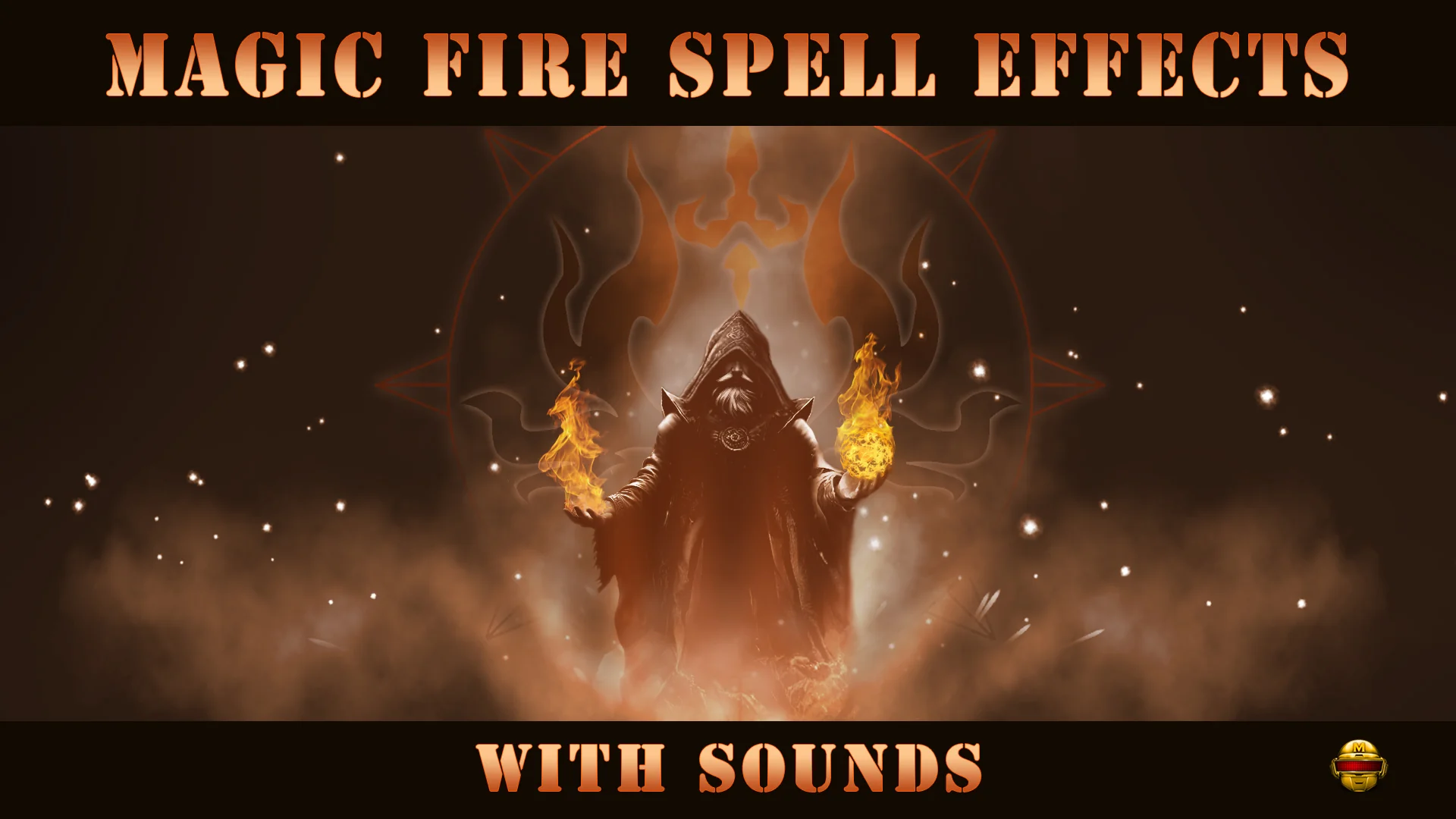
Magic Fire Spells with Sounds
A technical breakdown of Magic Fire Spells with Sounds, featuring 27 fire particles, Cascade and Niagara versions, 45 shaders, 52 textures, and custom audio.
Folder Organization and Dual Setup in Magic Fire Spells
Integrating visual effects into an active project pipeline often requires deciding between legacy engine systems and modern simulation frameworks. Magic Fire Spells with Sounds resolves this by splitting its core assets across designated folder hierarchies, separating Cascade particle systems from Niagara particle systems. This structural separation allows developers running older Unreal Engine production branches to implement the Cascade versions directly, while modern projects can route the newly added Niagara versions into their scene architecture without manual conversion.
The inclusion of Niagara particles in version 5.32 also brought calibrated parameters tailored to recent engine releases. When importing the package, technical artists can immediately locate the dedicated folders for each system type. Having separate directories prevents emitter overlap, keeps asset references clean, and simplifies dependency management when migrating visual assets between testing sandboxes and production builds.
Shader and Texture Foundations for Fire Spells
Behind the 27 fire spell particles lies a library of 45 shaders and 52 texture files. Flame effects and magical projectiles rely heavily on how shaders manipulate texture noise, masks, and emissive values across particle lifetimes. The asset pack allocates nearly two shaders per particle effect on average, providing distinct material logic across different types of magical fire.
The 52 textures provide the base visual components needed to build diverse combustive phenomena. Within these textures, procedural fire tongues, concentrated magical cores, expanding smoke plumes, and dispersible embers are defined. Because fire spells range from bright flame bursts to darker, witchcraft-inspired magic, the material shaders process these textures to balance emissive intensity against thick, obscuring smoke. Shaders govern how the flames dissolve, how heat dissipation is read by the camera, and how soft particle blending prevents harsh clipping when magical bursts collide with terrain or character geometry.
Audio Pairing: 46 Custom Sounds in 27 Sound Cues
Visual effects in combat systems fall flat without precise acoustic timing. Magic Fire Spells with Sounds addresses this by providing 46 specifically designed sound assets combined into 27 pre-built sound cues. Rather than relying on generic fire loops, each sound cue was crafted exclusively to match one of the 27 particle effects, establishing direct parity between visual milestones and audio events.
A typical spell sequence consists of multiple audio phases: an initial cast or ignition transient, a traveling whoosh or burning hum, and a terminal impact, explosion, or smoke hiss. The 46 raw audio files supply the discrete components necessary to build these layered sound cues. In practice, this 1:1 parity between the 27 spells and the 27 sound cues eliminates the guesswork of balancing pitch, volume, and timing inside the engine. When a spell spawns, calling its corresponding sound cue ensures the ignition crackle aligns with the initial particle flash, and the low-frequency impact boom plays the instant the visual fireball detonates.
Cascade to Niagara Parameter Calibration
Particle simulation behavior shifts as game engines update their underlying physics and rendering math. In the 5.32 release of the pack, particle parameters were revised to account for updates in modern engine releases. Moving from Cascade to Niagara entails fundamental differences in how particle velocity, drag, scale over life, and light emission are computed.
The parameter updates ensure that emitters behave consistently across versions. In newer engine builds, legacy Cascade emitters can exhibit timing shifts or visual discrepancies if their spawn rates and curve evaluations interact poorly with updated frame pipelines. The corrected parameters in this release stabilize particle lifespans, smoke billow expansion rates, and particle sizes, ensuring that high-velocity fireballs and sudden magical explosions maintain their intended silhouette and density regardless of which system is deployed.
Deploying Magic Fire Spells Across Combat Scenarios
The thematic scope of the pack covers witchcraft, dark magic, traditional fireballs, rapid casts, heavy explosions, and lingering smoke. Because combat systems demand varied gameplay roles for magic, the 27 distinct particle configurations can be mapped across standard ability sets:
Targeted Projectiles: High-velocity fireball bursts with distinct front-facing flame tips and trailing smoke plumes for standard ranged attacks.
Impact Explosions: Wide-radius blast effects that emphasize instantaneous flash, shockwave dissipation, and heavy smoke development for area-of-effect spells.
Cast and Ignition Markers: Concentrated magical fire coalescing at a character's hands or staff base, serving as the tell for incoming witchcraft spells.
Dark and Witchcraft Fire: Effects styled with deeper hues and prolonged dissipation phases, suitable for dark magic abilities and hexes.
Implementing these assets into character blueprints or animation notifies requires pairing the particle spawn node with the matching sound cue node. Because each of the 27 sound cues is specifically tailored to its corresponding particle system, sequencing ability events remains straightforward. Developers can trigger the visual particle at a socket location on a skeletal mesh while simultaneously playing the assigned sound cue at the same world coordinates. The resulting sync between the shader-driven fire textures and the custom audio transient delivers a complete combat ability interaction right out of the box.
 Spells & Combat
 Spells & Combat
 Spells & Combat