"7ad89cffa44984cf"{"id":"1002540","slug":"juggernaut","title":"Juggernaut","category":"Game Development Resource","engine":"4.26+,5.0+","assetVersion":"","engineVersion":"Engine Version: 4.26+,5.0+","tag":"Game Development R","accent":"blue","visual":"mech","summary":"Explore the Juggernaut character asset, featuring a frightening low-poly design, Animationblueprint setup, and 56 Animations For Creatures compatibility.","platform":"Unreal Engine","indexPolicy":"index","publishedAt":"2026-11-13T09:43:55.074Z","updatedAt":"2026-11-13T09:43:55.074Z","sourceNotes":[],"fileContents":[],"compatibility":["Unreal Engine","Engine Version: 4.26+,5.0+"],"featuredImage":{"alt":"Juggernaut","src":"/wp-content/uploads/published/2026/11/8e0ec795029c-ce8b5d35-a7ac-4fe5-80de-4462af8cdde6-e520dd409f.webp"},"hasDownloadLink":true,"downloads":0,"terms":[],"galleryImages":[{"src":"/wp-content/uploads/published/2026/11/883682508f23-a6b4b77e-c46f-47c6-bac6-d6f9d63231da-7253de59f0.webp","alt":"Juggernaut"},{"src":"/wp-content/uploads/published/2026/11/5a7dab563f66-7983f3ca-8267-4505-9db7-05e313f3704d-2bdbeb9ed0.webp","alt":"Juggernaut"},{"src":"/wp-content/uploads/published/2026/11/7832ef060897-7fa69df4-3de1-452d-b78e-8710546cd01a-dc927d0e5b.webp","alt":"Juggernaut"},{"src":"/wp-content/uploads/published/2026/11/7a61bc6fdd14-a03e3719-fdef-4170-a75f-8acf7b507a71-6683825134.webp","alt":"Juggernaut"}],"accessPanel":{"kind":"resource","title":"Get this resource","eyebrow":"Free resource","message":"Download this resource in your browser.","fileName":"Content.7z","safetyNote":"Resources are manually reviewed before listing to improve quality and reduce obvious risks.","actionLabel":"Get this resource","resourceType":"Resource archive","versions":[]},"contentHtml":"\u003ch2\u003eAtmospheric Roles for the Juggernaut in Dark Fantasy and Horror\u003c/h2\u003e\u003cp\u003eHostile encounters in survival horror and dark fantasy often rely on the immediate physical intimidation of an adversary. The Juggernaut is shaped specifically to deliver that threat through a distinctly nasty visual presentation designed to terrify players on sight. Rather than presenting a clean or heroic silhouette, the character emphasizes an unsettling, grotesque posture that reads clearly in dimly lit corridors, cavernous dungeons, and fog-drenched landscapes.\u003c/p\u003e\u003cp\u003eBecause the character carries a low-poly artistic execution, it slots comfortably into stylized pipelines where silhouette clarity and edge definition dictate the player's perception of danger. In horror projects, tension hinges on whether a creature appears capable of overpowering the player, and the Juggernaut leverages its hulking form to create that immediate sense of vulnerability. Placing such a character inside confined underground chambers, decayed castle halls, or abandoned industrial ruins instantly shifts the emotional tone from quiet dread to active terror.\u003c/p\u003e\u003cp\u003eIn fantasy worlds where massive brutes guard ritual chambers or roam forbidden ruins, the Juggernaut functions naturally as a heavy combatant, mini-boss, or patrolling enforcer. The low-poly geometry keeps the visual footprint distinct, allowing environmental lighting, harsh shadows, and atmospheric particle effects to accentuate its jagged contours and threatening profile without visual clutter.\u003c/p\u003e\u003ch2\u003eBehavior Control via Scripts and the Juggernaut Animationblueprint\u003c/h2\u003e\u003cp\u003eVisual intimidation needs responsive motion logic behind it to remain convincing during gameplay. The Juggernaut package addresses this requirement by incorporating an Animationblueprint alongside script support to manage how the character responds to world events and game states. This foundation allows the model to handle fundamental creature behaviors, from resting state poses to sudden aggressive bursts, without requiring a custom movement tree to be engineered entirely from the ground up.\u003c/p\u003e\u003cp\u003eAn Animationblueprint handles the blending between disparate movement states, ensuring that turns, acceleration cycles, and combat stances do not jar or snap unnaturally on screen. In games where creatures must track players across uneven terrain, the internal blueprint logic provides the structural bridge between character velocity, collision checks, and active skeletal animations. Having this logic ready to deploy means developers can route custom enemy artificial intelligence directly into the existing state machine, letting logic scripts trigger walk cycles, combat reactions, and recovery frames smoothly.\u003c/p\u003e\u003cp\u003eScript support further bridges the gap between state transitions and interactive mechanics. Whether an encounter demands that the Juggernaut patrol a rigid route until alerted, break into a charging frenzy upon spotting the player, or pause in menacing idle states to survey the room, the combination of scripted hooks and the Animationblueprint keeps visual playback in sync with the underlying gameplay calculations.\u003c/p\u003e\u003ch2\u003eExpanding Actions with the 56 Animations For Creatures Library\u003c/h2\u003e\u003cp\u003eA key strength of this character package is its verified compatibility with 56 Animations For Creatures. While the Juggernaut includes its own selection of animations to support basic operations, cross-compatibility with this broader creature animation set drastically expands its tactical and expressive vocabulary across different encounter phases.\u003c/p\u003e\u003cp\u003eCreature-focused animation packs generally accommodate a wide spectrum of physical expressions, encompassing varied movement gaits, threat displays, hit reactions, recovery cycles, and multi-directional melee strikes. With 56 compatible creature clips available to draw from, the Juggernaut can be tuned for distinct combat tempos. It can adopt deliberate, ponderous lumbering motions when slowly pursuing a target in a survival horror sequence, or switch to aggressive lunges, sweeping impacts, and heavy overhead attacks during high-stakes fantasy combat arenas.\u003c/p\u003e\u003cp\u003eThis compatibility also simplifies variety when multiple Juggernaut instances are deployed within the same game world. By assigning distinct sets of attacks, idles, and hit responses from the 56 available creature animations to different enemy archetypes, a development team can reuse the base character mesh across elite variants, standard brutes, and ambush predators without every monster exhibiting identical kinetic habits.\u003c/p\u003e\u003ch2\u003eLowpoly Efficiency in Hostile Creature Encounters\u003c/h2\u003e\u003cp\u003ePerformance budgeting remains an essential consideration across modern game engines, particularly when projects feature complex lighting schemes, heavy post-processing, or multi-enemy skirmishes. The Juggernaut's low-poly construction provides practical advantages for projects targeting tight hardware constraints or high framerate targets, such as fast-paced indie action titles, mobile releases, or standalone virtual reality experiences.\u003c/p\u003e\u003cp\u003eBecause the mesh does not carry unnecessary geometric density, rendering overhead stays modest even when the Juggernaut is paired with heavy dynamic shadow-casting lights, blood splatters, or magical VFX. Teams can comfortably stage encounters featuring several of these nasty creatures simultaneously, staging tense horde or mob battles where players must evade multiple heavy combatants at once without triggering performance drops.\u003c/p\u003e\u003cp\u003eThe simplified polygon structure also streamlines secondary production tasks. Deformations across joints during high-impact strikes and heavy windups remain clean and predictable, reducing the risk of strange mesh tearing or skinning artifacts during complex locomotion. This reliability makes the asset dependable for rapid prototyping as well as final integration, allowing animators and level designers to test terrifying enemy setups early in the production cycle.\u003c/p\u003e\u003ch2\u003eProject Suitability and Production Fit\u003c/h2\u003e\u003cp\u003eThe Juggernaut delivers the greatest value to developers building horror experiences, retro-styled survival games, and fantasy action titles that require a frightening heavy adversary without the overhead of high-density photorealistic meshes. Teams seeking an enemy that can instantly project menace, leverage established creature motion sets, and function directly through standard blueprint logic will find it a capable addition to their pipeline.\u003c/p\u003e\u003cp\u003eWith its nasty aesthetic, native script and Animationblueprint integration, and straightforward low-poly efficiency, the character serves as an immediate terror focal point for any dark production looking to challenge players with sheer, aggressive presence.\u003c/p\u003e\n\n\u003ch2\u003eExplore Similar Assets\u003c/h2\u003e\n\u003cul\u003e\n\u003cli\u003e\u003ca href=\"https://3dcghub.com/humanoids-monsters-pack/\" rel=\"noopener noreferrer\"\u003eHumanoids Monsters Pack\u003c/a\u003e\u003c/li\u003e\n\u003cli\u003e\u003ca href=\"https://3dcghub.com/armored-leech/\" rel=\"noopener noreferrer\"\u003eArmored Leech\u003c/a\u003e\u003c/li\u003e\n\u003cli\u003e\u003ca href=\"https://3dcghub.com/hell-acarid/\" rel=\"noopener noreferrer\"\u003eHell Acarid\u003c/a\u003e\u003c/li\u003e\n\u003cli\u003e\u003ca href=\"https://3dcghub.com/character-conversation-mocap-pack/\" rel=\"noopener noreferrer\"\u003eCharacter Conversation - MoCap Pack\u003c/a\u003e\u003c/li\u003e\n\u003cli\u003e\u003ca href=\"https://3dcghub.com/holden/\" rel=\"noopener noreferrer\"\u003eHolden\u003c/a\u003e\u003c/li\u003e\n\u003c/ul\u003e","contentTextLength":6780,"navigation":{"current":37,"total":4499,"previous":{"id":"1002541","slug":"light-lamellar-armour-pack","title":"Light Lamellar Armour Pack","category":"Characters \u0026 Creatures","platform":"Unreal Engine","updatedAt":"2026-11-13T09:45:33.266Z"},"next":{"id":"1002539","slug":"john-farmer","title":"John Farmer","category":"Humans","platform":"Unreal Engine","updatedAt":"2026-11-13T09:42:49.953Z"}},"relatedResources":[{"id":"1002537","slug":"humanoids-monsters-pack","title":"Humanoids Monsters Pack","category":"Game Development Resource","engine":"4.18+,5.0+","assetVersion":"","engineVersion":"Engine Version: 4.18+,5.0+","tag":"Game Development R","accent":"blue","visual":"mech","summary":"Examine the lowpoly horror creature design, Animationblueprint setup, and bundle compatibility provided in the Humanoids Monsters Pack for game projects.","platform":"Unreal Engine","indexPolicy":"index","publishedAt":"2026-11-13T09:40:58.998Z","updatedAt":"2026-11-13T09:40:58.998Z","sourceNotes":[],"fileContents":[],"compatibility":["Unreal Engine","Engine Version: 4.18+,5.0+"],"featuredImage":{"alt":"Humanoids Monsters Pack","src":"/wp-content/uploads/published/2026/11/adc9874f8225-c4b88b2e-6ffc-4737-93cd-ab6bac51ebfc-10cfc18eab.webp"},"hasDownloadLink":true,"downloads":0},{"id":"1002506","slug":"armored-leech","title":"Armored Leech","category":"Game Development Resource","engine":"4.16+,5.0+","assetVersion":"","engineVersion":"Engine Version: 4.16+,5.0+","tag":"Game Development R","accent":"blue","visual":"mech","summary":"Examine the Armored Leech monster asset, featuring an extensive animation set, Animationblueprint, and lowpoly horror creature design for 3D environments.","platform":"Unreal Engine","indexPolicy":"index","publishedAt":"2026-11-13T08:20:00.945Z","updatedAt":"2026-11-13T08:20:00.945Z","sourceNotes":[],"fileContents":[],"compatibility":["Unreal Engine","Engine Version: 4.16+,5.0+"],"featuredImage":{"alt":"Armored Leech","src":"/wp-content/uploads/published/2026/11/efa366aa74ca-75d2fc79-833c-4f48-b085-09b2ccd62d0f-73b9422b5b.webp"},"hasDownloadLink":true,"downloads":0},{"id":"1002556","slug":"parasite-spider","title":"Parasite_Spider","category":"Game Development Resource","engine":"4.19+,5.0+","assetVersion":"","engineVersion":"Engine Version: 4.19+,5.0+","tag":"Game Development R","accent":"blue","visual":"mech","summary":"Examine the Parasite_Spider creature asset, featuring 56 animations, Animationblueprint setup, and versatile implementation for shooter, fantasy, and horror gam","platform":"Unreal Engine","indexPolicy":"index","publishedAt":"2026-11-13T10:47:59.388Z","updatedAt":"2026-11-13T10:47:59.388Z","sourceNotes":[],"fileContents":[],"compatibility":["Unreal Engine","Engine Version: 4.19+,5.0+"],"featuredImage":{"alt":"Parasite_Spider","src":"/wp-content/uploads/published/2026/11/1ea5e65cab52-33d65b7d-a7b4-435d-998b-54b067e93eb4-524085e3c1.webp"},"hasDownloadLink":true,"downloads":0}]}
Game Development R
Juggernaut
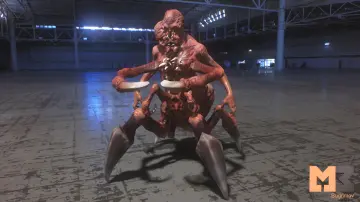
Explore the Juggernaut character asset, featuring a frightening low-poly design, Animationblueprint setup, and 56 Animations For Creatures compatibility.
Category:Unreal EnginePlatform: Unreal EngineEngine Version: 4.26+,5.0+Published: Nov 13, 2026
Game Development R
Resource overview
Atmospheric Roles for the Juggernaut in Dark Fantasy and Horror
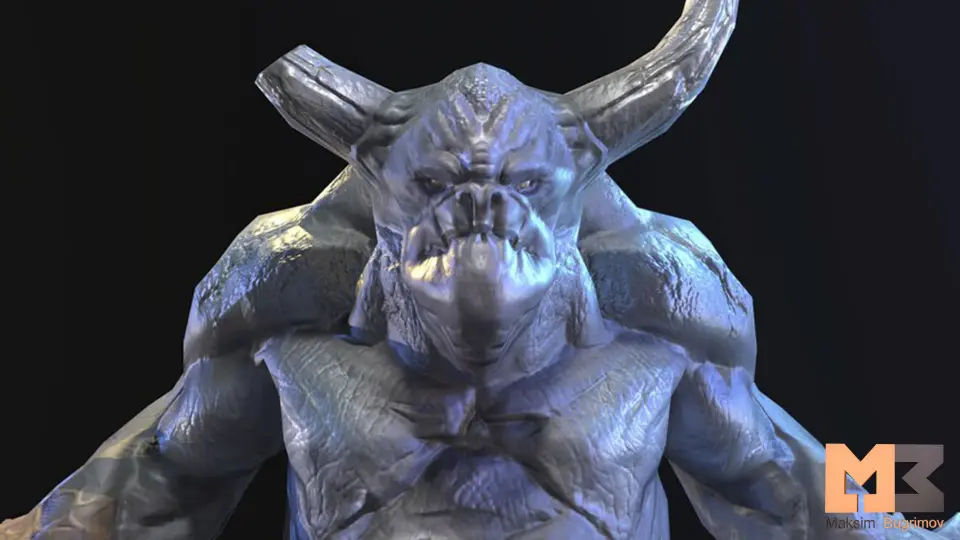
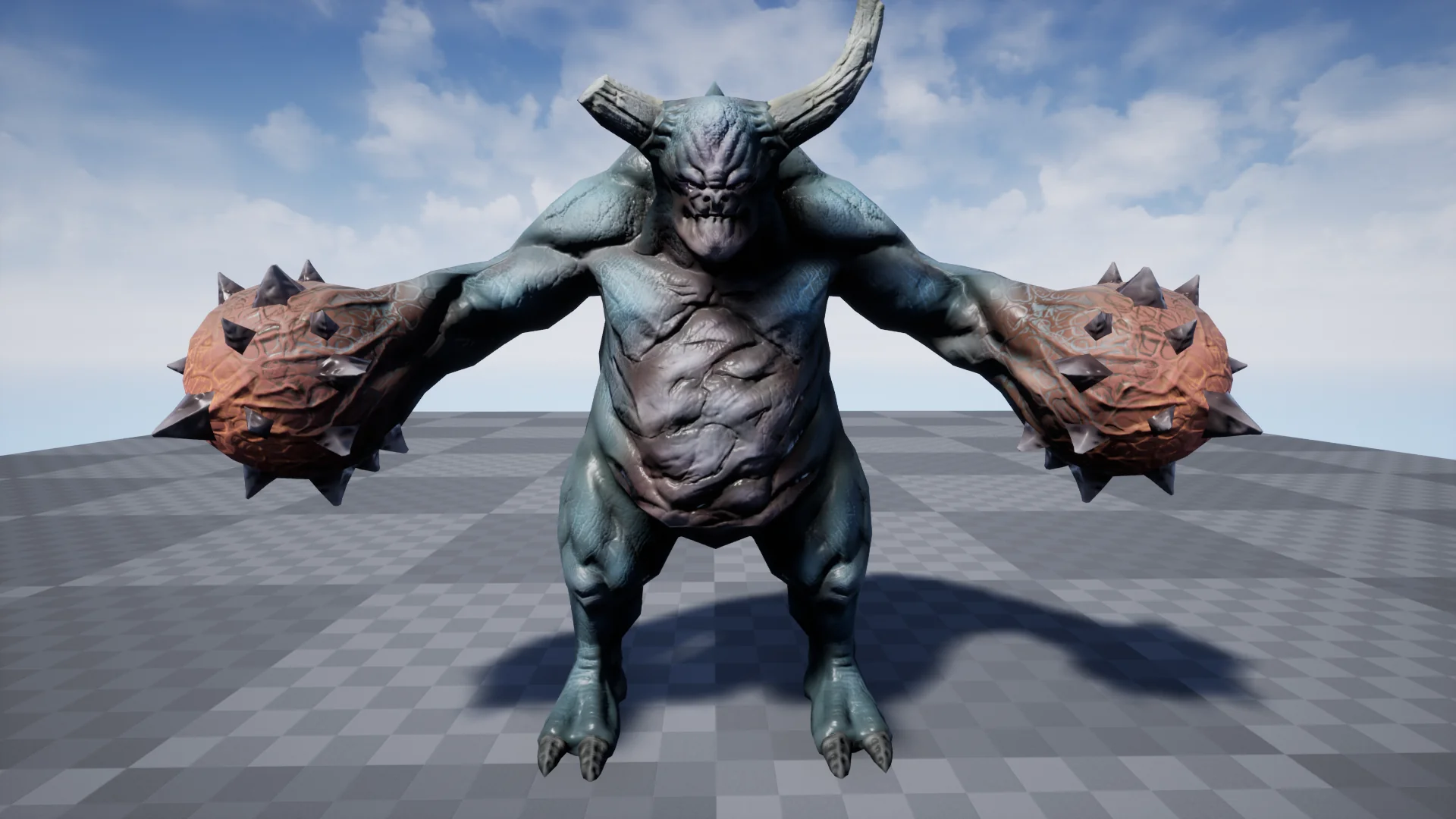
Hostile encounters in survival horror and dark fantasy often rely on the immediate physical intimidation of an adversary. The Juggernaut is shaped specifically to deliver that threat through a distinctly nasty visual presentation designed to terrify players on sight. Rather than presenting a clean or heroic silhouette, the character emphasizes an unsettling, grotesque posture that reads clearly in dimly lit corridors, cavernous dungeons, and fog-drenched landscapes.
Because the character carries a low-poly artistic execution, it slots comfortably into stylized pipelines where silhouette clarity and edge definition dictate the player's perception of danger. In horror projects, tension hinges on whether a creature appears capable of overpowering the player, and the Juggernaut leverages its hulking form to create that immediate sense of vulnerability. Placing such a character inside confined underground chambers, decayed castle halls, or abandoned industrial ruins instantly shifts the emotional tone from quiet dread to active terror.
In fantasy worlds where massive brutes guard ritual chambers or roam forbidden ruins, the Juggernaut functions naturally as a heavy combatant, mini-boss, or patrolling enforcer. The low-poly geometry keeps the visual footprint distinct, allowing environmental lighting, harsh shadows, and atmospheric particle effects to accentuate its jagged contours and threatening profile without visual clutter.
Behavior Control via Scripts and the Juggernaut Animationblueprint
Visual intimidation needs responsive motion logic behind it to remain convincing during gameplay. The Juggernaut package addresses this requirement by incorporating an Animationblueprint alongside script support to manage how the character responds to world events and game states. This foundation allows the model to handle fundamental creature behaviors, from resting state poses to sudden aggressive bursts, without requiring a custom movement tree to be engineered entirely from the ground up.
An Animationblueprint handles the blending between disparate movement states, ensuring that turns, acceleration cycles, and combat stances do not jar or snap unnaturally on screen. In games where creatures must track players across uneven terrain, the internal blueprint logic provides the structural bridge between character velocity, collision checks, and active skeletal animations. Having this logic ready to deploy means developers can route custom enemy artificial intelligence directly into the existing state machine, letting logic scripts trigger walk cycles, combat reactions, and recovery frames smoothly.
Script support further bridges the gap between state transitions and interactive mechanics. Whether an encounter demands that the Juggernaut patrol a rigid route until alerted, break into a charging frenzy upon spotting the player, or pause in menacing idle states to survey the room, the combination of scripted hooks and the Animationblueprint keeps visual playback in sync with the underlying gameplay calculations.
Expanding Actions with the 56 Animations For Creatures Library
A key strength of this character package is its verified compatibility with 56 Animations For Creatures. While the Juggernaut includes its own selection of animations to support basic operations, cross-compatibility with this broader creature animation set drastically expands its tactical and expressive vocabulary across different encounter phases.
Creature-focused animation packs generally accommodate a wide spectrum of physical expressions, encompassing varied movement gaits, threat displays, hit reactions, recovery cycles, and multi-directional melee strikes. With 56 compatible creature clips available to draw from, the Juggernaut can be tuned for distinct combat tempos. It can adopt deliberate, ponderous lumbering motions when slowly pursuing a target in a survival horror sequence, or switch to aggressive lunges, sweeping impacts, and heavy overhead attacks during high-stakes fantasy combat arenas.
This compatibility also simplifies variety when multiple Juggernaut instances are deployed within the same game world. By assigning distinct sets of attacks, idles, and hit responses from the 56 available creature animations to different enemy archetypes, a development team can reuse the base character mesh across elite variants, standard brutes, and ambush predators without every monster exhibiting identical kinetic habits.
Lowpoly Efficiency in Hostile Creature Encounters
Performance budgeting remains an essential consideration across modern game engines, particularly when projects feature complex lighting schemes, heavy post-processing, or multi-enemy skirmishes. The Juggernaut's low-poly construction provides practical advantages for projects targeting tight hardware constraints or high framerate targets, such as fast-paced indie action titles, mobile releases, or standalone virtual reality experiences.
Because the mesh does not carry unnecessary geometric density, rendering overhead stays modest even when the Juggernaut is paired with heavy dynamic shadow-casting lights, blood splatters, or magical VFX. Teams can comfortably stage encounters featuring several of these nasty creatures simultaneously, staging tense horde or mob battles where players must evade multiple heavy combatants at once without triggering performance drops.
The simplified polygon structure also streamlines secondary production tasks. Deformations across joints during high-impact strikes and heavy windups remain clean and predictable, reducing the risk of strange mesh tearing or skinning artifacts during complex locomotion. This reliability makes the asset dependable for rapid prototyping as well as final integration, allowing animators and level designers to test terrifying enemy setups early in the production cycle.
Project Suitability and Production Fit
The Juggernaut delivers the greatest value to developers building horror experiences, retro-styled survival games, and fantasy action titles that require a frightening heavy adversary without the overhead of high-density photorealistic meshes. Teams seeking an enemy that can instantly project menace, leverage established creature motion sets, and function directly through standard blueprint logic will find it a capable addition to their pipeline.
With its nasty aesthetic, native script and Animationblueprint integration, and straightforward low-poly efficiency, the character serves as an immediate terror focal point for any dark production looking to challenge players with sheer, aggressive presence.
 Game Development R
 Game Development R
 Game Development R
 Game Development R