"7ad89cffa44984cf"{"id":"1002541","slug":"light-lamellar-armour-pack","title":"Light Lamellar Armour Pack","category":"Characters \u0026 Creatures","engine":"4.19+,5.0+","assetVersion":"","engineVersion":"Engine Version: 4.19+,5.0+","tag":"Characters","accent":"blue","visual":"character","summary":"Explore the Light Lamellar Armour Pack, featuring modular materials, APEX cloth physics, weapon sets, and Unreal Engine mannequin compatibility.","platform":"Unreal Engine","indexPolicy":"index","publishedAt":"2026-11-13T09:45:33.266Z","updatedAt":"2026-11-13T09:45:33.266Z","sourceNotes":[],"fileContents":[],"compatibility":["Unreal Engine","Engine Version: 4.19+,5.0+"],"featuredImage":{"alt":"Light Lamellar Armour Pack","src":"/wp-content/uploads/published/2026/11/a90ed462f890-4d5a08ae-1849-400c-872e-2b767c70fe18-65a39c5ded.webp"},"hasDownloadLink":true,"downloads":0,"terms":[{"taxonomy":"category","slug":"characters-and-creatures","name":"Characters \u0026 Creatures"}],"galleryImages":[{"src":"/wp-content/uploads/published/2026/11/e880b6709aa9-611d4959-ce1f-4fdf-a3a8-02d65d255ea1-0cbefe1a09.webp","alt":"Light Lamellar Armour Pack"},{"src":"/wp-content/uploads/published/2026/11/0b4717b41bf7-6df9754f-89b5-4ed1-b871-25ee3de86af7-9a745b1203.webp","alt":"Light Lamellar Armour Pack"},{"src":"/wp-content/uploads/published/2026/11/254658c00484-ceab5bd8-7769-4989-a61d-c21fc926df49-ec74e2aa38.webp","alt":"Light Lamellar Armour Pack"},{"src":"/wp-content/uploads/published/2026/11/d5506a4d0d3c-23b07d9c-45c3-43d1-b44f-8583942e2159-896389eff6.webp","alt":"Light Lamellar Armour Pack"},{"src":"/wp-content/uploads/published/2026/11/dba7481e7224-56d2b622-4eb5-4cdc-beb2-5cd4d6edc5cc-57bfac448b.webp","alt":"Light Lamellar Armour Pack"},{"src":"/wp-content/uploads/published/2026/11/e1cfa65a5dab-3c255150-2c1f-43f7-8ad1-2277f0d126ac-bfa46b28d0.webp","alt":"Light Lamellar Armour Pack"},{"src":"/wp-content/uploads/published/2026/11/8e2b3fcff176-5d8d2fb4-e1fe-41df-adfc-a07ce398beb5-788e7478f7.webp","alt":"Light Lamellar Armour Pack"},{"src":"/wp-content/uploads/published/2026/11/191ec4071a81-c1abcbda-eb1b-4d2e-bd2e-e1e9fe2045bc-965d09b656.webp","alt":"Light Lamellar Armour Pack"},{"src":"/wp-content/uploads/published/2026/11/0be5af2e0976-174c19f1-166d-48ff-b9f3-d7b735b19079-577d8844ed.webp","alt":"Light Lamellar Armour Pack"},{"src":"/wp-content/uploads/published/2026/11/616cab3645fc-a7ec3d17-dcdb-4b76-aff6-85c769fe3b7f-228ffd7d0f.webp","alt":"Light Lamellar Armour Pack"}],"accessPanel":{"kind":"resource","title":"Get this resource","eyebrow":"Free resource","message":"Download this resource in your browser.","fileName":"Content.7z","safetyNote":"Resources are manually reviewed before listing to improve quality and reduce obvious risks.","actionLabel":"Get this resource","resourceType":"Resource archive","versions":[]},"contentHtml":"\u003cp\u003eThe Light Lamellar Armour Pack delivers a complete character solution centered around medieval scale-based protection, integrated weaponry, and modular material customization. Constructed to function directly within real-time environments, the asset brings together individual armor components, distinct body partitions, combat gear including shields and weapons, and pre-rigged dynamic cloth. Its technical foundation leverages the standard Unreal Engine mannequin structure alongside physics-enabled APEX cloth elements, enabling fast implementation into character pipelines requiring historical or fantasy military figures.\u003c/p\u003e \u003ch2\u003eMaterial Customization in the Light Lamellar Armour Setup\u003c/h2\u003e\n\u003cp\u003eVisual diversity is driven by an advanced material system that treats each section of the warrior as an isolated canvas. The mesh architecture separates the character into discrete body and armor partitions, allowing artists and technical designers to alter specific elements without impacting neighboring surfaces. Plating finishes, undergarment textiles, and protective leather straps can be adjusted independently to avoid uniform repetition across an entire squad of combatants.\u003c/p\u003e \u003cp\u003eSurface identity extends further through an integrated decal workflow. The material graph supports the direct application of included decals to armor plates, tabards, and defensive surfaces. For productions requiring specific faction iconography, heraldic symbols, or customized player emblems, the system accepts custom logos that project directly onto the underlying meshes. This capability bridges the gap between generic army building and bespoke hero character presentation, offering a quick method to distinguish rank, allegiance, or unit type through texture-level modifications.\u003c/p\u003e \u003cp\u003eThe realism of the materials supports both gritty historical medieval settings and grounded fantasy environments. Rather than locking the character into a single predetermined state of wear or color scheme, the parameters within the material instances allow fine control over tones and surface responses. This separation ensures that a front-line soldier, a scout, or an elite guard can share the core structural geometry while reading as visually distinct entities within a crowded scene.\u003c/p\u003e \u003ch2\u003eAPEX Cloth Simulation and Rigging\u003c/h2\u003e\n\u003cp\u003ePhysical movement relies on an integrated APEX cloth configuration that handles the dynamic flex of fabric under simulated movement. Fabric components—such as sashes, skirts, or draped garment layers that sit beneath and around the lamellar scales—are fully rigged and prepared for dynamic response out of the box. This bypasses the need to manually build collision envelopes or weight dynamic vertices from scratch.\u003c/p\u003e \u003cp\u003eBecause the cloth structure operates via APEX, fabric reacts naturally to running, sudden stops, turning velocity, and combat impacts. The dynamic response functions reliably across various camera perspectives, including low third-person action angles and elevated top-down perspectives where cloth momentum communicates character direction and speed. By isolating the soft materials from the rigid behavior of the lamellar plates, the character avoids the synthetic stretching or rigid clipping often seen when full-body meshes share identical skinning weights across rigid and soft components.\u003c/p\u003e \u003ch2\u003eCombat Gear and Armament Modules\u003c/h2\u003e\n\u003cp\u003eTo establish immediate battlefield capability, the package pairs the protective suit with complementary medieval armaments. A combat shield and a selection of weapon assets accompany the warrior model, ensuring that the character can be deployed into combat mechanics without having to source separate martial props.\u003c/p\u003e \u003cp\u003eThe shield mesh matches the functional aesthetic of the lamellar plates, providing a coherent visual balance when equipped in the character's off-hand. The included weapons align with the defensive style of a light-to-medium infantryman or guard, giving game developers immediate access to striking and parrying animations that require matched equipment sockets. Like the primary armor, these accessory assets are geared toward realistic visual styling, making them suitable for tactical melee encounters, formations, or roaming patrol encounters.\u003c/p\u003e \u003ch2\u003eUE Mannequin Integration and Animation Blueprint Workflow\u003c/h2\u003e\n\u003cp\u003eIntegration speed is a core technical asset of the character. Built to align directly with the standard Unreal Engine mannequin, the skeletal hierarchy allows direct assignment to existing Animation Blueprints. Retargeting steps can be completely bypassed or executed in seconds, letting teams apply standard locomotion sets, directional dodges, and multi-directional attacks directly to the rig.\u003c/p\u003e \u003cp\u003eThe shared joint naming conventions and proportions mean that character controllers, blendspaces, and combat state machines hook into the character model with minimal manual setup. Whether a project relies on straightforward third-person movement trees or a complex scripted gameplay loop with layered upper-body combat stances, the mesh handles standard mannequin animation data predictably without joint twisting or abnormal deformations across the shoulders and hips.\u003c/p\u003e \u003cp\u003eBeyond standard mannequin setups, the asset maintains interoperability with Gothic Knight assets, giving teams that utilize related medieval collections the ability to mix, match, and cross-reference equipment sets. This cross-compatibility simplifies the task of expanding a game's roster of armored humanoids while maintaining a consistent visual standard and rigging foundation.\u003c/p\u003e \u003ch2\u003ePractical Pipeline Deployment for Lamellar Warriors\u003c/h2\u003e\n\u003cp\u003eImplementing the package into an active project requires minimal overhead due to the consolidated way its components are presented. Character artists can import the mesh files, assign the predefined material instances, and immediately inspect how the custom decal layers align over the plate geometry. The modular division of the armor pieces means that developers can toggle visibility on specific parts or create gameplay-driven equipment tiers where heavier components are enabled as players unlock better protection.\u003c/p\u003e \u003cp\u003eFor technical directors balancing performance against visual detail, the combination of independent material slots and efficient APEX physics offers a balanced foundation for both single-player campaigns and multi-character skirmishes. The character is equipped to handle close-up cinematic inspection, top-down tactical movement, and direct action-combat gameplay within a single standardized framework.\u003c/p\u003e\n\n\u003ch2\u003eMore From The Same Workflow\u003c/h2\u003e\n\u003cul\u003e\n\u003cli\u003e\u003ca href=\"https://3dcghub.com/light-warrior/\" rel=\"noopener noreferrer\"\u003eLight Warrior\u003c/a\u003e\u003c/li\u003e\n\u003cli\u003e\u003ca href=\"https://3dcghub.com/fantasy-armour-caster-mage-sorcerer-wizard-metahuman/\" rel=\"noopener noreferrer\"\u003eFantasy Armour - Caster / Mage / Sorcerer / Wizard - Metahuman\u003c/a\u003e\u003c/li\u003e\n\u003cli\u003e\u003ca href=\"https://3dcghub.com/medieval-armour-metahuman-male-female/\" rel=\"noopener noreferrer\"\u003eMedieval Armour - Metahuman - Male/Female\u003c/a\u003e\u003c/li\u003e\n\u003cli\u003e\u003ca href=\"https://3dcghub.com/asian-armour-metahuman/\" rel=\"noopener noreferrer\"\u003eAsian Armour - Metahuman\u003c/a\u003e\u003c/li\u003e\n\u003cli\u003e\u003ca href=\"https://3dcghub.com/viking-warriors/\" rel=\"noopener noreferrer\"\u003eViking Warriors\u003c/a\u003e\u003c/li\u003e\n\u003c/ul\u003e","contentTextLength":6663,"navigation":{"current":36,"total":4499,"previous":{"id":"1002542","slug":"little-dragon-sea","title":"Little Dragon Sea","category":"Characters \u0026 Creatures","platform":"Unreal Engine","updatedAt":"2026-11-13T09:47:38.951Z"},"next":{"id":"1002540","slug":"juggernaut","title":"Juggernaut","category":"Game Development Resource","platform":"Unreal Engine","updatedAt":"2026-11-13T09:43:55.074Z"}},"relatedResources":[{"id":"1001642","slug":"light-warrior","title":"Light Warrior","category":"Characters \u0026 Creatures","engine":"4.19+,5.0+","assetVersion":"","engineVersion":"Engine Version: 4.19+,5.0+","tag":"Characters","accent":"blue","visual":"character","summary":"Explore the Light Warrior character asset for Unreal Engine, featuring APEX cloth dynamics, advanced material customization, UE mannequin rigging, and weapons.","platform":"Unreal Engine","indexPolicy":"index","publishedAt":"2026-10-13T02:26:09.285Z","updatedAt":"2026-10-13T02:26:09.285Z","sourceNotes":[],"fileContents":[],"compatibility":["Unreal Engine","Engine Version: 4.19+,5.0+"],"featuredImage":{"alt":"Light Warrior","src":"/wp-content/uploads/published/2026/10/1961ac8c32cb-1891ca23-2a17-4068-81af-80cf504d4ba6-7b198e2c02.webp"},"hasDownloadLink":true,"downloads":0},{"id":"1000601","slug":"fantasy-armour-caster-mage-sorcerer-wizard-metahuman","title":"Fantasy Armour - Caster / Mage / Sorcerer / Wizard - Metahuman","category":"Characters \u0026 Creatures","engine":"4.26+,5.0+","assetVersion":"","engineVersion":"Engine Version: 4.26+,5.0+","tag":"Characters","accent":"blue","visual":"character","summary":"Customizable fantasy caster armor pack for Unreal Engine with ~60 skeletal meshes, Master Material control, UE5 Mannequin rigging, and MetaHuman parametric clot","platform":"Unreal Engine","indexPolicy":"index","publishedAt":"2026-07-20T07:27:01.397Z","updatedAt":"2026-07-20T07:27:01.397Z","sourceNotes":[],"fileContents":[],"compatibility":["Unreal Engine","Engine Version: 4.26+,5.0+"],"featuredImage":{"alt":"Fantasy Armour - Caster / Mage / Sorcerer / Wizard - Metahuman","src":"/wp-content/uploads/published/2026/07/d94e74d93cde-a805533d-c1f4-44d5-a295-e5fc68bc62cf-494b58e3ee.webp"},"hasDownloadLink":true,"downloads":1},{"id":"3013","slug":"medieval-armour-metahuman-male-female","title":"Medieval Armour - Metahuman - Male/Female","category":"Characters \u0026 Creatures","engine":"5.0+","assetVersion":"Engine version: 5.0+","engineVersion":"5.0","tag":"Characters","accent":"blue","visual":"character","summary":"Enhance your game with this modular Medieval Armour pack. Fully compatible with MetaHuman and Unreal Engine 5, featuring customizable knight and soldier sets.","platform":"Unreal Engine","indexPolicy":"noindex","publishedAt":"2026-02-07T16:24:55.000Z","updatedAt":"2026-04-19T15:57:43.000Z","sourceNotes":[],"fileContents":[],"compatibility":["Unreal Engine","Engine version: 5.0+"],"featuredImage":{"alt":"Medieval Armour - Metahuman - Male/Female","src":"https://3dcghub.com/wp-content/uploads/2026/02/a9674880-5e39-4e2c-8bce-51cab7294e45.webp"},"hasDownloadLink":true,"downloads":12}]}
Characters
Light Lamellar Armour Pack
Explore the Light Lamellar Armour Pack, featuring modular materials, APEX cloth physics, weapon sets, and Unreal Engine mannequin compatibility.
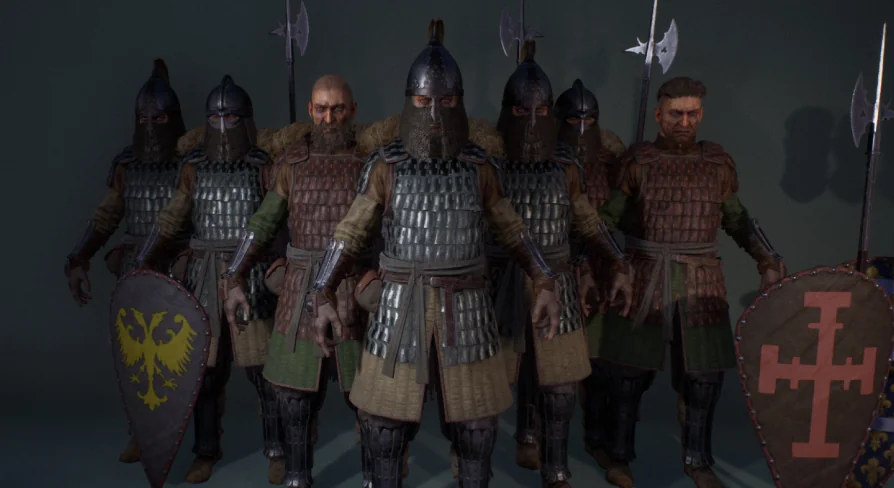
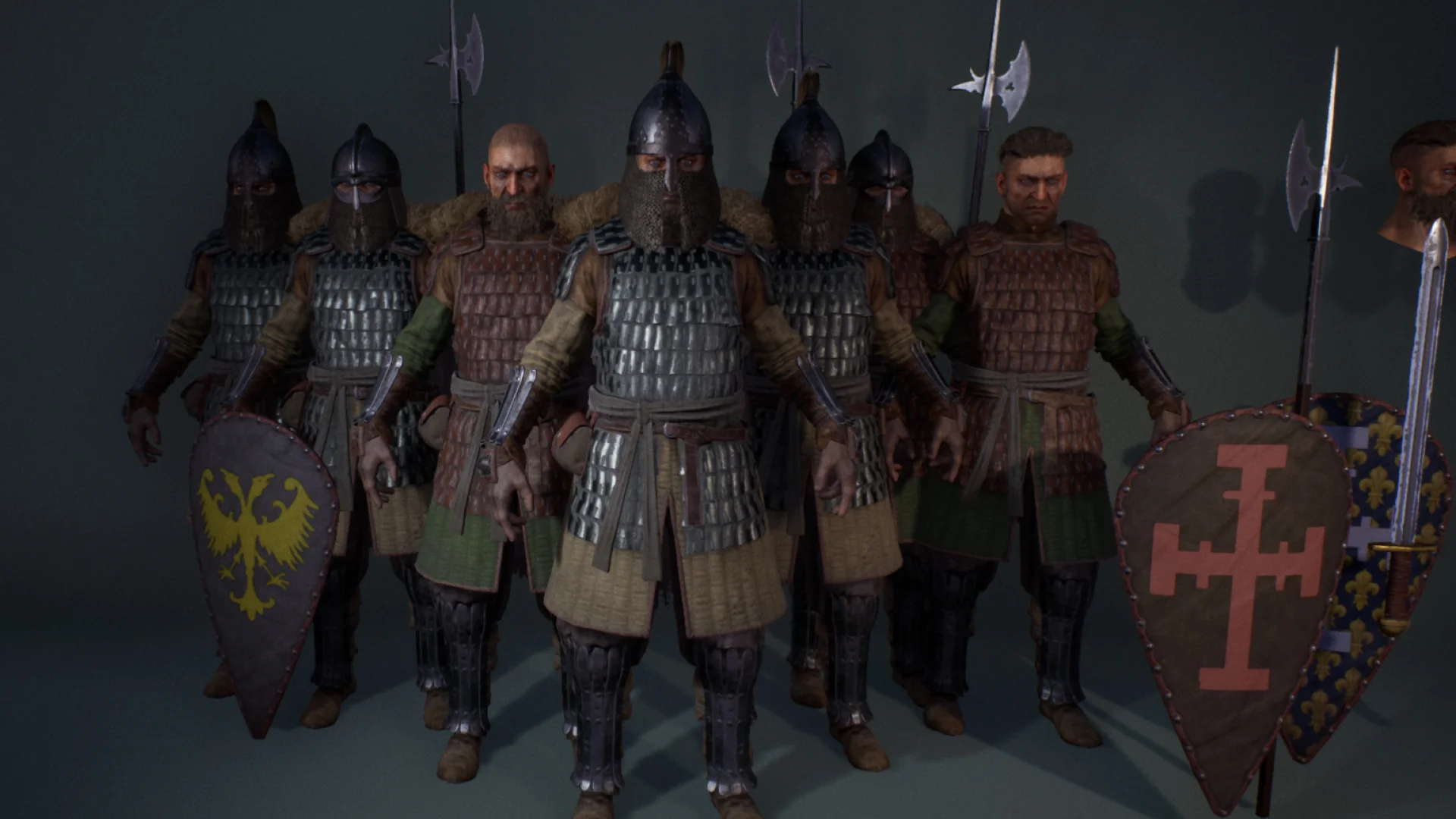
The Light Lamellar Armour Pack delivers a complete character solution centered around medieval scale-based protection, integrated weaponry, and modular material customization. Constructed to function directly within real-time environments, the asset brings together individual armor components, distinct body partitions, combat gear including shields and weapons, and pre-rigged dynamic cloth. Its technical foundation leverages the standard Unreal Engine mannequin structure alongside physics-enabled APEX cloth elements, enabling fast implementation into character pipelines requiring historical or fantasy military figures.
Material Customization in the Light Lamellar Armour Setup
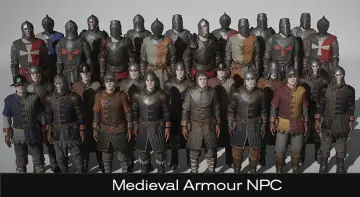
Visual diversity is driven by an advanced material system that treats each section of the warrior as an isolated canvas. The mesh architecture separates the character into discrete body and armor partitions, allowing artists and technical designers to alter specific elements without impacting neighboring surfaces. Plating finishes, undergarment textiles, and protective leather straps can be adjusted independently to avoid uniform repetition across an entire squad of combatants.
Surface identity extends further through an integrated decal workflow. The material graph supports the direct application of included decals to armor plates, tabards, and defensive surfaces. For productions requiring specific faction iconography, heraldic symbols, or customized player emblems, the system accepts custom logos that project directly onto the underlying meshes. This capability bridges the gap between generic army building and bespoke hero character presentation, offering a quick method to distinguish rank, allegiance, or unit type through texture-level modifications.
The realism of the materials supports both gritty historical medieval settings and grounded fantasy environments. Rather than locking the character into a single predetermined state of wear or color scheme, the parameters within the material instances allow fine control over tones and surface responses. This separation ensures that a front-line soldier, a scout, or an elite guard can share the core structural geometry while reading as visually distinct entities within a crowded scene.
APEX Cloth Simulation and Rigging
Physical movement relies on an integrated APEX cloth configuration that handles the dynamic flex of fabric under simulated movement. Fabric components—such as sashes, skirts, or draped garment layers that sit beneath and around the lamellar scales—are fully rigged and prepared for dynamic response out of the box. This bypasses the need to manually build collision envelopes or weight dynamic vertices from scratch.
Because the cloth structure operates via APEX, fabric reacts naturally to running, sudden stops, turning velocity, and combat impacts. The dynamic response functions reliably across various camera perspectives, including low third-person action angles and elevated top-down perspectives where cloth momentum communicates character direction and speed. By isolating the soft materials from the rigid behavior of the lamellar plates, the character avoids the synthetic stretching or rigid clipping often seen when full-body meshes share identical skinning weights across rigid and soft components.
Combat Gear and Armament Modules
To establish immediate battlefield capability, the package pairs the protective suit with complementary medieval armaments. A combat shield and a selection of weapon assets accompany the warrior model, ensuring that the character can be deployed into combat mechanics without having to source separate martial props.
The shield mesh matches the functional aesthetic of the lamellar plates, providing a coherent visual balance when equipped in the character's off-hand. The included weapons align with the defensive style of a light-to-medium infantryman or guard, giving game developers immediate access to striking and parrying animations that require matched equipment sockets. Like the primary armor, these accessory assets are geared toward realistic visual styling, making them suitable for tactical melee encounters, formations, or roaming patrol encounters.
UE Mannequin Integration and Animation Blueprint Workflow
Integration speed is a core technical asset of the character. Built to align directly with the standard Unreal Engine mannequin, the skeletal hierarchy allows direct assignment to existing Animation Blueprints. Retargeting steps can be completely bypassed or executed in seconds, letting teams apply standard locomotion sets, directional dodges, and multi-directional attacks directly to the rig.
The shared joint naming conventions and proportions mean that character controllers, blendspaces, and combat state machines hook into the character model with minimal manual setup. Whether a project relies on straightforward third-person movement trees or a complex scripted gameplay loop with layered upper-body combat stances, the mesh handles standard mannequin animation data predictably without joint twisting or abnormal deformations across the shoulders and hips.
Beyond standard mannequin setups, the asset maintains interoperability with Gothic Knight assets, giving teams that utilize related medieval collections the ability to mix, match, and cross-reference equipment sets. This cross-compatibility simplifies the task of expanding a game's roster of armored humanoids while maintaining a consistent visual standard and rigging foundation.
Practical Pipeline Deployment for Lamellar Warriors
Implementing the package into an active project requires minimal overhead due to the consolidated way its components are presented. Character artists can import the mesh files, assign the predefined material instances, and immediately inspect how the custom decal layers align over the plate geometry. The modular division of the armor pieces means that developers can toggle visibility on specific parts or create gameplay-driven equipment tiers where heavier components are enabled as players unlock better protection.
For technical directors balancing performance against visual detail, the combination of independent material slots and efficient APEX physics offers a balanced foundation for both single-player campaigns and multi-character skirmishes. The character is equipped to handle close-up cinematic inspection, top-down tactical movement, and direct action-combat gameplay within a single standardized framework.
 Characters
 Characters
 Characters
 Characters