"7e6fc58c410f2894"{"id":"1001674","slug":"viking-warriors","title":"Viking Warriors","category":"Characters \u0026 Creatures","engine":"4.19+,5.0+","assetVersion":"","engineVersion":"Engine Version: 4.19+,5.0+","tag":"Characters","accent":"blue","visual":"character","summary":"Viking Warriors brings modular material customization, APEX cloth physics, combat weapons, and seamless Unreal Engine mannequin compatibility into real-time pro","platform":"Unreal Engine","publishedAt":"2026-10-13T15:22:48.715Z","updatedAt":"2026-10-13T15:22:48.715Z","sourceNotes":[],"fileContents":[],"compatibility":["Unreal Engine","Engine Version: 4.19+,5.0+"],"featuredImage":{"alt":"Viking Warriors","src":"/wp-content/uploads/published/2026/10/42eef3ea8f03-e62a40b7-e5d1-408b-80e1-bfb7b5904e73-740805dff2.webp"},"hasDownloadLink":true,"downloads":0,"terms":[{"taxonomy":"category","slug":"characters-and-creatures","name":"Characters \u0026 Creatures"}],"galleryImages":[{"src":"/wp-content/uploads/published/2026/10/7ed3222a05d4-9af245d4-8230-4aa4-8b48-c35ed08a06c6-751822d96c.webp","alt":"Viking Warriors"},{"src":"/wp-content/uploads/published/2026/10/8789fb9a6e70-294bcf00-019a-4920-8596-3eba5a24293e-dd235fe047.webp","alt":"Viking Warriors"},{"src":"/wp-content/uploads/published/2026/10/fac2f66e1113-836cb5b1-dfe8-4c41-9b59-6fc78be8a2a0-729bb49b85.webp","alt":"Viking Warriors"},{"src":"/wp-content/uploads/published/2026/10/3f208f176ff8-77bb3445-55c9-4fde-93ac-8869baf3ddd8-42309b060e.webp","alt":"Viking Warriors"},{"src":"/wp-content/uploads/published/2026/10/1383bcd99bc2-1d95d517-8cce-45f5-bcfa-5aaaee923bed-260a8c44b3.webp","alt":"Viking Warriors"},{"src":"/wp-content/uploads/published/2026/10/5fdc215ea718-7ded31fb-b615-4eaf-a6f7-99c16a96a8e2-d00140c208.webp","alt":"Viking Warriors"},{"src":"/wp-content/uploads/published/2026/10/711a0083f7d0-e6c6c3c9-58d7-41fb-ac34-dadfce3d3ff6-f469cdb9df.webp","alt":"Viking Warriors"},{"src":"/wp-content/uploads/published/2026/10/63ebec0fab92-8cfb168f-5d45-450e-9d22-30d6c2cb715b-a4cc057a57.webp","alt":"Viking Warriors"},{"src":"/wp-content/uploads/published/2026/10/9af6fe35213a-7137d728-fddb-4eb5-aaf4-6f82b2a914b1-a2ff73e310.webp","alt":"Viking Warriors"},{"src":"/wp-content/uploads/published/2026/10/940cd79661c1-529dc5e5-d7ac-4ff0-8522-09b1e23f0f5e-257aff35e9.webp","alt":"Viking Warriors"}],"accessPanel":{"kind":"resource","title":"Download this resource","eyebrow":"Free Download","message":"Log in or create a free account to start your download.","fileName":"Content.7z","safetyNote":"Resources are manually reviewed before listing to improve quality and reduce obvious risks.","actionLabel":"Download Free","resourceType":"Resource archive"},"contentHtml":"\u003ch2\u003eIntegrating Viking Warriors with the Unreal Engine Mannequin\u003c/h2\u003e\n\u003cp\u003eDrop-in functionality defines the setup experience for Viking Warriors. Rather than requiring complex skeleton retargeting or manual bone remapping, the character assets are fully compatible with the standard Unreal Engine mannequin skeleton. In a standard project pipeline, character meshes that deviate from default joint orientations or bone hierarchies often demand custom rig adjustments, animation blueprint reconstruction, and tedious socket realignment. Because these models adhere directly to the established mannequin structure, they can be introduced into an active project in seconds.\u003c/p\u003e\n\u003cp\u003eOnce imported, the meshes can immediately reference existing animation blueprints, movement logic, and locomotion state machines structured through the standard mannequin. Whether a project relies on stock third-person movement sets, root-motion combat sequences, or custom blendspaces, the skeletal structure reads incoming animation data without distorted joint offsets. This direct alignment ensures that running, dodging, sprinting, and melee attacks drive the warrior geometry correctly from the moment the files are placed in the content directory.\u003c/p\u003e\n\u003cp\u003eIn addition to standard locomotion, character setups can utilize existing animation blueprints alongside project-specific scripting to coordinate stance shifts and physical interactions. The compatibility extends throughout the character hierarchy, ensuring that standard sockets—such as hand grip locations, weapon holsters, and spine mounts—align predictably with the geometry, minimizing the iteration cycle required to get a fully controllable warrior traversing dynamic game environments.\u003c/p\u003e \u003ch2\u003eArmor Separation and Custom Decals within the Advanced Material System\u003c/h2\u003e\n\u003cp\u003eVisual diversity is managed through an advanced material system built to allow distinct surface adjustments across different sections of each warrior. In medieval and fantasy game production, avoiding repetitive, identical combatants is a common challenge. Viking Warriors addresses this by breaking down body and armor components into individually tweakable parameters. Rather than applying a single, unchangeable texture sheet over the entire model, the material pipeline isolates parts so they can be modified separately.\u003c/p\u003e\n\u003cp\u003eIndividual armor plates, leather straps, garments, and underlying body pieces can be adjusted independently. This segmentation gives artists control over surface values, color variations, and material characteristics across each piece of the gear without affecting adjacent sections. A chest piece can be darkened or adjusted to reflect worn leather while metal pauldrons or chainmail layers retain their specific reflective and roughness properties.\u003c/p\u003e\n\u003cp\u003eBeyond broad surface tweaks, the material setup incorporates a flexible decal workflow. The pack supplies pre-configured decals designed to sit cleanly on shields, armor plates, and cloth tunics. For projects requiring unique heraldry, clan markings, or faction insignias, the system permits developers to insert their own custom logos directly into the material framework. This decal layer blends cleanly with the base materials, preserving the underlying realistic textures while providing distinct identity options for individual warrior variants or rival factions.\u003c/p\u003e \u003ch2\u003eRigged APEX Cloth Simulation and Cape Dynamics\u003c/h2\u003e\n\u003cp\u003eDynamic movement relies heavily on secondary motion, and Viking Warriors addresses this through the integration of the APEX cloth system. Characters feature dedicated cloth pieces, such as hanging garments and capes, that are fully rigged and configured out of the box. Rather than relying entirely on rigid bone weighting—which can cause flowing fabrics to stretch unnaturally during fast movement—the APEX cloth system allows fabrics to drape, fold, and billow in response to character velocity and gravity.\u003c/p\u003e\n\u003cp\u003eThe Cape APEX properties are established directly on the skeletal mesh assets, allowing capes to follow torso movements while reacting fluidly to rotational momentum, sudden stops, and directional changes. When the warrior enters an evasive roll or executes a sweeping attack, the cape moves independently from the legs and spine, preventing stiff clipping and enhancing the realistic medieval presentation.\u003c/p\u003e\n\u003cp\u003eBecause the cloth simulation is pre-rigged and calibrated, developers avoid the time-consuming process of painting cloth simulation weights, setting max distances, or defining backstop channels from scratch. The physics asset interactions are designed to work harmoniously with character movement, providing believable drape and inertia across standard combat locomotion.\u003c/p\u003e \u003ch2\u003eCombat Loadouts: Viking Shield and Weapon Assets\u003c/h2\u003e\n\u003cp\u003eCharacters require appropriate armament to be combat-ready, and the package provides dedicated equipment assets to complete the warriors' setup. Included in the pack are two distinct weapon assets along with a specialized Viking shield, giving characters immediate visual and practical functionality for battle scenarios.\u003c/p\u003e\n\u003cp\u003eThese equipment assets are modeled to match the realistic, historical visual style of the warriors. The shield features standard mounting considerations, allowing it to be socketed to the warrior's forearm or held in an off-hand defensive position. Because it integrates with the overall material architecture, it sits naturally alongside the armored body meshes. The two weapon assets provide options for standard one-handed strikes or dual-wielding setups, functioning as individual static or skeletal elements that link seamlessly to standard mannequin hand sockets.\u003c/p\u003e\n\u003cp\u003eHaving dedicated weapons and a Viking shield bundled directly with the character meshes ensures that scaling, surface resolution, and stylistic fidelity remain unified. Developers do not need to hunt for secondary prop packs or worry about mismatching art directions when assembling combat encounters, patrol squads, or player-controlled protagonists.\u003c/p\u003e \u003ch2\u003eTroubleshooting Cloth Animation in Engine Version 4.20\u003c/h2\u003e\n\u003cp\u003eWhile the assets are intended for broad compatibility, specific engine versions introduce unique handling requirements. For developers implementing Viking Warriors within Unreal Engine 4.20, cloth animation behavior may occasionally show inconsistencies during playback. This behavior stems from engine-level transitions in APEX cloth handling rather than an issue with the underlying skeleton.\u003c/p\u003e\n\u003cp\u003eWhen cloth animation fails to evaluate correctly in 4.20, the recommended resolution is to reassign the APEX cloth file directly within the Cape APEX properties on the skeletal mesh editor. Clearing and reapplying the cloth asset re-establishes the connection between the physical simulation parameters and the mesh's vertex influence channels. This simple reassignment forces the engine to re-cache the cloth deformation data, returning natural fabric physics to the cape.\u003c/p\u003e\n\u003cp\u003eShould the animation continue to display anomalous deformation after reassignment, direct communication with the developer is available to resolve stubborn cloth binding errors. Keeping the cape properties properly assigned ensures the realistic movement of all medieval garments remains consistent, safeguarding visual fidelity across varied Unreal Engine deployment pipelines.\u003c/p\u003e\n\n\u003ch2\u003eMore From The Same Workflow\u003c/h2\u003e\n\u003cul\u003e\n\u003cli\u003e\u003ca href=\"https://3dcghub.com/samurai-warriors/\" title=\"Samurai Warriors\"\u003eSamurai Warriors\u003c/a\u003e\u003c/li\u003e\n\u003cli\u003e\u003ca href=\"https://3dcghub.com/light-warrior/\" title=\"Light Warrior\"\u003eLight Warrior\u003c/a\u003e\u003c/li\u003e\n\u003cli\u003e\u003ca href=\"https://3dcghub.com/amazonian-warrior-girl/\" title=\"Amazonian warrior girl\"\u003eAmazonian warrior girl\u003c/a\u003e\u003c/li\u003e\n\u003cli\u003e\u003ca href=\"https://3dcghub.com/hero-mercenary-warrior/\" title=\"Hero Mercenary Warrior\"\u003eHero Mercenary Warrior\u003c/a\u003e\u003c/li\u003e\n\u003cli\u003e\u003ca href=\"https://3dcghub.com/character-military-bandit-2/\" title=\"Character Military Bandit 2\"\u003eCharacter Military Bandit 2\u003c/a\u003e\u003c/li\u003e\n\u003c/ul\u003e","contentTextLength":7388,"navigation":{"current":8,"total":3618,"previous":{"id":"1001675","slug":"viking-weapons-and-shields-kit","title":"Viking Weapons and Shields Kit","category":"Weapons \u0026 Combat","platform":"Unreal Engine","updatedAt":"2026-10-13T15:24:48.939Z"},"next":{"id":"1001673","slug":"utopian-city","title":"Utopian City","category":"Cities","platform":"Unreal Engine","updatedAt":"2026-10-13T15:20:50.467Z"}},"relatedResources":[{"id":"1001658","slug":"samurai-warriors","title":"Samurai Warriors","category":"Characters \u0026 Creatures","engine":"4.19+,5.0+","assetVersion":"","engineVersion":"Engine Version: 4.19+,5.0+","tag":"Characters","accent":"blue","visual":"character","summary":"Integrate Samurai Warriors with UE mannequin compatibility, NvCloth solver cloth dynamics, and modular material controls for medieval combat projects.","platform":"Unreal Engine","publishedAt":"2026-10-13T08:34:57.969Z","updatedAt":"2026-10-13T08:34:57.969Z","sourceNotes":[],"fileContents":[],"compatibility":["Unreal Engine","Engine Version: 4.19+,5.0+"],"featuredImage":{"alt":"Samurai Warriors","src":"/wp-content/uploads/published/2026/10/86ea906ffa4f-d5fb222a-187f-4a65-9e5f-6bf524e306b5-605f393566.webp"},"hasDownloadLink":true,"downloads":0},{"id":"1001642","slug":"light-warrior","title":"Light Warrior","category":"Characters \u0026 Creatures","engine":"4.19+,5.0+","assetVersion":"","engineVersion":"Engine Version: 4.19+,5.0+","tag":"Characters","accent":"blue","visual":"character","summary":"Explore the Light Warrior character asset for Unreal Engine, featuring APEX cloth dynamics, advanced material customization, UE mannequin rigging, and weapons.","platform":"Unreal Engine","publishedAt":"2026-10-13T02:26:09.285Z","updatedAt":"2026-10-13T02:26:09.285Z","sourceNotes":[],"fileContents":[],"compatibility":["Unreal Engine","Engine Version: 4.19+,5.0+"],"featuredImage":{"alt":"Light Warrior","src":"/wp-content/uploads/published/2026/10/1961ac8c32cb-1891ca23-2a17-4068-81af-80cf504d4ba6-7b198e2c02.webp"},"hasDownloadLink":true,"downloads":0},{"id":"1000497","slug":"amazonian-warrior-girl","title":"Amazonian warrior girl","category":"Characters \u0026 Creatures","engine":"4.26+,5.0+","assetVersion":"","engineVersion":"Engine Version: 4.26+,5.0+","tag":"Characters","accent":"blue","visual":"character","summary":"A rigged, low-poly Amazonian warrior girl character model with 4K PBR textures, two interchangeable skin materials, and default skeleton compatibility for Unrea","platform":"Unreal Engine","publishedAt":"2026-07-13T04:00:54.006Z","updatedAt":"2026-07-13T04:00:54.006Z","sourceNotes":[],"fileContents":[],"compatibility":["Unreal Engine","Engine Version: 4.26+,5.0+"],"featuredImage":{"alt":"Amazonian warrior girl","src":"/wp-content/uploads/published/2026/07/6dff3d76561b-2ab1fcb9-dce7-4128-a8dc-9f79d681a72a-92625e72af.webp"},"hasDownloadLink":true,"downloads":1}]}
Characters
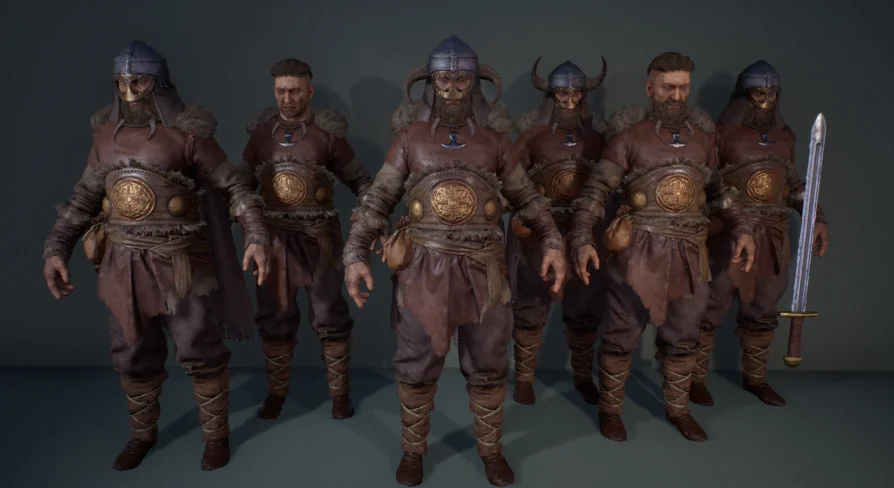
Viking Warriors
Viking Warriors brings modular material customization, APEX cloth physics, combat weapons, and seamless Unreal Engine mannequin compatibility into real-time pro
Integrating Viking Warriors with the Unreal Engine Mannequin
Drop-in functionality defines the setup experience for Viking Warriors. Rather than requiring complex skeleton retargeting or manual bone remapping, the character assets are fully compatible with the standard Unreal Engine mannequin skeleton. In a standard project pipeline, character meshes that deviate from default joint orientations or bone hierarchies often demand custom rig adjustments, animation blueprint reconstruction, and tedious socket realignment. Because these models adhere directly to the established mannequin structure, they can be introduced into an active project in seconds.
Once imported, the meshes can immediately reference existing animation blueprints, movement logic, and locomotion state machines structured through the standard mannequin. Whether a project relies on stock third-person movement sets, root-motion combat sequences, or custom blendspaces, the skeletal structure reads incoming animation data without distorted joint offsets. This direct alignment ensures that running, dodging, sprinting, and melee attacks drive the warrior geometry correctly from the moment the files are placed in the content directory.
In addition to standard locomotion, character setups can utilize existing animation blueprints alongside project-specific scripting to coordinate stance shifts and physical interactions. The compatibility extends throughout the character hierarchy, ensuring that standard sockets—such as hand grip locations, weapon holsters, and spine mounts—align predictably with the geometry, minimizing the iteration cycle required to get a fully controllable warrior traversing dynamic game environments.
Armor Separation and Custom Decals within the Advanced Material System
Visual diversity is managed through an advanced material system built to allow distinct surface adjustments across different sections of each warrior. In medieval and fantasy game production, avoiding repetitive, identical combatants is a common challenge. Viking Warriors addresses this by breaking down body and armor components into individually tweakable parameters. Rather than applying a single, unchangeable texture sheet over the entire model, the material pipeline isolates parts so they can be modified separately.
Individual armor plates, leather straps, garments, and underlying body pieces can be adjusted independently. This segmentation gives artists control over surface values, color variations, and material characteristics across each piece of the gear without affecting adjacent sections. A chest piece can be darkened or adjusted to reflect worn leather while metal pauldrons or chainmail layers retain their specific reflective and roughness properties.
Beyond broad surface tweaks, the material setup incorporates a flexible decal workflow. The pack supplies pre-configured decals designed to sit cleanly on shields, armor plates, and cloth tunics. For projects requiring unique heraldry, clan markings, or faction insignias, the system permits developers to insert their own custom logos directly into the material framework. This decal layer blends cleanly with the base materials, preserving the underlying realistic textures while providing distinct identity options for individual warrior variants or rival factions.
Rigged APEX Cloth Simulation and Cape Dynamics
Dynamic movement relies heavily on secondary motion, and Viking Warriors addresses this through the integration of the APEX cloth system. Characters feature dedicated cloth pieces, such as hanging garments and capes, that are fully rigged and configured out of the box. Rather than relying entirely on rigid bone weighting—which can cause flowing fabrics to stretch unnaturally during fast movement—the APEX cloth system allows fabrics to drape, fold, and billow in response to character velocity and gravity.
The Cape APEX properties are established directly on the skeletal mesh assets, allowing capes to follow torso movements while reacting fluidly to rotational momentum, sudden stops, and directional changes. When the warrior enters an evasive roll or executes a sweeping attack, the cape moves independently from the legs and spine, preventing stiff clipping and enhancing the realistic medieval presentation.
Because the cloth simulation is pre-rigged and calibrated, developers avoid the time-consuming process of painting cloth simulation weights, setting max distances, or defining backstop channels from scratch. The physics asset interactions are designed to work harmoniously with character movement, providing believable drape and inertia across standard combat locomotion.
Combat Loadouts: Viking Shield and Weapon Assets
Characters require appropriate armament to be combat-ready, and the package provides dedicated equipment assets to complete the warriors' setup. Included in the pack are two distinct weapon assets along with a specialized Viking shield, giving characters immediate visual and practical functionality for battle scenarios.
These equipment assets are modeled to match the realistic, historical visual style of the warriors. The shield features standard mounting considerations, allowing it to be socketed to the warrior's forearm or held in an off-hand defensive position. Because it integrates with the overall material architecture, it sits naturally alongside the armored body meshes. The two weapon assets provide options for standard one-handed strikes or dual-wielding setups, functioning as individual static or skeletal elements that link seamlessly to standard mannequin hand sockets.
Having dedicated weapons and a Viking shield bundled directly with the character meshes ensures that scaling, surface resolution, and stylistic fidelity remain unified. Developers do not need to hunt for secondary prop packs or worry about mismatching art directions when assembling combat encounters, patrol squads, or player-controlled protagonists.
Troubleshooting Cloth Animation in Engine Version 4.20
While the assets are intended for broad compatibility, specific engine versions introduce unique handling requirements. For developers implementing Viking Warriors within Unreal Engine 4.20, cloth animation behavior may occasionally show inconsistencies during playback. This behavior stems from engine-level transitions in APEX cloth handling rather than an issue with the underlying skeleton.
When cloth animation fails to evaluate correctly in 4.20, the recommended resolution is to reassign the APEX cloth file directly within the Cape APEX properties on the skeletal mesh editor. Clearing and reapplying the cloth asset re-establishes the connection between the physical simulation parameters and the mesh's vertex influence channels. This simple reassignment forces the engine to re-cache the cloth deformation data, returning natural fabric physics to the cape.
Should the animation continue to display anomalous deformation after reassignment, direct communication with the developer is available to resolve stubborn cloth binding errors. Keeping the cape properties properly assigned ensures the realistic movement of all medieval garments remains consistent, safeguarding visual fidelity across varied Unreal Engine deployment pipelines.
 Characters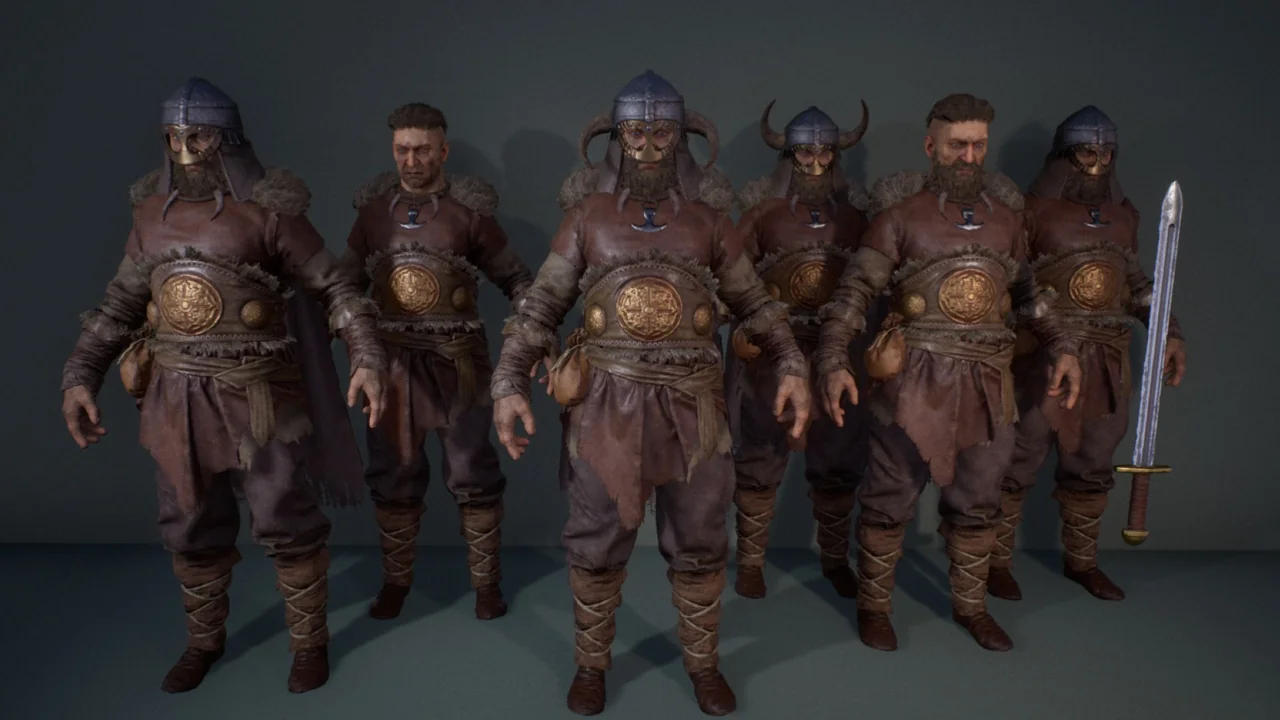
 Characters
 Characters
 Characters