"7ad89cffa44984cf"{"id":"1002506","slug":"armored-leech","title":"Armored Leech","category":"Game Development Resource","engine":"4.16+,5.0+","assetVersion":"","engineVersion":"Engine Version: 4.16+,5.0+","tag":"Game Development R","accent":"blue","visual":"mech","summary":"Examine the Armored Leech monster asset, featuring an extensive animation set, Animationblueprint, and lowpoly horror creature design for 3D environments.","platform":"Unreal Engine","indexPolicy":"index","publishedAt":"2026-11-13T08:20:00.945Z","updatedAt":"2026-11-13T08:20:00.945Z","sourceNotes":[],"fileContents":[],"compatibility":["Unreal Engine","Engine Version: 4.16+,5.0+"],"featuredImage":{"alt":"Armored Leech","src":"/wp-content/uploads/published/2026/11/efa366aa74ca-75d2fc79-833c-4f48-b085-09b2ccd62d0f-73b9422b5b.webp"},"hasDownloadLink":true,"downloads":0,"terms":[],"galleryImages":[{"src":"/wp-content/uploads/published/2026/11/fa2df0489e1b-f61d8bf1-95c6-458a-af34-0b5aa28b74de-232c5f2ccc.webp","alt":"Armored Leech"},{"src":"/wp-content/uploads/published/2026/11/5eae84c3efdc-3ad86436-8f45-4e52-ae88-c7db2372a2c8-edee4345b5.webp","alt":"Armored Leech"},{"src":"/wp-content/uploads/published/2026/11/13caa069115f-0011d542-d7df-4d8a-b3e7-5085a2b6d070-7963122cd6.webp","alt":"Armored Leech"},{"src":"/wp-content/uploads/published/2026/11/4baca32b81b6-536b73a1-58f3-4c29-838b-028a08c1872f-b8370bd833.webp","alt":"Armored Leech"}],"accessPanel":{"kind":"resource","title":"Get this resource","eyebrow":"Free resource","message":"Download this resource in your browser.","fileName":"Content.7z","safetyNote":"Resources are manually reviewed before listing to improve quality and reduce obvious risks.","actionLabel":"Get this resource","resourceType":"Resource archive","versions":[]},"contentHtml":"\u003cp\u003eA creature lurking in the dark shadows of a damp dungeon floor or a derelict starship corridor needs clear behavioral language to project genuine dread. The Armored Leech operates as a specialized monster made for fantasy and sci-fi scenes, combining segmented biological plating with predatory locomotion. Its lowpoly geometry keeps runtime overhead low while presenting a realistic horror aesthetic designed to unnerve players through deliberate motion and sudden strikes.\u003c/p\u003e \u003ch2\u003eLocomotion and Basic Postures of the Armored Leech\u003c/h2\u003e \u003cp\u003eCreating believable movement for an elongated, segmented creature requires distinct states that convey both weight and flexibility. The Armored Leech features two separate idle animations and two movement cycles, establishing the fundamental baseline for its navigation through an environment. In an idle state, subtle muscle twitches and shifting armor plates communicate that the creature is alert, assessing its surroundings rather than standing frozen.\u003c/p\u003e \u003cp\u003eWhen transitioning into active locomotion, the two movement clips allow for clean integration across varied pathfinding speeds. Whether slithering slowly through narrow vents or surging across open subterranean arenas, the movement cycles translate the rhythmic undulation expected of an annelid predator. These base animations provide the necessary continuity for AI wander cycles, patrol routes, and approach phases before combat initiates.\u003c/p\u003e \u003ch2\u003eConstriction and Impact Dynamics in Armored Leech Encounters\u003c/h2\u003e \u003cp\u003eCombat pacing hinges on responsiveness, particularly when a monster must react to incoming fire or melee strikes while maintaining offensive pressure. The Armored Leech includes three attack animations, seven hit reactions, nine tight state animations, an eating sequence, and two death animations.\u003c/p\u003e \u003cp\u003eThe presence of seven distinct GetHit clips ensures that damage feedback does not devolve into repetitive, robotic flinching. When players strike the creature from different angles or land successive hits in rapid succession, the engine can blend between varied directional recoils. This level of physical reaction makes weapons feel impactful and gives combat encounters a fluid, reactive texture.\u003c/p\u003e \u003cp\u003eOn the offensive side, three attack variants allow the creature to mix up its offensive patterns, preventing combat from becoming entirely predictable. Instead of cycling a single lunge, the creature can alternate its strikes, forcing players to adapt their defensive timing. When an attack connects, the eating sequence offers a gruesome narrative outcome or a dedicated finisher animation that reinforces the parasitic nature of the beast.\u003c/p\u003e \u003cp\u003eThe nine variations dedicated to the tight state represent a significant component of the creature's mechanical identity. For an armored parasite, coiling, latching, and constricting are central combat behaviors. Having nine distinct variations in this state enables sustained pressure mechanics, whether the leech is wrapping itself tightly into a defensive ball, coiling around environmental props, or constricting an unfortunate target. Once its health is exhausted, two distinct death animations govern its collapse, letting the heavy armor plates clatter against the ground as life leaves the body.\u003c/p\u003e \u003ch2\u003eStance Shifts from Cobra Mode to Ground Dormancy\u003c/h2\u003e \u003cp\u003eBeyond standard locomotion and direct attacks, the Armored Leech is equipped with specialized behavioral stances that drastically alter its silhouette and combat profile. Among the most striking of these is the Cobra Mode, supported by two unique animations. In this posture, the leech elevates the forward portion of its segmented body, mimicking the flared, upright stance of a venomous serpent.\u003c/p\u003e \u003cp\u003eThis elevated posture transforms how the monster interacts with line of sight. By rearing up, it can peer over low cover, display threat signals, or prepare high-angle strikes against players. The two Cobra Mode variations accommodate both the transition into this raised pose and the settled display itself, offering level designers an effective tool for jump scares or dramatic boss reveals.\u003c/p\u003e \u003cp\u003eComplementing the verticality of Cobra Mode are the grounding routines, represented by two Rise animations and two Lying animations. These clips are tailored for dormancy and ambush behaviors. A creature that can lie flat against the soil or floor panels creates immediate tension in horror settings, appearing almost indistinguishable from organic waste or metal piping until disturbed. The Rise animations handle the physical transition from this dormant, prone condition into active hostility, giving the monster a natural method to emerge from mud, stagnant water, or containment units.\u003c/p\u003e \u003ch2\u003eLogic, Animationblueprint, and Script Control\u003c/h2\u003e \u003cp\u003eManaging thirty-two individual animation clips requires a robust state management system to ensure transitions remain seamless during gameplay. The asset incorporates an Animationblueprint alongside script support, organizing the complex web of behaviors into functional logic.\u003c/p\u003e \u003cp\u003eThe Animationblueprint handles the parameter-driven transitions between grounded states, movement blends, hit stuns, and the vertical Cobra Mode. By driving these states through native blueprint logic, developers can hook the creature directly into existing AI decision trees or behavior graphs without needing to assemble transition rules from scratch. Blending from a prone lying state into a sudden strike or shifting into a constricting tight routine becomes a matter of setting state variables.\u003c/p\u003e \u003cp\u003eTechnical integration also notes compatibility with Stylized Horse setups within the project ecosystem, demonstrating the flexibility of its bone structure and animation pipeline when implemented alongside existing character assets.\u003c/p\u003e \u003ch2\u003eAtmospheric Integration Across Horror and Fantasy Worlds\u003c/h2\u003e \u003cp\u003eThe classification of the Armored Leech spans both fantasy and sci-fi horror, anchored by its lowpoly mesh budget and realistic visual treatment. This combination ensures that the model remains performant when deployed in clusters or swarms, while the surface detailing maintains the tactile horror of chitinous plates over wet, muscular tissue.\u003c/p\u003e \u003cp\u003eIn fantasy settings, the creature functions naturally as a subterranean dweller inhabiting damp crypts, forgotten sewers, or cursed swamps where it can lie in wait beneath the surface. In science fiction scenarios, those same biological plates read as alien adaptations or bio-engineered parasites thriving in the humid waste systems of derelict space stations. The extensive library of thirty-two animations, paired with its dedicated Animationblueprint and scripts, provides developers with a complete predatory creature capable of slithering, rearing, constricting, and striking straight out of the box.\u003c/p\u003e\n\n\u003ch2\u003eContinue Browsing Similar Packs\u003c/h2\u003e\n\u003cul\u003e\n\u003cli\u003e\u003ca href=\"https://3dcghub.com/armored-beetle-pack/\" rel=\"noopener noreferrer\"\u003eArmored Beetle Pack\u003c/a\u003e\u003c/li\u003e\n\u003cli\u003e\u003ca href=\"https://3dcghub.com/sci-fi-soldier-02/\" rel=\"noopener noreferrer\"\u003eSci-Fi Soldier 02\u003c/a\u003e\u003c/li\u003e\n\u003cli\u003e\u003ca href=\"https://3dcghub.com/fantasy-elephant/\" rel=\"noopener noreferrer\"\u003eFantasy Elephant\u003c/a\u003e\u003c/li\u003e\n\u003cli\u003e\u003ca href=\"https://3dcghub.com/character-conversation-mocap-pack/\" rel=\"noopener noreferrer\"\u003eCharacter Conversation - MoCap Pack\u003c/a\u003e\u003c/li\u003e\n\u003cli\u003e\u003ca href=\"https://3dcghub.com/armor-bundle/\" rel=\"noopener noreferrer\"\u003eARMOR - Bundle\u003c/a\u003e\u003c/li\u003e\n\u003c/ul\u003e","contentTextLength":6867,"navigation":{"current":71,"total":4499,"previous":{"id":"1002507","slug":"bishop-and-rook-set","title":"Bishop and Rook Set","category":"Game Development Resource","platform":"Unreal Engine","updatedAt":"2026-11-13T08:21:18.795Z"},"next":{"id":"1002505","slug":"arachnid","title":"Arachnid","category":"Characters \u0026 Creatures","platform":"Unreal Engine","updatedAt":"2026-11-13T08:13:22.983Z"}},"relatedResources":[{"id":"1000219","slug":"armored-beetle-pack","title":"Armored Beetle Pack","category":"Insects","engine":"4.26+,5.0+","assetVersion":"","engineVersion":"Engine Version: 4.26+,5.0+","tag":"Insects","accent":"blue","visual":"mech","summary":"A detailed breakdown of the Armored Beetle Pack, featuring dual UE4/UE5 rigging setups, custom bone hierarchies, and extensive combat animation libraries.","platform":"Unreal Engine","indexPolicy":"index","publishedAt":"2026-06-26T13:37:10.021Z","updatedAt":"2026-06-26T13:37:10.021Z","sourceNotes":[],"fileContents":[],"compatibility":["Unreal Engine","Engine Version: 4.26+,5.0+"],"featuredImage":{"alt":"Armored Beetle Pack","src":"/wp-content/uploads/published/2026/06/6f1d5060365e-9f32e83f-b5a2-44f4-8822-b569c203d353-d5e3808fc7.webp"},"hasDownloadLink":true,"downloads":0},{"id":"1002191","slug":"sci-fi-soldier-02","title":"Sci-Fi Soldier 02","category":"Characters \u0026 Creatures","engine":"4.16+,5.0+","assetVersion":"","engineVersion":"Engine Version: 4.16+,5.0+","tag":"Characters","accent":"blue","visual":"character","summary":"Sci-Fi Soldier 02 features an armored cyberpunk character mesh partitioned into three materials, five color schemes, and full Epic skeleton rigging.","platform":"Unreal Engine","indexPolicy":"index","publishedAt":"2026-10-29T14:33:53.795Z","updatedAt":"2026-10-29T14:33:53.795Z","sourceNotes":[],"fileContents":[],"compatibility":["Unreal Engine","Engine Version: 4.16+,5.0+"],"featuredImage":{"alt":"Sci-Fi Soldier 02","src":"/wp-content/uploads/published/2026/10/2239681efe17-1831404d-11f8-4f94-b171-b2647a9f4def-a4f67378d8.webp"},"hasDownloadLink":true,"downloads":0},{"id":"1002537","slug":"humanoids-monsters-pack","title":"Humanoids Monsters Pack","category":"Game Development Resource","engine":"4.18+,5.0+","assetVersion":"","engineVersion":"Engine Version: 4.18+,5.0+","tag":"Game Development R","accent":"blue","visual":"mech","summary":"Examine the lowpoly horror creature design, Animationblueprint setup, and bundle compatibility provided in the Humanoids Monsters Pack for game projects.","platform":"Unreal Engine","indexPolicy":"index","publishedAt":"2026-11-13T09:40:58.998Z","updatedAt":"2026-11-13T09:40:58.998Z","sourceNotes":[],"fileContents":[],"compatibility":["Unreal Engine","Engine Version: 4.18+,5.0+"],"featuredImage":{"alt":"Humanoids Monsters Pack","src":"/wp-content/uploads/published/2026/11/adc9874f8225-c4b88b2e-6ffc-4737-93cd-ab6bac51ebfc-10cfc18eab.webp"},"hasDownloadLink":true,"downloads":0}]}
Game Development R
Armored Leech
Examine the Armored Leech monster asset, featuring an extensive animation set, Animationblueprint, and lowpoly horror creature design for 3D environments.
Category:Unreal EnginePlatform: Unreal EngineEngine Version: 4.16+,5.0+Published: Nov 13, 2026
Game Development R
Resource overview
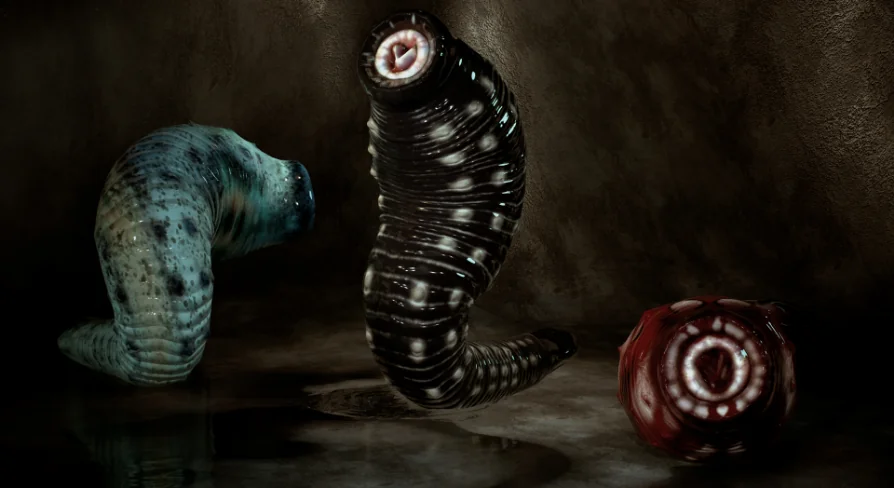
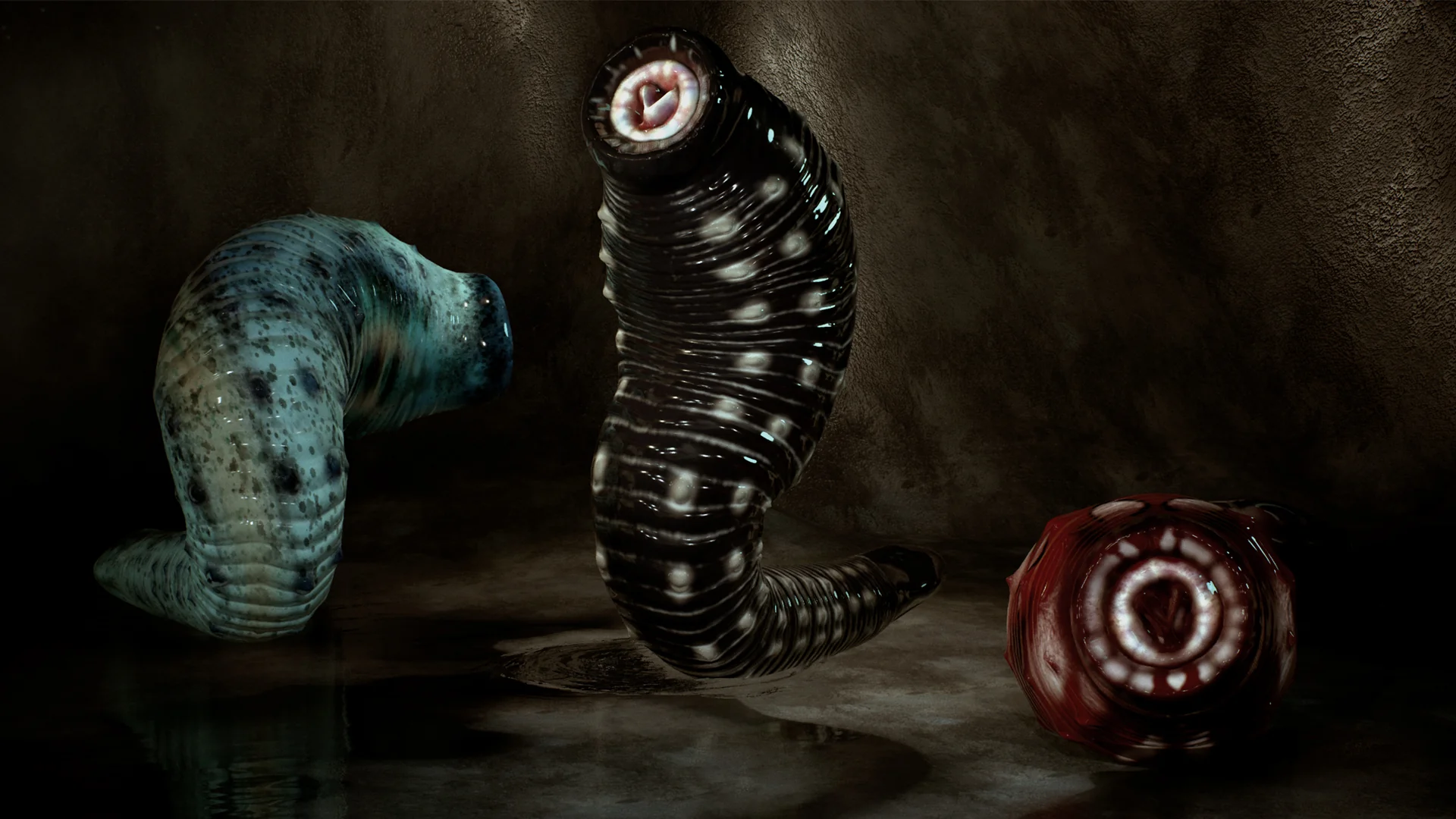
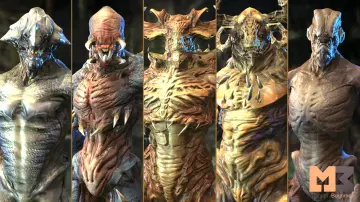
A creature lurking in the dark shadows of a damp dungeon floor or a derelict starship corridor needs clear behavioral language to project genuine dread. The Armored Leech operates as a specialized monster made for fantasy and sci-fi scenes, combining segmented biological plating with predatory locomotion. Its lowpoly geometry keeps runtime overhead low while presenting a realistic horror aesthetic designed to unnerve players through deliberate motion and sudden strikes.
Locomotion and Basic Postures of the Armored Leech
Creating believable movement for an elongated, segmented creature requires distinct states that convey both weight and flexibility. The Armored Leech features two separate idle animations and two movement cycles, establishing the fundamental baseline for its navigation through an environment. In an idle state, subtle muscle twitches and shifting armor plates communicate that the creature is alert, assessing its surroundings rather than standing frozen.
When transitioning into active locomotion, the two movement clips allow for clean integration across varied pathfinding speeds. Whether slithering slowly through narrow vents or surging across open subterranean arenas, the movement cycles translate the rhythmic undulation expected of an annelid predator. These base animations provide the necessary continuity for AI wander cycles, patrol routes, and approach phases before combat initiates.
Constriction and Impact Dynamics in Armored Leech Encounters
Combat pacing hinges on responsiveness, particularly when a monster must react to incoming fire or melee strikes while maintaining offensive pressure. The Armored Leech includes three attack animations, seven hit reactions, nine tight state animations, an eating sequence, and two death animations.
The presence of seven distinct GetHit clips ensures that damage feedback does not devolve into repetitive, robotic flinching. When players strike the creature from different angles or land successive hits in rapid succession, the engine can blend between varied directional recoils. This level of physical reaction makes weapons feel impactful and gives combat encounters a fluid, reactive texture.
On the offensive side, three attack variants allow the creature to mix up its offensive patterns, preventing combat from becoming entirely predictable. Instead of cycling a single lunge, the creature can alternate its strikes, forcing players to adapt their defensive timing. When an attack connects, the eating sequence offers a gruesome narrative outcome or a dedicated finisher animation that reinforces the parasitic nature of the beast.
The nine variations dedicated to the tight state represent a significant component of the creature's mechanical identity. For an armored parasite, coiling, latching, and constricting are central combat behaviors. Having nine distinct variations in this state enables sustained pressure mechanics, whether the leech is wrapping itself tightly into a defensive ball, coiling around environmental props, or constricting an unfortunate target. Once its health is exhausted, two distinct death animations govern its collapse, letting the heavy armor plates clatter against the ground as life leaves the body.
Stance Shifts from Cobra Mode to Ground Dormancy
Beyond standard locomotion and direct attacks, the Armored Leech is equipped with specialized behavioral stances that drastically alter its silhouette and combat profile. Among the most striking of these is the Cobra Mode, supported by two unique animations. In this posture, the leech elevates the forward portion of its segmented body, mimicking the flared, upright stance of a venomous serpent.
This elevated posture transforms how the monster interacts with line of sight. By rearing up, it can peer over low cover, display threat signals, or prepare high-angle strikes against players. The two Cobra Mode variations accommodate both the transition into this raised pose and the settled display itself, offering level designers an effective tool for jump scares or dramatic boss reveals.
Complementing the verticality of Cobra Mode are the grounding routines, represented by two Rise animations and two Lying animations. These clips are tailored for dormancy and ambush behaviors. A creature that can lie flat against the soil or floor panels creates immediate tension in horror settings, appearing almost indistinguishable from organic waste or metal piping until disturbed. The Rise animations handle the physical transition from this dormant, prone condition into active hostility, giving the monster a natural method to emerge from mud, stagnant water, or containment units.
Logic, Animationblueprint, and Script Control
Managing thirty-two individual animation clips requires a robust state management system to ensure transitions remain seamless during gameplay. The asset incorporates an Animationblueprint alongside script support, organizing the complex web of behaviors into functional logic.
The Animationblueprint handles the parameter-driven transitions between grounded states, movement blends, hit stuns, and the vertical Cobra Mode. By driving these states through native blueprint logic, developers can hook the creature directly into existing AI decision trees or behavior graphs without needing to assemble transition rules from scratch. Blending from a prone lying state into a sudden strike or shifting into a constricting tight routine becomes a matter of setting state variables.
Technical integration also notes compatibility with Stylized Horse setups within the project ecosystem, demonstrating the flexibility of its bone structure and animation pipeline when implemented alongside existing character assets.
Atmospheric Integration Across Horror and Fantasy Worlds
The classification of the Armored Leech spans both fantasy and sci-fi horror, anchored by its lowpoly mesh budget and realistic visual treatment. This combination ensures that the model remains performant when deployed in clusters or swarms, while the surface detailing maintains the tactile horror of chitinous plates over wet, muscular tissue.
In fantasy settings, the creature functions naturally as a subterranean dweller inhabiting damp crypts, forgotten sewers, or cursed swamps where it can lie in wait beneath the surface. In science fiction scenarios, those same biological plates read as alien adaptations or bio-engineered parasites thriving in the humid waste systems of derelict space stations. The extensive library of thirty-two animations, paired with its dedicated Animationblueprint and scripts, provides developers with a complete predatory creature capable of slithering, rearing, constricting, and striking straight out of the box.
 Game Development R
 Insects
 Characters
 Game Development R