"7ad89cffa44984cf"{"id":"1002505","slug":"arachnid","title":"Arachnid","category":"Characters \u0026 Creatures","engine":"4.18+,5.0+","assetVersion":"","engineVersion":"Engine Version: 4.18+,5.0+","tag":"Characters","accent":"blue","visual":"character","summary":"Explore the Arachnid character asset, an enemy built for mass attacks in horror and fantasy games with Animationblueprint and 56 creature animations.","platform":"Unreal Engine","indexPolicy":"index","publishedAt":"2026-11-13T08:13:22.983Z","updatedAt":"2026-11-13T08:13:22.983Z","sourceNotes":[],"fileContents":[],"compatibility":["Unreal Engine","Engine Version: 4.18+,5.0+"],"featuredImage":{"alt":"Arachnid","src":"/wp-content/uploads/published/2026/11/f4213c72188c-de0c6f20-ce0b-4f74-9eeb-3519a507c475-106966dfd5.webp"},"hasDownloadLink":true,"downloads":0,"terms":[{"taxonomy":"category","slug":"characters-and-creatures","name":"Characters \u0026 Creatures"}],"galleryImages":[{"src":"/wp-content/uploads/published/2026/11/51583b46bc1a-5b3d4c56-0d5e-462a-ab14-f033c8d43ecb-e1bc3e0d7b.webp","alt":"Arachnid"},{"src":"/wp-content/uploads/published/2026/11/a96e32990fae-14f51b64-f3ee-496b-a13b-2bd97dc3058c-b3911ad67e.webp","alt":"Arachnid"},{"src":"/wp-content/uploads/published/2026/11/055a10699296-b8fadc7a-fe28-406c-a3ee-c9e07d28a42c-a6a373da13.webp","alt":"Arachnid"},{"src":"/wp-content/uploads/published/2026/11/084efbb76084-1dbb3cdd-2c3b-4138-9607-cabfd0b18437-d6c85dbbf8.webp","alt":"Arachnid"}],"accessPanel":{"kind":"resource","title":"Get this resource","eyebrow":"Free resource","message":"Download this resource in your browser.","fileName":"Content.7z","safetyNote":"Resources are manually reviewed before listing to improve quality and reduce obvious risks.","actionLabel":"Get this resource","resourceType":"Resource archive","versions":[]},"contentHtml":"\u003ch2\u003eSwarm Encounters and the Arachnid Profile\u003c/h2\u003e\u003cp\u003eClaustrophobic subterranean tunnels, decayed crypts, and dense forest floors demand specific creature designs that communicate threat through numbers. The Arachnid fills this space directly as a character model structured to function as an enemy unit in games. Its core identity centers on mass attack encounters, shifting the balance of combat from an isolated duel into an urgent crowd-control challenge. When an enemy is designated for mass attack waves, its profile must work equally well when isolated on screen or when duplicated across dozens of active instances. The Arachnid character provides the physical presence needed to sell that volume without muddying the visual hierarchy of an encounter.\u003c/p\u003e\u003cp\u003eIn horror and dark fantasy productions, a swarm entity alters how players navigate an environment. Tight passageways force players to manage sightlines, choke points, and spatial boundaries against fast-encroaching threats. Because the asset is explicitly conceived as a character for mass assault, it addresses an essential design requirement: populating scenes with expendable yet dangerous hostiles that push player positioning, demand resource consumption, and build immediate tension.\u003c/p\u003e\u003ch2\u003eHorror and Fantasy Setting Deployments\u003c/h2\u003e\u003cp\u003eThe thematic tags for the character span both fantasy and horror, two genres that rely heavily on biological dread and unnatural entity designs. In horror production pipelines, the creature serves as an instrument of tension and sudden escalation. Placing an Arachnid into narrow ventilation shafts, derelict research corridors, or spider-infested basements immediately signals vulnerability. Because the creature carries distinct horror qualities, encounters can be staged around sudden ambushes, wall-skittering approaches, or dark nest spaces where movement is heard before it is seen.\u003c/p\u003e\u003cp\u003eWithin fantasy titles, the creature readily inhabits ancient dungeons, corrupted forests, abandoned mines, and subterranean catacombs. Fantasy combat often balances individual high-tier bosses with swarms of low-to-mid tier minions. Here, the Arachnid acts as the frontline menace deployed to deplete player stamina, draw out cooldowns, or disrupt spellcasting rhythms. The crossover between horror and fantasy means level designers can repurpose the asset across multiple distinct biome types, transitioning from a terrifying standalone encounter in an early horror segment to a relentless horde during an open fantasy battlefield sequence.\u003c/p\u003e\u003ch2\u003eMovement Logic within the Arachnid Animationblueprint\u003c/h2\u003e\u003cp\u003eDirecting multi-legged locomotion in modern game engines requires specialized control logic, and the inclusion of an Animationblueprint is central to making the Arachnid responsive. An Animationblueprint connects the skeletal mesh of the character to real-time state machines, blend spaces, and procedural adjustments. For an enemy focused on mass attack situations, smooth state switching is essential. The Animationblueprint governs how the Arachnid accelerates from an idle posture into a full crawl, turns rapidly to track an evasive target, and transitions into attack frames without visual snapping.\u003c/p\u003e\u003cp\u003eMulti-legged creature rigs present distinct challenges in terrain adaptation and directional changes. Through the Animationblueprint, developers can manage complex state graphs that handle transitions between rapid scurrying, rearing back for striking animations, taking hits, and dropping down upon death. In a crowd-based scenario where dozens of Arachnid units might be running across uneven ground simultaneously, having a dedicated Animationblueprint ensures that locomotion blends cleanly without breaking character believability or bogging down performance with disjointed motion cuts.\u003c/p\u003e\u003ch2\u003eMotion Depth Through 56 Animations For Creatures\u003c/h2\u003e\u003cp\u003eVaried movement is vital for preventing swarm combat from looking mechanical or repetitive. The Arachnid benefits directly from compatibility with 56 Animations For Creatures, providing a comprehensive pool of motions that cover full gameplay cycles. A library of 56 animations allows an enemy character to show genuine behavioral nuance rather than cycling through a single attack or one uniform run loop.\u003c/p\u003e\u003cp\u003eWith 56 individual creature animations available, the asset can draw upon diverse motion clips to express varying levels of aggression, alternate striking patterns, multiple hit reactions, and differing death falls. In mass attack sequences, having different attack animations prevents every closing Arachnid from swinging or lunging in unison. Some units can unleash forward thrusts, others can execute lateral sweeps or rearing strikes, while retreating units utilize specific backward navigation loops. Hit reactions can vary depending on impact force, letting smaller hits cause brief staggers while heavier strikes trigger knockdown or recovery cycles. Distributing distinct movement and death animations across a pack breaks up the visual monotony that often plagues horde systems, making the entire swarm feel like an organic, erratic threat.\u003c/p\u003e\u003ch2\u003eScript Integration for Multi-Unit Behavior\u003c/h2\u003e\u003cp\u003eComplementing the visual mesh and animation system, the script component provides the underlying logic required to execute functional enemy behavior. Implementing an enemy intended for mass attacks requires coordinated positioning and pathfinding logic. A script layer allows creators to structure how the Arachnid approaches target acquisition, pathfinding navigation, attack wind-ups, and engagement distance checks.\u003c/p\u003e\u003cp\u003eIn swarm-based gameplay, individual creatures must not simply pile directly atop one another in a broken collision knot. Scripted behavioral routines enable spacing offsets, flanking paths, and dynamic aggression timers so that while some Arachnid units engage in melee strikes, others flank around the player's periphery. The script also handles the communication channel between game world events and the Animationblueprint. When damage thresholds are reached or specific combat events fire in engine, the script triggers the appropriate animation parameters, ensuring that movement state changes, attack execution, and death sequences occur precisely in sync with game mechanics.\u003c/p\u003e\u003ch2\u003ePractical Suitability for Game Projects\u003c/h2\u003e\u003cp\u003eThe Arachnid is configured precisely around the requirements of an encounter-ready enemy character. Combining a creature concept tailored for mass attack wave design with an Animationblueprint, dedicated script support, and compatibility with 56 Animations For Creatures gives development teams a modular foundation. Whether deployed as lurking horrors in tight atmospheric corridors or as overwhelming hordes in vast fantasy arenas, the character integrates seamlessly into established creature combat systems without demanding custom animation authoring or ground-up state machine assembly.\u003c/p\u003e\n\n\u003ch2\u003eExplore Similar Assets\u003c/h2\u003e\n\u003cul\u003e\n\u003cli\u003e\u003ca href=\"https://3dcghub.com/spideeye/\" rel=\"noopener noreferrer\"\u003eSpideEye\u003c/a\u003e\u003c/li\u003e\n\u003cli\u003e\u003ca href=\"https://3dcghub.com/cartoon-zombies-pack/\" rel=\"noopener noreferrer\"\u003eCartoon Zombies (Pack)\u003c/a\u003e\u003c/li\u003e\n\u003cli\u003e\u003ca href=\"https://3dcghub.com/elite-soldiers/\" rel=\"noopener noreferrer\"\u003eElite Soldiers\u003c/a\u003e\u003c/li\u003e\n\u003cli\u003e\u003ca href=\"https://3dcghub.com/sci-fi-mercenary-01-marauder/\" rel=\"noopener noreferrer\"\u003eSCI-FI MERCENARY 01 (MARAUDER)\u003c/a\u003e\u003c/li\u003e\n\u003cli\u003e\u003ca href=\"https://3dcghub.com/monster-beetle-pack/\" rel=\"noopener noreferrer\"\u003eMonster_Beetle_Pack\u003c/a\u003e\u003c/li\u003e\n\u003c/ul\u003e","contentTextLength":6966,"navigation":{"current":72,"total":4499,"previous":{"id":"1002506","slug":"armored-leech","title":"Armored Leech","category":"Game Development Resource","platform":"Unreal Engine","updatedAt":"2026-11-13T08:20:00.945Z"},"next":{"id":"1002504","slug":"apocalypse-fatman","title":"Apocalypse Fatman","category":"Characters \u0026 Creatures","platform":"Unreal Engine","updatedAt":"2026-11-13T08:11:48.753Z"}},"relatedResources":[{"id":"3571","slug":"spideeye","title":"SpideEye","category":"Characters \u0026 Creatures","engine":"4.26+,5.0+","assetVersion":"Engine version: 4.26+,5.0+","engineVersion":"4.18","tag":"Characters","accent":"blue","visual":"character","summary":"Enhance your game with SpideEye, a low-poly arachnid featuring 3 color variations and PBR textures. Perfect for horror and fantasy projects. Learn more!","platform":"Unreal Engine","indexPolicy":"noindex","publishedAt":"2026-02-09T08:35:52.000Z","updatedAt":"2026-04-19T15:57:36.000Z","sourceNotes":[],"fileContents":[],"compatibility":["Unreal Engine","Engine version: 4.26+,5.0+"],"featuredImage":{"alt":"SpideEye","src":"https://3dcghub.com/wp-content/uploads/2026/02/67c5cc5d-594b-483d-b81a-14000bc9f0f7.webp"},"hasDownloadLink":true,"downloads":0},{"id":"1002558","slug":"pbr-creature","title":"PBR Creature","category":"Characters \u0026 Creatures","engine":"4.18+,5.0+","assetVersion":"","engineVersion":"Engine Version: 4.18+,5.0+","tag":"Characters","accent":"blue","visual":"character","summary":"An analysis of the PBR Creature asset, detailing its low-poly mesh, 56 creature animations, and Animationblueprint setup across horror, shooter, and fantasy gen","platform":"Unreal Engine","indexPolicy":"index","publishedAt":"2026-11-13T10:50:56.597Z","updatedAt":"2026-11-13T10:50:56.597Z","sourceNotes":[],"fileContents":[],"compatibility":["Unreal Engine","Engine Version: 4.18+,5.0+"],"featuredImage":{"alt":"PBR Creature","src":"/wp-content/uploads/published/2026/11/a75d6edd99e4-564c8565-9398-4b84-9f8c-872ea342c9e5-9b3aabfcbe.webp"},"hasDownloadLink":true,"downloads":0},{"id":"1001622","slug":"cartoon-zombies-pack","title":"Cartoon Zombies (Pack)","category":"Characters \u0026 Creatures","engine":"4.18+,5.0+","assetVersion":"","engineVersion":"Engine Version: 4.18+,5.0+","tag":"Characters","accent":"blue","visual":"character","summary":"Explore Cartoon Zombies (Pack) for mobile games and fantasy horror projects, featuring lowpoly characters compatible with 56 Animations For Creatures.","platform":"Unreal Engine","indexPolicy":"index","publishedAt":"2026-10-13T01:53:49.828Z","updatedAt":"2026-10-13T01:53:49.828Z","sourceNotes":[],"fileContents":[],"compatibility":["Unreal Engine","Engine Version: 4.18+,5.0+"],"featuredImage":{"alt":"Cartoon Zombies (Pack)","src":"/wp-content/uploads/published/2026/10/f0cf6260b47b-e6203bcf-4879-4017-8327-62b05d57c93c-82adc7c50d.webp"},"hasDownloadLink":true,"downloads":0}]}
Characters
Arachnid
Explore the Arachnid character asset, an enemy built for mass attacks in horror and fantasy games with Animationblueprint and 56 creature animations.
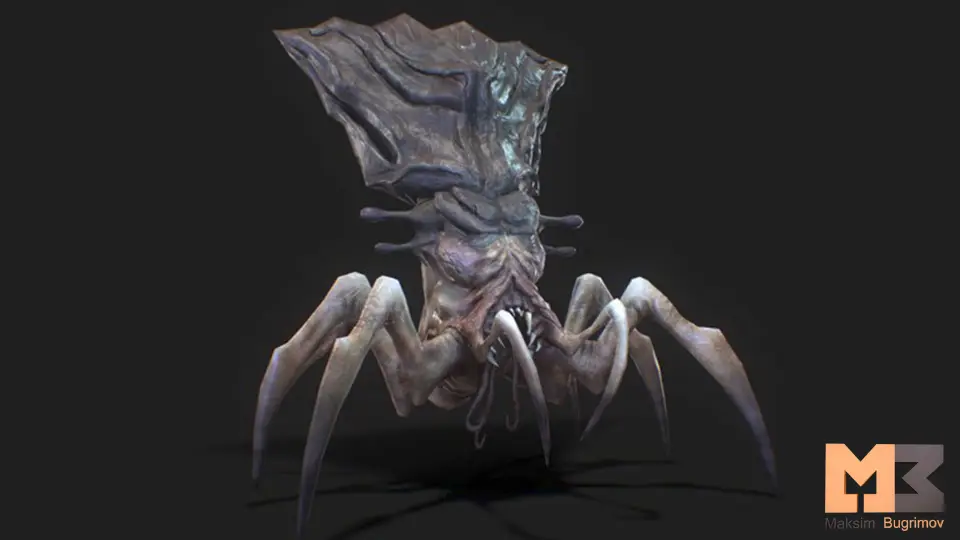
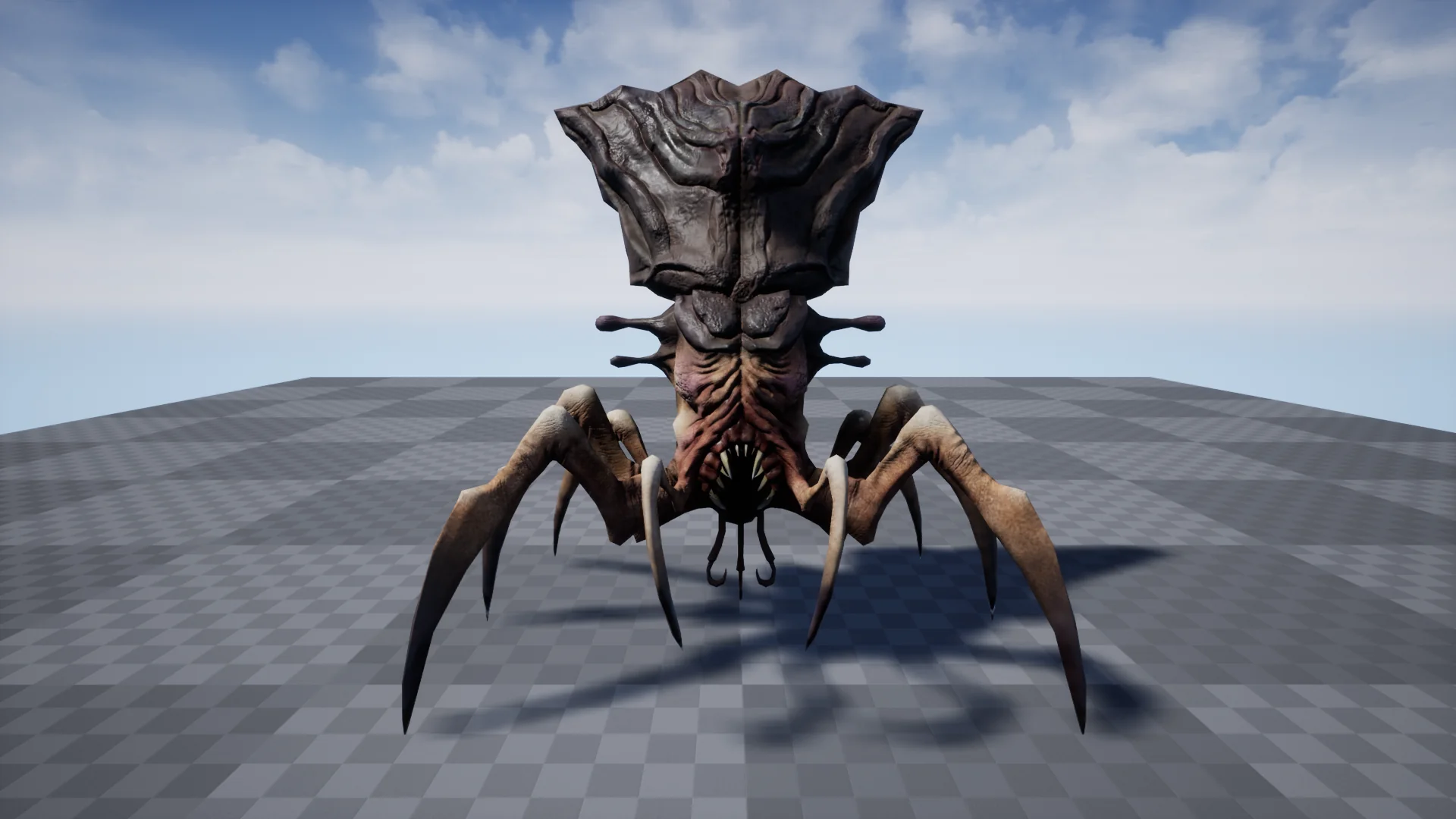
Claustrophobic subterranean tunnels, decayed crypts, and dense forest floors demand specific creature designs that communicate threat through numbers. The Arachnid fills this space directly as a character model structured to function as an enemy unit in games. Its core identity centers on mass attack encounters, shifting the balance of combat from an isolated duel into an urgent crowd-control challenge. When an enemy is designated for mass attack waves, its profile must work equally well when isolated on screen or when duplicated across dozens of active instances. The Arachnid character provides the physical presence needed to sell that volume without muddying the visual hierarchy of an encounter.
In horror and dark fantasy productions, a swarm entity alters how players navigate an environment. Tight passageways force players to manage sightlines, choke points, and spatial boundaries against fast-encroaching threats. Because the asset is explicitly conceived as a character for mass assault, it addresses an essential design requirement: populating scenes with expendable yet dangerous hostiles that push player positioning, demand resource consumption, and build immediate tension.
Horror and Fantasy Setting Deployments
The thematic tags for the character span both fantasy and horror, two genres that rely heavily on biological dread and unnatural entity designs. In horror production pipelines, the creature serves as an instrument of tension and sudden escalation. Placing an Arachnid into narrow ventilation shafts, derelict research corridors, or spider-infested basements immediately signals vulnerability. Because the creature carries distinct horror qualities, encounters can be staged around sudden ambushes, wall-skittering approaches, or dark nest spaces where movement is heard before it is seen.
Within fantasy titles, the creature readily inhabits ancient dungeons, corrupted forests, abandoned mines, and subterranean catacombs. Fantasy combat often balances individual high-tier bosses with swarms of low-to-mid tier minions. Here, the Arachnid acts as the frontline menace deployed to deplete player stamina, draw out cooldowns, or disrupt spellcasting rhythms. The crossover between horror and fantasy means level designers can repurpose the asset across multiple distinct biome types, transitioning from a terrifying standalone encounter in an early horror segment to a relentless horde during an open fantasy battlefield sequence.
Movement Logic within the Arachnid Animationblueprint
Directing multi-legged locomotion in modern game engines requires specialized control logic, and the inclusion of an Animationblueprint is central to making the Arachnid responsive. An Animationblueprint connects the skeletal mesh of the character to real-time state machines, blend spaces, and procedural adjustments. For an enemy focused on mass attack situations, smooth state switching is essential. The Animationblueprint governs how the Arachnid accelerates from an idle posture into a full crawl, turns rapidly to track an evasive target, and transitions into attack frames without visual snapping.
Multi-legged creature rigs present distinct challenges in terrain adaptation and directional changes. Through the Animationblueprint, developers can manage complex state graphs that handle transitions between rapid scurrying, rearing back for striking animations, taking hits, and dropping down upon death. In a crowd-based scenario where dozens of Arachnid units might be running across uneven ground simultaneously, having a dedicated Animationblueprint ensures that locomotion blends cleanly without breaking character believability or bogging down performance with disjointed motion cuts.
Motion Depth Through 56 Animations For Creatures
Varied movement is vital for preventing swarm combat from looking mechanical or repetitive. The Arachnid benefits directly from compatibility with 56 Animations For Creatures, providing a comprehensive pool of motions that cover full gameplay cycles. A library of 56 animations allows an enemy character to show genuine behavioral nuance rather than cycling through a single attack or one uniform run loop.
With 56 individual creature animations available, the asset can draw upon diverse motion clips to express varying levels of aggression, alternate striking patterns, multiple hit reactions, and differing death falls. In mass attack sequences, having different attack animations prevents every closing Arachnid from swinging or lunging in unison. Some units can unleash forward thrusts, others can execute lateral sweeps or rearing strikes, while retreating units utilize specific backward navigation loops. Hit reactions can vary depending on impact force, letting smaller hits cause brief staggers while heavier strikes trigger knockdown or recovery cycles. Distributing distinct movement and death animations across a pack breaks up the visual monotony that often plagues horde systems, making the entire swarm feel like an organic, erratic threat.
Script Integration for Multi-Unit Behavior
Complementing the visual mesh and animation system, the script component provides the underlying logic required to execute functional enemy behavior. Implementing an enemy intended for mass attacks requires coordinated positioning and pathfinding logic. A script layer allows creators to structure how the Arachnid approaches target acquisition, pathfinding navigation, attack wind-ups, and engagement distance checks.
In swarm-based gameplay, individual creatures must not simply pile directly atop one another in a broken collision knot. Scripted behavioral routines enable spacing offsets, flanking paths, and dynamic aggression timers so that while some Arachnid units engage in melee strikes, others flank around the player's periphery. The script also handles the communication channel between game world events and the Animationblueprint. When damage thresholds are reached or specific combat events fire in engine, the script triggers the appropriate animation parameters, ensuring that movement state changes, attack execution, and death sequences occur precisely in sync with game mechanics.
Practical Suitability for Game Projects
The Arachnid is configured precisely around the requirements of an encounter-ready enemy character. Combining a creature concept tailored for mass attack wave design with an Animationblueprint, dedicated script support, and compatibility with 56 Animations For Creatures gives development teams a modular foundation. Whether deployed as lurking horrors in tight atmospheric corridors or as overwhelming hordes in vast fantasy arenas, the character integrates seamlessly into established creature combat systems without demanding custom animation authoring or ground-up state machine assembly.
 Characters
 Characters
 Characters
 Characters