"7ad89cffa44984cf"{"id":"1002558","slug":"pbr-creature","title":"PBR Creature","category":"Characters \u0026 Creatures","engine":"4.18+,5.0+","assetVersion":"","engineVersion":"Engine Version: 4.18+,5.0+","tag":"Characters","accent":"blue","visual":"character","summary":"An analysis of the PBR Creature asset, detailing its low-poly mesh, 56 creature animations, and Animationblueprint setup across horror, shooter, and fantasy gen","platform":"Unreal Engine","indexPolicy":"index","publishedAt":"2026-11-13T10:50:56.597Z","updatedAt":"2026-11-13T10:50:56.597Z","sourceNotes":[],"fileContents":[],"compatibility":["Unreal Engine","Engine Version: 4.18+,5.0+"],"featuredImage":{"alt":"PBR Creature","src":"/wp-content/uploads/published/2026/11/a75d6edd99e4-564c8565-9398-4b84-9f8c-872ea342c9e5-9b3aabfcbe.webp"},"hasDownloadLink":true,"downloads":0,"terms":[{"taxonomy":"category","slug":"characters-and-creatures","name":"Characters \u0026 Creatures"}],"galleryImages":[{"src":"/wp-content/uploads/published/2026/11/0e20b8141345-e74b9af4-828a-4fb6-8837-b0cc8dc94192-e357950636.webp","alt":"PBR Creature"},{"src":"/wp-content/uploads/published/2026/11/7c63455fac01-8c087f86-3744-401d-b57b-00847e054a9d-4e9522050b.webp","alt":"PBR Creature"},{"src":"/wp-content/uploads/published/2026/11/023725a4e47c-9df9c792-58e6-4870-ad5b-f70cd7a69f8b-0cd1629074.webp","alt":"PBR Creature"},{"src":"/wp-content/uploads/published/2026/11/c6e5fc8ff9f5-3d825d2a-1886-43c6-8274-e6f5abe1b655-73de6b6102.webp","alt":"PBR Creature"}],"accessPanel":{"kind":"resource","title":"Get this resource","eyebrow":"Free resource","message":"Download this resource in your browser.","fileName":"Content.7z","safetyNote":"Resources are manually reviewed before listing to improve quality and reduce obvious risks.","actionLabel":"Get this resource","resourceType":"Resource archive","versions":[]},"contentHtml":"\u003cp\u003eA subterranean dungeon corridor bathed in flickering torchlight, an abandoned industrial basement shrouded in heavy fog, or a frantic sci-fi corridor under siege by aggressive beasts all share a common requirement: a hostile presence that moves convincingly and interacts naturally with environment lighting. Hostile encounters in games depend heavily on how an adversary visually integrates with darkness, shadows, and dynamic light sources. When a monster stalks through narrow passageways or bursts into an open arena, the credibility of that threat rests on surface reaction and organic movement.\u003c/p\u003e \u003ch2\u003eStaging the PBR Creature in Tension-Driven Arenas\u003c/h2\u003e \u003cp\u003eThe visual presence of an antagonist dictates how players read threat levels across contrasting game environments. Within fantasy settings, a beast must seamlessly inhabit ancient ruins, damp cavern networks, and mystical forests, appearing as an indigenous terror or an unnatural abomination spawned by corrupt magic. In survival horror scenarios, the exact same model must project vulnerability-inducing dread, stalking through claustrophobic rooms where high-contrast shadows conceal its silhouette until it closes the distance.\u003c/p\u003e \u003cp\u003eShooter titles impose distinct visual requirements. In fast-paced action sequences, players track movement across vast distances, demanding silhouettes that read instantly against cluttered backgrounds. Whether an encounter features solitary ambush predators or aggressive packs charging through gunfire, the monster must maintain its menacing posture across varied encounter scales. Bridging these distinct design spaces—fantasy, horror, and action shooters—requires an aesthetic balance that feels grounded in organic anatomy without leaning so heavily into specific narrative tropes that it cannot migrate between genres.\u003c/p\u003e \u003ch2\u003eLow-Poly Geometry Under Physically Based Rendering\u003c/h2\u003e \u003cp\u003eManaging rendering overhead while preserving visual fidelity is a continuous challenge when populating hostile environments. The low-poly construction of the mesh serves an essential performance function. By keeping polygon counts lightweight, scenes can support multiple simultaneous entities on screen without exhausting the geometry processing pipeline. This efficiency is critical for wave-based survival modes, shooter horde scenarios, or dense dungeon rooms where numerous enemies converge on a player character at once.\u003c/p\u003e \u003cp\u003eEfficiency in mesh density does not mean sacrificing surface believability. The physically based rendering workflow dictates how light bounces across the monster's hide, scales, or flesh. Under dynamic lighting rigs, PBR material properties govern surface roughness, reflectivity, and ambient occlusion, ensuring the skin reacts correctly to point lights, flashlights, glowing spell effects, and environmental fog. A low-poly mesh anchored by accurate PBR surface response delivers crisp specular highlights across muscle contours and deep crevices in low-light environments, giving the creature depth and palpable texture without demanding excessive mesh complexity.\u003c/p\u003e \u003ch2\u003eMechanics of the Creature Animationblueprint and Motion Set\u003c/h2\u003e \u003cp\u003eA static model only becomes a believable threat when animated with weight and fluidity. The inclusion of 56 animations for creatures offers an expansive movement library capable of sustaining complex behavior trees. In combat scenarios, repetitive motion breaks immersion instantly; seeing the exact same attack swing or damage flinch reduces an imposing adversary to a predictable mechanical routine. Having access to a pool of 56 motion clips provides the necessary variance for nuanced locomotion, distinct attack phases, transitional turns, and varied reaction states.\u003c/p\u003e \u003cp\u003eLinking an extensive motion library to gameplay logic is handled directly through the Animationblueprint framework. Rather than requiring developers to construct state machines from scratch, an integrated animation blueprint establishes the pathways connecting speed, direction, combat states, and hit triggers to the underlying skeletal clips. Blend spaces can smoothly interpolate between creeping stalks, trotting pursuits, and full-speed charges based on real-time AI velocity. The presence of scripting logic streamlines the connection between gameplay events—such as taking damage, acquiring targets, or launching special attacks—and the visual execution of corresponding animations.\u003c/p\u003e \u003ch2\u003eImplementing 56 Animations in Shooter and Fantasy Combat\u003c/h2\u003e \u003cp\u003eThe pacing of enemy encounters changes dramatically depending on whether a player wields a firearm, a melee weapon, or magic spells. In a shooter framework, enemy locomotion must handle high-speed approach vectors while accounting for ranged suppression. When players open fire, having access to varied directional hit reactions within the 56-clip set allows the creature to flinch, stagger, or adjust its stride without immediately breaking its attack run. Death states within the animation collection provide dramatic terminations that communicate definitive victory at the end of an intense firefight.\u003c/p\u003e \u003cp\u003eFantasy combat routines, by contrast, focus heavily on telegraphing melee engagements. Players dodging sword strikes or counter-attacking in close quarters rely on readable windups and recovery windows. The breadth of the animation library allows developers to isolate specific attack strikes—such as claw sweeps, downward smashes, or leaping bites—giving each behavior clear timing cues. This granularity supports sophisticated combat loops where the monster alters its attack cadence based on player proximity, alternating between aggressive strikes and defensive repositioning.\u003c/p\u003e \u003cp\u003eHorror encounters leverage the slower, more deliberate segments of the animation catalog. Prowling cycles, unsettled idling states, and sniffing or searching animations let the monster patrol corridors convincingly while searching for a hidden protagonist. Because the animation blueprint governs state switching, the transition from a slow, menacing stalk to an explosive sprint upon spotting the player occurs seamlessly, amplifying tension and delivering the startling jump scares characteristic of survival horror experiences.\u003c/p\u003e \u003ch2\u003eProduction Alignment and Implementation Contexts\u003c/h2\u003e \u003cp\u003eIndependent developers and small production teams building combat-heavy prototypes benefit directly from an all-in-one hostile character package. Integrating a creature mesh that already combines low-poly performance optimization, PBR surface definition, a complete 56-clip animation catalog, and an Animationblueprint eliminates the friction of rigging and building animation trees manually. It provides an immediate, functional combatant for wave-based shooters, dungeon exploration titles, or indie horror experiments where rapid iteration on AI behavior and encounter design is paramount.\u003c/p\u003e\n\n\u003ch2\u003eMore From The Same Workflow\u003c/h2\u003e\n\u003cul\u003e\n\u003cli\u003e\u003ca href=\"https://3dcghub.com/mushroom-monster-pack-pbr/\" rel=\"noopener noreferrer\"\u003eMushroom Monster Pack PBR\u003c/a\u003e\u003c/li\u003e\n\u003cli\u003e\u003ca href=\"https://3dcghub.com/dragons-pack-pbr/\" rel=\"noopener noreferrer\"\u003eDragons Pack PBR\u003c/a\u003e\u003c/li\u003e\n\u003cli\u003e\u003ca href=\"https://3dcghub.com/crab-animated-creature/\" rel=\"noopener noreferrer\"\u003eCrab - Animated Creature\u003c/a\u003e\u003c/li\u003e\n\u003cli\u003e\u003ca href=\"https://3dcghub.com/bloodthirsty-beetle/\" rel=\"noopener noreferrer\"\u003eBloodthirsty Beetle\u003c/a\u003e\u003c/li\u003e\n\u003cli\u003e\u003ca href=\"https://3dcghub.com/dinosaur-mosasaurus-sea-monster-series-4/\" rel=\"noopener noreferrer\"\u003eDinosaur Mosasaurus - Sea Monster Series 4\u003c/a\u003e\u003c/li\u003e\n\u003c/ul\u003e","contentTextLength":6951,"navigation":{"current":19,"total":4499,"previous":{"id":"1002559","slug":"phoenix","title":"Phoenix","category":"Characters \u0026 Creatures","platform":"Unreal Engine","updatedAt":"2026-11-13T10:52:24.146Z"},"next":{"id":"1002557","slug":"parasites-pack","title":"Parasites Pack","category":"Characters \u0026 Creatures","platform":"Unreal Engine","updatedAt":"2026-11-13T10:49:48.970Z"}},"relatedResources":[{"id":"1002551","slug":"mushroom-monster-pack-pbr","title":"Mushroom Monster Pack PBR","category":"Characters \u0026 Creatures","engine":"4.26+,5.0+","assetVersion":"","engineVersion":"Engine Version: 4.26+,5.0+","tag":"Characters","accent":"blue","visual":"character","summary":"Explore the Mushroom Monster Pack PBR, featuring rigged animations, 30 morph targets, 9 texture variants, Substance customization, and audio.","platform":"Unreal Engine","indexPolicy":"index","publishedAt":"2026-11-13T10:04:14.578Z","updatedAt":"2026-11-13T10:04:14.578Z","sourceNotes":[],"fileContents":[],"compatibility":["Unreal Engine","Engine Version: 4.26+,5.0+"],"featuredImage":{"alt":"Mushroom Monster Pack PBR","src":"/wp-content/uploads/published/2026/11/d7d8072a8c88-491e2cc5-7246-4ed0-a58e-d7c143dda8c7-91e9c83b0d.webp"},"hasDownloadLink":true,"downloads":0},{"id":"1002553","slug":"dragons-pack-pbr","title":"Dragons Pack PBR","category":"Characters \u0026 Creatures","engine":"4.26+,5.0+","assetVersion":"","engineVersion":"Engine Version: 4.26+,5.0+","tag":"Characters","accent":"blue","visual":"character","summary":"A modular dragon character with three heads, four backs, two tails, morphable meshes, land and air animations, riding gear, and texture customization.","platform":"Unreal Engine","indexPolicy":"index","publishedAt":"2026-11-13T10:44:04.939Z","updatedAt":"2026-11-13T10:44:04.939Z","sourceNotes":[],"fileContents":[],"compatibility":["Unreal Engine","Engine Version: 4.26+,5.0+"],"featuredImage":{"alt":"Dragons Pack PBR","src":"/wp-content/uploads/published/2026/11/3da1c57f3803-c7f49a80-8d53-4c2e-a37d-b60a8158091b-4055ba50f8.webp"},"hasDownloadLink":true,"downloads":0},{"id":"1001992","slug":"crab-animated-creature","title":"Crab - Animated Creature","category":"Characters \u0026 Creatures","engine":"4.26+,5.0+","assetVersion":"","engineVersion":"Engine Version: 4.26+,5.0+","tag":"Characters","accent":"blue","visual":"character","summary":"Examine the Crab - Animated Creature asset, featuring 16k tris geometry, 4k PBR textures across five distinct color schemes, and over 20 locomotion and combat a","platform":"Unreal Engine","indexPolicy":"index","publishedAt":"2026-10-26T12:10:39.424Z","updatedAt":"2026-10-26T12:10:39.424Z","sourceNotes":[],"fileContents":[],"compatibility":["Unreal Engine","Engine Version: 4.26+,5.0+"],"featuredImage":{"alt":"Crab - Animated Creature","src":"/wp-content/uploads/published/2026/10/f46bd33bd8db-097dce17-fd07-43fe-a30c-81259b9b58f5-ad8f184b42.webp"},"hasDownloadLink":true,"downloads":0}]}
Characters
PBR Creature
An analysis of the PBR Creature asset, detailing its low-poly mesh, 56 creature animations, and Animationblueprint setup across horror, shooter, and fantasy gen
A subterranean dungeon corridor bathed in flickering torchlight, an abandoned industrial basement shrouded in heavy fog, or a frantic sci-fi corridor under siege by aggressive beasts all share a common requirement: a hostile presence that moves convincingly and interacts naturally with environment lighting. Hostile encounters in games depend heavily on how an adversary visually integrates with darkness, shadows, and dynamic light sources. When a monster stalks through narrow passageways or bursts into an open arena, the credibility of that threat rests on surface reaction and organic movement.
Staging the PBR Creature in Tension-Driven Arenas
The visual presence of an antagonist dictates how players read threat levels across contrasting game environments. Within fantasy settings, a beast must seamlessly inhabit ancient ruins, damp cavern networks, and mystical forests, appearing as an indigenous terror or an unnatural abomination spawned by corrupt magic. In survival horror scenarios, the exact same model must project vulnerability-inducing dread, stalking through claustrophobic rooms where high-contrast shadows conceal its silhouette until it closes the distance.
Shooter titles impose distinct visual requirements. In fast-paced action sequences, players track movement across vast distances, demanding silhouettes that read instantly against cluttered backgrounds. Whether an encounter features solitary ambush predators or aggressive packs charging through gunfire, the monster must maintain its menacing posture across varied encounter scales. Bridging these distinct design spaces—fantasy, horror, and action shooters—requires an aesthetic balance that feels grounded in organic anatomy without leaning so heavily into specific narrative tropes that it cannot migrate between genres.
Low-Poly Geometry Under Physically Based Rendering
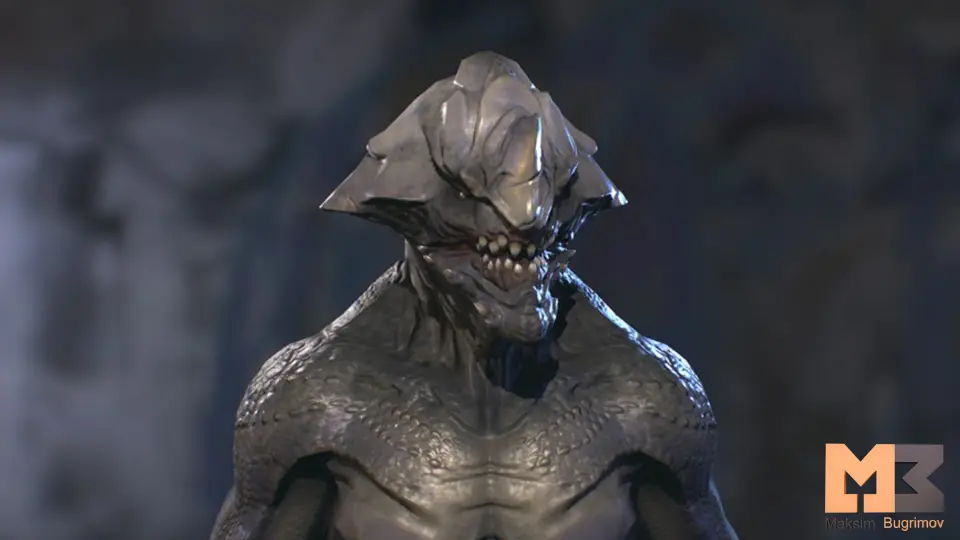
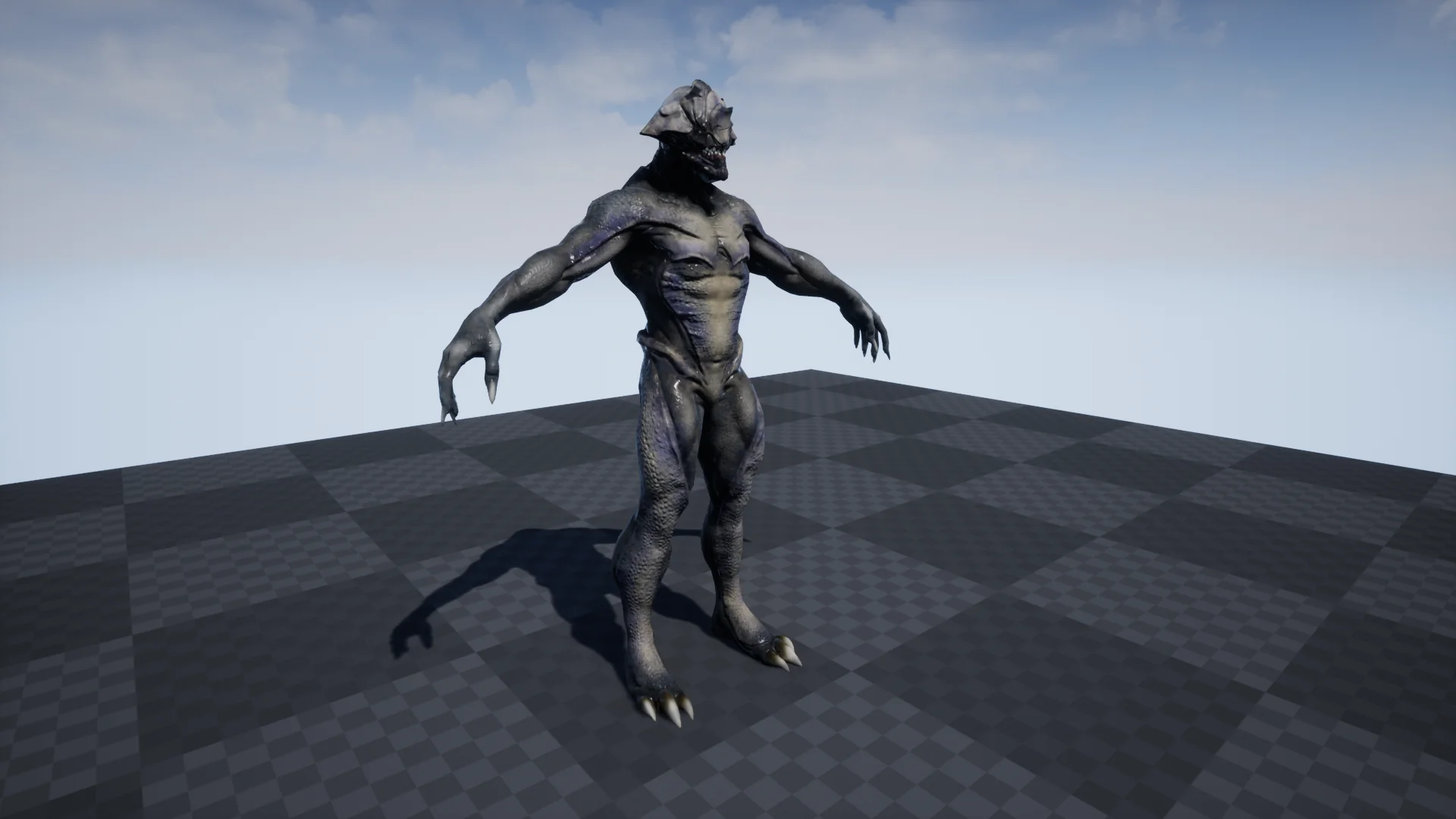
Managing rendering overhead while preserving visual fidelity is a continuous challenge when populating hostile environments. The low-poly construction of the mesh serves an essential performance function. By keeping polygon counts lightweight, scenes can support multiple simultaneous entities on screen without exhausting the geometry processing pipeline. This efficiency is critical for wave-based survival modes, shooter horde scenarios, or dense dungeon rooms where numerous enemies converge on a player character at once.
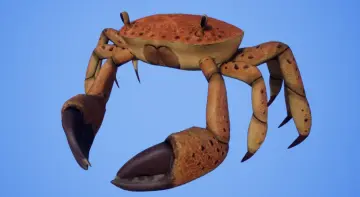
Efficiency in mesh density does not mean sacrificing surface believability. The physically based rendering workflow dictates how light bounces across the monster's hide, scales, or flesh. Under dynamic lighting rigs, PBR material properties govern surface roughness, reflectivity, and ambient occlusion, ensuring the skin reacts correctly to point lights, flashlights, glowing spell effects, and environmental fog. A low-poly mesh anchored by accurate PBR surface response delivers crisp specular highlights across muscle contours and deep crevices in low-light environments, giving the creature depth and palpable texture without demanding excessive mesh complexity.
Mechanics of the Creature Animationblueprint and Motion Set
A static model only becomes a believable threat when animated with weight and fluidity. The inclusion of 56 animations for creatures offers an expansive movement library capable of sustaining complex behavior trees. In combat scenarios, repetitive motion breaks immersion instantly; seeing the exact same attack swing or damage flinch reduces an imposing adversary to a predictable mechanical routine. Having access to a pool of 56 motion clips provides the necessary variance for nuanced locomotion, distinct attack phases, transitional turns, and varied reaction states.
Linking an extensive motion library to gameplay logic is handled directly through the Animationblueprint framework. Rather than requiring developers to construct state machines from scratch, an integrated animation blueprint establishes the pathways connecting speed, direction, combat states, and hit triggers to the underlying skeletal clips. Blend spaces can smoothly interpolate between creeping stalks, trotting pursuits, and full-speed charges based on real-time AI velocity. The presence of scripting logic streamlines the connection between gameplay events—such as taking damage, acquiring targets, or launching special attacks—and the visual execution of corresponding animations.
Implementing 56 Animations in Shooter and Fantasy Combat
The pacing of enemy encounters changes dramatically depending on whether a player wields a firearm, a melee weapon, or magic spells. In a shooter framework, enemy locomotion must handle high-speed approach vectors while accounting for ranged suppression. When players open fire, having access to varied directional hit reactions within the 56-clip set allows the creature to flinch, stagger, or adjust its stride without immediately breaking its attack run. Death states within the animation collection provide dramatic terminations that communicate definitive victory at the end of an intense firefight.
Fantasy combat routines, by contrast, focus heavily on telegraphing melee engagements. Players dodging sword strikes or counter-attacking in close quarters rely on readable windups and recovery windows. The breadth of the animation library allows developers to isolate specific attack strikes—such as claw sweeps, downward smashes, or leaping bites—giving each behavior clear timing cues. This granularity supports sophisticated combat loops where the monster alters its attack cadence based on player proximity, alternating between aggressive strikes and defensive repositioning.
Horror encounters leverage the slower, more deliberate segments of the animation catalog. Prowling cycles, unsettled idling states, and sniffing or searching animations let the monster patrol corridors convincingly while searching for a hidden protagonist. Because the animation blueprint governs state switching, the transition from a slow, menacing stalk to an explosive sprint upon spotting the player occurs seamlessly, amplifying tension and delivering the startling jump scares characteristic of survival horror experiences.
Production Alignment and Implementation Contexts
Independent developers and small production teams building combat-heavy prototypes benefit directly from an all-in-one hostile character package. Integrating a creature mesh that already combines low-poly performance optimization, PBR surface definition, a complete 56-clip animation catalog, and an Animationblueprint eliminates the friction of rigging and building animation trees manually. It provides an immediate, functional combatant for wave-based shooters, dungeon exploration titles, or indie horror experiments where rapid iteration on AI behavior and encounter design is paramount.
 Characters
 Characters
 Characters
 Characters