"7ad89cffa44984cf"{"id":"1002557","slug":"parasites-pack","title":"Parasites Pack","category":"Characters \u0026 Creatures","engine":"4.26+,5.0+","assetVersion":"","engineVersion":"Engine Version: 4.26+,5.0+","tag":"Characters","accent":"blue","visual":"character","summary":"A detailed look at the Parasites Pack, featuring five low-poly creature characters with animations, sounds, animation blueprints, and script integration.","platform":"Unreal Engine","indexPolicy":"index","publishedAt":"2026-11-13T10:49:48.970Z","updatedAt":"2026-11-13T10:49:48.970Z","sourceNotes":[],"fileContents":[],"compatibility":["Unreal Engine","Engine Version: 4.26+,5.0+"],"featuredImage":{"alt":"Parasites Pack","src":"/wp-content/uploads/published/2026/11/d5f5d25bb220-1ef98fa5-f598-4a54-8211-2a1e0a164513-d20c82884b.webp"},"hasDownloadLink":true,"downloads":0,"terms":[{"taxonomy":"category","slug":"characters-and-creatures","name":"Characters \u0026 Creatures"}],"galleryImages":[{"src":"/wp-content/uploads/published/2026/11/5f5d7ea41c22-ec04904f-7da6-4cbd-896f-86a256781c50-9e9e1b4493.webp","alt":"Parasites Pack"},{"src":"/wp-content/uploads/published/2026/11/feb5c7dddf22-f4672155-ab58-4fb4-9a61-baca0dc1b645-4e394068a9.webp","alt":"Parasites Pack"},{"src":"/wp-content/uploads/published/2026/11/b3503309c749-f4269dfd-e8d9-4ba8-81fb-e39382f2cd6c-7f0cc31476.webp","alt":"Parasites Pack"},{"src":"/wp-content/uploads/published/2026/11/0a803c1225a9-505b3453-0731-4050-b730-ca1611cae5e2-ebb40a691c.webp","alt":"Parasites Pack"},{"src":"/wp-content/uploads/published/2026/11/02fd11c50371-5230d2c3-2c01-4392-a43a-0f7af4f03c96-8f8afc39fd.webp","alt":"Parasites Pack"},{"src":"/wp-content/uploads/published/2026/11/a3c9f9eaf906-c27958f4-d88b-4797-9bac-e639a5e608fd-1a44cd774d.webp","alt":"Parasites Pack"}],"accessPanel":{"kind":"resource","title":"Get this resource","eyebrow":"Free resource","message":"Download this resource in your browser.","fileName":"Content.7z","safetyNote":"Resources are manually reviewed before listing to improve quality and reduce obvious risks.","actionLabel":"Get this resource","resourceType":"Resource archive","versions":[]},"contentHtml":"\u003cp\u003eDark subterranean tunnels, decaying fantasy catacombs, and biomechanical horror corridors share a common need for unsettling biological adversaries. Parasitic organisms provide immediate tension in these environments, acting as swarming nuisances, ambush predators, or grotesque environmental hazards. Parasites Pack supplies five distinct characters conceived as low-poly creatures and monsters suited for fantasy and horror projects. By pairing these five models with their own animations, sound assets, script components, and animation blueprints, the collection bypasses the sterile phase of greybox enemy testing, giving developers immediate visual, mechanical, and auditory feedback inside interactive scenes.\u003c/p\u003e \u003ch2\u003eVisualizing Low-Poly Hostility in the Parasites Pack\u003c/h2\u003e\n\u003cp\u003eEach of the five character models adopts a low-poly aesthetic, establishing distinct creature silhouettes that communicate biological threat without overwhelming rendering budgets. In low-poly art styles, creature readability depends on form, posture, and sharp silhouette differentiation rather than micro-surface detail. Because the collection focuses on parasite, monster, and creature archetypes, the five distinct figures provide natural variety across enemy ranks.\u003c/p\u003e\n\u003cp\u003eA multi-character lineup of five entities enables developers to assemble multi-tiered encounters. Rather than repeating a single monster model across an entire level, games can distribute the five parasite variants across distinct environmental niches. One creature might serve as an initial scouting pest, another can function as an aggressive vanguard, and larger or more specialized variants can operate as disruptive ambushers within enclosed fantasy crypts or abandoned horror research stations. The low-poly construction ensures that scenes populating multiple instances of these monsters remain performant during dense mob spawns or intense swarming behavior.\u003c/p\u003e \u003ch2\u003eMotion States and the Parasites Pack Animation Logic\u003c/h2\u003e\n\u003cp\u003eMovement defines the psychological threat of parasitic monsters. Stiff or robotic locomotion undermines horror, while dynamic motion sells the impression of an unpredictable, skittering biological entity. The pack integrates dedicated animations alongside an animation blueprint, mapping out locomotion, transitions, and state evaluations directly within the character structure.\u003c/p\u003e\n\u003cp\u003eThe presence of an animation blueprint bridges the gap between raw motion clips and actual runtime behavior. Instead of manually stitching together locomotion loops, blend spaces, and state machines from scratch, developers gain a functional framework where motion dynamically responds to character velocity, direction, and trigger events. In horror sequences, where the timing of an ambush or sudden lunge creates shock value, an animation blueprint ensures smooth transitions between idling in shadows and darting toward the player. For fast-paced fantasy combat, this framework supports responsive hit reactions, attack cycles, and movement changes that keep enemy behavior readable and mechanically fair.\u003c/p\u003e \u003ch2\u003eAtmospheric Audio and Creature Scripts\u003c/h2\u003e\n\u003cp\u003eAudio is half the presence of any creature in game design, especially within horror and suspense contexts. Silent monsters often read as detached or incomplete during early testing, requiring audio designers to hunt for placeholder sound effects before gameplay pacing can be judged accurately. Parasites Pack bundles dedicated sounds with the characters, providing vocalizations, aggressive cues, and Foley audio that pair directly with the visual animations.\u003c/p\u003e\n\u003cp\u003eComplementing the audio assets is the inclusion of script logic. Scripting ties character behavior, audio triggers, and animation playback into cohesive gameplay events. When a parasite character spots a target, transitions between patrol and combat, or unleashes an attack, the coordination between the script and animation blueprint handles state switching while firing off corresponding sounds at key moments. This integration minimizes the friction typically encountered when assembling disparate marketplace assets, where audio files, skeletal animations, and game logic must otherwise be reconciled manually through custom coding.\u003c/p\u003e \u003ch2\u003eFantasy and Horror Encounter Construction\u003c/h2\u003e\n\u003cp\u003eThe overlap between horror and fantasy thematic tags positions the pack across a broad spectrum of project types. In classic fantasy role-playing games or dungeon crawlers, parasitic monsters serve as natural inhabitants of infested mines, cursed ruins, toxic marshes, or deep subterranean caverns. They fit naturally into narrative arcs revolving around corruption, magical plagues, or ancient hives disturbed by adventurers.\u003c/p\u003e\n\u003cp\u003eWithin pure horror projects, the same five characters translate directly into mutated organisms, invasive biological horrors, or alien infestations aboard derelict outposts. The low-poly styling allows for stylized horror aesthetics, where harsh lighting, deep shadows, and stark silhouettes emphasize geometric contours to amplify dread. Because low-poly assets adapt smoothly across stylized rendering pipelines, indie horror projects can lean on strong post-processing, fog volumes, and dramatic directional lights to produce striking, atmospheric encounters.\u003c/p\u003e \u003ch2\u003eMega Bundle Compatibility and Production Suitability\u003c/h2\u003e\n\u003cp\u003eIntegration with the broader ecosystem is addressed through confirmed compatibility with the All My 3D Characters Mega Bundle. For creators utilizing multiple collections from this catalog, consistent technical setups across characters streamline project management and asset pipelines. Shared conventions across scripts, animation blueprints, and character hierarchies make it straightforward to deploy the parasite figures alongside other bundled figures without restructuring core gameplay systems.\u003c/p\u003e\n\u003cp\u003eSolo developers, small independent studios, and rapid prototyping teams benefit most directly from this package. When building enemy factions for a horror proof-of-concept or populating fantasy levels with aggressive wildlife, having five ready-to-use characters complete with motion, audio, and blueprint scripting eliminates standard integration bottlenecks. Teams can immediately drop these monsters into gameplay test beds, evaluate combat mechanics, fine-tune pacing, and build functional creature encounters with minimal preliminary setup.\u003c/p\u003e\n\n\u003ch2\u003eMore From The Same Workflow\u003c/h2\u003e\n\u003cul\u003e\n\u003cli\u003e\u003ca href=\"https://3dcghub.com/parasite-fat/\" rel=\"noopener noreferrer\"\u003eParasite Fat\u003c/a\u003e\u003c/li\u003e\n\u003cli\u003e\u003ca href=\"https://3dcghub.com/parasite-zombie-05-game-assets-extra/\" rel=\"noopener noreferrer\"\u003eParasite Zombie 05 - Game Assets + Extra\u003c/a\u003e\u003c/li\u003e\n\u003cli\u003e\u003ca href=\"https://3dcghub.com/parasite-zombie-06-game-assets-extra/\" rel=\"noopener noreferrer\"\u003eParasite Zombie 06 - Game Assets + Extra\u003c/a\u003e\u003c/li\u003e\n\u003cli\u003e\u003ca href=\"https://3dcghub.com/parasite-zombie-04-game-assets-extra/\" rel=\"noopener noreferrer\"\u003eParasite Zombie 04 - Game Assets + Extra\u003c/a\u003e\u003c/li\u003e\n\u003cli\u003e\u003ca href=\"https://3dcghub.com/parasite-spider/\" rel=\"noopener noreferrer\"\u003eParasite_Spider\u003c/a\u003e\u003c/li\u003e\n\u003c/ul\u003e","contentTextLength":6498,"navigation":{"current":20,"total":4499,"previous":{"id":"1002558","slug":"pbr-creature","title":"PBR Creature","category":"Characters \u0026 Creatures","platform":"Unreal Engine","updatedAt":"2026-11-13T10:50:56.597Z"},"next":{"id":"1002556","slug":"parasite-spider","title":"Parasite_Spider","category":"Game Development Resource","platform":"Unreal Engine","updatedAt":"2026-11-13T10:47:59.388Z"}},"relatedResources":[{"id":"1002555","slug":"parasite-fat","title":"Parasite Fat","category":"Characters \u0026 Creatures","engine":"4.26+,5.0+","assetVersion":"","engineVersion":"Engine Version: 4.26+,5.0+","tag":"Characters","accent":"blue","visual":"character","summary":"Examine the Parasite Fat creature asset, featuring low-poly modeling, 56 creature animations, an Animation Blueprint, and multi-genre game utility.","platform":"Unreal Engine","indexPolicy":"index","publishedAt":"2026-11-13T10:46:56.136Z","updatedAt":"2026-11-13T10:46:56.136Z","sourceNotes":[],"fileContents":[],"compatibility":["Unreal Engine","Engine Version: 4.26+,5.0+"],"featuredImage":{"alt":"Parasite Fat","src":"/wp-content/uploads/published/2026/11/9614601ac561-e57895a1-f308-4590-8778-c5c57928d074-16fac66df3.webp"},"hasDownloadLink":true,"downloads":0},{"id":"3193","slug":"parasite-zombie-05-game-assets-extra","title":"Parasite Zombie 05 - Game Assets + Extra","category":"Characters \u0026 Creatures","engine":"5.2+","assetVersion":"Engine version: 5.2+","engineVersion":"4.27","tag":"Characters","accent":"blue","visual":"character","summary":"Enhance your horror game with the Parasite Zombie 05. This modular character asset is perfect for modern, sci-fi, and medieval projects in Unreal Engine.","platform":"Unreal Engine","indexPolicy":"noindex","publishedAt":"2026-02-08T16:34:11.000Z","updatedAt":"2026-04-19T15:57:41.000Z","sourceNotes":[],"fileContents":[],"compatibility":["Unreal Engine","Engine version: 5.2+"],"featuredImage":{"alt":"Parasite Zombie 05 - Game Assets + Extra","src":"https://3dcghub.com/wp-content/uploads/2026/02/95e0cdaf-0c1e-4da6-a850-afd01029b95e.webp"},"hasDownloadLink":true,"downloads":3},{"id":"3186","slug":"parasite-zombie-04-game-assets-extra","title":"Parasite Zombie 04 - Game Assets + Extra","category":"Characters \u0026 Creatures","engine":"5.0+","assetVersion":"Engine version: 5.0+","engineVersion":"4.27","tag":"Characters","accent":"blue","visual":"character","summary":"Enhance your horror game with the Parasite Zombie 04 character asset. Featuring modular materials and cross-genre compatibility for modern and medieval settings","platform":"Unreal Engine","indexPolicy":"index","publishedAt":"2026-02-08T16:28:56.000Z","updatedAt":"2026-04-19T15:57:41.000Z","sourceNotes":[],"fileContents":[],"compatibility":["Unreal Engine","Engine version: 5.0+"],"featuredImage":{"alt":"Parasite Zombie 04 - Game Assets + Extra","src":"https://3dcghub.com/wp-content/uploads/2026/02/e26e84ab-57b5-4795-a55f-cbc490e1ddd1.webp"},"hasDownloadLink":true,"downloads":1}]}
Characters
Parasites Pack
A detailed look at the Parasites Pack, featuring five low-poly creature characters with animations, sounds, animation blueprints, and script integration.
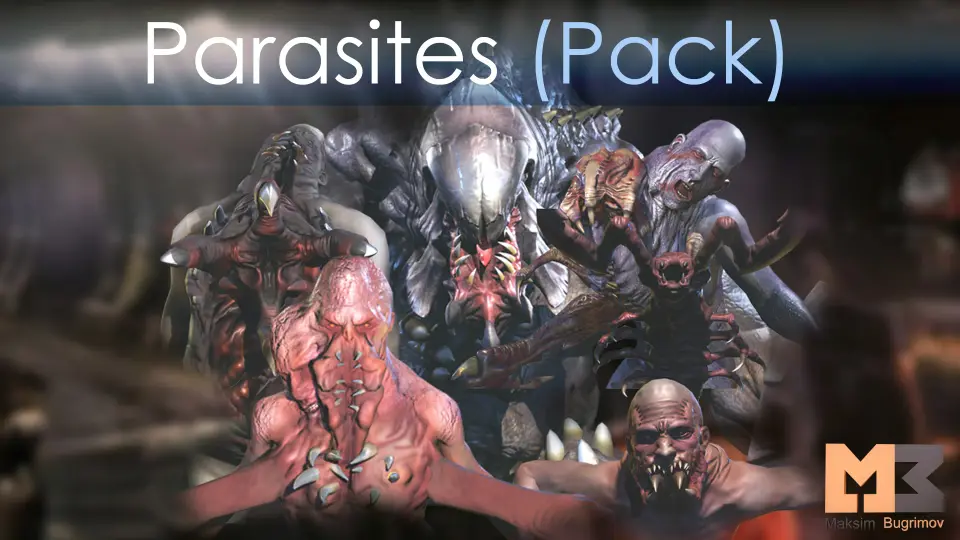
Dark subterranean tunnels, decaying fantasy catacombs, and biomechanical horror corridors share a common need for unsettling biological adversaries. Parasitic organisms provide immediate tension in these environments, acting as swarming nuisances, ambush predators, or grotesque environmental hazards. Parasites Pack supplies five distinct characters conceived as low-poly creatures and monsters suited for fantasy and horror projects. By pairing these five models with their own animations, sound assets, script components, and animation blueprints, the collection bypasses the sterile phase of greybox enemy testing, giving developers immediate visual, mechanical, and auditory feedback inside interactive scenes.
Visualizing Low-Poly Hostility in the Parasites Pack
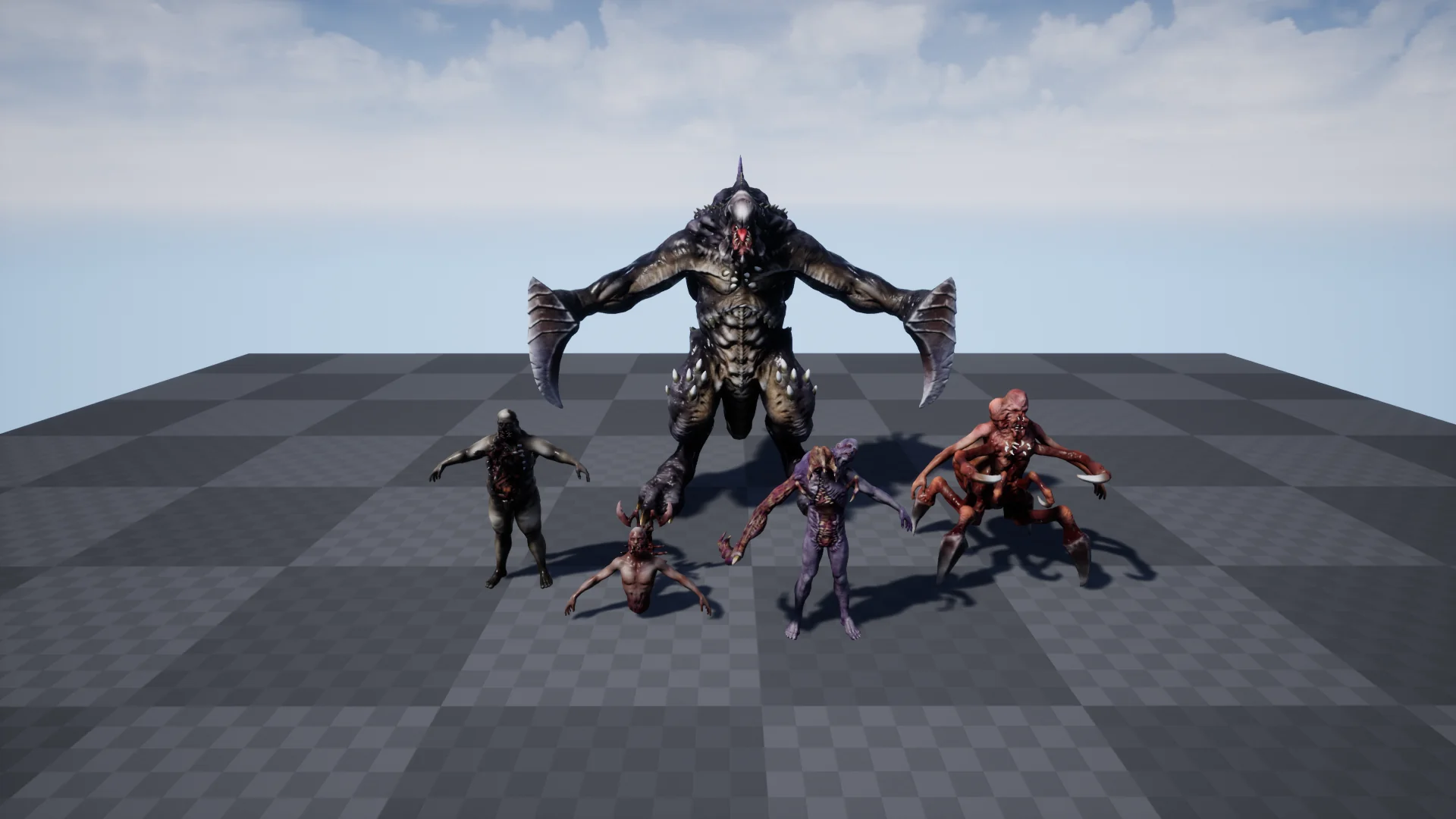
Each of the five character models adopts a low-poly aesthetic, establishing distinct creature silhouettes that communicate biological threat without overwhelming rendering budgets. In low-poly art styles, creature readability depends on form, posture, and sharp silhouette differentiation rather than micro-surface detail. Because the collection focuses on parasite, monster, and creature archetypes, the five distinct figures provide natural variety across enemy ranks.
A multi-character lineup of five entities enables developers to assemble multi-tiered encounters. Rather than repeating a single monster model across an entire level, games can distribute the five parasite variants across distinct environmental niches. One creature might serve as an initial scouting pest, another can function as an aggressive vanguard, and larger or more specialized variants can operate as disruptive ambushers within enclosed fantasy crypts or abandoned horror research stations. The low-poly construction ensures that scenes populating multiple instances of these monsters remain performant during dense mob spawns or intense swarming behavior.
Motion States and the Parasites Pack Animation Logic
Movement defines the psychological threat of parasitic monsters. Stiff or robotic locomotion undermines horror, while dynamic motion sells the impression of an unpredictable, skittering biological entity. The pack integrates dedicated animations alongside an animation blueprint, mapping out locomotion, transitions, and state evaluations directly within the character structure.
The presence of an animation blueprint bridges the gap between raw motion clips and actual runtime behavior. Instead of manually stitching together locomotion loops, blend spaces, and state machines from scratch, developers gain a functional framework where motion dynamically responds to character velocity, direction, and trigger events. In horror sequences, where the timing of an ambush or sudden lunge creates shock value, an animation blueprint ensures smooth transitions between idling in shadows and darting toward the player. For fast-paced fantasy combat, this framework supports responsive hit reactions, attack cycles, and movement changes that keep enemy behavior readable and mechanically fair.
Atmospheric Audio and Creature Scripts
Audio is half the presence of any creature in game design, especially within horror and suspense contexts. Silent monsters often read as detached or incomplete during early testing, requiring audio designers to hunt for placeholder sound effects before gameplay pacing can be judged accurately. Parasites Pack bundles dedicated sounds with the characters, providing vocalizations, aggressive cues, and Foley audio that pair directly with the visual animations.
Complementing the audio assets is the inclusion of script logic. Scripting ties character behavior, audio triggers, and animation playback into cohesive gameplay events. When a parasite character spots a target, transitions between patrol and combat, or unleashes an attack, the coordination between the script and animation blueprint handles state switching while firing off corresponding sounds at key moments. This integration minimizes the friction typically encountered when assembling disparate marketplace assets, where audio files, skeletal animations, and game logic must otherwise be reconciled manually through custom coding.
Fantasy and Horror Encounter Construction
The overlap between horror and fantasy thematic tags positions the pack across a broad spectrum of project types. In classic fantasy role-playing games or dungeon crawlers, parasitic monsters serve as natural inhabitants of infested mines, cursed ruins, toxic marshes, or deep subterranean caverns. They fit naturally into narrative arcs revolving around corruption, magical plagues, or ancient hives disturbed by adventurers.
Within pure horror projects, the same five characters translate directly into mutated organisms, invasive biological horrors, or alien infestations aboard derelict outposts. The low-poly styling allows for stylized horror aesthetics, where harsh lighting, deep shadows, and stark silhouettes emphasize geometric contours to amplify dread. Because low-poly assets adapt smoothly across stylized rendering pipelines, indie horror projects can lean on strong post-processing, fog volumes, and dramatic directional lights to produce striking, atmospheric encounters.
Mega Bundle Compatibility and Production Suitability
Integration with the broader ecosystem is addressed through confirmed compatibility with the All My 3D Characters Mega Bundle. For creators utilizing multiple collections from this catalog, consistent technical setups across characters streamline project management and asset pipelines. Shared conventions across scripts, animation blueprints, and character hierarchies make it straightforward to deploy the parasite figures alongside other bundled figures without restructuring core gameplay systems.
Solo developers, small independent studios, and rapid prototyping teams benefit most directly from this package. When building enemy factions for a horror proof-of-concept or populating fantasy levels with aggressive wildlife, having five ready-to-use characters complete with motion, audio, and blueprint scripting eliminates standard integration bottlenecks. Teams can immediately drop these monsters into gameplay test beds, evaluate combat mechanics, fine-tune pacing, and build functional creature encounters with minimal preliminary setup.
 Characters
 Characters
 Characters
 Characters