"d037b61901c110d2"{"id":"1002671","slug":"isometric-world-sky-temple","title":"Isometric World : Sky Temple","category":"Fantasy","engine":"5.0+","assetVersion":"","engineVersion":"Engine Version: 5.0+","tag":"Fantasy","accent":"blue","visual":"mech","summary":"Explore Isometric World: Sky Temple, featuring a modular low-poly demo level, Niagara systems, decals, blueprints, and multi-perspective camera support.","platform":"Unreal Engine","indexPolicy":"index","publishedAt":"2026-11-16T22:21:46.669Z","updatedAt":"2026-11-16T22:21:46.669Z","sourceNotes":[],"fileContents":[],"compatibility":["Unreal Engine","Engine Version: 5.0+"],"featuredImage":{"alt":"Isometric World : Sky Temple","src":"/wp-content/uploads/published/2026/11/3b29e4848ffa-41329a2a-821b-4653-80aa-4d13ee59f66f-e2d39e7116.webp"},"fileSizeBytes":464543434,"hasDownloadLink":true,"downloads":0,"terms":[{"taxonomy":"category","slug":"fantasy","name":"Fantasy"}],"galleryImages":[{"src":"/wp-content/uploads/published/2026/11/820fb0f56b27-22c7ee9c-f42b-4927-a42e-ddfeae8fbcf4-14c4ff029f.webp","alt":"Isometric World : Sky Temple"},{"src":"/wp-content/uploads/published/2026/11/9f98b08a65bd-4797e04f-a4fb-4998-9a99-a30bdf34fa56-0ab11e1c1c.webp","alt":"Isometric World : Sky Temple"}],"accessPanel":{"kind":"resource","title":"Get this resource","eyebrow":"Free resource","message":"Download this resource in your browser.","fileName":"Content.7z","safetyNote":"Resources are manually reviewed before listing to improve quality and reduce obvious risks.","actionLabel":"Get this resource","resourceType":"Resource archive","versions":[]},"contentHtml":"\u003ch2\u003eDeconstructing the Isometric World Demo Level Workflow\u003c/h2\u003e\n\u003cp\u003eStarting production inside an environment kit works best when the initial staging is already operational. Isometric World: Sky Temple approaches environment building by supplying a complete demo level right out of the box, offering a space that can be directly explored, dissected, and transformed. Instead of forcing level designers to begin with an empty viewport, the pre-built level demonstrates exact spatial relationships among architecture, structural elevation, and thematic focal points.\u003c/p\u003e\n\u003cp\u003eTaking apart a functioning demo map reveals how modular sections link together to establish architectural continuity. You can fly a camera through the scene to inspect scale, isolate specific building blocks, or duplicate entire courtyards to expand the boundaries of the scene. Because the environment is built to be transformed, you can pull apart existing temple wings, shift elevations, reorient access stairways, and test new paths without breaking the visual coherence of the fantasy setting.\u003c/p\u003e\n\u003cp\u003eWorking within this template structure accelerates early prototyping. Designers can immediately assess sightlines, character clearance, and path navigation. Once the underlying layout matches project specifications, the demo level can be pruned down or expanded into a larger game zone, functioning equally well as a self-contained combat arena or an expansive floating district.\u003c/p\u003e \u003ch2\u003eStatic Meshes, Niagara Systems, and Modular Sky Temple Assets\u003c/h2\u003e\n\u003cp\u003eThe asset package organizes its visual elements across several core technical categories: static meshes, Niagara systems, decals, and blueprints. Each category serves a dedicated role in constructing a stylized, low-poly environment that remains readable from various camera distances.\u003c/p\u003e\n\u003cp\u003eThe static meshes make up the architectural and prop framework. Based on a clean low-poly aesthetic, these models emphasize clear silhouettes and stylized forms rather than high-density surface geometry. The collection includes structural components required to erect a temple complex—such as walls, platforms, stairs, pillars, and foundational blocks—alongside thematic props like statues. Modularity is central to these meshes, allowing pieces to snap together cleanly to form towering shrines, sunken plazas, or tiered walkways.\u003c/p\u003e\n\u003cp\u003eNiagara systems supply real-time visual effects throughout the scene. In a fantasy sky temple setting, dynamic particle effects add essential life to static geometry. Ambient environmental particles, magical accents, or localized atmospheric effects created within Niagara integrate directly with the lighting and geometry, grounding the low-poly models in active motion.\u003c/p\u003e\n\u003cp\u003eSurface variation is handled through decals. Rather than cluttering the scene with complex mesh geometry to show surface wear, runic inscriptions, or ground breakup, decals project details cleanly across the low-poly meshes. This keeps asset footprints lightweight while preventing flat stone surfaces from looking uniform.\u003c/p\u003e\n\u003cp\u003eBlueprints pull these disparate elements into functional packages. By combining meshes, decals, and particle emitters within structured blueprint actors, the asset provides ready-to-place prefabs. Placing an interactive shrine, an illuminated altar, or an ornate statue assembly becomes a single-step placement operation, cutting down scene assembly time and keeping the outliner organized.\u003c/p\u003e \u003ch2\u003ePerspective Adaptability Across Isometric, TPS, and FPS Viewports\u003c/h2\u003e\n\u003cp\u003eWhile the kit is explicitly tuned for isometric and top-down viewing angles, the underlying assets are structured to maintain visual appeal across ground-level perspectives. Balancing readability across different camera placements requires specific design choices in mesh proportions and texture styling.\u003c/p\u003e\n\u003cp\u003eTop-down and isometric viewports demand strong silhouette clarity. When a camera looks down from an elevated angle, intricate micro-details often turn into visual noise. The low-poly forms and stylized surfacing used here ensure that temple edges, structural boundaries, and floor layouts remain immediately recognizable during fast-paced tactical gameplay or classic RPG navigation. Character paths and combat boundaries stay sharp, preventing players from losing their bearings in complex architecture.\u003c/p\u003e\n\u003cp\u003eShifting the camera to a third-person (TPS) or first-person (FPS) viewpoint tests the density and scale of the models. Because the environment includes vertical architectural elements like statues, grand pillars, and elevated perches, third-person cameras capture dramatic upward angles. Ground decals and Niagara particle systems hold their visual appeal when viewed from standard character heights, allowing developers to switch perspectives dynamically—for example, zooming from a tactical top-down combat camera directly into a third-person narrative dialogue scene.\u003c/p\u003e \u003ch2\u003eStylized Fantasy and Low-Poly MMORPG Environmental Applications\u003c/h2\u003e\n\u003cp\u003eThe artistic direction balances a stylized fantasy aesthetic with low-poly optimization, making it suitable for larger multiplayer games or expansive single-player titles. In projects such as MMORPGs, engine performance depends heavily on rendering vast shared areas with high player counts without suffering frame drops.\u003c/p\u003e\n\u003cp\u003eLow-poly geometry reduces rendering overhead, allowing game engines to display broad open-air vistas, multiple temple tiers, and background islands simultaneously. The stylized look provides a timeless aesthetic that does not date as quickly as photorealistic assets, ensuring visual consistency across extended development cycles.\u003c/p\u003e\n\u003cp\u003eThe temple theme, paired with statues and stylized urban tags like downtown, allows for varied world-building scenarios. Designers can construct:\u003c/p\u003e\n\u003cul\u003e \u003cli\u003eCentral sanctuary hubs where players congregate, trade, and accept quests within an MMORPG setting.\u003c/li\u003e \u003cli\u003eFloating sky sanctuaries that act as endgame raid zones, puzzle dungeons, or boss arenas.\u003c/li\u003e \u003cli\u003eSacred urban districts positioned above a larger fantasy downtown, combining civic gathering plazas with monumental temple architecture.\u003c/li\u003e \u003cli\u003eIsolated ritual platforms designed specifically for isometric tactical battles or wave-based survival modes.\u003c/li\u003e\n\u003c/ul\u003e\n\u003cp\u003eThe modular nature of the temple pieces ensures that these distinct areas do not look like identical copies. By rearranging the statues, altering platform heights, and shifting Niagara particle placements, multiple distinct districts can be built from the same foundational kit.\u003c/p\u003e \u003ch2\u003eWalk-Through Reference and Ongoing Maintenance\u003c/h2\u003e\n\u003cp\u003eNavigating asset integration is supported by a dedicated video walk-through, which allows developers to observe the environment in real time before diving into customization. Watching the video walk-through demonstrates how lighting, Niagara particles, and modular pieces work together in motion, serving as a direct reference for recreating intended visual targets or discovering unintended scene modifications.\u003c/p\u003e\n\u003cp\u003eWhen unexpected issues emerge during level construction or blueprint integration, developers have access to a direct support channel. Questions and bug reports submitted through the question section receive responses in less than 48 hours. Having direct, prompt developer assistance reduces roadblocks when troubleshooting asset behavior, ensuring that project schedules stay on track as you transform the sky temple into your own custom world.\u003c/p\u003e\n\n\u003ch2\u003eMore From The Same Workflow\u003c/h2\u003e\n\u003cul\u003e\n\u003cli\u003e\u003ca href=\"https://3dcghub.com/storm-volumetric-clouds-and-sky/\" rel=\"noopener noreferrer\"\u003eStorm Volumetric Clouds and Sky\u003c/a\u003e\u003c/li\u003e\n\u003cli\u003e\u003ca href=\"https://3dcghub.com/tropical-alien-world/\" rel=\"noopener noreferrer\"\u003eTropical Alien World\u003c/a\u003e\u003c/li\u003e\n\u003cli\u003e\u003ca href=\"https://3dcghub.com/flying-fantasy-town/\" rel=\"noopener noreferrer\"\u003eFlying Fantasy Town\u003c/a\u003e\u003c/li\u003e\n\u003cli\u003e\u003ca href=\"https://3dcghub.com/dreamscape-stylized-environment-tower-stylized-nature-open-world-fantasy/\" rel=\"noopener noreferrer\"\u003eDreamscape: Stylized Environment Tower - Stylized Nature Open World Fantasy\u003c/a\u003e\u003c/li\u003e\n\u003cli\u003e\u003ca href=\"https://3dcghub.com/cartoon-temple-environment/\" rel=\"noopener noreferrer\"\u003eCartoon Temple Environment\u003c/a\u003e\u003c/li\u003e\n\u003c/ul\u003e","contentTextLength":7532,"navigation":{"current":18,"total":4611,"previous":{"id":"1002672","slug":"ithris-cemetery","title":"Ithris Cemetery","category":"Fantasy","platform":"Unreal Engine","updatedAt":"2026-11-16T22:22:48.228Z"},"next":{"id":"1002670","slug":"greenwood-fantasy-village","title":"Greenwood Fantasy Village","category":"Fantasy","platform":"Unreal Engine","updatedAt":"2026-11-16T22:20:45.576Z"}},"relatedResources":[{"id":"1001018","slug":"storm-volumetric-clouds-and-sky","title":"Storm Volumetric Clouds and Sky","category":"Weather","engine":"5.2+","assetVersion":"","engineVersion":"Engine Version: 5.2+","tag":"Weather","accent":"blue","visual":"mech","summary":"A flexible volumetric storm system with custom blueprint, material parameters, 8 demo levels, real-world heightmaps, and Lumen support for UE 5.1+.","platform":"Unreal Engine","indexPolicy":"index","publishedAt":"2026-08-22T16:19:29.034Z","updatedAt":"2026-08-22T16:19:29.034Z","sourceNotes":[],"fileContents":[],"compatibility":["Unreal Engine","Engine Version: 5.2+"],"featuredImage":{"alt":"Storm Volumetric Clouds and Sky","src":"/wp-content/uploads/published/2026/08/a2ac7753a005-4410b895-7e92-4c66-9417-0f813fcbc722-40f9d9ae0d.webp"},"fileSizeBytes":542040631,"hasDownloadLink":true,"downloads":0},{"id":"1002686","slug":"platformer-stylized-cube-world-vol-1","title":"PLATFORMER - Stylized Cube World Vol.1","category":"Fantasy","engine":"5.0+","assetVersion":"","engineVersion":"Engine Version: 5.0+","tag":"Fantasy","accent":"blue","visual":"mech","summary":"Examine the modular assets, PBR materials, interactive props, and demo maps included in PLATFORMER - Stylized Cube World Vol.1 for level building.","platform":"Unreal Engine","indexPolicy":"index","publishedAt":"2026-11-16T22:37:54.454Z","updatedAt":"2026-11-16T22:37:54.454Z","sourceNotes":[],"fileContents":[],"compatibility":["Unreal Engine","Engine Version: 5.0+"],"featuredImage":{"alt":"PLATFORMER - Stylized Cube World Vol.1","src":"/wp-content/uploads/published/2026/11/fa55e4dec10f-993fcd0b-2ca7-4c65-9a85-3956de115c19-0f8fa8b598.webp"},"fileSizeBytes":396987921,"hasDownloadLink":true,"downloads":0},{"id":"1002682","slug":"modular-gothic-temple-medieval-winter-snow","title":"Modular Gothic Temple (medieval/winter/snow)","category":"Fantasy","engine":"5.0+","assetVersion":"","engineVersion":"Engine Version: 5.0+","tag":"Fantasy","accent":"blue","visual":"mech","summary":"Explore the Modular Gothic Temple environment kit, featuring dedicated shaders for brick walls, columns, and trees in a realistic medieval winter setting.","platform":"Unreal Engine","indexPolicy":"index","publishedAt":"2026-11-16T22:33:11.443Z","updatedAt":"2026-11-16T22:33:11.443Z","sourceNotes":[],"fileContents":[],"compatibility":["Unreal Engine","Engine Version: 5.0+"],"featuredImage":{"alt":"Modular Gothic Temple (medieval/winter/snow)","src":"/wp-content/uploads/published/2026/11/2a5f400bf753-913b21ae-da2d-4fd6-ba6b-2813ac54e941-8be955e6cd.webp"},"fileSizeBytes":1487471966,"hasDownloadLink":true,"downloads":0}]}
Resource screenshots
1 / 2
Fantasy
Isometric World : Sky Temple
Explore Isometric World: Sky Temple, featuring a modular low-poly demo level, Niagara systems, decals, blueprints, and multi-perspective camera support.
Deconstructing the Isometric World Demo Level Workflow
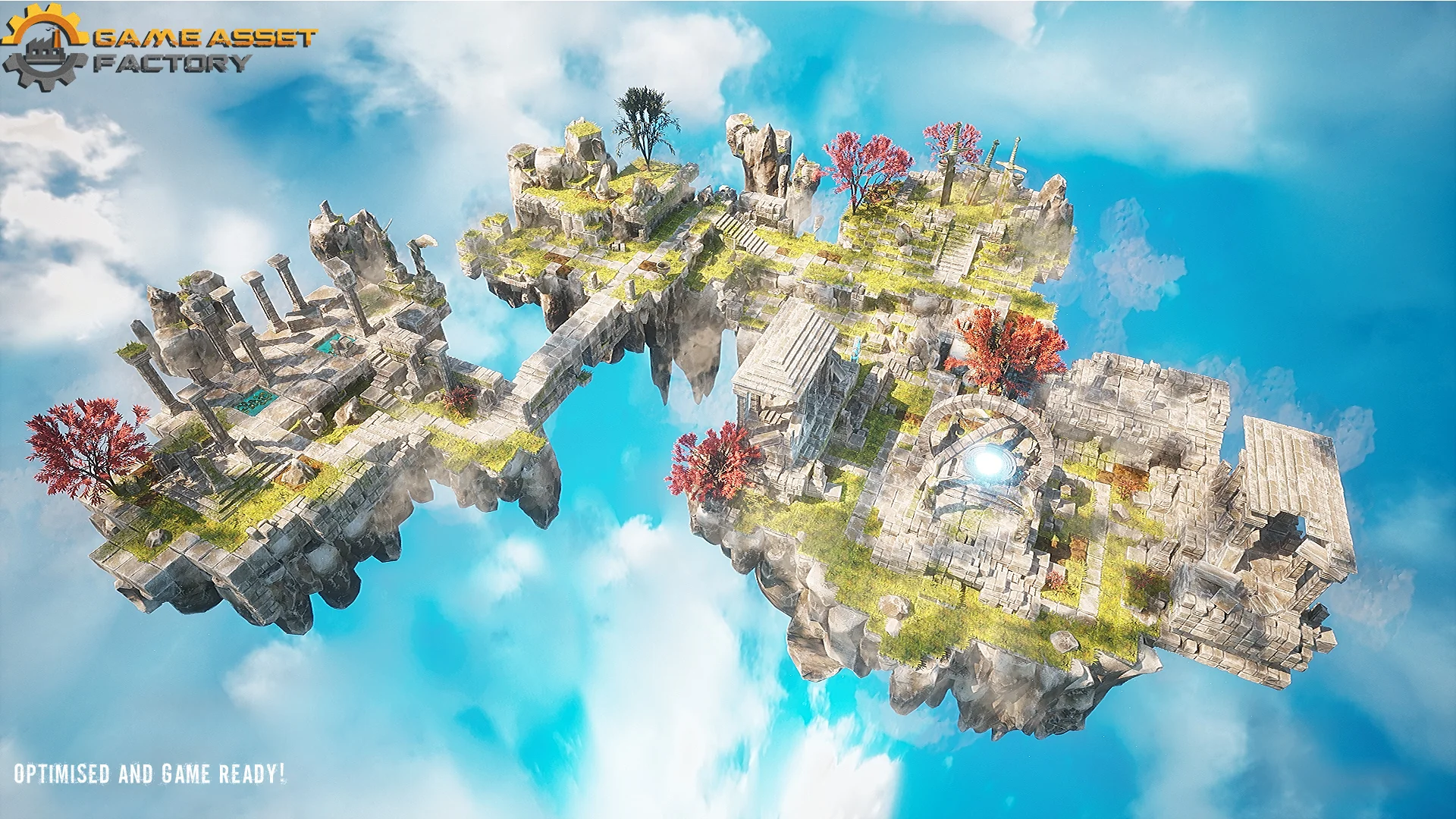
Starting production inside an environment kit works best when the initial staging is already operational. Isometric World: Sky Temple approaches environment building by supplying a complete demo level right out of the box, offering a space that can be directly explored, dissected, and transformed. Instead of forcing level designers to begin with an empty viewport, the pre-built level demonstrates exact spatial relationships among architecture, structural elevation, and thematic focal points.
Taking apart a functioning demo map reveals how modular sections link together to establish architectural continuity. You can fly a camera through the scene to inspect scale, isolate specific building blocks, or duplicate entire courtyards to expand the boundaries of the scene. Because the environment is built to be transformed, you can pull apart existing temple wings, shift elevations, reorient access stairways, and test new paths without breaking the visual coherence of the fantasy setting.
Working within this template structure accelerates early prototyping. Designers can immediately assess sightlines, character clearance, and path navigation. Once the underlying layout matches project specifications, the demo level can be pruned down or expanded into a larger game zone, functioning equally well as a self-contained combat arena or an expansive floating district.
Static Meshes, Niagara Systems, and Modular Sky Temple Assets
The asset package organizes its visual elements across several core technical categories: static meshes, Niagara systems, decals, and blueprints. Each category serves a dedicated role in constructing a stylized, low-poly environment that remains readable from various camera distances.
The static meshes make up the architectural and prop framework. Based on a clean low-poly aesthetic, these models emphasize clear silhouettes and stylized forms rather than high-density surface geometry. The collection includes structural components required to erect a temple complex—such as walls, platforms, stairs, pillars, and foundational blocks—alongside thematic props like statues. Modularity is central to these meshes, allowing pieces to snap together cleanly to form towering shrines, sunken plazas, or tiered walkways.
Niagara systems supply real-time visual effects throughout the scene. In a fantasy sky temple setting, dynamic particle effects add essential life to static geometry. Ambient environmental particles, magical accents, or localized atmospheric effects created within Niagara integrate directly with the lighting and geometry, grounding the low-poly models in active motion.
Surface variation is handled through decals. Rather than cluttering the scene with complex mesh geometry to show surface wear, runic inscriptions, or ground breakup, decals project details cleanly across the low-poly meshes. This keeps asset footprints lightweight while preventing flat stone surfaces from looking uniform.
Blueprints pull these disparate elements into functional packages. By combining meshes, decals, and particle emitters within structured blueprint actors, the asset provides ready-to-place prefabs. Placing an interactive shrine, an illuminated altar, or an ornate statue assembly becomes a single-step placement operation, cutting down scene assembly time and keeping the outliner organized.
Perspective Adaptability Across Isometric, TPS, and FPS Viewports
While the kit is explicitly tuned for isometric and top-down viewing angles, the underlying assets are structured to maintain visual appeal across ground-level perspectives. Balancing readability across different camera placements requires specific design choices in mesh proportions and texture styling.
Top-down and isometric viewports demand strong silhouette clarity. When a camera looks down from an elevated angle, intricate micro-details often turn into visual noise. The low-poly forms and stylized surfacing used here ensure that temple edges, structural boundaries, and floor layouts remain immediately recognizable during fast-paced tactical gameplay or classic RPG navigation. Character paths and combat boundaries stay sharp, preventing players from losing their bearings in complex architecture.
Shifting the camera to a third-person (TPS) or first-person (FPS) viewpoint tests the density and scale of the models. Because the environment includes vertical architectural elements like statues, grand pillars, and elevated perches, third-person cameras capture dramatic upward angles. Ground decals and Niagara particle systems hold their visual appeal when viewed from standard character heights, allowing developers to switch perspectives dynamically—for example, zooming from a tactical top-down combat camera directly into a third-person narrative dialogue scene.
Stylized Fantasy and Low-Poly MMORPG Environmental Applications
The artistic direction balances a stylized fantasy aesthetic with low-poly optimization, making it suitable for larger multiplayer games or expansive single-player titles. In projects such as MMORPGs, engine performance depends heavily on rendering vast shared areas with high player counts without suffering frame drops.
Low-poly geometry reduces rendering overhead, allowing game engines to display broad open-air vistas, multiple temple tiers, and background islands simultaneously. The stylized look provides a timeless aesthetic that does not date as quickly as photorealistic assets, ensuring visual consistency across extended development cycles.
The temple theme, paired with statues and stylized urban tags like downtown, allows for varied world-building scenarios. Designers can construct:
Central sanctuary hubs where players congregate, trade, and accept quests within an MMORPG setting.
Floating sky sanctuaries that act as endgame raid zones, puzzle dungeons, or boss arenas.
Sacred urban districts positioned above a larger fantasy downtown, combining civic gathering plazas with monumental temple architecture.
Isolated ritual platforms designed specifically for isometric tactical battles or wave-based survival modes.
The modular nature of the temple pieces ensures that these distinct areas do not look like identical copies. By rearranging the statues, altering platform heights, and shifting Niagara particle placements, multiple distinct districts can be built from the same foundational kit.
Walk-Through Reference and Ongoing Maintenance
Navigating asset integration is supported by a dedicated video walk-through, which allows developers to observe the environment in real time before diving into customization. Watching the video walk-through demonstrates how lighting, Niagara particles, and modular pieces work together in motion, serving as a direct reference for recreating intended visual targets or discovering unintended scene modifications.
When unexpected issues emerge during level construction or blueprint integration, developers have access to a direct support channel. Questions and bug reports submitted through the question section receive responses in less than 48 hours. Having direct, prompt developer assistance reduces roadblocks when troubleshooting asset behavior, ensuring that project schedules stay on track as you transform the sky temple into your own custom world.
 Weather
 Fantasy
 Fantasy