"d037b61901c110d2"{"id":"1002672","slug":"ithris-cemetery","title":"Ithris Cemetery","category":"Fantasy","engine":"5.0+","assetVersion":"","engineVersion":"Engine Version: 5.0+","tag":"Fantasy","accent":"blue","visual":"mech","summary":"Explore the Ithris Cemetery environment pack, featuring over 150 static meshes, modular chapel exterior assets, tilable materials, and a showcase scene.","platform":"Unreal Engine","indexPolicy":"index","publishedAt":"2026-11-16T22:22:48.228Z","updatedAt":"2026-11-16T22:22:48.228Z","sourceNotes":[],"fileContents":[],"compatibility":["Unreal Engine","Engine Version: 5.0+"],"featuredImage":{"alt":"Ithris Cemetery","src":"/wp-content/uploads/published/2026/11/1118915d43b9-8981b3f6-fe4c-4b50-8a63-dac1911af4c5-e018895431.webp"},"fileSizeBytes":3542066725,"hasDownloadLink":true,"downloads":0,"terms":[{"taxonomy":"category","slug":"fantasy","name":"Fantasy"}],"galleryImages":[{"src":"/wp-content/uploads/published/2026/11/1a99e3d8a0ec-6dd062a1-d27e-415e-a8c7-2470eeb1988e-ae45a4e627.webp","alt":"Ithris Cemetery"},{"src":"/wp-content/uploads/published/2026/11/158b3507d0cb-42b8d6b5-b499-478b-a4f8-b8710a4a3951-7c8d5da5c3.webp","alt":"Ithris Cemetery"},{"src":"/wp-content/uploads/published/2026/11/0750e7be2b06-c3655a0b-11b3-4eb0-82c6-1fb99bf55ad4-c633540a0b.webp","alt":"Ithris Cemetery"},{"src":"/wp-content/uploads/published/2026/11/70101635e564-57a787fa-8d55-4269-bf3b-4a025ce77596-290bccba26.webp","alt":"Ithris Cemetery"},{"src":"/wp-content/uploads/published/2026/11/9a512645f8a2-6ba12db9-156a-448a-a770-ac7d74d53bde-a3100029ed.webp","alt":"Ithris Cemetery"},{"src":"/wp-content/uploads/published/2026/11/4c9fb38fac46-497018d9-f080-45a5-b78b-a3f78a9921b6-4f59e2970f.webp","alt":"Ithris Cemetery"},{"src":"/wp-content/uploads/published/2026/11/152558fa1437-2ed6ee8a-de0e-432c-8843-3cabcb6abcb4-522cdc30d9.webp","alt":"Ithris Cemetery"},{"src":"/wp-content/uploads/published/2026/11/fa5d8c149c37-2a486833-5b06-47c8-a07e-9f41e789f975-a6ad2b9c39.webp","alt":"Ithris Cemetery"},{"src":"/wp-content/uploads/published/2026/11/c32ce1f30042-aa50390e-2348-4b35-b49e-6a8fcf9dd2a6-24b5ef219d.webp","alt":"Ithris Cemetery"},{"src":"/wp-content/uploads/published/2026/11/7556c79a82a5-c3afdf33-cc24-4e2a-ac36-3241a5a2e705-7db91903f1.webp","alt":"Ithris Cemetery"}],"accessPanel":{"kind":"resource","title":"Get this resource","eyebrow":"Free resource","message":"Download this resource in your browser.","fileName":"Content.7z","safetyNote":"Resources are manually reviewed before listing to improve quality and reduce obvious risks.","actionLabel":"Get this resource","resourceType":"Resource archive","versions":[]},"contentHtml":"\u003ch2\u003eDeploying Ithris Cemetery for Dark Fantasy and Horror Environments\u003c/h2\u003e\n\u003cp\u003eEstablishing a convincing sense of dread in virtual environments demands assets that carry consistent architectural weight and environmental history. Ithris Cemetery directly serves this requirement, offering an environment kit tailored for medieval, dark fantasy, and horror projects. The collection is built to accommodate multiple stages of the development cycle, functioning equally well as a foundation for staging new level art, a testing ground for experimental lighting setups, or a drop-in expansion for existing game projects requiring grim graveyard and castle surroundings.\u003c/p\u003e\n\u003cp\u003eAt the center of the package is a distinctive visual tone that bridges realistic material behavior with a stylized artistic direction. This balance allows the assets to blend naturally into fantasy RPGs where environment storytelling relies on heavy stone architecture, aged monuments, and ominous silhouettes. Because the package addresses both small-scale dressing and large-scale environmental layouts, artists can approach scene assembly without needing to bridge disparate visual styles across different parts of a graveyard compound.\u003c/p\u003e \u003ch2\u003eModular Assembly with the Ithris Cemetery Mesh Collection\u003c/h2\u003e\n\u003cp\u003eThe library contains more than 150 static meshes designed around modular level construction principles. This extensive volume allows environment artists to break away from repetitive cemetery layouts, assembling diverse paths, layered enclosures, and complex burial grounds from individual architectural blocks. Rather than relying on a handful of pre-assembled vignettes, the collection gives artists the discrete parts needed to structure terraced courtyards, stone perimeter walls, and scattered grave markers that feel tailored to specific terrain topologies.\u003c/p\u003e\n\u003cp\u003eA major structural highlight within the mesh collection is the modular chapel. The chapel assets focus strictly on exterior construction, providing the structural components necessary to erect imposing facades, buttresses, and rooflines within the cemetery grounds. There are no interior spaces included for the chapel, keeping the functional focus strictly on exterior composition, horizon blocking, and silhouette framing within level layouts. For horror and dark fantasy projects where the church building serves as a looming backdrop, boundary wall, or inaccessible focal point, these exterior modules deliver visual scale without the overhead of interior level design.\u003c/p\u003e \u003ch2\u003eTilable Materials and Surface Continuity\u003c/h2\u003e\n\u003cp\u003eTo maintain visual coherence across sprawling structural elements, the package relies on 11 tilable materials. Tilable material systems are essential in modular exterior workflows, allowing broad surfaces such as boundary stonework, pathways, chapel masonry, and ground layers to maintain continuous surface detail across variable mesh proportions. Instead of locking meshes to unique, non-reusable texture sheets that restrict architectural scaling, tilable materials ensure that large architectural walls and ground spans blend smoothly with one another.\u003c/p\u003e\n\u003cp\u003eThis texture setup supports the unique art style of the environment while anchoring its realistic and scary atmosphere. The materials handle the harsh, weathered character expected of ancient graveyards, complementing the physical wear sculpted into the 150-plus static meshes. Level artists working on medieval castle surroundings or isolated fantasy cemeteries can utilize these material properties to ensure that ground transitions, ruined foundations, and standing stone elements look part of the same historical site.\u003c/p\u003e \u003ch2\u003ePerformance Targets and Showcase Scene Configuration\u003c/h2\u003e\n\u003cp\u003eAlongside the modular assets, the package includes a fully constructed showcase scene that demonstrates how the meshes, materials, and atmospheric elements coalesce into a complete environment. Proper project setup requires consulting the included documentation, as the showcase environment is tuned for high visual fidelity and carries significant rendering weight. During performance benchmarks running at 1440p resolution, the showcase scene operates within a 30 to 55 FPS range on hardware configured with an Nvidia GeForce RTX 2080 GPU and an AMD Ryzen Threadripper 1950X CPU.\u003c/p\u003e\n\u003cp\u003eThis baseline makes the showcase scene an exceptional sandbox for technical and lighting artists looking to practice their craft under demanding visual conditions. Testing light placement, shadow casting, exposure compensation, and atmospheric fog across complex stone structures reveals how dynamic lighting reacts against heavy geometric density. For interactive game production, understanding this performance profile guides artists on where to optimize draw calls, manage cull distances, and configure scene rendering to strike an effective balance between atmospheric density and frame rate targets.\u003c/p\u003e \u003ch2\u003eGame Ready Collision, LODs, and Production Pipelines\u003c/h2\u003e\n\u003cp\u003eTransitioning modular environment art into an interactive game pipeline introduces practical requirements for performance optimization and player navigation. Every asset across the mesh collection arrives game-ready, incorporating custom collision and a full set of Levels of Detail (LODs). Custom collision ensures that players, navigation meshes, and physics actors interact accurately with uneven stone walls, grave boundaries, and the exterior facets of the chapel without experiencing invisible barriers or geometry clipping common to primitive collision hulls.\u003c/p\u003e\n\u003cp\u003eThe inclusion of LODs addresses the visual density inherent in a package containing over 150 distinct meshes. When populating large, open cemetery grounds where dozens of gravestones, wall segments, and architectural markers remain visible across long sightlines, LOD transitions automatically reduce geometric complexity as camera distance increases. This optimization helps preserve rendering budgets in expansive RPG or horror scenes, making it feasible to populate dense, eerie cemetery yards without overwhelming the graphics pipeline during runtime play.\u003c/p\u003e \u003ch2\u003eTarget Workflows and Implementation Potential\u003c/h2\u003e\n\u003cp\u003eThe modular construction and dedicated showcase level make this package particularly valuable for three primary development tracks. Lighting artists gain an intricate, pre-composed environment filled with challenging geometric occlusion, deep recesses, and high-contrast stone surfaces, perfect for refining cinematic or nighttime lighting portfolios. Level artists benefit from the extensive modularity of over 150 meshes, which provides the creative freedom to assemble custom medieval cemeteries, horror clearings, and castle outposts from the ground up.\u003c/p\u003e\n\u003cp\u003eTeams integrating the package into active game pipelines can draw directly from the modular exterior assets and tilable textures to construct functional gameplay arenas. The game-ready collision and LOD frameworks ensure that integrating these grim, atmospheric assets requires minimal technical remediation before placing them into active levels.\u003c/p\u003e\n\n\u003ch2\u003eMore From The Same Workflow\u003c/h2\u003e\n\u003cul\u003e\n\u003cli\u003e\u003ca href=\"https://3dcghub.com/cemetery-vol-1-gravestones/\" rel=\"noopener noreferrer\"\u003eCemetery - VOL.1 - Gravestones\u003c/a\u003e\u003c/li\u003e\n\u003cli\u003e\u003ca href=\"https://3dcghub.com/greenwood-fantasy-village/\" rel=\"noopener noreferrer\"\u003eGreenwood Fantasy Village\u003c/a\u003e\u003c/li\u003e\n\u003cli\u003e\u003ca href=\"https://3dcghub.com/flying-fantasy-town/\" rel=\"noopener noreferrer\"\u003eFlying Fantasy Town\u003c/a\u003e\u003c/li\u003e\n\u003cli\u003e\u003ca href=\"https://3dcghub.com/isometric-world-sky-temple/\" rel=\"noopener noreferrer\"\u003eIsometric World : Sky Temple\u003c/a\u003e\u003c/li\u003e\n\u003cli\u003e\u003ca href=\"https://3dcghub.com/dungeon-lamps/\" rel=\"noopener noreferrer\"\u003eDungeon Lamps\u003c/a\u003e\u003c/li\u003e\n\u003c/ul\u003e","contentTextLength":7130,"navigation":{"current":17,"total":4611,"previous":{"id":"1002673","slug":"lookout-tower","title":"Lookout Tower","category":"Forest \u0026 Jungle","platform":"Unreal Engine","updatedAt":"2026-11-16T22:23:53.864Z"},"next":{"id":"1002671","slug":"isometric-world-sky-temple","title":"Isometric World : Sky Temple","category":"Fantasy","platform":"Unreal Engine","updatedAt":"2026-11-16T22:21:46.669Z"}},"relatedResources":[{"id":"1001134","slug":"cemetery-vol-1-gravestones","title":"Cemetery - VOL.1 - Gravestones","category":"Tombs \u0026 Gravestones","engine":"4.26+,5.0+","assetVersion":"","engineVersion":"Engine Version: 4.26+,5.0+","tag":"Tombs","accent":"blue","visual":"mech","summary":"Unreal Engine graveyard prop pack with 66 channel-packed texture sets, master material controls, real-time lighting, and custom-made labels. Built for horror, f","platform":"Unreal Engine","indexPolicy":"index","publishedAt":"2026-09-09T02:27:08.459Z","updatedAt":"2026-09-09T02:27:08.459Z","sourceNotes":[],"fileContents":[],"compatibility":["Unreal Engine","Engine Version: 4.26+,5.0+"],"featuredImage":{"alt":"Cemetery - VOL.1 - Gravestones","src":"/wp-content/uploads/published/2026/09/4b4f48b7dd32-914a8410-0549-494c-93c7-f4fd0bb74b79-ef5d24987d.webp"},"fileSizeBytes":424428308,"hasDownloadLink":true,"downloads":0},{"id":"1002670","slug":"greenwood-fantasy-village","title":"Greenwood Fantasy Village","category":"Fantasy","engine":"5.0+","assetVersion":"","engineVersion":"Engine Version: 5.0+","tag":"Fantasy","accent":"blue","visual":"mech","summary":"Explore Greenwood Fantasy Village, a stylized lowpoly 3D environment pack featuring modular terrain, shared atlased textures, and over 100 props.","platform":"Unreal Engine","indexPolicy":"index","publishedAt":"2026-11-16T22:20:45.576Z","updatedAt":"2026-11-16T22:20:45.576Z","sourceNotes":[],"fileContents":[],"compatibility":["Unreal Engine","Engine Version: 5.0+"],"featuredImage":{"alt":"Greenwood Fantasy Village","src":"/wp-content/uploads/published/2026/11/d253a758f6ef-1b23f55f-5c41-4af9-851a-1fff5106a441-4fcf22acfe.webp"},"fileSizeBytes":1237319716,"hasDownloadLink":true,"downloads":0},{"id":"1002681","slug":"modular-dungeon-collection","title":"Modular Dungeon Collection","category":"Fantasy","engine":"5.0+","assetVersion":"","engineVersion":"Engine Version: 5.0+","tag":"Fantasy","accent":"blue","visual":"mech","summary":"Examine the Modular Dungeon Collection, featuring 67 modular pieces, 50 props, tileable wall materials, and an included sample dungeon scene.","platform":"Unreal Engine","indexPolicy":"index","publishedAt":"2026-11-16T22:32:18.014Z","updatedAt":"2026-11-16T22:32:18.014Z","sourceNotes":[],"fileContents":[],"compatibility":["Unreal Engine","Engine Version: 5.0+"],"featuredImage":{"alt":"Modular Dungeon Collection","src":"/wp-content/uploads/published/2026/11/87b648d8b0ad-58a605aa-4795-41b6-9a44-2aa0b292179a-4463c4b223.webp"},"fileSizeBytes":3437938730,"hasDownloadLink":true,"downloads":0}]}
Resource screenshots
1 / 10
Fantasy
Ithris Cemetery
Explore the Ithris Cemetery environment pack, featuring over 150 static meshes, modular chapel exterior assets, tilable materials, and a showcase scene.
Deploying Ithris Cemetery for Dark Fantasy and Horror Environments
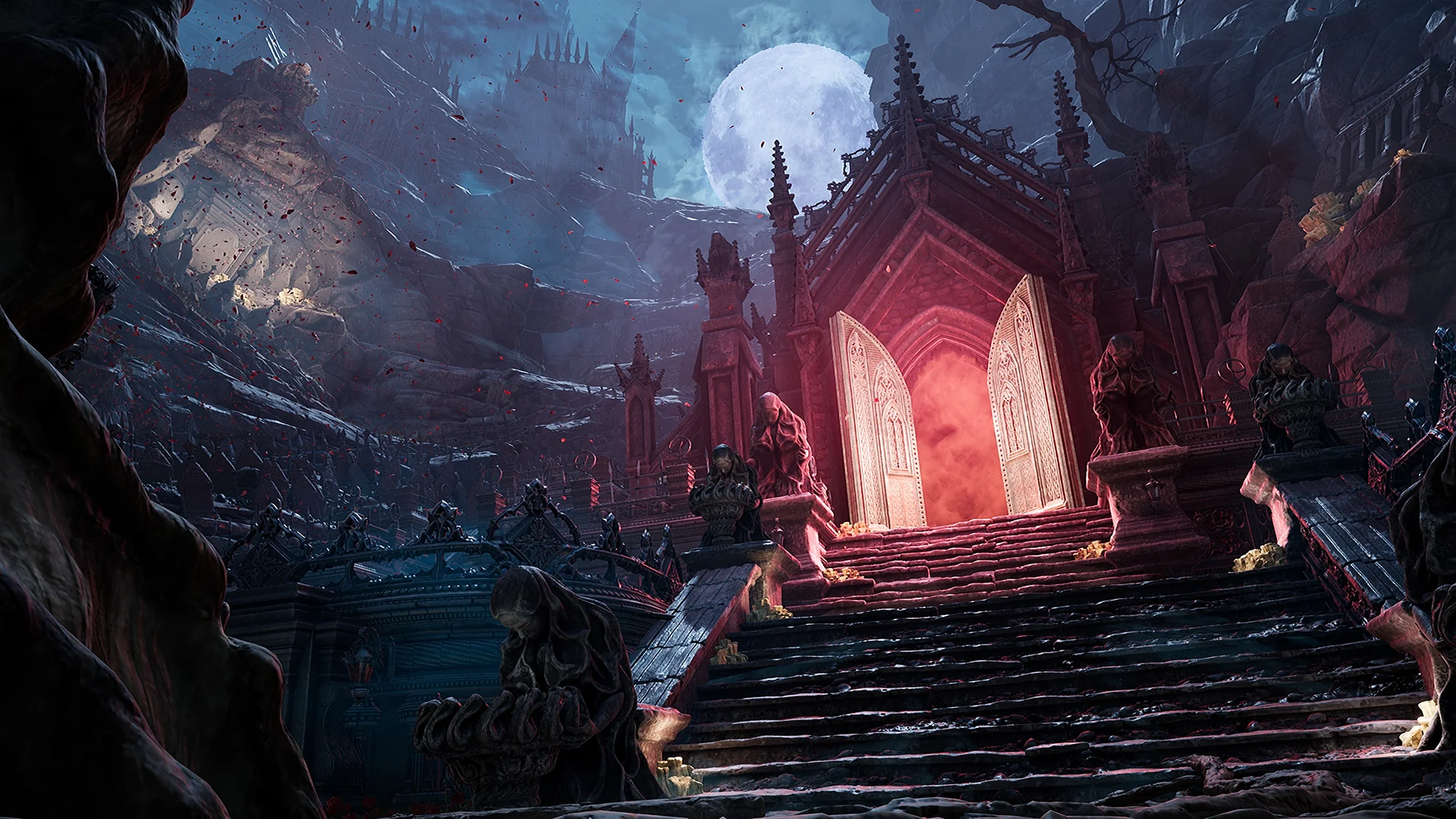
Establishing a convincing sense of dread in virtual environments demands assets that carry consistent architectural weight and environmental history. Ithris Cemetery directly serves this requirement, offering an environment kit tailored for medieval, dark fantasy, and horror projects. The collection is built to accommodate multiple stages of the development cycle, functioning equally well as a foundation for staging new level art, a testing ground for experimental lighting setups, or a drop-in expansion for existing game projects requiring grim graveyard and castle surroundings.
At the center of the package is a distinctive visual tone that bridges realistic material behavior with a stylized artistic direction. This balance allows the assets to blend naturally into fantasy RPGs where environment storytelling relies on heavy stone architecture, aged monuments, and ominous silhouettes. Because the package addresses both small-scale dressing and large-scale environmental layouts, artists can approach scene assembly without needing to bridge disparate visual styles across different parts of a graveyard compound.
Modular Assembly with the Ithris Cemetery Mesh Collection
The library contains more than 150 static meshes designed around modular level construction principles. This extensive volume allows environment artists to break away from repetitive cemetery layouts, assembling diverse paths, layered enclosures, and complex burial grounds from individual architectural blocks. Rather than relying on a handful of pre-assembled vignettes, the collection gives artists the discrete parts needed to structure terraced courtyards, stone perimeter walls, and scattered grave markers that feel tailored to specific terrain topologies.
A major structural highlight within the mesh collection is the modular chapel. The chapel assets focus strictly on exterior construction, providing the structural components necessary to erect imposing facades, buttresses, and rooflines within the cemetery grounds. There are no interior spaces included for the chapel, keeping the functional focus strictly on exterior composition, horizon blocking, and silhouette framing within level layouts. For horror and dark fantasy projects where the church building serves as a looming backdrop, boundary wall, or inaccessible focal point, these exterior modules deliver visual scale without the overhead of interior level design.
Tilable Materials and Surface Continuity
To maintain visual coherence across sprawling structural elements, the package relies on 11 tilable materials. Tilable material systems are essential in modular exterior workflows, allowing broad surfaces such as boundary stonework, pathways, chapel masonry, and ground layers to maintain continuous surface detail across variable mesh proportions. Instead of locking meshes to unique, non-reusable texture sheets that restrict architectural scaling, tilable materials ensure that large architectural walls and ground spans blend smoothly with one another.
This texture setup supports the unique art style of the environment while anchoring its realistic and scary atmosphere. The materials handle the harsh, weathered character expected of ancient graveyards, complementing the physical wear sculpted into the 150-plus static meshes. Level artists working on medieval castle surroundings or isolated fantasy cemeteries can utilize these material properties to ensure that ground transitions, ruined foundations, and standing stone elements look part of the same historical site.
Performance Targets and Showcase Scene Configuration
Alongside the modular assets, the package includes a fully constructed showcase scene that demonstrates how the meshes, materials, and atmospheric elements coalesce into a complete environment. Proper project setup requires consulting the included documentation, as the showcase environment is tuned for high visual fidelity and carries significant rendering weight. During performance benchmarks running at 1440p resolution, the showcase scene operates within a 30 to 55 FPS range on hardware configured with an Nvidia GeForce RTX 2080 GPU and an AMD Ryzen Threadripper 1950X CPU.
This baseline makes the showcase scene an exceptional sandbox for technical and lighting artists looking to practice their craft under demanding visual conditions. Testing light placement, shadow casting, exposure compensation, and atmospheric fog across complex stone structures reveals how dynamic lighting reacts against heavy geometric density. For interactive game production, understanding this performance profile guides artists on where to optimize draw calls, manage cull distances, and configure scene rendering to strike an effective balance between atmospheric density and frame rate targets.
Game Ready Collision, LODs, and Production Pipelines
Transitioning modular environment art into an interactive game pipeline introduces practical requirements for performance optimization and player navigation. Every asset across the mesh collection arrives game-ready, incorporating custom collision and a full set of Levels of Detail (LODs). Custom collision ensures that players, navigation meshes, and physics actors interact accurately with uneven stone walls, grave boundaries, and the exterior facets of the chapel without experiencing invisible barriers or geometry clipping common to primitive collision hulls.
The inclusion of LODs addresses the visual density inherent in a package containing over 150 distinct meshes. When populating large, open cemetery grounds where dozens of gravestones, wall segments, and architectural markers remain visible across long sightlines, LOD transitions automatically reduce geometric complexity as camera distance increases. This optimization helps preserve rendering budgets in expansive RPG or horror scenes, making it feasible to populate dense, eerie cemetery yards without overwhelming the graphics pipeline during runtime play.
Target Workflows and Implementation Potential
The modular construction and dedicated showcase level make this package particularly valuable for three primary development tracks. Lighting artists gain an intricate, pre-composed environment filled with challenging geometric occlusion, deep recesses, and high-contrast stone surfaces, perfect for refining cinematic or nighttime lighting portfolios. Level artists benefit from the extensive modularity of over 150 meshes, which provides the creative freedom to assemble custom medieval cemeteries, horror clearings, and castle outposts from the ground up.
Teams integrating the package into active game pipelines can draw directly from the modular exterior assets and tilable textures to construct functional gameplay arenas. The game-ready collision and LOD frameworks ensure that integrating these grim, atmospheric assets requires minimal technical remediation before placing them into active levels.
 Tombs
 Fantasy
 Fantasy