"e9c335e082208b17"{"id":"1002893","slug":"interactive-lighter","title":"Interactive Lighter","category":"Gameplay Features","engine":"5.1+","assetVersion":"","engineVersion":"Engine Version: 5.1+","tag":"Gameplay Features","accent":"blue","visual":"mech","summary":"Explore the Interactive Lighter asset, featuring a low poly animated vintage model, advanced flame system, and multiplayer network replication.","platform":"Unreal Engine","indexPolicy":"index","publishedAt":"2026-11-21T02:03:26.276Z","updatedAt":"2026-11-21T02:03:26.276Z","sourceNotes":[],"fileContents":[],"compatibility":["Unreal Engine","Engine Version: 5.1+"],"featuredImage":{"alt":"Interactive Lighter","src":"/wp-content/uploads/published/2026/11/3eaa5507f8e5-c6be63a7-9800-492b-94c4-e0ccb8c0cd50-5333ddc666.webp"},"fileSizeBytes":7773889,"hasDownloadLink":true,"downloads":0,"terms":[{"taxonomy":"category","slug":"gameplay-features","name":"Gameplay Features"}],"galleryImages":[{"src":"/wp-content/uploads/published/2026/11/06ed178f52ae-44519232-8c9f-4813-a740-955fd53d3f0e-fcc82da2e8.webp","alt":"Interactive Lighter"},{"src":"/wp-content/uploads/published/2026/11/a9302d36d684-3806a368-daa9-4c30-8070-541f8108b573-1966e570c4.webp","alt":"Interactive Lighter"},{"src":"/wp-content/uploads/published/2026/11/a7e4972781a1-9b446ccb-d544-42f5-b86c-0a73225bc032-55c1ced3f3.webp","alt":"Interactive Lighter"},{"src":"/wp-content/uploads/published/2026/11/c23cfbdce299-1abbca11-b017-4829-8d56-705af45ef131-f6ee4c7db3.webp","alt":"Interactive Lighter"},{"src":"/wp-content/uploads/published/2026/11/2002e9cec8cc-9b708832-331a-4bd7-9440-f29b1ad50cb0-c118cfef2f.webp","alt":"Interactive Lighter"},{"src":"/wp-content/uploads/published/2026/11/1825986b7e68-0d541c19-a9e8-4a54-8552-1e1034a7a748-45e54e47c0.webp","alt":"Interactive Lighter"},{"src":"/wp-content/uploads/published/2026/11/65b17cfe4e3c-7943ed9e-d618-4a44-8cf3-7b5b7d864143-969103e115.webp","alt":"Interactive Lighter"},{"src":"/wp-content/uploads/published/2026/11/a05793f8f82f-bfdcee49-1c24-4279-84b3-c89ddae786e1-539762e337.webp","alt":"Interactive Lighter"},{"src":"/wp-content/uploads/published/2026/11/ba10be13e94a-060cf5cf-a883-4487-8666-da134b12a4ac-d3c781a748.webp","alt":"Interactive Lighter"},{"src":"/wp-content/uploads/published/2026/11/e3b0b738cf41-0fed58f0-ce0b-4cec-acde-1ca443e41dec-605248ef39.webp","alt":"Interactive Lighter"}],"contentHtml":"\u003ch2\u003eAtmospheric Utility in Horror and Fantasy Environments\u003c/h2\u003e\n\u003cp\u003eExploration mechanics in dark, claustrophobic environments often depend on personal light sources to control player visibility and tension. The Interactive Lighter directly serves these gameplay contexts, particularly within horror and fantasy settings where modern electric flashlights would break thematic immersion. Because the asset represents an antique, vintage tool, it fits naturally into historical settings, gothic horror scenarios, and low-technology fantasy worlds where characters must rely on small, handheld tools to navigate pitch-black interiors or examine occult mechanisms.\u003c/p\u003e\n\u003cp\u003eIn horror design, lighting serves both as a functional gameplay device and as a psychological lever. A handheld lighter offers a localized, flickering radius of illumination, leaving room corners and distant corridors steeped in shadow. Because this asset is built to be fully interactive rather than a static decorative prop, players can actively engage with it during gameplay, triggering interactions that alter light levels at critical moments. The realistic visual styling reinforces the tactile presence of an old, reliable antique implement, grounding the player in the immediate reality of an abandoned estate, a dungeon crawl, or a dark period investigation.\u003c/p\u003e\n\u003cp\u003eFantasy titles gain similar utility when incorporating a vintage lighting mechanism. Rather than relying solely on magical spells or unwieldy wooden torches, characters can handle a compact personal fire source. The balance between period aesthetics and interactive mechanical behavior allows environmental narrative to flourish, giving designers an atmospheric tool ready to insert straight into level encounters.\u003c/p\u003e \u003ch2\u003eMechanical Fidelity of the Low Poly Interactive Lighter Model\u003c/h2\u003e\n\u003cp\u003eMaintaining high framerates in resource-intensive scenes requires assets that balance visual detail against geometric complexity. The model in this package is low poly, allowing it to perform cleanly in scenes packed with dynamic lighting, shadow casting, and post-processing effects. Because it is highly optimized for better performance, technical artists do not need to spend time aggressively reducing polygon budgets or cleaning up dense topology before dropping it into production levels.\u003c/p\u003e\n\u003cp\u003eDespite its low poly construction, the item retains a realistic appearance tailored to vintage and antique hardware. Moving parts need clear structural definitions so that mechanical motions look deliberate and convincing in first-person or close third-person camera angles. The asset contains an animated model, providing the requisite moving components needed to show genuine operation rather than relying on sudden, static swaps between closed and open meshes.\u003c/p\u003e\n\u003cp\u003eBeing game ready out of the box means that the asset integrates into standard production pipelines without requiring structural remodeling or custom skeletal reconstruction. The low poly budget also makes it an excellent candidate for scenes where multiple fire sources or several active items appear simultaneously on screen, ensuring baseline performance remains steady even when complex shaders run alongside it.\u003c/p\u003e \u003ch2\u003eMultiplayer Replication and Network Logic for the Interactive Lighter\u003c/h2\u003e\n\u003cp\u003eIntegrating interactive equipment into shared online experiences introduces synchronization hurdles that single-player assets rarely face. The Interactive Lighter addresses this directly through dedicated multiplayer and network replication features. In cooperative horror titles or multiplayer fantasy adventures, lighting states cannot remain purely client-side; every participant in a session must see the exact same environmental state to preserve fairness, atmosphere, and gameplay cues.\u003c/p\u003e\n\u003cp\u003eBecause the asset is replicated across the network, changes to the state of the lighter—such as flipping it open, sparking the mechanism, or extinguishing the fire—broadcast reliably between the host and connected clients. If one player uses the lighter to illuminate a dark entryway in a cooperative horror game, surrounding teammates observe the identical animated sequences and corresponding flame behavior in real time. This synchronization eliminates visual desync issues where an object appears active for one player but inert to others.\u003c/p\u003e\n\u003cp\u003eNetwork replication within the asset also ensures that state changes communicate cleanly across standard client-server architectures. Multiplayer projects benefit from having network support built directly into the item's foundation, avoiding the time-consuming process of retrofitting isolated single-player tools with multiplayer variables, remote procedure calls, and server authority checks.\u003c/p\u003e \u003ch2\u003eOperating the Advanced Flame System and Blueprint Scripts\u003c/h2\u003e\n\u003cp\u003eCentral to the asset is its advanced flame system, which supplies the actual fire behavior and the functionalities needed to interact with the device. Fire in a real-time game requires more than a simple static texture or particle emitter; it must respond naturally to the object's physical states. The flame system handles these visual and functional requirements, offering the behavior expected when a vintage ignition tool is brought to life.\u003c/p\u003e\n\u003cp\u003eInteraction logic is driven by script architecture implemented through Blueprints. These Blueprint scripts control the sequencing behind the asset, tying together player input, physical animations, and the initiation of the advanced flame system. Designers can trace how the system processes input commands, how states are registered, and how the underlying script calls trigger the flame and animation components simultaneously. This setup provides clean access to the operational states of the lighter, making it straightforward to connect the object to character inventory frameworks, pickup systems, or puzzle triggers.\u003c/p\u003e\n\u003cp\u003eThe included support ensures that developers adopting the asset can implement its interactive features without parsing opaque, undocumented code. Having complete interaction functionalities wired into the script simplifies the workflow for gameplay programmers, allowing them to hook the lighter directly into existing character interaction interfaces with minimal friction.\u003c/p\u003e \u003ch2\u003eCreative Implementation Across Realistic and Stylized Genres\u003c/h2\u003e\n\u003cp\u003eWhile the visual design leans into antique, vintage realism, the low poly nature of the model and its flexible Blueprint scripts allow it to bridge several visual styles. Projects aiming for strict historical realism can drop the lighter into period-specific settings, taking advantage of its aged appearance and authentic physical motion. The realistic texturing and animated execution make it immediately convincing as an everyday carry item from an earlier era.\u003c/p\u003e\n\u003cp\u003eBeyond historical games, the asset provides immediate value to horror developers building tense survival experiences. In survival scenarios, resource management and visibility are paramount, and an interactive antique fire starter functions as an ideal tool for lighting candles, igniting environmental fuel, or burning through obstacles. Because the flame system contains built-in functionalities to interact, designers can repurpose those operational states to trigger in-game events, solve environmental puzzles, or drive narrative discovery in dark spaces.\u003c/p\u003e\n\u003cp\u003eTeams building cooperative network games benefit most from this package. Solo developers or small production teams creating multiplayer horror or fantasy games often find writing reliable network replication logic for interactive tools to be an engineering bottleneck. By packaging an optimized low poly animated model, complete Blueprint scripting, multiplayer network support, and an advanced flame system into a single game-ready resource, the asset solves the visual, mechanical, and technical challenges of handheld lighting in one unified package.\u003c/p\u003e\n\n\u003ch2\u003eContinue Browsing Similar Packs\u003c/h2\u003e\n\u003cul\u003e\n\u003cli\u003e\u003ca href=\"https://3dcghub.com/interactive-water-ocean-and-swim-systems/\" rel=\"noopener noreferrer\"\u003eInteractive Water, Ocean and Swim Systems\u003c/a\u003e\u003c/li\u003e\n\u003cli\u003e\u003ca href=\"https://3dcghub.com/daforma-vertex-shader-based-3d-deformation-effectors/\" rel=\"noopener noreferrer\"\u003edaforma - Vertex Shader based 3D Deformation Effectors\u003c/a\u003e\u003c/li\u003e\n\u003cli\u003e\u003ca href=\"https://3dcghub.com/interactive-cutscene/\" rel=\"noopener noreferrer\"\u003eInteractive Cutscene\u003c/a\u003e\u003c/li\u003e\n\u003cli\u003e\u003ca href=\"https://3dcghub.com/pawnshop-system/\" rel=\"noopener noreferrer\"\u003ePawnshop System\u003c/a\u003e\u003c/li\u003e\n\u003cli\u003e\u003ca href=\"https://3dcghub.com/interactive-garage/\" rel=\"noopener noreferrer\"\u003eInteractive Garage\u003c/a\u003e\u003c/li\u003e\n\u003c/ul\u003e","contentTextLength":7999,"navigation":{"current":42,"total":4839,"previous":{"id":"1002894","slug":"igtoolspp-speedtree-to-pivot-painter-2-0","title":"IGToolsPP: Speedtree to Pivot Painter 2.0","category":"Engine Tools","platform":"Unreal Engine","updatedAt":"2026-11-21T02:07:09.797Z"},"next":{"id":"1002892","slug":"easyfirebase-pro","title":"EasyFirebase Pro","category":"Engine Tools","platform":"Unreal Engine","updatedAt":"2026-11-21T02:01:18.104Z"}},"relatedResources":[{"id":"10993","slug":"interactive-water-ocean-and-swim-systems","title":"Interactive Water, Ocean and Swim Systems","category":"Gameplay Features","engine":"5.4+","assetVersion":"Engine version: 5.4+","engineVersion":"5.3","tag":"Gameplay Features","accent":"blue","visual":"animation","summary":"Discover a robust 3-in-1 solution for creating interactive aquatic environments. This system features advanced shaders, realistic buoyancy, and complete multiplayer support for swimming above and below the surface.","platform":"Unreal Engine","indexPolicy":"noindex","publishedAt":"2026-03-03T16:40:07.000Z","updatedAt":"2026-04-19T15:49:53.000Z","sourceNotes":[],"fileContents":[],"compatibility":["Unreal Engine","Engine version: 5.4+"],"featuredImage":{"alt":"Interactive Water, Ocean and Swim Systems","src":"https://3dcghub.com/wp-content/uploads/2026/03/5bc7b9ab-1622-4a70-a72e-efdf2f38bc9a.webp"},"fileSizeBytes":303124050,"hasDownloadLink":true,"downloads":3},{"id":"1001995","slug":"daforma-vertex-shader-based-3d-deformation-effectors","title":"daforma - Vertex Shader based 3D Deformation Effectors","category":"Gameplay Features","engine":"5.0+","assetVersion":"","engineVersion":"Engine Version: 5.0+","tag":"Gameplay Features","accent":"blue","visual":"mech","summary":"Explore daforma, an interactive vertex shader deformation toolkit using Advanced BP Effect actors and HISM grids for real-time ripple, warp, and Lumen effects.","platform":"Unreal Engine","indexPolicy":"index","publishedAt":"2026-10-26T12:14:03.022Z","updatedAt":"2026-10-26T12:14:03.022Z","sourceNotes":[],"fileContents":[],"compatibility":["Unreal Engine","Engine Version: 5.0+"],"featuredImage":{"alt":"daforma - Vertex Shader based 3D Deformation Effectors","src":"/wp-content/uploads/published/2026/10/a22ce2a73410-5d0fe4d5-eb06-4722-a1ae-0083113c6806-3acb7f20fe.webp"},"fileSizeBytes":741811963,"hasDownloadLink":true,"downloads":0},{"id":"1001581","slug":"interactive-cutscene","title":"Interactive Cutscene","category":"Gameplay Features","engine":"5.3+","assetVersion":"","engineVersion":"Engine Version: 5.3+","tag":"Gameplay Features","accent":"blue","visual":"mech","summary":"Build responsive Quick Time Events in Unreal Engine with Interactive Cutscene, featuring Sequencer sync, volume triggers, and multiplatform input.","platform":"Unreal Engine","indexPolicy":"index","publishedAt":"2026-10-10T08:53:30.443Z","updatedAt":"2026-10-10T08:53:30.443Z","sourceNotes":[],"fileContents":[],"compatibility":["Unreal Engine","Engine Version: 5.3+"],"featuredImage":{"alt":"Interactive Cutscene","src":"/wp-content/uploads/published/2026/10/b63507fb7743-cbc39278-253e-45ae-994b-c44935c36728-335d8b52f3.webp"},"fileSizeBytes":15799397,"hasDownloadLink":true,"downloads":0}]}
Resource screenshots
1 / 10
Join our channel
Follow 3DCGHUB on Telegram for new resource drops, migration updates, and community notices.
Atmospheric Utility in Horror and Fantasy Environments
Exploration mechanics in dark, claustrophobic environments often depend on personal light sources to control player visibility and tension. The Interactive Lighter directly serves these gameplay contexts, particularly within horror and fantasy settings where modern electric flashlights would break thematic immersion. Because the asset represents an antique, vintage tool, it fits naturally into historical settings, gothic horror scenarios, and low-technology fantasy worlds where characters must rely on small, handheld tools to navigate pitch-black interiors or examine occult mechanisms.
In horror design, lighting serves both as a functional gameplay device and as a psychological lever. A handheld lighter offers a localized, flickering radius of illumination, leaving room corners and distant corridors steeped in shadow. Because this asset is built to be fully interactive rather than a static decorative prop, players can actively engage with it during gameplay, triggering interactions that alter light levels at critical moments. The realistic visual styling reinforces the tactile presence of an old, reliable antique implement, grounding the player in the immediate reality of an abandoned estate, a dungeon crawl, or a dark period investigation.
Fantasy titles gain similar utility when incorporating a vintage lighting mechanism. Rather than relying solely on magical spells or unwieldy wooden torches, characters can handle a compact personal fire source. The balance between period aesthetics and interactive mechanical behavior allows environmental narrative to flourish, giving designers an atmospheric tool ready to insert straight into level encounters.
Mechanical Fidelity of the Low Poly Interactive Lighter Model
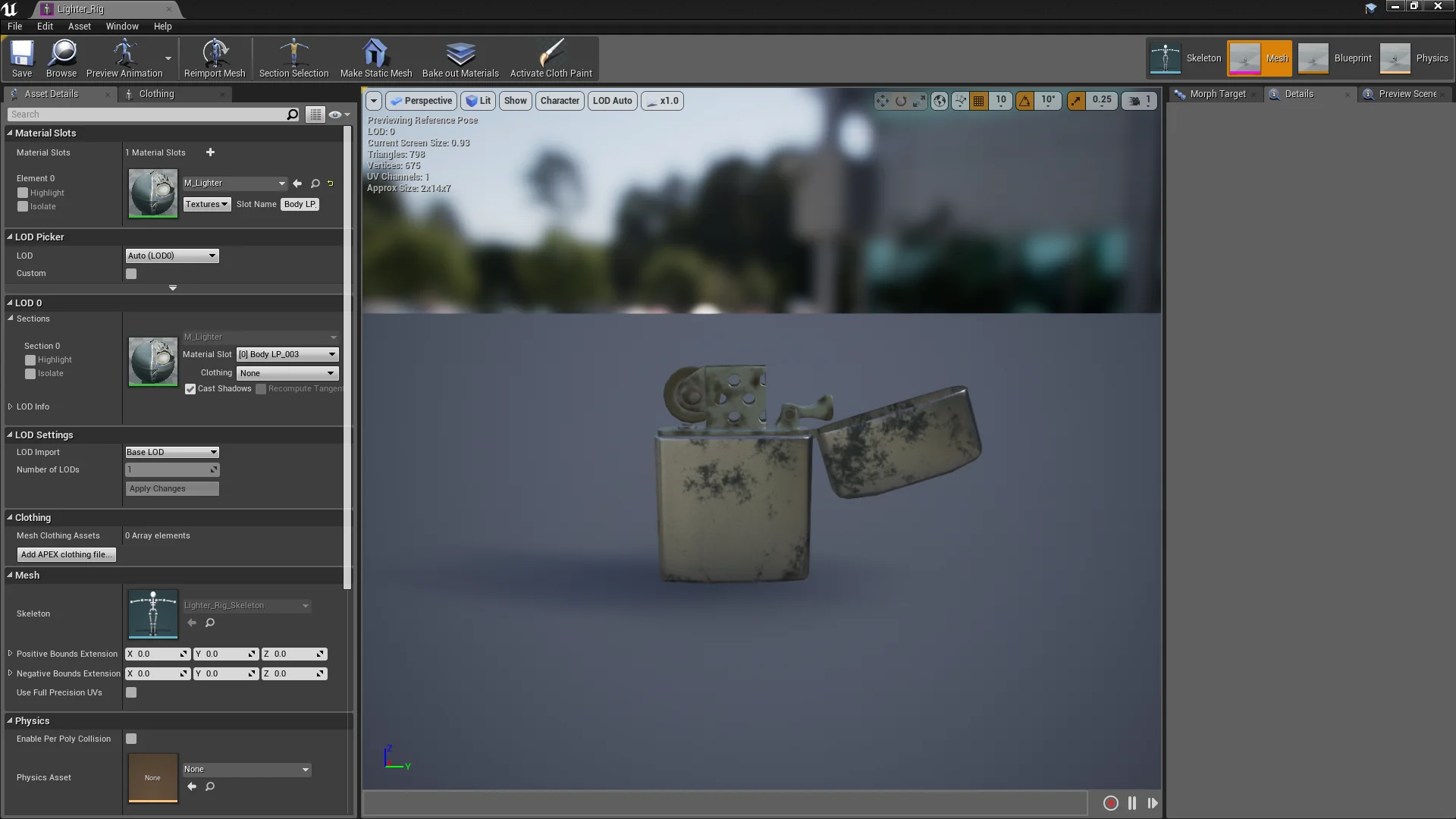
Maintaining high framerates in resource-intensive scenes requires assets that balance visual detail against geometric complexity. The model in this package is low poly, allowing it to perform cleanly in scenes packed with dynamic lighting, shadow casting, and post-processing effects. Because it is highly optimized for better performance, technical artists do not need to spend time aggressively reducing polygon budgets or cleaning up dense topology before dropping it into production levels.
Despite its low poly construction, the item retains a realistic appearance tailored to vintage and antique hardware. Moving parts need clear structural definitions so that mechanical motions look deliberate and convincing in first-person or close third-person camera angles. The asset contains an animated model, providing the requisite moving components needed to show genuine operation rather than relying on sudden, static swaps between closed and open meshes.
Being game ready out of the box means that the asset integrates into standard production pipelines without requiring structural remodeling or custom skeletal reconstruction. The low poly budget also makes it an excellent candidate for scenes where multiple fire sources or several active items appear simultaneously on screen, ensuring baseline performance remains steady even when complex shaders run alongside it.
Multiplayer Replication and Network Logic for the Interactive Lighter
Integrating interactive equipment into shared online experiences introduces synchronization hurdles that single-player assets rarely face. The Interactive Lighter addresses this directly through dedicated multiplayer and network replication features. In cooperative horror titles or multiplayer fantasy adventures, lighting states cannot remain purely client-side; every participant in a session must see the exact same environmental state to preserve fairness, atmosphere, and gameplay cues.
Because the asset is replicated across the network, changes to the state of the lighter—such as flipping it open, sparking the mechanism, or extinguishing the fire—broadcast reliably between the host and connected clients. If one player uses the lighter to illuminate a dark entryway in a cooperative horror game, surrounding teammates observe the identical animated sequences and corresponding flame behavior in real time. This synchronization eliminates visual desync issues where an object appears active for one player but inert to others.
Network replication within the asset also ensures that state changes communicate cleanly across standard client-server architectures. Multiplayer projects benefit from having network support built directly into the item's foundation, avoiding the time-consuming process of retrofitting isolated single-player tools with multiplayer variables, remote procedure calls, and server authority checks.
Operating the Advanced Flame System and Blueprint Scripts
Central to the asset is its advanced flame system, which supplies the actual fire behavior and the functionalities needed to interact with the device. Fire in a real-time game requires more than a simple static texture or particle emitter; it must respond naturally to the object's physical states. The flame system handles these visual and functional requirements, offering the behavior expected when a vintage ignition tool is brought to life.
Interaction logic is driven by script architecture implemented through Blueprints. These Blueprint scripts control the sequencing behind the asset, tying together player input, physical animations, and the initiation of the advanced flame system. Designers can trace how the system processes input commands, how states are registered, and how the underlying script calls trigger the flame and animation components simultaneously. This setup provides clean access to the operational states of the lighter, making it straightforward to connect the object to character inventory frameworks, pickup systems, or puzzle triggers.
The included support ensures that developers adopting the asset can implement its interactive features without parsing opaque, undocumented code. Having complete interaction functionalities wired into the script simplifies the workflow for gameplay programmers, allowing them to hook the lighter directly into existing character interaction interfaces with minimal friction.
Creative Implementation Across Realistic and Stylized Genres
While the visual design leans into antique, vintage realism, the low poly nature of the model and its flexible Blueprint scripts allow it to bridge several visual styles. Projects aiming for strict historical realism can drop the lighter into period-specific settings, taking advantage of its aged appearance and authentic physical motion. The realistic texturing and animated execution make it immediately convincing as an everyday carry item from an earlier era.
Beyond historical games, the asset provides immediate value to horror developers building tense survival experiences. In survival scenarios, resource management and visibility are paramount, and an interactive antique fire starter functions as an ideal tool for lighting candles, igniting environmental fuel, or burning through obstacles. Because the flame system contains built-in functionalities to interact, designers can repurpose those operational states to trigger in-game events, solve environmental puzzles, or drive narrative discovery in dark spaces.
Teams building cooperative network games benefit most from this package. Solo developers or small production teams creating multiplayer horror or fantasy games often find writing reliable network replication logic for interactive tools to be an engineering bottleneck. By packaging an optimized low poly animated model, complete Blueprint scripting, multiplayer network support, and an advanced flame system into a single game-ready resource, the asset solves the visual, mechanical, and technical challenges of handheld lighting in one unified package.
 Gameplay Features
 Gameplay Features
 Gameplay Features