"c14ff6bd758dadb1"{"id":"1000614","slug":"generic-combat-system-advanced-gas-based-multiplayer-combat-framework","title":"Generic Combat System - Advanced GAS based Multiplayer combat framework.","category":"Game Mechanics","engine":"5.6","assetVersion":"Asset Version: 1.4","engineVersion":"Engine Version: 5.6","tag":"Game Mechanics","accent":"blue","visual":"mech","summary":"Advanced multiplayer combat framework built on GAS with blueprint-friendly C++ architecture, Souls-like combat reference, and modular integration for Unreal Eng","platform":"Unreal Engine","publishedAt":"2026-07-20T20:41:12.096Z","updatedAt":"2026-07-20T20:41:12.096Z","sourceNotes":[],"fileContents":[],"compatibility":["Unreal Engine","Asset Version: 1.4","Engine Version: 5.6"],"featuredImage":{"alt":"Generic Combat System - Advanced GAS based Multiplayer combat framework.","src":"/wp-content/uploads/published/2026/07/b66bcc866bd3-eade1298-40b5-4a64-a0a7-797c3d973d00-b9b68723ec.webp"},"hasDownloadLink":true,"downloads":2,"terms":[{"taxonomy":"category","slug":"game-mechanics","name":"Game Mechanics"}],"galleryImages":[{"src":"/wp-content/uploads/published/2026/07/e688a32d050f-532830de-d157-44db-8e63-fd77e545c462-9c8c5cc459.webp","alt":"Generic Combat System - Advanced GAS based Multiplayer combat framework."},{"src":"/wp-content/uploads/published/2026/07/5bcc39ac1b3e-cc7f8aa5-95d6-4698-8bf3-c06666c19ed4-1b59ba785d.webp","alt":"Generic Combat System - Advanced GAS based Multiplayer combat framework."},{"src":"/wp-content/uploads/published/2026/07/ea2e11b5ef1e-a619830f-2a6b-4ba3-8935-5860532fbe91-bbf6581dd9.webp","alt":"Generic Combat System - Advanced GAS based Multiplayer combat framework."},{"src":"/wp-content/uploads/published/2026/07/fb208c3b62f9-6d6d226b-6a34-492e-b32c-913a40234367-089a688a36.webp","alt":"Generic Combat System - Advanced GAS based Multiplayer combat framework."},{"src":"/wp-content/uploads/published/2026/07/cc973af33474-42af0471-e6f8-4578-bd54-d282524b2430-2d27b8b743.webp","alt":"Generic Combat System - Advanced GAS based Multiplayer combat framework."},{"src":"/wp-content/uploads/published/2026/07/0b1e3f14ee6f-5925022f-a79a-491c-bdc0-4ddb14c8d3b8-e40b925451.webp","alt":"Generic Combat System - Advanced GAS based Multiplayer combat framework."},{"src":"/wp-content/uploads/published/2026/07/e89af8d7ade1-1c78f28b-542f-4bf3-b3fd-0ad0c77d5105-bdf0376f86.webp","alt":"Generic Combat System - Advanced GAS based Multiplayer combat framework."},{"src":"/wp-content/uploads/published/2026/07/151d01a080b6-54fc35a1-44c6-45df-8600-c9074c2a1164-3d091379f5.webp","alt":"Generic Combat System - Advanced GAS based Multiplayer combat framework."}],"accessPanel":{"kind":"resource","title":"Download this resource","eyebrow":"Free Download","message":"Log in or create a free account to start your download.","fileName":"5.6.7z","safetyNote":"Resources are manually reviewed before listing to improve quality and reduce obvious risks.","actionLabel":"Download Free","resourceType":"Resource archive"},"contentHtml":"\u003cp\u003eBuilding a combat system in Unreal Engine often means wrestling with deeply coupled logic and fighting the engine's input layer. Generic Combat System (GCS) approaches that problem from the top down: it is a multi-module code plugin that sits on top of Generic Gameplay Abilities (GAS/GGA) and Generic Input System (GIPS), bundling both plugins in a single package. This gives a framework driven by combat logic itself, leaving movement, inventory, and AI to external systems while exposing every easy-to-change feature as blueprints.\u003c/p\u003e \u003ch2\u003eSetting Up the GCS Code Plugin\u003c/h2\u003e \u003cp\u003eGCS is distributed as a code plugin, which means the marketplace delivery contains the C++ source rather than a prebuilt binary. The setup path is deliberately split. The plugin code comes through the Fab Marketplace, while the sample content assets and Git repository access require a verification step after acquisition. That separation keeps the downloadable footprint small and gives the developer direct access to the repository for ongoing updates.\u003c/p\u003e \u003cp\u003eThe architecture is multi-module with a clean code design. Core functionalities are developed using components and decoupled through interfaces, an approach the developer takes seriously given their stated dislike of large, coupled, poorly structured projects. That decoupled foundation matters when the time comes to drop GCS into an existing codebase: combat logic can be wired into external systems through those interfaces rather than through fragile direct references.\u003c/p\u003e \u003ch2\u003eMultiplayer-ready Abilities Through GAS\u003c/h2\u003e \u003cp\u003eBecause GCS is built on GAS, multiplayer is not an afterthought. GAS is inherently friendly to multiplayer development, and GCS pushes that further by ensuring all built-in abilities support multiplayer features as much as possible. For developers working on sessions where combat state must replicate reliably and responsively, that baseline matters. Abilities and effects ship in quantity, referred to collectively as a plethora of preset gameplay abilities and effects. An Ability System Reference is included so users can quickly learn how to add new content rather than starting from an empty ability set.\u003c/p\u003e \u003cp\u003eThe bundled Generic Input System handles the front end of that equation. GIPS manages input routing and feeds it into the ability layer, while Generic Gameplay Abilities handle execution and state. That stack gives combat a structured path from button press to replicated ability activation.\u003c/p\u003e \u003ch2\u003eSouls-like Reference Combat in the Sample Project\u003c/h2\u003e \u003cp\u003eThe provided sample project leans toward Souls-like games. The developer names Elden Ring as a personal favorite, and that influence shapes the reference content. Inside the project files, GCS offers almost a complete Souls-like combat mechanism as a reference, meant to be usable out of the box. Developers can design new attributes and skills based on the existing structure rather than prototyping attack windows, hit reactions, and combo logic from zero.\u003c/p\u003e \u003cp\u003eVarious application examples of the framework live in the same project files. These examples serve as living documentation: instead of reading about how a system should be used, the developer can open the sample, inspect the graph, and trace the flow. The sample also uses Generic Game System to handle common game features, avoiding repeated implementation work for routine mechanics that most action games require.\u003c/p\u003e \u003ch2\u003eBlueprint Exposure and C++ Design\u003c/h2\u003e \u003cp\u003eGCS addresses a common pain point in Unreal plugin development: the gap between powerful C++ systems and the blueprint workflow. The developer notes that blueprints are good but have limitations, and GCS closes that gap by designing all C++ code for the convenience of blueprint users. Features that need to be changed frequently or tweaked per project are exposed as blueprints. Deep systems stay in C++ where performance and architecture matter.\u003c/p\u003e \u003cp\u003eThat split keeps iteration fast. A designer can adjust ability timing, damage values, or visual feedback through exposed blueprint hooks without touching the core module. When deeper customization is needed, the modular and replaceable core design means the developer can swap or extend pieces without rewriting large sections of the project, which directly supports long-term production rather than quick prototyping only.\u003c/p\u003e \u003ch2\u003eIntegrating Combat With Movement and AI\u003c/h2\u003e \u003cp\u003eGCS focuses on combat and leaves locomotion open. Basic locomotion is provided as a reference, but the framework is built to integrate with external movement systems. A compatible API allows very easy integration with Generic Movement System so combat and locomotion can be perfectly combined. Developers can also choose to integrate with other locomotion systems if the project already relies on a different solution.\u003c/p\u003e \u003cp\u003eThe same philosophy applies to inventory and AI. GCS avoids locking those systems down, instead exposing interfaces so existing implementations can connect cleanly. Basic AI reference content is included within GCS itself, giving teams a starting point for enemy behavior without forcing a particular AI architecture on the rest of the project. That makes GCS viable for developers adding combat to an existing project that already has its own inventory and movement code.\u003c/p\u003e \u003ch2\u003eLearning GAS Through Practical Combat\u003c/h2\u003e \u003cp\u003eFor developers still learning GAS, GCS functions as a practical reference rather than a textbook. Through the framework, users can understand and learn various practical applications of GAS, mastering how to build a powerful and practical combat system using GAS by studying abilities and effects that already work. The included Generic Gameplay Abilities and Generic Input System documentation supports that learning curve, giving beginners a path from concept to working ability without needing to reverse-engineer the system.\u003c/p\u003e \u003cp\u003eDocumentation is split across modules: Generic Input System, Generic Game System, and Generic Gameplay Abilities each have dedicated docs. Tutorials, documentation, and sample content are planned for continuous updates to meet the needs of different developers, which keeps the learning materials current as the framework evolves.\u003c/p\u003e \u003ch2\u003eModular Core for Deep Customization\u003c/h2\u003e \u003cp\u003eExtensibility is treated as a core design principle. GCS is modular and replaceable at the core level, so when the developer needs to make deep customizations, they do not face the hassle of changing a large amount of content. That design choice serves studios working on combat-heavy action games where the base mechanics often need to bend around a specific creative vision. Instead of forking the plugin or working around locked internals, developers can target the module they need and leave the rest intact.\u003c/p\u003e \u003cp\u003eThat modularity also aligns with the framework's suitability for most types of combat games. GCS is framed as suitable for various action games through its flexible combat focus. The tag set reinforces that scope: Skill, Gas, System, Performance, Modular, Gameplay, Fighting, Advanced, Framework, Ability, Combo, Combat, Powerful, Blueprint, Fight, Hit. Each tag maps to a facet of the system, from modular architecture to the combo and hit mechanics that define the moment-to-moment feel.\u003c/p\u003e \u003ch2\u003eProduction Readiness and Ongoing Support\u003c/h2\u003e \u003cp\u003eGCS is positioned as a framework creative teams can build on across production. The continuous update plan covers documentation, tutorials, and sample content. The plugin's clean code design and decoupled component architecture support maintenance over time, since modules can be updated or replaced without destabilizing the whole project. The developer states that documentation and sample content updates will continue to meet the needs of different developers, making the framework a moving target in a productive sense rather than a static drop.\u003c/p\u003e \u003cp\u003eFor studios evaluating fit, GCS targets four groups: developers needing a combat system for an existing project, Souls-like game creators looking for a near-complete combat reference, GAS beginners learning through practical application, and Generic Movement System users wanting tight locomotion integration. The framework's compatibility with GMS and its open approach to other locomotion systems keep it flexible enough to slot into diverse production pipelines without forcing a full stack replacement.\u003c/p\u003e\n\n\u003ch2\u003eMore From The Same Workflow\u003c/h2\u003e\n\u003cul\u003e\n\u003cli\u003e\u003ca href=\"https://3dcghub.com/counter-attack-system/\" title=\"Counter Attack System\"\u003eCounter Attack System\u003c/a\u003e\u003c/li\u003e\n\u003cli\u003e\u003ca href=\"https://3dcghub.com/bacon-combo-graph/\" title=\"Bacon Combo Graph\"\u003eBacon Combo Graph\u003c/a\u003e\u003c/li\u003e\n\u003cli\u003e\u003ca href=\"https://3dcghub.com/flexible-combat-system/\" title=\"Flexible Combat System\"\u003eFlexible Combat System\u003c/a\u003e\u003c/li\u003e\n\u003cli\u003e\u003ca href=\"https://3dcghub.com/takedown-animations-pack/\" title=\"Takedown Animations Pack\"\u003eTakedown Animations Pack\u003c/a\u003e\u003c/li\u003e\n\u003cli\u003e\u003ca href=\"https://3dcghub.com/battle-of-drones-multiplayer/\" title=\"Battle of Drones Multiplayer\"\u003eBattle of Drones Multiplayer\u003c/a\u003e\u003c/li\u003e\n\u003c/ul\u003e","contentTextLength":8382,"navigation":{"current":1246,"total":3719,"previous":{"id":"1000615","slug":"goofy-npc","title":"Goofy NPC","category":"Characters \u0026 Creatures","platform":"Unreal Engine","updatedAt":"2026-07-20T20:43:34.110Z"},"next":{"id":"1000613","slug":"game-main-menu-3d-ui-3d-immerse-ui","title":"Game Main Menu - 3D UI - 3D Immerse UI","category":"UI Kits / HUDs","platform":"Unreal Engine","updatedAt":"2026-07-20T20:37:06.164Z"}},"relatedResources":[{"id":"1000580","slug":"counter-attack-system","title":"Counter Attack System","category":"Game Mechanics","engine":"5.1+","assetVersion":"","engineVersion":"Engine Version: 5.1+","tag":"Game Mechanics","accent":"blue","visual":"mech","summary":"A Blueprint-based Unreal Engine combat component with multiplayer support, multi-direction counter detection, enemy AI, and DataTable-driven animation setup.","platform":"Unreal Engine","publishedAt":"2026-07-16T23:34:45.444Z","updatedAt":"2026-07-16T23:34:45.444Z","sourceNotes":[],"fileContents":[],"compatibility":["Unreal Engine","Engine Version: 5.1+"],"featuredImage":{"alt":"Counter Attack System","src":"/wp-content/uploads/published/2026/07/eda57b398f3d-e4e9c4ec-de74-4ea3-bdb1-12a7df58fdcf-97cc90c1d6.webp"},"hasDownloadLink":true,"downloads":0},{"id":"1000564","slug":"bacon-combo-graph","title":"Bacon Combo Graph","category":"Game Mechanics","engine":"5.6","assetVersion":"Asset Version: 1.1.3","engineVersion":"Engine Version: 5.6","tag":"Game Mechanics","accent":"blue","visual":"mech","summary":"Unreal Engine 5.4+ plugin for building animation-driven combat systems with a graph-based combo editor, native GAS support, hitboxes, and multiplayer.","platform":"Unreal Engine","publishedAt":"2026-07-16T05:12:09.313Z","updatedAt":"2026-07-16T05:12:09.313Z","sourceNotes":[],"fileContents":[],"compatibility":["Unreal Engine","Asset Version: 1.1.3","Engine Version: 5.6"],"featuredImage":{"alt":"Bacon Combo Graph","src":"/wp-content/uploads/published/2026/07/9646d4d546ed-2c516278-31f8-44fe-9b3a-405f33305fde-22655ed477.webp"},"hasDownloadLink":true,"downloads":0},{"id":"1001247","slug":"basic-multiplayer-melee-combat-system","title":"Basic Multiplayer Melee Combat System","category":"Fighting","engine":"5.0+","assetVersion":"","engineVersion":"Engine Version: 5.0+","tag":"Fighting","accent":"blue","visual":"mech","summary":"A technical look at the Basic Multiplayer Melee Combat System, featuring modular actor components, hit scan tracing, lock-on targeting, and 3v3 bot support.","platform":"Unreal Engine","publishedAt":"2026-09-23T15:24:40.286Z","updatedAt":"2026-09-23T15:24:40.286Z","sourceNotes":[],"fileContents":[],"compatibility":["Unreal Engine","Engine Version: 5.0+"],"featuredImage":{"alt":"Basic Multiplayer Melee Combat System","src":"/wp-content/uploads/published/2026/09/035e110571a9-f0a9ce02-9dce-45fd-b0a4-670e3182aabb-234ab47290.webp"},"hasDownloadLink":true,"downloads":1}]}
Game Mechanics
Generic Combat System - Advanced GAS based Multiplayer combat framework.
Advanced multiplayer combat framework built on GAS with blueprint-friendly C++ architecture, Souls-like combat reference, and modular integration for Unreal Eng
Building a combat system in Unreal Engine often means wrestling with deeply coupled logic and fighting the engine's input layer. Generic Combat System (GCS) approaches that problem from the top down: it is a multi-module code plugin that sits on top of Generic Gameplay Abilities (GAS/GGA) and Generic Input System (GIPS), bundling both plugins in a single package. This gives a framework driven by combat logic itself, leaving movement, inventory, and AI to external systems while exposing every easy-to-change feature as blueprints.
Setting Up the GCS Code Plugin
GCS is distributed as a code plugin, which means the marketplace delivery contains the C++ source rather than a prebuilt binary. The setup path is deliberately split. The plugin code comes through the Fab Marketplace, while the sample content assets and Git repository access require a verification step after acquisition. That separation keeps the downloadable footprint small and gives the developer direct access to the repository for ongoing updates.
The architecture is multi-module with a clean code design. Core functionalities are developed using components and decoupled through interfaces, an approach the developer takes seriously given their stated dislike of large, coupled, poorly structured projects. That decoupled foundation matters when the time comes to drop GCS into an existing codebase: combat logic can be wired into external systems through those interfaces rather than through fragile direct references.
Multiplayer-ready Abilities Through GAS
Because GCS is built on GAS, multiplayer is not an afterthought. GAS is inherently friendly to multiplayer development, and GCS pushes that further by ensuring all built-in abilities support multiplayer features as much as possible. For developers working on sessions where combat state must replicate reliably and responsively, that baseline matters. Abilities and effects ship in quantity, referred to collectively as a plethora of preset gameplay abilities and effects. An Ability System Reference is included so users can quickly learn how to add new content rather than starting from an empty ability set.
The bundled Generic Input System handles the front end of that equation. GIPS manages input routing and feeds it into the ability layer, while Generic Gameplay Abilities handle execution and state. That stack gives combat a structured path from button press to replicated ability activation.
Souls-like Reference Combat in the Sample Project
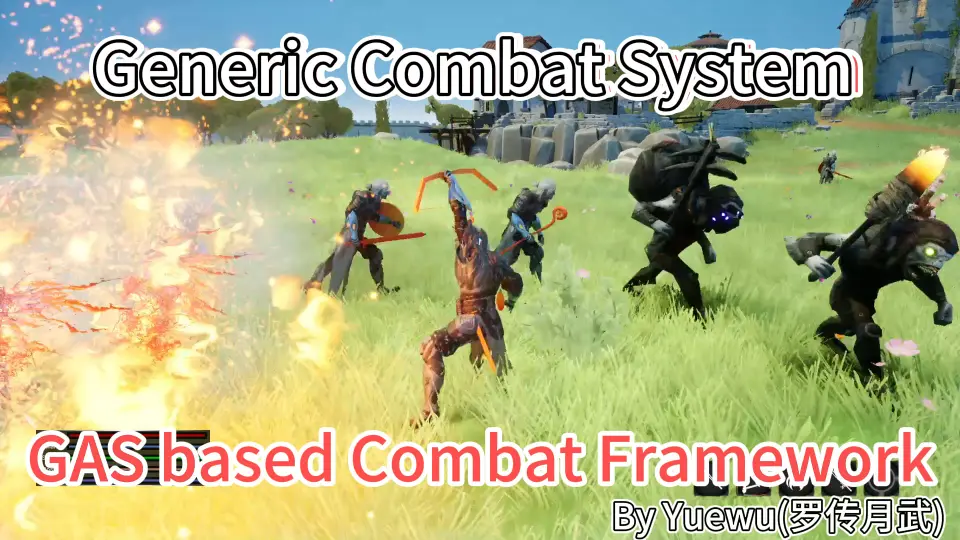
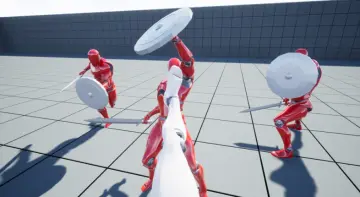
The provided sample project leans toward Souls-like games. The developer names Elden Ring as a personal favorite, and that influence shapes the reference content. Inside the project files, GCS offers almost a complete Souls-like combat mechanism as a reference, meant to be usable out of the box. Developers can design new attributes and skills based on the existing structure rather than prototyping attack windows, hit reactions, and combo logic from zero.
Various application examples of the framework live in the same project files. These examples serve as living documentation: instead of reading about how a system should be used, the developer can open the sample, inspect the graph, and trace the flow. The sample also uses Generic Game System to handle common game features, avoiding repeated implementation work for routine mechanics that most action games require.
Blueprint Exposure and C++ Design
GCS addresses a common pain point in Unreal plugin development: the gap between powerful C++ systems and the blueprint workflow. The developer notes that blueprints are good but have limitations, and GCS closes that gap by designing all C++ code for the convenience of blueprint users. Features that need to be changed frequently or tweaked per project are exposed as blueprints. Deep systems stay in C++ where performance and architecture matter.
That split keeps iteration fast. A designer can adjust ability timing, damage values, or visual feedback through exposed blueprint hooks without touching the core module. When deeper customization is needed, the modular and replaceable core design means the developer can swap or extend pieces without rewriting large sections of the project, which directly supports long-term production rather than quick prototyping only.
Integrating Combat With Movement and AI
GCS focuses on combat and leaves locomotion open. Basic locomotion is provided as a reference, but the framework is built to integrate with external movement systems. A compatible API allows very easy integration with Generic Movement System so combat and locomotion can be perfectly combined. Developers can also choose to integrate with other locomotion systems if the project already relies on a different solution.
The same philosophy applies to inventory and AI. GCS avoids locking those systems down, instead exposing interfaces so existing implementations can connect cleanly. Basic AI reference content is included within GCS itself, giving teams a starting point for enemy behavior without forcing a particular AI architecture on the rest of the project. That makes GCS viable for developers adding combat to an existing project that already has its own inventory and movement code.
Learning GAS Through Practical Combat
For developers still learning GAS, GCS functions as a practical reference rather than a textbook. Through the framework, users can understand and learn various practical applications of GAS, mastering how to build a powerful and practical combat system using GAS by studying abilities and effects that already work. The included Generic Gameplay Abilities and Generic Input System documentation supports that learning curve, giving beginners a path from concept to working ability without needing to reverse-engineer the system.
Documentation is split across modules: Generic Input System, Generic Game System, and Generic Gameplay Abilities each have dedicated docs. Tutorials, documentation, and sample content are planned for continuous updates to meet the needs of different developers, which keeps the learning materials current as the framework evolves.
Modular Core for Deep Customization
Extensibility is treated as a core design principle. GCS is modular and replaceable at the core level, so when the developer needs to make deep customizations, they do not face the hassle of changing a large amount of content. That design choice serves studios working on combat-heavy action games where the base mechanics often need to bend around a specific creative vision. Instead of forking the plugin or working around locked internals, developers can target the module they need and leave the rest intact.
That modularity also aligns with the framework's suitability for most types of combat games. GCS is framed as suitable for various action games through its flexible combat focus. The tag set reinforces that scope: Skill, Gas, System, Performance, Modular, Gameplay, Fighting, Advanced, Framework, Ability, Combo, Combat, Powerful, Blueprint, Fight, Hit. Each tag maps to a facet of the system, from modular architecture to the combo and hit mechanics that define the moment-to-moment feel.
Production Readiness and Ongoing Support
GCS is positioned as a framework creative teams can build on across production. The continuous update plan covers documentation, tutorials, and sample content. The plugin's clean code design and decoupled component architecture support maintenance over time, since modules can be updated or replaced without destabilizing the whole project. The developer states that documentation and sample content updates will continue to meet the needs of different developers, making the framework a moving target in a productive sense rather than a static drop.
For studios evaluating fit, GCS targets four groups: developers needing a combat system for an existing project, Souls-like game creators looking for a near-complete combat reference, GAS beginners learning through practical application, and Generic Movement System users wanting tight locomotion integration. The framework's compatibility with GMS and its open approach to other locomotion systems keep it flexible enough to slot into diverse production pipelines without forcing a full stack replacement.
 Game Mechanics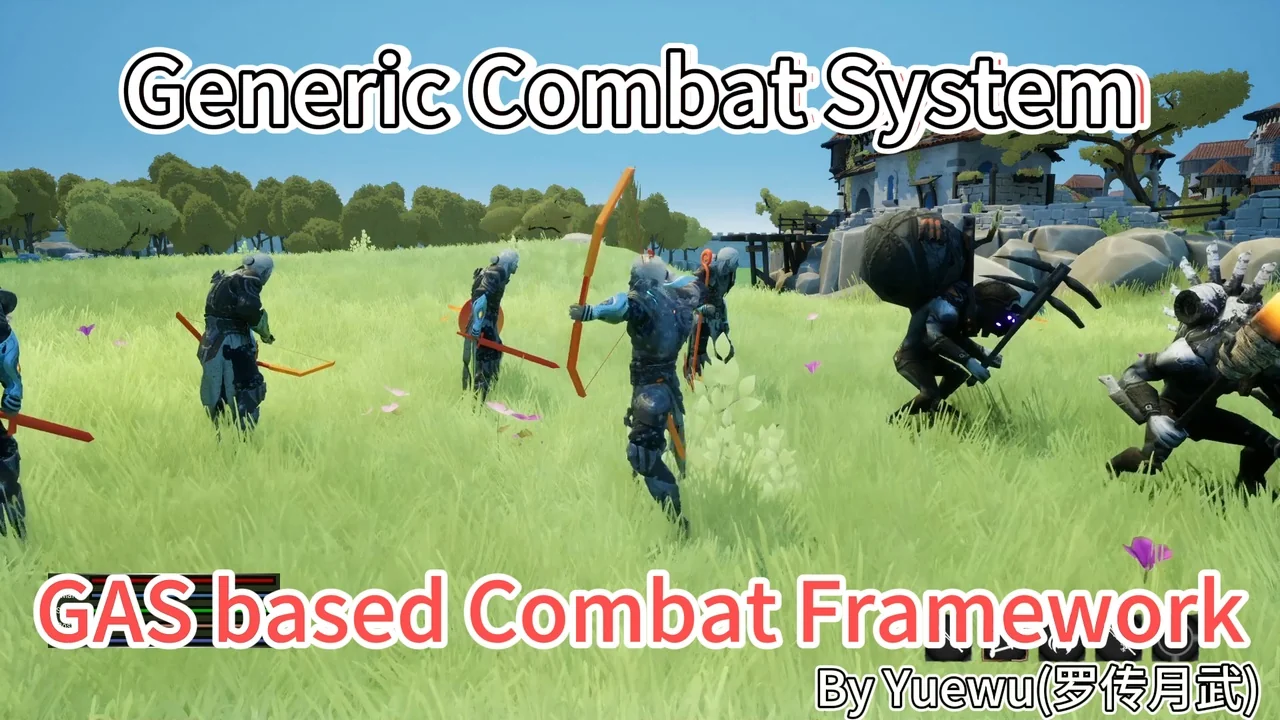
 Game Mechanics
 Game Mechanics
 Fighting