"177e4e4394b9ce1f"{"id":"1001578","slug":"first-person-story-adventure-template","title":"First Person Story Adventure Template","category":"Humans","engine":"5.0+","assetVersion":"","engineVersion":"Engine Version: 5.0+","tag":"Humans","accent":"blue","visual":"mech","summary":"Build interactive walking simulators with the First Person Story Adventure Template, featuring master blueprints, journals, interactive drawers, and doors.","platform":"Unreal Engine","publishedAt":"2026-10-10T08:51:14.227Z","updatedAt":"2026-10-10T08:51:14.227Z","sourceNotes":[],"fileContents":[],"compatibility":["Unreal Engine","Engine Version: 5.0+"],"featuredImage":{"alt":"First Person Story Adventure Template","src":"/wp-content/uploads/published/2026/10/76b62200fed2-9a54eb3b-381c-412c-9ca5-c1f7e0c9ac92-0399520407.webp"},"hasDownloadLink":true,"downloads":0,"terms":[{"taxonomy":"category","slug":"humans","name":"Humans"}],"galleryImages":[{"src":"/wp-content/uploads/published/2026/10/f51a6c8e8199-c3206f01-4bde-4f7e-98d8-f52ebfb38ddc-ce9e4a204c.webp","alt":"First Person Story Adventure Template"},{"src":"/wp-content/uploads/published/2026/10/070bc2b91cd4-18b73aa0-3a20-4bde-a9e9-53e0f374a2e7-293957f632.webp","alt":"First Person Story Adventure Template"},{"src":"/wp-content/uploads/published/2026/10/d85c4449bd4d-40426eca-696a-4dd7-b273-a58ae878da74-b647bdd78d.webp","alt":"First Person Story Adventure Template"},{"src":"/wp-content/uploads/published/2026/10/0c64f70d3518-86165cb2-e855-4257-9bb4-3489ac8026c7-84f2ba5dd2.webp","alt":"First Person Story Adventure Template"},{"src":"/wp-content/uploads/published/2026/10/4826112f7f8f-73374bfe-9a79-4bdb-a3a3-54eb4eb64a81-8c383026a9.webp","alt":"First Person Story Adventure Template"},{"src":"/wp-content/uploads/published/2026/10/35d7a8e96d82-4ec50c24-f0be-4c38-8fcc-22b8b49a488f-bcad51ccae.webp","alt":"First Person Story Adventure Template"},{"src":"/wp-content/uploads/published/2026/10/7c02e6009ddd-a45cbb80-6642-4001-b87b-ddab95b6121a-e14df681c6.webp","alt":"First Person Story Adventure Template"},{"src":"/wp-content/uploads/published/2026/10/26af72c8efce-cb87919c-512d-4bf3-8305-d9e63e80953f-578b76f893.webp","alt":"First Person Story Adventure Template"},{"src":"/wp-content/uploads/published/2026/10/68ba1888836a-855ec11b-37c4-408c-bae1-4c8cb043bb70-6870f3baa9.webp","alt":"First Person Story Adventure Template"}],"accessPanel":{"kind":"resource","title":"Download this resource","eyebrow":"Free Download","message":"Log in or create a free account to start your download.","fileName":"First Person Story Adventure Template.7z","safetyNote":"Resources are manually reviewed before listing to improve quality and reduce obvious risks.","actionLabel":"Download Free","resourceType":"Resource archive"},"contentHtml":"\u003ch2\u003eWalking Simulator Mechanics and Interactive Art Spaces\u003c/h2\u003e\n\u003cp\u003eNavigating an environment from a first-person perspective forms the foundation of modern exploratory titles. For an individual artist or a collaborative team focused on staging an interactive piece of art, writing custom game code from the ground up often pulls attention away from scene design, mood, and worldbuilding. The First Person Story Adventure Template targets this exact balance by providing an established framework for narrative adventures and walking simulators. Instead of building basic movement and inspection loops from scratch, creators can concentrate on pacing, environmental composition, and player discovery.\u003c/p\u003e\n\u003cp\u003eThe core setup handles the technical heavy lifting required to let a player step into a scene and interact with items directly. By emphasizing direct inspection and environmental traversal, the template fits exploratory scenarios where story unfolds through observation rather than fast-paced combat or complex mechanical challenges. The system saves significant setup time, turning static digital sets into navigable, responsive virtual locations.\u003c/p\u003e \u003ch2\u003eMaster Blueprints for Doors, Drawers, and Cupboards\u003c/h2\u003e\n\u003cp\u003eEnvironmental depth in narrative adventure games relies heavily on how players manipulate common household or architectural elements. Rather than locking down scenes with non-functional static meshes, the template supplies several master blueprints configured specifically for real-world interactions. These blueprints provide clean examples for common props that players expect to search, inspect, or move aside during an investigation.\u003c/p\u003e\n\u003cp\u003eCabinets, cupboards, sliding drawers, and swinging doors represent key touchpoints in any space. Through the master blueprints, these objects operate under a unified structural logic:\u003c/p\u003e\n\u003cul\u003e \u003cli\u003eDoors function as physical barriers that can be opened to uncover new rooms, reveal hidden chambers, or guide player progression along a specific narrative path.\u003c/li\u003e \u003cli\u003eDrawers offer sliding opening behaviors, giving level designers a place to conceal smaller items, notes, or mission-critical props within desks and dressers.\u003c/li\u003e \u003cli\u003eCupboards provide dual-door or single-door cabinet opening mechanics, allowing players to search storage furniture throughout a scene.\u003c/li\u003e \u003cli\u003eInteractive objects use foundational master blueprints so that new props inherit interaction rules without requiring bespoke coding for each mesh.\u003c/li\u003e\n\u003c/ul\u003e\n\u003cp\u003eBy establishing these objects inside adaptable blueprint hierarchies, scenes feel grounded. Players gain the tactile satisfaction of opening storage furniture and checking quiet corners, transforming a visual showcase into an active exploratory experience.\u003c/p\u003e \u003ch2\u003eLetters, Collectible Journal Entries, and Narrative Discovery\u003c/h2\u003e\n\u003cp\u003eStory-driven projects frequently depend on written testimony, fragmented dialogue, and historical records to deliver context. The First Person Story Adventure Template integrates narrative delivery straight into the environment through dedicated master blueprints for readable items and records.\u003c/p\u003e\n\u003cp\u003eLetters placed throughout the level serve as immediate narrative triggers. A player can pick up and examine correspondence left behind on tables, desks, or floors, reading personal notes that contextualize the surrounding setting. This creates a direct bridge between the immediate 3D space and the broader plot, encouraging careful inspection of every room.\u003c/p\u003e\n\u003cp\u003eBeyond isolated documents, the template incorporates collectible journal entries. When players locate specific written records, those items can register directly into a journal system. This catalog of journal entries lets adventurers track their discoveries, review past notes, and piece together the sequence of events as they advance through the world. The transition from physical paper in the environment to a structured log reinforces narrative momentum across extended walkthroughs.\u003c/p\u003e \u003ch2\u003eAnimation Blueprint Logic and Simple Interaction Handling\u003c/h2\u003e\n\u003cp\u003eAt the center of the experience is a universal and simple-to-use interaction system. Many interaction setups become tangled in complicated trace channels, hardcoded character logic, or cumbersome interface requirements. This template simplifies the pipeline by pairing universal interaction scripts with organized animation blueprint handling, ensuring responsive behavior without unnecessary complexity.\u003c/p\u003e\n\u003cp\u003eBecause the interaction system is built to remain universal, assigning interactive capabilities to new models does not demand bespoke script rewrites. The underlying script logic determines when the player looks at an item, registers the input command, and executes the appropriate state changes, whether that involves rotating a door handle, pulling open a drawer, or picking up a document. Working alongside the animation blueprint, motion flows naturally from input to execution, keeping visual transitions smooth as the player navigates the space.\u003c/p\u003e \u003ch2\u003eWidget Interaction System with Terminals and Keypads\u003c/h2\u003e\n\u003cp\u003eNarrative adventures often branch beyond simple wooden furniture into technological puzzles, security checkpoints, and mechanical barriers. The template features compatibility with the Widget Interaction System with Terminals \u0026amp; Keypads, broadening the possibilities for environmental puzzle design and electronic interfaces.\u003c/p\u003e\n\u003cp\u003eBy interfacing with in-game widgets, terminals and keypads can serve as interactive locks, narrative terminals, or entry gates. Players can step up to electronic devices within the first-person perspective, enter combinations, activate security mechanisms, or read terminal screens using direct widget interaction. This compatibility allows artists and level designers to mix classic tactile props, like doors and drawers, with modern or futuristic puzzle devices, creating varied layers of interaction across different genres.\u003c/p\u003e \u003ch2\u003eMigration Tutorials, Project Previews, and Documentation\u003c/h2\u003e\n\u003cp\u003eIntegrating a new gameplay template into an ongoing art pipeline requires clear orientation and dependable setup instructions. The template provides access to dedicated documentation and a migration tutorial, outlining how to transfer the blueprints, interaction scripts, and player setups into existing projects without disrupting existing assets.\u003c/p\u003e\n\u003cp\u003eCreators evaluating the mechanics can examine a playable Windows demo to test player movement, inspection speeds, and furniture interactions firsthand, alongside a YouTube preview demonstrating the systems in motion. For technical troubleshooting and reference, a helpdesk is available to consult. A community Discord space is also accessible for user discussion, though product support is not provided directly by the author within that channel. These resources ensure that whether teams are migrating the template into a finished art environment or drafting a fresh walking simulator from scratch, the pathway from installation to a fully interactive world remains clear.\u003c/p\u003e\n\n\u003ch2\u003eRelated Resources Worth Checking\u003c/h2\u003e\n\u003cul\u003e\n\u003cli\u003e\u003ca href=\"https://3dcghub.com/melee-ai-fp-tp-two-hands/\" title=\"Melee+ (AI+FP/TP+Two Hands)\"\u003eMelee+ (AI+FP/TP+Two Hands)\u003c/a\u003e\u003c/li\u003e\n\u003cli\u003e\u003ca href=\"https://3dcghub.com/dynamic-first-person-template/\" title=\"Dynamic First Person Template\"\u003eDynamic First Person Template\u003c/a\u003e\u003c/li\u003e\n\u003cli\u003e\u003ca href=\"https://3dcghub.com/first-person-bow-and-arrow-animation-set/\" title=\"First Person Bow \u0026amp; Arrow Animation Set\"\u003eFirst Person Bow \u0026amp; Arrow Animation Set\u003c/a\u003e\u003c/li\u003e\n\u003cli\u003e\u003ca href=\"https://3dcghub.com/vehicle-variety-first-person-vehicle-interaction-system-fpvis/\" title=\"Vehicle Variety First Person Vehicle Interaction System (FPVIS)\"\u003eVehicle Variety First Person Vehicle Interaction System (FPVIS)\u003c/a\u003e\u003c/li\u003e\n\u003cli\u003e\u003ca href=\"https://3dcghub.com/third-person-story-adventure-template/\" title=\"Third Person Story Adventure Template\"\u003eThird Person Story Adventure Template\u003c/a\u003e\u003c/li\u003e\n\u003c/ul\u003e","contentTextLength":7115,"navigation":{"current":36,"total":3551,"previous":{"id":"1001579","slug":"fps-weapon-loadout-system","title":"FPS Weapon Loadout System","category":"Weapons \u0026 Combat","platform":"Unreal Engine","updatedAt":"2026-10-10T08:51:41.065Z"},"next":{"id":"1001577","slug":"endless-runner-shooter-template","title":"Endless Runner Shooter Template","category":"Platformer","platform":"Unreal Engine","updatedAt":"2026-10-10T08:50:34.218Z"}},"relatedResources":[{"id":"1001104","slug":"melee-ai-fp-tp-two-hands","title":"Melee+ (AI+FP/TP+Two Hands)","category":"Humans","engine":"4.27,5.0+","assetVersion":"","engineVersion":"Engine Version: 4.27,5.0+","tag":"Humans","accent":"blue","visual":"mech","summary":"Blueprint melee framework with any weapon in any hand, first/third-person mode, physical hit tracing, and AI combatants in one component.","platform":"Unreal Engine","publishedAt":"2026-09-07T05:37:02.505Z","updatedAt":"2026-09-07T05:37:02.505Z","sourceNotes":[],"fileContents":[],"compatibility":["Unreal Engine","Engine Version: 4.27,5.0+"],"featuredImage":{"alt":"Melee+ (AI+FP/TP+Two Hands)","src":"/wp-content/uploads/published/2026/09/95aab0609514-0da9baa9-edf9-478f-9dc5-f7fd3543196c-18d8ad0965.webp"},"hasDownloadLink":true,"downloads":0},{"id":"1001613","slug":"true-horror-first-person-view","title":"True Horror First Person View","category":"Simulation","engine":"5.3+","assetVersion":"","engineVersion":"Engine Version: 5.3+","tag":"Simulation","accent":"blue","visual":"mech","summary":"Explore True Horror First Person View, a full-body horror template with Lyra-based locomotion, VHS camera effects, spline-driven AI, and Poolroom maps.","platform":"Unreal Engine","publishedAt":"2026-10-10T16:57:39.147Z","updatedAt":"2026-10-10T16:57:39.147Z","sourceNotes":[],"fileContents":[],"compatibility":["Unreal Engine","Engine Version: 5.3+"],"featuredImage":{"alt":"True Horror First Person View","src":"/wp-content/uploads/published/2026/10/83a7bf2c8685-1b81c236-5283-47ca-84c3-9abf864c5353-6e2d50314b.webp"},"hasDownloadLink":true,"downloads":0},{"id":"1001343","slug":"dynamic-first-person-template","title":"Dynamic First Person Template","category":"Shooter","engine":"5.4+","assetVersion":"","engineVersion":"Engine Version: 5.4+","tag":"Shooter","accent":"blue","visual":"mech","summary":"Configure FPS gameplay via a dropped Settings actor. Dynamic First Person Template features 100+ variables, weapon recoil, flashlight battery, and camera effect","platform":"Unreal Engine","publishedAt":"2026-10-04T10:07:41.991Z","updatedAt":"2026-10-04T10:07:41.991Z","sourceNotes":[],"fileContents":[],"compatibility":["Unreal Engine","Engine Version: 5.4+"],"featuredImage":{"alt":"Dynamic First Person Template","src":"/wp-content/uploads/published/2026/10/af07f68e3c92-987ade73-9b51-41e6-a137-bed85c417cf7-f7d4cc359e.webp"},"hasDownloadLink":true,"downloads":0}]}
Humans
First Person Story Adventure Template
Build interactive walking simulators with the First Person Story Adventure Template, featuring master blueprints, journals, interactive drawers, and doors.
Category:Unreal Engine,HumansPlatform: Unreal EngineEngine Version: 5.0+Published: Oct 10, 2026
Humans
Resource overview
Walking Simulator Mechanics and Interactive Art Spaces
Navigating an environment from a first-person perspective forms the foundation of modern exploratory titles. For an individual artist or a collaborative team focused on staging an interactive piece of art, writing custom game code from the ground up often pulls attention away from scene design, mood, and worldbuilding. The First Person Story Adventure Template targets this exact balance by providing an established framework for narrative adventures and walking simulators. Instead of building basic movement and inspection loops from scratch, creators can concentrate on pacing, environmental composition, and player discovery.
The core setup handles the technical heavy lifting required to let a player step into a scene and interact with items directly. By emphasizing direct inspection and environmental traversal, the template fits exploratory scenarios where story unfolds through observation rather than fast-paced combat or complex mechanical challenges. The system saves significant setup time, turning static digital sets into navigable, responsive virtual locations.
Master Blueprints for Doors, Drawers, and Cupboards
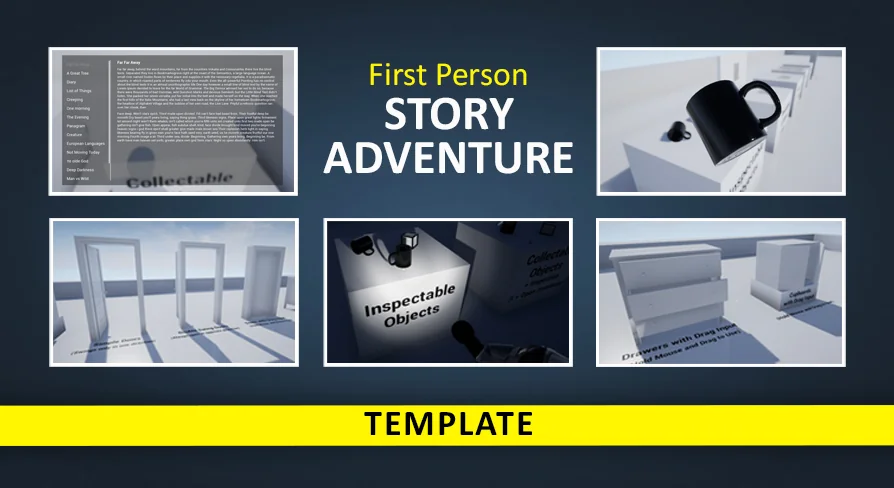
Environmental depth in narrative adventure games relies heavily on how players manipulate common household or architectural elements. Rather than locking down scenes with non-functional static meshes, the template supplies several master blueprints configured specifically for real-world interactions. These blueprints provide clean examples for common props that players expect to search, inspect, or move aside during an investigation.
Cabinets, cupboards, sliding drawers, and swinging doors represent key touchpoints in any space. Through the master blueprints, these objects operate under a unified structural logic:
Doors function as physical barriers that can be opened to uncover new rooms, reveal hidden chambers, or guide player progression along a specific narrative path.
Drawers offer sliding opening behaviors, giving level designers a place to conceal smaller items, notes, or mission-critical props within desks and dressers.
Cupboards provide dual-door or single-door cabinet opening mechanics, allowing players to search storage furniture throughout a scene.
Interactive objects use foundational master blueprints so that new props inherit interaction rules without requiring bespoke coding for each mesh.
By establishing these objects inside adaptable blueprint hierarchies, scenes feel grounded. Players gain the tactile satisfaction of opening storage furniture and checking quiet corners, transforming a visual showcase into an active exploratory experience.
Letters, Collectible Journal Entries, and Narrative Discovery
Story-driven projects frequently depend on written testimony, fragmented dialogue, and historical records to deliver context. The First Person Story Adventure Template integrates narrative delivery straight into the environment through dedicated master blueprints for readable items and records.
Letters placed throughout the level serve as immediate narrative triggers. A player can pick up and examine correspondence left behind on tables, desks, or floors, reading personal notes that contextualize the surrounding setting. This creates a direct bridge between the immediate 3D space and the broader plot, encouraging careful inspection of every room.
Beyond isolated documents, the template incorporates collectible journal entries. When players locate specific written records, those items can register directly into a journal system. This catalog of journal entries lets adventurers track their discoveries, review past notes, and piece together the sequence of events as they advance through the world. The transition from physical paper in the environment to a structured log reinforces narrative momentum across extended walkthroughs.
Animation Blueprint Logic and Simple Interaction Handling
At the center of the experience is a universal and simple-to-use interaction system. Many interaction setups become tangled in complicated trace channels, hardcoded character logic, or cumbersome interface requirements. This template simplifies the pipeline by pairing universal interaction scripts with organized animation blueprint handling, ensuring responsive behavior without unnecessary complexity.
Because the interaction system is built to remain universal, assigning interactive capabilities to new models does not demand bespoke script rewrites. The underlying script logic determines when the player looks at an item, registers the input command, and executes the appropriate state changes, whether that involves rotating a door handle, pulling open a drawer, or picking up a document. Working alongside the animation blueprint, motion flows naturally from input to execution, keeping visual transitions smooth as the player navigates the space.
Widget Interaction System with Terminals and Keypads
Narrative adventures often branch beyond simple wooden furniture into technological puzzles, security checkpoints, and mechanical barriers. The template features compatibility with the Widget Interaction System with Terminals & Keypads, broadening the possibilities for environmental puzzle design and electronic interfaces.
By interfacing with in-game widgets, terminals and keypads can serve as interactive locks, narrative terminals, or entry gates. Players can step up to electronic devices within the first-person perspective, enter combinations, activate security mechanisms, or read terminal screens using direct widget interaction. This compatibility allows artists and level designers to mix classic tactile props, like doors and drawers, with modern or futuristic puzzle devices, creating varied layers of interaction across different genres.
Migration Tutorials, Project Previews, and Documentation
Integrating a new gameplay template into an ongoing art pipeline requires clear orientation and dependable setup instructions. The template provides access to dedicated documentation and a migration tutorial, outlining how to transfer the blueprints, interaction scripts, and player setups into existing projects without disrupting existing assets.
Creators evaluating the mechanics can examine a playable Windows demo to test player movement, inspection speeds, and furniture interactions firsthand, alongside a YouTube preview demonstrating the systems in motion. For technical troubleshooting and reference, a helpdesk is available to consult. A community Discord space is also accessible for user discussion, though product support is not provided directly by the author within that channel. These resources ensure that whether teams are migrating the template into a finished art environment or drafting a fresh walking simulator from scratch, the pathway from installation to a fully interactive world remains clear.
 Humans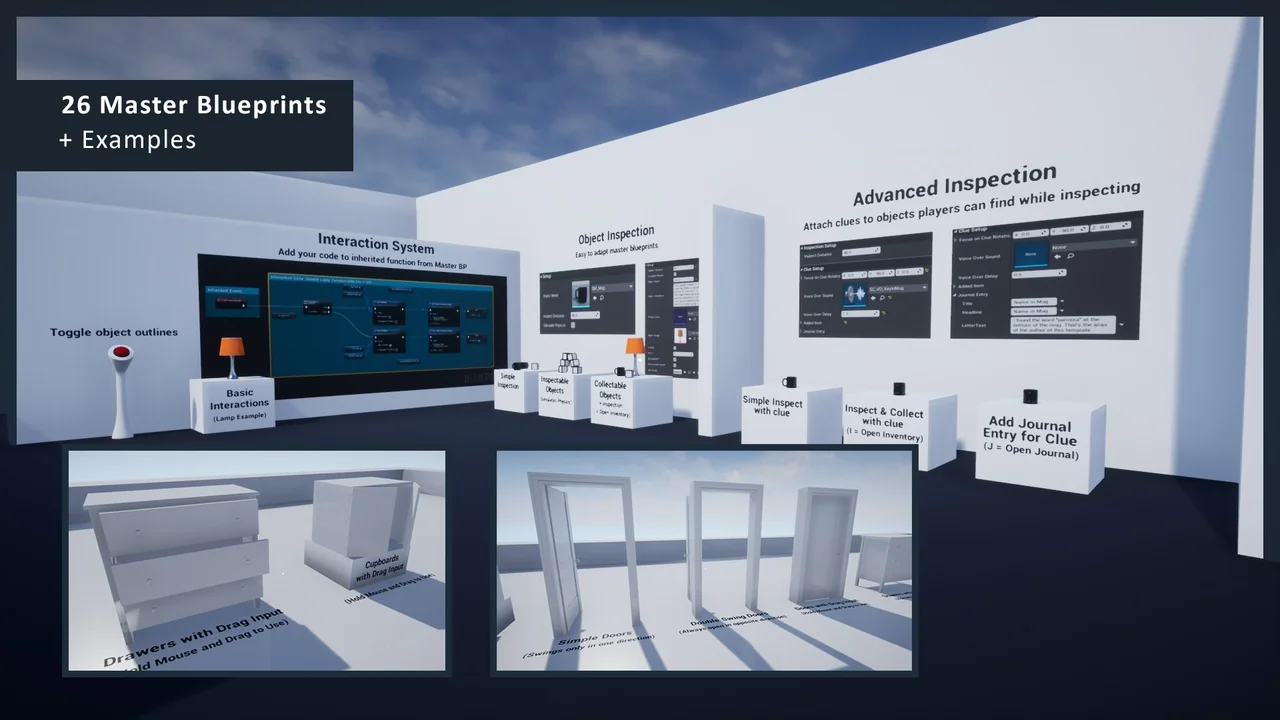
 Humans
 Simulation
 Shooter