"177e4e4394b9ce1f"{"id":"1001577","slug":"endless-runner-shooter-template","title":"Endless Runner Shooter Template","category":"Platformer","engine":"5.2+","assetVersion":"","engineVersion":"Engine Version: 5.2+","tag":"Platformer","accent":"blue","visual":"mech","summary":"Explore the Endless Runner Shooter Template, featuring 100% Blueprints, modular tile generation, runtime gameplay switches, and mobile platform support.","platform":"Unreal Engine","publishedAt":"2026-10-10T08:50:34.218Z","updatedAt":"2026-10-10T08:50:34.218Z","sourceNotes":[],"fileContents":[],"compatibility":["Unreal Engine","Engine Version: 5.2+"],"featuredImage":{"alt":"Endless Runner Shooter Template","src":"/wp-content/uploads/published/2026/10/7b7ad6c5cc25-a602c829-2f1f-4c67-9f93-ea6b656ce80a-fc1f400e9f.webp"},"hasDownloadLink":true,"downloads":0,"terms":[{"taxonomy":"category","slug":"platformer","name":"Platformer"}],"galleryImages":[{"src":"/wp-content/uploads/published/2026/10/37eb711b0efe-dcc6ef32-3545-4f90-b8bc-05e6986f629b-841184301f.webp","alt":"Endless Runner Shooter Template"},{"src":"/wp-content/uploads/published/2026/10/317bc2e5acfb-56ba3ab8-22c9-432b-80b8-e393b5df5989-5d50f5a3d8.webp","alt":"Endless Runner Shooter Template"},{"src":"/wp-content/uploads/published/2026/10/5b6b1b4a7c0b-81526078-9bda-483b-965d-bc5ad6322adb-f18d6729f5.webp","alt":"Endless Runner Shooter Template"},{"src":"/wp-content/uploads/published/2026/10/0d6d0a2084a7-2cd86453-ad5d-4a10-b452-c0790bd5dd41-f123de853b.webp","alt":"Endless Runner Shooter Template"},{"src":"/wp-content/uploads/published/2026/10/278f4677a664-a1e5ec22-9a37-4dc2-b7bf-735babd6b0c5-32fdac50b0.webp","alt":"Endless Runner Shooter Template"},{"src":"/wp-content/uploads/published/2026/10/cc785d314849-43a4db0a-e94d-447e-8054-5022f5c86d66-053311d714.webp","alt":"Endless Runner Shooter Template"}],"accessPanel":{"kind":"resource","title":"Download this resource","eyebrow":"Free Download","message":"Log in or create a free account to start your download.","fileName":"Content.7z","safetyNote":"Resources are manually reviewed before listing to improve quality and reduce obvious risks.","actionLabel":"Download Free","resourceType":"Resource archive"},"contentHtml":"\u003ch2\u003eSetting Up the Blueprint Endless Runner Shooter Template\u003c/h2\u003e\u003cp\u003eIntegrating an endless runner architecture begins with establishing how data, procedural layouts, and character input interact. The Endless Runner Shooter Template relies entirely on a 100% Blueprint framework, avoiding custom C++ source code dependencies. This setup allows developers to drop the asset structure directly into a project pipeline and begin modifying core logic immediately through visual scripting graphs.\u003c/p\u003e\u003cp\u003eBecause the logic is native to Blueprints, inspecting execution paths, tracking state changes, and modifying event nodes happens directly within the editor interface. Developers can trace game states from initial startup into active track generation without compiling external code libraries. This architecture keeps node networks readable, enabling rapid iterations when adjusting movement physics, hit detection, or camera handling across active game sessions.\u003c/p\u003e\u003ch2\u003eConstructing Modular Tile Sequences for Infinite Runs\u003c/h2\u003e\u003cp\u003eAt the center of infinite level layouts is the modular tile creation system. Rather than hand-crafting prolonged linear levels, the template generates environments dynamically by assembling discrete modular tiles along the travel vector. Each modular segment connects with adjacent sections to form a continuous, seamless route.\u003c/p\u003e\u003cp\u003eThe procedural loop handles the instantiation, positioning, and eventual destruction of modular track pieces as the player advances. When the player character reaches designated thresholds along a tile, the generation system calls subsequent modules into place while pruning distant geometry behind the camera. This recycling structure keeps memory consumption predictable across indefinite play sessions, preventing performance degradation over extended runs. Developers can expand the track pool by authoring new tile variants that follow the modular snapping anchors built into the base Blueprint actors.\u003c/p\u003e\u003ch2\u003eManaging Obstacle and Power-Up Spawning Dynamics\u003c/h2\u003e\u003cp\u003eTraversing static track geometry quickly becomes predictable without dynamic placement systems. To keep runs variable, the template incorporates dedicated obstacle and power-up spawning logic that populates incoming modular tiles on the fly.\u003c/p\u003e\u003cp\u003eThe spawning system evaluates active tiles and distributes hazards and pickup items across defined lanes, paths, or track coordinates. Obstacles function as environmental blockers or damage volumes that challenge player reflexes, while power-ups provide active benefits, temporary enhancements, or gameplay modifications during a run. Because spawning operates independently of the underlying tile meshes, track sections can load varying configurations of hazards and items each time they are generated. This separation of track meshes from item population ensures that repetitive landscape pieces still produce unpredictable gameplay scenarios.\u003c/p\u003e\u003ch2\u003eSwitching Between Runner and Shooter Gameplay at Runtime\u003c/h2\u003e\u003cp\u003eHybrid genres require systems capable of altering core play states without resetting the world or interrupting player momentum. The Endless Runner Shooter Template addresses this through an explicit mechanism designed to change gameplay style during runtime.\u003c/p\u003e\u003cp\u003eUnder standard endless runner mechanics, player interactions focus on lane switching, jump timing, evasion, and sustained traversal. When shifting into shooter mechanics, the input maps, character capabilities, and interaction priorities adapt immediately. The runtime transition enables the player character to alternate between pure avoidance gameplay and active weapon engagements while continuing along the infinite track. The underlying framework supports different gameplay mechanics—such as traditional runner systems, active shooter modes, and related variants—under a consolidated controller architecture. This dynamic shifting prevents mechanical stagnation, giving developers a baseline to structure hybrid phases, transition zones, or elevated threat encounters within a single continuous run.\u003c/p\u003e\u003ch2\u003eTargeting Mobile Platforms and System Adaptability\u003c/h2\u003e\u003cp\u003eDeploying procedural games to handheld devices introduces strict constraints on processing overhead, input responsiveness, and draw calls. The Endless Runner Shooter Template incorporates mobile support directly into its core design.\u003c/p\u003e\u003cp\u003eThe template balances input interpretation and Blueprint evaluation to align with mobile performance profiles. Touch interactions, gesture inputs, and hardware-conscious rendering demands are factored into the logic graphs, allowing mobile games to run the modular tile loops without excessive frame drops. Because the architecture avoids high-overhead operations in the generation step, the continuous generation of track pieces, collision checks, and obstacle spawns remains stable on mobile chipsets.\u003c/p\u003e\u003ch2\u003eSample Project Integration and Customization\u003c/h2\u003e\u003cp\u003eEvaluating the template in an active environment is streamlined through the accompanying sample project, which requires the Endless Runner Shooter Template to operate. The sample project establishes a concrete reference implementation, demonstrating how the modular tile creation, obstacle and power-up spawning systems, and runtime mechanics work together in a finished configuration.\u003c/p\u003e\u003cp\u003eStudying the sample implementation reveals how data communicates between the game mode, the character pawn, and the procedural track spawners. Creators can reference the sample layouts to configure custom tile sets, adjust spawn rate algorithms for hazards, and fine-tune runtime transitions between runner and shooter systems. By grounding the entire framework in clean Blueprint graphs, the template functions as a versatile starting point for infinite running and shooting projects across both desktop and mobile target hardware.\u003c/p\u003e\n\n\u003ch2\u003eContinue Browsing Similar Packs\u003c/h2\u003e\n\u003cul\u003e\n\u003cli\u003e\u003ca href=\"https://3dcghub.com/endless-runner-creator-v3/\" title=\"Endless Runner Creator V3\"\u003eEndless Runner Creator V3\u003c/a\u003e\u003c/li\u003e\n\u003cli\u003e\u003ca href=\"https://3dcghub.com/ultimate-template-unrealengine-2d-dialogue-inventory-system-save/\" title=\"ULTIMATE Template UnrealEngine || 2D + Dialogue + Inventory system + Save | |\"\u003eULTIMATE Template UnrealEngine || 2D + Dialogue + Inventory system + Save | |\u003c/a\u003e\u003c/li\u003e\n\u003cli\u003e\u003ca href=\"https://3dcghub.com/endless-random-worlds/\" title=\"Endless Random Worlds\"\u003eEndless Random Worlds\u003c/a\u003e\u003c/li\u003e\n\u003cli\u003e\u003ca href=\"https://3dcghub.com/push-push-puzzle-2d-kit/\" title=\"Push Push Puzzle 2D Kit\"\u003ePush Push Puzzle 2D Kit\u003c/a\u003e\u003c/li\u003e\n\u003cli\u003e\u003ca href=\"https://3dcghub.com/worldscape-plugin-making-real-planets-and-endless-worlds/\" title=\"WorldScape Plugin - Making real planets and Endless worlds\"\u003eWorldScape Plugin - Making real planets and Endless worlds\u003c/a\u003e\u003c/li\u003e\n\u003c/ul\u003e","contentTextLength":5986,"navigation":{"current":37,"total":3551,"previous":{"id":"1001578","slug":"first-person-story-adventure-template","title":"First Person Story Adventure Template","category":"Humans","platform":"Unreal Engine","updatedAt":"2026-10-10T08:51:14.227Z"},"next":{"id":"1001576","slug":"dwarf-fantasy-environment-set-1-1","title":"Dwarf Fantasy Environment Set 1.1","category":"Fantasy","platform":"Unreal Engine","updatedAt":"2026-10-10T08:50:06.263Z"}},"relatedResources":[{"id":"11715","slug":"endless-runner-creator-v3","title":"Endless Runner Creator V3","category":"Platformer","engine":"4.26+,5.0+","assetVersion":"Engine version: 4.26+,5.0+","engineVersion":"Asset Version:V3","tag":"Platformer","accent":"blue","visual":"mech","summary":"Build high-performance endless runner games with a flexible system featuring seven unique game types. This optimized engine supports both mobile and desktop platforms with ease.","platform":"Unreal Engine","publishedAt":"2026-03-05T18:18:19.000Z","updatedAt":"2026-04-19T15:48:08.000Z","sourceNotes":[],"fileContents":[],"compatibility":["Unreal Engine","Engine version: 4.26+,5.0+","Asset Version: V3"],"featuredImage":{"alt":"Endless Runner Creator V3","src":"https://3dcghub.com/wp-content/uploads/2026/03/1121ed83-5490-4700-8c2f-5c8bc92844fc.webp"},"hasDownloadLink":true,"downloads":0},{"id":"11729","slug":"ultimate-template-unrealengine-2d-dialogue-inventory-system-save","title":"ULTIMATE Template UnrealEngine || 2D + Dialogue + Inventory system + Save | |","category":"Platformer","engine":"5.5+","assetVersion":"Engine version: 5.5+","engineVersion":"5.5","tag":"Platformer","accent":"blue","visual":"city","summary":"The ULTIMATE Template for Unreal Engine is a comprehensive toolkit designed to jumpstart 2D and 2.5D game development. It features integrated animation, dialogue, and inventory systems to streamline your workflow.","platform":"Unreal Engine","publishedAt":"2026-03-05T18:26:37.000Z","updatedAt":"2026-04-19T15:48:07.000Z","sourceNotes":[],"fileContents":[],"compatibility":["Unreal Engine","Engine version: 5.5+"],"featuredImage":{"alt":"ULTIMATE Template UnrealEngine || 2D + Dialogue + Inventory system + Save | |","src":"https://3dcghub.com/wp-content/uploads/2026/03/78f3e1b6-7c25-4143-87c5-c625191631ff.webp"},"hasDownloadLink":true,"downloads":0},{"id":"1001259","slug":"endless-random-worlds","title":"Endless Random Worlds","category":"Procedural Systems","engine":"5.0+","assetVersion":"","engineVersion":"Engine Version: 5.0+","tag":"Procedural Systems","accent":"blue","visual":"mech","summary":"Build dynamic procedural environments with Endless Random Worlds, using level streaming to assemble endless open maps and roguelike interior spaces.","platform":"Unreal Engine","publishedAt":"2026-09-27T05:27:08.445Z","updatedAt":"2026-09-27T05:27:08.445Z","sourceNotes":[],"fileContents":[],"compatibility":["Unreal Engine","Engine Version: 5.0+"],"featuredImage":{"alt":"Endless Random Worlds","src":"/wp-content/uploads/published/2026/09/4390d1da3360-6bd61fd8-acd3-4fa8-9527-f9f5ab33a842-cf89e64b75.webp"},"hasDownloadLink":true,"downloads":1}]}
Platformer
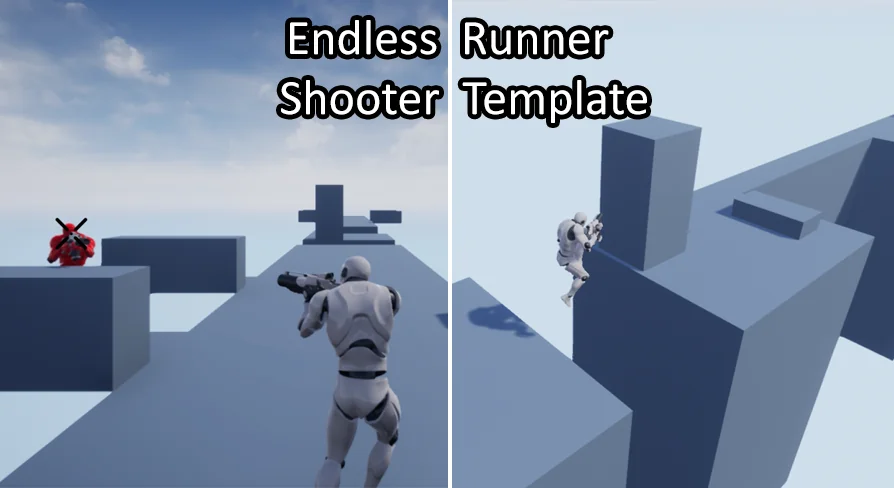
Endless Runner Shooter Template
Explore the Endless Runner Shooter Template, featuring 100% Blueprints, modular tile generation, runtime gameplay switches, and mobile platform support.
Category:Unreal Engine,PlatformerPlatform: Unreal EngineEngine Version: 5.2+Published: Oct 10, 2026
Platformer
Resource overview
Setting Up the Blueprint Endless Runner Shooter Template
Integrating an endless runner architecture begins with establishing how data, procedural layouts, and character input interact. The Endless Runner Shooter Template relies entirely on a 100% Blueprint framework, avoiding custom C++ source code dependencies. This setup allows developers to drop the asset structure directly into a project pipeline and begin modifying core logic immediately through visual scripting graphs.
Because the logic is native to Blueprints, inspecting execution paths, tracking state changes, and modifying event nodes happens directly within the editor interface. Developers can trace game states from initial startup into active track generation without compiling external code libraries. This architecture keeps node networks readable, enabling rapid iterations when adjusting movement physics, hit detection, or camera handling across active game sessions.
Constructing Modular Tile Sequences for Infinite Runs
At the center of infinite level layouts is the modular tile creation system. Rather than hand-crafting prolonged linear levels, the template generates environments dynamically by assembling discrete modular tiles along the travel vector. Each modular segment connects with adjacent sections to form a continuous, seamless route.
The procedural loop handles the instantiation, positioning, and eventual destruction of modular track pieces as the player advances. When the player character reaches designated thresholds along a tile, the generation system calls subsequent modules into place while pruning distant geometry behind the camera. This recycling structure keeps memory consumption predictable across indefinite play sessions, preventing performance degradation over extended runs. Developers can expand the track pool by authoring new tile variants that follow the modular snapping anchors built into the base Blueprint actors.
Managing Obstacle and Power-Up Spawning Dynamics
Traversing static track geometry quickly becomes predictable without dynamic placement systems. To keep runs variable, the template incorporates dedicated obstacle and power-up spawning logic that populates incoming modular tiles on the fly.
The spawning system evaluates active tiles and distributes hazards and pickup items across defined lanes, paths, or track coordinates. Obstacles function as environmental blockers or damage volumes that challenge player reflexes, while power-ups provide active benefits, temporary enhancements, or gameplay modifications during a run. Because spawning operates independently of the underlying tile meshes, track sections can load varying configurations of hazards and items each time they are generated. This separation of track meshes from item population ensures that repetitive landscape pieces still produce unpredictable gameplay scenarios.
Switching Between Runner and Shooter Gameplay at Runtime
Hybrid genres require systems capable of altering core play states without resetting the world or interrupting player momentum. The Endless Runner Shooter Template addresses this through an explicit mechanism designed to change gameplay style during runtime.
Under standard endless runner mechanics, player interactions focus on lane switching, jump timing, evasion, and sustained traversal. When shifting into shooter mechanics, the input maps, character capabilities, and interaction priorities adapt immediately. The runtime transition enables the player character to alternate between pure avoidance gameplay and active weapon engagements while continuing along the infinite track. The underlying framework supports different gameplay mechanics—such as traditional runner systems, active shooter modes, and related variants—under a consolidated controller architecture. This dynamic shifting prevents mechanical stagnation, giving developers a baseline to structure hybrid phases, transition zones, or elevated threat encounters within a single continuous run.
Targeting Mobile Platforms and System Adaptability
Deploying procedural games to handheld devices introduces strict constraints on processing overhead, input responsiveness, and draw calls. The Endless Runner Shooter Template incorporates mobile support directly into its core design.
The template balances input interpretation and Blueprint evaluation to align with mobile performance profiles. Touch interactions, gesture inputs, and hardware-conscious rendering demands are factored into the logic graphs, allowing mobile games to run the modular tile loops without excessive frame drops. Because the architecture avoids high-overhead operations in the generation step, the continuous generation of track pieces, collision checks, and obstacle spawns remains stable on mobile chipsets.
Sample Project Integration and Customization
Evaluating the template in an active environment is streamlined through the accompanying sample project, which requires the Endless Runner Shooter Template to operate. The sample project establishes a concrete reference implementation, demonstrating how the modular tile creation, obstacle and power-up spawning systems, and runtime mechanics work together in a finished configuration.
Studying the sample implementation reveals how data communicates between the game mode, the character pawn, and the procedural track spawners. Creators can reference the sample layouts to configure custom tile sets, adjust spawn rate algorithms for hazards, and fine-tune runtime transitions between runner and shooter systems. By grounding the entire framework in clean Blueprint graphs, the template functions as a versatile starting point for infinite running and shooting projects across both desktop and mobile target hardware.
 Platformer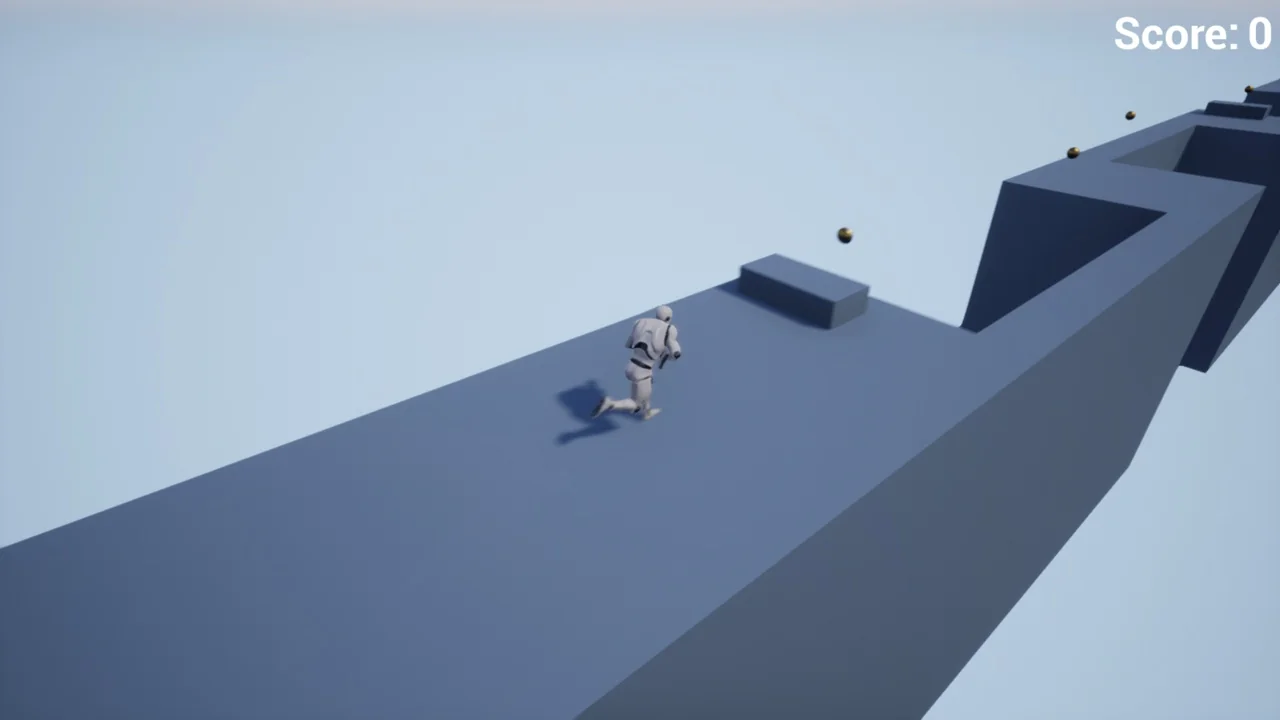
 Platformer
 Platformer
 Procedural Systems