"177e4e4394b9ce1f"{"id":"1001613","slug":"true-horror-first-person-view","title":"True Horror First Person View","category":"Simulation","engine":"5.3+","assetVersion":"","engineVersion":"Engine Version: 5.3+","tag":"Simulation","accent":"blue","visual":"mech","summary":"Explore True Horror First Person View, a full-body horror template with Lyra-based locomotion, VHS camera effects, spline-driven AI, and Poolroom maps.","platform":"Unreal Engine","publishedAt":"2026-10-10T16:57:39.147Z","updatedAt":"2026-10-10T16:57:39.147Z","sourceNotes":[],"fileContents":[],"compatibility":["Unreal Engine","Engine Version: 5.3+"],"featuredImage":{"alt":"True Horror First Person View","src":"/wp-content/uploads/published/2026/10/83a7bf2c8685-1b81c236-5283-47ca-84c3-9abf864c5353-6e2d50314b.webp"},"hasDownloadLink":true,"downloads":0,"terms":[{"taxonomy":"category","slug":"simulation","name":"Simulation"}],"galleryImages":[{"src":"/wp-content/uploads/published/2026/10/d906d6c53a13-7fef8780-5c9d-4e48-acc3-dd4ee59fc976-aac370d560.webp","alt":"True Horror First Person View"},{"src":"/wp-content/uploads/published/2026/10/e240e4237f83-b0f3de9f-4a1c-4648-9c36-290940111b75-37ed948fa5.webp","alt":"True Horror First Person View"},{"src":"/wp-content/uploads/published/2026/10/41fde8fc63d7-0cf8e101-2386-4031-b9fe-0a9d3d883acf-32802094b6.webp","alt":"True Horror First Person View"},{"src":"/wp-content/uploads/published/2026/10/6f24b5f7dea7-25d92fdd-fe7f-4d9b-b832-020732f596c5-c9087e942a.webp","alt":"True Horror First Person View"},{"src":"/wp-content/uploads/published/2026/10/487852256603-46e583de-aa86-4aab-9cf9-01e020022f7c-da5edd4b20.webp","alt":"True Horror First Person View"},{"src":"/wp-content/uploads/published/2026/10/b14d40f085a8-1e4d9830-8c02-491e-a4af-47a6bc8adfe1-0ef639b741.webp","alt":"True Horror First Person View"},{"src":"/wp-content/uploads/published/2026/10/38b04824236b-85e27cd0-dda9-40e9-9080-1c03cf7dbcaf-18c6c6dd19.webp","alt":"True Horror First Person View"},{"src":"/wp-content/uploads/published/2026/10/3fe1804400ef-93f27732-6715-47d7-bbf5-df658e70c32b-e70d342250.webp","alt":"True Horror First Person View"},{"src":"/wp-content/uploads/published/2026/10/4959a08287ab-7eb2b9c6-b65b-4e50-9d43-4a494ae39795-522a8e2eb1.webp","alt":"True Horror First Person View"},{"src":"/wp-content/uploads/published/2026/10/27dccb32df1f-604acd7d-e099-418f-97f0-def6f8e637f1-8497c1ecd7.webp","alt":"True Horror First Person View"}],"accessPanel":{"kind":"resource","title":"Download this resource","eyebrow":"Free Download","message":"Log in or create a free account to start your download.","fileName":"True Horror First Person View.7z","safetyNote":"Resources are manually reviewed before listing to improve quality and reduce obvious risks.","actionLabel":"Download Free","resourceType":"Resource archive"},"contentHtml":"\u003cp\u003eBuilding a grounded first-person perspective for horror titles often requires balancing tactile player movement with claustrophobic, diegetic camera presentation. True Horror First Person View addresses this specific mechanical baseline, originating around Backroom-style exploration while scaling directly into standard atmospheric horror settings.\u003c/p\u003e\u003cp\u003eRather than relying on basic floating arms or ungrounded character controllers, the setup is anchored by a complete physical presence and a specialized camera pipeline that replicates found-footage artifacts, diegetic HUD elements, and environmental dread without carrying over unwanted shooter logic.\u003c/p\u003e\u003ch2\u003eLyra-Based Full-Body Locomotion and Movement Mechanics\u003c/h2\u003e\u003cp\u003eThe player character is constructed by hand from scratch rather than reusing the stock Lyra character model, while adopting the underlying locomotion structure from the Lyra starter pack. It incorporates linked animation layers and safe thread methods to drive fluid state transitions across walk, jog, and sprint profiles.\u003c/p\u003e\u003cp\u003eLocomotion fidelity relies heavily on distance-matching techniques, which control start, stop, and pivot sequences to prevent sliding and maintain physical weight. Jumping also operates through distance matching, ensuring predictable takeoffs and landings. Characters support realistic crouching behavior and natural turn-in-place mechanics, anchoring the camera strictly to a full physical body mesh that remains visible during movement. Weapon programming and combat framework code are omitted entirely, keeping the character blueprint clean for pure exploration and evasion.\u003c/p\u003e\u003ch2\u003eVHS Camera Systems, Optical Zoom, and Screen Effects\u003c/h2\u003e\u003cp\u003eCamera interaction is treated as an active gameplay device rather than an invisible viewport. The view integrates natural camera shake, smooth movement interpolations, and a smooth interaction crosshair intended for picking up items and handling physical triggers.\u003c/p\u003e\u003cp\u003eThe system comes with an integrated found-footage camera display that tracks a real-time date and a functioning real-time stopwatch directly on screen. An automatic depth-of-field module pairs with a dedicated zoom mechanism, adjusting focus distance dynamically as the zoom operates alongside dedicated camera display modes. Visual styling is reinforced by a broad collection of post-process materials and shaders, including:\u003c/p\u003e\u003cul\u003e\u003cli\u003eVHS and bodycam lens post-process effects\u003c/li\u003e\u003cli\u003eScreen glitch and hallucination materials\u003c/li\u003e\u003cli\u003eEdge outline, directional blur, and custom sharpening materials\u003c/li\u003e\u003cli\u003eNiagara particles for drifting dust motes, insect swarms, and ambient stars\u003c/li\u003e\u003cli\u003eA dedicated god ray light Blueprint for volumetric light shafts\u003c/li\u003e\u003c/ul\u003e\u003cp\u003eThese post-process systems provide the distortion, noise, and atmospheric degradation typical of analog recording tapes and modern body-mounted cameras.\u003c/p\u003e\u003ch2\u003eSpline-Driven Sequences, Tentacle AI, and Humanoid Monsters\u003c/h2\u003e\u003cp\u003eEnemy encounters in horror projects depend on alternating between unpredictable pathfinding and tightly controlled scripted scares. The template accommodates both through twin artificial intelligence systems: a humanoid creature and a specialized tentacle monster.\u003c/p\u003e\u003cp\u003eBoth creature types come equipped with state behaviors for roaming, patrolling, roaring, chasing, and attacking. When a player is caught, the interaction triggers a catch-and-die kill sequence that handles the transition to a dedicated game-over screen. To support scripted events, the framework incorporates a spline line system that works alongside event triggers. Developers can spawn the creature directly onto a spline curve to choreograph intricate movements, jump-scares, or specific pursuit paths through tight corridors, featuring a dedicated Tentacle Pawn configured specifically for spline traversal. A playable tentacle monster is also included alongside custom menu interfaces configured for both playable character types.\u003c/p\u003e\u003ch2\u003eEnvironmental Interaction, Audio Cues, and Level Assets\u003c/h2\u003e\u003cp\u003eThe mechanical layer is rounded out by foundational survival systems. Players can manage an interactive flashlight with dedicated pickup items, monitor a health regeneration and damage loop, navigate a pause menu with an integrated mini-map, and manipulate physics-driven door Blueprints. For shifting between isolated sections of an environment, a noclip teleportation system is built in alongside an environmental weather manager.\u003c/p\u003e\u003cp\u003eAuditory design is configured directly across the mechanics, incorporating dynamic footstep sounds keyed to physical surface materials, including grass, metal, sand, water, and wood. The asset package contains 47 custom sound files covering stingers, industrial drones, UI chimes, effects, and distinct water drops tailored for pool environments, complemented by 65 ambient background sounds. Scene architecture is supported by 2K and 4K modular floor and wall tile textures, decals, and utility meshes such as wet floor signs, security cameras, and illuminated exit signs.\u003c/p\u003e\u003ch2\u003eEngine Plugins and Production Integration\u003c/h2\u003e\u003cp\u003eFour primary plugins drive the underlying systems within this framework: the Animation Warping plugin, the Animation Locomotion Library, the Modelling Tools Editor Mode plugin, and the Unreal Engine Water plugin. The Water plugin is utilized within the project strictly for visual and atmospheric staging across demonstration environments.\u003c/p\u003e\u003cp\u003eTesting and demonstration are divided across multiple maps. These include a main menu level, two showcase levels designed to test template mechanics, spline paths, and tentacle encounters, and two demonstration PoolRoom maps set during day and night cycles. Step sounds can be auditioned within the dedicated showcase mechanics map. Network replication is not present in the current framework, confining the toolset to dedicated single-player horror pipelines that prioritize responsive client-side animation layers and atmospheric tension.\u003c/p\u003e\n\n\u003ch2\u003eExplore Similar Assets\u003c/h2\u003e\n\u003cul\u003e\n\u003cli\u003e\u003ca href=\"https://3dcghub.com/first-person-story-adventure-template/\" title=\"First Person Story Adventure Template\"\u003eFirst Person Story Adventure Template\u003c/a\u003e\u003c/li\u003e\n\u003cli\u003e\u003ca href=\"https://3dcghub.com/dynamic-first-person-template/\" title=\"Dynamic First Person Template\"\u003eDynamic First Person Template\u003c/a\u003e\u003c/li\u003e\n\u003cli\u003e\u003ca href=\"https://3dcghub.com/first-person-bow-and-arrow-animation-set/\" title=\"First Person Bow \u0026amp; Arrow Animation Set\"\u003eFirst Person Bow \u0026amp; Arrow Animation Set\u003c/a\u003e\u003c/li\u003e\n\u003cli\u003e\u003ca href=\"https://3dcghub.com/vehicle-variety-first-person-vehicle-interaction-system-fpvis/\" title=\"Vehicle Variety First Person Vehicle Interaction System (FPVIS)\"\u003eVehicle Variety First Person Vehicle Interaction System (FPVIS)\u003c/a\u003e\u003c/li\u003e\n\u003cli\u003e\u003ca href=\"https://3dcghub.com/first-person-sawed-off-shotgun-animations/\" title=\"First Person Sawed-Off Shotgun Animations\"\u003eFirst Person Sawed-Off Shotgun Animations\u003c/a\u003e\u003c/li\u003e\n\u003c/ul\u003e","contentTextLength":6081,"navigation":{"current":1,"total":3551,"next":{"id":"1001612","slug":"monster-beetle-pack","title":"Monster_Beetle_Pack","category":"Characters \u0026 Creatures","platform":"Unreal Engine","updatedAt":"2026-10-10T16:55:05.925Z"}},"relatedResources":[{"id":"1001578","slug":"first-person-story-adventure-template","title":"First Person Story Adventure Template","category":"Humans","engine":"5.0+","assetVersion":"","engineVersion":"Engine Version: 5.0+","tag":"Humans","accent":"blue","visual":"mech","summary":"Build interactive walking simulators with the First Person Story Adventure Template, featuring master blueprints, journals, interactive drawers, and doors.","platform":"Unreal Engine","publishedAt":"2026-10-10T08:51:14.227Z","updatedAt":"2026-10-10T08:51:14.227Z","sourceNotes":[],"fileContents":[],"compatibility":["Unreal Engine","Engine Version: 5.0+"],"featuredImage":{"alt":"First Person Story Adventure Template","src":"/wp-content/uploads/published/2026/10/76b62200fed2-9a54eb3b-381c-412c-9ca5-c1f7e0c9ac92-0399520407.webp"},"hasDownloadLink":true,"downloads":0},{"id":"1001343","slug":"dynamic-first-person-template","title":"Dynamic First Person Template","category":"Shooter","engine":"5.4+","assetVersion":"","engineVersion":"Engine Version: 5.4+","tag":"Shooter","accent":"blue","visual":"mech","summary":"Configure FPS gameplay via a dropped Settings actor. Dynamic First Person Template features 100+ variables, weapon recoil, flashlight battery, and camera effect","platform":"Unreal Engine","publishedAt":"2026-10-04T10:07:41.991Z","updatedAt":"2026-10-04T10:07:41.991Z","sourceNotes":[],"fileContents":[],"compatibility":["Unreal Engine","Engine Version: 5.4+"],"featuredImage":{"alt":"Dynamic First Person Template","src":"/wp-content/uploads/published/2026/10/af07f68e3c92-987ade73-9b51-41e6-a137-bed85c417cf7-f7d4cc359e.webp"},"hasDownloadLink":true,"downloads":0},{"id":"1000827","slug":"first-person-bow-and-arrow-animation-set","title":"First Person Bow \u0026 Arrow Animation Set","category":"Combat","engine":"5.5+","assetVersion":"","engineVersion":"Engine Version: 5.5+","tag":"Combat","accent":"blue","visual":"animation","summary":"Thirty hand-crafted first-person bow and arrow animations for Unreal Engine, featuring AnimBP with right-hand IK and integration with the Unreal First Person te","platform":"Unreal Engine","publishedAt":"2026-08-02T16:25:19.371Z","updatedAt":"2026-08-02T16:25:31.100Z","sourceNotes":[],"fileContents":[],"compatibility":["Unreal Engine","Engine Version: 5.5+"],"featuredImage":{"alt":"First Person Bow \u0026 Arrow Animation Set","src":"/wp-content/uploads/published/2026/08/8d06c9ece5db-2366ec5e-d77b-4568-8881-90f8004c9619-78d18d3f2c.webp"},"hasDownloadLink":true,"downloads":2}]}
Simulation
True Horror First Person View
Explore True Horror First Person View, a full-body horror template with Lyra-based locomotion, VHS camera effects, spline-driven AI, and Poolroom maps.
Category:Unreal Engine,SimulationPlatform: Unreal EngineEngine Version: 5.3+Published: Oct 10, 2026
Simulation
Resource overview
Building a grounded first-person perspective for horror titles often requires balancing tactile player movement with claustrophobic, diegetic camera presentation. True Horror First Person View addresses this specific mechanical baseline, originating around Backroom-style exploration while scaling directly into standard atmospheric horror settings.
Rather than relying on basic floating arms or ungrounded character controllers, the setup is anchored by a complete physical presence and a specialized camera pipeline that replicates found-footage artifacts, diegetic HUD elements, and environmental dread without carrying over unwanted shooter logic.
Lyra-Based Full-Body Locomotion and Movement Mechanics
The player character is constructed by hand from scratch rather than reusing the stock Lyra character model, while adopting the underlying locomotion structure from the Lyra starter pack. It incorporates linked animation layers and safe thread methods to drive fluid state transitions across walk, jog, and sprint profiles.
Locomotion fidelity relies heavily on distance-matching techniques, which control start, stop, and pivot sequences to prevent sliding and maintain physical weight. Jumping also operates through distance matching, ensuring predictable takeoffs and landings. Characters support realistic crouching behavior and natural turn-in-place mechanics, anchoring the camera strictly to a full physical body mesh that remains visible during movement. Weapon programming and combat framework code are omitted entirely, keeping the character blueprint clean for pure exploration and evasion.
VHS Camera Systems, Optical Zoom, and Screen Effects
Camera interaction is treated as an active gameplay device rather than an invisible viewport. The view integrates natural camera shake, smooth movement interpolations, and a smooth interaction crosshair intended for picking up items and handling physical triggers.
The system comes with an integrated found-footage camera display that tracks a real-time date and a functioning real-time stopwatch directly on screen. An automatic depth-of-field module pairs with a dedicated zoom mechanism, adjusting focus distance dynamically as the zoom operates alongside dedicated camera display modes. Visual styling is reinforced by a broad collection of post-process materials and shaders, including:
VHS and bodycam lens post-process effects
Screen glitch and hallucination materials
Edge outline, directional blur, and custom sharpening materials
Niagara particles for drifting dust motes, insect swarms, and ambient stars
A dedicated god ray light Blueprint for volumetric light shafts
These post-process systems provide the distortion, noise, and atmospheric degradation typical of analog recording tapes and modern body-mounted cameras.
Spline-Driven Sequences, Tentacle AI, and Humanoid Monsters
Enemy encounters in horror projects depend on alternating between unpredictable pathfinding and tightly controlled scripted scares. The template accommodates both through twin artificial intelligence systems: a humanoid creature and a specialized tentacle monster.
Both creature types come equipped with state behaviors for roaming, patrolling, roaring, chasing, and attacking. When a player is caught, the interaction triggers a catch-and-die kill sequence that handles the transition to a dedicated game-over screen. To support scripted events, the framework incorporates a spline line system that works alongside event triggers. Developers can spawn the creature directly onto a spline curve to choreograph intricate movements, jump-scares, or specific pursuit paths through tight corridors, featuring a dedicated Tentacle Pawn configured specifically for spline traversal. A playable tentacle monster is also included alongside custom menu interfaces configured for both playable character types.
Environmental Interaction, Audio Cues, and Level Assets
The mechanical layer is rounded out by foundational survival systems. Players can manage an interactive flashlight with dedicated pickup items, monitor a health regeneration and damage loop, navigate a pause menu with an integrated mini-map, and manipulate physics-driven door Blueprints. For shifting between isolated sections of an environment, a noclip teleportation system is built in alongside an environmental weather manager.
Auditory design is configured directly across the mechanics, incorporating dynamic footstep sounds keyed to physical surface materials, including grass, metal, sand, water, and wood. The asset package contains 47 custom sound files covering stingers, industrial drones, UI chimes, effects, and distinct water drops tailored for pool environments, complemented by 65 ambient background sounds. Scene architecture is supported by 2K and 4K modular floor and wall tile textures, decals, and utility meshes such as wet floor signs, security cameras, and illuminated exit signs.
Engine Plugins and Production Integration
Four primary plugins drive the underlying systems within this framework: the Animation Warping plugin, the Animation Locomotion Library, the Modelling Tools Editor Mode plugin, and the Unreal Engine Water plugin. The Water plugin is utilized within the project strictly for visual and atmospheric staging across demonstration environments.
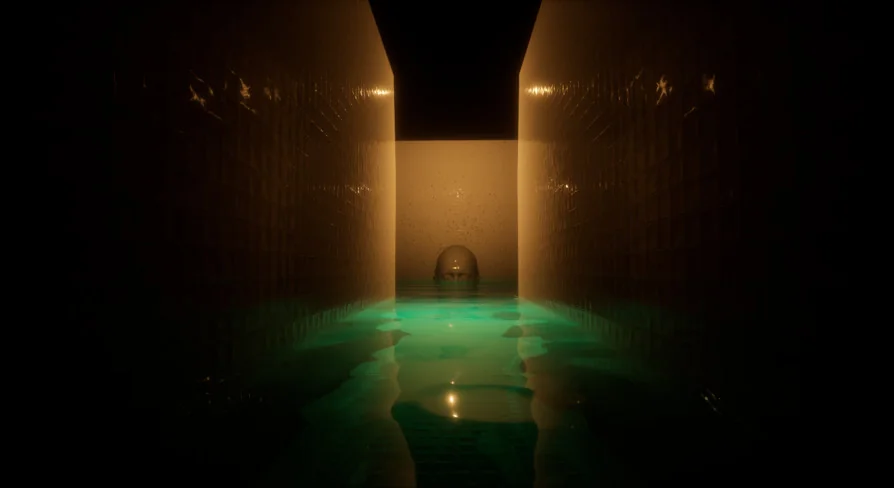
Testing and demonstration are divided across multiple maps. These include a main menu level, two showcase levels designed to test template mechanics, spline paths, and tentacle encounters, and two demonstration PoolRoom maps set during day and night cycles. Step sounds can be auditioned within the dedicated showcase mechanics map. Network replication is not present in the current framework, confining the toolset to dedicated single-player horror pipelines that prioritize responsive client-side animation layers and atmospheric tension.
 Simulation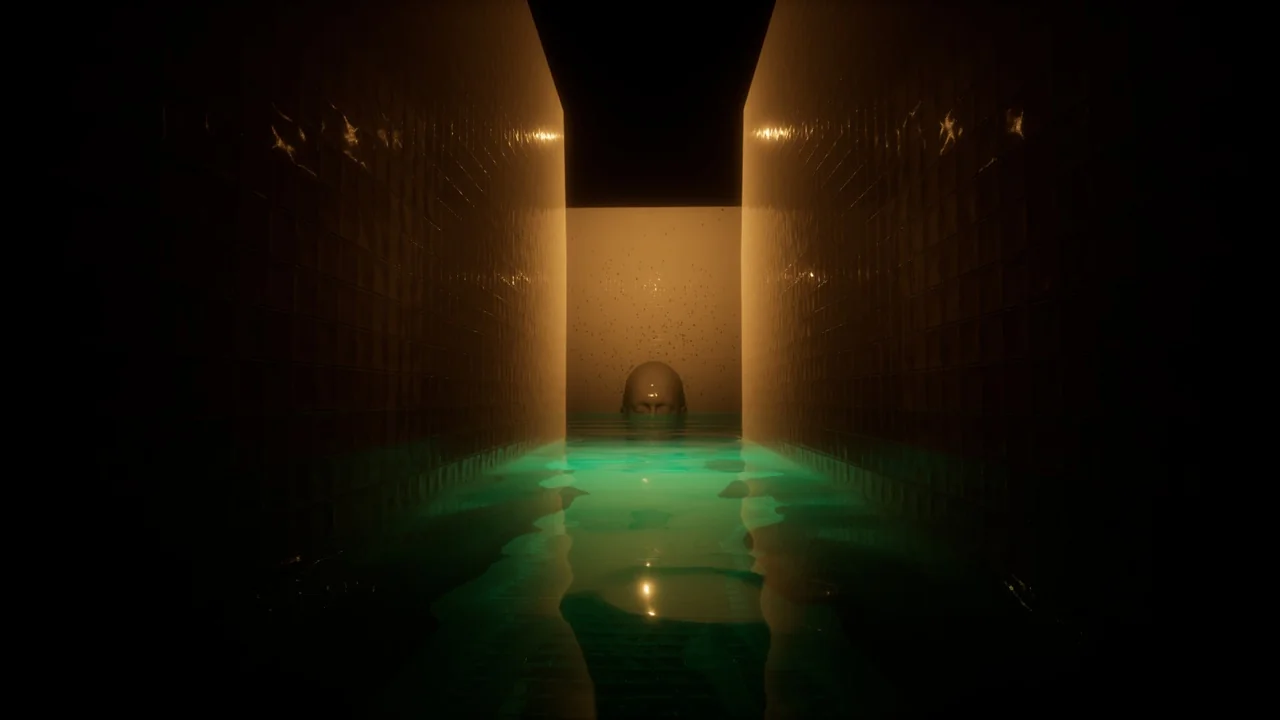
 Humans
 Shooter
 Combat