"82ee98b2ee2793f1"{"id":"1002432","slug":"dog-husky","title":"Dog - Husky","category":"Animals","engine":"4.20+,5.0+","assetVersion":"","engineVersion":"Engine Version: 4.20+,5.0+","tag":"Animals","accent":"blue","visual":"mech","summary":"Technical breakdown of the Dog - Husky asset, covering its 57-bone rig, LOD structure, 100+ animations, texture maps, and scene environment props.","platform":"Unreal Engine","indexPolicy":"index","publishedAt":"2026-11-10T18:29:06.959Z","updatedAt":"2026-11-10T18:29:06.959Z","sourceNotes":[],"fileContents":[],"compatibility":["Unreal Engine","Engine Version: 4.20+,5.0+"],"featuredImage":{"alt":"Dog - Husky","src":"/wp-content/uploads/published/2026/11/dfe64ae98f6e-5dc5b208-f9fe-4ace-96fe-36d17c81699c-9aab47c05a.webp"},"hasDownloadLink":true,"downloads":0,"terms":[{"taxonomy":"category","slug":"animals","name":"Animals"}],"galleryImages":[{"src":"/wp-content/uploads/published/2026/11/f7cd75fc050c-c2fac25a-85ff-46fc-869a-bc3fc280dcdc-d16072968e.webp","alt":"Dog - Husky"},{"src":"/wp-content/uploads/published/2026/11/5d099365d8aa-011756ed-7dd1-4d7a-8c25-8342a1b6c6f5-58b0011ca6.webp","alt":"Dog - Husky"},{"src":"/wp-content/uploads/published/2026/11/984be62db09c-891b1866-8935-4864-8c79-2e899a1a0cf3-f8c47c7bf0.webp","alt":"Dog - Husky"},{"src":"/wp-content/uploads/published/2026/11/efb3c82e692d-85c47b69-4051-4a97-b5be-a63d7e6e648e-48750410ba.webp","alt":"Dog - Husky"},{"src":"/wp-content/uploads/published/2026/11/4a8e66004099-8401583c-5c57-4528-b079-62c984cc7033-3f16f3239d.webp","alt":"Dog - Husky"},{"src":"/wp-content/uploads/published/2026/11/4ef49463682a-b4e94698-99ae-484c-9d6f-6407e63a3495-32b0469345.webp","alt":"Dog - Husky"},{"src":"/wp-content/uploads/published/2026/11/3947e02115e2-c8a2b6b9-49c9-495a-b588-9c1e6adb6d31-d53ddfbe34.webp","alt":"Dog - Husky"},{"src":"/wp-content/uploads/published/2026/11/34f3a7711699-d3ece0bc-e92e-4e9f-9ae7-129a2850c3a6-7806c67ccd.webp","alt":"Dog - Husky"},{"src":"/wp-content/uploads/published/2026/11/ca1bcf318d9f-68b0505d-256c-4fb5-b15b-376a6bae6c05-8e3ab6f43f.webp","alt":"Dog - Husky"},{"src":"/wp-content/uploads/published/2026/11/a9e5f5c1403e-1e54f611-7eb9-46f8-b95c-46c8793c12d7-65afdbce04.webp","alt":"Dog - Husky"}],"accessPanel":{"kind":"resource","title":"Get this resource","eyebrow":"Free resource","message":"Download this resource in your browser.","fileName":"Content.7z","safetyNote":"Resources are manually reviewed before listing to improve quality and reduce obvious risks.","actionLabel":"Get this resource","resourceType":"Resource archive","versions":[]},"contentHtml":"\u003ch2\u003eRig Configuration and Mesh Variations for the Husky Model\u003c/h2\u003e\u003cp\u003eIntegrating a quadrupeds into a real-time production pipeline begins with the underlying skeleton and geometry. The primary mesh of the Husky model is built upon a 57-bone skeletal structure, striking a balance between expressive anatomical movement and performance overhead. In its full-fidelity version, the geometry clocks in at 14,600 triangles. To accommodate dynamic camera distances and variable performance budgets, four discrete levels of details (LODs) are configured out of the box. Having these LODs enabled and pre-calibrated prevents sudden popping during scene transitions and ensures rendering efficiency when multiple animals are visible simultaneously.\u003c/p\u003e\u003cp\u003eHardware constraints often demand alternative geometry budgets. Alongside the primary asset, a dedicated lightweight mesh with 2,900 triangles is provided for mobile platforms. This variation retains the core silhouette and skeletal binding of the larger model while stripping unnecessary polygon density. Texturing is driven by standardized 2048x2048 resolution maps, encompassing an albedo map with an integrated alpha mask, an ambient occlusion / metallic / roughness composite map, and a tangent-space normal map. For rendering pipelines or engine shaders that struggle with transparent cutout overdraw, an alternative dog model without alpha channels is included, giving developers a solid opaque rendering path without additional texture repacking.\u003c/p\u003e\u003ch2\u003eLocomotion Layering Across Speeds and Directions\u003c/h2\u003e\u003cp\u003eLocomotion handling forms the core of any interactive creature setup. The asset supplies over 100 animations available in both In-Place (IP) and Root Motion (RM) configurations. Having pre-calculated root motion data allows precise physics tracking without footskate, while the in-place options offer direct integration with standard character controller velocity inputs. Locomotion is layered across four distinct speed tiers: walking, trotting, running, and fast running.\u003c/p\u003e\u003cp\u003eDirectionality is preserved across these gaits to facilitate responsive directional blend spaces:\u003c/p\u003e\u003cul\u003e\u003cli\u003eWalk cycles include forward, left, right, backward, backward-left, and backward-right vectors.\u003c/li\u003e\u003cli\u003eTrot animations supply forward, left, and right directional motion.\u003c/li\u003e\u003cli\u003eRun and run fast sets both cover forward, left, and right paths.\u003c/li\u003e\u003cli\u003eTurning mechanics feature standard left and right pivots, supplemented by dedicated 180-degree quick turns in either direction.\u003c/li\u003e\u003c/ul\u003e\u003cp\u003eBeyond standard upright movement, a complete crouch locomotion sub-tree is present. This includes crouch idle variations (1 and 2), crouch turning left and right, and six-directional crouch moving (forward, left, right, backward, backward-left, and backward-right). For water-based travel, the locomotion system provides dedicated swimming states featuring an entry transition followed by directional swimming forward, left, right, backward, backward-left, and backward-right.\u003c/p\u003e\u003ch2\u003eThe 15-Stage Traversal and Dog Jump System\u003c/h2\u003e\u003cp\u003eTraversing complex level architecture requires nuanced jump curves beyond one canned leaping clip. The pack introduces a 15-stage jump sequencing structure designed to map onto state-driven game engines. This modular pipeline breaks leaps down into distinct mechanical phases:\u003c/p\u003e\u003cul\u003e\u003cli\u003eLaunch states include a neutral start, a forward start, and an in-place launch.\u003c/li\u003e\u003cli\u003eAirborne trajectory curves supply fly-up, forward fly-up, and horizontal drift clips.\u003c/li\u003e\u003cli\u003eDescent trajectories are bifurcated into high and low altitude downward phases, with high-forward and low-forward variants.\u003c/li\u003e\u003cli\u003eLanding sequences offer generic recovery, forward-momentum landing, and stationary spot landings.\u003c/li\u003e\u003cli\u003eEdge interaction is addressed via specialized fall-off-edge transitions, accompanied by hooked-and-climbed recovery animations.\u003c/li\u003e\u003c/ul\u003e\u003cp\u003eFor simpler traversal logic that bypasses the 15-stage graph, independent jump animations are provided for forward leaps, running jumps, and jumping in place. This dual approach allows developers to implement complex contextual parkour for hero canines or fall back on standard three-phase jump triggers for secondary pack animals.\u003c/p\u003e\u003ch2\u003eState-Driven Behavioral Cycles and Idles\u003c/h2\u003e\u003cp\u003eSimulating believable creature behavior requires transitional logic that links rest states with physical activity. Rather than relying on rigid looping tracks, the animations for recurring actions feature discrete beginnings, cycles, and ends. Eating includes both a standard ingest cycle and an aggressive tear phase, while drinking uses a targeted intake loop. Resting mechanics are split between two distinct lying positions, two belly-down lying variations, a standard curled sleep, and a flat belly sleep posture. Each posture possesses dedicated transition paths into and out of the active states.\u003c/p\u003e\u003cp\u003eStationary downtime is expanded through seven separate idle variations, preventing repetitive visual rhythms when the creature remains idle in a scene. The sitting sequence includes start frames, two sitting idle variations, and a clean stand-up exit. Specialized one-shot clips round out domestic canine behaviors: a full ground-digging sequence (start, loop, and end), ear scratching, barking, and object pick-up interactions. These state breaks allow animators to script domestic routines or trigger responsive domestic behaviors based on player proximity.\u003c/p\u003e\u003ch2\u003eCombat Interactions and Scene Construction Props\u003c/h2\u003e\u003cp\u003eHostile encounters and impact reactions are accounted for with dedicated action clips. Offensive sets incorporate biting actions delivered from stationary stances, running bites, directional bites to the left and right, and an airborne jumping bite. Damage feedback is organized across three anatomical zones: front hits, middle impacts, and rear reactions. Defeat states are resolved through directional death animations to the left or right, matching physical momentum during combat exchanges.\u003c/p\u003e\u003cp\u003eTo contextualize the canine inside domestic, Arctic, or Siberian environments, the package incorporates several environmental props. Builders can assemble animal enclosures and living quarters using modular dog barriers, dedicated dog houses, resting mats, and pet beds. Interaction sequences integrate directly with accessory assets such as food and water bowls, alongside chew toys. These secondary meshes allow level designers to dress functional domestic scenes, kennels, or outdoor working compounds using assets scaled specifically to the Husky rig.\u003c/p\u003e\n\n\u003ch2\u003eExplore Similar Assets\u003c/h2\u003e\n\u003cul\u003e\n\u003cli\u003e\u003ca href=\"https://3dcghub.com/puppy-shepherd/\" rel=\"noopener noreferrer\"\u003ePuppy - Shepherd\u003c/a\u003e\u003c/li\u003e\n\u003cli\u003e\u003ca href=\"https://3dcghub.com/cute-hamsters/\" rel=\"noopener noreferrer\"\u003eCute Hamsters\u003c/a\u003e\u003c/li\u003e\n\u003cli\u003e\u003ca href=\"https://3dcghub.com/asian-animal-tiger/\" rel=\"noopener noreferrer\"\u003eAsian Animal - Tiger\u003c/a\u003e\u003c/li\u003e\n\u003cli\u003e\u003ca href=\"https://3dcghub.com/stylized-fantasy-creatures-bundle/\" rel=\"noopener noreferrer\"\u003eStylized Fantasy Creatures Bundle\u003c/a\u003e\u003c/li\u003e\n\u003cli\u003e\u003ca href=\"https://3dcghub.com/raptor-dinosaur-animated/\" rel=\"noopener noreferrer\"\u003eRaptor Dinosaur Animated\u003c/a\u003e\u003c/li\u003e\n\u003c/ul\u003e","contentTextLength":6545,"navigation":{"current":18,"total":4372,"previous":{"id":"1002433","slug":"flamingo-animated","title":"Flamingo Animated","category":"Birds","platform":"Unreal Engine","updatedAt":"2026-11-10T18:29:46.252Z"},"next":{"id":"1002431","slug":"dinosaur-stegosaurus","title":"Dinosaur Stegosaurus","category":"Characters \u0026 Creatures","platform":"Unreal Engine","updatedAt":"2026-11-10T18:27:24.656Z"}},"relatedResources":[{"id":"1000961","slug":"puppy-shepherd","title":"Puppy - Shepherd","category":"Animals","engine":"5.0+","assetVersion":"","engineVersion":"Engine Version: 5.0+","tag":"Animals","accent":"blue","visual":"mech","summary":"Rigged shepherd puppy model for real-time projects, with 75 animations, 4 LODs, 2048x2048 PBR textures, a mobile-friendly mesh, and dog accessories.","platform":"Unreal Engine","indexPolicy":"index","publishedAt":"2026-08-14T15:44:12.217Z","updatedAt":"2026-08-14T15:44:12.217Z","sourceNotes":[],"fileContents":[],"compatibility":["Unreal Engine","Engine Version: 5.0+"],"featuredImage":{"alt":"Puppy - Shepherd","src":"https://media.fab.com/image_previews/gallery_images/81eb8820-5970-4299-a319-1b9a5ed0d172/e16e67cf-7836-42c4-aa57-a6ead5d11b88.png"},"hasDownloadLink":true,"downloads":1},{"id":"1002313","slug":"cute-hamsters","title":"Cute Hamsters","category":"Animals","engine":"4.20+,5.0+","assetVersion":"","engineVersion":"Engine Version: 4.20+,5.0+","tag":"Animals","accent":"blue","visual":"mech","summary":"Cute Hamsters packs 31 hamster characters and 12 animations, with a Unity3D animation example and a UE version that omits the script and Toon shader.","platform":"Unreal Engine","indexPolicy":"index","publishedAt":"2026-11-06T06:15:37.558Z","updatedAt":"2026-11-06T06:15:37.558Z","sourceNotes":[],"fileContents":[],"compatibility":["Unreal Engine","Engine Version: 4.20+,5.0+"],"featuredImage":{"alt":"Cute Hamsters","src":"/wp-content/uploads/published/2026/11/cd85b9463262-766c2630-3b0e-416b-a94d-4f2be305d982-f7b99950c0.webp"},"hasDownloadLink":true,"downloads":0},{"id":"1000244","slug":"asian-animal-tiger","title":"Asian Animal - Tiger","category":"Animals","engine":"4.26+,5.0+","assetVersion":"","engineVersion":"Engine Version: 4.26+,5.0+","tag":"Animals","accent":"blue","visual":"mech","summary":"A highly detailed 3D tiger model featuring three LOD variations, 4K textures, a 37-bone rig, and 53 unique animations for realistic wildlife environments.","platform":"Unreal Engine","indexPolicy":"index","publishedAt":"2026-06-30T19:57:16.638Z","updatedAt":"2026-06-30T19:57:16.638Z","sourceNotes":[],"fileContents":[],"compatibility":["Unreal Engine","Engine Version: 4.26+,5.0+"],"featuredImage":{"alt":"Asian Animal - Tiger","src":"/wp-content/uploads/published/2026/06/88b3fb6ce8d3-9bce027c-37b2-4452-a053-04a73a2eff55-838ca9c79f.webp"},"hasDownloadLink":true,"downloads":0}]}
Animals
Dog - Husky
Technical breakdown of the Dog - Husky asset, covering its 57-bone rig, LOD structure, 100+ animations, texture maps, and scene environment props.
Category:Unreal Engine,AnimalsPlatform: Unreal EngineEngine Version: 4.20+,5.0+Published: Nov 10, 2026
Animals
Resource overview
Rig Configuration and Mesh Variations for the Husky Model
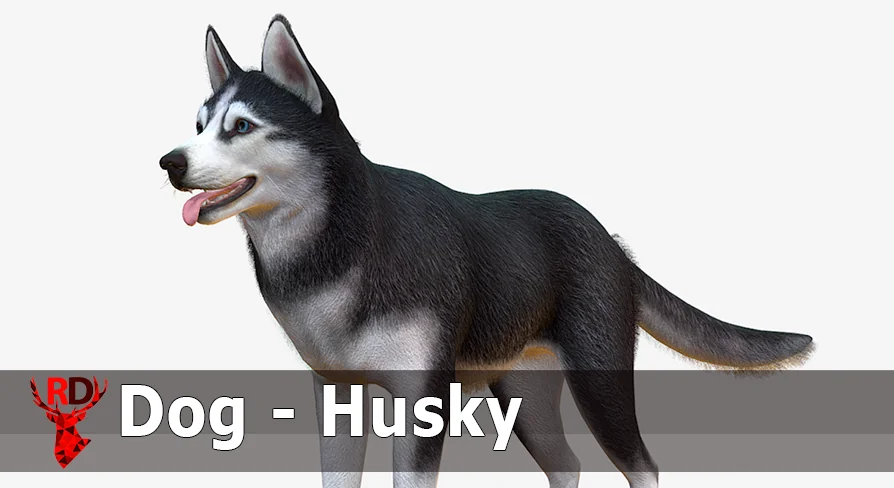
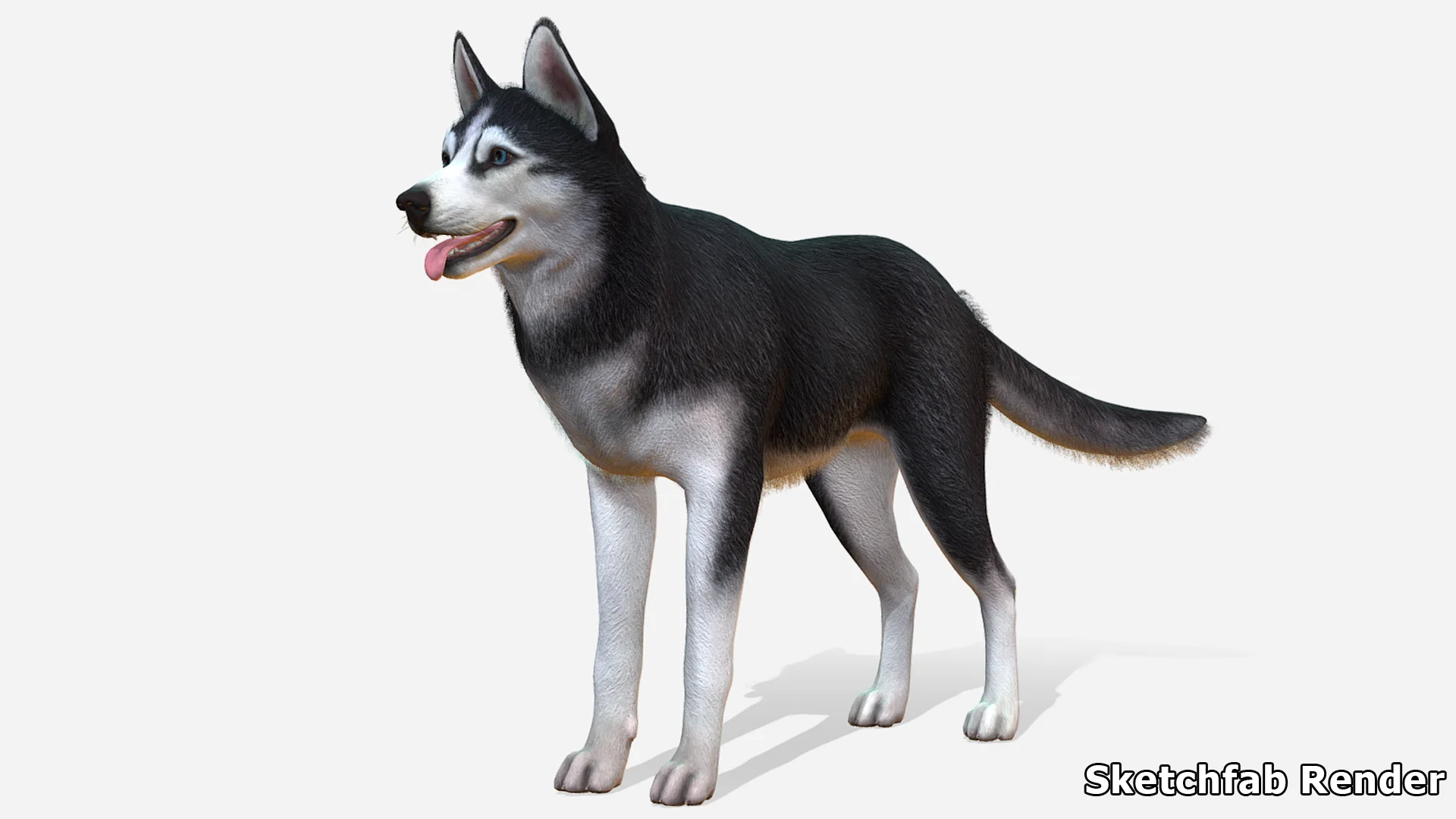
Integrating a quadrupeds into a real-time production pipeline begins with the underlying skeleton and geometry. The primary mesh of the Husky model is built upon a 57-bone skeletal structure, striking a balance between expressive anatomical movement and performance overhead. In its full-fidelity version, the geometry clocks in at 14,600 triangles. To accommodate dynamic camera distances and variable performance budgets, four discrete levels of details (LODs) are configured out of the box. Having these LODs enabled and pre-calibrated prevents sudden popping during scene transitions and ensures rendering efficiency when multiple animals are visible simultaneously.
Hardware constraints often demand alternative geometry budgets. Alongside the primary asset, a dedicated lightweight mesh with 2,900 triangles is provided for mobile platforms. This variation retains the core silhouette and skeletal binding of the larger model while stripping unnecessary polygon density. Texturing is driven by standardized 2048x2048 resolution maps, encompassing an albedo map with an integrated alpha mask, an ambient occlusion / metallic / roughness composite map, and a tangent-space normal map. For rendering pipelines or engine shaders that struggle with transparent cutout overdraw, an alternative dog model without alpha channels is included, giving developers a solid opaque rendering path without additional texture repacking.
Locomotion Layering Across Speeds and Directions
Locomotion handling forms the core of any interactive creature setup. The asset supplies over 100 animations available in both In-Place (IP) and Root Motion (RM) configurations. Having pre-calculated root motion data allows precise physics tracking without footskate, while the in-place options offer direct integration with standard character controller velocity inputs. Locomotion is layered across four distinct speed tiers: walking, trotting, running, and fast running.
Directionality is preserved across these gaits to facilitate responsive directional blend spaces:
Walk cycles include forward, left, right, backward, backward-left, and backward-right vectors.
Trot animations supply forward, left, and right directional motion.
Run and run fast sets both cover forward, left, and right paths.
Turning mechanics feature standard left and right pivots, supplemented by dedicated 180-degree quick turns in either direction.
Beyond standard upright movement, a complete crouch locomotion sub-tree is present. This includes crouch idle variations (1 and 2), crouch turning left and right, and six-directional crouch moving (forward, left, right, backward, backward-left, and backward-right). For water-based travel, the locomotion system provides dedicated swimming states featuring an entry transition followed by directional swimming forward, left, right, backward, backward-left, and backward-right.
The 15-Stage Traversal and Dog Jump System
Traversing complex level architecture requires nuanced jump curves beyond one canned leaping clip. The pack introduces a 15-stage jump sequencing structure designed to map onto state-driven game engines. This modular pipeline breaks leaps down into distinct mechanical phases:
Launch states include a neutral start, a forward start, and an in-place launch.
Edge interaction is addressed via specialized fall-off-edge transitions, accompanied by hooked-and-climbed recovery animations.
For simpler traversal logic that bypasses the 15-stage graph, independent jump animations are provided for forward leaps, running jumps, and jumping in place. This dual approach allows developers to implement complex contextual parkour for hero canines or fall back on standard three-phase jump triggers for secondary pack animals.
State-Driven Behavioral Cycles and Idles
Simulating believable creature behavior requires transitional logic that links rest states with physical activity. Rather than relying on rigid looping tracks, the animations for recurring actions feature discrete beginnings, cycles, and ends. Eating includes both a standard ingest cycle and an aggressive tear phase, while drinking uses a targeted intake loop. Resting mechanics are split between two distinct lying positions, two belly-down lying variations, a standard curled sleep, and a flat belly sleep posture. Each posture possesses dedicated transition paths into and out of the active states.
Stationary downtime is expanded through seven separate idle variations, preventing repetitive visual rhythms when the creature remains idle in a scene. The sitting sequence includes start frames, two sitting idle variations, and a clean stand-up exit. Specialized one-shot clips round out domestic canine behaviors: a full ground-digging sequence (start, loop, and end), ear scratching, barking, and object pick-up interactions. These state breaks allow animators to script domestic routines or trigger responsive domestic behaviors based on player proximity.
Combat Interactions and Scene Construction Props
Hostile encounters and impact reactions are accounted for with dedicated action clips. Offensive sets incorporate biting actions delivered from stationary stances, running bites, directional bites to the left and right, and an airborne jumping bite. Damage feedback is organized across three anatomical zones: front hits, middle impacts, and rear reactions. Defeat states are resolved through directional death animations to the left or right, matching physical momentum during combat exchanges.
To contextualize the canine inside domestic, Arctic, or Siberian environments, the package incorporates several environmental props. Builders can assemble animal enclosures and living quarters using modular dog barriers, dedicated dog houses, resting mats, and pet beds. Interaction sequences integrate directly with accessory assets such as food and water bowls, alongside chew toys. These secondary meshes allow level designers to dress functional domestic scenes, kennels, or outdoor working compounds using assets scaled specifically to the Husky rig.
 Animals
 Animals
 Animals
 Animals