"c14ff6bd758dadb1"{"id":"1001065","slug":"raptor-dinosaur-animated","title":"Raptor Dinosaur Animated","category":"Animals","engine":"4.26+,5.0+","assetVersion":"","engineVersion":"Engine Version: 4.26+,5.0+","tag":"Animals","accent":"blue","visual":"mech","summary":"Dromaeosaurus animated model with 150+ animations, 5 LOD stages, 4096-pixel textures, UE4 ragdoll, and HumanIK FBX files for retargeting.","platform":"Unreal Engine","publishedAt":"2026-09-03T16:02:56.829Z","updatedAt":"2026-09-03T16:02:56.829Z","sourceNotes":[],"fileContents":[],"compatibility":["Unreal Engine","Engine Version: 4.26+,5.0+"],"featuredImage":{"alt":"Raptor Dinosaur Animated","src":"/wp-content/uploads/published/2026/09/b2c8cf21982a-6c8db538-21ee-4c01-aed5-6eb7cbbd1ba5-03c2b8519d.webp"},"hasDownloadLink":true,"downloads":1,"terms":[{"taxonomy":"category","slug":"animals","name":"Animals"}],"galleryImages":[{"src":"/wp-content/uploads/published/2026/09/295ac5fd2f9d-3dc8ec5a-12c6-4aae-b73e-39ea5966f409-9e3c0fde5a.webp","alt":"Raptor Dinosaur Animated"},{"src":"/wp-content/uploads/published/2026/09/493e35504a4a-12825015-8554-4396-8ea4-0f3a60aeb4b3-0f2f5c1b65.webp","alt":"Raptor Dinosaur Animated"},{"src":"/wp-content/uploads/published/2026/09/032f97b3bbce-03020ef1-2be9-4d7b-a67a-21892da1f7ca-64ddf08990.webp","alt":"Raptor Dinosaur Animated"},{"src":"/wp-content/uploads/published/2026/09/a1a66ab617ff-f9308430-5365-4776-8fb1-855bbc52525e-ba050a8f76.webp","alt":"Raptor Dinosaur Animated"},{"src":"/wp-content/uploads/published/2026/09/19ff2a9b4b7f-3c97b684-90ea-442c-a130-4cb9da7a02f3-0802c3f783.webp","alt":"Raptor Dinosaur Animated"},{"src":"/wp-content/uploads/published/2026/09/e33d25e760d3-c4561afe-77d1-4358-a13b-1c10fab4c0d5-3df35a1880.webp","alt":"Raptor Dinosaur Animated"},{"src":"/wp-content/uploads/published/2026/09/75a6323df282-a8d083b5-3453-4047-8c5a-4c8717bda60e-826a1537ee.webp","alt":"Raptor Dinosaur Animated"}],"accessPanel":{"kind":"resource","title":"Download this resource","eyebrow":"Free Download","message":"Log in or create a free account to start your download.","fileName":"Content.7z","safetyNote":"Resources are manually reviewed before listing to improve quality and reduce obvious risks.","actionLabel":"Download Free","resourceType":"Resource archive"},"contentHtml":"\u003ch2\u003eA Dromaeosaurus Pack, Deliberately Minus the Controller\u003c/h2\u003e\u003cp\u003eCreature work in games rarely ends at the skeleton. The real production weight sits in how many behaviors the animal can cycle through, and whether those animations can survive contact with the player or the level geometry. This Raptor Dinosaur Animated pack takes on the motion side of that problem with a fully rigged Dromaeosaurus, but it deliberately stops short of delivering a character controller. What arrives is over 150 animations, multiple LOD models, and a set of source files aimed at teams who already have their own movement framework or want to build one rather than inherit a canned one.\u003c/p\u003e\u003cp\u003eThat boundary is worth respecting during planning. Because the pack contains only animations and the models that run them, it fits cleanly into an existing character setup. For an Unreal Engine project, the included PhysicsAsset gives the death states a physical fallback without needing any extra configuration.\u003c/p\u003e\u003ch2\u003eTwo LOD Paths for Cutscene and Gameplay Raptors\u003c/h2\u003e\u003cp\u003eThe Dromaeosaurus is delivered with two distinct model layouts. One is a higher-polygon-count model with two LOD stages, clearly aimed at cutscenes where cameras can push close to the creature and see its surface detail. The other is a three-stage LOD model intended for gameplay, so the raptor can keep performance under control as it moves through dense levels or appears alongside other actors.\u003c/p\u003e\u003cp\u003eKeeping those two paths separate is a practical move. A cinematic dinosaur does not have to share its geometry budget with a creature that might be one of several on screen, and the gameplay rig can swap between three draw distances without forcing the cutscene asset to do double duty.\u003c/p\u003e\u003ch2\u003e4096×4096 Maps on a Creature Built for Close-Up Work\u003c/h2\u003e\u003cp\u003eTexture coverage arrives as Diffuse, Specular, and Normal maps at 4096×4096 resolution. That level of detail is especially relevant for the cutscene-oriented model, where the camera might catch the raptor’s face, claws, or flank in direct light. The Normal map carries surface undulation, the Specular map gives the skin a different response under wet or dry lighting, and the Diffuse supplies the base color pattern across the body.\u003c/p\u003e\u003cp\u003eBecause the same assets are used on both cutscene and gameplay LODs, a close-up in a scripted moment should look consistent with the creature that the player sees during combat.\u003c/p\u003e\u003ch2\u003eThe Animation Set: From Climbing to Death States\u003c/h2\u003e\u003cp\u003eOver 150 gameplay animations are included, and the breadth of the list points to a dinosaur that is meant to feel alive in more than just chase sequences. The movement set covers walking, running, jumping, swimming, and diving, so the raptor can cross a stream or climb a rock face using the same character rig. Climbing and diving are less common in off-the-shelf dinosaur packs, and their presence widens the range of environments where the asset can be placed.\u003c/p\u003e\u003cp\u003eCombat and death have their own clusters. Fighting animations cover attacks, deaths produce collapse states, and eating, sleeping, and digging round out the non-combat loops. These are the kinds of animations that let a creature behave like an animal between action beats rather than a permanently alert enemy.\u003c/p\u003e\u003ch2\u003eRagdoll, FBX Sources, and a HumanIK Rig for Retargeting\u003c/h2\u003e\u003cp\u003eA configured UE4 ragdoll PhysicsAsset is part of the delivery. That means when the raptor dies from a heavy hit, the body can transition into the physics simulation without the team hand-placing collision shapes on a new skeleton.\u003c/p\u003e\u003cp\u003eThe pack also includes all FBX source files, rigged with a HumanIK setup. Studios working in Maya or MotionBuilder can retarget the existing animation to another skeleton of similar proportions, or take the raptor’s motion data onto a custom hero rig. Opening the asset in a DCC tool grants immediate access to the source scene rather than forcing every edit through the game engine.\u003c/p\u003e\u003cp\u003eFor an Unreal production, the absence of a controller is not an absence of support. The content arrives ready to be dropped into an animation blueprint, while the cutscene-specific LOD can be loaded in Sequencer using existing engine workflows. Teams that need a complete creature behavior system will still need to wire the inputs themselves. Teams that already have one will find this Dromaeosaurus prepared to fill the animation slots.\u003c/p\u003e\n\n\u003ch2\u003eExplore Similar Assets\u003c/h2\u003e\n\u003cul\u003e\n\u003cli\u003e\u003ca href=\"https://3dcghub.com/dinosaur-mosasaurus-sea-monster-series-4/\" title=\"Dinosaur Mosasaurus - Sea Monster Series 4\"\u003eDinosaur Mosasaurus - Sea Monster Series 4\u003c/a\u003e\u003c/li\u003e\n\u003cli\u003e\u003ca href=\"https://3dcghub.com/galapagos-tortoise/\" title=\"Galapagos Tortoise\"\u003eGalapagos Tortoise\u003c/a\u003e\u003c/li\u003e\n\u003cli\u003e\u003ca href=\"https://3dcghub.com/animal-pack-ultra/\" title=\"Animal Pack Ultra\"\u003eAnimal Pack Ultra\u003c/a\u003e\u003c/li\u003e\n\u003cli\u003e\u003ca href=\"https://3dcghub.com/rog-creatures-wolf/\" title=\"ROG Creatures: Wolf\"\u003eROG Creatures: Wolf\u003c/a\u003e\u003c/li\u003e\n\u003cli\u003e\u003ca href=\"https://3dcghub.com/animal-pack-ultra-2/\" title=\"Animal Pack Ultra 2\"\u003eAnimal Pack Ultra 2\u003c/a\u003e\u003c/li\u003e\n\u003c/ul\u003e","contentTextLength":4448,"navigation":{"current":765,"total":3719,"previous":{"id":"1001066","slug":"roadside-vol-1-blockades-nanite-and-low-poly-versions-2","title":"Roadside VOL.1 - Blockades (Nanite and Low Poly Versions)","category":"Rocks \u0026 Stones","platform":"Unreal Engine","updatedAt":"2026-09-03T16:20:18.807Z"},"next":{"id":"1001064","slug":"post-apocalyptic-desert","title":"Post Apocalyptic Desert","category":"Apocalyptic / Post-apocalyptic","platform":"Unreal Engine","updatedAt":"2026-09-03T15:10:50.530Z"}},"relatedResources":[{"id":"1000296","slug":"galapagos-tortoise","title":"Galapagos Tortoise","category":"Animals","engine":"4.27,5.0+","assetVersion":"","engineVersion":"Engine Version: 4.27,5.0+","tag":"Animals","accent":"blue","visual":"mech","summary":"A fully rigged and animated Galapagos Tortoise built for realistic savanna environments, featuring 2K textures, two skin variants, and 9 in-place animations.","platform":"Unreal Engine","publishedAt":"2026-07-03T17:49:30.825Z","updatedAt":"2026-07-03T17:49:30.825Z","sourceNotes":[],"fileContents":[],"compatibility":["Unreal Engine","Engine Version: 4.27,5.0+"],"featuredImage":{"alt":"Galapagos Tortoise","src":"/wp-content/uploads/published/2026/07/a7b1192e2894-e7a4c613-1160-4e14-8d80-a053ff63e151-32f5350a0c.webp"},"hasDownloadLink":true,"downloads":0},{"id":"2225","slug":"dinosaur-mosasaurus-sea-monster-series-4","title":"Dinosaur Mosasaurus - Sea Monster Series 4","category":"Characters \u0026 Creatures","engine":"4.26+,5.0+","assetVersion":"Engine version: 4.26+,5.0+","engineVersion":"4.26","tag":"Characters","accent":"blue","visual":"character","summary":"Enhance your game with this realistic Mosasaurus 3D model. Featuring 8K PBR textures and extensive swimming animations, it is perfect for prehistoric scenes.","platform":"Unreal Engine","publishedAt":"2026-02-07T08:32:27.000Z","updatedAt":"2026-04-19T15:58:05.000Z","sourceNotes":[],"fileContents":[],"compatibility":["Unreal Engine","Engine version: 4.26+,5.0+"],"featuredImage":{"alt":"Dinosaur Mosasaurus - Sea Monster Series 4","src":"https://3dcghub.com/wp-content/uploads/2026/02/5c10d787-54b9-419d-80fe-ded31fe8b559.webp"},"hasDownloadLink":true,"downloads":0},{"id":"1001602","slug":"stegosaurus","title":"Stegosaurus","category":"Animals","engine":"5.0+","assetVersion":"","engineVersion":"Engine Version: 5.0+","tag":"Animals","accent":"blue","visual":"mech","summary":"Animated 3D Stegosaurus asset featuring 78 animations, four LOD stages, 4096x4096 PBR textures, and five distinct skin color material instances.","platform":"Unreal Engine","publishedAt":"2026-10-10T16:23:41.255Z","updatedAt":"2026-10-10T16:23:41.255Z","sourceNotes":[],"fileContents":[],"compatibility":["Unreal Engine","Engine Version: 5.0+"],"featuredImage":{"alt":"Stegosaurus","src":"/wp-content/uploads/published/2026/10/ec1efaa8fab8-1a680d75-f983-45fa-9baf-2e4e46ac0bbb-6d487a56e4.webp"},"hasDownloadLink":true,"downloads":0}]}
Animals
Raptor Dinosaur Animated
Dromaeosaurus animated model with 150+ animations, 5 LOD stages, 4096-pixel textures, UE4 ragdoll, and HumanIK FBX files for retargeting.
A Dromaeosaurus Pack, Deliberately Minus the Controller
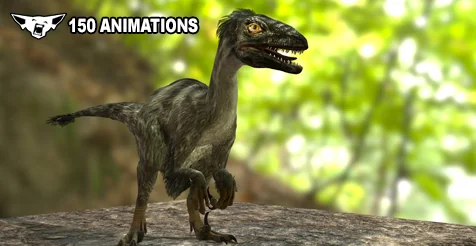
Creature work in games rarely ends at the skeleton. The real production weight sits in how many behaviors the animal can cycle through, and whether those animations can survive contact with the player or the level geometry. This Raptor Dinosaur Animated pack takes on the motion side of that problem with a fully rigged Dromaeosaurus, but it deliberately stops short of delivering a character controller. What arrives is over 150 animations, multiple LOD models, and a set of source files aimed at teams who already have their own movement framework or want to build one rather than inherit a canned one.
That boundary is worth respecting during planning. Because the pack contains only animations and the models that run them, it fits cleanly into an existing character setup. For an Unreal Engine project, the included PhysicsAsset gives the death states a physical fallback without needing any extra configuration.
Two LOD Paths for Cutscene and Gameplay Raptors
The Dromaeosaurus is delivered with two distinct model layouts. One is a higher-polygon-count model with two LOD stages, clearly aimed at cutscenes where cameras can push close to the creature and see its surface detail. The other is a three-stage LOD model intended for gameplay, so the raptor can keep performance under control as it moves through dense levels or appears alongside other actors.
Keeping those two paths separate is a practical move. A cinematic dinosaur does not have to share its geometry budget with a creature that might be one of several on screen, and the gameplay rig can swap between three draw distances without forcing the cutscene asset to do double duty.
4096×4096 Maps on a Creature Built for Close-Up Work
Texture coverage arrives as Diffuse, Specular, and Normal maps at 4096×4096 resolution. That level of detail is especially relevant for the cutscene-oriented model, where the camera might catch the raptor’s face, claws, or flank in direct light. The Normal map carries surface undulation, the Specular map gives the skin a different response under wet or dry lighting, and the Diffuse supplies the base color pattern across the body.
Because the same assets are used on both cutscene and gameplay LODs, a close-up in a scripted moment should look consistent with the creature that the player sees during combat.
The Animation Set: From Climbing to Death States
Over 150 gameplay animations are included, and the breadth of the list points to a dinosaur that is meant to feel alive in more than just chase sequences. The movement set covers walking, running, jumping, swimming, and diving, so the raptor can cross a stream or climb a rock face using the same character rig. Climbing and diving are less common in off-the-shelf dinosaur packs, and their presence widens the range of environments where the asset can be placed.
Combat and death have their own clusters. Fighting animations cover attacks, deaths produce collapse states, and eating, sleeping, and digging round out the non-combat loops. These are the kinds of animations that let a creature behave like an animal between action beats rather than a permanently alert enemy.
Ragdoll, FBX Sources, and a HumanIK Rig for Retargeting
A configured UE4 ragdoll PhysicsAsset is part of the delivery. That means when the raptor dies from a heavy hit, the body can transition into the physics simulation without the team hand-placing collision shapes on a new skeleton.
The pack also includes all FBX source files, rigged with a HumanIK setup. Studios working in Maya or MotionBuilder can retarget the existing animation to another skeleton of similar proportions, or take the raptor’s motion data onto a custom hero rig. Opening the asset in a DCC tool grants immediate access to the source scene rather than forcing every edit through the game engine.
For an Unreal production, the absence of a controller is not an absence of support. The content arrives ready to be dropped into an animation blueprint, while the cutscene-specific LOD can be loaded in Sequencer using existing engine workflows. Teams that need a complete creature behavior system will still need to wire the inputs themselves. Teams that already have one will find this Dromaeosaurus prepared to fill the animation slots.
 Animals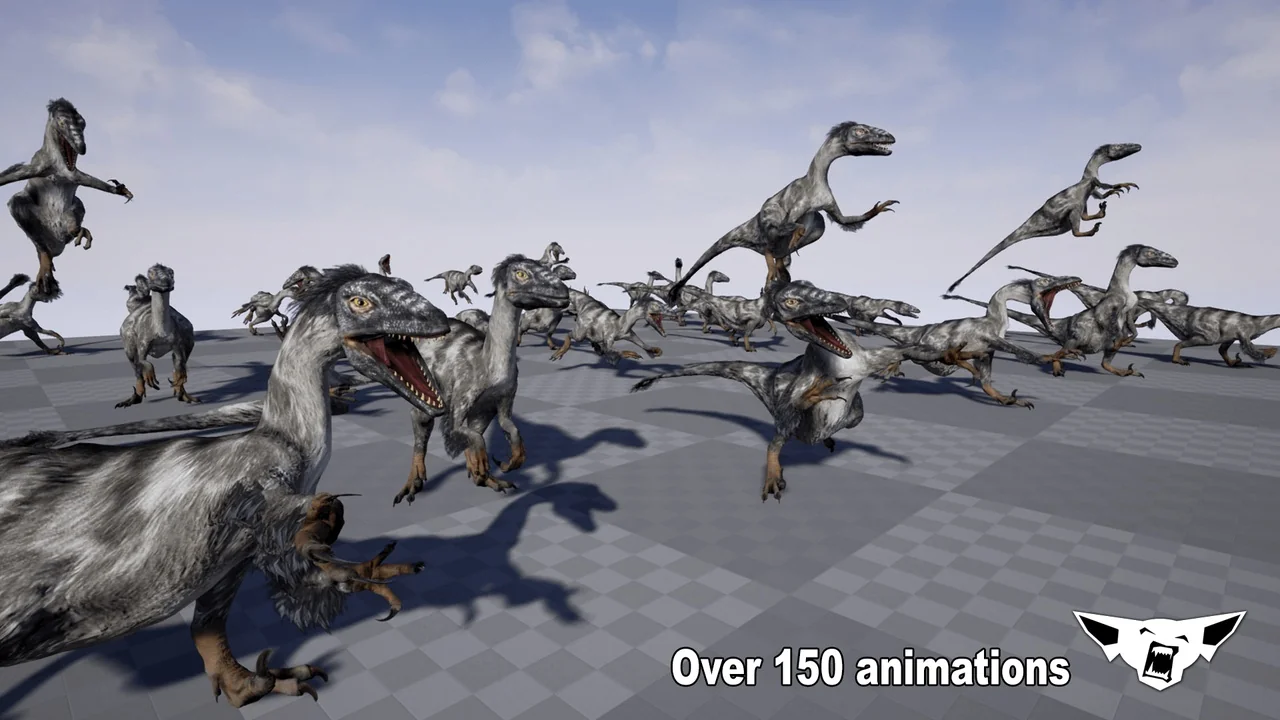
 Animals
 Characters
 Animals