"ae2217ad8e73450c"{"id":"1003025","slug":"crafting-animations","title":"Crafting Animations","category":"Gestures","engine":"4.20+,5.0+","assetVersion":"","engineVersion":"Engine Version: 4.20+,5.0+","tag":"Gestures","accent":"blue","visual":"animation","summary":"Explore character crafting animations covering blacksmithing, cooking, alchemy, mining, pottery, and resource gathering for fantasy and building games.","platform":"Unreal Engine","indexPolicy":"index","publishedAt":"2026-11-25T16:29:35.560Z","updatedAt":"2026-11-25T16:29:35.560Z","sourceNotes":[],"fileContents":[],"compatibility":["Unreal Engine","Engine Version: 4.20+,5.0+"],"featuredImage":{"alt":"Crafting Animations","src":"/wp-content/uploads/published/2026/11/e4a480fb26c0-98197d6b-d711-4a7b-a9bc-929dadbe9f76-d6e9fcc7af.webp"},"hasDownloadLink":true,"downloads":0,"terms":[{"taxonomy":"category","slug":"gestures","name":"Gestures"}],"galleryImages":[{"src":"/wp-content/uploads/published/2026/11/104a6dbe4d90-bf85865c-c9a5-4b78-938e-0ba30254c63a-d6da5273f1.webp","alt":"Crafting Animations"},{"src":"/wp-content/uploads/published/2026/11/f217bf52b6e9-f5250f82-bfb1-4ea0-ac9f-dc117e78e4fe-4408d14ea0.webp","alt":"Crafting Animations"},{"src":"/wp-content/uploads/published/2026/11/2581b83df7c9-a80521b4-4a9d-4d95-8f60-37faad4bead6-b83dd42d9b.webp","alt":"Crafting Animations"},{"src":"/wp-content/uploads/published/2026/11/16195f322b35-9755340e-d0e0-4fed-8264-a5d4626850d2-c2fc6ec8e7.webp","alt":"Crafting Animations"},{"src":"/wp-content/uploads/published/2026/11/7938869e5b4a-10d8af10-6702-41f1-b2dc-f138cd723110-a9253ce6be.webp","alt":"Crafting Animations"},{"src":"/wp-content/uploads/published/2026/11/1e9de2331c86-00d089e0-e8b8-4ab0-b7c5-8aadf1f03377-977c89e1ab.webp","alt":"Crafting Animations"},{"src":"/wp-content/uploads/published/2026/11/a24cf3b05b57-4f361000-9239-4d4a-8514-399dbe31fa34-d7ef88aff8.webp","alt":"Crafting Animations"}],"accessPanel":{"kind":"resource","title":"Get this resource","safetyNote":"Resources are manually reviewed before listing to improve quality and reduce obvious risks.","fileName":"Content.7z","resourceType":"Resource archive","versions":[]},"contentHtml":"\u003cp\u003ePopulating a fantasy or survival world requires believable character interaction with work environments. Static workbenches and simple progress bars break immersion when players step up to an anvil, a stove, or an alchemical table. Crafting Animations provides physical movements tailored to character trades, translating inventory recipes into recognizable, embodied routines. By giving characters distinct gestures for manipulating tools, tending stations, and harvesting raw goods, virtual worlds gain the grounding necessary for compelling roleplay, settlement management, and player-driven production loops.\u003c/p\u003e \u003ch2\u003eBlacksmithing Workstations in Crafting Animations\u003c/h2\u003e\n\u003cp\u003eMetalworking stands at the center of fantasy equipment progression, and the pack structures blacksmithing around several distinct sub-stations. The forge represents thermal preparation, capturing the character standing before the heat source, managing implements, and timing the heating of raw stock. Without specialized forge postures, characters often look disconnected from the physical reality of melting ore or softening ingots.\u003c/p\u003e\n\u003cp\u003eHammering completes the primary shaping cycle. The rhythm of swinging a smithing hammer onto an anvil establishes a cadence that can tie into crafting mini-games or audio-visual feedback loops. The character's arm strike, posture balance, and repeated contact with the surface communicate weight and force. When moving from rough shaping to refining, the grindstone movement shifts focus toward precision. Standing or leaning into the spinning stone, the character holds an edge against the wheel, creating a logical transition between hot forging and finishing blade or tool durability.\u003c/p\u003e \u003ch2\u003eAlchemical Mixing and Culinary Crafting Workflows\u003c/h2\u003e\n\u003cp\u003ePreparing consumables relies on fine motor manipulation rather than heavy strikes. The potion creation routines present the calculated movements of an alchemist handling vessels, measuring elements, and combining reagents to produce elixirs. Accompanying this is the mortar and pestle action, where repetitive manual crushing reduces solid ingredients, herbs, and minerals into fine powders. This establishes a preparatory phase before liquids are mixed, offering clear visual stages for potion workshops.\u003c/p\u003e\n\u003cp\u003eCulinary stations expand consumable crafting into kitchen and campfire settings:\u003c/p\u003e\n\u003cul\u003e\n\u003cli\u003e\u003cstrong\u003eFrying Pan:\u003c/strong\u003e Captures close stovetop or hearth cooking, with active wrist and arm motions used to agitate, flip, or stir ingredients over a hot surface.\u003c/li\u003e\n\u003cli\u003e\u003cstrong\u003eCauldron:\u003c/strong\u003e Suits large-batch cooking or deep potion brewing, utilizing broad stirring motions over wide-rimmed pots suspended above open flames.\u003c/li\u003e\n\u003cli\u003e\u003cstrong\u003eStove Top:\u003c/strong\u003e Focuses on domestic or tavern meal preparation, managing cookware and checking on multiple heat surfaces.\u003c/li\u003e\n\u003c/ul\u003e\n\u003cp\u003eThese movements allow developers to differentiate between field rations simmered in cast iron and bulk broths or tonics prepared in grand cauldrons.\u003c/p\u003e \u003ch2\u003eRaw Material Extraction and Wilderness Gathering Animations\u003c/h2\u003e\n\u003cp\u003eBefore items reach an artisan workshop, raw materials must be gathered from natural terrain. Resource acquisition movements cover multiple extraction types, starting with timber processing. Chopping down a tree uses deliberate, high-impact swings directed at vertical trunks, driving an axe blade through bark and core wood until timber falls. Once logs are collected, the wood chopping animation transitions to a split block, bringing an axe downward with force to separate manageable firewood and timber blocks.\u003c/p\u003e\n\u003cp\u003eMining motions deliver repeated pickaxe strikes into solid rock faces, mineral veins, and underground seams. This visual cadence serves as the primary engine for stone, ore, and gem gathering. In riverbeds and shallow waters, panning for gold supplies a very different extraction rhythm. Characters crouch or wade with a pan, employing subtle, continuous circular swirling to separate sediment from dense metallic flakes. These distinct gathering styles enable games to implement varied terrain tasks that feel visually authentic to the specific resource being harvested.\u003c/p\u003e \u003ch2\u003eWorkshop Arts and Domestic Trade Animations\u003c/h2\u003e\n\u003cp\u003eBeyond survival tasks and martial manufacturing, specialized studio and craft routines round out town life. Painting at an easel shifts the tempo toward fine arts, where a character steps before a mounted canvas to execute delicate brush strokes and examine their composition. This fits decorative crafting, quest-related artisan work, or background non-player character activities within academies, villas, and creative guilds.\u003c/p\u003e\n\u003cp\u003eThe potter wheel introduces rotational shaping techniques. The character maintains contact with spinning clay, working the medium with centered hand pressure to pull pots, urns, and vessels from raw earth. Alongside specialized workshop crafts, broader labor tasks expand the trades. Tanning leather brings raw hides through curing and stretching phases, while shoveling provides earth-moving gestures suitable for landscaping, excavation, agricultural chores, and grave digging.\u003c/p\u003e \u003ch2\u003eDesigning Gameplay Systems Around Character Trade Skills\u003c/h2\u003e\n\u003cp\u003eThe variety of motions in Crafting Animations provides immediate utility for game systems that rely on multi-tier production chains. In a typical fantasy title, crafting often suffers from excessive abstraction, where opening an interface and waiting for a circular timer represents the entire manufacturing effort. By mapping physical animations directly to distinct workstation components, designers can build spatial workshops where characters physically move between tasks: heating metal at the forge, shaping it on the anvil, and finishing it on the grindstone.\u003c/p\u003e\n\u003cp\u003eSimilarly, village simulation and non-player character schedules benefit directly from distinct visual duties. Rather than having townspeople walk in simple loops or hold generic idle stances, town zones can be populated with active leather tanners, alchemists working mortars, cooks stirring cauldrons, and painters at canvases. These animations provide developers with the visual vocabulary needed to construct bustling towns, deep survival networks, and rewarding crafting systems across diverse fantasy environments.\u003c/p\u003e\n\n\u003ch2\u003eMore From The Same Workflow\u003c/h2\u003e\n\u003cul\u003e\n\u003cli\u003e\u003ca href=\"https://3dcghub.com/small-boat-anim-set/\" rel=\"noopener noreferrer\"\u003eSmall Boat Anim Set\u003c/a\u003e\u003c/li\u003e\n\u003cli\u003e\u003ca href=\"https://3dcghub.com/park-life-mocap-pack/\" rel=\"noopener noreferrer\"\u003ePark Life - MoCap Pack\u003c/a\u003e\u003c/li\u003e\n\u003cli\u003e\u003ca href=\"https://3dcghub.com/female-lounge-singer/\" rel=\"noopener noreferrer\"\u003eFemale Lounge Singer\u003c/a\u003e\u003c/li\u003e\n\u003cli\u003e\u003ca href=\"https://3dcghub.com/105-zombie-animations-mocap-281-bonus-zombie-audio/\" rel=\"noopener noreferrer\"\u003e105 Zombie Animations Mocap + 281 Bonus Zombie Audio\u003c/a\u003e\u003c/li\u003e\n\u003cli\u003e\u003ca href=\"https://3dcghub.com/couples-anim-pack/\" rel=\"noopener noreferrer\"\u003eCouples Anim Pack\u003c/a\u003e\u003c/li\u003e\n\u003c/ul\u003e","contentTextLength":6290,"navigation":{"current":19,"total":4964,"previous":{"id":"1003026","slug":"custom-lens-flare-tool","title":"Custom Lens Flare Tool","category":"Gameplay Features","platform":"Unreal Engine","updatedAt":"2026-11-25T16:30:15.471Z"},"next":{"id":"1003024","slug":"conversion-animset-twinsword-and-twinblades","title":"Conversion Animset ( TwinSword \u0026 TwinBlades)","category":"Combat","platform":"Unreal Engine","updatedAt":"2026-11-25T16:28:58.798Z"}},"relatedResources":[{"id":"1002203","slug":"small-boat-anim-set","title":"Small Boat Anim Set","category":"Gestures","engine":"4.24+,5.0+","assetVersion":"","engineVersion":"Engine Version: 4.24+,5.0+","tag":"Gestures","accent":"blue","visual":"mech","summary":"Explore the Small Boat Anim Set, featuring 26 rowboat animations covering paddle strokes, idle poses, enters, and exits for character navigation.","platform":"Unreal Engine","indexPolicy":"index","publishedAt":"2026-10-29T14:46:41.373Z","updatedAt":"2026-10-29T14:46:41.373Z","sourceNotes":[],"fileContents":[],"compatibility":["Unreal Engine","Engine Version: 4.24+,5.0+"],"featuredImage":{"alt":"Small Boat Anim Set","src":"/wp-content/uploads/published/2026/10/29ddbb0e85c9-ad0e392b-2f4f-443d-890c-922f2d8bfbca-6b6a98d10c.webp"},"fileSizeBytes":13702991,"hasDownloadLink":true,"downloads":0},{"id":"1002137","slug":"park-life-mocap-pack","title":"Park Life - MoCap Pack","category":"Gestures","engine":"4.24+,5.0+","assetVersion":"","engineVersion":"Engine Version: 4.24+,5.0+","tag":"Gestures","accent":"blue","visual":"mech","summary":"Explore the Park Life MoCap Pack, featuring over 65 seamless looping animations for seated, standing, and conversational background character scenes.","platform":"Unreal Engine","indexPolicy":"index","publishedAt":"2026-10-29T09:39:34.073Z","updatedAt":"2026-10-29T09:39:34.073Z","sourceNotes":[],"fileContents":[],"compatibility":["Unreal Engine","Engine Version: 4.24+,5.0+"],"featuredImage":{"alt":"Park Life - MoCap Pack","src":"/wp-content/uploads/published/2026/10/8a6d6d3ad404-d8d4fef1-6905-4ca8-af0c-128e457415ed-28e6d26471.webp"},"fileSizeBytes":55494461,"hasDownloadLink":true,"downloads":0},{"id":"1002023","slug":"female-lounge-singer","title":"Female Lounge Singer","category":"Gestures","engine":"4.26+,5.0+","assetVersion":"","engineVersion":"Engine Version: 4.26+,5.0+","tag":"Gestures","accent":"blue","visual":"mech","summary":"Female Lounge Singer delivers 30 stylized performance animations across upbeat, ballad, idle, and transition tempos for noir and cyberpunk NPC staging.","platform":"Unreal Engine","indexPolicy":"index","publishedAt":"2026-10-26T13:00:24.859Z","updatedAt":"2026-10-26T13:00:24.859Z","sourceNotes":[],"fileContents":[],"compatibility":["Unreal Engine","Engine Version: 4.26+,5.0+"],"featuredImage":{"alt":"Female Lounge Singer","src":"/wp-content/uploads/published/2026/10/136d0117fa39-f9c70cca-3fbd-4afc-8c95-9af1e9a9d26a-3effc138ed.webp"},"fileSizeBytes":38297692,"hasDownloadLink":true,"downloads":0}]}[{"id":4225,"sourceId":4225,"taxonomyId":4225,"taxonomy":"category","slug":"asset-library","name":"Asset Library","parentId":null,"count":4817,"hasChildren":true,"href":"/","seoTitle":"Free Game Assets Library | 3DCGHUB","seoDescription":"Browse free Unreal Engine, Unity, Blender assets and game development tutorials on 3DCGHUB with previews, compatibility notes, and secure downloads.","sitemapEnabled":true,"children":[{"id":4227,"sourceId":4227,"taxonomyId":4227,"taxonomy":"category","slug":"blender-add-ons-plugins","name":"Blender Add-ons \u0026 Plugins","parentId":4225,"count":10,"hasChildren":false,"href":"/category/blender-add-ons-plugins/","seoTitle":"Free Blender Add-ons \u0026 Plugins | 3DCGHUB","seoDescription":"Browse free Blender Add-ons \u0026 Plugins tools for Blender on 3DCGHUB: curated downloads with preview images, compatibility notes and secure download access.","sitemapEnabled":true},{"id":514,"sourceId":514,"taxonomyId":514,"taxonomy":"category","slug":"unity-2","name":"Unity","parentId":4225,"count":453,"hasChildren":true,"href":"/category/unity-2/","seoTitle":"Free Unity Assets | 3DCGHUB","seoDescription":"Browse free Unity resources on 3DCGHUB: curated downloads with preview images, compatibility notes and secure download access.","sitemapEnabled":true,"children":[{"id":523,"sourceId":523,"taxonomyId":523,"taxonomy":"category","slug":"2d","name":"2D","parentId":514,"count":1,"hasChildren":true,"href":"/category/2d/","seoTitle":"Free Unity 2D | 3DCGHUB","seoDescription":"Browse free 2D assets for Unity on 3DCGHUB: curated downloads with preview images, compatibility notes and secure download access.","sitemapEnabled":true},{"id":515,"sourceId":515,"taxonomyId":515,"taxonomy":"category","slug":"3d-unity-2","name":"3D","parentId":514,"count":162,"hasChildren":true,"href":"/category/3d-unity-2/","seoTitle":"Free Unity 3D Assets | 3DCGHUB","seoDescription":"Browse free 3D assets for Unity on 3DCGHUB: curated downloads with preview images, compatibility notes and secure download access.","sitemapEnabled":true},{"id":565,"sourceId":565,"taxonomyId":565,"taxonomy":"category","slug":"add-ons","name":"Add-Ons","parentId":514,"count":2,"hasChildren":false,"href":"/category/add-ons/","seoTitle":"Free Unity Add-Ons | 3DCGHUB","seoDescription":"Browse free Add-Ons assets for Unity on 3DCGHUB: curated downloads with preview images, compatibility notes and secure download access.","sitemapEnabled":true},{"id":529,"sourceId":529,"taxonomyId":529,"taxonomy":"category","slug":"audio-unity-2","name":"Audio","parentId":514,"count":1,"hasChildren":true,"href":"/category/audio-unity-2/","seoTitle":"Free Unity Audio | 3DCGHUB","seoDescription":"Browse free Audio for Unity on 3DCGHUB: curated downloads with preview images, compatibility notes and secure download access.","sitemapEnabled":true},{"id":557,"sourceId":557,"taxonomyId":557,"taxonomy":"category","slug":"templates","name":"Templates","parentId":514,"count":36,"hasChildren":true,"href":"/category/templates/","seoTitle":"Free Unity Templates | 3DCGHUB","seoDescription":"Browse free Unity project templates on 3DCGHUB. Starter kits with previews, compatibility notes, and secure download access.","sitemapEnabled":true},{"id":533,"sourceId":533,"taxonomyId":533,"taxonomy":"category","slug":"tools-unity-2","name":"Tools","parentId":514,"count":0,"hasChildren":true,"href":"/category/tools-unity-2/","sitemapEnabled":true},{"id":554,"sourceId":554,"taxonomyId":554,"taxonomy":"category","slug":"vfx-unity-2","name":"VFX","parentId":514,"count":4,"hasChildren":true,"href":"/category/vfx-unity-2/","seoTitle":"Free Unity VFX | 3DCGHUB","seoDescription":"Browse free VFX for Unity on 3DCGHUB: curated downloads with preview images, compatibility notes and secure download access.","sitemapEnabled":true}]},{"id":511,"sourceId":511,"taxonomyId":511,"taxonomy":"category","slug":"unreal-engine-2","name":"Unreal Engine","parentId":4225,"count":4355,"hasChildren":true,"href":"/category/unreal-engine-2/","seoTitle":"Free Unreal Engine Assets | 3DCGHUB","seoDescription":"Browse free Unreal Engine resources on 3DCGHUB: curated downloads with preview images, compatibility notes and secure download access.","sitemapEnabled":true,"children":[{"id":54,"sourceId":54,"taxonomyId":54,"taxonomy":"category","slug":"3d","name":"3D","parentId":511,"count":2441,"hasChildren":true,"href":"/category/3d/","seoTitle":"Free Unreal Engine 3D | 3DCGHUB","seoDescription":"Browse free 3D assets for Unreal Engine on 3DCGHUB: curated downloads with preview images, compatibility notes and secure download access.","sitemapEnabled":true},{"id":441,"sourceId":441,"taxonomyId":441,"taxonomy":"category","slug":"animations","name":"Animations","parentId":511,"count":269,"hasChildren":true,"href":"/category/animations/","seoTitle":"Free Unreal Engine Animations | 3DCGHUB","seoDescription":"Browse free Animations for Unreal Engine on 3DCGHUB: curated downloads with preview images, compatibility notes and secure download access.","sitemapEnabled":true},{"id":446,"sourceId":446,"taxonomyId":446,"taxonomy":"category","slug":"audio","name":"Audio","parentId":511,"count":63,"hasChildren":true,"href":"/category/audio/","seoTitle":"Free Unreal Engine Audio Resources | 3DCGHUB","seoDescription":"Browse free Unreal Engine audio resources including sound effects, voices, dialogue, and ambient sounds. Curated free downloads on 3DCGHUB.","sitemapEnabled":true},{"id":466,"sourceId":466,"taxonomyId":466,"taxonomy":"category","slug":"game-systems","name":"Game Systems","parentId":511,"count":381,"hasChildren":true,"href":"/category/game-systems/","seoTitle":"Free Unreal Engine Game Systems | 3DCGHUB","seoDescription":"Browse free Game Systems tools for Unreal Engine on 3DCGHUB: curated downloads with preview images, compatibility notes and secure download access.","sitemapEnabled":true},{"id":478,"sourceId":478,"taxonomyId":478,"taxonomy":"category","slug":"game-templates","name":"Game Templates","parentId":511,"count":155,"hasChildren":true,"href":"/category/game-templates/","seoTitle":"Free Unreal Engine Game Templates | 3DCGHUB","seoDescription":"Browse free Game Templates for Unreal Engine on 3DCGHUB: curated downloads with preview images, compatibility notes and secure download access.","sitemapEnabled":true},{"id":432,"sourceId":432,"taxonomyId":432,"taxonomy":"category","slug":"hdri","name":"HDRI","parentId":511,"count":6,"hasChildren":true,"href":"/category/hdri/","seoTitle":"Free Unreal Engine HDRI | 3DCGHUB","seoDescription":"Browse free Unreal Engine HDRI skies and lighting maps on 3DCGHUB. Environment lighting with previews and secure downloads.","sitemapEnabled":true},{"id":228,"sourceId":228,"taxonomyId":228,"taxonomy":"category","slug":"material-and-textures","name":"Material \u0026 Textures","parentId":511,"count":172,"hasChildren":true,"href":"/category/material-and-textures/","seoTitle":"Free Unreal Engine Material \u0026 Textures | 3DCGHUB","seoDescription":"Browse free Material \u0026 Textures for Unreal Engine on 3DCGHUB: curated downloads with preview images, compatibility notes and secure download access.","sitemapEnabled":true},{"id":298,"sourceId":298,"taxonomyId":298,"taxonomy":"category","slug":"sprites-and-flipbooks","name":"Sprites \u0026 Flipbooks","parentId":511,"count":18,"hasChildren":true,"href":"/category/sprites-and-flipbooks/","seoTitle":"Free Unreal Engine Sprites \u0026 Flipbooks | 3DCGHUB","seoDescription":"Browse free Sprites \u0026 Flipbooks assets for Unreal Engine on 3DCGHUB: curated downloads with preview images, compatibility notes and secure download access.","sitemapEnabled":true},{"id":489,"sourceId":489,"taxonomyId":489,"taxonomy":"category","slug":"tools-and-plugins","name":"Tools \u0026 Plugins","parentId":511,"count":390,"hasChildren":true,"href":"/category/tools-and-plugins/","seoTitle":"Free Unreal Engine Tools \u0026 Plugins | 3DCGHUB","seoDescription":"Browse free Tools \u0026 Plugins for Unreal Engine on 3DCGHUB: curated downloads with preview images, compatibility notes and secure download access.","sitemapEnabled":true},{"id":459,"sourceId":459,"taxonomyId":459,"taxonomy":"category","slug":"ui","name":"UI","parentId":511,"count":47,"hasChildren":true,"href":"/category/ui/","seoTitle":"Free Unreal Engine UI | 3DCGHUB","seoDescription":"Browse free UI for Unreal Engine on 3DCGHUB: curated downloads with preview images, compatibility notes and secure download access.","sitemapEnabled":true},{"id":450,"sourceId":450,"taxonomyId":450,"taxonomy":"category","slug":"vfx","name":"VFX","parentId":511,"count":413,"hasChildren":true,"href":"/category/vfx/","seoTitle":"Free Unreal Engine VFX | 3DCGHUB","seoDescription":"Browse free VFX for Unreal Engine on 3DCGHUB: curated downloads with preview images, compatibility notes and secure download access.","sitemapEnabled":true}]}]},{"id":4222,"sourceId":4222,"taxonomyId":4222,"taxonomy":"category","slug":"tutorial-library","name":"Tutorial Library","parentId":null,"count":117,"hasChildren":false,"href":"/tutorials/","seoTitle":"Free Game Development Tutorial Library | 3DCGHUB","seoDescription":"Browse free game development tutorials for Unreal Engine, Unity, Blender, and more on 3DCGHUB with practical workflows and secure downloads.","sitemapEnabled":true}]
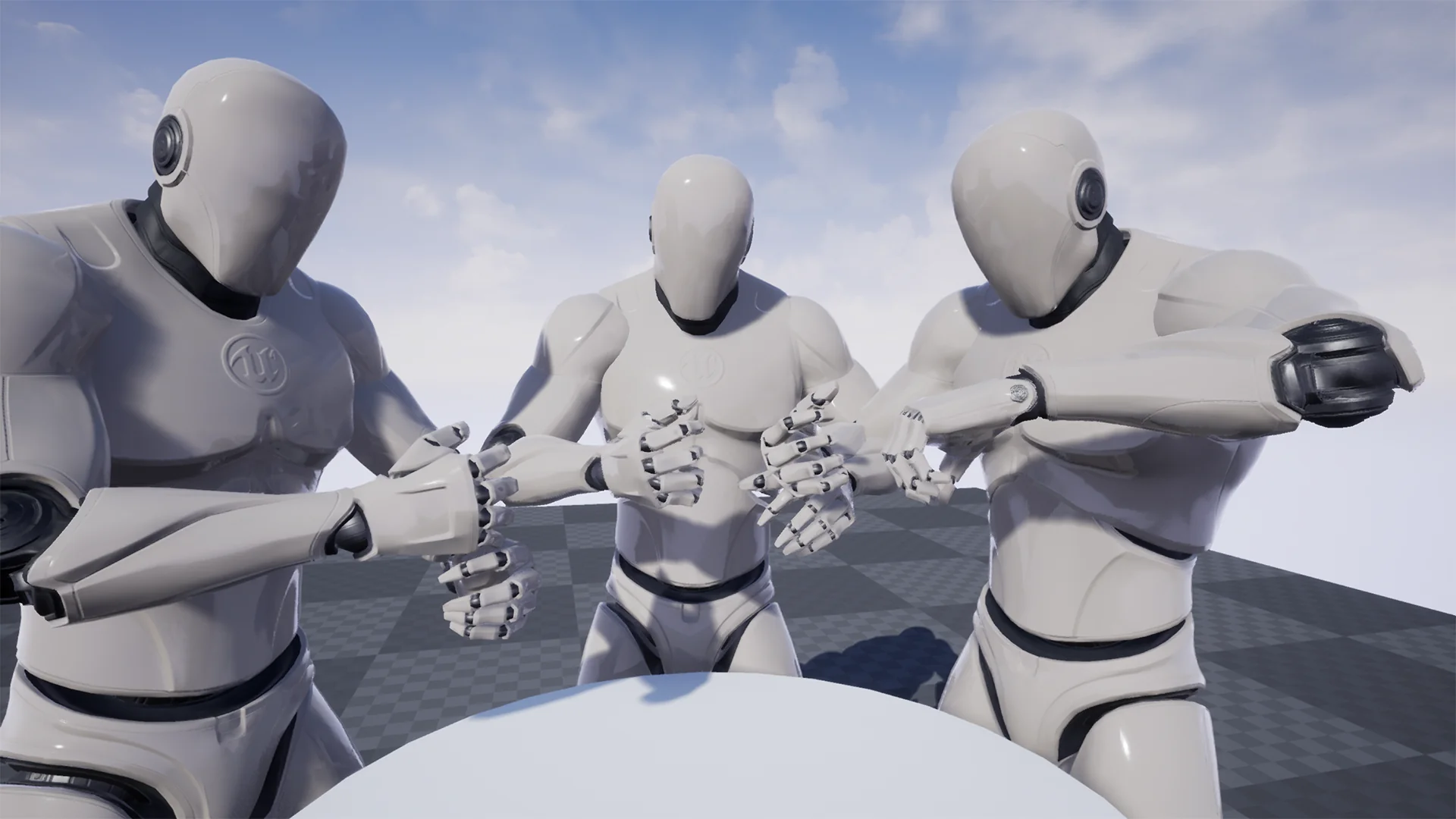
Resource screenshots
1 / 7
Asset drops
Daily Asset Drops
Follow 3DCGHUB on Telegram for daily Unreal, Unity & Blender drops and curated CC0 releases.
Resources are manually reviewed before listing to improve quality and reduce obvious risks.
Reviewed archive
Gestures
Crafting Animations
Explore character crafting animations covering blacksmithing, cooking, alchemy, mining, pottery, and resource gathering for fantasy and building games.
Populating a fantasy or survival world requires believable character interaction with work environments. Static workbenches and simple progress bars break immersion when players step up to an anvil, a stove, or an alchemical table. Crafting Animations provides physical movements tailored to character trades, translating inventory recipes into recognizable, embodied routines. By giving characters distinct gestures for manipulating tools, tending stations, and harvesting raw goods, virtual worlds gain the grounding necessary for compelling roleplay, settlement management, and player-driven production loops.
Blacksmithing Workstations in Crafting Animations
Metalworking stands at the center of fantasy equipment progression, and the pack structures blacksmithing around several distinct sub-stations. The forge represents thermal preparation, capturing the character standing before the heat source, managing implements, and timing the heating of raw stock. Without specialized forge postures, characters often look disconnected from the physical reality of melting ore or softening ingots.
Hammering completes the primary shaping cycle. The rhythm of swinging a smithing hammer onto an anvil establishes a cadence that can tie into crafting mini-games or audio-visual feedback loops. The character's arm strike, posture balance, and repeated contact with the surface communicate weight and force. When moving from rough shaping to refining, the grindstone movement shifts focus toward precision. Standing or leaning into the spinning stone, the character holds an edge against the wheel, creating a logical transition between hot forging and finishing blade or tool durability.
Alchemical Mixing and Culinary Crafting Workflows
Preparing consumables relies on fine motor manipulation rather than heavy strikes. The potion creation routines present the calculated movements of an alchemist handling vessels, measuring elements, and combining reagents to produce elixirs. Accompanying this is the mortar and pestle action, where repetitive manual crushing reduces solid ingredients, herbs, and minerals into fine powders. This establishes a preparatory phase before liquids are mixed, offering clear visual stages for potion workshops.
Culinary stations expand consumable crafting into kitchen and campfire settings:
Frying Pan: Captures close stovetop or hearth cooking, with active wrist and arm motions used to agitate, flip, or stir ingredients over a hot surface.
Cauldron: Suits large-batch cooking or deep potion brewing, utilizing broad stirring motions over wide-rimmed pots suspended above open flames.
Stove Top: Focuses on domestic or tavern meal preparation, managing cookware and checking on multiple heat surfaces.
These movements allow developers to differentiate between field rations simmered in cast iron and bulk broths or tonics prepared in grand cauldrons.
Raw Material Extraction and Wilderness Gathering Animations
Before items reach an artisan workshop, raw materials must be gathered from natural terrain. Resource acquisition movements cover multiple extraction types, starting with timber processing. Chopping down a tree uses deliberate, high-impact swings directed at vertical trunks, driving an axe blade through bark and core wood until timber falls. Once logs are collected, the wood chopping animation transitions to a split block, bringing an axe downward with force to separate manageable firewood and timber blocks.
Mining motions deliver repeated pickaxe strikes into solid rock faces, mineral veins, and underground seams. This visual cadence serves as the primary engine for stone, ore, and gem gathering. In riverbeds and shallow waters, panning for gold supplies a very different extraction rhythm. Characters crouch or wade with a pan, employing subtle, continuous circular swirling to separate sediment from dense metallic flakes. These distinct gathering styles enable games to implement varied terrain tasks that feel visually authentic to the specific resource being harvested.
Workshop Arts and Domestic Trade Animations
Beyond survival tasks and martial manufacturing, specialized studio and craft routines round out town life. Painting at an easel shifts the tempo toward fine arts, where a character steps before a mounted canvas to execute delicate brush strokes and examine their composition. This fits decorative crafting, quest-related artisan work, or background non-player character activities within academies, villas, and creative guilds.
The potter wheel introduces rotational shaping techniques. The character maintains contact with spinning clay, working the medium with centered hand pressure to pull pots, urns, and vessels from raw earth. Alongside specialized workshop crafts, broader labor tasks expand the trades. Tanning leather brings raw hides through curing and stretching phases, while shoveling provides earth-moving gestures suitable for landscaping, excavation, agricultural chores, and grave digging.
Designing Gameplay Systems Around Character Trade Skills
The variety of motions in Crafting Animations provides immediate utility for game systems that rely on multi-tier production chains. In a typical fantasy title, crafting often suffers from excessive abstraction, where opening an interface and waiting for a circular timer represents the entire manufacturing effort. By mapping physical animations directly to distinct workstation components, designers can build spatial workshops where characters physically move between tasks: heating metal at the forge, shaping it on the anvil, and finishing it on the grindstone.
Similarly, village simulation and non-player character schedules benefit directly from distinct visual duties. Rather than having townspeople walk in simple loops or hold generic idle stances, town zones can be populated with active leather tanners, alchemists working mortars, cooks stirring cauldrons, and painters at canvases. These animations provide developers with the visual vocabulary needed to construct bustling towns, deep survival networks, and rewarding crafting systems across diverse fantasy environments.
 Gestures
 Gestures
 Gestures