"059e11fbf316ed56"{"id":"1001292","slug":"comic-book-cutscene","title":"Comic Book Cutscene","category":"Widgets \u0026 Controls","engine":"5.0+","assetVersion":"","engineVersion":"Engine Version: 5.0+","tag":"Widgets \u0026 Controls","accent":"blue","visual":"mech","summary":"Transform gameplay and story moments into graphic novel sequences with the Comic Book Cutscene system, featuring animated panels, shaders, and photo mode.","platform":"Unreal Engine","publishedAt":"2026-10-01T15:14:47.270Z","updatedAt":"2026-10-01T15:14:47.270Z","sourceNotes":[],"fileContents":[],"compatibility":["Unreal Engine","Engine Version: 5.0+"],"featuredImage":{"alt":"Comic Book Cutscene","src":"/wp-content/uploads/published/2026/10/a59af8ab4e62-930780c0-a1bc-4e5e-b09f-5cfdd9a6dd08-852cc8c421.webp"},"hasDownloadLink":true,"downloads":0,"terms":[{"taxonomy":"category","slug":"widgets-and-controls","name":"Widgets \u0026 Controls"}],"galleryImages":[{"src":"/wp-content/uploads/published/2026/10/1bcc1946cf8a-d6840f28-19fb-42ee-9c92-81f1cb8b467f-c76ebd6f60.webp","alt":"Comic Book Cutscene"},{"src":"/wp-content/uploads/published/2026/10/62bd1d5637ad-e9353913-0700-494b-bf4b-91c63a82c8a5-8233baaae5.webp","alt":"Comic Book Cutscene"},{"src":"/wp-content/uploads/published/2026/10/6ec53bfee48b-f351227f-86fc-4863-8245-e288ff7514de-32f1bff0a7.webp","alt":"Comic Book Cutscene"},{"src":"/wp-content/uploads/published/2026/10/dcd7e002dc4d-fb1b9f44-ab9b-4566-ae4b-5dcd01fca75e-0814723356.webp","alt":"Comic Book Cutscene"},{"src":"/wp-content/uploads/published/2026/10/d5b5221d44c7-05c20893-f8b2-4853-8150-6b7142e34165-a8e3473bc9.webp","alt":"Comic Book Cutscene"},{"src":"/wp-content/uploads/published/2026/10/1cda878eda14-642f9fc7-b59e-4cfe-bf60-36b7f4817212-5a54687aa7.webp","alt":"Comic Book Cutscene"},{"src":"/wp-content/uploads/published/2026/10/cef91c8d2b31-d1b9670a-1bef-4962-9e7e-6511ab544cc6-be0ffb4466.webp","alt":"Comic Book Cutscene"},{"src":"/wp-content/uploads/published/2026/10/645f5a1928a6-1e0be2d4-8c54-4230-aecd-14da89c2fb30-94931d9dde.webp","alt":"Comic Book Cutscene"}],"accessPanel":{"kind":"resource","title":"Download this resource","eyebrow":"Free Download","message":"Log in or create a free account to start your download.","fileName":"ComicBookCutscene.7z","safetyNote":"Resources are manually reviewed before listing to improve quality and reduce obvious risks.","actionLabel":"Download Free","resourceType":"Resource archive"},"contentHtml":"\u003cp\u003eStylized adventures, episodic mysteries, and character-driven action games often face the challenge of shifting between active gameplay and narrative exposition without losing momentum. Traditional letterboxed cinematics can interrupt the aesthetic continuity of a stylized title, whereas graphic novel layouts turn narrative pauses into distinct visual highlights. Comic Book Cutscene operates as a specialized cinematic framework built to translate in-game actions, character exchanges, and critical story milestones into animated, multi-panel comic pages.\u003c/p\u003e \u003ch2\u003eFormatting Mission Briefings and Dramatic Story Events\u003c/h2\u003e\n\u003cp\u003eNarrative progression in games relies on varied pacing. Certain story points call for immediate reaction shots, while exposition-heavy segments like mission briefings or tactical overviews demand structured, readable delivery. Comic Book Cutscene enables seamless triggering of sequence layouts directly throughout ongoing gameplay progression. Instead of loading an external pre-rendered video, the system calls upon comic presentation frameworks on the fly, allowing developers to present character interactions, story beats, or sudden dramatic turns right within the engine runtime.\u003c/p\u003e \u003cp\u003eBy organizing narrative intervals into distinct panels, creators can isolate specific character reactions alongside broader environmental context. A tactical briefing, for instance, can present an establishing panel of an objective location while secondary panels display character portraits, operational diagrams, or immediate tactical instructions. This method preserves narrative clarity without requiring complex pre-rendered animations for every script update.\u003c/p\u003e \u003ch2\u003eAnimated Comic Page Layouts and Panel Pacing\u003c/h2\u003e\n\u003cp\u003eCentral to the Comic Book Cutscene system is its library of animated comic page layouts. Rather than presenting static 2D images, the tool handles transitions between frames dynamically, sliding, wiping, and shifting focus across panels in a sequence that mirrors the reading flow of traditional graphic novels. Multiple animated page styles are provided, giving creators the ability to vary visual presentation between different scenes or match changing narrative tones across chapters.\u003c/p\u003e \u003cp\u003eFlexible panel arrangements allow fine control over the rhythm of visual storytelling. Pacing in comic media is governed by panel scale, border margins, and transition speeds. Fast-paced combat cutscenes benefit from rapid, jagged panel sequences that emphasize kinetic beats, whereas somber character discussions can be paced across wider, lingering frame transitions. Adjusting panel arrangements ensures that the visual delivery directly complements the mood, intensity, and rhythm of the underlying gameplay scenario.\u003c/p\u003e \u003ch2\u003eComic-Inspired Visual Shaders for Cohesive Frames\u003c/h2\u003e\n\u003cp\u003eA persistent hurdle when translating 3D gameplay into comic form is the visual disconnect between standard real-time rendering and graphic novel illustration. Comic Book Cutscene includes a dedicated comic-inspired visual shader crafted to transform standard in-game captures and environments into stylized frames. This shader alters the shading behavior of the 3D scene, establishing visual continuity between 3D rendered assets and illustrative 2D layouts.\u003c/p\u003e \u003cp\u003eThe shader works across gameplay scenes to unify character models, lighting setups, and environments under a cohesive aesthetic. When a gameplay moment is transitioned into a cutscene panel, the shader ensures that the visual style retains the punchy, inked, or high-contrast quality typical of printed sequential art, preventing panels from looking like raw game engine viewports pasted onto a canvas.\u003c/p\u003e \u003ch2\u003eDialogue Delivery Through Speech Bubbles and Voice Narration\u003c/h2\u003e\n\u003cp\u003eDialogue presentation in comic sequences requires more than standard subtitle text at the bottom of the screen. The package incorporates a large collection of speech bubbles designed to convey personality, inflection, and tone directly through sequential art conventions. Creators can select distinct bubble shapes and styles to signal quiet dialogue, inner thoughts, spontaneous character reactions, or loud, dramatic emphasis.\u003c/p\u003e \u003cp\u003eDialogue sequences are further elevated through integrated voice narration support. Speech bubbles can be paired directly with voiceover audio tracks, creating a balanced audiovisual experience where the written graphic elements mirror the spoken performance. This combination allows cutscenes to retain the visual appeal of a comic book while maintaining the cinematic immersion expected of modern voice-acted games.\u003c/p\u003e \u003ch2\u003eFreezing Action with Photo Mode\u003c/h2\u003e\n\u003cp\u003eBeyond scripted, hand-crafted cinematic sequences, emergent player actions provide some of the most compelling visual material in interactive media. The system features a photo mode that freezes gameplay moments directly during active play. Creators and players can pause action mid-stride, frame the composition, and capture scenes right off the gameplay viewport.\u003c/p\u003e \u003cp\u003eThis capture workflow simplifies the process of authoring custom comic panels and player-driven narrative sequences. A player landing a critical strike, navigating an environmental trap, or discovering a hidden vantage point can be captured and transferred into a panel layout, making the system practical not just for pre-authored cinematics, but also for responsive recap sequences or custom in-game storytelling based on real-time achievements.\u003c/p\u003e \u003ch2\u003eCharacter System Compatibility and Production Applications\u003c/h2\u003e\n\u003cp\u003eIntegration with existing character pipelines is supported through compatibility with the Character Creator System. This alignment allows character rigs and custom avatars built within that ecosystem to transfer directly into the cutscene framework, populating comic panels and receiving both shader treatments and speech bubble bindings without requiring bespoke rigging workarounds.\u003c/p\u003e \u003cp\u003eComic Book Cutscene serves narrative-heavy projects, manga-styled adventures, and stylized action titles where traditional cinematic pipelines might prove too resource-intensive or aesthetically ill-fitting. Small teams, solo developers, and narrative designers seeking a distinctive, graphic novel approach to storytelling gain a comprehensive framework that connects gameplay triggers, stylized rendering, and panel-by-panel direction into a cohesive cinematic workflow.\u003c/p\u003e\n\n\u003ch2\u003eExplore Similar Assets\u003c/h2\u003e\n\u003cul\u003e\n\u003cli\u003e\u003ca href=\"https://3dcghub.com/delayed-healthbar-system/\" title=\"Delayed Healthbar System\"\u003eDelayed Healthbar System\u003c/a\u003e\u003c/li\u003e\n\u003cli\u003e\u003ca href=\"https://3dcghub.com/rd-lighting-kit/\" title=\"RD: Lighting Kit\"\u003eRD: Lighting Kit\u003c/a\u003e\u003c/li\u003e\n\u003cli\u003e\u003ca href=\"https://3dcghub.com/hqui-progress-bars/\" title=\"HQUI: Progress Bars\"\u003eHQUI: Progress Bars\u003c/a\u003e\u003c/li\u003e\n\u003cli\u003e\u003ca href=\"https://3dcghub.com/comic-sound-effect-fx/\" title=\"Comic Sound Effect FX\"\u003eComic Sound Effect FX\u003c/a\u003e\u003c/li\u003e\n\u003cli\u003e\u003ca href=\"https://3dcghub.com/easy-toolbag/\" title=\"Easy Toolbag\"\u003eEasy Toolbag\u003c/a\u003e\u003c/li\u003e\n\u003c/ul\u003e","contentTextLength":6423,"navigation":{"current":5,"total":3238,"previous":{"id":"1001293","slug":"melee-weapon-aura-vfx-energy-auras-and-glowing-effects-for-melee-weapons","title":"Melee Weapon Aura VFX – Energy Auras \u0026 Glowing Effects for Melee Weapons","category":"Spells \u0026 Combat","platform":"Unreal Engine","updatedAt":"2026-10-01T16:43:48.677Z"},"next":{"id":"1001291","slug":"combat-magic-animations","title":"Combat Magic Animations","category":"Combat","platform":"Unreal Engine","updatedAt":"2026-10-01T14:40:33.091Z"}},"relatedResources":[{"id":"15459","slug":"delayed-healthbar-system","title":"Delayed Healthbar System","category":"Widgets \u0026 Controls","engine":"5.0+","assetVersion":"Engine version: 5.0+","engineVersion":"5.0","tag":"Widgets \u0026 Controls","accent":"blue","visual":"audio","summary":"Enhance your game's user interface with the Delayed Healthbar System. This asset provides a ready-to-use solution for animated health bars, damage blips, and screen-space indicators.","platform":"Unreal Engine","publishedAt":"2026-03-12T09:07:20.000Z","updatedAt":"2026-04-19T15:44:46.000Z","sourceNotes":[],"fileContents":[],"compatibility":["Unreal Engine","Engine version: 5.0+"],"featuredImage":{"alt":"Delayed Healthbar System","src":"https://3dcghub.com/wp-content/uploads/2026/03/072782e5-1fcd-4671-915e-3f517fc8aea5.webp"},"hasDownloadLink":true,"downloads":0},{"id":"15496","slug":"rd-lighting-kit","title":"RD: Lighting Kit","category":"Widgets \u0026 Controls","engine":"5.0+","assetVersion":"Engine version: 5.0+","engineVersion":"5.0","tag":"Widgets \u0026 Controls","accent":"blue","visual":"character","summary":"Transform your renders with RD: Lighting Kit, a comprehensive tool for creating photorealistic studio environments in Unreal Engine. It features over 50 handcrafted presets and unique backdrops for professional results.","platform":"Unreal Engine","publishedAt":"2026-03-12T09:11:29.000Z","updatedAt":"2026-04-19T15:44:45.000Z","sourceNotes":[],"fileContents":[],"compatibility":["Unreal Engine","Engine version: 5.0+"],"featuredImage":{"alt":"RD: Lighting Kit","src":"https://3dcghub.com/wp-content/uploads/2026/03/56a37b57-480a-454b-a6d3-4243c4f68a88.webp"},"hasDownloadLink":true,"downloads":0},{"id":"15480","slug":"hqui-progress-bars","title":"HQUI: Progress Bars","category":"Widgets \u0026 Controls","engine":"4.26+,5.0+","assetVersion":"Engine version: 4.26+,5.0+","engineVersion":"4.19","tag":"Widgets \u0026 Controls","accent":"blue","visual":"animation","summary":"HQUI: Progress Bars offers a robust set of highly customizable UMG components for developers. This pack features advanced settings, gradients, and automated interpolation to elevate your game's user interface.","platform":"Unreal Engine","publishedAt":"2026-03-12T09:09:48.000Z","updatedAt":"2026-04-19T15:44:46.000Z","sourceNotes":[],"fileContents":[],"compatibility":["Unreal Engine","Engine version: 4.26+,5.0+"],"featuredImage":{"alt":"HQUI: Progress Bars","src":"https://3dcghub.com/wp-content/uploads/2026/03/327a22db-0f44-410f-93b6-73bd636562cb.webp"},"hasDownloadLink":true,"downloads":2}]}
Widgets & Controls
Comic Book Cutscene
Transform gameplay and story moments into graphic novel sequences with the Comic Book Cutscene system, featuring animated panels, shaders, and photo mode.
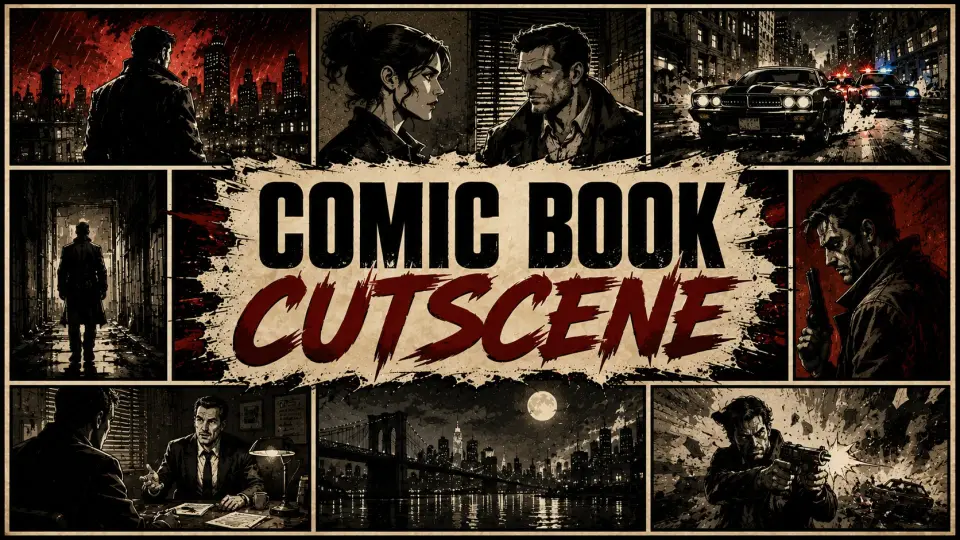
Stylized adventures, episodic mysteries, and character-driven action games often face the challenge of shifting between active gameplay and narrative exposition without losing momentum. Traditional letterboxed cinematics can interrupt the aesthetic continuity of a stylized title, whereas graphic novel layouts turn narrative pauses into distinct visual highlights. Comic Book Cutscene operates as a specialized cinematic framework built to translate in-game actions, character exchanges, and critical story milestones into animated, multi-panel comic pages.
Formatting Mission Briefings and Dramatic Story Events
Narrative progression in games relies on varied pacing. Certain story points call for immediate reaction shots, while exposition-heavy segments like mission briefings or tactical overviews demand structured, readable delivery. Comic Book Cutscene enables seamless triggering of sequence layouts directly throughout ongoing gameplay progression. Instead of loading an external pre-rendered video, the system calls upon comic presentation frameworks on the fly, allowing developers to present character interactions, story beats, or sudden dramatic turns right within the engine runtime.
By organizing narrative intervals into distinct panels, creators can isolate specific character reactions alongside broader environmental context. A tactical briefing, for instance, can present an establishing panel of an objective location while secondary panels display character portraits, operational diagrams, or immediate tactical instructions. This method preserves narrative clarity without requiring complex pre-rendered animations for every script update.
Animated Comic Page Layouts and Panel Pacing
Central to the Comic Book Cutscene system is its library of animated comic page layouts. Rather than presenting static 2D images, the tool handles transitions between frames dynamically, sliding, wiping, and shifting focus across panels in a sequence that mirrors the reading flow of traditional graphic novels. Multiple animated page styles are provided, giving creators the ability to vary visual presentation between different scenes or match changing narrative tones across chapters.
Flexible panel arrangements allow fine control over the rhythm of visual storytelling. Pacing in comic media is governed by panel scale, border margins, and transition speeds. Fast-paced combat cutscenes benefit from rapid, jagged panel sequences that emphasize kinetic beats, whereas somber character discussions can be paced across wider, lingering frame transitions. Adjusting panel arrangements ensures that the visual delivery directly complements the mood, intensity, and rhythm of the underlying gameplay scenario.
Comic-Inspired Visual Shaders for Cohesive Frames
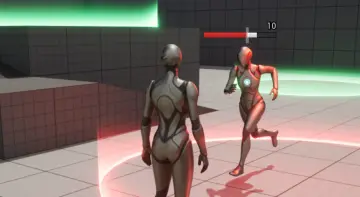
A persistent hurdle when translating 3D gameplay into comic form is the visual disconnect between standard real-time rendering and graphic novel illustration. Comic Book Cutscene includes a dedicated comic-inspired visual shader crafted to transform standard in-game captures and environments into stylized frames. This shader alters the shading behavior of the 3D scene, establishing visual continuity between 3D rendered assets and illustrative 2D layouts.
The shader works across gameplay scenes to unify character models, lighting setups, and environments under a cohesive aesthetic. When a gameplay moment is transitioned into a cutscene panel, the shader ensures that the visual style retains the punchy, inked, or high-contrast quality typical of printed sequential art, preventing panels from looking like raw game engine viewports pasted onto a canvas.
Dialogue Delivery Through Speech Bubbles and Voice Narration
Dialogue presentation in comic sequences requires more than standard subtitle text at the bottom of the screen. The package incorporates a large collection of speech bubbles designed to convey personality, inflection, and tone directly through sequential art conventions. Creators can select distinct bubble shapes and styles to signal quiet dialogue, inner thoughts, spontaneous character reactions, or loud, dramatic emphasis.
Dialogue sequences are further elevated through integrated voice narration support. Speech bubbles can be paired directly with voiceover audio tracks, creating a balanced audiovisual experience where the written graphic elements mirror the spoken performance. This combination allows cutscenes to retain the visual appeal of a comic book while maintaining the cinematic immersion expected of modern voice-acted games.
Freezing Action with Photo Mode
Beyond scripted, hand-crafted cinematic sequences, emergent player actions provide some of the most compelling visual material in interactive media. The system features a photo mode that freezes gameplay moments directly during active play. Creators and players can pause action mid-stride, frame the composition, and capture scenes right off the gameplay viewport.
This capture workflow simplifies the process of authoring custom comic panels and player-driven narrative sequences. A player landing a critical strike, navigating an environmental trap, or discovering a hidden vantage point can be captured and transferred into a panel layout, making the system practical not just for pre-authored cinematics, but also for responsive recap sequences or custom in-game storytelling based on real-time achievements.
Character System Compatibility and Production Applications
Integration with existing character pipelines is supported through compatibility with the Character Creator System. This alignment allows character rigs and custom avatars built within that ecosystem to transfer directly into the cutscene framework, populating comic panels and receiving both shader treatments and speech bubble bindings without requiring bespoke rigging workarounds.
Comic Book Cutscene serves narrative-heavy projects, manga-styled adventures, and stylized action titles where traditional cinematic pipelines might prove too resource-intensive or aesthetically ill-fitting. Small teams, solo developers, and narrative designers seeking a distinctive, graphic novel approach to storytelling gain a comprehensive framework that connects gameplay triggers, stylized rendering, and panel-by-panel direction into a cohesive cinematic workflow.
 Widgets & Controls
 Widgets & Controls
 Widgets & Controls
 Widgets & Controls