"ae2217ad8e73450c"{"id":"1003021","slug":"close-combat-animset","title":"Close Combat Animset","category":"Combat","engine":"4.15+,5.0+","assetVersion":"","engineVersion":"Engine Version: 4.15+,5.0+","tag":"Combat","accent":"blue","visual":"mech","summary":"A cross-platform animation library engineered for martial arts, kicks, armed strikes, and modular melee mechanics across mobile and PC video game projects.","platform":"Unreal Engine","indexPolicy":"index","publishedAt":"2026-11-25T16:25:48.049Z","updatedAt":"2026-11-25T16:25:48.049Z","sourceNotes":[],"fileContents":[],"compatibility":["Unreal Engine","Engine Version: 4.15+,5.0+"],"featuredImage":{"alt":"Close Combat Animset","src":"/wp-content/uploads/published/2026/11/ebb68b373139-5c79fe1e-d14b-49a8-9522-727e48da5766-19c3d40bfa.webp"},"hasDownloadLink":true,"downloads":0,"terms":[{"taxonomy":"category","slug":"combat","name":"Combat"}],"galleryImages":[{"src":"/wp-content/uploads/published/2026/11/f3c338453b26-99617704-e887-446d-8e77-b1d50663af2d-5c4b590d10.webp","alt":"Close Combat Animset"},{"src":"/wp-content/uploads/published/2026/11/b1a84acbe6aa-a8720374-5efb-4899-b2ff-219de4efab0d-a74e2381d1.webp","alt":"Close Combat Animset"},{"src":"/wp-content/uploads/published/2026/11/a9258d95e1ea-2c3382a7-6ace-44fb-891f-eebc790281e6-1bd2579919.webp","alt":"Close Combat Animset"},{"src":"/wp-content/uploads/published/2026/11/6c8a8b179e09-0cf78896-180b-4c1e-b3c9-c6666b1e32ad-94de01afc4.webp","alt":"Close Combat Animset"},{"src":"/wp-content/uploads/published/2026/11/728a626d9b49-192274d3-a976-49f5-b438-1c7b2bbdc44d-79fae8d7c8.webp","alt":"Close Combat Animset"},{"src":"/wp-content/uploads/published/2026/11/889891fd14ed-ecd34a06-1b43-4069-85a5-458b51a5bb37-b3059f1d7a.webp","alt":"Close Combat Animset"},{"src":"/wp-content/uploads/published/2026/11/fd5a06bb6fa1-789f5928-006a-42ec-a6a5-73a894e831f4-915d39f0f2.webp","alt":"Close Combat Animset"}],"accessPanel":{"kind":"resource","title":"Get this resource","safetyNote":"Resources are manually reviewed before listing to improve quality and reduce obvious risks.","fileName":"Content.7z","resourceType":"Resource archive","versions":[]},"contentHtml":"\u003cp\u003eEstablishing responsive, visually coherent hand-to-hand engagements in game development often encounters friction when developers are forced to untangle pre-packaged character blueprints or rigid template frameworks. When engineering a bespoke combat controller, an independent state machine, or an established character rig, gameplay programmers and technical animators frequently require raw, high-impact motion assets rather than full-system gameplay mechanics. The Close Combat Animset provides a focused motion repertoire focused on armed strikes, high-impact kicks, martial arts techniques, and agile ninja maneuvers, offering direct integration paths for teams prioritizing fluid combat execution across diverse genres.\u003c/p\u003e \u003ch2\u003eClose Combat Mechanics Across Distinct Gameplay Perspectives\u003c/h2\u003e\n\u003cp\u003eCombat animation readability varies significantly depending on camera placement, distance, and player field of view. An attack sequence that looks impactful in a traditional third-person perspective can lose its clarity entirely when viewed from a distant overhead camera, while motions designed strictly for side-scrolling encounters might fail to communicate depth in a free-roaming environment. The Close Combat Animset addresses multiple camera configurations by supplying strikes and transitions suited for fighting games, RPGs, third-person action adventures, top-down brawlers, isometric tactical titles, and side-scrolling platformers.\u003c/p\u003e\n\u003cp\u003eIn standard third-person and over-the-shoulder action experiences, melee motions rely on deliberate weight shifts, directional follow-through, and believable momentum transfer. Players observe character movement from immediate angles, making subtle body mechanics, hip rotation, and foot planting critical for conveying physical force. In contrast, top-down and isometric camera angles compress verticality and demand broad, readable silhouettes. Within these high-angle presentations, strikes require pronounced limb extensions, wide arcs, and distinct visual silhouettes so players can identify weapon trajectories and kick releases amid dense battlefield environments or overlapping particle effects.\u003c/p\u003e\n\u003cp\u003eFor dedicated fighting games and planar platformers, animation priority shifts toward precise horizontal reach and frame-level clarity. In a 2D or 2.5D side-scrolling structure, attacks must clearly align with lateral hurtboxes and collision volumes. Snappy kick executions, direct armed thrusts, and rapid martial arts flourishes ensure that visual impacts match the exact moments of spatial intersection, allowing players to accurately judge spacing, attack reach, and recovery vulnerabilities regardless of the project's visual presentation.\u003c/p\u003e \u003ch2\u003eModular Animset Construction for Armed and Unarmed Martial Arts\u003c/h2\u003e\n\u003cp\u003eCombative fluidity relies heavily on modular animation architecture. Rather than locking characters into prolonged, non-interactive animation sequences, modular assets allow designers to break down offensive actions into distinct phases: wind-up, active strike frames, contact follow-through, and recovery transitions. The Close Combat Animset incorporates this modular design philosophy across a wide range of unarmed martial arts, fighter maneuvers, armed weapon swings, and ninja-inspired agility moves.\u003c/p\u003e\n\u003cp\u003eBecause the motion files function as discrete building blocks, developers can link individual strikes together to build customized, branching combo sequences. A character can execute an initial straight punch, branch immediately into a spinning martial arts kick, or cancel active momentum into an evasive repositioning maneuver. This level of granular control lets designers craft distinct fighting profiles for varied combatant archetypes using the same core motion foundation:\u003c/p\u003e\n\u003cul\u003e \u003cli\u003e\u003cstrong\u003eAgile Ninja Archetypes:\u003c/strong\u003e Fast strikes paired with rapid, fluid recovery phases that prioritize speed, evasion, and misdirection.\u003c/li\u003e \u003cli\u003e\u003cstrong\u003eDisciplined Martial Artists:\u003c/strong\u003e Balanced physical forms featuring clean kick extensions, structured stances, and technical hand strikes.\u003c/li\u003e \u003cli\u003e\u003cstrong\u003eArmed Melee Specialists:\u003c/strong\u003e Weapon-assisted swings and lunges that emphasize reach, kinetic force, and deliberate momentum.\u003c/li\u003e \u003cli\u003e\u003cstrong\u003eAggressive Brawlers:\u003c/strong\u003e Heavy, direct kick-and-punch combinations engineered to overwhelm opposing defenses through sheer forward pressure.\u003c/li\u003e\n\u003c/ul\u003e\n\u003cp\u003eThis structural versatility extends to defensive and cancel windows. By dividing attacks into modular components, gameplay programmers can easily define input buffering zones, hit-stop moments, counter-attack triggers, and dynamic parry states within their project's animation state machines without encountering awkward blending seams.\u003c/p\u003e \u003ch2\u003eCross-Platform Combat Optimization for PC and Mobile Architectures\u003c/h2\u003e\n\u003cp\u003eMultiplatform deployment introduces technical hurdles concerning animation evaluation performance, memory footprints, and frame rate stability. The motion data within the Close Combat Animset has been optimized to maintain high efficiency across both desktop PC hardware and resource-constrained mobile environments.\u003c/p\u003e\n\u003cp\u003eOn mobile chipsets, animation processing represents a substantial draw on CPU overhead, particularly when multiple combatants engage in high-speed encounters simultaneously. Bloated bone transform channels, excessive keyframe density, or redundant animation curves can rapidly degrade rendering performance, resulting in sluggish touch controls and dropped frames during intensive gameplay. By ensuring that skeletal motion tracks remain clean and lightweight, the animset minimizes computational overhead, allowing mobile devices to manage multi-character brawls, complex crowd encounters, and rapid combat state transitions without thermal throttling or performance hitching.\u003c/p\u003e\n\u003cp\u003eOn PC platforms, this optimization translates into exceptional responsiveness and sub-frame precision. Competitive fighting games and precision action RPGs demand uncompromised fidelity, where frame data, hitbox alignment, and recovery windows must execute with complete predictability. The streamlined animation curves allow PC builds to run smoothly at elevated refresh rates, delivering fluid visual motion that preserves every nuance of a strike's impact and timing.\u003c/p\u003e \u003ch2\u003eProduction Application in Stencil of Judgement\u003c/h2\u003e\n\u003cp\u003eThe practical utility of any motion collection is best measured through its deployment in active game production. The Close Combat Animset serves as an integrated asset in the real-world title Stencil of Judgement, demonstrating its adaptability within an authentic development pipeline.\u003c/p\u003e\n\u003cp\u003eIntegrating pre-built animations into a live production requires motion data that can withstand extensive retargeting, custom character proportion adjustments, and intricate blending setups. In active projects like Stencil of Judgement, animation clips must blend seamlessly into movement locomotion blend spaces, react cleanly to directional hit reactions, and align with environmental collision logic. The successful deployment of this animset in a realized production demonstrates its structural stability, proving that the skeletal motion data transitions cleanly from isolated preview environments into complex, interactive game loops.\u003c/p\u003e \u003ch2\u003eAnimset Scope, Scheduled Content Updates, and The Art of Combat\u003c/h2\u003e\n\u003cp\u003eThe Close Combat Animset is specifically tailored for development teams, technical artists, and animators who require pure animation assets without the baggage of pre-packaged character controllers or unneeded gameplay scripting. In projects where custom movement logic, netcode, or specialized combat systems are already established, importing heavy gameplay templates often requires hours of tedious refactoring to remove unwanted dependencies. By maintaining an animation-only scope, this package allows studios to import the motion files directly into their own proprietary architectures without friction.\u003c/p\u003e\n\u003cp\u003eFor creators who utilize the comprehensive combat framework The Art of Combat, this collection is integrated directly into that system as an update, providing seamless continuity between dedicated framework mechanics and expanded motion libraries. Furthermore, the asset roadmap includes scheduled content updates, ensuring that creators can continue to expand their martial arts repertoires, kick variations, and melee encounter systems as additional motion data is introduced to the library over time.\u003c/p\u003e\n\n\u003ch2\u003eExplore Similar Assets\u003c/h2\u003e\n\u003cul\u003e\n\u003cli\u003e\u003ca href=\"https://3dcghub.com/greatsword-animset/\" rel=\"noopener noreferrer\"\u003eGreatSword Animset\u003c/a\u003e\u003c/li\u003e\n\u003cli\u003e\u003ca href=\"https://3dcghub.com/two-sword-animset/\" rel=\"noopener noreferrer\"\u003eTwo Sword AnimSet\u003c/a\u003e\u003c/li\u003e\n\u003cli\u003e\u003ca href=\"https://3dcghub.com/sword-animset-pro/\" rel=\"noopener noreferrer\"\u003eSword Animset Pro\u003c/a\u003e\u003c/li\u003e\n\u003cli\u003e\u003ca href=\"https://3dcghub.com/fighting-animset-pro/\" rel=\"noopener noreferrer\"\u003eFighting Animset Pro\u003c/a\u003e\u003c/li\u003e\n\u003cli\u003e\u003ca href=\"https://3dcghub.com/brutal-axe-shield-animset/\" rel=\"noopener noreferrer\"\u003eBrutal Axe Shield AnimSet\u003c/a\u003e\u003c/li\u003e\n\u003c/ul\u003e","contentTextLength":8400,"navigation":{"current":23,"total":4964,"previous":{"id":"1003022","slug":"competitive-shooter-hud","title":"Competitive Shooter HUD","category":"UI Kits / HUDs","platform":"Unreal Engine","updatedAt":"2026-11-25T16:26:34.647Z"},"next":{"id":"1003020","slug":"climb-2-5d-wall-movement","title":"Climb - 2.5D Wall Movement","category":"Gameplay Features","platform":"Unreal Engine","updatedAt":"2026-11-25T16:23:48.704Z"}},"relatedResources":[{"id":"1002043","slug":"greatsword-animset","title":"GreatSword Animset","category":"Combat","engine":"4.21+,5.0+","assetVersion":"","engineVersion":"Engine Version: 4.21+,5.0+","tag":"Combat","accent":"blue","visual":"mech","summary":"A close look at the GreatSword Animset for Unreal Engine 5, featuring 130 combat animations built on the Epic Skeleton with broad stylistic range.","platform":"Unreal Engine","indexPolicy":"index","publishedAt":"2026-10-26T14:31:19.433Z","updatedAt":"2026-11-24T10:27:37.409Z","sourceNotes":[],"fileContents":[],"compatibility":["Unreal Engine","Engine Version: 4.21+,5.0+"],"featuredImage":{"alt":"GreatSword Animset","src":"/wp-content/uploads/published/2026/10/8c0a3d809aac-db4d456d-3970-4c20-b9a0-2123beb912eb-1200749d36.webp"},"hasDownloadLink":true,"downloads":1},{"id":"1002245","slug":"two-sword-animset","title":"Two Sword AnimSet","category":"Combat","engine":"4.26+,5.0+","assetVersion":"","engineVersion":"Engine Version: 4.26+,5.0+","tag":"Combat","accent":"blue","visual":"mech","summary":"A close look at Two Sword AnimSet, featuring 57 animations and 9 poses for dual sword and katana action RPG main characters.","platform":"Unreal Engine","indexPolicy":"index","publishedAt":"2026-10-29T16:04:20.439Z","updatedAt":"2026-10-29T16:04:20.439Z","sourceNotes":[],"fileContents":[],"compatibility":["Unreal Engine","Engine Version: 4.26+,5.0+"],"featuredImage":{"alt":"Two Sword AnimSet","src":"/wp-content/uploads/published/2026/10/4c186c71096d-ace5d2d5-70df-4b90-b46f-d7e7b254596d-110eb6e9ba.webp"},"fileSizeBytes":12382561,"hasDownloadLink":true,"downloads":3},{"id":"1002227","slug":"sword-animset-pro","title":"Sword Animset Pro","category":"Combat","engine":"4.26+,5.0+","assetVersion":"","engineVersion":"Engine Version: 4.26+,5.0+","tag":"Combat","accent":"blue","visual":"mech","summary":"Sword Animset Pro provides 178 motion-captured animations for third-person sword combat, covering locomotion, attacks, combos, blocks, and dodges.","platform":"Unreal Engine","indexPolicy":"index","publishedAt":"2026-10-29T15:26:02.245Z","updatedAt":"2026-10-29T15:26:02.245Z","sourceNotes":[],"fileContents":[],"compatibility":["Unreal Engine","Engine Version: 4.26+,5.0+"],"featuredImage":{"alt":"Sword Animset Pro","src":"/wp-content/uploads/published/2026/10/7af4c8a01f00-e5ce8ccc-cad9-4617-b9cc-a11878cecf62-8faaf739fa.webp"},"fileSizeBytes":122277610,"hasDownloadLink":true,"downloads":2}]}[{"id":4225,"sourceId":4225,"taxonomyId":4225,"taxonomy":"category","slug":"asset-library","name":"Asset Library","parentId":null,"count":4817,"hasChildren":true,"href":"/","seoTitle":"Free Game Assets Library | 3DCGHUB","seoDescription":"Browse free Unreal Engine, Unity, Blender assets and game development tutorials on 3DCGHUB with previews, compatibility notes, and secure downloads.","sitemapEnabled":true,"children":[{"id":4227,"sourceId":4227,"taxonomyId":4227,"taxonomy":"category","slug":"blender-add-ons-plugins","name":"Blender Add-ons \u0026 Plugins","parentId":4225,"count":10,"hasChildren":false,"href":"/category/blender-add-ons-plugins/","seoTitle":"Free Blender Add-ons \u0026 Plugins | 3DCGHUB","seoDescription":"Browse free Blender Add-ons \u0026 Plugins tools for Blender on 3DCGHUB: curated downloads with preview images, compatibility notes and secure download access.","sitemapEnabled":true},{"id":514,"sourceId":514,"taxonomyId":514,"taxonomy":"category","slug":"unity-2","name":"Unity","parentId":4225,"count":453,"hasChildren":true,"href":"/category/unity-2/","seoTitle":"Free Unity Assets | 3DCGHUB","seoDescription":"Browse free Unity resources on 3DCGHUB: curated downloads with preview images, compatibility notes and secure download access.","sitemapEnabled":true,"children":[{"id":523,"sourceId":523,"taxonomyId":523,"taxonomy":"category","slug":"2d","name":"2D","parentId":514,"count":1,"hasChildren":true,"href":"/category/2d/","seoTitle":"Free Unity 2D | 3DCGHUB","seoDescription":"Browse free 2D assets for Unity on 3DCGHUB: curated downloads with preview images, compatibility notes and secure download access.","sitemapEnabled":true},{"id":515,"sourceId":515,"taxonomyId":515,"taxonomy":"category","slug":"3d-unity-2","name":"3D","parentId":514,"count":162,"hasChildren":true,"href":"/category/3d-unity-2/","seoTitle":"Free Unity 3D Assets | 3DCGHUB","seoDescription":"Browse free 3D assets for Unity on 3DCGHUB: curated downloads with preview images, compatibility notes and secure download access.","sitemapEnabled":true},{"id":565,"sourceId":565,"taxonomyId":565,"taxonomy":"category","slug":"add-ons","name":"Add-Ons","parentId":514,"count":2,"hasChildren":false,"href":"/category/add-ons/","seoTitle":"Free Unity Add-Ons | 3DCGHUB","seoDescription":"Browse free Add-Ons assets for Unity on 3DCGHUB: curated downloads with preview images, compatibility notes and secure download access.","sitemapEnabled":true},{"id":529,"sourceId":529,"taxonomyId":529,"taxonomy":"category","slug":"audio-unity-2","name":"Audio","parentId":514,"count":1,"hasChildren":true,"href":"/category/audio-unity-2/","seoTitle":"Free Unity Audio | 3DCGHUB","seoDescription":"Browse free Audio for Unity on 3DCGHUB: curated downloads with preview images, compatibility notes and secure download access.","sitemapEnabled":true},{"id":557,"sourceId":557,"taxonomyId":557,"taxonomy":"category","slug":"templates","name":"Templates","parentId":514,"count":36,"hasChildren":true,"href":"/category/templates/","seoTitle":"Free Unity Templates | 3DCGHUB","seoDescription":"Browse free Unity project templates on 3DCGHUB. Starter kits with previews, compatibility notes, and secure download access.","sitemapEnabled":true},{"id":533,"sourceId":533,"taxonomyId":533,"taxonomy":"category","slug":"tools-unity-2","name":"Tools","parentId":514,"count":0,"hasChildren":true,"href":"/category/tools-unity-2/","sitemapEnabled":true},{"id":554,"sourceId":554,"taxonomyId":554,"taxonomy":"category","slug":"vfx-unity-2","name":"VFX","parentId":514,"count":4,"hasChildren":true,"href":"/category/vfx-unity-2/","seoTitle":"Free Unity VFX | 3DCGHUB","seoDescription":"Browse free VFX for Unity on 3DCGHUB: curated downloads with preview images, compatibility notes and secure download access.","sitemapEnabled":true}]},{"id":511,"sourceId":511,"taxonomyId":511,"taxonomy":"category","slug":"unreal-engine-2","name":"Unreal Engine","parentId":4225,"count":4355,"hasChildren":true,"href":"/category/unreal-engine-2/","seoTitle":"Free Unreal Engine Assets | 3DCGHUB","seoDescription":"Browse free Unreal Engine resources on 3DCGHUB: curated downloads with preview images, compatibility notes and secure download access.","sitemapEnabled":true,"children":[{"id":54,"sourceId":54,"taxonomyId":54,"taxonomy":"category","slug":"3d","name":"3D","parentId":511,"count":2441,"hasChildren":true,"href":"/category/3d/","seoTitle":"Free Unreal Engine 3D | 3DCGHUB","seoDescription":"Browse free 3D assets for Unreal Engine on 3DCGHUB: curated downloads with preview images, compatibility notes and secure download access.","sitemapEnabled":true},{"id":441,"sourceId":441,"taxonomyId":441,"taxonomy":"category","slug":"animations","name":"Animations","parentId":511,"count":269,"hasChildren":true,"href":"/category/animations/","seoTitle":"Free Unreal Engine Animations | 3DCGHUB","seoDescription":"Browse free Animations for Unreal Engine on 3DCGHUB: curated downloads with preview images, compatibility notes and secure download access.","sitemapEnabled":true},{"id":446,"sourceId":446,"taxonomyId":446,"taxonomy":"category","slug":"audio","name":"Audio","parentId":511,"count":63,"hasChildren":true,"href":"/category/audio/","seoTitle":"Free Unreal Engine Audio Resources | 3DCGHUB","seoDescription":"Browse free Unreal Engine audio resources including sound effects, voices, dialogue, and ambient sounds. Curated free downloads on 3DCGHUB.","sitemapEnabled":true},{"id":466,"sourceId":466,"taxonomyId":466,"taxonomy":"category","slug":"game-systems","name":"Game Systems","parentId":511,"count":381,"hasChildren":true,"href":"/category/game-systems/","seoTitle":"Free Unreal Engine Game Systems | 3DCGHUB","seoDescription":"Browse free Game Systems tools for Unreal Engine on 3DCGHUB: curated downloads with preview images, compatibility notes and secure download access.","sitemapEnabled":true},{"id":478,"sourceId":478,"taxonomyId":478,"taxonomy":"category","slug":"game-templates","name":"Game Templates","parentId":511,"count":155,"hasChildren":true,"href":"/category/game-templates/","seoTitle":"Free Unreal Engine Game Templates | 3DCGHUB","seoDescription":"Browse free Game Templates for Unreal Engine on 3DCGHUB: curated downloads with preview images, compatibility notes and secure download access.","sitemapEnabled":true},{"id":432,"sourceId":432,"taxonomyId":432,"taxonomy":"category","slug":"hdri","name":"HDRI","parentId":511,"count":6,"hasChildren":true,"href":"/category/hdri/","seoTitle":"Free Unreal Engine HDRI | 3DCGHUB","seoDescription":"Browse free Unreal Engine HDRI skies and lighting maps on 3DCGHUB. Environment lighting with previews and secure downloads.","sitemapEnabled":true},{"id":228,"sourceId":228,"taxonomyId":228,"taxonomy":"category","slug":"material-and-textures","name":"Material \u0026 Textures","parentId":511,"count":172,"hasChildren":true,"href":"/category/material-and-textures/","seoTitle":"Free Unreal Engine Material \u0026 Textures | 3DCGHUB","seoDescription":"Browse free Material \u0026 Textures for Unreal Engine on 3DCGHUB: curated downloads with preview images, compatibility notes and secure download access.","sitemapEnabled":true},{"id":298,"sourceId":298,"taxonomyId":298,"taxonomy":"category","slug":"sprites-and-flipbooks","name":"Sprites \u0026 Flipbooks","parentId":511,"count":18,"hasChildren":true,"href":"/category/sprites-and-flipbooks/","seoTitle":"Free Unreal Engine Sprites \u0026 Flipbooks | 3DCGHUB","seoDescription":"Browse free Sprites \u0026 Flipbooks assets for Unreal Engine on 3DCGHUB: curated downloads with preview images, compatibility notes and secure download access.","sitemapEnabled":true},{"id":489,"sourceId":489,"taxonomyId":489,"taxonomy":"category","slug":"tools-and-plugins","name":"Tools \u0026 Plugins","parentId":511,"count":390,"hasChildren":true,"href":"/category/tools-and-plugins/","seoTitle":"Free Unreal Engine Tools \u0026 Plugins | 3DCGHUB","seoDescription":"Browse free Tools \u0026 Plugins for Unreal Engine on 3DCGHUB: curated downloads with preview images, compatibility notes and secure download access.","sitemapEnabled":true},{"id":459,"sourceId":459,"taxonomyId":459,"taxonomy":"category","slug":"ui","name":"UI","parentId":511,"count":47,"hasChildren":true,"href":"/category/ui/","seoTitle":"Free Unreal Engine UI | 3DCGHUB","seoDescription":"Browse free UI for Unreal Engine on 3DCGHUB: curated downloads with preview images, compatibility notes and secure download access.","sitemapEnabled":true},{"id":450,"sourceId":450,"taxonomyId":450,"taxonomy":"category","slug":"vfx","name":"VFX","parentId":511,"count":413,"hasChildren":true,"href":"/category/vfx/","seoTitle":"Free Unreal Engine VFX | 3DCGHUB","seoDescription":"Browse free VFX for Unreal Engine on 3DCGHUB: curated downloads with preview images, compatibility notes and secure download access.","sitemapEnabled":true}]}]},{"id":4222,"sourceId":4222,"taxonomyId":4222,"taxonomy":"category","slug":"tutorial-library","name":"Tutorial Library","parentId":null,"count":117,"hasChildren":false,"href":"/tutorials/","seoTitle":"Free Game Development Tutorial Library | 3DCGHUB","seoDescription":"Browse free game development tutorials for Unreal Engine, Unity, Blender, and more on 3DCGHUB with practical workflows and secure downloads.","sitemapEnabled":true}]
Resource screenshots
1 / 7
Asset drops
Daily Asset Drops
Follow 3DCGHUB on Telegram for daily Unreal, Unity & Blender drops and curated CC0 releases.
Resources are manually reviewed before listing to improve quality and reduce obvious risks.
Reviewed archive
Combat
Close Combat Animset
A cross-platform animation library engineered for martial arts, kicks, armed strikes, and modular melee mechanics across mobile and PC video game projects.
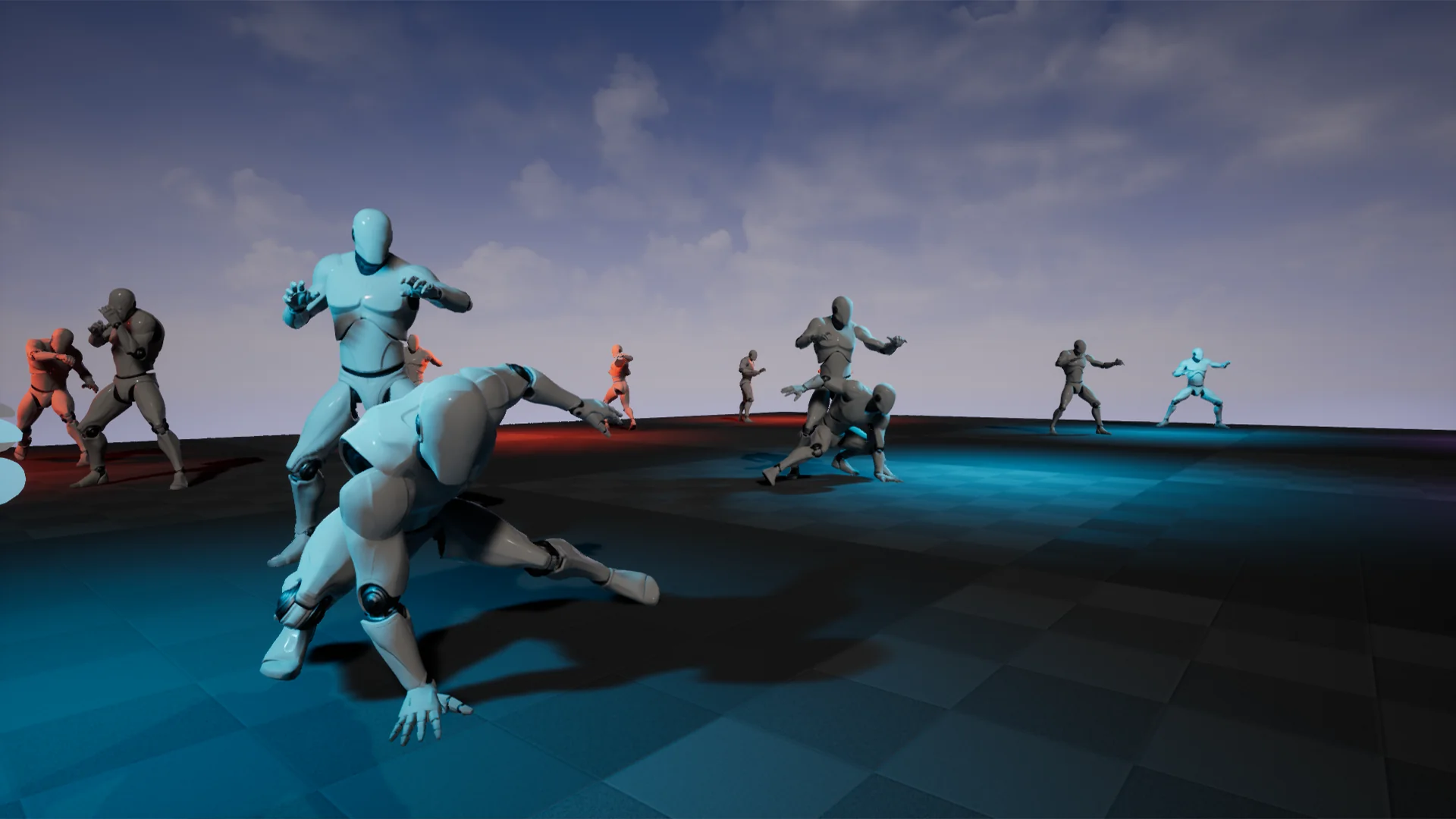
Establishing responsive, visually coherent hand-to-hand engagements in game development often encounters friction when developers are forced to untangle pre-packaged character blueprints or rigid template frameworks. When engineering a bespoke combat controller, an independent state machine, or an established character rig, gameplay programmers and technical animators frequently require raw, high-impact motion assets rather than full-system gameplay mechanics. The Close Combat Animset provides a focused motion repertoire focused on armed strikes, high-impact kicks, martial arts techniques, and agile ninja maneuvers, offering direct integration paths for teams prioritizing fluid combat execution across diverse genres.
Close Combat Mechanics Across Distinct Gameplay Perspectives
Combat animation readability varies significantly depending on camera placement, distance, and player field of view. An attack sequence that looks impactful in a traditional third-person perspective can lose its clarity entirely when viewed from a distant overhead camera, while motions designed strictly for side-scrolling encounters might fail to communicate depth in a free-roaming environment. The Close Combat Animset addresses multiple camera configurations by supplying strikes and transitions suited for fighting games, RPGs, third-person action adventures, top-down brawlers, isometric tactical titles, and side-scrolling platformers.
In standard third-person and over-the-shoulder action experiences, melee motions rely on deliberate weight shifts, directional follow-through, and believable momentum transfer. Players observe character movement from immediate angles, making subtle body mechanics, hip rotation, and foot planting critical for conveying physical force. In contrast, top-down and isometric camera angles compress verticality and demand broad, readable silhouettes. Within these high-angle presentations, strikes require pronounced limb extensions, wide arcs, and distinct visual silhouettes so players can identify weapon trajectories and kick releases amid dense battlefield environments or overlapping particle effects.
For dedicated fighting games and planar platformers, animation priority shifts toward precise horizontal reach and frame-level clarity. In a 2D or 2.5D side-scrolling structure, attacks must clearly align with lateral hurtboxes and collision volumes. Snappy kick executions, direct armed thrusts, and rapid martial arts flourishes ensure that visual impacts match the exact moments of spatial intersection, allowing players to accurately judge spacing, attack reach, and recovery vulnerabilities regardless of the project's visual presentation.
Modular Animset Construction for Armed and Unarmed Martial Arts
Combative fluidity relies heavily on modular animation architecture. Rather than locking characters into prolonged, non-interactive animation sequences, modular assets allow designers to break down offensive actions into distinct phases: wind-up, active strike frames, contact follow-through, and recovery transitions. The Close Combat Animset incorporates this modular design philosophy across a wide range of unarmed martial arts, fighter maneuvers, armed weapon swings, and ninja-inspired agility moves.
Because the motion files function as discrete building blocks, developers can link individual strikes together to build customized, branching combo sequences. A character can execute an initial straight punch, branch immediately into a spinning martial arts kick, or cancel active momentum into an evasive repositioning maneuver. This level of granular control lets designers craft distinct fighting profiles for varied combatant archetypes using the same core motion foundation:
Agile Ninja Archetypes: Fast strikes paired with rapid, fluid recovery phases that prioritize speed, evasion, and misdirection.
Disciplined Martial Artists: Balanced physical forms featuring clean kick extensions, structured stances, and technical hand strikes.
Armed Melee Specialists: Weapon-assisted swings and lunges that emphasize reach, kinetic force, and deliberate momentum.
Aggressive Brawlers: Heavy, direct kick-and-punch combinations engineered to overwhelm opposing defenses through sheer forward pressure.
This structural versatility extends to defensive and cancel windows. By dividing attacks into modular components, gameplay programmers can easily define input buffering zones, hit-stop moments, counter-attack triggers, and dynamic parry states within their project's animation state machines without encountering awkward blending seams.
Cross-Platform Combat Optimization for PC and Mobile Architectures
Multiplatform deployment introduces technical hurdles concerning animation evaluation performance, memory footprints, and frame rate stability. The motion data within the Close Combat Animset has been optimized to maintain high efficiency across both desktop PC hardware and resource-constrained mobile environments.
On mobile chipsets, animation processing represents a substantial draw on CPU overhead, particularly when multiple combatants engage in high-speed encounters simultaneously. Bloated bone transform channels, excessive keyframe density, or redundant animation curves can rapidly degrade rendering performance, resulting in sluggish touch controls and dropped frames during intensive gameplay. By ensuring that skeletal motion tracks remain clean and lightweight, the animset minimizes computational overhead, allowing mobile devices to manage multi-character brawls, complex crowd encounters, and rapid combat state transitions without thermal throttling or performance hitching.
On PC platforms, this optimization translates into exceptional responsiveness and sub-frame precision. Competitive fighting games and precision action RPGs demand uncompromised fidelity, where frame data, hitbox alignment, and recovery windows must execute with complete predictability. The streamlined animation curves allow PC builds to run smoothly at elevated refresh rates, delivering fluid visual motion that preserves every nuance of a strike's impact and timing.
Production Application in Stencil of Judgement
The practical utility of any motion collection is best measured through its deployment in active game production. The Close Combat Animset serves as an integrated asset in the real-world title Stencil of Judgement, demonstrating its adaptability within an authentic development pipeline.
Integrating pre-built animations into a live production requires motion data that can withstand extensive retargeting, custom character proportion adjustments, and intricate blending setups. In active projects like Stencil of Judgement, animation clips must blend seamlessly into movement locomotion blend spaces, react cleanly to directional hit reactions, and align with environmental collision logic. The successful deployment of this animset in a realized production demonstrates its structural stability, proving that the skeletal motion data transitions cleanly from isolated preview environments into complex, interactive game loops.
Animset Scope, Scheduled Content Updates, and The Art of Combat
The Close Combat Animset is specifically tailored for development teams, technical artists, and animators who require pure animation assets without the baggage of pre-packaged character controllers or unneeded gameplay scripting. In projects where custom movement logic, netcode, or specialized combat systems are already established, importing heavy gameplay templates often requires hours of tedious refactoring to remove unwanted dependencies. By maintaining an animation-only scope, this package allows studios to import the motion files directly into their own proprietary architectures without friction.
For creators who utilize the comprehensive combat framework The Art of Combat, this collection is integrated directly into that system as an update, providing seamless continuity between dedicated framework mechanics and expanded motion libraries. Furthermore, the asset roadmap includes scheduled content updates, ensuring that creators can continue to expand their martial arts repertoires, kick variations, and melee encounter systems as additional motion data is introduced to the library over time.
 Combat
 Combat
 Combat