"efaa631e936fd3ee"{"id":"1002245","slug":"two-sword-animset","title":"Two Sword AnimSet","category":"Combat","engine":"4.26+,5.0+","assetVersion":"","engineVersion":"Engine Version: 4.26+,5.0+","tag":"Combat","accent":"blue","visual":"mech","summary":"A close look at Two Sword AnimSet, featuring 57 animations and 9 poses for dual sword and katana action RPG main characters.","platform":"Unreal Engine","publishedAt":"2026-10-29T16:04:20.439Z","updatedAt":"2026-10-29T16:04:20.439Z","sourceNotes":[],"fileContents":[],"compatibility":["Unreal Engine","Engine Version: 4.26+,5.0+"],"featuredImage":{"alt":"Two Sword AnimSet","src":"/wp-content/uploads/published/2026/10/4c186c71096d-ace5d2d5-70df-4b90-b46f-d7e7b254596d-110eb6e9ba.webp"},"hasDownloadLink":true,"downloads":0,"terms":[{"taxonomy":"category","slug":"combat","name":"Combat"}],"galleryImages":[{"src":"/wp-content/uploads/published/2026/10/a5026aa139c5-3ed23d9c-1890-43c0-8012-9ff2a4f9211a-83521c180c.webp","alt":"Two Sword AnimSet"},{"src":"/wp-content/uploads/published/2026/10/c2fe3f7d61cf-14065b53-4ce2-4a99-8ab7-6526a54534bc-af7bf3d0ee.webp","alt":"Two Sword AnimSet"},{"src":"/wp-content/uploads/published/2026/10/754afe6d24d0-ca8e7270-86e8-4849-ade0-dea0071b4b07-cb5fd9f99d.webp","alt":"Two Sword AnimSet"},{"src":"/wp-content/uploads/published/2026/10/0e3d3c5f441c-0f6f5e31-b37a-4a1d-9091-07a8e50e378d-e159169f6c.webp","alt":"Two Sword AnimSet"},{"src":"/wp-content/uploads/published/2026/10/f0d097f47b0a-d5079aac-d9d4-467a-9184-c28d0450f3a4-dc29cc960a.webp","alt":"Two Sword AnimSet"},{"src":"/wp-content/uploads/published/2026/10/c8d07bf226e2-31215530-1f23-4ee5-b733-072b389c842c-43e4b7ad80.webp","alt":"Two Sword AnimSet"},{"src":"/wp-content/uploads/published/2026/10/4bb95d359cab-b5e0277a-347c-4a6a-9c3a-7dc8b9702e09-7c0734e9d8.webp","alt":"Two Sword AnimSet"},{"src":"/wp-content/uploads/published/2026/10/100c6d9334b5-22b2f061-3cd1-480d-a539-2bf352a2a395-44b6adc0d2.webp","alt":"Two Sword AnimSet"}],"accessPanel":{"kind":"resource","title":"Download this resource","eyebrow":"Free Download","message":"Log in or create a free account to start your download.","fileName":"Content.7z","safetyNote":"Resources are manually reviewed before listing to improve quality and reduce obvious risks.","actionLabel":"Download Free","resourceType":"Resource archive"},"contentHtml":"\u003cp\u003eDual-blade combat in third-person action encounters hinges on distinct weight, clear trajectory, and intentional posture. Two Sword AnimSet establishes the choreography and rhythm required for dual-wielded swords and katanas, centering on the martial pacing expected of a primary action RPG protagonist. Wielding paired blades demands deliberate physical balance: both weapons must slash, parry, and return to ready positions without awkward visual clipping or chaotic overlapping. Across 57 handcrafted motion clips and 9 specific poses, the collection builds a complete kinetic language for a fighter in dynamic close-quarters combat.\u003c/p\u003e \u003ch2\u003eDual-Blade Locomotion and Aerial Transitions in Two Sword AnimSet\u003c/h2\u003e\n\u003cp\u003eResponsive ground navigation forms the backbone of any action RPG movement system. With 20 individual movement animations, the asset supplies the varied footwork needed to shift between combat engagement and spatial traversal while maintaining twin weapons at the ready. Having a large distribution of movement clips allows developers to construct directional blends, strafes, and varied running tempos that preserve upper-body blade readiness while keeping lower-body stepping grounded and crisp.\u003c/p\u003e \u003cp\u003eQuick repositioning extends beyond standard running steps into dedicated evasion tools. Four separate roll animations provide heavy-commitment dodges that carry the character out of broad enemy swings or area-of-effect hazards. In addition to rolling, four avoid animations cover tighter, shorter slips and evasive steps, enabling rapid defensive repositions without breaking posture or traveling as far across the combat arena.\u003c/p\u003e \u003cp\u003eVerticality is handled through a structured sequence of four jump clips divided into jump, fall, Z0, and Z1. Rather than relying on a generic loop for the entire airborne duration, splitting aerial movement into launch, sustained descent, and distinct vertical velocity stages gives character controllers precise anchor points. The Z0 and Z1 states let animators and programmers tune the apex of the arc and the exact threshold before impact, ensuring that jumps carry natural gravity whether hopping over ground obstacles or initiating downward blade strikes.\u003c/p\u003e \u003ch2\u003eKatana Attacks, Avoid Maneuvers, and Combat Poses\u003c/h2\u003e\n\u003cp\u003eOffensive sequences in Two Sword AnimSet focus on fast, controlled cutting paths suited to dual katanas or straight swords. The 10 attack animations provide the core striking toolkit for an action game's main character, delivering varied slashes and combination sequences that utilize both hands independently and in unison. The timing leans into handcrafted keyframing, preserving the distinct sharpness and sudden deceleration characteristic of traditional blade arts rather than relying on loose motion-captured drift.\u003c/p\u003e \u003cp\u003eDefense and utility round out the offensive moveset. A dedicated defense animation holds both blades in a protective guard to deflect incoming attacks, providing the visual baseline for timed parries or continuous blocking states. A buff animation provides an empowering flourish or tactical pause, giving the fighter a clear physical activation gesture when triggering temporary combat enhancements or blade skills during a skirmish. Nine static poses accompany these motions, offering steady reference frames and posture keys for blending stances, checking weapon offsets, or configuring system-level state machines.\u003c/p\u003e \u003ch2\u003eReaction States, Knockdown Recovery, and Stance Transitions\u003c/h2\u003e\n\u003cp\u003eConvincing melee combat requires clear visual feedback when hits land. The set provides hit reactions split across front and side impacts, allowing character models to flinch and turn realistically based on the direction of an incoming weapon swing. When strikes overcome the character completely, a single dead animation provides a definitive defeat sequence that resolves smoothly on the ground.\u003c/p\u003e \u003cp\u003eHeavier impacts are handled by a multi-stage down sequence comprising down 1, downidle 1, and rise 1. Rather than forcing developers to trigger an uninterrupted knockdown-and-recovery loop, breaking the sequence into three phases enables variable stun durations: the initial knockdown collapse transitions naturally into a vulnerable ground-lying idle, which holds until gameplay systems call the dedicated rise motion to bring the fighter back to their feet. This granular division is critical for rhythm-heavy action RPGs where player input or stun thresholds dictate recovery timing.\u003c/p\u003e \u003cp\u003eBetween hostile encounters, weapon handling needs clear visual boundaries. Equip and unequip animations handle drawing both blades from their scabbards or stowing them back onto the character's body. Stance preservation relies on two active idle variations, a dedicated long idle for extended pauses, and two idle transition clips that bridge the gap between combat-alert postures and relaxed neutral states without snapping limbs or breaking weapon alignment.\u003c/p\u003e \u003ch2\u003eIntegration with Wudang Sword AnimSet\u003c/h2\u003e\n\u003cp\u003eFor projects expanding their martial movesets across different weapon configurations, Two Sword AnimSet maintains direct compatibility with Wudang Sword AnimSet. This shared baseline allows combat designers to mix single-sword Chinese martial forms with dual-wielded katana choreography within the same character or across allied combatants. The visual synergy between these libraries simplifies state machine transitions, letting developers implement dual-wielding stance changes, weapon upgrades, or dual-discipline fighting styles without visual dissonance in posture and movement style.\u003c/p\u003e\n\n\u003ch2\u003eRelated Resources Worth Checking\u003c/h2\u003e\n\u003cul\u003e\n\u003cli\u003e\u003ca href=\"https://3dcghub.com/insane-gun-sword-animset/\" title=\"Insane Gun Sword AnimSet\"\u003eInsane Gun Sword AnimSet\u003c/a\u003e\u003c/li\u003e\n\u003cli\u003e\u003ca href=\"https://3dcghub.com/essential-great-sword-animation-pack/\" title=\"Essential Great Sword Animation Pack\"\u003eEssential Great Sword Animation Pack\u003c/a\u003e\u003c/li\u003e\n\u003cli\u003e\u003ca href=\"https://3dcghub.com/great-dualblade-animset/\" title=\"Great DualBlade AnimSet\"\u003eGreat DualBlade AnimSet\u003c/a\u003e\u003c/li\u003e\n\u003cli\u003e\u003ca href=\"https://3dcghub.com/sword-animset-pro/\" title=\"Sword Animset Pro\"\u003eSword Animset Pro\u003c/a\u003e\u003c/li\u003e\n\u003cli\u003e\u003ca href=\"https://3dcghub.com/twinsword-animset-expansion/\" title=\"TwinSword Animset Expansion\"\u003eTwinSword Animset Expansion\u003c/a\u003e\u003c/li\u003e\n\u003c/ul\u003e","contentTextLength":5681,"navigation":{"current":40,"total":4209,"previous":{"id":"1002246","slug":"ultimate-gamedev-bundle","title":"Ultimate GameDev Bundle","category":"Engine Tools","platform":"Unreal Engine","updatedAt":"2026-10-29T16:05:10.720Z"},"next":{"id":"1002244","slug":"tvtps","title":"TVTPS","category":"Shooter","platform":"Unreal Engine","updatedAt":"2026-10-29T16:02:50.058Z"}},"relatedResources":[{"id":"1002063","slug":"insane-gun-sword-animset","title":"Insane Gun Sword AnimSet","category":"Combat","engine":"4.26+,5.0+","assetVersion":"","engineVersion":"Engine Version: 4.26+,5.0+","tag":"Combat","accent":"blue","visual":"mech","summary":"Examine the Insane Gun Sword AnimSet featuring over 115 handcrafted animations and 18 poses built for third-person hyper action and RPG main characters.","platform":"Unreal Engine","publishedAt":"2026-10-26T15:21:50.321Z","updatedAt":"2026-10-26T15:21:50.321Z","sourceNotes":[],"fileContents":[],"compatibility":["Unreal Engine","Engine Version: 4.26+,5.0+"],"featuredImage":{"alt":"Insane Gun Sword AnimSet","src":"/wp-content/uploads/published/2026/10/5eab2718ca72-2105005d-7212-4b6d-9e37-56f27e6c1f31-5b16b3c11f.webp"},"hasDownloadLink":true,"downloads":0},{"id":"1000598","slug":"essential-great-sword-animation-pack","title":"Essential Great Sword Animation Pack","category":"Combat","engine":"4.26+,5.0+","assetVersion":"","engineVersion":"Engine Version: 4.26+,5.0+","tag":"Combat","accent":"blue","visual":"animation","summary":"Unreal Engine animation pack with one-handed and two-handed great sword combat stances, locomotion, attacks, and a playable character blueprint for action RPGs.","platform":"Unreal Engine","publishedAt":"2026-07-18T13:52:05.447Z","updatedAt":"2026-07-18T13:52:05.447Z","sourceNotes":[],"fileContents":[],"compatibility":["Unreal Engine","Engine Version: 4.26+,5.0+"],"featuredImage":{"alt":"Essential Great Sword Animation Pack","src":"/wp-content/uploads/published/2026/07/825b1d12899d-c4bf9404-41fd-4b60-a7a2-0ffc173b037f-2674bc9bbb.webp"},"hasDownloadLink":true,"downloads":22},{"id":"5690","slug":"great-dualblade-animset","title":"Great DualBlade AnimSet","category":"Combat","engine":"4.26+,5.0+","assetVersion":"Engine version: 4.26+,5.0+","engineVersion":"4.18","tag":"Combat","accent":"blue","visual":"animation","summary":"Enhance your game's combat with the Great DualBlade AnimSet. This pack features 84+ high-quality animations designed for fast-paced, dual-wielding characters.","platform":"Unreal Engine","publishedAt":"2026-02-17T16:43:21.000Z","updatedAt":"2026-04-19T15:56:42.000Z","sourceNotes":[],"fileContents":[],"compatibility":["Unreal Engine","Engine version: 4.26+,5.0+"],"featuredImage":{"alt":"Great DualBlade AnimSet","src":"https://3dcghub.com/wp-content/uploads/2026/02/bb6988a6-9484-48e0-82ff-dfeca1355d39.webp"},"hasDownloadLink":true,"downloads":10}]}
Combat
Two Sword AnimSet
A close look at Two Sword AnimSet, featuring 57 animations and 9 poses for dual sword and katana action RPG main characters.
Category:Unreal Engine,CombatPlatform: Unreal EngineEngine Version: 4.26+,5.0+Published: Oct 29, 2026
Combat
Resource overview
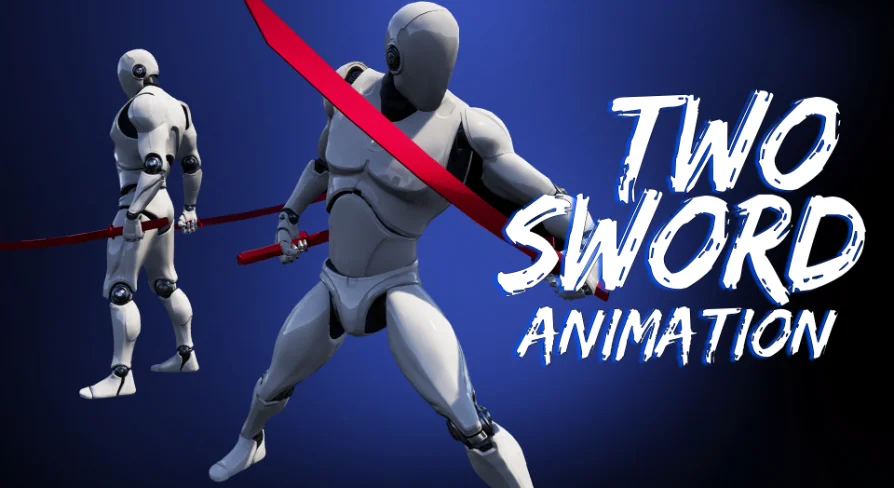
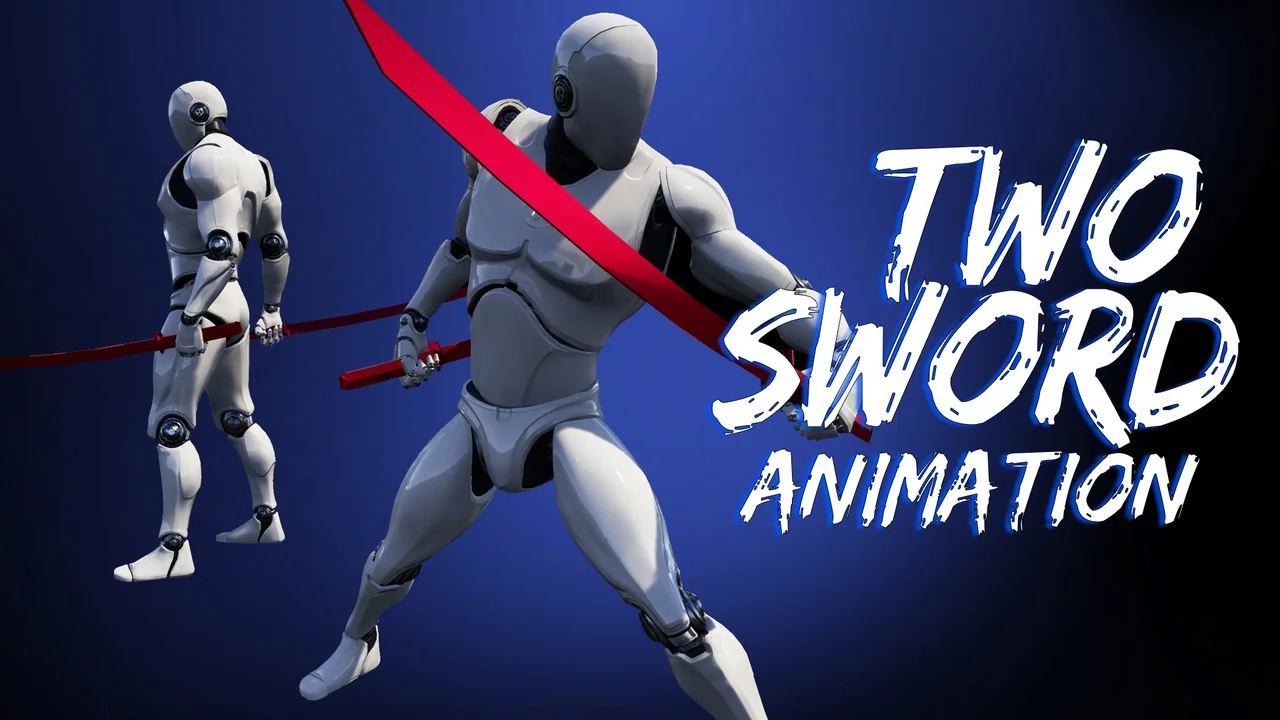
Dual-blade combat in third-person action encounters hinges on distinct weight, clear trajectory, and intentional posture. Two Sword AnimSet establishes the choreography and rhythm required for dual-wielded swords and katanas, centering on the martial pacing expected of a primary action RPG protagonist. Wielding paired blades demands deliberate physical balance: both weapons must slash, parry, and return to ready positions without awkward visual clipping or chaotic overlapping. Across 57 handcrafted motion clips and 9 specific poses, the collection builds a complete kinetic language for a fighter in dynamic close-quarters combat.
Dual-Blade Locomotion and Aerial Transitions in Two Sword AnimSet
Responsive ground navigation forms the backbone of any action RPG movement system. With 20 individual movement animations, the asset supplies the varied footwork needed to shift between combat engagement and spatial traversal while maintaining twin weapons at the ready. Having a large distribution of movement clips allows developers to construct directional blends, strafes, and varied running tempos that preserve upper-body blade readiness while keeping lower-body stepping grounded and crisp.
Quick repositioning extends beyond standard running steps into dedicated evasion tools. Four separate roll animations provide heavy-commitment dodges that carry the character out of broad enemy swings or area-of-effect hazards. In addition to rolling, four avoid animations cover tighter, shorter slips and evasive steps, enabling rapid defensive repositions without breaking posture or traveling as far across the combat arena.
Verticality is handled through a structured sequence of four jump clips divided into jump, fall, Z0, and Z1. Rather than relying on a generic loop for the entire airborne duration, splitting aerial movement into launch, sustained descent, and distinct vertical velocity stages gives character controllers precise anchor points. The Z0 and Z1 states let animators and programmers tune the apex of the arc and the exact threshold before impact, ensuring that jumps carry natural gravity whether hopping over ground obstacles or initiating downward blade strikes.
Katana Attacks, Avoid Maneuvers, and Combat Poses
Offensive sequences in Two Sword AnimSet focus on fast, controlled cutting paths suited to dual katanas or straight swords. The 10 attack animations provide the core striking toolkit for an action game's main character, delivering varied slashes and combination sequences that utilize both hands independently and in unison. The timing leans into handcrafted keyframing, preserving the distinct sharpness and sudden deceleration characteristic of traditional blade arts rather than relying on loose motion-captured drift.
Defense and utility round out the offensive moveset. A dedicated defense animation holds both blades in a protective guard to deflect incoming attacks, providing the visual baseline for timed parries or continuous blocking states. A buff animation provides an empowering flourish or tactical pause, giving the fighter a clear physical activation gesture when triggering temporary combat enhancements or blade skills during a skirmish. Nine static poses accompany these motions, offering steady reference frames and posture keys for blending stances, checking weapon offsets, or configuring system-level state machines.
Reaction States, Knockdown Recovery, and Stance Transitions
Convincing melee combat requires clear visual feedback when hits land. The set provides hit reactions split across front and side impacts, allowing character models to flinch and turn realistically based on the direction of an incoming weapon swing. When strikes overcome the character completely, a single dead animation provides a definitive defeat sequence that resolves smoothly on the ground.
Heavier impacts are handled by a multi-stage down sequence comprising down 1, downidle 1, and rise 1. Rather than forcing developers to trigger an uninterrupted knockdown-and-recovery loop, breaking the sequence into three phases enables variable stun durations: the initial knockdown collapse transitions naturally into a vulnerable ground-lying idle, which holds until gameplay systems call the dedicated rise motion to bring the fighter back to their feet. This granular division is critical for rhythm-heavy action RPGs where player input or stun thresholds dictate recovery timing.
Between hostile encounters, weapon handling needs clear visual boundaries. Equip and unequip animations handle drawing both blades from their scabbards or stowing them back onto the character's body. Stance preservation relies on two active idle variations, a dedicated long idle for extended pauses, and two idle transition clips that bridge the gap between combat-alert postures and relaxed neutral states without snapping limbs or breaking weapon alignment.
Integration with Wudang Sword AnimSet
For projects expanding their martial movesets across different weapon configurations, Two Sword AnimSet maintains direct compatibility with Wudang Sword AnimSet. This shared baseline allows combat designers to mix single-sword Chinese martial forms with dual-wielded katana choreography within the same character or across allied combatants. The visual synergy between these libraries simplifies state machine transitions, letting developers implement dual-wielding stance changes, weapon upgrades, or dual-discipline fighting styles without visual dissonance in posture and movement style.
 Combat
 Combat
 Combat
 Combat