"031373f479d9561a"{"id":"28510","slug":"atmospheric-modular-underground-car-park-hallways","title":"Atmospheric Modular Underground Car Park \u0026 Hallways","category":"Horror","engine":"4.26+,5.0+","assetVersion":"Engine version: 4.26+,5.0+","engineVersion":"","tag":"Horror","accent":"blue","visual":"city","summary":"Atmospheric Modular Underground Car Park \u0026 Hallways focuses on a fully modular interior parking garage space with a large prop selection and first-person-ready texture density. It suits projects that need realistic, moody underground scenes while still keep...","platform":"Unreal Engine","publishedAt":"2026-05-16T07:51:39.000Z","updatedAt":"2026-05-16T07:51:40.000Z","sourceNotes":[],"fileContents":[],"compatibility":["Unreal Engine","Engine version: 4.26+,5.0+"],"featuredImage":{"alt":"Atmospheric Modular Underground Car Park \u0026 Hallways","src":"https://3dcghub.com/wp-content/uploads/2026/05/fc554ca61735_1093ac58-3cd5-41a2-8138-2d8c18c1c48a.webp"},"hasDownloadLink":true,"downloads":0,"terms":[{"taxonomy":"category","slug":"horror","name":"Horror"},{"taxonomy":"post_tag","slug":"environment","name":"Environment"},{"taxonomy":"post_tag","slug":"materials","name":"Materials"},{"taxonomy":"post_tag","slug":"vehicles","name":"Vehicles"}],"galleryImages":[{"src":"https://3dcghub.com/wp-content/uploads/2026/05/9803214ecf74_d042368c-371a-43d0-83a1-a7a1e2086d4b.webp","alt":"Atmospheric Modular Underground Car Park \u0026 Hallways"},{"src":"https://3dcghub.com/wp-content/uploads/2026/05/e27e8c8b17e4_4c290560-5568-439e-bbef-dae63ad62f32.webp","alt":"Atmospheric Modular Underground Car Park \u0026 Hallways"},{"src":"https://3dcghub.com/wp-content/uploads/2026/05/666e04a10114_6ce51686-f898-4a3c-99c0-453a33ce8e6d.webp","alt":"Atmospheric Modular Underground Car Park \u0026 Hallways"},{"src":"https://3dcghub.com/wp-content/uploads/2026/05/97f17733bf73_4d5a3a72-1ca6-45d6-9096-f82a0f5be538.webp","alt":"Atmospheric Modular Underground Car Park \u0026 Hallways"},{"src":"https://3dcghub.com/wp-content/uploads/2026/05/9b06e20a336a_21eed666-6cd8-419a-b852-4c27b177d45b.webp","alt":"Atmospheric Modular Underground Car Park \u0026 Hallways"},{"src":"https://3dcghub.com/wp-content/uploads/2026/05/989ce8ac3a11_6dba4d83-a8ba-4aa2-8c06-057bfe951a71.webp","alt":"Atmospheric Modular Underground Car Park \u0026 Hallways"},{"src":"https://3dcghub.com/wp-content/uploads/2026/05/fc1aba3d0291_fb9f98ca-0049-4947-bc5c-41a33fcaee8e.webp","alt":"Atmospheric Modular Underground Car Park \u0026 Hallways"},{"src":"https://3dcghub.com/wp-content/uploads/2026/05/48f8f4146f5f_c6634263-aecb-413d-853e-e8fe2ae4b61c.webp","alt":"Atmospheric Modular Underground Car Park \u0026 Hallways"},{"src":"https://3dcghub.com/wp-content/uploads/2026/05/0bb97eccd8f1_e2a6322d-4ff5-47c5-8d0a-17c7a1c2fa8e.webp","alt":"Atmospheric Modular Underground Car Park \u0026 Hallways"}],"accessPanel":{"kind":"resource","title":"Access this resource","eyebrow":"Free Download","message":"Log in or create a free account to start your download.","fileName":"Content.7z","safetyNote":"All resources are 100% manually reviewed to eliminate all risks.","actionLabel":"Download Free","resourceType":"Resource archive"},"contentHtml":"\u003cp\u003eProjects that need a tense, realistic underground setting often rely on more than a single room or a handful of props. They need repeatable structure, enough visual variation to avoid obvious reuse, and detail that still reads well up close. Atmospheric Modular Underground Car Park \u0026amp; Hallways is driven by that kind of work: a fully original atmospheric underground parking garage with the modular pieces and set dressing needed to shape the space into something specific.\u003c/p\u003e\u003cp\u003eThe pack is presented as a complete interior parking garage space rather than a narrow collection of isolated objects. That matters for artists building playable areas, cinematic setups, or environmental scenes where layout is part of the storytelling. A garage can feel clean and orderly, neglected and oppressive, or simply practical and believable depending on how the modular pieces and props are arranged. With more than 150 props in the pack, including modular pieces, there is enough material to treat the environment as a place instead of a backdrop.\u003c/p\u003e\u003ch2\u003eAtmospheric underground car park scenes with room to change the tone\u003c/h2\u003e\u003cp\u003eThe strongest creative angle here is the setting itself. An underground car park naturally supports realistic, automotive, and horror-oriented work, and the tag set reflects that mix. A realistic approach can emphasize the everyday character of a working garage: repeating bays, concrete transitions, clear circulation routes, and dense environmental dressing. A horror-focused setup can use the same architecture differently, leaning into empty stretches, visibility breaks, and long interior lines that turn familiar space into something uneasy.\u003c/p\u003e\u003cp\u003eBecause the space is fully modular, the environment does not have to stay locked to one fixed arrangement. Artists can build a compact section for a focused encounter, a broader layout for exploration, or a more cinematic composition that guides the eye through layered foreground and background details. The modular format supports that flexibility directly. It allows the garage to function as a game level, a scene fragment, or a reusable environment block that can be reshaped across multiple situations.\u003c/p\u003e\u003cp\u003eThe resource name also pairs the underground car park with hallways, which broadens the mood even further within the same overall setting. That gives the environment a stronger sense of transition and interior movement. A parking structure becomes more than open vehicle space when it can also suggest side passages, service routes, or connected circulation areas. In practice, that kind of spatial identity helps developers build pacing into the environment rather than treating every area as one uninterrupted expanse.\u003c/p\u003e\u003ch2\u003eOver 150 props and over 70 unique set dressing props\u003c/h2\u003e\u003cp\u003eScale is one of the more useful practical details here. The pack includes over 150 props, with modular pieces included in that total, alongside over 70 unique set dressing props. That combination gives it two different kinds of usefulness at once. The modular pieces shape the larger structure of the garage, while the unique set dressing props help break repetition and give smaller areas their own visual character.\u003c/p\u003e\u003cp\u003eFor scene building, that balance is important. A modular environment can establish layout efficiently, but it risks looking too uniform if every bay, corner, and transition reads the same. Unique set dressing props help interrupt that sameness. They let artists create local points of interest, make one stretch of the garage feel more active or more neglected than another, and keep the environment from flattening into pure repetition.\u003c/p\u003e\u003cp\u003eThe pack is described as containing everything needed, and more, to create a parking garage of your choosing. Read practically, that points to freedom in how the garage is assembled. One developer may want a straightforward realistic level space. Another may be chasing a slower, more atmospheric tone where the arrangement of objects is used to control line of sight and player expectation. A larger prop pool makes those choices easier to support without leaning too heavily on duplicate placement.\u003c/p\u003e\u003cp\u003eThis also helps when a project needs the environment to do more than sit in the background. Parking garages often serve as traversal spaces, staging areas, or high-tension encounter zones. The presence of both modular components and distinct set dressing means the space can be adapted for those roles while staying visually coherent.\u003c/p\u003e\u003ch2\u003eFirst Person/VR detail and the 10.24ppm texel ratio\u003c/h2\u003e\u003cp\u003eOne of the clearest pipeline-facing notes is that the assets are set up by default for First Person/VR games. That immediately places the pack in a close-view context, where texture quality and surface consistency matter more because the viewer spends time near walls, props, and structural details. Underground garage scenes often put the camera close to columns, barriers, signs, or utility elements, so a first-person-ready setup has direct creative value.\u003c/p\u003e\u003cp\u003eEvery asset is audited to be 10.24ppm, described here as First Person Quality. That is not just a technical number dropped into the feature list. It supports a particular use case: scenes where the environment needs to hold up under close inspection without the artist having to aggressively cut detail to preserve texture budgets. The pack specifically pushes back against the need to down-res assets and lose visible detail in the process.\u003c/p\u003e\u003cp\u003eFor developers working on immersive projects, especially those where the player lingers in the environment, that consistency is useful. It helps the scene maintain a stable level of visual fidelity from asset to asset instead of feeling sharp in one corner and noticeably softer in another. In a parking garage, where repeated materials and structures dominate the view, uneven texture presentation can stand out quickly. A pack-wide texel target addresses that concern in a direct way.\u003c/p\u003e\u003cp\u003eThe description also states that the assets are made to AAA quality and intended to hold up to the inevitable optimization pass. The practical meaning is straightforward: the visual target is high, but the pack is also built with production reality in mind. Teams often start with detail-rich scenes and refine them later. Assets that remain useful through that process are easier to integrate into active development.\u003c/p\u003e\u003ch2\u003e120fps example scene and physically based lighting\u003c/h2\u003e\u003cp\u003eThe included example scene is another strong indicator of how the pack is meant to be used. It runs at 120fps and uses a physically based lighting setup. That gives artists and developers a performance-conscious reference point while also showing the environment under a lighting model suited to realistic materials and believable interior response.\u003c/p\u003e\u003cp\u003eIn a garage setting, lighting is not a minor detail. This kind of space depends on how illumination falls across concrete surfaces, how darker stretches contrast with brighter points, and how the scene preserves clarity without losing mood. A physically based lighting setup supports that balance. It helps the garage read as grounded and tangible rather than artificially staged.\u003c/p\u003e\u003cp\u003eThe 120fps example scene is useful in a different but related way. It suggests that the environment is not only about visual density. It is also presented with a scene example that prioritizes smooth runtime performance. For teams exploring first-person or VR applications, that is an especially relevant detail, because those projects can be sensitive to both visual quality and responsiveness.\u003c/p\u003e\u003cp\u003eThis does not mean every project will use the environment in exactly the same way, but it does show a concrete starting point: a lighting approach and scene example aimed at a polished, performant presentation. That makes the pack easier to evaluate as a practical building block instead of a loose pile of assets.\u003c/p\u003e\u003ch2\u003eSensibly packed assets for large amounts of items\u003c/h2\u003e\u003cp\u003eThe final feature worth dwelling on is the asset packing. The pack uses sensible asset packing to reduce material calls on large amounts of items. For an underground parking garage, that is more than a technical footnote. This kind of environment naturally involves many repeated and closely grouped objects. Once a scene grows from a small test area into a believable interior space, the number of visible items can climb fast.\u003c/p\u003e\u003cp\u003eReducing material calls becomes especially relevant in those denser scenarios. It supports the idea that the garage can be filled out rather than kept sparse for safety. Since the pack already leans on a large number of props and modular components, that efficiency-minded packing works hand in hand with the environment’s intended scale.\u003c/p\u003e\u003cp\u003eThere is also a nice fit between this detail and the pack’s broader identity. The environment aims for strong close-up quality through its audited texel ratio, but it also acknowledges the practical cost of placing many objects in one scene. That balance is often what determines whether a detailed modular environment remains pleasant to build with over time.\u003c/p\u003e\u003cp\u003eAtmospheric Modular Underground Car Park \u0026amp; Hallways makes the most sense for artists and developers who need a realistic underground setting with enough modular freedom to shape mood, flow, and scene density. It is particularly well suited to first-person, VR, realistic, and horror-leaning projects that want an interior parking garage space to hold up both visually and structurally.\u003c/p\u003e\n\n\u003ch2\u003eContinue Browsing Similar Packs\u003c/h2\u003e\n\u003cul\u003e\n\u003cli\u003e\u003ca href=\"https://3dcghub.com/arcade-ultimate-vehicles-pack-low-poly-cars/\" title=\"ARCADE: Ultimate Vehicles Pack – Low Poly Cars\"\u003eARCADE: Ultimate Vehicles Pack – Low Poly Cars\u003c/a\u003e\u003c/li\u003e\n\u003cli\u003e\u003ca href=\"https://3dcghub.com/classic-sport-car-01-classic-sport-car-cars-vintage-vehicle-vehicles/\" title=\"Classic Sport Car 01 ( Classic Sport Car Cars Vintage Vehicle Vehicles )\"\u003eClassic Sport Car 01 ( Classic Sport Car Cars Vintage Vehicle Vehicles )\u003c/a\u003e\u003c/li\u003e\n\u003cli\u003e\u003ca href=\"https://3dcghub.com/advanced-road-materials/\" title=\"Advanced road materials\"\u003eAdvanced road materials\u003c/a\u003e\u003c/li\u003e\n\u003cli\u003e\u003ca href=\"https://3dcghub.com/cartoon-vehicles-full-pack-low-poly-cars-80-cars/\" title=\"Cartoon Vehicles Full Pack – Low Poly Cars (80 Cars)\"\u003eCartoon Vehicles Full Pack – Low Poly Cars (80 Cars)\u003c/a\u003e\u003c/li\u003e\n\u003cli\u003e\u003ca href=\"https://3dcghub.com/galaxy-materials-skybox-update/\" title=\"Galaxy Materials (Skybox Update)\"\u003eGalaxy Materials (Skybox Update)\u003c/a\u003e\u003c/li\u003e\n\u003c/ul\u003e\n\n\u003ch2\u003eAsset Gallery\u003c/h2\u003e","contentTextLength":9645,"navigation":{"current":1365,"total":3223,"previous":{"id":"28521","slug":"balloons","title":"Balloons","category":"Gameplay Features","platform":"Unreal Engine","updatedAt":"2026-05-16T07:52:06.000Z"},"next":{"id":"28498","slug":"ascent-ui-tools-gamepad-navigation-ui-framework","title":"Ascent UI Tools - Gamepad Navigation \u0026 UI Framework","category":"Engine Tools","platform":"Unreal Engine","updatedAt":"2026-05-16T07:36:08.000Z"}},"relatedResources":[{"id":"27497","slug":"classic-sport-car-01-classic-sport-car-cars-vintage-vehicle-vehicles","title":"Classic Sport Car 01 ( Classic Sport Car Cars Vintage Vehicle Vehicles )","category":"Cars \u0026 Trucks","engine":"5.0+","assetVersion":"Engine version: 5.0+","engineVersion":"","tag":"Cars \u0026 Trucks","accent":"blue","visual":"audio","summary":"Classic Sport Car 01 is built around a driveable classic vehicle setup with animated doors, separate meshes, and editable material instances. It fits levels, games, automotive presentations, and ArchViz scenes that need a realistic car with direct interaction.","platform":"Unreal Engine","publishedAt":"2026-04-26T06:12:02.000Z","updatedAt":"2026-04-26T06:12:03.000Z","sourceNotes":[],"fileContents":[],"compatibility":["Unreal Engine","Engine version: 5.0+"],"featuredImage":{"alt":"Classic Sport Car 01 ( Classic Sport Car Cars Vintage Vehicle Vehicles )","src":"https://3dcghub.com/wp-content/uploads/2026/04/f54c1386f4cd_6a7584be-ec42-4f48-96a0-9bcf33410019.webp"},"hasDownloadLink":true,"downloads":0},{"id":"27114","slug":"driveable-steampunk-car-vehicle-steampunk-car-retro-futuristic-victorian","title":"Driveable SteamPunk Car / Vehicle ( SteamPunk Car Retro Futuristic Victorian)","category":"Vehicles \u0026 Transportation","engine":"5.0+","assetVersion":"Engine version: 5.0+","engineVersion":"","tag":"Vehicles","accent":"blue","visual":"audio","summary":"This Victorian steampunk car combines a playable vehicle setup with a retro-futuristic look and AAA-quality presentation. It also includes five custom painted material variations and both single-mesh and 20-piece mesh options for flexible scene work.","platform":"Unreal Engine","publishedAt":"2026-04-21T10:30:10.000Z","updatedAt":"2026-04-21T10:30:11.000Z","sourceNotes":[],"fileContents":[],"compatibility":["Unreal Engine","Engine version: 5.0+"],"featuredImage":{"alt":"Driveable SteamPunk Car / Vehicle ( SteamPunk Car Retro Futuristic Victorian)","src":"https://3dcghub.com/wp-content/uploads/2026/04/5e1c523dde65_c9bf7782-71c6-475a-9bdd-1f70bf92b6af.webp"},"hasDownloadLink":true,"downloads":0},{"id":"15535","slug":"atmospheric-entry-fx","title":"Atmospheric Entry FX","category":"Fire \u0026 Explosions","engine":"4.27,5.0+","assetVersion":"Engine version: 4.27,5.0+","engineVersion":"4.27","tag":"Fire \u0026 Explosions","accent":"blue","visual":"luts","summary":"Enhance your space-themed projects with Atmospheric Entry FX, a collection of 10 Niagara particle systems. These customizable effects are perfect for simulating spacecraft reentry and meteor impacts.","platform":"Unreal Engine","publishedAt":"2026-03-12T12:05:17.000Z","updatedAt":"2026-04-19T15:44:45.000Z","sourceNotes":[],"fileContents":[],"compatibility":["Unreal Engine","Engine version: 4.27,5.0+"],"featuredImage":{"alt":"Atmospheric Entry FX","src":"https://3dcghub.com/wp-content/uploads/2026/03/8b28ab8c-fcb0-48b8-8bc3-0fd66214d582.webp"},"hasDownloadLink":true,"downloads":0}]}
Horror
Atmospheric Modular Underground Car Park & Hallways
Atmospheric Modular Underground Car Park & Hallways focuses on a fully modular interior parking garage space with a large prop selection and first-person-ready texture density. It suits projects that need realistic, moody underground scenes while still keep...
Category:Unreal Engine,HorrorPlatform: Unreal EngineEngine version: 4.26+,5.0+Published: May 16, 2026
Horror
Resource overview
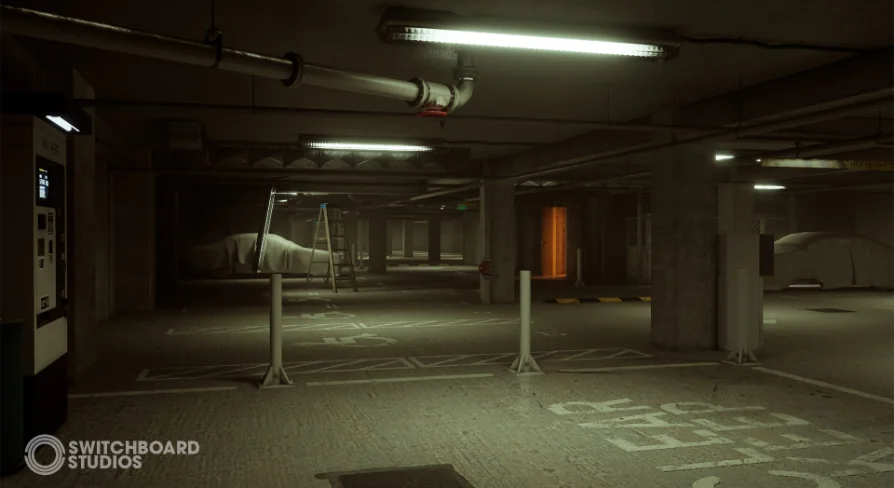
Projects that need a tense, realistic underground setting often rely on more than a single room or a handful of props. They need repeatable structure, enough visual variation to avoid obvious reuse, and detail that still reads well up close. Atmospheric Modular Underground Car Park & Hallways is driven by that kind of work: a fully original atmospheric underground parking garage with the modular pieces and set dressing needed to shape the space into something specific.
The pack is presented as a complete interior parking garage space rather than a narrow collection of isolated objects. That matters for artists building playable areas, cinematic setups, or environmental scenes where layout is part of the storytelling. A garage can feel clean and orderly, neglected and oppressive, or simply practical and believable depending on how the modular pieces and props are arranged. With more than 150 props in the pack, including modular pieces, there is enough material to treat the environment as a place instead of a backdrop.
Atmospheric underground car park scenes with room to change the tone
The strongest creative angle here is the setting itself. An underground car park naturally supports realistic, automotive, and horror-oriented work, and the tag set reflects that mix. A realistic approach can emphasize the everyday character of a working garage: repeating bays, concrete transitions, clear circulation routes, and dense environmental dressing. A horror-focused setup can use the same architecture differently, leaning into empty stretches, visibility breaks, and long interior lines that turn familiar space into something uneasy.
Because the space is fully modular, the environment does not have to stay locked to one fixed arrangement. Artists can build a compact section for a focused encounter, a broader layout for exploration, or a more cinematic composition that guides the eye through layered foreground and background details. The modular format supports that flexibility directly. It allows the garage to function as a game level, a scene fragment, or a reusable environment block that can be reshaped across multiple situations.
The resource name also pairs the underground car park with hallways, which broadens the mood even further within the same overall setting. That gives the environment a stronger sense of transition and interior movement. A parking structure becomes more than open vehicle space when it can also suggest side passages, service routes, or connected circulation areas. In practice, that kind of spatial identity helps developers build pacing into the environment rather than treating every area as one uninterrupted expanse.
Over 150 props and over 70 unique set dressing props
Scale is one of the more useful practical details here. The pack includes over 150 props, with modular pieces included in that total, alongside over 70 unique set dressing props. That combination gives it two different kinds of usefulness at once. The modular pieces shape the larger structure of the garage, while the unique set dressing props help break repetition and give smaller areas their own visual character.
For scene building, that balance is important. A modular environment can establish layout efficiently, but it risks looking too uniform if every bay, corner, and transition reads the same. Unique set dressing props help interrupt that sameness. They let artists create local points of interest, make one stretch of the garage feel more active or more neglected than another, and keep the environment from flattening into pure repetition.
The pack is described as containing everything needed, and more, to create a parking garage of your choosing. Read practically, that points to freedom in how the garage is assembled. One developer may want a straightforward realistic level space. Another may be chasing a slower, more atmospheric tone where the arrangement of objects is used to control line of sight and player expectation. A larger prop pool makes those choices easier to support without leaning too heavily on duplicate placement.
This also helps when a project needs the environment to do more than sit in the background. Parking garages often serve as traversal spaces, staging areas, or high-tension encounter zones. The presence of both modular components and distinct set dressing means the space can be adapted for those roles while staying visually coherent.
First Person/VR detail and the 10.24ppm texel ratio
One of the clearest pipeline-facing notes is that the assets are set up by default for First Person/VR games. That immediately places the pack in a close-view context, where texture quality and surface consistency matter more because the viewer spends time near walls, props, and structural details. Underground garage scenes often put the camera close to columns, barriers, signs, or utility elements, so a first-person-ready setup has direct creative value.
Every asset is audited to be 10.24ppm, described here as First Person Quality. That is not just a technical number dropped into the feature list. It supports a particular use case: scenes where the environment needs to hold up under close inspection without the artist having to aggressively cut detail to preserve texture budgets. The pack specifically pushes back against the need to down-res assets and lose visible detail in the process.
For developers working on immersive projects, especially those where the player lingers in the environment, that consistency is useful. It helps the scene maintain a stable level of visual fidelity from asset to asset instead of feeling sharp in one corner and noticeably softer in another. In a parking garage, where repeated materials and structures dominate the view, uneven texture presentation can stand out quickly. A pack-wide texel target addresses that concern in a direct way.
The description also states that the assets are made to AAA quality and intended to hold up to the inevitable optimization pass. The practical meaning is straightforward: the visual target is high, but the pack is also built with production reality in mind. Teams often start with detail-rich scenes and refine them later. Assets that remain useful through that process are easier to integrate into active development.
120fps example scene and physically based lighting
The included example scene is another strong indicator of how the pack is meant to be used. It runs at 120fps and uses a physically based lighting setup. That gives artists and developers a performance-conscious reference point while also showing the environment under a lighting model suited to realistic materials and believable interior response.
In a garage setting, lighting is not a minor detail. This kind of space depends on how illumination falls across concrete surfaces, how darker stretches contrast with brighter points, and how the scene preserves clarity without losing mood. A physically based lighting setup supports that balance. It helps the garage read as grounded and tangible rather than artificially staged.
The 120fps example scene is useful in a different but related way. It suggests that the environment is not only about visual density. It is also presented with a scene example that prioritizes smooth runtime performance. For teams exploring first-person or VR applications, that is an especially relevant detail, because those projects can be sensitive to both visual quality and responsiveness.
This does not mean every project will use the environment in exactly the same way, but it does show a concrete starting point: a lighting approach and scene example aimed at a polished, performant presentation. That makes the pack easier to evaluate as a practical building block instead of a loose pile of assets.
Sensibly packed assets for large amounts of items
The final feature worth dwelling on is the asset packing. The pack uses sensible asset packing to reduce material calls on large amounts of items. For an underground parking garage, that is more than a technical footnote. This kind of environment naturally involves many repeated and closely grouped objects. Once a scene grows from a small test area into a believable interior space, the number of visible items can climb fast.
Reducing material calls becomes especially relevant in those denser scenarios. It supports the idea that the garage can be filled out rather than kept sparse for safety. Since the pack already leans on a large number of props and modular components, that efficiency-minded packing works hand in hand with the environment’s intended scale.
There is also a nice fit between this detail and the pack’s broader identity. The environment aims for strong close-up quality through its audited texel ratio, but it also acknowledges the practical cost of placing many objects in one scene. That balance is often what determines whether a detailed modular environment remains pleasant to build with over time.
Atmospheric Modular Underground Car Park & Hallways makes the most sense for artists and developers who need a realistic underground setting with enough modular freedom to shape mood, flow, and scene density. It is particularly well suited to first-person, VR, realistic, and horror-leaning projects that want an interior parking garage space to hold up both visually and structurally.
 Horror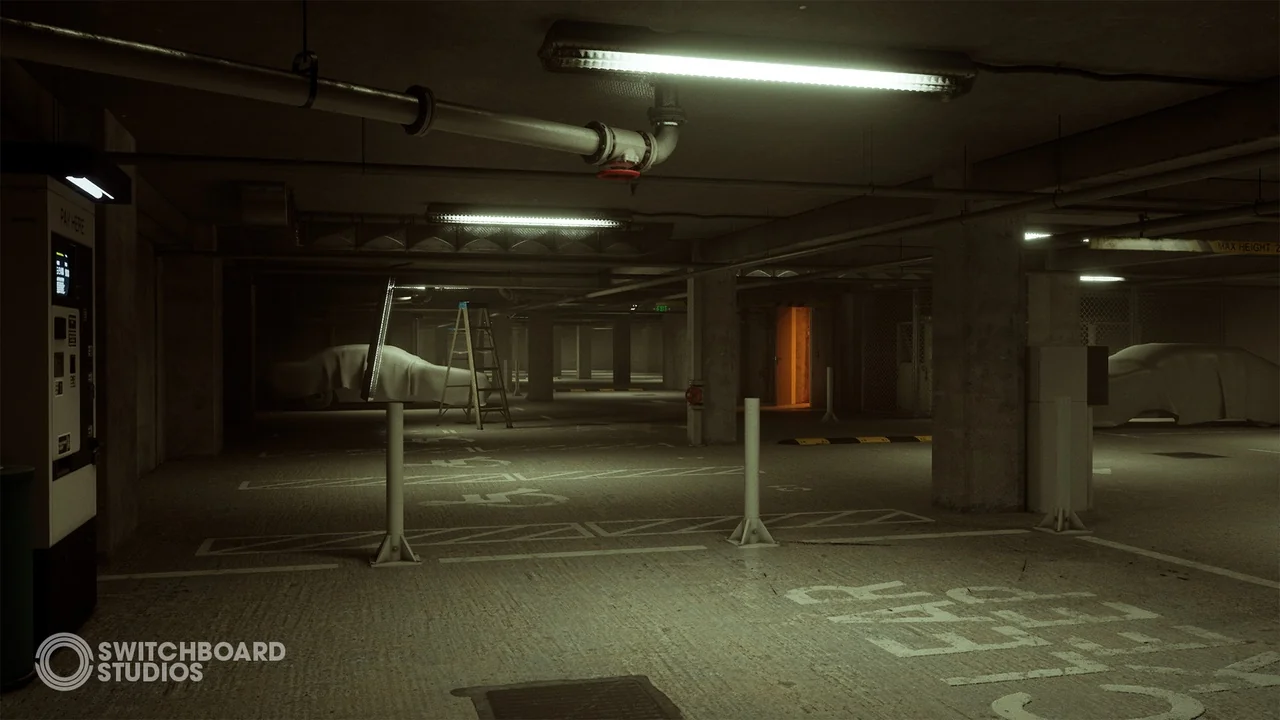
 Cars & Trucks
 Vehicles
 Fire & Explosions