"6ac84fdb0bd06614"{"id":"1000147","slug":"animalia-leopard-young","title":"Animalia - Leopard (young)","category":"Characters \u0026 Creatures","engine":"4.26+,5.0+","assetVersion":"","engineVersion":"Engine Version: 4.26+,5.0+","tag":"Characters","accent":"blue","visual":"character","summary":"A realistic young leopard with 60 fps animations, 4K textures, root motion options, gFur support, LODs, and ragdoll setup.","platform":"Unreal Engine","publishedAt":"2026-06-18T06:44:20.152Z","updatedAt":"2026-06-18T06:44:20.152Z","sourceNotes":[],"fileContents":[],"compatibility":["Unreal Engine","Engine Version: 4.26+,5.0+"],"featuredImage":{"alt":"Animalia - Leopard (young)","src":"/wp-content/uploads/published/2026/06/840511946ba8-2afc0d62-9b01-4293-b83c-f9b2d7d0101f-81df9aea17.webp"},"hasDownloadLink":true,"downloads":0,"terms":[{"taxonomy":"category","slug":"characters-and-creatures","name":"Characters \u0026 Creatures"}],"galleryImages":[{"src":"/wp-content/uploads/published/2026/06/0e5fa9bd1124-2c6b7c7d-6cd5-4d9b-8a15-1a5c582cc3e8-09f3a60fac.webp","alt":"Animalia - Leopard (young)"},{"src":"/wp-content/uploads/published/2026/06/c8ce5c55e187-f7bc194b-9aa4-4aed-b459-7fdbcbffc79e-b4040116fb.webp","alt":"Animalia - Leopard (young)"},{"src":"/wp-content/uploads/published/2026/06/14c1300da07f-5005e208-31ca-4fdd-ba50-d3fb06d0cca1-59987dacd6.webp","alt":"Animalia - Leopard (young)"},{"src":"/wp-content/uploads/published/2026/06/6f927a3938bb-a5127548-ac9c-4a71-a498-84be7d478d8c-b6b28f7bbf.webp","alt":"Animalia - Leopard (young)"},{"src":"/wp-content/uploads/published/2026/06/52d6242bfbf6-1f7e4d06-5b7b-49b8-8598-0ac5f7b1b88d-45589c599c.webp","alt":"Animalia - Leopard (young)"}],"accessPanel":{"kind":"resource","title":"Download this resource","eyebrow":"Free Download","message":"Log in or create a free account to start your download.","fileName":"Content.7z","safetyNote":"Resources are manually reviewed before listing to improve quality and reduce obvious risks.","actionLabel":"Download Free","resourceType":"Resource archive"},"contentHtml":"\u003cp\u003eFor scenes that need a believable young predator rather than a generic wildlife stand-in, \u003cstrong\u003eAnimalia - Leopard (young)\u003c/strong\u003e Is driven by a realistic juvenile leopard with a presentation that balances visual detail and animation utility. The asset combines a young Leopard model, bone mesh, 4K textures, and animations authored at 60 fps, which makes it useful not just as a static creature in an environment but as a moving character that can carry behavior, reactions, and traversal across a project.\u003c/p\u003e\u003cp\u003eThat combination gives it a clear creative identity. The realism and fur-driven look push it toward naturalistic wildlife scenes, cinematic creature moments, and gameplay situations where motion quality matters as much as surface detail. Instead of leaning on a single presentation mode, it supports multiple ways of working with the character through root motion choices, ragdoll setup, LODs, and separate animation rig support for Maya and 3ds Max.\u003c/p\u003e\u003ch2\u003eYoung Leopard presence in scene work\u003c/h2\u003e\u003cp\u003eThe strongest immediate quality here is the focus on a \u003cstrong\u003eRealistic young Leopard\u003c/strong\u003e Rather than a stylized or abstract animal form. That makes the asset especially suitable when the creature needs to read clearly as a living part of the world. A young leopard carries a different visual and behavioral impression from a fully grown big cat, and that distinction can shape how the animal functions in a scene. It can feel watchful, reactive, agile, or vulnerable depending on the surrounding context and animation choices.\u003c/p\u003e\u003cp\u003eThe included \u003cstrong\u003e4K textures\u003c/strong\u003e Support close visual inspection, which matters when the animal is meant to hold up in shots where coat detail and surface definition need to carry the realism. Paired with the \u003cstrong\u003eBone mesh\u003c/strong\u003e, the model is not limited to display value alone. It is prepared for movement and interaction, which shifts it from being background wildlife to something that can play a more active role in a sequence or encounter.\u003c/p\u003e\u003cp\u003eBecause the resource is explicitly tagged around \u003cstrong\u003eLeopard\u003c/strong\u003e, \u003cstrong\u003eRealistic\u003c/strong\u003e, \u003cstrong\u003eCreature\u003c/strong\u003e, \u003cstrong\u003eFur\u003c/strong\u003e, and \u003cstrong\u003eAnimal\u003c/strong\u003e, its identity is narrow in a useful way. It is not trying to cover a broad zoo of interchangeable creatures. It is focused on a single animal presentation with enough support systems to make that one subject more flexible in production.\u003c/p\u003e\u003ch2\u003e60 fps animation and root motion choices\u003c/h2\u003e\u003cp\u003eAnimation is one of the main reasons this asset can carry more than visual decoration. The animations are \u003cstrong\u003eAuthored at 60 fps\u003c/strong\u003e, which points to a smoother, denser motion presentation for a creature whose body language and gait are central to its believability. For an animal character, the quality of locomotion, weight shifts, turns, and reactions often determines whether the creature feels convincing. A high frame-rate authoring approach helps preserve subtleties in those motions.\u003c/p\u003e\u003cp\u003eThe asset also includes \u003cstrong\u003eAll animations available with and without the root motion\u003c/strong\u003e. That is a practical distinction for developers and artists who need different animation handling depending on the project structure. In one setup, root motion can help preserve the intended travel and body movement authored into the performance. In another, in-place versions can fit more easily into systems that manage movement externally. Having both options broadens how the leopard can be integrated into gameplay logic, scripted events, or animation state setups without forcing a single workflow.\u003c/p\u003e\u003cp\u003eThe changelog shows that animation support has continued to expand. Version \u003cstrong\u003e2.2.0\u003c/strong\u003e Added \u003cstrong\u003e20 new animations\u003c/strong\u003e, including \u003cstrong\u003eHit\u003c/strong\u003e And \u003cstrong\u003eLoco turn\u003c/strong\u003e. Those additions matter because they extend the creature beyond basic display or simple locomotion. Hit animations give the leopard a clearer response path for interactive scenarios, while locomotion turns strengthen moment-to-moment movement transitions. Version \u003cstrong\u003e2.2.1\u003c/strong\u003e Then followed with \u003cstrong\u003eVarious tweaks and fixes\u003c/strong\u003e, while \u003cstrong\u003e2.0.0\u003c/strong\u003e Marks the initial release.\u003c/p\u003e\u003cp\u003eTaken together, those details suggest a creature asset that can serve both presentational and reactive roles. It can move through a space, respond to events, and better maintain motion continuity during turns and impacts, which are often the moments where animal characters either feel alive or start to look mechanical.\u003c/p\u003e\u003ch2\u003eGFur support, bone mesh, and the fur-driven look\u003c/h2\u003e\u003cp\u003eFor a leopard, fur presentation is not a minor extra. It is part of the animal's silhouette and realism. This resource includes \u003cstrong\u003eGFur support\u003c/strong\u003e, and \u003cstrong\u003eGFur for Unreal Engine 5\u003c/strong\u003e Is available separately at no cost. At the same time, the leopard \u003cstrong\u003eDoesn't require the gFur plugin\u003c/strong\u003e, which keeps the asset usable without making that plugin a hard dependency.\u003c/p\u003e\u003cp\u003eThat split is useful because it lets teams decide how far they want to push the fur side of the creature. If a project wants to explore a fuller fur presentation inside an Unreal Engine 5 workflow, that support is there. If the priority is keeping the setup simpler, the asset still stands on its own without that requirement. Either way, the fact that fur support is explicitly included reinforces that the resource is meant to present the animal as more than a bare mesh solution.\u003c/p\u003e\u003cp\u003eThe presence of a \u003cstrong\u003eBone mesh\u003c/strong\u003e Also matters here because it underpins movement and deformation rather than treating the leopard as a static fur showcase. This gives a creature setup where the body structure, animation, and fur-oriented support are working toward the same end: making the young leopard convincing while moving, turning, reacting, or settling into a scene.\u003c/p\u003e\u003ch2\u003eMaya and 3ds Max rigs alongside LODs and ragdoll\u003c/h2\u003e\u003cp\u003eBeyond the model and animation set, the resource includes \u003cstrong\u003eMaya and 3ds Max animation rigs\u003c/strong\u003e. That gives it a clearer place in a broader creature workflow. For teams or artists who work across DCC tools and engine implementation, dedicated animation rigs make the asset more adaptable for custom motion work, adjustments, or animation-related iteration. The details do not promise a specific editing scope beyond the presence of those rigs, but their inclusion plainly extends the leopard beyond a locked, engine-only presentation.\u003c/p\u003e\u003cp\u003eThe technical support continues with \u003cstrong\u003eLODs\u003c/strong\u003e And a \u003cstrong\u003eRagdoll setup\u003c/strong\u003e. LODs matter whenever a creature is expected to exist across different camera distances or scene densities. They help the leopard remain practical as more than a single showcase subject. A ragdoll setup adds another layer of responsiveness, especially in interactive uses where physical reactions are part of the creature's role. Together, those systems support the idea that this is not just a model with a small motion add-on, but a creature package prepared for use in more active situations.\u003c/p\u003e\u003cp\u003eNone of those features feel decorative. They map directly to the kinds of production needs that come up once an animal has to do real work in a scene: hold up visually, move believably, fit different animation handling styles, and react within an interactive system.\u003c/p\u003e\u003ch2\u003eWhere Animalia - Leopard (young) fits best\u003c/h2\u003e\u003cp\u003eThis resource is a strong fit when a project needs a \u003cstrong\u003eRealistic young Leopard\u003c/strong\u003e That can do more than occupy a frame. Its 60 fps animation work, root motion and in-place availability, 4K textures, and fur support make it most useful in projects where the creature is meant to be seen clearly and move with intent. The inclusion of Maya and 3ds Max rigs, LODs, and ragdoll setup adds room for production use beyond simple placement.\u003c/p\u003e\u003cp\u003eIf the goal is to add a juvenile big cat that can function in both cinematic and interactive contexts, this asset has the right kind of specificity. It is driven by one animal, and the supporting features stay closely tied to that purpose: believable movement, detailed surface presentation, fur-ready rendering support, and scene-ready creature systems.\u003c/p\u003e\n\n\u003ch2\u003eExplore Similar Assets\u003c/h2\u003e\n\u003cul\u003e\n\u003cli\u003e\u003ca href=\"https://3dcghub.com/animalia-meadow-grasshopper/\" title=\"Animalia - Meadow Grasshopper\"\u003eAnimalia - Meadow Grasshopper\u003c/a\u003e\u003c/li\u003e\n\u003cli\u003e\u003ca href=\"https://3dcghub.com/animalia-bald-and-golden-eagle/\" title=\"Animalia - Bald and Golden Eagle\"\u003eAnimalia - Bald and Golden Eagle\u003c/a\u003e\u003c/li\u003e\n\u003cli\u003e\u003ca href=\"https://3dcghub.com/animalia-domestic-cat/\" title=\"Animalia - Domestic Cat\"\u003eAnimalia - Domestic Cat\u003c/a\u003e\u003c/li\u003e\n\u003cli\u003e\u003ca href=\"https://3dcghub.com/animalia-red-deer-male/\" title=\"Animalia - Red Deer (male)\"\u003eAnimalia - Red Deer (male)\u003c/a\u003e\u003c/li\u003e\n\u003cli\u003e\u003ca href=\"https://3dcghub.com/young-imp/\" title=\"Young Imp\"\u003eYoung Imp\u003c/a\u003e\u003c/li\u003e\n\u003c/ul\u003e","contentTextLength":7818,"navigation":{"current":1138,"total":3181,"previous":{"id":"1000148","slug":"animalia-starter-kit","title":"Animalia - Starter Kit","category":"Animals","platform":"Unreal Engine","updatedAt":"2026-06-18T06:51:43.125Z"},"next":{"id":"1000146","slug":"amaya","title":"Amaya","category":"Humans","platform":"Unreal Engine","updatedAt":"2026-06-18T05:32:39.353Z"}},"relatedResources":[{"id":"1000973","slug":"animalia-gray-wolf-young","title":"Animalia - Gray Wolf (young)","category":"Characters \u0026 Creatures","engine":"4.26+,5.0+","assetVersion":"","engineVersion":"Engine Version: 4.26+,5.0+","tag":"Characters","accent":"blue","visual":"character","summary":"A realistic young Gray Wolf with 60fps animations, 4K textures, gFur support, Maya/3ds Max rigs, LODs, and ragdoll setup for Unreal Engine 5 projects.","platform":"Unreal Engine","publishedAt":"2026-08-17T16:04:58.364Z","updatedAt":"2026-08-17T16:04:58.364Z","sourceNotes":[],"fileContents":[],"compatibility":["Unreal Engine","Engine Version: 4.26+,5.0+"],"featuredImage":{"alt":"Animalia - Gray Wolf (young)","src":"/wp-content/uploads/published/2026/08/9fcd1d0b632e-f6aeddf4-1dc7-45c0-91e5-98a501f9cf7e-0eaf67a9d1.webp"},"hasDownloadLink":true,"downloads":0},{"id":"1000974","slug":"animalia-lion-male","title":"Animalia - Lion (male)","category":"Characters \u0026 Creatures","engine":"4.26+,5.0+","assetVersion":"","engineVersion":"Engine Version: 4.26+,5.0+","tag":"Characters","accent":"blue","visual":"character","summary":"Realistic male lion with 60fps animations, 4K textures, gFur support, Maya/3ds Max rigs, LODs, and ragdoll for Unreal Engine 4.24 and up.","platform":"Unreal Engine","publishedAt":"2026-08-17T16:08:33.242Z","updatedAt":"2026-08-17T16:08:33.242Z","sourceNotes":[],"fileContents":[],"compatibility":["Unreal Engine","Engine Version: 4.26+,5.0+"],"featuredImage":{"alt":"Animalia - Lion (male)","src":"/wp-content/uploads/published/2026/08/799ef29163e0-6c655651-224e-4b8d-9200-2a0d57dbd08f-30295b193d.webp"},"hasDownloadLink":true,"downloads":0},{"id":"1000912","slug":"animalia-raccoon","title":"Animalia - Raccoon","category":"Characters \u0026 Creatures","engine":"4.26+,5.0+","assetVersion":"","engineVersion":"Engine Version: 4.26+,5.0+","tag":"Characters","accent":"blue","visual":"character","summary":"Realistic raccoon with 60fps animations, 2K textures, gFur support, LODs, ragdoll setup, and a 3ds Max rig. Works with UE 4.24+ and the Animalia Starter Kit.","platform":"Unreal Engine","publishedAt":"2026-08-07T17:04:40.260Z","updatedAt":"2026-08-07T17:04:40.260Z","sourceNotes":[],"fileContents":[],"compatibility":["Unreal Engine","Engine Version: 4.26+,5.0+"],"featuredImage":{"alt":"Animalia - Raccoon","src":"/wp-content/uploads/published/2026/08/2674d40980b0-8799a4c5-7e67-49ed-88a6-836893685cf5-b83809c831.webp"},"hasDownloadLink":true,"downloads":0}]}
Characters
Animalia - Leopard (young)
A realistic young leopard with 60 fps animations, 4K textures, root motion options, gFur support, LODs, and ragdoll setup.
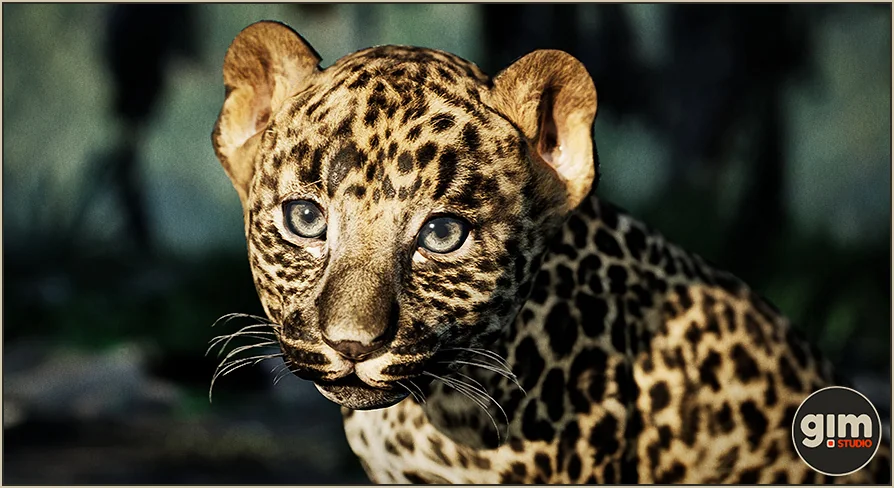
For scenes that need a believable young predator rather than a generic wildlife stand-in, Animalia - Leopard (young) Is driven by a realistic juvenile leopard with a presentation that balances visual detail and animation utility. The asset combines a young Leopard model, bone mesh, 4K textures, and animations authored at 60 fps, which makes it useful not just as a static creature in an environment but as a moving character that can carry behavior, reactions, and traversal across a project.
That combination gives it a clear creative identity. The realism and fur-driven look push it toward naturalistic wildlife scenes, cinematic creature moments, and gameplay situations where motion quality matters as much as surface detail. Instead of leaning on a single presentation mode, it supports multiple ways of working with the character through root motion choices, ragdoll setup, LODs, and separate animation rig support for Maya and 3ds Max.
Young Leopard presence in scene work
The strongest immediate quality here is the focus on a Realistic young Leopard Rather than a stylized or abstract animal form. That makes the asset especially suitable when the creature needs to read clearly as a living part of the world. A young leopard carries a different visual and behavioral impression from a fully grown big cat, and that distinction can shape how the animal functions in a scene. It can feel watchful, reactive, agile, or vulnerable depending on the surrounding context and animation choices.
The included 4K textures Support close visual inspection, which matters when the animal is meant to hold up in shots where coat detail and surface definition need to carry the realism. Paired with the Bone mesh, the model is not limited to display value alone. It is prepared for movement and interaction, which shifts it from being background wildlife to something that can play a more active role in a sequence or encounter.
Because the resource is explicitly tagged around Leopard, Realistic, Creature, Fur, and Animal, its identity is narrow in a useful way. It is not trying to cover a broad zoo of interchangeable creatures. It is focused on a single animal presentation with enough support systems to make that one subject more flexible in production.
60 fps animation and root motion choices
Animation is one of the main reasons this asset can carry more than visual decoration. The animations are Authored at 60 fps, which points to a smoother, denser motion presentation for a creature whose body language and gait are central to its believability. For an animal character, the quality of locomotion, weight shifts, turns, and reactions often determines whether the creature feels convincing. A high frame-rate authoring approach helps preserve subtleties in those motions.
The asset also includes All animations available with and without the root motion. That is a practical distinction for developers and artists who need different animation handling depending on the project structure. In one setup, root motion can help preserve the intended travel and body movement authored into the performance. In another, in-place versions can fit more easily into systems that manage movement externally. Having both options broadens how the leopard can be integrated into gameplay logic, scripted events, or animation state setups without forcing a single workflow.
The changelog shows that animation support has continued to expand. Version 2.2.0 Added 20 new animations, including Hit And Loco turn. Those additions matter because they extend the creature beyond basic display or simple locomotion. Hit animations give the leopard a clearer response path for interactive scenarios, while locomotion turns strengthen moment-to-moment movement transitions. Version 2.2.1 Then followed with Various tweaks and fixes, while 2.0.0 Marks the initial release.
Taken together, those details suggest a creature asset that can serve both presentational and reactive roles. It can move through a space, respond to events, and better maintain motion continuity during turns and impacts, which are often the moments where animal characters either feel alive or start to look mechanical.
GFur support, bone mesh, and the fur-driven look
For a leopard, fur presentation is not a minor extra. It is part of the animal's silhouette and realism. This resource includes GFur support, and GFur for Unreal Engine 5 Is available separately at no cost. At the same time, the leopard Doesn't require the gFur plugin, which keeps the asset usable without making that plugin a hard dependency.
That split is useful because it lets teams decide how far they want to push the fur side of the creature. If a project wants to explore a fuller fur presentation inside an Unreal Engine 5 workflow, that support is there. If the priority is keeping the setup simpler, the asset still stands on its own without that requirement. Either way, the fact that fur support is explicitly included reinforces that the resource is meant to present the animal as more than a bare mesh solution.
The presence of a Bone mesh Also matters here because it underpins movement and deformation rather than treating the leopard as a static fur showcase. This gives a creature setup where the body structure, animation, and fur-oriented support are working toward the same end: making the young leopard convincing while moving, turning, reacting, or settling into a scene.
Maya and 3ds Max rigs alongside LODs and ragdoll
Beyond the model and animation set, the resource includes Maya and 3ds Max animation rigs. That gives it a clearer place in a broader creature workflow. For teams or artists who work across DCC tools and engine implementation, dedicated animation rigs make the asset more adaptable for custom motion work, adjustments, or animation-related iteration. The details do not promise a specific editing scope beyond the presence of those rigs, but their inclusion plainly extends the leopard beyond a locked, engine-only presentation.
The technical support continues with LODs And a Ragdoll setup. LODs matter whenever a creature is expected to exist across different camera distances or scene densities. They help the leopard remain practical as more than a single showcase subject. A ragdoll setup adds another layer of responsiveness, especially in interactive uses where physical reactions are part of the creature's role. Together, those systems support the idea that this is not just a model with a small motion add-on, but a creature package prepared for use in more active situations.
None of those features feel decorative. They map directly to the kinds of production needs that come up once an animal has to do real work in a scene: hold up visually, move believably, fit different animation handling styles, and react within an interactive system.
Where Animalia - Leopard (young) fits best
This resource is a strong fit when a project needs a Realistic young Leopard That can do more than occupy a frame. Its 60 fps animation work, root motion and in-place availability, 4K textures, and fur support make it most useful in projects where the creature is meant to be seen clearly and move with intent. The inclusion of Maya and 3ds Max rigs, LODs, and ragdoll setup adds room for production use beyond simple placement.
If the goal is to add a juvenile big cat that can function in both cinematic and interactive contexts, this asset has the right kind of specificity. It is driven by one animal, and the supporting features stay closely tied to that purpose: believable movement, detailed surface presentation, fur-ready rendering support, and scene-ready creature systems.
 Characters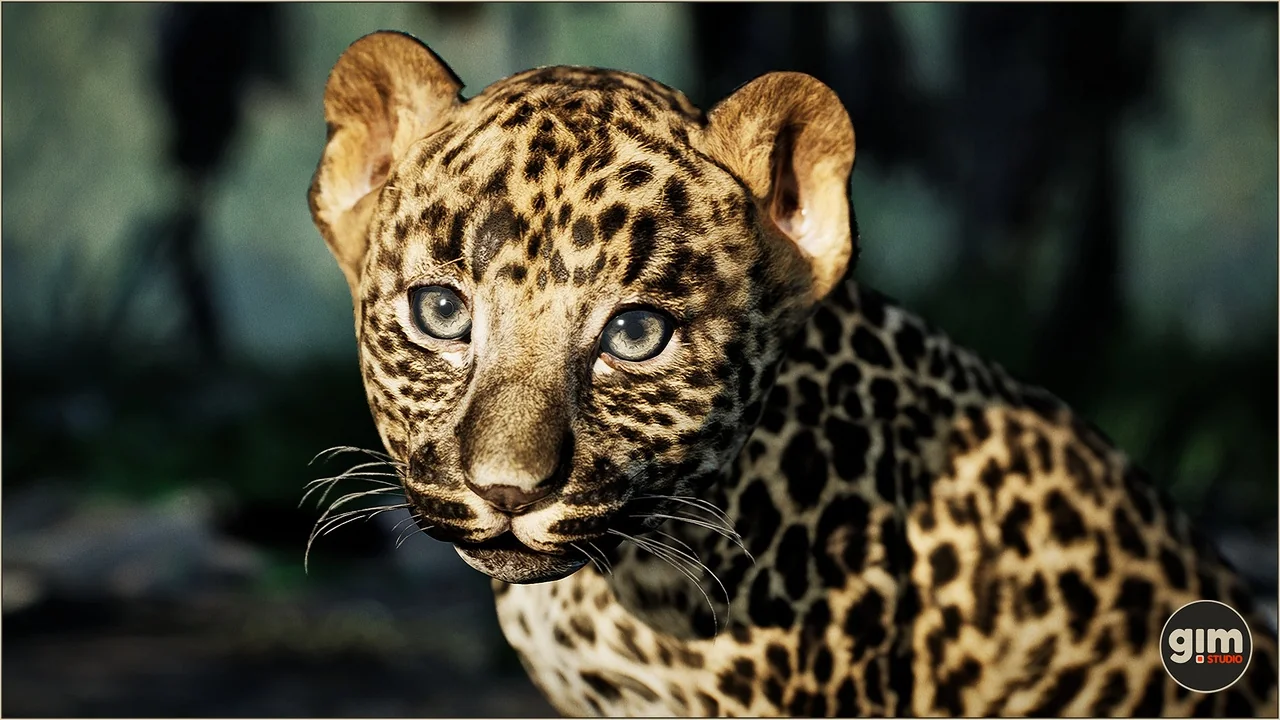
 Characters
 Characters
 Characters