"031373f479d9561a"{"id":"1000257","slug":"animalia-honeybee","title":"Animalia - Honeybee","category":"Characters \u0026 Creatures","engine":"4.26+,5.0+","assetVersion":"","engineVersion":"Engine Version: 4.26+,5.0+","tag":"Characters","accent":"blue","visual":"character","summary":"A realistic 3D honeybee model featuring 4K textures, LODs, a 3ds Max animation rig, and a physics-ready ragdoll setup for environmental detailing.","platform":"Unreal Engine","publishedAt":"2026-06-30T22:47:21.277Z","updatedAt":"2026-06-30T22:47:21.277Z","sourceNotes":[],"fileContents":[],"compatibility":["Unreal Engine","Engine Version: 4.26+,5.0+"],"featuredImage":{"alt":"Animalia - Honeybee","src":"/wp-content/uploads/published/2026/06/83c72de26e4d-db5ec858-bfc9-4625-bbff-f647f53bad39-7905552159.webp"},"hasDownloadLink":true,"downloads":0,"terms":[{"taxonomy":"category","slug":"characters-and-creatures","name":"Characters \u0026 Creatures"}],"galleryImages":[{"src":"/wp-content/uploads/published/2026/06/fa67b27b5b2c-df83f78c-8c65-422b-94d6-b1ee311f1d79-1daec57a6e.webp","alt":"Animalia - Honeybee"},{"src":"/wp-content/uploads/published/2026/06/63112cdcda68-7ac11dd3-edc3-4cff-8768-5a6875ac54f9-a7c4964e31.webp","alt":"Animalia - Honeybee"},{"src":"/wp-content/uploads/published/2026/06/64899900890d-be16a5eb-a2e3-4387-8237-32d56ae00547-41fd7308a9.webp","alt":"Animalia - Honeybee"},{"src":"/wp-content/uploads/published/2026/06/e3cf0c30c5d5-bc843eee-462c-4cd9-9c91-de3d2a5e38e6-e67f5342c4.webp","alt":"Animalia - Honeybee"},{"src":"/wp-content/uploads/published/2026/06/6bd7acd49779-133a25a4-d60d-483d-950f-e3abedd38778-68cc868b78.webp","alt":"Animalia - Honeybee"},{"src":"/wp-content/uploads/published/2026/06/7781f21236dc-df416425-2b2f-4743-a5b0-7ae675c44fd9-a467e96058.webp","alt":"Animalia - Honeybee"}],"accessPanel":{"kind":"resource","title":"Download this resource","eyebrow":"Free Download","message":"Log in or create a free account to start your download.","fileName":"Content.7z","safetyNote":"Resources are manually reviewed before listing to improve quality and reduce obvious risks.","actionLabel":"Download Free","resourceType":"Resource archive"},"contentHtml":"\u003ch2\u003ePopulating Macro Environments with High-Resolution Detail\u003c/h2\u003e\n\u003cp\u003eCreating immersive natural environments often requires pushing past broad foliage and terrain to populate scenes with convincing ambient life. The Animalia - Honeybee asset is designed specifically for these granular environmental needs, offering a highly realistic insect model suited for gardens, dense forests, or specialized macro-scale cinematics. What distinguishes this creature model is the application of 4K textures to an exceptionally small subject. In standard asset deployment, background insects typically rely on low-resolution maps to save memory. By equipping the honeybee with 4K textures, the asset is elevated to hero-prop status, capable of holding up under extreme camera proximity.\u003c/p\u003e\n\u003cp\u003eThis level of texture fidelity allows environmental artists and cinematic directors to frame tight, close-up shots of the insect interacting with flowers, landing on surfaces, or flying past the lens without exposing pixelation or muddy material details. The exoskeleton, wings, and anatomical structures retain sharp visual integrity even under intense, direct lighting setups typical of nature documentaries or macro-photography styles in real-time engines. For developers looking to push the visual realism of the insect further within Unreal Engine 5, the model is compatible with gFur. While the gFur plugin is entirely optional and not required for the asset to function, integrating it allows developers to generate realistic fuzz and hair on the bee's body, significantly enhancing the tactile, realistic nature of the creature.\u003c/p\u003e\n\u003ch2\u003eCurrent Animation Capabilities and Root Motion Implementation\u003c/h2\u003e\n\u003cp\u003eMoving a creature seamlessly through a digital environment requires robust animation data, and this asset provides a foundational set of movements to establish ambient behavior. The package currently includes a set of three distinct animations. This initial release is positioned as an early access phase regarding the animation library, which is deliberately limited compared to larger creature packs, though future updates are intended to expand this roster. Recent updates to the asset, specifically in the 2.0.1 changelog, introduced targeted fixes to stabilize the stand animation, ensuring the insect maintains a proper, jitter-free idle state when resting on surfaces.\u003c/p\u003e\n\u003cp\u003eTo maximize the utility of this focused animation set, every sequence is provided in two distinct formats: with root motion and without root motion. This dual delivery is crucial for gameplay programmers and technical animators. Animations with root motion allow the animation data itself to drive the physical displacement of the honeybee through world space, which is highly advantageous for rendering precise, pre-calculated cinematic sequences or intricate flight paths where foot slippage or unnatural gliding must be avoided. Conversely, the in-place animations (without root motion) allow the engine's movement component and AI navigation systems to dictate the creature's speed and trajectory. This flexibility ensures the honeybee can be deployed both as a tightly controlled cinematic actor and as a dynamic, AI-driven background entity.\u003c/p\u003e\n\u003ch2\u003eExtending Behaviors with the 3ds Max Rig\u003c/h2\u003e\n\u003cp\u003eBecause the built-in animation library is currently in a limited state, the inclusion of a dedicated 3ds Max animation rig is a vital pipeline tool. Rather than being restricted to the three provided animations, development teams have direct access to the creature's underlying skeletal structure and control curves. This allows animators to load the rig into 3ds Max and author completely custom behaviors tailored to the specific needs of their project.\u003c/p\u003e\n\u003cp\u003eHaving the source rig means a studio can generate complex, project-specific sequences that go beyond basic idling or flying. Animators can create specific pollination cycles, defensive stinging actions, complex swarm interactions, or unique death sequences. This pipeline flexibility ensures that the asset is not just a static prop with a few baked movements, but a fully articulated creature that can be adapted to highly specialized gameplay mechanics or narrative moments requiring bespoke insect animation.\u003c/p\u003e\n\u003ch2\u003ePhysics Integration and Performance Scaling via LODs\u003c/h2\u003e\n\u003cp\u003eIntegrating a highly detailed, 4K-textured asset into a real-time environment requires careful attention to optimization and physics. To ensure the realistic honeybee interacts convincingly with the game world, the model comes equipped with a pre-configured ragdoll setup. This physics integration allows the creature to react dynamically to world forces rather than relying solely on static, pre-authored animations. If the insect is struck by an object, caught in an environmental hazard, or swatted during gameplay, the ragdoll system takes over, allowing the physics engine to calculate realistic limb and body reactions. This results in highly dynamic and unpredictable interactions that ground the creature within the physical rules of the game world.\u003c/p\u003e\n\u003cp\u003eBalancing these physics calculations and the heavy 4K texture maps is achieved through the inclusion of LODs (Levels of Detail). For an insect asset, LODs are arguably the most critical technical feature for maintaining engine performance. While the highest detail mesh and 4K textures are rendered when the camera is inches away from the bee, the LOD system aggressively reduces the geometric complexity and texture overhead as the creature moves further into the background. This optimization is what makes it possible to render large numbers of honeybees simultaneously. Developers can populate entire hives or design dense ambient swarms in the distance without crippling the frame rate, reserving the demanding macro-level detail only for the insects directly in the player's immediate view.\u003c/p\u003e\n\n\u003ch2\u003eRelated Resources Worth Checking\u003c/h2\u003e\n\u003cul\u003e\n\u003cli\u003e\u003ca href=\"https://3dcghub.com/animalia-leopard-young/\" title=\"Animalia - Leopard (young)\"\u003eAnimalia - Leopard (young)\u003c/a\u003e\u003c/li\u003e\n\u003cli\u003e\u003ca href=\"https://3dcghub.com/animalia-meadow-grasshopper/\" title=\"Animalia - Meadow Grasshopper\"\u003eAnimalia - Meadow Grasshopper\u003c/a\u003e\u003c/li\u003e\n\u003cli\u003e\u003ca href=\"https://3dcghub.com/animalia-bald-and-golden-eagle/\" title=\"Animalia - Bald and Golden Eagle\"\u003eAnimalia - Bald and Golden Eagle\u003c/a\u003e\u003c/li\u003e\n\u003cli\u003e\u003ca href=\"https://3dcghub.com/animalia-domestic-cat/\" title=\"Animalia - Domestic Cat\"\u003eAnimalia - Domestic Cat\u003c/a\u003e\u003c/li\u003e\n\u003cli\u003e\u003ca href=\"https://3dcghub.com/animalia-red-deer-male/\" title=\"Animalia - Red Deer (male)\"\u003eAnimalia - Red Deer (male)\u003c/a\u003e\u003c/li\u003e\n\u003c/ul\u003e","contentTextLength":5976,"navigation":{"current":1093,"total":3223,"previous":{"id":"1000258","slug":"animalia-housefly","title":"Animalia - Housefly","category":"Characters \u0026 Creatures","platform":"Unreal Engine","updatedAt":"2026-06-30T22:49:24.269Z"},"next":{"id":"1000256","slug":"rain-forest-pack","title":"Rain Forest Pack","category":"Forest \u0026 Jungle","platform":"Unreal Engine","updatedAt":"2026-06-30T22:45:14.446Z"}},"relatedResources":[{"id":"1000974","slug":"animalia-lion-male","title":"Animalia - Lion (male)","category":"Characters \u0026 Creatures","engine":"4.26+,5.0+","assetVersion":"","engineVersion":"Engine Version: 4.26+,5.0+","tag":"Characters","accent":"blue","visual":"character","summary":"Realistic male lion with 60fps animations, 4K textures, gFur support, Maya/3ds Max rigs, LODs, and ragdoll for Unreal Engine 4.24 and up.","platform":"Unreal Engine","publishedAt":"2026-08-17T16:08:33.242Z","updatedAt":"2026-08-17T16:08:33.242Z","sourceNotes":[],"fileContents":[],"compatibility":["Unreal Engine","Engine Version: 4.26+,5.0+"],"featuredImage":{"alt":"Animalia - Lion (male)","src":"/wp-content/uploads/published/2026/08/799ef29163e0-6c655651-224e-4b8d-9200-2a0d57dbd08f-30295b193d.webp"},"hasDownloadLink":true,"downloads":0},{"id":"1000973","slug":"animalia-gray-wolf-young","title":"Animalia - Gray Wolf (young)","category":"Characters \u0026 Creatures","engine":"4.26+,5.0+","assetVersion":"","engineVersion":"Engine Version: 4.26+,5.0+","tag":"Characters","accent":"blue","visual":"character","summary":"A realistic young Gray Wolf with 60fps animations, 4K textures, gFur support, Maya/3ds Max rigs, LODs, and ragdoll setup for Unreal Engine 5 projects.","platform":"Unreal Engine","publishedAt":"2026-08-17T16:04:58.364Z","updatedAt":"2026-08-17T16:04:58.364Z","sourceNotes":[],"fileContents":[],"compatibility":["Unreal Engine","Engine Version: 4.26+,5.0+"],"featuredImage":{"alt":"Animalia - Gray Wolf (young)","src":"/wp-content/uploads/published/2026/08/9fcd1d0b632e-f6aeddf4-1dc7-45c0-91e5-98a501f9cf7e-0eaf67a9d1.webp"},"hasDownloadLink":true,"downloads":0},{"id":"1000912","slug":"animalia-raccoon","title":"Animalia - Raccoon","category":"Characters \u0026 Creatures","engine":"4.26+,5.0+","assetVersion":"","engineVersion":"Engine Version: 4.26+,5.0+","tag":"Characters","accent":"blue","visual":"character","summary":"Realistic raccoon with 60fps animations, 2K textures, gFur support, LODs, ragdoll setup, and a 3ds Max rig. Works with UE 4.24+ and the Animalia Starter Kit.","platform":"Unreal Engine","publishedAt":"2026-08-07T17:04:40.260Z","updatedAt":"2026-08-07T17:04:40.260Z","sourceNotes":[],"fileContents":[],"compatibility":["Unreal Engine","Engine Version: 4.26+,5.0+"],"featuredImage":{"alt":"Animalia - Raccoon","src":"/wp-content/uploads/published/2026/08/2674d40980b0-8799a4c5-7e67-49ed-88a6-836893685cf5-b83809c831.webp"},"hasDownloadLink":true,"downloads":0}]}
Characters
Animalia - Honeybee
A realistic 3D honeybee model featuring 4K textures, LODs, a 3ds Max animation rig, and a physics-ready ragdoll setup for environmental detailing.
Populating Macro Environments with High-Resolution Detail
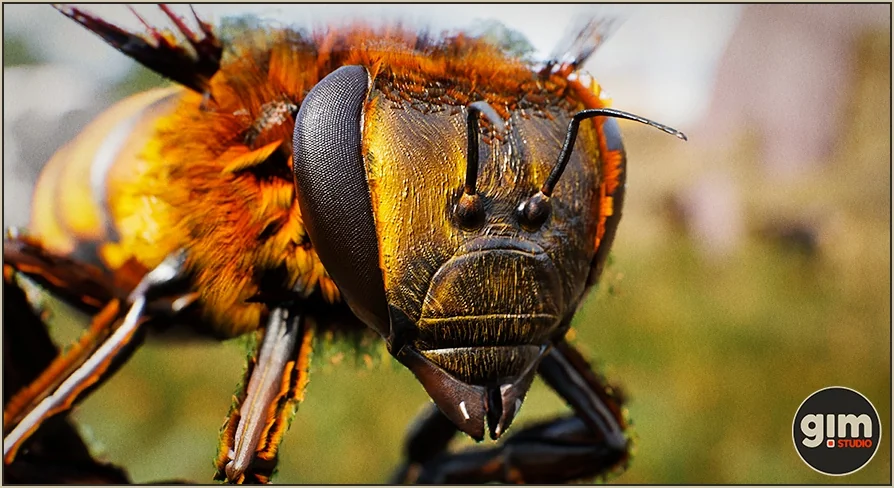
Creating immersive natural environments often requires pushing past broad foliage and terrain to populate scenes with convincing ambient life. The Animalia - Honeybee asset is designed specifically for these granular environmental needs, offering a highly realistic insect model suited for gardens, dense forests, or specialized macro-scale cinematics. What distinguishes this creature model is the application of 4K textures to an exceptionally small subject. In standard asset deployment, background insects typically rely on low-resolution maps to save memory. By equipping the honeybee with 4K textures, the asset is elevated to hero-prop status, capable of holding up under extreme camera proximity.
This level of texture fidelity allows environmental artists and cinematic directors to frame tight, close-up shots of the insect interacting with flowers, landing on surfaces, or flying past the lens without exposing pixelation or muddy material details. The exoskeleton, wings, and anatomical structures retain sharp visual integrity even under intense, direct lighting setups typical of nature documentaries or macro-photography styles in real-time engines. For developers looking to push the visual realism of the insect further within Unreal Engine 5, the model is compatible with gFur. While the gFur plugin is entirely optional and not required for the asset to function, integrating it allows developers to generate realistic fuzz and hair on the bee's body, significantly enhancing the tactile, realistic nature of the creature.
Current Animation Capabilities and Root Motion Implementation
Moving a creature seamlessly through a digital environment requires robust animation data, and this asset provides a foundational set of movements to establish ambient behavior. The package currently includes a set of three distinct animations. This initial release is positioned as an early access phase regarding the animation library, which is deliberately limited compared to larger creature packs, though future updates are intended to expand this roster. Recent updates to the asset, specifically in the 2.0.1 changelog, introduced targeted fixes to stabilize the stand animation, ensuring the insect maintains a proper, jitter-free idle state when resting on surfaces.
To maximize the utility of this focused animation set, every sequence is provided in two distinct formats: with root motion and without root motion. This dual delivery is crucial for gameplay programmers and technical animators. Animations with root motion allow the animation data itself to drive the physical displacement of the honeybee through world space, which is highly advantageous for rendering precise, pre-calculated cinematic sequences or intricate flight paths where foot slippage or unnatural gliding must be avoided. Conversely, the in-place animations (without root motion) allow the engine's movement component and AI navigation systems to dictate the creature's speed and trajectory. This flexibility ensures the honeybee can be deployed both as a tightly controlled cinematic actor and as a dynamic, AI-driven background entity.
Extending Behaviors with the 3ds Max Rig
Because the built-in animation library is currently in a limited state, the inclusion of a dedicated 3ds Max animation rig is a vital pipeline tool. Rather than being restricted to the three provided animations, development teams have direct access to the creature's underlying skeletal structure and control curves. This allows animators to load the rig into 3ds Max and author completely custom behaviors tailored to the specific needs of their project.
Having the source rig means a studio can generate complex, project-specific sequences that go beyond basic idling or flying. Animators can create specific pollination cycles, defensive stinging actions, complex swarm interactions, or unique death sequences. This pipeline flexibility ensures that the asset is not just a static prop with a few baked movements, but a fully articulated creature that can be adapted to highly specialized gameplay mechanics or narrative moments requiring bespoke insect animation.
Physics Integration and Performance Scaling via LODs
Integrating a highly detailed, 4K-textured asset into a real-time environment requires careful attention to optimization and physics. To ensure the realistic honeybee interacts convincingly with the game world, the model comes equipped with a pre-configured ragdoll setup. This physics integration allows the creature to react dynamically to world forces rather than relying solely on static, pre-authored animations. If the insect is struck by an object, caught in an environmental hazard, or swatted during gameplay, the ragdoll system takes over, allowing the physics engine to calculate realistic limb and body reactions. This results in highly dynamic and unpredictable interactions that ground the creature within the physical rules of the game world.
Balancing these physics calculations and the heavy 4K texture maps is achieved through the inclusion of LODs (Levels of Detail). For an insect asset, LODs are arguably the most critical technical feature for maintaining engine performance. While the highest detail mesh and 4K textures are rendered when the camera is inches away from the bee, the LOD system aggressively reduces the geometric complexity and texture overhead as the creature moves further into the background. This optimization is what makes it possible to render large numbers of honeybees simultaneously. Developers can populate entire hives or design dense ambient swarms in the distance without crippling the frame rate, reserving the demanding macro-level detail only for the insects directly in the player's immediate view.
 Characters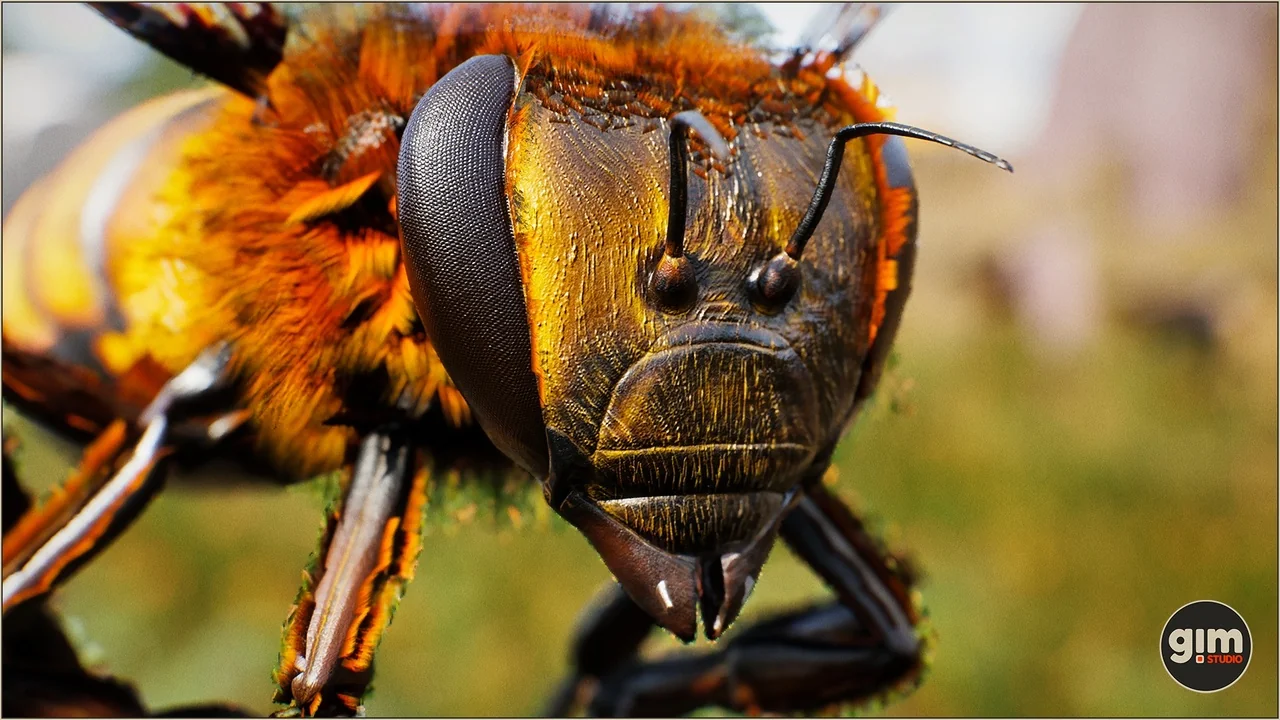
 Characters
 Characters
 Characters