"f813c18d2170b1f6"{"id":"24599","slug":"3d-pool-in-ue5-c-aaa-quality-beginner-to-advance","title":"3D pool in UE5 C++ AAA Quality (Beginner to Advance)","category":"Unreal Engine","engine":"Video language: English","assetVersion":"Video language: English","engineVersion":"File content: video + supporting files + English subtitles","tag":"Unreal Engine","accent":"blue","visual":"luts","summary":"This UE5 C++ course follows the making of a 3D pool game from the first code steps to final implementation. It covers Unreal Editor use, class structure, coding standards, vector math, and a physics model built from the ground up.","platform":"Unreal Engine","publishedAt":"2026-04-15T14:33:22.000Z","updatedAt":"2026-04-20T06:12:41.000Z","sourceNotes":[],"fileContents":[],"compatibility":["Unreal Engine","Video language: English","File content: video + supporting files + English subtitles"],"featuredImage":{"alt":"3D pool in UE5 C++ AAA Quality (Beginner to Advance)","src":"https://3dcghub.com/wp-content/uploads/2026/04/5537e1c029eb_course_15060_image.webp"},"hasDownloadLink":true,"downloads":0,"terms":[{"taxonomy":"category","slug":"tutoriallibrary-unrealengine","name":"Unreal Engine"},{"taxonomy":"post_tag","slug":"unreal-engine-5","name":"Unreal Engine 5"},{"taxonomy":"post_tag","slug":"vehicles","name":"Vehicles"},{"taxonomy":"post_tag","slug":"vfx","name":"VFX"}],"galleryImages":[],"accessPanel":{"kind":"video-resource","title":"Access this video resource","eyebrow":"Free Download","message":"Log in or create a free account to start your download.","fileName":"3D pool in UE5 C AAA Quality Beginner to Advance.7z","safetyNote":"All resources are 100% manually reviewed to eliminate all risks.","actionLabel":"Download Free","resourceType":"Video package"},"contentHtml":"\u003ch2\u003eA 3D pool project that teaches the full build process\u003c/h2\u003e\u003cp\u003e\u003cstrong\u003e3D pool in UE5 C++ AAA Quality (Beginner to Advance)\u003c/strong\u003e Centers on making a pool game in Unreal Engine 5 with C++. The course sets out to show how an industry-standard game comes together, starting from the point where a game idea has no code behind it and moving toward final implementation. That makes the pool table more than a scene or a prototype; it becomes the working example used to explain rules, mechanics, and the structure of a complete game.\u003c/p\u003e\u003cp\u003eThe material is aimed at learners who want to understand how game systems connect instead of only copying isolated steps. A pool game is a useful fit for that kind of learning because it needs clear rules, readable logic, and a physical simulation that feels consistent from shot to shot. The course also notes that the same knowledge can carry into personal projects later, as more advanced features get added.\u003c/p\u003e\u003cp\u003eIt is presented as a 6-hour course with 16 lectures and 1 resource, updated in Jan, 2026, and delivered in English. The focus is not on a narrow demo. It is on the path from basic Unreal C++ understanding to a playable result.\u003c/p\u003e\u003ch2\u003eStarting with Unreal C++ before moving into Blueprints\u003c/h2\u003e\u003cp\u003eA major part of the course is the comparison between C++ and Blueprints in Unreal Engine. Instead of treating C++ as an advanced topic to save for later, the course begins by explaining why C++ should be used over Blueprints in this workflow and what architecture Unreal C++ uses. It also covers the basic functionality of classes and their hierarchy, which gives the learner a structural view of how Unreal pieces fit together.\u003c/p\u003e\u003cp\u003eThis approach matters for a pool game because the project needs more than visual scripting alone. Rules, interactions, and game flow all benefit from code that can be read and maintained as the project grows. The course also emphasizes coding standards and best practices, along with common programming problems and their common solutions. That keeps the focus on writing code that is readable, maintainable, fast, and efficient.\u003c/p\u003e\u003cp\u003eAlongside the C++ material, the course points to the Unreal Engine Editor itself. That means the learner is not only working through programming concepts in isolation, but also seeing how those concepts live inside the engine interface used to build the game.\u003c/p\u003e\u003ch2\u003eSystems, math, and the physics side of the table\u003c/h2\u003e\u003cp\u003eA 3D pool game depends heavily on movement and physical behavior, so the course gives attention to the mathematical side of gameplay. It calls out advanced C++, mathematical approaches for solving common coding problems, and complex vector mathematics for working effectively in a 3D game world. Those topics matter when the game has to handle direction, force, and motion in a way that feels coherent.\u003c/p\u003e\u003cp\u003eThe course also mentions understanding vehicle dynamics and building a physics model from the ground up. Even though the subject is a pool game, that emphasis shows that the course is concerned with how motion behaves under the hood, not just with surface-level interaction. The same logic supports the broader goal of implementing game rules and mechanics in a professional way.\u003c/p\u003e\u003cp\u003eHere are the kinds of topics that get folded into that workflow:\u003c/p\u003e\u003cul\u003e\u003cli\u003eUnreal Engine Editor use\u003c/li\u003e\u003cli\u003eCoding standards and best practices\u003c/li\u003e\u003cli\u003eCommon programming problems and solutions\u003c/li\u003e\u003cli\u003eAdvanced C++ work\u003c/li\u003e\u003cli\u003eVector mathematics in a 3D game world\u003c/li\u003e\u003cli\u003eUnreal Engine object framework\u003c/li\u003e\u003cli\u003eVehicle dynamics and physics modeling\u003c/li\u003e\u003c/ul\u003e\u003cp\u003eThat mix gives the course a practical shape. The pool game is the project thread, but the lessons extend into the logic and math that support a playable 3D experience.\u003c/p\u003e\u003ch2\u003eWhy the course reaches beyond a single pool table\u003c/h2\u003e\u003cp\u003eAlthough the title points to a pool game, the learning path is broader than one scene or one ruleset. The course says that by the end, learners can use their knowledge of C++ and Blueprints to build their own dream games. It also states that the games created during the course can be used in personal projects moving forward as more advanced features are added.\u003c/p\u003e\u003cp\u003eAnother useful detail is that it is framed as helpful even for learners who are mainly interested in single-player games. The material still covers concepts beyond multiplayer-focused programming, which makes it easier to treat the course as a general Unreal C++ foundation rather than a niche exercise. That is a strong fit for anyone who wants to understand how a game can be planned, coded, and organized inside Unreal Engine 5.\u003c/p\u003e\u003cp\u003eThe course description also points to the Unreal Engine object framework. That suggests attention to how professional games are put together at a systems level, not only how one part of gameplay behaves. For a pool project, that can mean understanding how the gameâs pieces interact instead of relying on disconnected logic.\u003c/p\u003e\u003ch2\u003eWho this fits best\u003c/h2\u003e\u003cp\u003eThis course fits learners who want a concrete Unreal Engine 5 C++ project that explains how rules, mechanics, and physics come together in a 3D game. It is especially relevant for anyone who wants to move from the early question of how to start with zero code toward the point where a game is fully implemented. Beginners who want a guided entry into Unreal C++ can use it as a starting path, while more advanced learners can use it to sharpen code structure, vector math, and engine-level thinking around a playable pool game.\u003c/p\u003e\u003cp\u003eIf the goal is to learn Unreal C++ through a focused 3D pool project rather than through abstract examples, this course gives that path directly.\u003c/p\u003e\n\n\u003ch2\u003eMore From The Same Workflow\u003c/h2\u003e\n\u003cul\u003e\n\u003cli\u003e\u003ca href=\"https://3dcghub.com/niagara-beginners-to-advanced-in-unreal-engine-5/\" title=\"Niagara Beginners to advanced in Unreal Engine 5\"\u003eNiagara Beginners to advanced in Unreal Engine 5\u003c/a\u003e\u003c/li\u003e\n\u003cli\u003e\u003ca href=\"https://3dcghub.com/create-zelda-like-skills-with-c-in-unreal-engine-5-2/\" title=\"Create Zelda-like skills with C++ in unreal engine 5\"\u003eCreate Zelda-like skills with C++ in unreal engine 5\u003c/a\u003e\u003c/li\u003e\n\u003cli\u003e\u003ca href=\"https://3dcghub.com/main-menus-beginner-class-unreal-engine-5/\" title=\"Main Menus Beginner Class – Unreal Engine 5\"\u003eMain Menus Beginner Class – Unreal Engine 5\u003c/a\u003e\u003c/li\u003e\n\u003cli\u003e\u003ca href=\"https://3dcghub.com/create-zelda-like-skills-with-c-in-unreal-engine-5/\" title=\"Create Zelda-like skills with C++ in unreal engine 5\"\u003eCreate Zelda-like skills with C++ in unreal engine 5\u003c/a\u003e\u003c/li\u003e\n\u003cli\u003e\u003ca href=\"https://3dcghub.com/make-a-2d-action-platformer-in-unreal-engine-5/\" title=\"Make a 2D Action Platformer in Unreal Engine 5\"\u003eMake a 2D Action Platformer in Unreal Engine 5\u003c/a\u003e\u003c/li\u003e\n\u003c/ul\u003e","contentTextLength":5769,"navigation":{"current":1969,"total":3651,"previous":{"id":"24604","slug":"create-a-complete-2d-survivors-style-game-in-godot-4","title":"Create a Complete 2D Survivors Style Game in Godot 4","category":"Godot","platform":"Unreal Engine","updatedAt":"2026-04-20T06:12:41.000Z"},"next":{"id":"24662","slug":"lodmod","title":"Lodmod","category":"Blender Add-ons \u0026 Plugins","platform":"Blender","updatedAt":"2026-04-20T06:12:40.000Z"}},"relatedResources":[{"id":"24593","slug":"niagara-beginners-to-advanced-in-unreal-engine-5","title":"Niagara Beginners to advanced in Unreal Engine 5","category":"Unreal Engine","engine":"Video language: English","assetVersion":"Video language: English","engineVersion":"File content: video + supporting files + English subtitles","tag":"Unreal Engine","accent":"blue","visual":"luts","summary":"This Unreal Engine 5 course starts Niagara from scratch and moves into real-time VFX through practical effect builds. It covers stylized fire, smoke, explosions, portals, energy balls, fluids, and other game-focused visuals, along with mesh, material, and n...","platform":"Unreal Engine","publishedAt":"2026-04-15T14:14:53.000Z","updatedAt":"2026-04-20T06:12:42.000Z","sourceNotes":[],"fileContents":[],"compatibility":["Unreal Engine","Video language: English","File content: video + supporting files + English subtitles"],"featuredImage":{"alt":"Niagara Beginners to advanced in Unreal Engine 5","src":"https://3dcghub.com/wp-content/uploads/2026/04/93c917ee0bfb_3869562_576d_17.webp"},"hasDownloadLink":true,"downloads":0},{"id":"1000750","slug":"unreal-engine-5-scenebuilding-crash-course","title":"Unreal Engine 5 Scenebuilding Crash Course","category":"Unreal Engine","engine":"File Content: video + English subtitles","assetVersion":"Video Language: English","engineVersion":"File Content: video + English subtitles","tag":"Unreal Engine","accent":"blue","visual":"mech","summary":"A 1h 40m beginner course by James Roha covering UE5 visual production fundamentals, finding quality digital assets, and completing an original 3D scene.","platform":"Unreal Engine","publishedAt":"2026-07-27T13:46:54.467Z","updatedAt":"2026-07-27T13:46:54.467Z","sourceNotes":[],"fileContents":[],"compatibility":["Unreal Engine","Video Language: English","File Content: video + English subtitles"],"featuredImage":{"alt":"Unreal Engine 5 Scenebuilding Crash Course","src":"/wp-content/uploads/published/2026/07/819381a7050d-6120223-9d70-2-67b4a400e0.webp"},"hasDownloadLink":true,"downloads":0},{"id":"1000145","slug":"aaa-game-environment-creation-in-unreal-engine-5","title":"AAA Game Environment Creation in Unreal Engine 5","category":"Unreal Engine","engine":"File Content: video + English subtitles","assetVersion":"Video Language: English","engineVersion":"File Content: video + English subtitles","tag":"Unreal Engine","accent":"blue","visual":"city","summary":"A beginner Unreal Engine 5 course focused on AAA environment set dressing, art fundamentals, design theory, and lighting for stronger scenes.","platform":"Unreal Engine","publishedAt":"2026-06-13T08:44:03.779Z","updatedAt":"2026-06-13T08:44:03.779Z","sourceNotes":[],"fileContents":[],"compatibility":["Unreal Engine","Video Language: English","File Content: video + English subtitles"],"featuredImage":{"alt":"AAA Game Environment Creation in Unreal Engine 5","src":"/wp-content/uploads/published/2026/06/2e2726eb21ab-6708657-817a-8e95909d91.webp"},"hasDownloadLink":true,"downloads":1}]}
Unreal Engine
3D pool in UE5 C++ AAA Quality (Beginner to Advance)
This UE5 C++ course follows the making of a 3D pool game from the first code steps to final implementation. It covers Unreal Editor use, class structure, coding standards, vector math, and a physics model built from the ground up.
Category:Unreal EnginePlatform: Unreal EngineVideo language: EnglishFile content: video + supporting files + English subtitlesPublished: Apr 15, 2026Updated: Apr 20, 2026
Unreal Engine
Resource overview
A 3D pool project that teaches the full build process
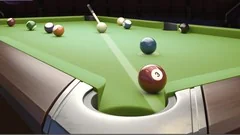
3D pool in UE5 C++ AAA Quality (Beginner to Advance) Centers on making a pool game in Unreal Engine 5 with C++. The course sets out to show how an industry-standard game comes together, starting from the point where a game idea has no code behind it and moving toward final implementation. That makes the pool table more than a scene or a prototype; it becomes the working example used to explain rules, mechanics, and the structure of a complete game.
The material is aimed at learners who want to understand how game systems connect instead of only copying isolated steps. A pool game is a useful fit for that kind of learning because it needs clear rules, readable logic, and a physical simulation that feels consistent from shot to shot. The course also notes that the same knowledge can carry into personal projects later, as more advanced features get added.
It is presented as a 6-hour course with 16 lectures and 1 resource, updated in Jan, 2026, and delivered in English. The focus is not on a narrow demo. It is on the path from basic Unreal C++ understanding to a playable result.
Starting with Unreal C++ before moving into Blueprints
A major part of the course is the comparison between C++ and Blueprints in Unreal Engine. Instead of treating C++ as an advanced topic to save for later, the course begins by explaining why C++ should be used over Blueprints in this workflow and what architecture Unreal C++ uses. It also covers the basic functionality of classes and their hierarchy, which gives the learner a structural view of how Unreal pieces fit together.
This approach matters for a pool game because the project needs more than visual scripting alone. Rules, interactions, and game flow all benefit from code that can be read and maintained as the project grows. The course also emphasizes coding standards and best practices, along with common programming problems and their common solutions. That keeps the focus on writing code that is readable, maintainable, fast, and efficient.
Alongside the C++ material, the course points to the Unreal Engine Editor itself. That means the learner is not only working through programming concepts in isolation, but also seeing how those concepts live inside the engine interface used to build the game.
Systems, math, and the physics side of the table
A 3D pool game depends heavily on movement and physical behavior, so the course gives attention to the mathematical side of gameplay. It calls out advanced C++, mathematical approaches for solving common coding problems, and complex vector mathematics for working effectively in a 3D game world. Those topics matter when the game has to handle direction, force, and motion in a way that feels coherent.
The course also mentions understanding vehicle dynamics and building a physics model from the ground up. Even though the subject is a pool game, that emphasis shows that the course is concerned with how motion behaves under the hood, not just with surface-level interaction. The same logic supports the broader goal of implementing game rules and mechanics in a professional way.
Here are the kinds of topics that get folded into that workflow:
Unreal Engine Editor use
Coding standards and best practices
Common programming problems and solutions
Advanced C++ work
Vector mathematics in a 3D game world
Unreal Engine object framework
Vehicle dynamics and physics modeling
That mix gives the course a practical shape. The pool game is the project thread, but the lessons extend into the logic and math that support a playable 3D experience.
Why the course reaches beyond a single pool table
Although the title points to a pool game, the learning path is broader than one scene or one ruleset. The course says that by the end, learners can use their knowledge of C++ and Blueprints to build their own dream games. It also states that the games created during the course can be used in personal projects moving forward as more advanced features are added.
Another useful detail is that it is framed as helpful even for learners who are mainly interested in single-player games. The material still covers concepts beyond multiplayer-focused programming, which makes it easier to treat the course as a general Unreal C++ foundation rather than a niche exercise. That is a strong fit for anyone who wants to understand how a game can be planned, coded, and organized inside Unreal Engine 5.
The course description also points to the Unreal Engine object framework. That suggests attention to how professional games are put together at a systems level, not only how one part of gameplay behaves. For a pool project, that can mean understanding how the gameâs pieces interact instead of relying on disconnected logic.
Who this fits best
This course fits learners who want a concrete Unreal Engine 5 C++ project that explains how rules, mechanics, and physics come together in a 3D game. It is especially relevant for anyone who wants to move from the early question of how to start with zero code toward the point where a game is fully implemented. Beginners who want a guided entry into Unreal C++ can use it as a starting path, while more advanced learners can use it to sharpen code structure, vector math, and engine-level thinking around a playable pool game.
If the goal is to learn Unreal C++ through a focused 3D pool project rather than through abstract examples, this course gives that path directly.
 Unreal Engine
 Unreal Engine
 Unreal Engine
 Unreal Engine