"031373f479d9561a"{"id":"28434","slug":"1900s-office-1900s-1900th-office-officed-workspace-workspace","title":"1900s Office ( 1900s 1900th Office Officed Workspace Workspace )","category":"Industrial","engine":"4.26+,5.0+","assetVersion":"Engine version: 4.26+,5.0+","engineVersion":"","tag":"Industrial","accent":"blue","visual":"city","summary":"1900s Office Environment focuses on a ready-to-populate historical workspace with 109 unique meshes and a showcased preassembled scene. Its compatibility with ULAT also opens a faster path for custom modular building work and more natural scene population.","platform":"Unreal Engine","publishedAt":"2026-05-15T16:33:54.000Z","updatedAt":"2026-05-15T16:50:42.000Z","sourceNotes":[],"fileContents":[],"compatibility":["Unreal Engine","Engine version: 4.26+,5.0+"],"featuredImage":{"alt":"1900s Office ( 1900s 1900th Office Officed Workspace Workspace )","src":"https://3dcghub.com/wp-content/uploads/2026/05/e33c39f2457c_aefe9087-7ffd-4238-bf03-148884fc6a4e.webp"},"hasDownloadLink":true,"downloads":0,"terms":[{"taxonomy":"category","slug":"industrial-environments","name":"Industrial"},{"taxonomy":"post_tag","slug":"environment","name":"Environment"},{"taxonomy":"post_tag","slug":"prop","name":"Prop"},{"taxonomy":"post_tag","slug":"unreal-engine-5","name":"Unreal Engine 5"}],"galleryImages":[{"src":"https://3dcghub.com/wp-content/uploads/2026/05/0df32d50585e_28598622-cf8b-44b5-9478-7767e55bb93a.webp","alt":"1900s Office ( 1900s 1900th Office Officed Workspace Workspace )"},{"src":"https://3dcghub.com/wp-content/uploads/2026/05/93408d18c13e_ef8fb57f-0870-45ff-bc7b-d981bf5f80ab.webp","alt":"1900s Office ( 1900s 1900th Office Officed Workspace Workspace )"},{"src":"https://3dcghub.com/wp-content/uploads/2026/05/b43217966a55_314080c5-0f14-4a7d-89ab-c18c920cb8e0.webp","alt":"1900s Office ( 1900s 1900th Office Officed Workspace Workspace )"}],"accessPanel":{"kind":"resource","title":"Access this resource","eyebrow":"Free Download","message":"Log in or create a free account to start your download.","fileName":"Content.7z","safetyNote":"All resources are 100% manually reviewed to eliminate all risks.","actionLabel":"Download Free","resourceType":"Resource archive"},"contentHtml":"\u003cp\u003eGetting a period office into a scene usually starts with layout speed rather than decoration, and that is where 1900s Office Environment makes its clearest case. The pack includes 109 unique meshes, all showcased assets, and a showcased preassembled scene, so it supports both direct scene placement and a more deliberate set-dressing pass. Instead of beginning from an empty room, artists can work from an assembled space and then refine it around the mood, camera path, or gameplay need they have in mind.\u003c/p\u003e\n\u003cp\u003eThe setting is rooted in a historical office identity. The asset naming and tags point toward a turn-of-the-century workspace filled with classical and vintage cues: office furniture, bookshelves, chairs, wooden desks, lamps, old files, paperwork, cabinets, and document storage. The atmosphere leans into a refined interior language as well, with references to leather chairs, handwritten documents, manuscripts, carpets, wood paneling, velvet curtains, stained glass, and clocks. That combination gives the pack a usable visual direction for scenes that need a formal, timeworn, and prestigious office rather than a generic room with period props.\u003c/p\u003e \u003ch2\u003eStarting with the 1900s Office preassembled scene\u003c/h2\u003e\n\u003cp\u003eThe included preassembled scene is one of the most practical parts of the package because it gives developers and environment artists an immediate staging point. For game environments, that can mean dropping in a complete office and then deciding whether the room functions as a narrative location, an exploration stop, an executive chamber, or a document-heavy workspace. For virtual production, a preassembled space can serve as a reliable base for blocking shots, testing composition, and establishing a consistent historical interior before custom changes begin.\u003c/p\u003e\n\u003cp\u003eThe pack is presented as including all showcased assets, which matters for anyone trying to match a specific look without rebuilding it from scratch. A developer can preserve the assembled scene for a hero room and then break out the individual meshes for surrounding spaces, side rooms, corridors, or alternate office arrangements. That kind of workflow is especially useful when one environment needs to carry several variations of the same historical tone, such as a private study, a legal office, a clerical room, or a library-like work area.\u003c/p\u003e\n\u003cp\u003eThe pack is also described as offering high-quality visuals with a good level of detail while staying optimized for game-ready projects. That balance suggests a production-minded approach: enough visual richness to sell antique furniture and classic interior character, with optimization in mind for actual implementation rather than display only. The package then offers a resource that fits scene building where appearance and usability need to stay aligned.\u003c/p\u003e \u003ch2\u003eHow the vintage office details shape scene use\u003c/h2\u003e\n\u003cp\u003eWhat makes this environment flexible is not a broad genre pitch, but the way its period cues can push a scene in different directions while staying within the same historical language. The tags outline a dense office atmosphere that can support several interpretations of the space. Typewriters, old letters, handwritten documents, paperwork, and file storage naturally suit investigative or administrative scenes. Brass lamps, banker's lamps, mahogany wood, and ornate interior details lean toward a more executive or aristocratic impression. Library references, dark academia notes, and secluded study cues make it equally viable for private reading rooms or scholarly interiors.\u003c/p\u003e\n\u003cp\u003eThat range is useful for storytelling because the environment does not have to play only one role. A room arranged around a wooden desk and document stacks can become a legal office or a bureaucratic workplace. Shift the emphasis toward shelves, manuscripts, and a grandfather clock, and it starts reading more like a personal study or archive. Bring forward velvet curtains, stained glass, and regal furnishing choices, and the same environment language can serve a grander office with a stronger elite or luxury identity.\u003c/p\u003e\n\u003cp\u003eThe period references also help with gameplay and visual pacing. Historical offices often depend on layered surfaces and readable props, and the tags here support exactly that kind of density: chairs, cabinets, bookshelves, lamps, papers, and storage pieces all contribute to a workspace that can feel inhabited. For slower exploration scenes, those objects add texture and clues. For cinematic use, they provide depth in foreground and background framing. For virtual production, they offer visual anchors that help a room feel complete from multiple camera angles.\u003c/p\u003e \u003ch2\u003eUsing ULAT with 1900s Office for faster modular work\u003c/h2\u003e\n\u003cp\u003e1900s Office Environment includes ULAT, the Ultimate Level Art Tool, and the pack is compatible with it. ULAT is described as allowing fast creation of custom modular buildings while also offering a seamless and distinctive way to populate scenes naturally. That is useful because the environment can function as more than a fixed room package. It can be part of a broader level-building workflow where the office interior is placed inside custom modular structures rather than treated as an isolated set piece.\u003c/p\u003e\n\u003cp\u003eFor artists, that opens a practical implementation path. The preassembled office can establish the visual target, while ULAT supports the faster construction of surrounding structures or expanded layouts. A single office can grow into a suite of rooms, a wing of a larger building, or a more elaborate historical facility while keeping the same atmosphere. Developers working on virtual production levels can use that compatibility to move from one staged room to a wider environment with a more natural population pass.\u003c/p\u003e\n\u003cp\u003eThe wording around scene population is important here. ULAT is not presented only as a building tool, but also as a way to populate scenes in a seamless and distinctive manner. In creative terms, that supports the kind of historical interior that benefits from layered placement rather than sparse decoration. The office style suggested by the pack is full of period signals, and a tool that helps populate scenes naturally fits that direction well. Instead of a bare modular shell with a few props, the workflow points toward a fuller, more lived-in environment.\u003c/p\u003e \u003ch2\u003eGame-ready projects and virtual production levels\u003c/h2\u003e\n\u003cp\u003eThe pack is explicitly positioned for two uses: populating game environments and populating virtual production levels. Those two cases overlap, but they emphasize slightly different strengths. In game environments, optimization and scene readability matter. The environment is described as optimized for game-ready projects, which aligns with teams that need detailed historical spaces without treating them as purely static showpieces.\u003c/p\u003e\n\u003cp\u003eIn virtual production, the attraction is the ability to establish high-quality visuals quickly. A period office is often difficult to fake with only a few props because the style depends on a complete room language. This pack addresses that by providing a cohesive environment rather than scattered historical objects. The preassembled scene gives a strong starting point for shot setup, and the broader mesh collection makes it easier to adjust the room for specific compositions or narrative beats.\u003c/p\u003e\n\u003cp\u003eThe tags also suggest visual themes that can support different production tones without leaving the pack's identity. A gaslight-era feeling can lean moody and intimate. A classic executive room can feel formal and authoritative. A dark, book-lined workspace can push toward mystery, historical fiction, or period drama. Since these cues all sit within the same office framework, the environment can be adapted to different creative contexts while keeping a consistent historical look.\u003c/p\u003e \u003ch2\u003eWhere 109 unique meshes matter most in a historical workspace\u003c/h2\u003e\n\u003cp\u003eThe count of 109 unique meshes is not just a specification line; it points to how much variation can be introduced into a period office setup. Historical interiors rely on repetition with difference: multiple storage pieces, several seating options, layered paper elements, and a mix of decorative and functional objects. A larger unique mesh pool helps prevent a room from feeling too uniform, which is especially important in classic office spaces where the furniture and accessories carry much of the storytelling.\u003c/p\u003e\n\u003cp\u003eThat variety also helps when the same environment needs to appear in more than one context. One scene may need a polished executive workspace with elegant furniture and controlled arrangement. Another may need a denser room filled with old files, paperwork, and archival clutter. Another may need a secluded study feeling, with bookshelves and writing surfaces taking priority. The same pack can support those shifts because it is not limited to a single centerpiece asset or one narrow office composition.\u003c/p\u003e\n\u003cp\u003eFor teams planning around production readiness, the strongest fit here is straightforward: a historical office environment with detailed visuals, optimization for game-ready work, an included preassembled scene, and ULAT compatibility for faster modular building and natural scene population. That makes it well suited to projects that need a convincing 1900s workspace without spending the early environment pass constructing every room from zero.\u003c/p\u003e\n\n\u003ch2\u003eContinue Browsing Similar Packs\u003c/h2\u003e\n\u003cul\u003e\n\u003cli\u003e\u003ca href=\"https://3dcghub.com/mountain-village-environment-village-modular-village-houses-village-props/\" title=\"Mountain Village Environment (Village, Modular Village Houses, Village Props)\"\u003eMountain Village Environment (Village, Modular Village Houses, Village Props)\u003c/a\u003e\u003c/li\u003e\n\u003cli\u003e\u003ca href=\"https://3dcghub.com/medieval-props-kit/\" title=\"Medieval Props Kit\"\u003eMedieval Props Kit\u003c/a\u003e\u003c/li\u003e\n\u003cli\u003e\u003ca href=\"https://3dcghub.com/medieval-props-pack/\" title=\"Medieval Props Pack\"\u003eMedieval Props Pack\u003c/a\u003e\u003c/li\u003e\n\u003cli\u003e\u003ca href=\"https://3dcghub.com/military-props-pack-high-quality-3d-assets-for-game-dev/\" title=\"Military Props Pack\"\u003eMilitary Props Pack\u003c/a\u003e\u003c/li\u003e\n\u003c/ul\u003e\n\n\u003ch2\u003eAsset Gallery\u003c/h2\u003e","contentTextLength":9463,"navigation":{"current":1370,"total":3223,"previous":{"id":"28427","slug":"500-ultimate-luts-pack-post-processing-filters","title":"500+ Ultimate LUTs Pack - Post-Processing Filters","category":"Variety","platform":"Unreal Engine","updatedAt":"2026-05-15T16:51:07.000Z"},"next":{"id":"28447","slug":"abandoned-mansion-_-fully-modular-asset-pack","title":"Abandoned Mansion _ Fully Modular Asset Pack","category":"Abandoned","platform":"Unreal Engine","updatedAt":"2026-05-15T16:50:24.000Z"}},"relatedResources":[{"id":"28140","slug":"office-space-megapack","title":"Office Space Megapack","category":"Industrial","engine":"4.26+,5.0+","assetVersion":"Engine version: 4.26+,5.0+","engineVersion":"","tag":"Industrial","accent":"blue","visual":"city","summary":"Office Space Megapack is a modular office environment package aimed at building detailed workplace interiors for Unreal projects. It combines over 250 props, more than 150 unique set dressing items, and a first-person-focused texel standard that suits close...","platform":"Unreal Engine","publishedAt":"2026-05-04T15:40:16.000Z","updatedAt":"2026-05-04T15:40:17.000Z","sourceNotes":[],"fileContents":[],"compatibility":["Unreal Engine","Engine version: 4.26+,5.0+"],"featuredImage":{"alt":"Office Space Megapack","src":"https://3dcghub.com/wp-content/uploads/2026/05/5c378f05fe62_cbea38bb-ee98-4d19-810d-109867987322.webp"},"hasDownloadLink":true,"downloads":4},{"id":"27541","slug":"cpu-world","title":"Cpu World","category":"Industrial","engine":"4.26+,5.0+","assetVersion":"Engine version: 4.26+,5.0+","engineVersion":"","tag":"Industrial","accent":"blue","visual":"city","summary":"CPU World places a character inside a miniature field of electronic components and chip walls. Flashing LEDs and the small-scale layout push the scene toward surreal realism while keeping the technology theme clear.","platform":"Unreal Engine","publishedAt":"2026-04-26T07:18:31.000Z","updatedAt":"2026-04-26T07:18:32.000Z","sourceNotes":[],"fileContents":[],"compatibility":["Unreal Engine","Engine version: 4.26+,5.0+"],"featuredImage":{"alt":"Cpu World","src":"https://3dcghub.com/wp-content/uploads/2026/04/f820e39a2b85_104642b2-320a-43bd-be3e-d969f2fbbacc.webp"},"hasDownloadLink":true,"downloads":0},{"id":"27159","slug":"junkyard-environment-14-assets","title":"Junkyard Environment / 14 Assets","category":"Industrial","engine":"4.26+,5.0+","assetVersion":"Engine version: 4.26+,5.0+","engineVersion":"","tag":"Industrial","accent":"blue","visual":"city","summary":"Junkyard Environment / 14 Assets gathers rusty vehicles, a crane, trucks, a pickup, and other junkyard pieces into a focused prop package. Its PBR workflow and optimized, modular direction make it useful for exterior scenes that need visual weight without l...","platform":"Unreal Engine","publishedAt":"2026-04-21T13:49:45.000Z","updatedAt":"2026-04-21T13:49:46.000Z","sourceNotes":[],"fileContents":[],"compatibility":["Unreal Engine","Engine version: 4.26+,5.0+"],"featuredImage":{"alt":"Junkyard Environment / 14 Assets","src":"https://3dcghub.com/wp-content/uploads/2026/04/ba5b2081c43f_7994d52c-7990-4428-84b6-ce1157a852f2.webp"},"hasDownloadLink":true,"downloads":0}]}
1900s Office Environment focuses on a ready-to-populate historical workspace with 109 unique meshes and a showcased preassembled scene. Its compatibility with ULAT also opens a faster path for custom modular building work and more natural scene population.
Category:Unreal Engine,IndustrialPlatform: Unreal EngineEngine version: 4.26+,5.0+Published: May 15, 2026
Industrial
Resource overview
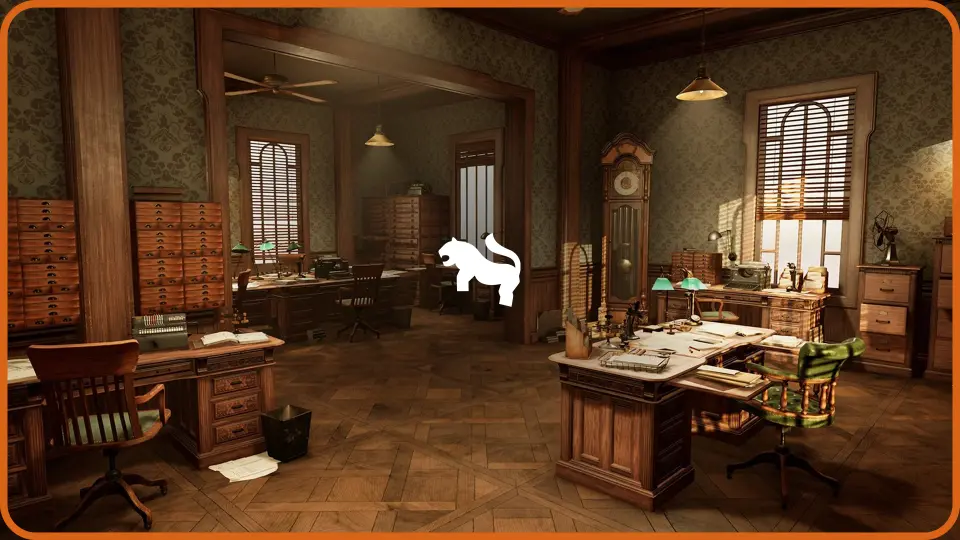
Getting a period office into a scene usually starts with layout speed rather than decoration, and that is where 1900s Office Environment makes its clearest case. The pack includes 109 unique meshes, all showcased assets, and a showcased preassembled scene, so it supports both direct scene placement and a more deliberate set-dressing pass. Instead of beginning from an empty room, artists can work from an assembled space and then refine it around the mood, camera path, or gameplay need they have in mind.
The setting is rooted in a historical office identity. The asset naming and tags point toward a turn-of-the-century workspace filled with classical and vintage cues: office furniture, bookshelves, chairs, wooden desks, lamps, old files, paperwork, cabinets, and document storage. The atmosphere leans into a refined interior language as well, with references to leather chairs, handwritten documents, manuscripts, carpets, wood paneling, velvet curtains, stained glass, and clocks. That combination gives the pack a usable visual direction for scenes that need a formal, timeworn, and prestigious office rather than a generic room with period props.
Starting with the 1900s Office preassembled scene
The included preassembled scene is one of the most practical parts of the package because it gives developers and environment artists an immediate staging point. For game environments, that can mean dropping in a complete office and then deciding whether the room functions as a narrative location, an exploration stop, an executive chamber, or a document-heavy workspace. For virtual production, a preassembled space can serve as a reliable base for blocking shots, testing composition, and establishing a consistent historical interior before custom changes begin.
The pack is presented as including all showcased assets, which matters for anyone trying to match a specific look without rebuilding it from scratch. A developer can preserve the assembled scene for a hero room and then break out the individual meshes for surrounding spaces, side rooms, corridors, or alternate office arrangements. That kind of workflow is especially useful when one environment needs to carry several variations of the same historical tone, such as a private study, a legal office, a clerical room, or a library-like work area.
The pack is also described as offering high-quality visuals with a good level of detail while staying optimized for game-ready projects. That balance suggests a production-minded approach: enough visual richness to sell antique furniture and classic interior character, with optimization in mind for actual implementation rather than display only. The package then offers a resource that fits scene building where appearance and usability need to stay aligned.
How the vintage office details shape scene use
What makes this environment flexible is not a broad genre pitch, but the way its period cues can push a scene in different directions while staying within the same historical language. The tags outline a dense office atmosphere that can support several interpretations of the space. Typewriters, old letters, handwritten documents, paperwork, and file storage naturally suit investigative or administrative scenes. Brass lamps, banker's lamps, mahogany wood, and ornate interior details lean toward a more executive or aristocratic impression. Library references, dark academia notes, and secluded study cues make it equally viable for private reading rooms or scholarly interiors.
That range is useful for storytelling because the environment does not have to play only one role. A room arranged around a wooden desk and document stacks can become a legal office or a bureaucratic workplace. Shift the emphasis toward shelves, manuscripts, and a grandfather clock, and it starts reading more like a personal study or archive. Bring forward velvet curtains, stained glass, and regal furnishing choices, and the same environment language can serve a grander office with a stronger elite or luxury identity.
The period references also help with gameplay and visual pacing. Historical offices often depend on layered surfaces and readable props, and the tags here support exactly that kind of density: chairs, cabinets, bookshelves, lamps, papers, and storage pieces all contribute to a workspace that can feel inhabited. For slower exploration scenes, those objects add texture and clues. For cinematic use, they provide depth in foreground and background framing. For virtual production, they offer visual anchors that help a room feel complete from multiple camera angles.
Using ULAT with 1900s Office for faster modular work
1900s Office Environment includes ULAT, the Ultimate Level Art Tool, and the pack is compatible with it. ULAT is described as allowing fast creation of custom modular buildings while also offering a seamless and distinctive way to populate scenes naturally. That is useful because the environment can function as more than a fixed room package. It can be part of a broader level-building workflow where the office interior is placed inside custom modular structures rather than treated as an isolated set piece.
For artists, that opens a practical implementation path. The preassembled office can establish the visual target, while ULAT supports the faster construction of surrounding structures or expanded layouts. A single office can grow into a suite of rooms, a wing of a larger building, or a more elaborate historical facility while keeping the same atmosphere. Developers working on virtual production levels can use that compatibility to move from one staged room to a wider environment with a more natural population pass.
The wording around scene population is important here. ULAT is not presented only as a building tool, but also as a way to populate scenes in a seamless and distinctive manner. In creative terms, that supports the kind of historical interior that benefits from layered placement rather than sparse decoration. The office style suggested by the pack is full of period signals, and a tool that helps populate scenes naturally fits that direction well. Instead of a bare modular shell with a few props, the workflow points toward a fuller, more lived-in environment.
Game-ready projects and virtual production levels
The pack is explicitly positioned for two uses: populating game environments and populating virtual production levels. Those two cases overlap, but they emphasize slightly different strengths. In game environments, optimization and scene readability matter. The environment is described as optimized for game-ready projects, which aligns with teams that need detailed historical spaces without treating them as purely static showpieces.
In virtual production, the attraction is the ability to establish high-quality visuals quickly. A period office is often difficult to fake with only a few props because the style depends on a complete room language. This pack addresses that by providing a cohesive environment rather than scattered historical objects. The preassembled scene gives a strong starting point for shot setup, and the broader mesh collection makes it easier to adjust the room for specific compositions or narrative beats.
The tags also suggest visual themes that can support different production tones without leaving the pack's identity. A gaslight-era feeling can lean moody and intimate. A classic executive room can feel formal and authoritative. A dark, book-lined workspace can push toward mystery, historical fiction, or period drama. Since these cues all sit within the same office framework, the environment can be adapted to different creative contexts while keeping a consistent historical look.
Where 109 unique meshes matter most in a historical workspace
The count of 109 unique meshes is not just a specification line; it points to how much variation can be introduced into a period office setup. Historical interiors rely on repetition with difference: multiple storage pieces, several seating options, layered paper elements, and a mix of decorative and functional objects. A larger unique mesh pool helps prevent a room from feeling too uniform, which is especially important in classic office spaces where the furniture and accessories carry much of the storytelling.
That variety also helps when the same environment needs to appear in more than one context. One scene may need a polished executive workspace with elegant furniture and controlled arrangement. Another may need a denser room filled with old files, paperwork, and archival clutter. Another may need a secluded study feeling, with bookshelves and writing surfaces taking priority. The same pack can support those shifts because it is not limited to a single centerpiece asset or one narrow office composition.
For teams planning around production readiness, the strongest fit here is straightforward: a historical office environment with detailed visuals, optimization for game-ready work, an included preassembled scene, and ULAT compatibility for faster modular building and natural scene population. That makes it well suited to projects that need a convincing 1900s workspace without spending the early environment pass constructing every room from zero.
 Industrial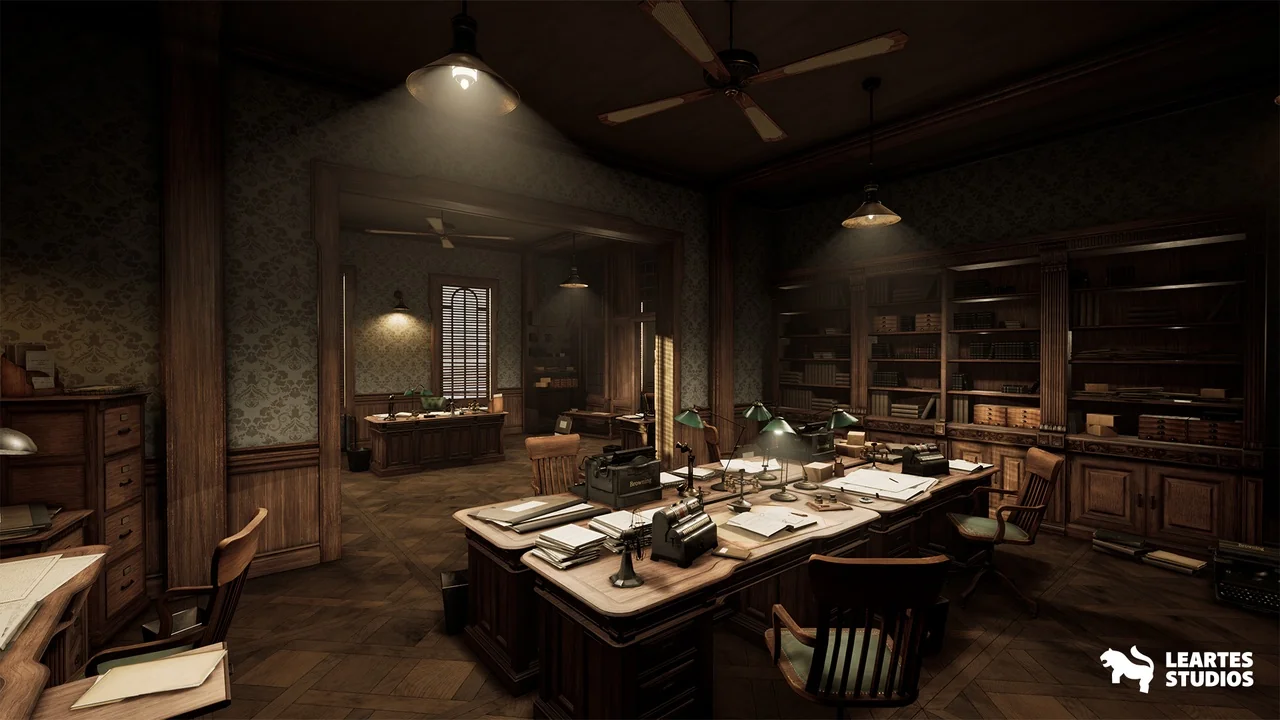
 Industrial
 Industrial
 Industrial