"c68a05d5e51405b3"{"id":"27159","slug":"junkyard-environment-14-assets","title":"Junkyard Environment / 14 Assets","category":"Industrial","engine":"4.26+,5.0+","assetVersion":"Engine version: 4.26+,5.0+","engineVersion":"","tag":"Industrial","accent":"blue","visual":"city","summary":"Junkyard Environment / 14 Assets gathers rusty vehicles, a crane, trucks, a pickup, and other junkyard pieces into a focused prop package. Its PBR workflow and optimized, modular direction make it useful for exterior scenes that need visual weight without l...","platform":"Unreal Engine","publishedAt":"2026-04-21T13:49:45.000Z","updatedAt":"2026-04-21T13:49:46.000Z","sourceNotes":[],"fileContents":[],"compatibility":["Unreal Engine","Engine version: 4.26+,5.0+"],"featuredImage":{"alt":"Junkyard Environment / 14 Assets","src":"https://3dcghub.com/wp-content/uploads/2026/04/ba5b2081c43f_7994d52c-7990-4428-84b6-ce1157a852f2.webp"},"hasDownloadLink":true,"downloads":0,"terms":[{"taxonomy":"category","slug":"industrial-environments","name":"Industrial"},{"taxonomy":"post_tag","slug":"environment","name":"Environment"},{"taxonomy":"post_tag","slug":"prop","name":"Prop"},{"taxonomy":"post_tag","slug":"vehicles","name":"Vehicles"}],"galleryImages":[{"src":"https://3dcghub.com/wp-content/uploads/2026/04/d5d49002906b_657fbd88-48b8-4752-bc7f-63ea13284e41.webp","alt":"Junkyard Environment / 14 Assets"},{"src":"https://3dcghub.com/wp-content/uploads/2026/04/37da28c16252_a0f50ae6-cde0-4c86-bb90-7809091d829b.webp","alt":"Junkyard Environment / 14 Assets"},{"src":"https://3dcghub.com/wp-content/uploads/2026/04/ae74ed6e453c_f39b6f49-81ec-4fe3-b86b-af482e4c3ebf.webp","alt":"Junkyard Environment / 14 Assets"},{"src":"https://3dcghub.com/wp-content/uploads/2026/04/cc4edb92fb63_fc37e4e0-cc9c-4005-b7bb-e1b3ff9155b8.webp","alt":"Junkyard Environment / 14 Assets"},{"src":"https://3dcghub.com/wp-content/uploads/2026/04/592d9322f175_7d65cb82-cdac-4c09-8548-938a75338177.webp","alt":"Junkyard Environment / 14 Assets"},{"src":"https://3dcghub.com/wp-content/uploads/2026/04/50f8c2e218a1_edf31279-73a5-47a7-8858-c5c72a02612a.webp","alt":"Junkyard Environment / 14 Assets"},{"src":"https://3dcghub.com/wp-content/uploads/2026/04/5401fae135e6_dd302581-a2d1-4ad3-9d01-662aa66d21f8.webp","alt":"Junkyard Environment / 14 Assets"},{"src":"https://3dcghub.com/wp-content/uploads/2026/04/ae5c726ba1c3_95bbe0ab-53ef-4a93-9a9a-9ec8e6c5046f.webp","alt":"Junkyard Environment / 14 Assets"},{"src":"https://3dcghub.com/wp-content/uploads/2026/04/3c2f1c0a3d7a_ad638a7b-8b0b-4612-9ee5-c9cefe98377e.webp","alt":"Junkyard Environment / 14 Assets"},{"src":"https://3dcghub.com/wp-content/uploads/2026/04/373e9f4ca01b_07ce71dc-af7d-42ab-80c7-4d52f70079be.webp","alt":"Junkyard Environment / 14 Assets"}],"accessPanel":{"kind":"resource","title":"Access this resource","eyebrow":"Free Download","message":"Log in or create a free account to start your download.","fileName":"Content.7z","safetyNote":"All resources are 100% manually reviewed to eliminate all risks.","actionLabel":"Download Free","resourceType":"Resource archive"},"contentHtml":"\u003ch2\u003eRusty vehicles, scrap, and outdoor clutter\u003c/h2\u003e\u003cp\u003eJunkyard Environment / 14 Assets centers on a familiar scrapyard vocabulary: rusty vehicles, cars, a truck, a pickup, a crane, and the kind of junk that turns an open lot into a lived-in outdoor environment. With 14 assets in the set, the package gives artists enough pieces to establish the place quickly without drifting away from the core theme.\u003c/p\u003e\u003cp\u003eThe visual identity is clear from the first glance. Old, destroyed, and weathered elements tell the story of a space that has been left to age, stripped for parts, or crowded with discarded machinery. That makes the set useful anywhere a scene needs a hard-used exterior look instead of clean industrial geometry. The junkyard setting already carries a strong narrative, so the props do a lot of work before any extra dressing is added.\u003c/p\u003e\u003cp\u003eBecause the pieces point to recognizable objects, they can anchor a location fast. A vehicle shell, a rusty truck form, or a scattered pile of junk can immediately define scale and mood. Even before the rest of a level is assembled, those shapes suggest abandonment, storage, salvage, and decay. That gives the environment a practical visual center that is easy to build around.\u003c/p\u003e\u003ch2\u003ePBR materials and readable surface detail\u003c/h2\u003e\u003cp\u003eThe package follows a PBR pipeline, which matters for junkyard art because the scene depends on believable metal, worn paint, and dirty exterior surfaces. Photorealistic and realistic tags point to a style that aims for grounded presentation rather than stylized exaggeration. In practice, that gives the assets room to sit inside scenes where lighting and surface response need to feel consistent.\u003c/p\u003e\u003cp\u003eLighting is part of the scene language here as much as the geometry itself. Rust, grime, and damaged surfaces need to stay readable when they are placed outdoors, and a PBR approach helps those materials hold together across different conditions. A junkyard can look flat if the surfaces do not carry enough variation, so the material focus matters as much as the props’ silhouettes.\u003c/p\u003e\u003cp\u003eThat consistency also helps the set remain believable when it is placed beside other environment pieces. A destroyed car, a weathered pickup, or a metal crane can feel like part of one location if the surface response is coherent. The package keeps its attention on that kind of visual unity, which is useful when a scene needs to look assembled rather than scattered.\u003c/p\u003e\u003ch2\u003eModular pieces for level dressing\u003c/h2\u003e\u003cp\u003eTags such as modular, lowpoly, optimized, and level suggest a package that can be used as part of scene dressing and layout work. That combination makes sense for a junkyard, where a few repeating shapes can be arranged into new compositions depending on the camera angle or the playable space. A level can feel packed with scrap while still staying manageable if the same asset family carries the visual load.\u003c/p\u003e\u003cp\u003eThe optimized direction is especially relevant for projects that need to balance detail with performance. A junkyard often contains a lot of visually dense material, but the actual scene still has to function inside a game or other project. A prop package like this gives developers a way to suggest clutter, damage, and decay without depending on an excessive number of unique assets.\u003c/p\u003e\u003cp\u003eModular design also makes the set easier to adapt across a broader environment. One arrangement might emphasize vehicle shapes and larger wrecks, while another could lean on scattered junk and tighter groupings of ruined parts. The same asset family can support both, which makes it a practical choice for level dressing where repetition needs to feel deliberate rather than obvious.\u003c/p\u003e\u003ch2\u003eWhere the set fits in a project\u003c/h2\u003e\u003cp\u003eThis resource fits naturally into AAA-quality projects and into projects that put performance first. That range is important: one team may want the junkyard to support a polished, cinematic presentation, while another may need the same kind of space to stay efficient inside a larger level. The package speaks to both needs through its PBR workflow and its optimized, modular character.\u003c/p\u003e\u003cp\u003eThe tags also point toward practical scene types. Exterior areas, destroyed spaces, old industrial edges, and outside junkyard layouts can all use the same asset family without feeling out of place. Car shells, truck forms, rusty surfaces, and crane elements help establish a location that reads quickly from a distance and still holds up when the camera moves closer.\u003c/p\u003e\u003cp\u003eFor artists, that means the package can serve as a fast starting point for a scrapyard, an abandoned vehicle yard, or any outdoor scene that needs heavy material wear. For developers, it offers a prop set that can carry atmosphere while keeping the environment grounded and efficient. The result is a junkyard that feels ready for practical scene work and stays focused on the balance between visual weight and performance.\u003c/p\u003e\n\n\u003ch2\u003eContinue Browsing Similar Packs\u003c/h2\u003e\n\u003cul\u003e\n\u003cli\u003e\u003ca href=\"https://3dcghub.com/medieval-village-slavic-huts-environment/\" title=\"Medieval Village – Slavic Huts environment\"\u003eMedieval Village – Slavic Huts environment\u003c/a\u003e\u003c/li\u003e\n\u003cli\u003e\u003ca href=\"https://3dcghub.com/volcano-land-environment-w-terrain-scatter-tool-exterior-natural-vfx/\" title=\"Volcano Land Environment w/ Terrain Scatter Tool (Exterior, Natural, VFX)\"\u003eVolcano Land Environment w/ Terrain Scatter Tool (Exterior, Natural, VFX)\u003c/a\u003e\u003c/li\u003e\n\u003cli\u003e\u003ca href=\"https://3dcghub.com/nature-package-forest-environment/\" title=\"Nature Package – Forest Environment\"\u003eNature Package – Forest Environment\u003c/a\u003e\u003c/li\u003e\n\u003cli\u003e\u003ca href=\"https://3dcghub.com/forest-environment-dynamic-nature/\" title=\"Forest Environment – Dynamic Nature\"\u003eForest Environment – Dynamic Nature\u003c/a\u003e\u003c/li\u003e\n\u003cli\u003e\u003ca href=\"https://3dcghub.com/underwater-sunken-ship-environment/\" title=\"Underwater Sunken Ship Environment\"\u003eUnderwater Sunken Ship Environment\u003c/a\u003e\u003c/li\u003e\n\u003c/ul\u003e","contentTextLength":5118,"navigation":{"current":2119,"total":3860,"previous":{"id":"27172","slug":"medieval-fantasy-ruins-dark-forest-environment","title":"Medieval Fantasy Ruins - Dark Forest Environment","category":"Medieval","platform":"Unreal Engine","updatedAt":"2026-04-21T15:06:52.000Z"},"next":{"id":"27146","slug":"impacts-hits-whooshes","title":"Impacts, Hits \u0026 Whooshes","category":"Sound Effects","platform":"Unreal Engine","updatedAt":"2026-04-21T13:27:18.000Z"}},"relatedResources":[{"id":"28434","slug":"1900s-office-1900s-1900th-office-officed-workspace-workspace","title":"1900s Office ( 1900s 1900th Office Officed Workspace Workspace )","category":"Industrial","engine":"4.26+,5.0+","assetVersion":"Engine version: 4.26+,5.0+","engineVersion":"","tag":"Industrial","accent":"blue","visual":"city","summary":"1900s Office Environment focuses on a ready-to-populate historical workspace with 109 unique meshes and a showcased preassembled scene. Its compatibility with ULAT also opens a faster path for custom modular building work and more natural scene population.","platform":"Unreal Engine","publishedAt":"2026-05-15T16:33:54.000Z","updatedAt":"2026-05-15T16:50:42.000Z","sourceNotes":[],"fileContents":[],"compatibility":["Unreal Engine","Engine version: 4.26+,5.0+"],"featuredImage":{"alt":"1900s Office ( 1900s 1900th Office Officed Workspace Workspace )","src":"https://3dcghub.com/wp-content/uploads/2026/05/e33c39f2457c_aefe9087-7ffd-4238-bf03-148884fc6a4e.webp"},"hasDownloadLink":true,"downloads":0},{"id":"27541","slug":"cpu-world","title":"Cpu World","category":"Industrial","engine":"4.26+,5.0+","assetVersion":"Engine version: 4.26+,5.0+","engineVersion":"","tag":"Industrial","accent":"blue","visual":"city","summary":"CPU World places a character inside a miniature field of electronic components and chip walls. Flashing LEDs and the small-scale layout push the scene toward surreal realism while keeping the technology theme clear.","platform":"Unreal Engine","publishedAt":"2026-04-26T07:18:31.000Z","updatedAt":"2026-04-26T07:18:32.000Z","sourceNotes":[],"fileContents":[],"compatibility":["Unreal Engine","Engine version: 4.26+,5.0+"],"featuredImage":{"alt":"Cpu World","src":"https://3dcghub.com/wp-content/uploads/2026/04/f820e39a2b85_104642b2-320a-43bd-be3e-d969f2fbbacc.webp"},"hasDownloadLink":true,"downloads":0},{"id":"1000630","slug":"junkyard-environment-kit","title":"Junkyard Environment Kit","category":"Industrial","engine":"5.0+","assetVersion":"","engineVersion":"Engine Version: 5.0+","tag":"Industrial","accent":"blue","visual":"city","summary":"Industrial and cyberpunk-themed environment kit featuring junk piles, destroyed tanks, pillars, walls, cables, and props for building wasteland and military sce","platform":"Unreal Engine","publishedAt":"2026-07-21T14:31:59.635Z","updatedAt":"2026-07-21T14:31:59.635Z","sourceNotes":[],"fileContents":[],"compatibility":["Unreal Engine","Engine Version: 5.0+"],"featuredImage":{"alt":"Junkyard Environment Kit","src":"/wp-content/uploads/published/2026/07/3b47ad514381-16c63dcb-c863-4a0b-a146-7ba2f607c8fc-62c8d315a6.webp"},"hasDownloadLink":true,"downloads":2}]}
Industrial
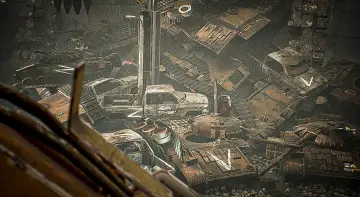
Junkyard Environment / 14 Assets
Junkyard Environment / 14 Assets gathers rusty vehicles, a crane, trucks, a pickup, and other junkyard pieces into a focused prop package. Its PBR workflow and optimized, modular direction make it useful for exterior scenes that need visual weight without l...
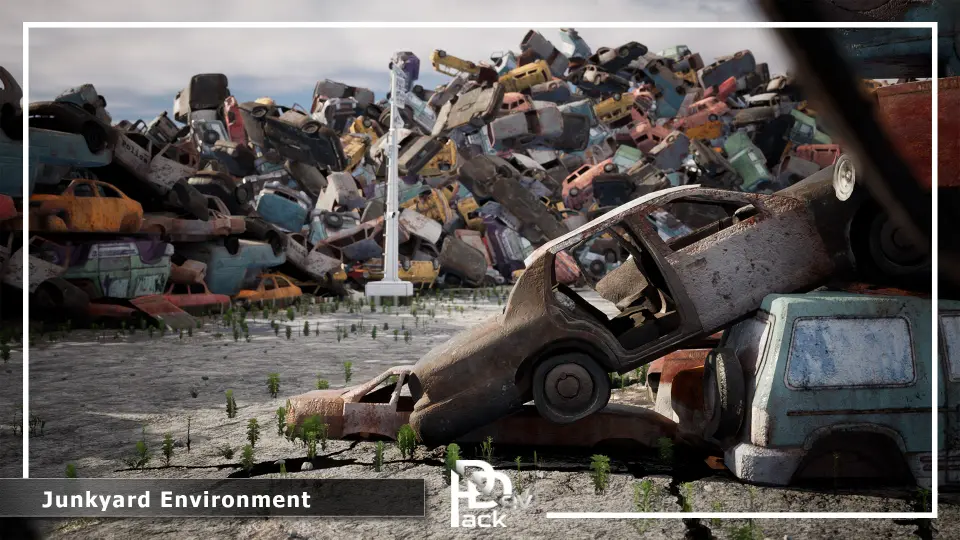
Junkyard Environment / 14 Assets centers on a familiar scrapyard vocabulary: rusty vehicles, cars, a truck, a pickup, a crane, and the kind of junk that turns an open lot into a lived-in outdoor environment. With 14 assets in the set, the package gives artists enough pieces to establish the place quickly without drifting away from the core theme.
The visual identity is clear from the first glance. Old, destroyed, and weathered elements tell the story of a space that has been left to age, stripped for parts, or crowded with discarded machinery. That makes the set useful anywhere a scene needs a hard-used exterior look instead of clean industrial geometry. The junkyard setting already carries a strong narrative, so the props do a lot of work before any extra dressing is added.
Because the pieces point to recognizable objects, they can anchor a location fast. A vehicle shell, a rusty truck form, or a scattered pile of junk can immediately define scale and mood. Even before the rest of a level is assembled, those shapes suggest abandonment, storage, salvage, and decay. That gives the environment a practical visual center that is easy to build around.
PBR materials and readable surface detail
The package follows a PBR pipeline, which matters for junkyard art because the scene depends on believable metal, worn paint, and dirty exterior surfaces. Photorealistic and realistic tags point to a style that aims for grounded presentation rather than stylized exaggeration. In practice, that gives the assets room to sit inside scenes where lighting and surface response need to feel consistent.
Lighting is part of the scene language here as much as the geometry itself. Rust, grime, and damaged surfaces need to stay readable when they are placed outdoors, and a PBR approach helps those materials hold together across different conditions. A junkyard can look flat if the surfaces do not carry enough variation, so the material focus matters as much as the props’ silhouettes.
That consistency also helps the set remain believable when it is placed beside other environment pieces. A destroyed car, a weathered pickup, or a metal crane can feel like part of one location if the surface response is coherent. The package keeps its attention on that kind of visual unity, which is useful when a scene needs to look assembled rather than scattered.
Modular pieces for level dressing
Tags such as modular, lowpoly, optimized, and level suggest a package that can be used as part of scene dressing and layout work. That combination makes sense for a junkyard, where a few repeating shapes can be arranged into new compositions depending on the camera angle or the playable space. A level can feel packed with scrap while still staying manageable if the same asset family carries the visual load.
The optimized direction is especially relevant for projects that need to balance detail with performance. A junkyard often contains a lot of visually dense material, but the actual scene still has to function inside a game or other project. A prop package like this gives developers a way to suggest clutter, damage, and decay without depending on an excessive number of unique assets.
Modular design also makes the set easier to adapt across a broader environment. One arrangement might emphasize vehicle shapes and larger wrecks, while another could lean on scattered junk and tighter groupings of ruined parts. The same asset family can support both, which makes it a practical choice for level dressing where repetition needs to feel deliberate rather than obvious.
Where the set fits in a project
This resource fits naturally into AAA-quality projects and into projects that put performance first. That range is important: one team may want the junkyard to support a polished, cinematic presentation, while another may need the same kind of space to stay efficient inside a larger level. The package speaks to both needs through its PBR workflow and its optimized, modular character.
The tags also point toward practical scene types. Exterior areas, destroyed spaces, old industrial edges, and outside junkyard layouts can all use the same asset family without feeling out of place. Car shells, truck forms, rusty surfaces, and crane elements help establish a location that reads quickly from a distance and still holds up when the camera moves closer.
For artists, that means the package can serve as a fast starting point for a scrapyard, an abandoned vehicle yard, or any outdoor scene that needs heavy material wear. For developers, it offers a prop set that can carry atmosphere while keeping the environment grounded and efficient. The result is a junkyard that feels ready for practical scene work and stays focused on the balance between visual weight and performance.
 Industrial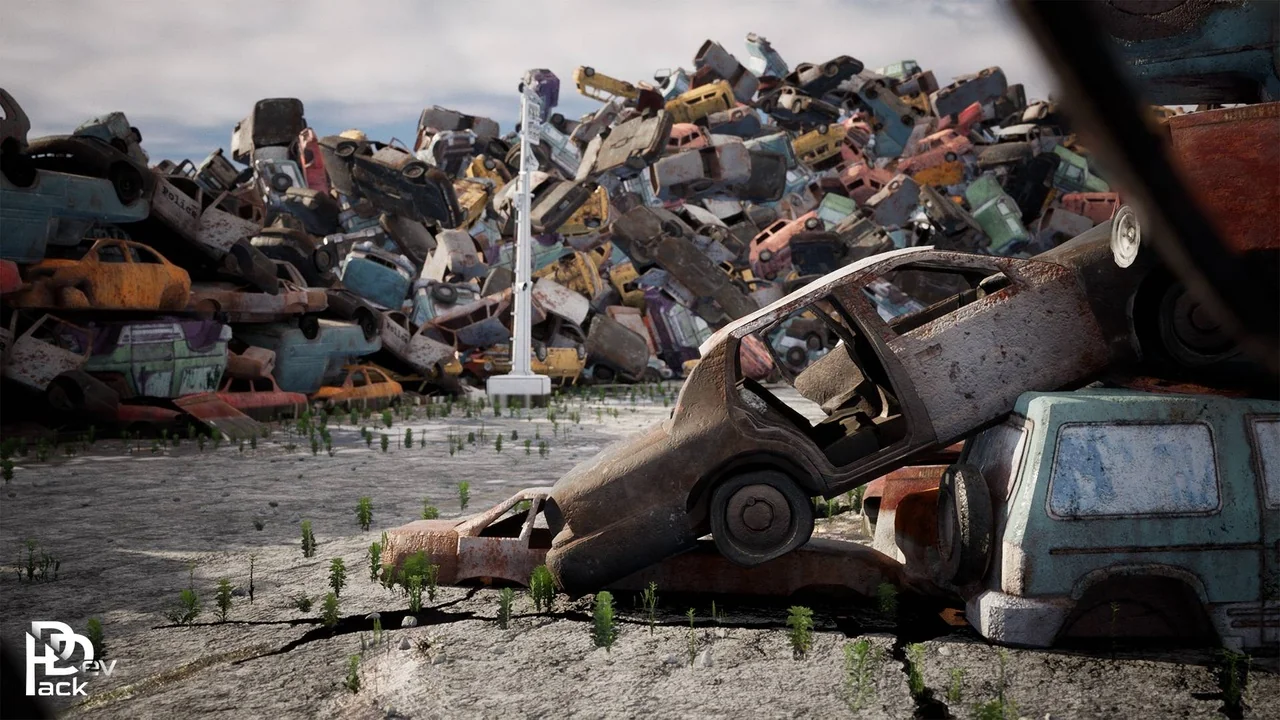
 Industrial
 Industrial
 Industrial