"1062d43bc714d570"{"id":"1001418","slug":"100-explosion-pack-niagara","title":"100 Explosion Pack Niagara","category":"Fire \u0026 Explosions","engine":"4.15+,5.0+","assetVersion":"","engineVersion":"Engine Version: 4.15+,5.0+","tag":"Fire \u0026 Explosions","accent":"blue","visual":"mech","summary":"Explore the 100 Explosion Pack Niagara, featuring baked simulation textures, Blueprint user parameters, and diverse blast effects for game production.","platform":"Unreal Engine","publishedAt":"2026-10-06T14:54:36.669Z","updatedAt":"2026-10-06T14:54:36.669Z","sourceNotes":[],"fileContents":[],"compatibility":["Unreal Engine","Engine Version: 4.15+,5.0+"],"featuredImage":{"alt":"100 Explosion Pack Niagara","src":"/wp-content/uploads/published/2026/10/7773cc88cebe-07f88a0e-c695-4ee8-907f-829ae250a9ef-be3c371fca.webp"},"hasDownloadLink":true,"downloads":2,"terms":[{"taxonomy":"category","slug":"fire-and-explosions","name":"Fire \u0026 Explosions"}],"galleryImages":[{"src":"/wp-content/uploads/published/2026/10/2626388ad5eb-5c4a7322-d239-454b-a68d-2700fac7515b-3edf03d480.webp","alt":"100 Explosion Pack Niagara"},{"src":"/wp-content/uploads/published/2026/10/45e63e62aa2c-1bdaff21-7652-47a5-b06c-16b9033bc9de-96cfe4f0e7.webp","alt":"100 Explosion Pack Niagara"},{"src":"/wp-content/uploads/published/2026/10/8f447d0c19c6-293412e6-5598-43c0-b657-2c400682f8ee-a3199ace9b.webp","alt":"100 Explosion Pack Niagara"},{"src":"/wp-content/uploads/published/2026/10/49897f82064c-8d87c28b-c94e-4853-829b-c00f8be5f69a-88b5c3e95f.webp","alt":"100 Explosion Pack Niagara"},{"src":"/wp-content/uploads/published/2026/10/b98e557defc1-4f3e5104-db1b-4b23-8598-4dadb1b25409-738e667e09.webp","alt":"100 Explosion Pack Niagara"},{"src":"/wp-content/uploads/published/2026/10/6f1404cfff35-2e73e863-7ce2-419f-b0e0-6a424e12b3a3-454a75251b.webp","alt":"100 Explosion Pack Niagara"},{"src":"/wp-content/uploads/published/2026/10/aa7ce40cc20a-e84820ae-6a47-471a-865e-ee481e462589-a8cc98949e.webp","alt":"100 Explosion Pack Niagara"},{"src":"/wp-content/uploads/published/2026/10/92d8017d4419-ce72ab35-0a93-49d3-8e84-14f1921ecbe4-bdcee5e635.webp","alt":"100 Explosion Pack Niagara"},{"src":"/wp-content/uploads/published/2026/10/8be696d1c940-2ebff5fd-7486-45e2-95b7-c56b0c0efcb1-01604a766f.webp","alt":"100 Explosion Pack Niagara"}],"accessPanel":{"kind":"resource","title":"Download this resource","eyebrow":"Free Download","message":"Log in or create a free account to start your download.","fileName":"Content.7z","safetyNote":"Resources are manually reviewed before listing to improve quality and reduce obvious risks.","actionLabel":"Download Free","resourceType":"Resource archive"},"contentHtml":"\u003cp\u003eHigh-energy visual effects form the backbone of combat feedback, environmental hazards, and large-scale cinematic set pieces. The 100 Explosion Pack Niagara provides a comprehensive collection of detonation effects built directly around Unreal Engine's Niagara framework. Rather than forcing creators to author complex particle behaviors from the ground up, the collection supplies ready-to-use visual assets spanning intense flame expansions, zero-gravity space blasts, aquatic water splashes, and monumental nuclear mushroom clouds. Every effect is configured to drop immediately into real-time environments while retaining the flexibility required for distinct gameplay scenarios.\u003c/p\u003e \u003ch2\u003eSmall Core Niagara Systems and Blueprint-Exposed User Parameters\u003c/h2\u003e\n\u003cp\u003eA primary architectural hurdle when managing dozens of unique particle effects is the overhead associated with maintaining isolated asset graphs. This package resolves that challenge by consolidating more than 100 effect variations onto a small, highly organized set of base Niagara Systems. Instead of sprawling into disconnected particle emitters, the variations branch out systematically from unified Niagara foundations.\u003c/p\u003e \u003cp\u003eControl over these visual permutations is handled directly through Blueprint-exposed User Parameters. Technical designers and artists do not need to navigate deep emitter stacks or recalculate curve math to tweak individual detonations. By surfacing key properties to Blueprints, the system allows direct adjustment of effect variables in engine actors, level blueprints, or gameplay components. This modularity means that a single underlying Niagara System can yield sharply divergent visual results—shifting from a rapid localized pop to a sweeping, sustained detonation simply by modifying parameter values.\u003c/p\u003e \u003cp\u003eExposing parameters to Blueprints also speeds up runtime iteration. Projectiles, destructible props, and scripted environmental triggers can pass dynamic information straight into the Niagara instance. A standard impact point can scale its intensity, emission strength, or dissipation rate depending on gameplay context without spawning an entirely separate particle class, keeping project assets neatly structured.\u003c/p\u003e \u003ch2\u003eBaked Simulations: Fire, Smoke, Frost, and Liquid Textures\u003c/h2\u003e\n\u003cp\u003eReal-time fluid and combustion dynamics can easily overwhelm frame budgets if calculated live inside game viewports. To combine cinematic density with runtime performance, the effects rely on high-quality animated textures generated from pre-baked simulations. These texture sequences capture the intricate physics of real fluid behavior, natural dissipation, and turbulent volumetric expansion.\u003c/p\u003e \u003cp\u003eThe baked simulations extend across several distinct physical mediums:\u003c/p\u003e\n\u003cul\u003e \u003cli\u003e\u003cstrong\u003eFire:\u003c/strong\u003e Dense flame fronts, violent initial bursts, and sustained burning motions that maintain clean internal definition without collapsing into flat color planes.\u003c/li\u003e \u003cli\u003e\u003cstrong\u003eSmoke:\u003c/strong\u003e Rolling, billowy volumes that cast convincing silhouettes, scatter light realistically, and dissolve gradually into the background.\u003c/li\u003e \u003cli\u003e\u003cstrong\u003eFrost:\u003c/strong\u003e Crystalline shockwaves, freezing vapor expansions, and cold-snap dissipations suited for non-combustive or elemental impact events.\u003c/li\u003e \u003cli\u003e\u003cstrong\u003eLiquid:\u003c/strong\u003e Cohesive fluid sheets, droplets, and churning spray designed to simulate rapid hydrodynamic displacement.\u003c/li\u003e\n\u003c/ul\u003e \u003cp\u003eBecause the complex motion is encoded into animated textures, the particle systems can focus computing power on high-precision particle distribution, velocity dispersion, and lighting interactions. This approach produces the nuanced look of offline fluid solvers while maintaining predictable real-time performance inside active scenes.\u003c/p\u003e \u003ch2\u003eExplosion Profiles from Flame Expansions to Nuclear Mushroom Clouds\u003c/h2\u003e\n\u003cp\u003eDifferent combat scenarios and environments demand distinct blast profiles. A surface-level chemical blast behaves entirely differently from a detonation underwater or an impact in outer space. The included library addresses these differences by providing tailored categories for diverse narrative and spatial requirements.\u003c/p\u003e \u003cp\u003eStandard combustion setups focus on rapid flame expansions, pushing intense fireballs outward before lingering smoke trails take over. For massive set pieces and apocalyptic scenes, the pack provides towering nuclear mushroom clouds characterized by heavy vertical column uplift, expansive upper caps, and wide ground-hugging shock rings. These larger blasts hold visual clarity across long draw distances, making them suitable for distant map boundaries or major objective destructions.\u003c/p\u003e \u003cp\u003eIn contrast to land detonations, the collection includes dedicated space blasts that omit atmospheric drag, casting fiery debris, glowing plasma, and sharp emissive sparks radially outward into open voids. For naval engagements or coastal environments, specialized water splashes simulate upward hydraulic displacement, launching foaming plumes and churning droplets that mimic the violent displacement of deep water bodies.\u003c/p\u003e \u003ch2\u003eEmissive Properties and Thematic Versatility Across Magic, Space, and Apocalyptic Scenes\u003c/h2\u003e\n\u003cp\u003eLighting feedback is critical when integrating explosions into dynamic scenes. The systems utilize rich emissive properties to cast intense momentary light onto adjacent meshes, terrain, and atmospheric fog. The initial burst of an explosion flashes brightly across the immediate environment, quickly shifting down the spectrum as materials burn, cool, and transition into smoke.\u003c/p\u003e \u003cp\u003eThis dynamic emissive range supports multiple visual themes. In realistic and apocalyptic military simulations, the balance tilts heavily toward dense black smoke, violent combustion, and scattered burning fragments. In science fiction titles, the space blast systems emphasize concentrated energy pulses and persistent glowing shock rings. For fantasy or magical combat, the frost and liquid elements can be repurposed into elemental spell impacts, frost explosions, or caustic chemical bursts by taking advantage of the underlying simulation textures.\u003c/p\u003e \u003ch2\u003eDirect Implementation and Parameter Control in Gameplay\u003c/h2\u003e\n\u003cp\u003eIntegrating the package into active projects involves placing the ready-to-use Niagara Systems directly into level sequences or binding them to spawn nodes inside character and weapon Blueprints. Because the variations stem from a compact system footprint, staging multiple explosions across a battlefield does not clutter project folders with redundant texture sets or duplicate emitter logic.\u003c/p\u003e \u003cp\u003eLevel designers can drop preset variations into scenes for background ambiance, while gameplay programmers can tie the exposed parameters to damage radii, weapon calibers, or material surface tags. Whether triggering a single burning blast, an icy concussive wave, a churning water impact, or a world-ending nuclear cloud, the package provides a focused, highly configurable VFX foundation that adapts to wide-ranging interactive requirements.\u003c/p\u003e\n\n\u003ch2\u003eMore From The Same Workflow\u003c/h2\u003e\n\u003cul\u003e\n\u003cli\u003e\u003ca href=\"https://3dcghub.com/niagara-stylized-fire-vol-1/\" title=\"Niagara Stylized Fire Vol. 1\"\u003eNiagara Stylized Fire Vol. 1\u003c/a\u003e\u003c/li\u003e\n\u003cli\u003e\u003ca href=\"https://3dcghub.com/volcano-environment-vfx/\" title=\"Volcano Environment VFX\"\u003eVolcano Environment VFX\u003c/a\u003e\u003c/li\u003e\n\u003cli\u003e\u003ca href=\"https://3dcghub.com/explosion-vfx-2/\" title=\"Explosion VFX 2\"\u003eExplosion VFX 2\u003c/a\u003e\u003c/li\u003e\n\u003cli\u003e\u003ca href=\"https://3dcghub.com/rocket-thruster-exhaust-fx/\" title=\"Rocket Thruster Exhaust FX\"\u003eRocket Thruster Exhaust FX\u003c/a\u003e\u003c/li\u003e\n\u003cli\u003e\u003ca href=\"https://3dcghub.com/atmospheric-entry-fx/\" title=\"Atmospheric Entry FX\"\u003eAtmospheric Entry FX\u003c/a\u003e\u003c/li\u003e\n\u003c/ul\u003e","contentTextLength":6986,"navigation":{"current":26,"total":3379,"previous":{"id":"1001419","slug":"3d-dynamicdatacubechart-01","title":"3D DynamicDataCubeChart 01","category":"Gameplay Features","platform":"Unreal Engine","updatedAt":"2026-10-06T14:59:05.834Z"},"next":{"id":"1001417","slug":"5-fps-4k-custom-modern-handguns-vol-1-modern-handguns-handgun-tactical","title":"(5) FPS 4K Custom Modern Handguns - VOL.1 ( Modern Handguns Handgun Tactical )","category":"Weapons \u0026 Combat","platform":"Unreal Engine","updatedAt":"2026-10-06T14:53:12.999Z"}},"relatedResources":[{"id":"1000859","slug":"niagara-stylized-fire-vol-1","title":"Niagara Stylized Fire Vol. 1","category":"Fire \u0026 Explosions","engine":"4.27,5.0+","assetVersion":"","engineVersion":"Engine Version: 4.27,5.0+","tag":"Fire \u0026 Explosions","accent":"blue","visual":"mech","summary":"Explore 13 stylized fire effects for Niagra, with exposed parameters for direct scaling, color, texture, and velocity changes in the Unreal editor.","platform":"Unreal Engine","publishedAt":"2026-08-05T06:21:08.974Z","updatedAt":"2026-08-05T06:21:08.974Z","sourceNotes":[],"fileContents":[],"compatibility":["Unreal Engine","Engine Version: 4.27,5.0+"],"featuredImage":{"alt":"Niagara Stylized Fire Vol. 1","src":"/wp-content/uploads/published/2026/08/c265c4f123de-44081164-a0db-48a5-be07-59033067b8d9-6e2c8e4977.webp"},"hasDownloadLink":true,"downloads":1},{"id":"1000777","slug":"volcano-environment-vfx","title":"Volcano Environment VFX","category":"Fire \u0026 Explosions","engine":"4.27,5.0+","assetVersion":"","engineVersion":"Engine Version: 4.27,5.0+","tag":"Fire \u0026 Explosions","accent":"blue","visual":"city","summary":"Six modular volcano environment and atmosphere VFX built for Niagara, optimized for games with drag-and-drop setup and customizable parameters for cinematic sce","platform":"Unreal Engine","publishedAt":"2026-07-28T18:19:24.127Z","updatedAt":"2026-07-28T18:19:24.127Z","sourceNotes":[],"fileContents":[],"compatibility":["Unreal Engine","Engine Version: 4.27,5.0+"],"featuredImage":{"alt":"Volcano Environment VFX","src":"/wp-content/uploads/published/2026/07/e24d5c319fff-909aa903-77c4-4aa3-a8ec-9a1cafca8cdf-5173a7858b.webp"},"hasDownloadLink":true,"downloads":0},{"id":"15576","slug":"explosion-vfx-2","title":"Explosion VFX 2","category":"Fire \u0026 Explosions","engine":"4.27,5.0+","assetVersion":"Engine version: 4.27,5.0+","engineVersion":"4.27","tag":"Fire \u0026 Explosions","accent":"blue","visual":"mech","summary":"Explosion VFX 2 is a collection of ten unique, ultra-realistic explosion effects designed for high-end games and animations. Each asset is UHD and utilizes optimized Sub UV technology for better performance.","platform":"Unreal Engine","publishedAt":"2026-03-12T12:10:13.000Z","updatedAt":"2026-04-19T15:44:44.000Z","sourceNotes":[],"fileContents":[],"compatibility":["Unreal Engine","Engine version: 4.27,5.0+"],"featuredImage":{"alt":"Explosion VFX 2","src":"https://3dcghub.com/wp-content/uploads/2026/03/0588e675-6dd6-4525-acc9-697baa028094.webp"},"hasDownloadLink":true,"downloads":1}]}
Fire & Explosions
100 Explosion Pack Niagara
Explore the 100 Explosion Pack Niagara, featuring baked simulation textures, Blueprint user parameters, and diverse blast effects for game production.
High-energy visual effects form the backbone of combat feedback, environmental hazards, and large-scale cinematic set pieces. The 100 Explosion Pack Niagara provides a comprehensive collection of detonation effects built directly around Unreal Engine's Niagara framework. Rather than forcing creators to author complex particle behaviors from the ground up, the collection supplies ready-to-use visual assets spanning intense flame expansions, zero-gravity space blasts, aquatic water splashes, and monumental nuclear mushroom clouds. Every effect is configured to drop immediately into real-time environments while retaining the flexibility required for distinct gameplay scenarios.
Small Core Niagara Systems and Blueprint-Exposed User Parameters
A primary architectural hurdle when managing dozens of unique particle effects is the overhead associated with maintaining isolated asset graphs. This package resolves that challenge by consolidating more than 100 effect variations onto a small, highly organized set of base Niagara Systems. Instead of sprawling into disconnected particle emitters, the variations branch out systematically from unified Niagara foundations.
Control over these visual permutations is handled directly through Blueprint-exposed User Parameters. Technical designers and artists do not need to navigate deep emitter stacks or recalculate curve math to tweak individual detonations. By surfacing key properties to Blueprints, the system allows direct adjustment of effect variables in engine actors, level blueprints, or gameplay components. This modularity means that a single underlying Niagara System can yield sharply divergent visual results—shifting from a rapid localized pop to a sweeping, sustained detonation simply by modifying parameter values.
Exposing parameters to Blueprints also speeds up runtime iteration. Projectiles, destructible props, and scripted environmental triggers can pass dynamic information straight into the Niagara instance. A standard impact point can scale its intensity, emission strength, or dissipation rate depending on gameplay context without spawning an entirely separate particle class, keeping project assets neatly structured.
Baked Simulations: Fire, Smoke, Frost, and Liquid Textures
Real-time fluid and combustion dynamics can easily overwhelm frame budgets if calculated live inside game viewports. To combine cinematic density with runtime performance, the effects rely on high-quality animated textures generated from pre-baked simulations. These texture sequences capture the intricate physics of real fluid behavior, natural dissipation, and turbulent volumetric expansion.
The baked simulations extend across several distinct physical mediums:
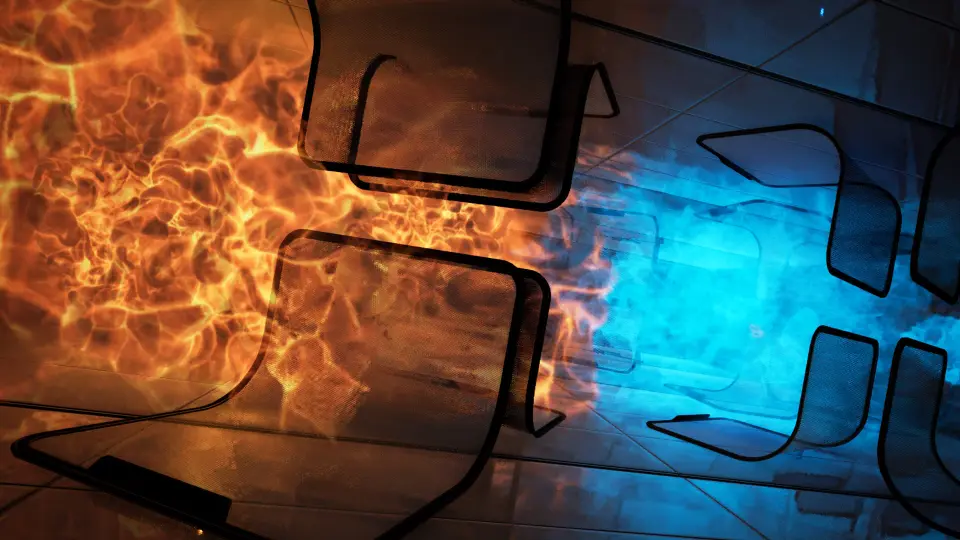
Fire: Dense flame fronts, violent initial bursts, and sustained burning motions that maintain clean internal definition without collapsing into flat color planes.
Smoke: Rolling, billowy volumes that cast convincing silhouettes, scatter light realistically, and dissolve gradually into the background.
Frost: Crystalline shockwaves, freezing vapor expansions, and cold-snap dissipations suited for non-combustive or elemental impact events.
Liquid: Cohesive fluid sheets, droplets, and churning spray designed to simulate rapid hydrodynamic displacement.
Because the complex motion is encoded into animated textures, the particle systems can focus computing power on high-precision particle distribution, velocity dispersion, and lighting interactions. This approach produces the nuanced look of offline fluid solvers while maintaining predictable real-time performance inside active scenes.
Explosion Profiles from Flame Expansions to Nuclear Mushroom Clouds
Different combat scenarios and environments demand distinct blast profiles. A surface-level chemical blast behaves entirely differently from a detonation underwater or an impact in outer space. The included library addresses these differences by providing tailored categories for diverse narrative and spatial requirements.
Standard combustion setups focus on rapid flame expansions, pushing intense fireballs outward before lingering smoke trails take over. For massive set pieces and apocalyptic scenes, the pack provides towering nuclear mushroom clouds characterized by heavy vertical column uplift, expansive upper caps, and wide ground-hugging shock rings. These larger blasts hold visual clarity across long draw distances, making them suitable for distant map boundaries or major objective destructions.
In contrast to land detonations, the collection includes dedicated space blasts that omit atmospheric drag, casting fiery debris, glowing plasma, and sharp emissive sparks radially outward into open voids. For naval engagements or coastal environments, specialized water splashes simulate upward hydraulic displacement, launching foaming plumes and churning droplets that mimic the violent displacement of deep water bodies.
Emissive Properties and Thematic Versatility Across Magic, Space, and Apocalyptic Scenes
Lighting feedback is critical when integrating explosions into dynamic scenes. The systems utilize rich emissive properties to cast intense momentary light onto adjacent meshes, terrain, and atmospheric fog. The initial burst of an explosion flashes brightly across the immediate environment, quickly shifting down the spectrum as materials burn, cool, and transition into smoke.
This dynamic emissive range supports multiple visual themes. In realistic and apocalyptic military simulations, the balance tilts heavily toward dense black smoke, violent combustion, and scattered burning fragments. In science fiction titles, the space blast systems emphasize concentrated energy pulses and persistent glowing shock rings. For fantasy or magical combat, the frost and liquid elements can be repurposed into elemental spell impacts, frost explosions, or caustic chemical bursts by taking advantage of the underlying simulation textures.
Direct Implementation and Parameter Control in Gameplay
Integrating the package into active projects involves placing the ready-to-use Niagara Systems directly into level sequences or binding them to spawn nodes inside character and weapon Blueprints. Because the variations stem from a compact system footprint, staging multiple explosions across a battlefield does not clutter project folders with redundant texture sets or duplicate emitter logic.
Level designers can drop preset variations into scenes for background ambiance, while gameplay programmers can tie the exposed parameters to damage radii, weapon calibers, or material surface tags. Whether triggering a single burning blast, an icy concussive wave, a churning water impact, or a world-ending nuclear cloud, the package provides a focused, highly configurable VFX foundation that adapts to wide-ranging interactive requirements.
 Fire & Explosions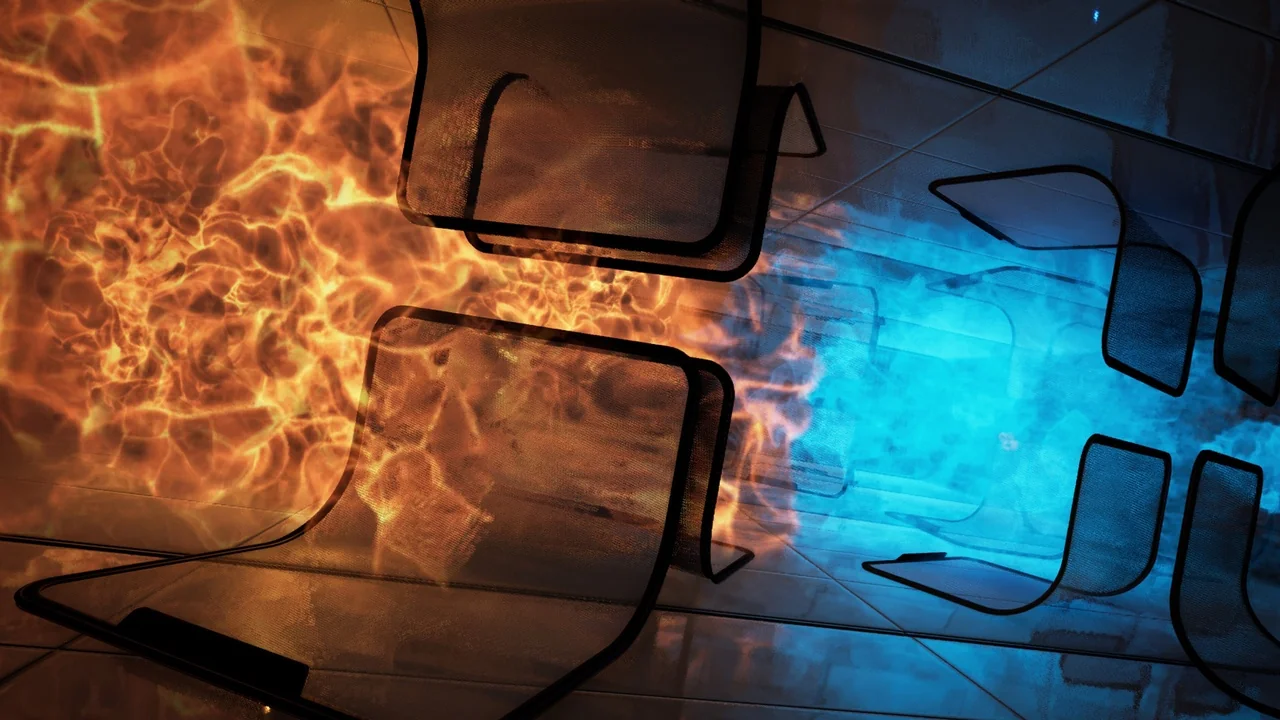
 Fire & Explosions
 Fire & Explosions
 Fire & Explosions