"0148f1904a9b0d16"{"id":"1002609","slug":"warrior","title":"Warrior","category":"Characters \u0026 Creatures","engine":"5.0+","assetVersion":"","engineVersion":"Engine Version: 5.0+","tag":"Characters","accent":"blue","visual":"character","summary":"Technical analysis of the Warrior character asset, featuring Epic Skeleton IK rigging, 47,554 vertices, 43 animations, and PBR textures for UE4 and UE5.","platform":"Unreal Engine","indexPolicy":"index","publishedAt":"2026-11-14T06:08:11.574Z","updatedAt":"2026-11-14T06:08:11.574Z","sourceNotes":[],"fileContents":[],"compatibility":["Unreal Engine","Engine Version: 5.0+"],"featuredImage":{"alt":"Warrior","src":"/wp-content/uploads/published/2026/11/5e217024f3b8-34038cd4-4e74-42de-997a-b7cd541109da-e2f859c8e2.webp"},"hasDownloadLink":true,"downloads":0,"terms":[{"taxonomy":"category","slug":"characters-and-creatures","name":"Characters \u0026 Creatures"}],"galleryImages":[{"src":"/wp-content/uploads/published/2026/11/c83e529feb1a-7068eacd-925d-44b3-a582-15a92e4e9417-94e36d72dc.webp","alt":"Warrior"},{"src":"/wp-content/uploads/published/2026/11/1a16733a4462-f00cf077-53bd-4581-ba6a-552ba4c766ae-860de277b7.webp","alt":"Warrior"},{"src":"/wp-content/uploads/published/2026/11/470aeb013740-8b5bdfd8-457a-45ee-8e08-8335b8b107bc-e50e6aaee6.webp","alt":"Warrior"},{"src":"/wp-content/uploads/published/2026/11/9349a7272b6c-30d34cab-247b-4aaa-b194-9356471f1573-3fe01c5a13.webp","alt":"Warrior"},{"src":"/wp-content/uploads/published/2026/11/99c950d375e2-8089b81c-52bb-4dbb-bbfc-cae3bd22a76e-f621146c4e.webp","alt":"Warrior"},{"src":"/wp-content/uploads/published/2026/11/f153c18a6a0e-752bfaf1-e14c-41ff-84a4-e473b2890628-d462c36c73.webp","alt":"Warrior"},{"src":"/wp-content/uploads/published/2026/11/e9f0cec7c81a-8baf99a2-05f0-4b6c-bd65-340415d35164-b569c4b1d7.webp","alt":"Warrior"}],"accessPanel":{"kind":"resource","title":"Get this resource","eyebrow":"Free resource","message":"Download this resource in your browser.","fileName":"Content.7z","safetyNote":"Resources are manually reviewed before listing to improve quality and reduce obvious risks.","actionLabel":"Get this resource","resourceType":"Resource archive","versions":[]},"contentHtml":"\u003ch2\u003eResolving Skeletal Discrepancies in Unreal Engine\u003c/h2\u003e\u003cp\u003eCharacter integration frequently stalls when skeletal hierarchies conflict between engine generations. The Warrior provides a direct bridge between legacy skeleton conventions and current production environments by utilizing an established Epic Skeleton framework equipped with dedicated IK bones.\u003c/p\u003e\u003cp\u003eWhile the character functions directly inside Unreal Engine 5, the underlying skeletal hierarchy adheres strictly to the Unreal Engine 4 skeleton format. Navigating this architecture requires recognizing that extra structural bones have been introduced to the default setup, specifically an additional bone designated as join1. This addition must be tracked when targeting retargeting profiles or mapping control rigs between versions. Working with an Unreal Engine 4 structure inside newer builds means developers can utilize standard retargeting chains, though IK solvers and socket attachments should account for the join1 addition to prevent alignment drift during complex locomotion cycles.\u003c/p\u003e\u003ch2\u003eIntegrating the Warrior Rig into Unreal Engine Pipelines\u003c/h2\u003e\u003cp\u003eRigged directly to the Epic Skeleton, the asset includes functioning inverse kinematics chains to handle ground alignment and weapon stabilization. Having native IK bones pre-configured reduces the technical setup needed before dropping the character into an active level.\u003c/p\u003e\u003cp\u003eDevelopment setups targeting both Windows and Mac platforms can deploy the character without operating-system-specific adjustments. Source files delivered in the archive include the base mesh in both native Maya format and standard FBX files, granting technical animators the freedom to modify the skinning or alter joint orientations directly inside a DCC application prior to export. Preview renders generated in Marmoset and Unreal Engine 4 display the physical interaction of light across the armor and cloth components, confirming that joint weighting remains stable through extreme poses without abnormal mesh stretching across the torso and limbs.\u003c/p\u003e\u003ch2\u003eStructuring the Warrior Animation Library for In-Place and Root Motion\u003c/h2\u003e\u003cp\u003eLocomotion handling varies widely depending on whether a game system relies on capsule-driven code or animation-driven movement. The included animation library addresses this split by dividing its 43 main animations into distinct playback categories alongside 6 standalone demo animations.\u003c/p\u003e\u003cp\u003eOf the 43 core animations, 40 are built as in-place sequences intended for standard player controllers where velocity and displacement are governed by character movement components. The remaining 3 animations feature full root motion, preserving realistic momentum and precise foot placement for contextual actions where programmatic capsule movement would cause visual foot sliding. Technical directors can pair the in-place sequences with standard directional blend spaces, while the root-motion files serve dedicated action states. These sequences supply immediate testing coverage for movement, basic combat cadence, and structural pose verification without requiring third-party motion packs during preliminary gameplay prototyping.\u003c/p\u003e\u003ch2\u003eTexture Density and PBR Material Management\u003c/h2\u003e\u003cp\u003eMaintaining visual fidelity across varied scene illumination demands a calibrated physical material workflow. The visual package relies on physically based rendering standards, supported by 19 distinct materials and material instances mapped across 51 individual texture maps.\u003c/p\u003e\u003cp\u003eTexture sets are authored in high-resolution formats spanning 2048x2048 up to 4096x4096 pixels, with the UV layout structured to allow clean downsampling to 1024x1024 for optimization targets without introducing seam artifacts or pixel bleeding. The multi-material setup divides the character into dedicated shading passes, enabling independent control over surface roughness, metallic reflectance, and ambient shadowing. Having 19 materials and instances allows teams to optimize shader complexity depending on camera proximity, swapping lower-cost material instances onto peripheral background actors while preserving high-definition parameters when the model is positioned near the camera.\u003c/p\u003e\u003ch2\u003eGenre Adaptability Across RPG, Strategy, and Horror Environments\u003c/h2\u003e\u003cp\u003eHigh-detail combatant models often suffer from rigid aesthetic constraints that lock them into a single thematic niche. This asset combines realistic knight, fantasy, pirate, firearm, and horror motifs into a single cohesive persona suited for multiple production styles.\u003c/p\u003e\u003cp\u003eGameplay frameworks ranging from third-person role-playing games and isometric strategy titles to tight first-person perspectives can accommodate the mesh directly. In a strategy context, the read of the silhouette and the 47,554-vertex density ensure clear unit identification from high camera angles without sacrificing anatomical proportion. When shifted into an action RPG or horror setting, the surface wear across the PBR textures brings tangible grit under dark or atmospheric lighting conditions. The character also operates in functional compatibility alongside creature assets such as the Wyvern spiked dragon lizard, allowing creators to stage mounted combat, predatory encounters, or dungeon sequences without aesthetic clash.\u003c/p\u003e\u003ch2\u003eMesh Geometry and Technical Scene Budgeting\u003c/h2\u003e\u003cp\u003ePolycount allocation dictates whether a skeletal mesh can run efficiently in crowded scenarios or must remain restricted to hero-only appearances. The Warrior balances these considerations through a geometry budget totaled at 47,554 vertices for the single included character.\u003c/p\u003e\u003cp\u003eThis vertex density places the mesh comfortably within the range of modern low-poly game models, providing enough polygonal resolution around deformation zones—such as the shoulders, elbows, and knees—to eliminate silhouette collapse during action animations. Because the base geometry is preserved across the provided FBX and Maya files, pipeline artists can generate bespoke level-of-detail tiers or bake proxy geometry for massive crowd sequences. The combination of clean geometry, standard Epic Skeleton IK joints, comprehensive 4096x4096 UV sets, and dual-format source access provides a predictable, dependable character foundation ready for immediate gameplay assembly.\u003c/p\u003e\n\n\u003ch2\u003eExplore Similar Assets\u003c/h2\u003e\n\u003cul\u003e\n\u003cli\u003e\u003ca href=\"https://3dcghub.com/warrior-maiden/\" rel=\"noopener noreferrer\"\u003eWarrior Maiden\u003c/a\u003e\u003c/li\u003e\n\u003cli\u003e\u003ca href=\"https://3dcghub.com/warrior-hero/\" rel=\"noopener noreferrer\"\u003eWarrior Hero\u003c/a\u003e\u003c/li\u003e\n\u003cli\u003e\u003ca href=\"https://3dcghub.com/apache-warrior-1/\" rel=\"noopener noreferrer\"\u003eApache Warrior 1\u003c/a\u003e\u003c/li\u003e\n\u003cli\u003e\u003ca href=\"https://3dcghub.com/viking-warriors/\" rel=\"noopener noreferrer\"\u003eViking Warriors\u003c/a\u003e\u003c/li\u003e\n\u003cli\u003e\u003ca href=\"https://3dcghub.com/samurai-warriors/\" rel=\"noopener noreferrer\"\u003eSamurai Warriors\u003c/a\u003e\u003c/li\u003e\n\u003c/ul\u003e","contentTextLength":6317,"navigation":{"current":40,"total":4543,"previous":{"id":"1002610","slug":"wood-monster","title":"Wood Monster","category":"Characters \u0026 Creatures","platform":"Unreal Engine","updatedAt":"2026-11-14T06:09:28.327Z"},"next":{"id":"1002608","slug":"train-pack","title":"Train pack","category":"Trains","platform":"Unreal Engine","updatedAt":"2026-11-14T06:07:12.844Z"}},"relatedResources":[{"id":"1002566","slug":"warrior-maiden","title":"Warrior Maiden","category":"Characters \u0026 Creatures","engine":"5.0+","assetVersion":"","engineVersion":"Engine Version: 5.0+","tag":"Characters","accent":"blue","visual":"character","summary":"Examine the Warrior Maiden low-poly realistic female character, featuring 17 combat animations, two skins, 4K textures, and 61k triangles for RPGs.","platform":"Unreal Engine","indexPolicy":"index","publishedAt":"2026-11-13T12:12:45.731Z","updatedAt":"2026-11-13T12:12:45.731Z","sourceNotes":[],"fileContents":[],"compatibility":["Unreal Engine","Engine Version: 5.0+"],"featuredImage":{"alt":"Warrior Maiden","src":"/wp-content/uploads/published/2026/11/b6da87ab81a4-d5c22ae6-d182-4183-9df3-22e3a38df8ee-0296ddbbc8.webp"},"hasDownloadLink":true,"downloads":0},{"id":"1002265","slug":"warrior-hero","title":"Warrior Hero","category":"Characters \u0026 Creatures","engine":"5.0+","assetVersion":"","engineVersion":"Engine Version: 5.0+","tag":"Characters","accent":"blue","visual":"character","summary":"A modular stylized medieval character featuring 4K AORM textures, 4 LOD stages, a Control Rig, Animation Blueprints, and separate armor components.","platform":"Unreal Engine","indexPolicy":"index","publishedAt":"2026-10-29T16:27:35.145Z","updatedAt":"2026-10-29T16:27:35.145Z","sourceNotes":[],"fileContents":[],"compatibility":["Unreal Engine","Engine Version: 5.0+"],"featuredImage":{"alt":"Warrior Hero","src":"/wp-content/uploads/published/2026/10/63b5bd5dcd22-e1c7d3fd-1c2b-414f-9bcd-db5505dff4c8-85da5ab7de.webp"},"hasDownloadLink":true,"downloads":0},{"id":"27038","slug":"apache-warrior-1","title":"Apache Warrior 1","category":"Characters \u0026 Creatures","engine":"5.0+","assetVersion":"Engine version: 5.0+","engineVersion":"","tag":"Characters","accent":"blue","visual":"character","summary":"Apache Warrior 1 combines an Epic Skeleton setup with 14 extra tail bones, 52 facial blendshapes, and modular mesh parts. Its material set and PBR textures give the character a direct path from assembly to rendering.","platform":"Unreal Engine","indexPolicy":"index","publishedAt":"2026-04-21T07:14:09.000Z","updatedAt":"2026-04-21T07:14:10.000Z","sourceNotes":[],"fileContents":[],"compatibility":["Unreal Engine","Engine version: 5.0+"],"featuredImage":{"alt":"Apache Warrior 1","src":"https://3dcghub.com/wp-content/uploads/2026/04/b4a6a7ad59ad_212004c9-3106-4a58-bf51-6ca664afc1b0.webp"},"hasDownloadLink":true,"downloads":0}]}
Characters
Warrior
Technical analysis of the Warrior character asset, featuring Epic Skeleton IK rigging, 47,554 vertices, 43 animations, and PBR textures for UE4 and UE5.
Character integration frequently stalls when skeletal hierarchies conflict between engine generations. The Warrior provides a direct bridge between legacy skeleton conventions and current production environments by utilizing an established Epic Skeleton framework equipped with dedicated IK bones.
While the character functions directly inside Unreal Engine 5, the underlying skeletal hierarchy adheres strictly to the Unreal Engine 4 skeleton format. Navigating this architecture requires recognizing that extra structural bones have been introduced to the default setup, specifically an additional bone designated as join1. This addition must be tracked when targeting retargeting profiles or mapping control rigs between versions. Working with an Unreal Engine 4 structure inside newer builds means developers can utilize standard retargeting chains, though IK solvers and socket attachments should account for the join1 addition to prevent alignment drift during complex locomotion cycles.
Integrating the Warrior Rig into Unreal Engine Pipelines
Rigged directly to the Epic Skeleton, the asset includes functioning inverse kinematics chains to handle ground alignment and weapon stabilization. Having native IK bones pre-configured reduces the technical setup needed before dropping the character into an active level.
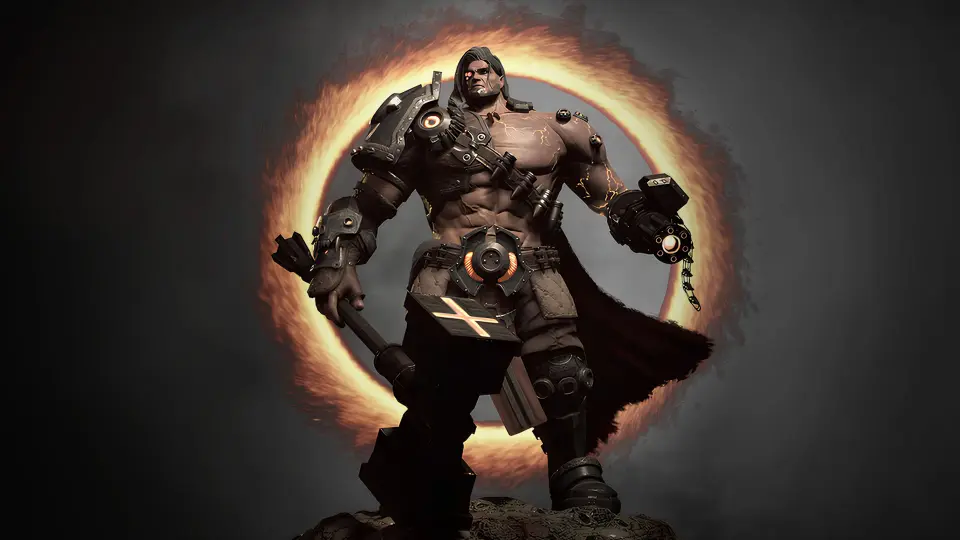
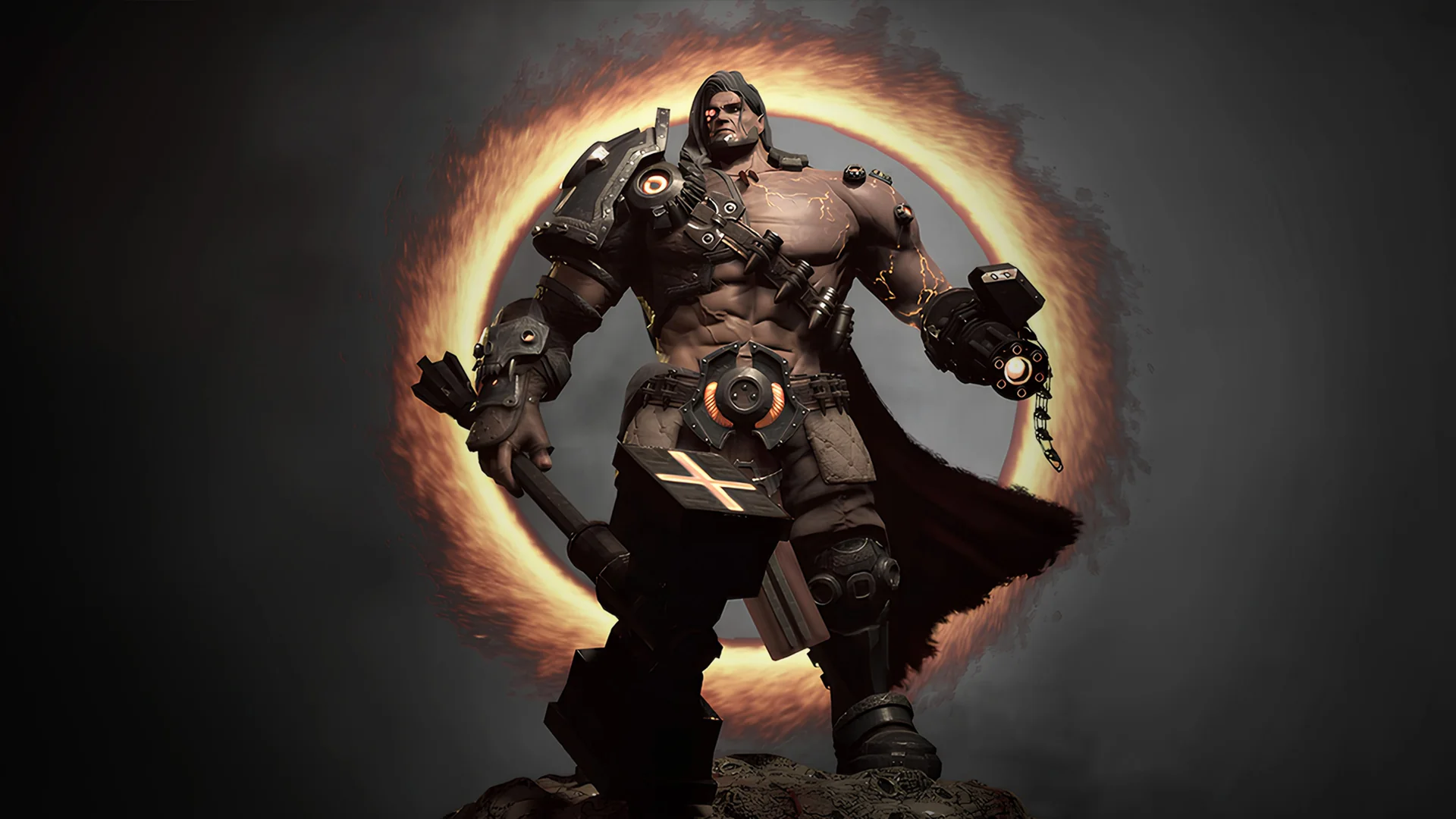
Development setups targeting both Windows and Mac platforms can deploy the character without operating-system-specific adjustments. Source files delivered in the archive include the base mesh in both native Maya format and standard FBX files, granting technical animators the freedom to modify the skinning or alter joint orientations directly inside a DCC application prior to export. Preview renders generated in Marmoset and Unreal Engine 4 display the physical interaction of light across the armor and cloth components, confirming that joint weighting remains stable through extreme poses without abnormal mesh stretching across the torso and limbs.
Structuring the Warrior Animation Library for In-Place and Root Motion
Locomotion handling varies widely depending on whether a game system relies on capsule-driven code or animation-driven movement. The included animation library addresses this split by dividing its 43 main animations into distinct playback categories alongside 6 standalone demo animations.
Of the 43 core animations, 40 are built as in-place sequences intended for standard player controllers where velocity and displacement are governed by character movement components. The remaining 3 animations feature full root motion, preserving realistic momentum and precise foot placement for contextual actions where programmatic capsule movement would cause visual foot sliding. Technical directors can pair the in-place sequences with standard directional blend spaces, while the root-motion files serve dedicated action states. These sequences supply immediate testing coverage for movement, basic combat cadence, and structural pose verification without requiring third-party motion packs during preliminary gameplay prototyping.
Texture Density and PBR Material Management
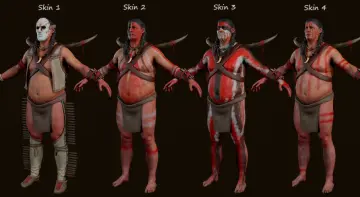
Maintaining visual fidelity across varied scene illumination demands a calibrated physical material workflow. The visual package relies on physically based rendering standards, supported by 19 distinct materials and material instances mapped across 51 individual texture maps.
Texture sets are authored in high-resolution formats spanning 2048x2048 up to 4096x4096 pixels, with the UV layout structured to allow clean downsampling to 1024x1024 for optimization targets without introducing seam artifacts or pixel bleeding. The multi-material setup divides the character into dedicated shading passes, enabling independent control over surface roughness, metallic reflectance, and ambient shadowing. Having 19 materials and instances allows teams to optimize shader complexity depending on camera proximity, swapping lower-cost material instances onto peripheral background actors while preserving high-definition parameters when the model is positioned near the camera.
Genre Adaptability Across RPG, Strategy, and Horror Environments
High-detail combatant models often suffer from rigid aesthetic constraints that lock them into a single thematic niche. This asset combines realistic knight, fantasy, pirate, firearm, and horror motifs into a single cohesive persona suited for multiple production styles.
Gameplay frameworks ranging from third-person role-playing games and isometric strategy titles to tight first-person perspectives can accommodate the mesh directly. In a strategy context, the read of the silhouette and the 47,554-vertex density ensure clear unit identification from high camera angles without sacrificing anatomical proportion. When shifted into an action RPG or horror setting, the surface wear across the PBR textures brings tangible grit under dark or atmospheric lighting conditions. The character also operates in functional compatibility alongside creature assets such as the Wyvern spiked dragon lizard, allowing creators to stage mounted combat, predatory encounters, or dungeon sequences without aesthetic clash.
Mesh Geometry and Technical Scene Budgeting
Polycount allocation dictates whether a skeletal mesh can run efficiently in crowded scenarios or must remain restricted to hero-only appearances. The Warrior balances these considerations through a geometry budget totaled at 47,554 vertices for the single included character.
This vertex density places the mesh comfortably within the range of modern low-poly game models, providing enough polygonal resolution around deformation zones—such as the shoulders, elbows, and knees—to eliminate silhouette collapse during action animations. Because the base geometry is preserved across the provided FBX and Maya files, pipeline artists can generate bespoke level-of-detail tiers or bake proxy geometry for massive crowd sequences. The combination of clean geometry, standard Epic Skeleton IK joints, comprehensive 4096x4096 UV sets, and dual-format source access provides a predictable, dependable character foundation ready for immediate gameplay assembly.
 Characters
 Characters
 Characters
 Characters