"efaa631e936fd3ee"{"id":"1002253","slug":"uv-light","title":"UV Light","category":"Gameplay Features","engine":"4.26+,5.0+","assetVersion":"","engineVersion":"Engine Version: 4.26+,5.0+","tag":"Gameplay Features","accent":"blue","visual":"mech","summary":"Examine the UV Light system for Unreal Engine, featuring UV emitters, reactive text render actors, and custom decal projection blueprints.","platform":"Unreal Engine","publishedAt":"2026-10-29T16:12:47.692Z","updatedAt":"2026-10-29T16:12:47.692Z","sourceNotes":[],"fileContents":[],"compatibility":["Unreal Engine","Engine Version: 4.26+,5.0+"],"featuredImage":{"alt":"UV Light","src":"/wp-content/uploads/published/2026/10/77654c090c23-cc045a53-5eff-454b-9e8c-82a0bc50d903-96492a1119.webp"},"hasDownloadLink":true,"downloads":0,"terms":[{"taxonomy":"category","slug":"gameplay-features","name":"Gameplay Features"}],"galleryImages":[{"src":"/wp-content/uploads/published/2026/10/fcd00b0e5fa5-b1c117ee-93f2-4646-952d-a38f21b1f930-41c23e9b9e.webp","alt":"UV Light"},{"src":"/wp-content/uploads/published/2026/10/78bc4e977e04-c736c634-369b-4b34-bbf4-9aad94660a33-c22f9c4f39.webp","alt":"UV Light"},{"src":"/wp-content/uploads/published/2026/10/baaf0487d0bf-da66a033-8483-45c0-9835-e8067619c736-308df2059e.webp","alt":"UV Light"},{"src":"/wp-content/uploads/published/2026/10/e67e19110587-9e57fbb9-c006-460c-bcc5-b0b1458baa20-53b8095c8d.webp","alt":"UV Light"},{"src":"/wp-content/uploads/published/2026/10/f50c69861fb5-25f109f0-b9ae-480a-952d-66f87140a570-0b0e16dd04.webp","alt":"UV Light"},{"src":"/wp-content/uploads/published/2026/10/5ea5bdec7141-f6ade614-6e39-4700-8de1-a0f55586700e-6feed443c3.webp","alt":"UV Light"},{"src":"/wp-content/uploads/published/2026/10/9a66bed4f121-f1a789ff-8de4-40ef-ac4d-331879fdc3ee-08732b33f1.webp","alt":"UV Light"},{"src":"/wp-content/uploads/published/2026/10/f14d30c9b2ca-0477843d-c181-48cf-8f5f-0fe9c214ec42-05b0be8a3b.webp","alt":"UV Light"},{"src":"/wp-content/uploads/published/2026/10/4beb371c34a3-052a62e9-ec5c-4c57-a194-4bcfc3b0eeed-1f63ee0187.webp","alt":"UV Light"}],"accessPanel":{"kind":"resource","title":"Download this resource","eyebrow":"Free Download","message":"Log in or create a free account to start your download.","fileName":"Content.7z","safetyNote":"Resources are manually reviewed before listing to improve quality and reduce obvious risks.","actionLabel":"Download Free","resourceType":"Resource archive"},"contentHtml":"\u003cp\u003eSweeping a specialized beam across a sterile surface changes the way an environment communicates with the player. The UV Light pack introduces dedicated UV emitters that interact selectively with target objects across a scene. Instead of treating lighting purely as ambient illumination, this system uses focused emission parameters to expose hidden elements only when exposed to specific wavelengths. The workflow is arranged through two distinct reactive actors: a text render actor suited for readable messages and a decal-based actor suited to flexible projection across varied surfaces.\u003c/p\u003e \u003ch2\u003eDirecting Illumination with UV Emitters\u003c/h2\u003e\n\u003cp\u003eAt the center of this implementation sits the UV emitter. In game environments requiring hidden layers of information, standard light sources illuminate everything within their attenuation radius indiscriminately. UV emitters operate with selective logic, dictating where and how reactive actors respond to being illuminated.\u003c/p\u003e \u003cp\u003eBy defining specific emission sources, level designers can place handheld torches, stationary blacklight lamps, or mounted investigative spotlights that exclusively interact with compatible elements. The emitter acts as the catalyst, driving the transition between concealed states and active visibility across the scene geometry.\u003c/p\u003e \u003cp\u003ePositioning an emitter requires evaluating both line of sight and cone angle. Because the system distinguishes between general room lighting and UV light, scenes can maintain moody, low-light atmospheres while retaining the ability to uncover hidden cues without blowing out scene exposure or breaking the mood of a shadow-heavy level.\u003c/p\u003e \u003ch2\u003eRevealing Hidden Messages Through Text Render Actors\u003c/h2\u003e\n\u003cp\u003eThe first actor type provided in the pack uses text render technology to display concealed text. Standard textures carrying written notes or clues often require unique material instances or texture maps for every single phrase, adding memory overhead and slowing down puzzle iteration. The text render actor solves this problem by displaying alphanumeric strings that remain invisible until a UV emitter casts light across their boundary.\u003c/p\u003e \u003cp\u003eThis approach supports static phrases as well as generated text strings. In dynamic gameplay environments where passwords, access codes, coordinates, or atmospheric notes change between sessions or player runs, generated text is critical. Designers can pass runtime string data directly into the text render actor, allowing randomized procedural puzzles to populate walls, desks, or equipment displays seamlessly.\u003c/p\u003e \u003cp\u003eReadability remains clean because text render components generate sharp typographic contours directly in world space. When the UV light cone sweeps across the actor, the text appears naturally within the illuminated field, fading or disappearing again once the light source moves away. This behavior supports gameplay styles focused on investigation, environmental clues, and procedural puzzle solving.\u003c/p\u003e \u003ch2\u003eProjecting Surface Details with UV Light Decal Actors\u003c/h2\u003e\n\u003cp\u003eWhile text actors excel at readable messages and codes, non-textual indicators require an alternate visual approach. The pack's second actor relies on decals to provide complete visual freedom across irregular surfaces. Decals project directly onto static meshes, skeletal meshes, and architectural modular pieces, conforming to corners, cracked plaster, and uneven props without requiring unique geometry modeling.\u003c/p\u003e \u003cp\u003eUsing decals opens up extensive creative options:\u003c/p\u003e\n\u003cul\u003e\n\u003cli\u003eHidden symbols, sigils, and navigation arrows painted onto environmental surfaces\u003c/li\u003e\n\u003cli\u003eForensic traces, such as footprints, fingerprints, and fluid residue revealed during searches\u003c/li\u003e\n\u003cli\u003eConcealed warning icons, directional markings, or architectural guides that direct navigation\u003c/li\u003e\n\u003cli\u003eIllustrations, drawings, and hand-drawn maps obscured under standard illumination\u003c/li\u003e\n\u003c/ul\u003e \u003cp\u003eBecause the decal actor responds specifically to the UV emitter logic, visual elements remain unseen in normal lighting. Once the UV beam crosses the surface, the decal projects its material channels, blending with the underlying world texture while looking firmly grounded in the environment. This separation prevents visual clutter during standard navigation while rewarding players who systematically search their surroundings with an active UV light source.\u003c/p\u003e \u003ch2\u003eBlueprint Architecture and Project Implementation\u003c/h2\u003e\n\u003cp\u003eThe system is built on Blueprints, giving developers accessible logic nodes to adjust emitter behavior and reveal thresholds. The underlying Blueprint framework links the presence of the UV emitter to the reactive visibility states of both the text render and decal actors. Developers can inspect, modify, and extend these graphs to fine-tune how quickly an actor becomes visible, whether the reveal is binary or gradual, and how the actors respond when an emitter leaves their radius.\u003c/p\u003e \u003cp\u003eBecause the framework handles the detection logic internally, placing reactive elements into an existing map is direct. Designers can drop text render actors onto walls or place decal actors over floor tiles, configure their base properties, and immediately test them against placed or carried UV emitters without writing complex custom shaders from scratch.\u003c/p\u003e \u003ch2\u003eTelekinetic Abilities Compatibility and Practical Application\u003c/h2\u003e\n\u003cp\u003eThe pack is compatible with Telekinetic Abilities, introducing unique possibilities for environmental interaction. When telekinesis systems allow players to lift, aim, or carry objects remotely, pairing those mechanics with UV emitters expands investigative gameplay. A player can lift a detached UV light source with telekinesis to sweep high ceilings, reach behind security grates, or cast light across distant walls that would otherwise remain out of reach.\u003c/p\u003e \u003cp\u003eConversely, objects carrying reactive text renders or decals can be manipulated telekinetically. Players can move a concealed puzzle piece through a stationary UV beam in the room to read its markings, or reorient reactive props to line up fragmented decal clues spread across multiple objects. This cross-compatibility connects puzzle design directly with mechanics-driven character interactions, making discovery an active, spatial task rather than a passive inspection.\u003c/p\u003e\n\n\u003ch2\u003eContinue Browsing Similar Packs\u003c/h2\u003e\n\u003cul\u003e\n\u003cli\u003e\u003ca href=\"https://3dcghub.com/smart-traffic-light/\" title=\"Smart Traffic Light\"\u003eSmart Traffic Light\u003c/a\u003e\u003c/li\u003e\n\u003cli\u003e\u003ca href=\"https://3dcghub.com/advanced-light-pack/\" title=\"Advanced Light Pack\"\u003eAdvanced Light Pack\u003c/a\u003e\u003c/li\u003e\n\u003cli\u003e\u003ca href=\"https://3dcghub.com/circus-theme-park-attraction/\" title=\"Circus - Theme Park Attraction\"\u003eCircus - Theme Park Attraction\u003c/a\u003e\u003c/li\u003e\n\u003cli\u003e\u003ca href=\"https://3dcghub.com/bren-light-machine-gun-lmg/\" title=\"Bren Light Machine Gun LMG\"\u003eBren Light Machine Gun LMG\u003c/a\u003e\u003c/li\u003e\n\u003cli\u003e\u003ca href=\"https://3dcghub.com/unified-procedural-animation/\" title=\"Unified Procedural Animation\"\u003eUnified Procedural Animation\u003c/a\u003e\u003c/li\u003e\n\u003c/ul\u003e","contentTextLength":6317,"navigation":{"current":32,"total":4209,"previous":{"id":"1002254","slug":"velociraptor-mech","title":"Velociraptor Mech","category":"Creatures \u0026 Monsters","platform":"Unreal Engine","updatedAt":"2026-10-29T16:13:27.610Z"},"next":{"id":"1002252","slug":"useful-rts-camera","title":"Useful RTS Camera","category":"Gameplay Features","platform":"Unreal Engine","updatedAt":"2026-10-29T16:12:08.826Z"}},"relatedResources":[{"id":"1000886","slug":"smart-traffic-light","title":"Smart Traffic Light","category":"Gameplay Features","engine":"4.26+,5.0+","assetVersion":"","engineVersion":"Engine Version: 4.26+,5.0+","tag":"Gameplay Features","accent":"blue","visual":"mech","summary":"Drag-and-drop traffic light creator Blueprint for Unreal Engine with customizable lenses, phase timings, multi-lane intersections, emergency overrides, and nigh","platform":"Unreal Engine","publishedAt":"2026-08-05T18:00:25.092Z","updatedAt":"2026-08-05T18:00:25.092Z","sourceNotes":[],"fileContents":[],"compatibility":["Unreal Engine","Engine Version: 4.26+,5.0+"],"featuredImage":{"alt":"Smart Traffic Light","src":"/wp-content/uploads/published/2026/08/02e6595e6fc7-7374c84b-0530-4852-b274-c61ccd4c5069-5ef6bc5bbe.webp"},"hasDownloadLink":true,"downloads":2},{"id":"10535","slug":"advanced-light-pack","title":"Advanced Light Pack","category":"Gameplay Features","engine":"4.27,5.0+","assetVersion":"Engine version: 4.27,5.0+","engineVersion":"4.20","tag":"Gameplay Features","accent":"blue","visual":"city","summary":"Enhance your 3D environments with the Advanced Light Pack, featuring 67 customizable blueprints and procedural tools. This resource includes studio setups, modular lights, and integrated animation systems.","platform":"Unreal Engine","publishedAt":"2026-03-03T15:35:18.000Z","updatedAt":"2026-04-19T15:50:00.000Z","sourceNotes":[],"fileContents":[],"compatibility":["Unreal Engine","Engine version: 4.27,5.0+"],"featuredImage":{"alt":"Advanced Light Pack","src":"https://3dcghub.com/wp-content/uploads/2026/03/cc80f405-effc-4ca9-bced-0f2aa8be97b4.webp"},"hasDownloadLink":true,"downloads":0},{"id":"1000571","slug":"circus-theme-park-attraction","title":"Circus - Theme Park Attraction","category":"Gameplay Features","engine":"5.1+","assetVersion":"","engineVersion":"Engine Version: 5.1+","tag":"Gameplay Features","accent":"blue","visual":"mech","summary":"Circus - Carnival of Lights is a fully animated theme park attraction with smooth animations, sound effects, and customizable colors for Unreal Engine projects.","platform":"Unreal Engine","publishedAt":"2026-07-16T21:51:14.783Z","updatedAt":"2026-07-16T21:51:14.783Z","sourceNotes":[],"fileContents":[],"compatibility":["Unreal Engine","Engine Version: 5.1+"],"featuredImage":{"alt":"Circus - Theme Park Attraction","src":"/wp-content/uploads/published/2026/07/8008b5d0fc4e-7da0e0ea-7f39-427e-818b-65a8c837d66b-e5ab12ffcd.webp"},"hasDownloadLink":true,"downloads":1}]}
Gameplay Features
UV Light
Examine the UV Light system for Unreal Engine, featuring UV emitters, reactive text render actors, and custom decal projection blueprints.
Sweeping a specialized beam across a sterile surface changes the way an environment communicates with the player. The UV Light pack introduces dedicated UV emitters that interact selectively with target objects across a scene. Instead of treating lighting purely as ambient illumination, this system uses focused emission parameters to expose hidden elements only when exposed to specific wavelengths. The workflow is arranged through two distinct reactive actors: a text render actor suited for readable messages and a decal-based actor suited to flexible projection across varied surfaces.
Directing Illumination with UV Emitters
At the center of this implementation sits the UV emitter. In game environments requiring hidden layers of information, standard light sources illuminate everything within their attenuation radius indiscriminately. UV emitters operate with selective logic, dictating where and how reactive actors respond to being illuminated.
By defining specific emission sources, level designers can place handheld torches, stationary blacklight lamps, or mounted investigative spotlights that exclusively interact with compatible elements. The emitter acts as the catalyst, driving the transition between concealed states and active visibility across the scene geometry.
Positioning an emitter requires evaluating both line of sight and cone angle. Because the system distinguishes between general room lighting and UV light, scenes can maintain moody, low-light atmospheres while retaining the ability to uncover hidden cues without blowing out scene exposure or breaking the mood of a shadow-heavy level.
Revealing Hidden Messages Through Text Render Actors
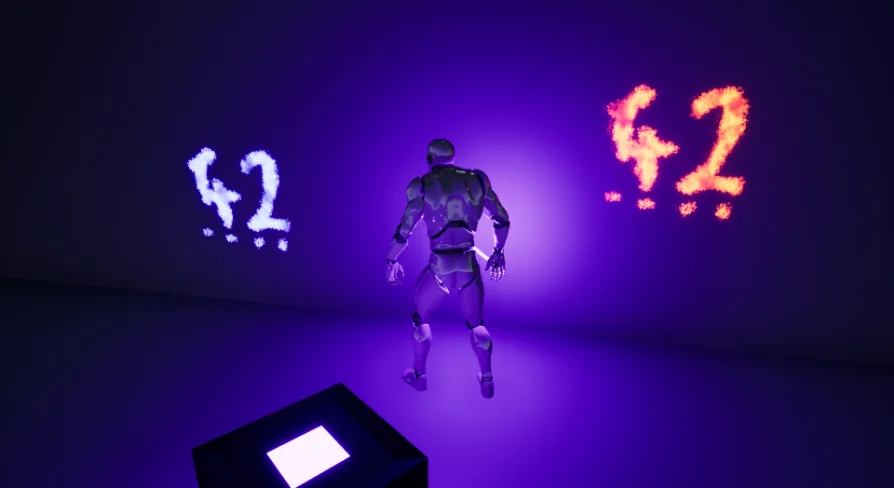
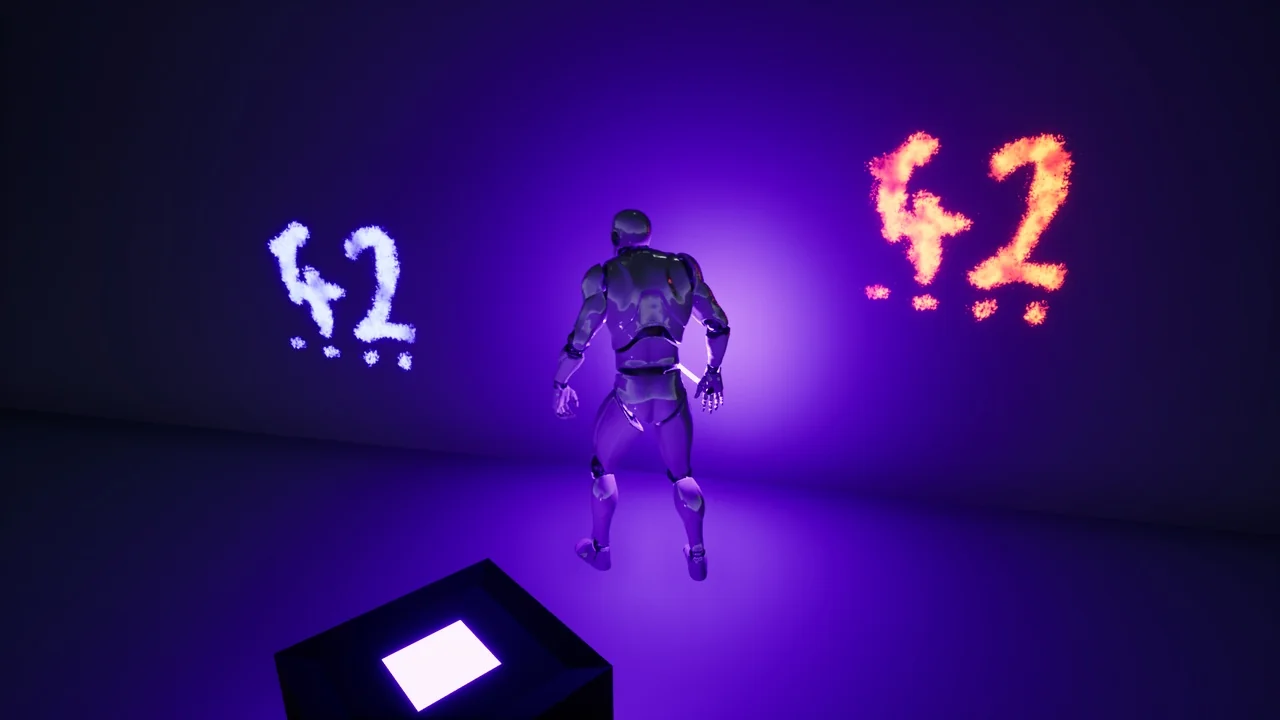
The first actor type provided in the pack uses text render technology to display concealed text. Standard textures carrying written notes or clues often require unique material instances or texture maps for every single phrase, adding memory overhead and slowing down puzzle iteration. The text render actor solves this problem by displaying alphanumeric strings that remain invisible until a UV emitter casts light across their boundary.
This approach supports static phrases as well as generated text strings. In dynamic gameplay environments where passwords, access codes, coordinates, or atmospheric notes change between sessions or player runs, generated text is critical. Designers can pass runtime string data directly into the text render actor, allowing randomized procedural puzzles to populate walls, desks, or equipment displays seamlessly.
Readability remains clean because text render components generate sharp typographic contours directly in world space. When the UV light cone sweeps across the actor, the text appears naturally within the illuminated field, fading or disappearing again once the light source moves away. This behavior supports gameplay styles focused on investigation, environmental clues, and procedural puzzle solving.
Projecting Surface Details with UV Light Decal Actors
While text actors excel at readable messages and codes, non-textual indicators require an alternate visual approach. The pack's second actor relies on decals to provide complete visual freedom across irregular surfaces. Decals project directly onto static meshes, skeletal meshes, and architectural modular pieces, conforming to corners, cracked plaster, and uneven props without requiring unique geometry modeling.
Using decals opens up extensive creative options:
Hidden symbols, sigils, and navigation arrows painted onto environmental surfaces
Forensic traces, such as footprints, fingerprints, and fluid residue revealed during searches
Concealed warning icons, directional markings, or architectural guides that direct navigation
Illustrations, drawings, and hand-drawn maps obscured under standard illumination
Because the decal actor responds specifically to the UV emitter logic, visual elements remain unseen in normal lighting. Once the UV beam crosses the surface, the decal projects its material channels, blending with the underlying world texture while looking firmly grounded in the environment. This separation prevents visual clutter during standard navigation while rewarding players who systematically search their surroundings with an active UV light source.
Blueprint Architecture and Project Implementation
The system is built on Blueprints, giving developers accessible logic nodes to adjust emitter behavior and reveal thresholds. The underlying Blueprint framework links the presence of the UV emitter to the reactive visibility states of both the text render and decal actors. Developers can inspect, modify, and extend these graphs to fine-tune how quickly an actor becomes visible, whether the reveal is binary or gradual, and how the actors respond when an emitter leaves their radius.
Because the framework handles the detection logic internally, placing reactive elements into an existing map is direct. Designers can drop text render actors onto walls or place decal actors over floor tiles, configure their base properties, and immediately test them against placed or carried UV emitters without writing complex custom shaders from scratch.
Telekinetic Abilities Compatibility and Practical Application
The pack is compatible with Telekinetic Abilities, introducing unique possibilities for environmental interaction. When telekinesis systems allow players to lift, aim, or carry objects remotely, pairing those mechanics with UV emitters expands investigative gameplay. A player can lift a detached UV light source with telekinesis to sweep high ceilings, reach behind security grates, or cast light across distant walls that would otherwise remain out of reach.
Conversely, objects carrying reactive text renders or decals can be manipulated telekinetically. Players can move a concealed puzzle piece through a stationary UV beam in the room to read its markings, or reorient reactive props to line up fragmented decal clues spread across multiple objects. This cross-compatibility connects puzzle design directly with mechanics-driven character interactions, making discovery an active, spatial task rather than a passive inspection.
 Gameplay Features
 Gameplay Features
 Gameplay Features
 Gameplay Features