"fa182e0cd0a6ea73"{"id":"1000571","slug":"circus-theme-park-attraction","title":"Circus - Theme Park Attraction","category":"Gameplay Features","engine":"5.1+","assetVersion":"","engineVersion":"Engine Version: 5.1+","tag":"Gameplay Features","accent":"blue","visual":"mech","summary":"Circus - Carnival of Lights is a fully animated theme park attraction with smooth animations, sound effects, and customizable colors for Unreal Engine projects.","platform":"Unreal Engine","publishedAt":"2026-07-16T21:51:14.783Z","updatedAt":"2026-07-16T21:51:14.783Z","sourceNotes":[],"fileContents":[],"compatibility":["Unreal Engine","Engine Version: 5.1+"],"featuredImage":{"alt":"Circus - Theme Park Attraction","src":"/wp-content/uploads/published/2026/07/8008b5d0fc4e-7da0e0ea-7f39-427e-818b-65a8c837d66b-e5ab12ffcd.webp"},"hasDownloadLink":true,"downloads":1,"terms":[{"taxonomy":"category","slug":"gameplay-features","name":"Gameplay Features"}],"galleryImages":[{"src":"/wp-content/uploads/published/2026/07/029cfabcc693-a39a637c-b507-4d31-9f47-ca6e3e425206-a3b6de3271.webp","alt":"Circus - Theme Park Attraction"},{"src":"/wp-content/uploads/published/2026/07/be5800367a61-ffc29f07-f543-4a35-a48a-c195e79838d5-90dff71ba6.webp","alt":"Circus - Theme Park Attraction"},{"src":"/wp-content/uploads/published/2026/07/10a784ca537b-d380eb30-d366-45ce-be60-51bfd332701e-a02398af38.webp","alt":"Circus - Theme Park Attraction"}],"accessPanel":{"kind":"resource","title":"Download this resource","eyebrow":"Free Download","message":"Log in or create a free account to start your download.","fileName":"Content.7z","safetyNote":"Resources are manually reviewed before listing to improve quality and reduce obvious risks.","actionLabel":"Download Free","resourceType":"Resource archive"},"contentHtml":"\u003cp\u003eTheme park projects demand a specific kind of energy — the kind that makes a virtual space feel alive, populated, and in constant motion. Empty plazas and static architecture rarely sell the atmosphere of a bustling amusement venue. The Circus - Carnival of Lights attraction is built precisely for those situations where a scene needs an animated focal point that immediately reads as functional entertainment infrastructure to anyone looking at it.\u003c/p\u003e\u003cp\u003eWhether someone is constructing a sprawling theme park, a retro festival landscape, or a single interactive ride area, dropping in a fully animated attraction changes how the surrounding environment is perceived. It stops being a backdrop and starts behaving like a destination.\u003c/p\u003e\u003ch2\u003eThe Circus - Carnival of Lights as an Animated Centerpiece\u003c/h2\u003e\u003cp\u003eAt its core, the Circus attraction is a fully animated theme park ride. That phrasing matters: this is not a static mesh meant to sit idly in a scene. It moves. The animation work is described as smooth, which suggests the motion is meant to be sustained and watchable rather than abrupt or purely mechanical. For a theme park setting, where the visual rhythm of rides drives much of the ambient energy, having an attraction that moves cleanly is what separates a decorative prop from something that feels like a working part of a park.\u003c/p\u003e\u003cp\u003eThe name itself — Carnival of Lights — points to a bright, illuminated aesthetic. The lighting is not incidental. It is part of the identity of the attraction, and it implies that the visual design leans into nighttime or dusk scenes where the lights can carry the intended impact. A daytime placement would likely flatten that aspect, while darker scenes would let both the motion and the illumination work together.\u003c/p\u003e\u003ch2\u003eHow Animations and Sounds Work Together\u003c/h2\u003e\u003cp\u003eThe attraction does not rely on motion alone to sell itself. It ships with immersive sound effects layered into the experience. In a theme park context, sound does a significant portion of the storytelling: the mechanical churn of a ride, the ambient crowd noise, the musical cues that signal excitement. By pairing smooth animations with built-in audio, the attraction aims to be a self-contained sensory package rather than something that requires the user to hunt down matching sound assets elsewhere.\u003c/p\u003e\u003cp\u003eThe word “immersive” suggests the sound design is not just a generic loop. It is meant to place the listener inside the attraction’s space. For projects where atmosphere is a priority — virtual tours, gameplay sequences, cinematic establishing shots — having synchronized audio built in reduces the friction of getting a scene to feel complete.\u003c/p\u003e\u003ch2\u003eColor Customization for Matching Park Themes\u003c/h2\u003e\u003cp\u003eOne of the more practical features of the attraction is its color customization. Every theme park has a visual identity. A retro carnival leans on warm reds, faded yellows, and bold stripes. A modern festival might push toward cooler palettes and neon accents. A dark or horror-oriented park might mute everything and rely on harsh contrast.\u003c/p\u003e\u003cp\u003eThe attraction allows users to match its colors to the specific theme of the park they are building. This matters because rigid palettes are often the reason an otherwise well-made asset clashes with its environment. Instead of forcing users to work around fixed colors, the customization option means the same attraction can serve multiple visual directions across different scenes or even within the same project at different times.\u003c/p\u003e\u003ch2\u003ePositioning Inside the Broader Carnival Pack\u003c/h2\u003e\u003cp\u003eThe Circus attraction is not built to work in isolation — or at least, its creator frames it as part of a larger ecosystem. It belongs to a Carnival Pack that includes this attraction alongside tons of other rides, props, and features. The intent is to provide enough material to bring an entire theme park to life rather than offering a single ride and leaving the rest to the user.\u003c/p\u003e\u003cp\u003eFor users deciding whether to use just this attraction or to pursue the full Carnival Theme Park Package, the creator makes the case clearly: the full package unlocks the attraction plus an entire collection of assets. That includes additional rides and props, which together create the density and variety that a believable theme park requires. A single attraction+ can anchor a plaza, but a full park needs the surrounding infrastructure — stalls, fencing, lighting rigs, secondary rides — to feel inhabited.\u003c/p\u003e\u003ch2\u003eWhere This Attraction Fits Best in a Project\u003c/h2\u003e\u003cp\u003eThe tag list attached to the attraction opens up several practical scenarios beyond a straightforward modern theme park. The “Retro” tag reinforces that the visual style can support vintage or period-piece carnival scenes. “Festival” suggests it works as well in transient, pop-up outdoor events as it does in permanent amusement parks. “Adventure” hints that it could serve as a set piece in a more narrative-driven game context, not just a simulation or visual showcase.\u003c/p\u003e\u003cp\u003eThe “Interactive” and “Script” tags point toward functionality that goes beyond passive animation. An interactive attraction implies the possibility of player or character engagement — boarding, triggering, or reacting to the ride in some scripted way. This makes the asset relevant to gameplay scenarios, not just environmental art.\u003c/p\u003e\u003cp\u003eThe Cinderella-tags — “Amusement,” “Carnival,” “Circus,” “Ride,” “Light” — line up with exactly what the attraction advertises. The presence of “Blueprint” indicates that this is delivered as a functional Unreal Engine blueprint asset, meaning the animation, sound, and interactivity are wired into the object rather than requiring manual assembly from loose components.\u003c/p\u003e\u003ch2\u003eCompatibility and Unity Availability\u003c/h2\u003e\u003cp\u003eFor Unreal Engine users, the attraction is compatible with engine versions 5.1 through 5.7. That range covers a significant stretch of current-generation Unreal development, meaning users on slightly older builds and those on the most recent releases can work with the same asset without an immediate version conflict.\u003c/p\u003e\u003cp\u003eA Unity release is listed as “Coming to Unity TBA.” This indicates the attraction is currently an Unreal Engine resource, but the creator has plans to bring it to Unity at an unspecified date. For cross-platform teams or studios evaluating whether to invest time integrating this asset now or waiting for a Unity port, the status is clear: Unreal is available now, Unity is pending but not yet released.\u003c/p\u003e\u003ch2\u003eWho Benefits Most from Using This Attraction\u003c/h2\u003e\u003cp\u003eDevelopers building theme park scenes, carnival environments, or festival-driven levels are the clearest audience. The attraction is purpose-built for adding energy and fun to a project, and its combination of animation, sound, and color customization means it can serve as a quick drop-in solution rather than a multi-week art and audio integration project.\u003c/p\u003e\u003cp\u003eUnreal Engine developers on versions 5.1 through 5.7 can use it immediately. For those planning larger amusement park projects, the Carnival Pack offers a broader set of surrounding assets, making the Circus attraction most valuable either as a standalone highlight in a small scene or as part of a coordinated set in a full park build.\u003c/p\u003e\n\n\u003ch2\u003eRelated Resources Worth Checking\u003c/h2\u003e\n\u003cul\u003e\n\u003cli\u003e\u003ca href=\"https://3dcghub.com/the-carnival-environment-post-apocalyptic-circus-amusement-parks-carnival/\" title=\"The Carnival Environment ( Post Apocalyptic Circus Amusement Parks Carnival )\"\u003eThe Carnival Environment ( Post Apocalyptic Circus Amusement Parks Carnival )\u003c/a\u003e\u003c/li\u003e\n\u003cli\u003e\u003ca href=\"https://3dcghub.com/amusement-park-environment-kit/\" title=\"Amusement Park Environment Kit\"\u003eAmusement Park Environment Kit\u003c/a\u003e\u003c/li\u003e\n\u003cli\u003e\u003ca href=\"https://3dcghub.com/abandoned-amusement-park/\" title=\"Abandoned Amusement Park\"\u003eAbandoned Amusement Park\u003c/a\u003e\u003c/li\u003e\n\u003cli\u003e\u003ca href=\"https://3dcghub.com/customizable-bodycam-component/\" title=\"Customizable Bodycam Component\"\u003eCustomizable Bodycam Component\u003c/a\u003e\u003c/li\u003e\n\u003cli\u003e\u003ca href=\"https://3dcghub.com/powerline-generator/\" title=\"Powerline Generator\"\u003ePowerline Generator\u003c/a\u003e\u003c/li\u003e\n\u003c/ul\u003e","contentTextLength":7337,"navigation":{"current":1365,"total":3789,"previous":{"id":"1000572","slug":"cloud-forge-vdb-cloud-pack-volume-2","title":"Cloud Forge - VDB Cloud Pack Volume 2","category":"Procedural Systems","platform":"Unreal Engine","updatedAt":"2026-07-16T22:15:54.739Z"},"next":{"id":"1000570","slug":"christmas-assets-volume-1","title":"Christmas Assets Volume 1","category":"Tools, Objects \u0026 Decor","platform":"Unreal Engine","updatedAt":"2026-07-16T21:44:55.238Z"}},"relatedResources":[{"id":"9802","slug":"amusement-park-environment-kit","title":"Amusement Park Environment Kit","category":"Streets \u0026 Construction","engine":"5.0+","assetVersion":"Engine version: 5.0+","engineVersion":"","tag":"Streets","accent":"blue","visual":"city","summary":"Create vibrant and diverse theme park scenes with the Amusement Park Environment Kit. This collection features modules, props, and PBR materials suitable for realistic, cartoony, or stylized projects.","platform":"Unreal Engine","publishedAt":"2026-03-02T13:52:44.000Z","updatedAt":"2026-04-19T15:50:59.000Z","sourceNotes":[],"fileContents":[],"compatibility":["Unreal Engine","Engine version: 5.0+"],"featuredImage":{"alt":"Amusement Park Environment Kit","src":"https://3dcghub.com/wp-content/uploads/2026/03/c4cdd98b-ad20-4ffc-ae73-9017396599e2.webp"},"hasDownloadLink":true,"downloads":2},{"id":"6776","slug":"the-carnival-environment-post-apocalyptic-circus-amusement-parks-carnival","title":"The Carnival Environment ( Post Apocalyptic Circus Amusement Parks Carnival )","category":"Abandoned","engine":"5.2+","assetVersion":"Engine version: 5.2+","engineVersion":"5.2","tag":"Abandoned","accent":"blue","visual":"city","summary":"Transform your project with a hauntingly detailed post-apocalyptic carnival. This pack includes 67 unique meshes, Lumen support, and advanced level design tools for professional results.","platform":"Unreal Engine","publishedAt":"2026-02-20T15:23:14.000Z","updatedAt":"2026-04-19T15:56:07.000Z","sourceNotes":[],"fileContents":[],"compatibility":["Unreal Engine","Engine version: 5.2+"],"featuredImage":{"alt":"The Carnival Environment ( Post Apocalyptic Circus Amusement Parks Carnival )","src":"https://3dcghub.com/wp-content/uploads/2026/02/62335bbe-c6fd-4b9a-bc8e-55587f0a8dde.webp"},"hasDownloadLink":true,"downloads":1},{"id":"6793","slug":"abandoned-amusement-park","title":"Abandoned Amusement Park","category":"Apocalyptic / Post-apocalyptic","engine":"4.26+,5.0+","assetVersion":"Engine version: 4.26+,5.0+","engineVersion":"4.17","tag":"Apocalyptic","accent":"blue","visual":"city","summary":"Transform your game world with a hauntingly beautiful Abandoned Amusement Park. This asset pack features authentic USSR-era rides and physics-driven animations for ultimate realism.","platform":"Unreal Engine","publishedAt":"2026-02-20T15:26:41.000Z","updatedAt":"2026-04-19T15:56:07.000Z","sourceNotes":[],"fileContents":[],"compatibility":["Unreal Engine","Engine version: 4.26+,5.0+"],"featuredImage":{"alt":"Abandoned Amusement Park","src":"https://3dcghub.com/wp-content/uploads/2026/02/7c659b72-89da-4894-b3f9-53a2aad2c365.webp"},"hasDownloadLink":true,"downloads":1}]}
Gameplay Features
Circus - Theme Park Attraction
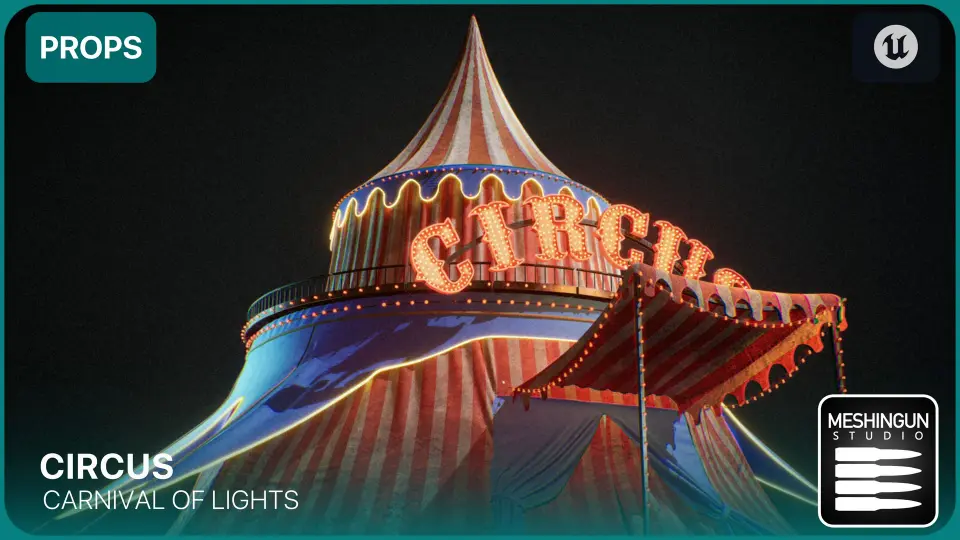
Circus - Carnival of Lights is a fully animated theme park attraction with smooth animations, sound effects, and customizable colors for Unreal Engine projects.
Theme park projects demand a specific kind of energy — the kind that makes a virtual space feel alive, populated, and in constant motion. Empty plazas and static architecture rarely sell the atmosphere of a bustling amusement venue. The Circus - Carnival of Lights attraction is built precisely for those situations where a scene needs an animated focal point that immediately reads as functional entertainment infrastructure to anyone looking at it.
Whether someone is constructing a sprawling theme park, a retro festival landscape, or a single interactive ride area, dropping in a fully animated attraction changes how the surrounding environment is perceived. It stops being a backdrop and starts behaving like a destination.
The Circus - Carnival of Lights as an Animated Centerpiece
At its core, the Circus attraction is a fully animated theme park ride. That phrasing matters: this is not a static mesh meant to sit idly in a scene. It moves. The animation work is described as smooth, which suggests the motion is meant to be sustained and watchable rather than abrupt or purely mechanical. For a theme park setting, where the visual rhythm of rides drives much of the ambient energy, having an attraction that moves cleanly is what separates a decorative prop from something that feels like a working part of a park.
The name itself — Carnival of Lights — points to a bright, illuminated aesthetic. The lighting is not incidental. It is part of the identity of the attraction, and it implies that the visual design leans into nighttime or dusk scenes where the lights can carry the intended impact. A daytime placement would likely flatten that aspect, while darker scenes would let both the motion and the illumination work together.
How Animations and Sounds Work Together
The attraction does not rely on motion alone to sell itself. It ships with immersive sound effects layered into the experience. In a theme park context, sound does a significant portion of the storytelling: the mechanical churn of a ride, the ambient crowd noise, the musical cues that signal excitement. By pairing smooth animations with built-in audio, the attraction aims to be a self-contained sensory package rather than something that requires the user to hunt down matching sound assets elsewhere.
The word “immersive” suggests the sound design is not just a generic loop. It is meant to place the listener inside the attraction’s space. For projects where atmosphere is a priority — virtual tours, gameplay sequences, cinematic establishing shots — having synchronized audio built in reduces the friction of getting a scene to feel complete.
Color Customization for Matching Park Themes
One of the more practical features of the attraction is its color customization. Every theme park has a visual identity. A retro carnival leans on warm reds, faded yellows, and bold stripes. A modern festival might push toward cooler palettes and neon accents. A dark or horror-oriented park might mute everything and rely on harsh contrast.
The attraction allows users to match its colors to the specific theme of the park they are building. This matters because rigid palettes are often the reason an otherwise well-made asset clashes with its environment. Instead of forcing users to work around fixed colors, the customization option means the same attraction can serve multiple visual directions across different scenes or even within the same project at different times.
Positioning Inside the Broader Carnival Pack
The Circus attraction is not built to work in isolation — or at least, its creator frames it as part of a larger ecosystem. It belongs to a Carnival Pack that includes this attraction alongside tons of other rides, props, and features. The intent is to provide enough material to bring an entire theme park to life rather than offering a single ride and leaving the rest to the user.
For users deciding whether to use just this attraction or to pursue the full Carnival Theme Park Package, the creator makes the case clearly: the full package unlocks the attraction plus an entire collection of assets. That includes additional rides and props, which together create the density and variety that a believable theme park requires. A single attraction+ can anchor a plaza, but a full park needs the surrounding infrastructure — stalls, fencing, lighting rigs, secondary rides — to feel inhabited.
Where This Attraction Fits Best in a Project
The tag list attached to the attraction opens up several practical scenarios beyond a straightforward modern theme park. The “Retro” tag reinforces that the visual style can support vintage or period-piece carnival scenes. “Festival” suggests it works as well in transient, pop-up outdoor events as it does in permanent amusement parks. “Adventure” hints that it could serve as a set piece in a more narrative-driven game context, not just a simulation or visual showcase.
The “Interactive” and “Script” tags point toward functionality that goes beyond passive animation. An interactive attraction implies the possibility of player or character engagement — boarding, triggering, or reacting to the ride in some scripted way. This makes the asset relevant to gameplay scenarios, not just environmental art.
The Cinderella-tags — “Amusement,” “Carnival,” “Circus,” “Ride,” “Light” — line up with exactly what the attraction advertises. The presence of “Blueprint” indicates that this is delivered as a functional Unreal Engine blueprint asset, meaning the animation, sound, and interactivity are wired into the object rather than requiring manual assembly from loose components.
Compatibility and Unity Availability
For Unreal Engine users, the attraction is compatible with engine versions 5.1 through 5.7. That range covers a significant stretch of current-generation Unreal development, meaning users on slightly older builds and those on the most recent releases can work with the same asset without an immediate version conflict.
A Unity release is listed as “Coming to Unity TBA.” This indicates the attraction is currently an Unreal Engine resource, but the creator has plans to bring it to Unity at an unspecified date. For cross-platform teams or studios evaluating whether to invest time integrating this asset now or waiting for a Unity port, the status is clear: Unreal is available now, Unity is pending but not yet released.
Who Benefits Most from Using This Attraction
Developers building theme park scenes, carnival environments, or festival-driven levels are the clearest audience. The attraction is purpose-built for adding energy and fun to a project, and its combination of animation, sound, and color customization means it can serve as a quick drop-in solution rather than a multi-week art and audio integration project.
Unreal Engine developers on versions 5.1 through 5.7 can use it immediately. For those planning larger amusement park projects, the Carnival Pack offers a broader set of surrounding assets, making the Circus attraction most valuable either as a standalone highlight in a small scene or as part of a coordinated set in a full park build.
 Gameplay Features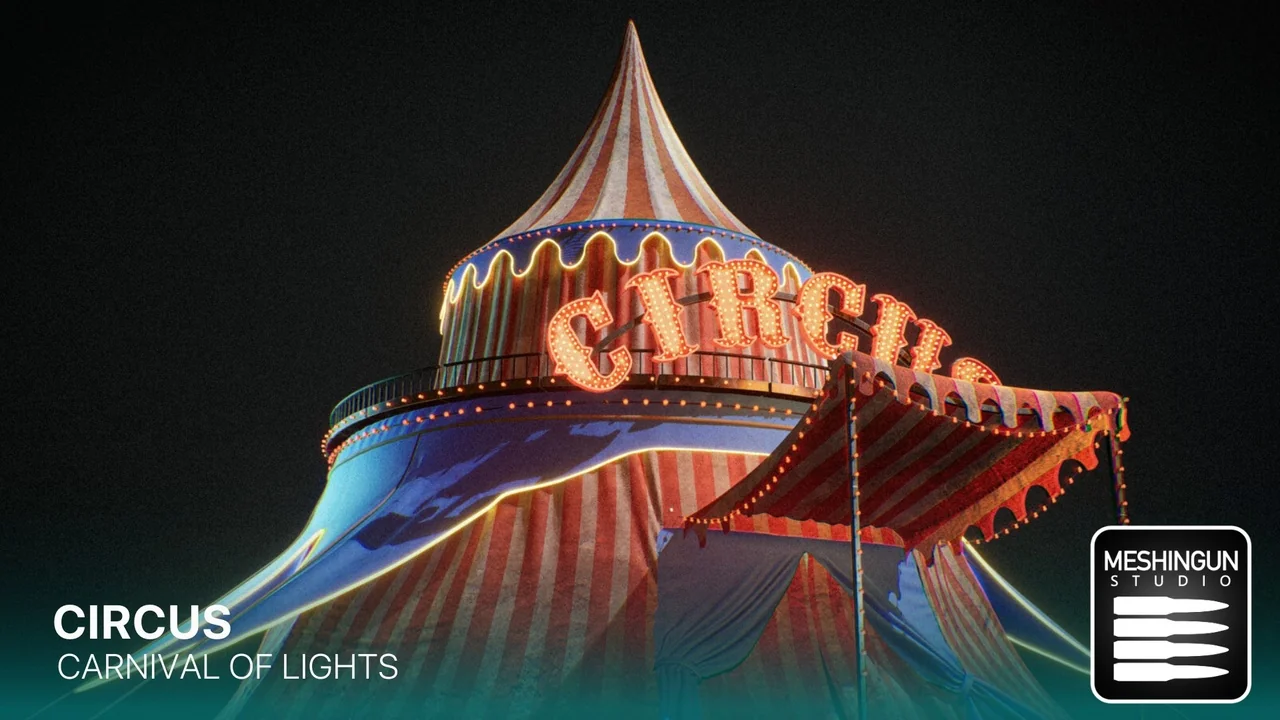
 Streets
 Abandoned
 Apocalyptic