"95fdaf16012263fa"{"id":"1002360","slug":"urban-material-pack","title":"Urban Material Pack","category":"Variety","engine":"4.27,5.0+","assetVersion":"","engineVersion":"Engine Version: 4.27,5.0+","tag":"Variety","accent":"blue","visual":"luts","summary":"Urban Material Pack holds 41 PBR materials at 2048x2048, with adjustable tiling, glass opacity, 3-way vertex instances, and wave-animated asphalt puddles.","platform":"Unreal Engine","indexPolicy":"index","publishedAt":"2026-11-06T07:13:46.778Z","updatedAt":"2026-11-06T07:13:46.778Z","sourceNotes":[],"fileContents":[],"compatibility":["Unreal Engine","Engine Version: 4.27,5.0+"],"featuredImage":{"alt":"Urban Material Pack","src":"/wp-content/uploads/published/2026/11/73b441e0ed2a-77626602-a044-4bb7-859e-f53013791228-af0f50dc8a.webp"},"hasDownloadLink":true,"downloads":0,"terms":[{"taxonomy":"category","slug":"variety","name":"Variety"}],"galleryImages":[{"src":"/wp-content/uploads/published/2026/11/ff2d0aba81a0-a45d3697-4db5-476e-a1b6-bb959a46afa1-51eb950a50.webp","alt":"Urban Material Pack"},{"src":"/wp-content/uploads/published/2026/11/e11af0f8cce7-80dba351-3b0e-4f57-b6b8-9b07b0260721-6045c7e59b.webp","alt":"Urban Material Pack"},{"src":"/wp-content/uploads/published/2026/11/13ee19fd42d2-b52cae2a-322f-4cca-ae38-7fdd27da9c6b-8bad138fb9.webp","alt":"Urban Material Pack"},{"src":"/wp-content/uploads/published/2026/11/89f72989332c-6b6ea332-4089-4a15-bb73-14cde56fd0f2-1f13da3c90.webp","alt":"Urban Material Pack"},{"src":"/wp-content/uploads/published/2026/11/d6e8a44a78b6-921ef0c8-eec5-422c-866e-1595f0918d26-a5193bcacd.webp","alt":"Urban Material Pack"},{"src":"/wp-content/uploads/published/2026/11/79771d138ac5-06cb5806-870f-4d5f-ae56-014777910fc4-b678b00993.webp","alt":"Urban Material Pack"},{"src":"/wp-content/uploads/published/2026/11/db1e69ad0ed9-f1f12fee-cded-439b-8d3c-07c2ba9ba4e0-c467bdd2e7.webp","alt":"Urban Material Pack"},{"src":"/wp-content/uploads/published/2026/11/e297b6d82eb0-a059755c-9d04-451a-90bf-1fabc22d3d2a-97809a044d.webp","alt":"Urban Material Pack"},{"src":"/wp-content/uploads/published/2026/11/01cd20b115c4-01f136c8-a041-46a6-af20-82dee873a672-3afb6d503a.webp","alt":"Urban Material Pack"},{"src":"/wp-content/uploads/published/2026/11/3203563d72aa-1be21354-cf44-4492-aec9-77eedf90c63b-152a3f6398.webp","alt":"Urban Material Pack"}],"accessPanel":{"kind":"resource","title":"Get this resource","eyebrow":"Free resource","message":"3DCGHUB is the service provider for this listing. Access is fulfilled through the official publisher channel.","fileName":"Urban Material Pack.7z","safetyNote":"Resources are manually reviewed before listing to improve quality and reduce obvious risks.","actionLabel":"Get this resource","resourceType":"Resource archive","versions":[]},"contentHtml":"\u003cp\u003eWalls, ground surfaces, window assemblies, and tile surfaces can all draw from one 41-material library. Urban Material Pack collects urban and downtown surfaces as PBR materials at 2048x2048, and each material includes base color, normal, roughness, and a combined AO/height map. Brick, concrete, cobblestone and pavement, plaster, metal, wood, tile, window glass, window frames, and asphalt cover the surface roles a downtown scene tends to need.\u003c/p\u003e \u003ch2\u003e41 materials across brick, concrete, tile, and glass\u003c/h2\u003e\n\u003cp\u003eThe texture breakdown gives the pack its shape: 1 asphalt, 8 brick, 2 cobblestone or pavement, 6 concrete, 14 tile, 2 window glass, 2 window frame, 2 plaster, 3 metal, and 4 wood. Tile carries the largest count, brick follows at 8, and concrete sits at 6. The smaller groups are specific: glass and frames for windows, plaster for wall finishes, metal and wood for the remaining hard surfaces, and a single asphalt material for ground.\u003c/p\u003e\n\u003cul\u003e\n\u003cli\u003e1 asphalt\u003c/li\u003e\n\u003cli\u003e8 brick\u003c/li\u003e\n\u003cli\u003e2 cobblestone or pavement\u003c/li\u003e\n\u003cli\u003e6 concrete\u003c/li\u003e\n\u003cli\u003e14 tile\u003c/li\u003e\n\u003cli\u003e2 window glass\u003c/li\u003e\n\u003cli\u003e2 window frame\u003c/li\u003e\n\u003cli\u003e2 plaster\u003c/li\u003e\n\u003cli\u003e3 metal\u003c/li\u003e\n\u003cli\u003e4 wood\u003c/li\u003e\n\u003c/ul\u003e\n\u003cp\u003eThe breakdown matters when planning a scene. A downtown block can lean on tile for patterned surfaces, brick for walls, concrete for structural surfaces, and the window categories for glazing and frames. Asphalt, plaster, metal, and wood fill the rest, with asphalt taking the dedicated ground role.\u003c/p\u003e \u003ch2\u003e2048x2048 maps with a combined AO/height pass\u003c/h2\u003e\n\u003cp\u003eResolution is 2048x2048 across the set. Each material includes a base color map, a normal map, roughness, and a combined AO/height map. Base color, normal, and roughness stand as their own maps; ambient occlusion and height arrive together in one combined map.\u003c/p\u003e\n\u003cp\u003eThe map set is consistent from asphalt to wood, which keeps surface construction predictable when materials from different categories meet in the same scene. A brick wall, a concrete panel, and a tile floor all carry the same map types at the same resolution. The combined AO/height map is one of the listed map slots; it does not replace the normal, roughness, or base color maps.\u003c/p\u003e \u003ch3\u003eTiling, rotation, normal intensity, AO power, and roughness intensity\u003c/h3\u003e\n\u003cp\u003eEach material instance exposes texture tiling, texture rotation, normal intensity, AO power, and roughness intensity. Those controls let a surface change scale, orientation, normal strength, occlusion strength, and roughness at the instance level. A brick material can be tiled at a different scale or rotated; a concrete material can take a stronger or weaker normal; AO power and roughness intensity adjust the surface response without changing the base maps.\u003c/p\u003e\n\u003cp\u003eEvery material instance includes those controls, so repeated surfaces can be adjusted individually while the same underlying material stays in use.\u003c/p\u003e \u003ch3\u003eGlass opacity and distance-based tessellation fades\u003c/h3\u003e\n\u003cp\u003eGlass material instances include adjustable opacity. Distance-based tessellation material instances include adjustable tessellation and displacement start and end fade. The start and end fade controls set where tessellation and displacement begin and end across distance, and the controls sit on the instances themselves.\u003c/p\u003e \u003ch2\u003ePaintable cracks and wave-animated puddles on the asphalt\u003c/h2\u003e\n\u003cp\u003eThe asphalt ground material supports paintable cracks and water puddles with wave animation. Wave tiling, wave speed, and wave intensity are adjustable. The cracks can be painted into the asphalt surface, and the puddles animate with waves rather than staying as a fixed patch. Asphalt is the only ground material in the texture breakdown, so this single entry carries the set's dedicated road and ground variation.\u003c/p\u003e \u003ch2\u003e3-way vertex instances and the downtown surface mix\u003c/h2\u003e\n\u003cp\u003eThe set includes 3-way vertex material instances alongside the standard material instances, glass instances, and distance-based tessellation instances. A downtown block can combine asphalt for ground, cobblestone or pavement for walking surfaces, brick and concrete for walls, plaster for wall finishes, window glass and frames for openings, and metal, wood, and tile for the remaining surfaces. Those categories come from the same 41-material library, with instance-level tiling and rotation available for repeated surfaces.\u003c/p\u003e\n\u003cp\u003eFor architectural work, the categories apply to building surfaces, ground treatments, and window assemblies. Game environments can use the same mix for an urban downtown setting. The 3-way vertex instances are a separate option from the standard material instances, giving the pack a different material setup to call on when the surface mix requires it.\u003c/p\u003e \u003ch2\u003eWho gets the most from Urban Material Pack\u003c/h2\u003e\n\u003cp\u003eEnvironment artists building a downtown block, architectural teams producing urban building surfaces, and game or architectural projects that need a broad surface library will find the most use here. The concrete scope is 41 urban and downtown PBR materials at 2048x2048, with base color, normal, roughness, and combined AO/height maps.\u003c/p\u003e\n\u003cp\u003eMaterial instances carry tiling, rotation, normal intensity, AO power, and roughness intensity; glass instances add opacity; distance-based tessellation instances add tessellation and displacement start and end fade; 3-way vertex instances are included; and the asphalt material adds paintable cracks plus wave-animated puddles with adjustable wave tiling, speed, and intensity. Teams weighing it for a downtown scene can check those surface categories and instance controls against the work in front of them.\u003c/p\u003e\n\n\u003ch2\u003eExplore Similar Assets\u003c/h2\u003e\n\u003cul\u003e\n\u003cli\u003e\u003ca href=\"https://3dcghub.com/dynamic-rain-overlay/\" rel=\"noopener noreferrer\"\u003eDynamic Rain Overlay\u003c/a\u003e\u003c/li\u003e\n\u003cli\u003e\u003ca href=\"https://3dcghub.com/09-cloth-materials/\" rel=\"noopener noreferrer\"\u003e09 Cloth Materials\u003c/a\u003e\u003c/li\u003e\n\u003cli\u003e\u003ca href=\"https://3dcghub.com/shiny-things/\" rel=\"noopener noreferrer\"\u003eShiny Things\u003c/a\u003e\u003c/li\u003e\n\u003cli\u003e\u003ca href=\"https://3dcghub.com/splatter-decals/\" rel=\"noopener noreferrer\"\u003eSplatter Decals\u003c/a\u003e\u003c/li\u003e\n\u003cli\u003e\u003ca href=\"https://3dcghub.com/maskedrockshader/\" rel=\"noopener noreferrer\"\u003eMaskedRockShader\u003c/a\u003e\u003c/li\u003e\n\u003c/ul\u003e","contentTextLength":5502,"navigation":{"current":8,"total":4291,"previous":{"id":"1002361","slug":"uz-x-fpsk-ready","title":"UZ-X (FPSK Ready)","category":"Guns","platform":"Unreal Engine","updatedAt":"2026-11-06T07:18:59.634Z"},"next":{"id":"1002359","slug":"survival-props-pack","title":"Survival props pack","category":"Apocalyptic / Post-apocalyptic","platform":"Unreal Engine","updatedAt":"2026-11-06T07:08:23.651Z"}},"relatedResources":[{"id":"1002298","slug":"dynamic-rain-overlay","title":"Dynamic Rain Overlay","category":"Variety","engine":"4.27+,5.0+","assetVersion":"","engineVersion":"Engine Version: 4.27+,5.0+","tag":"Variety","accent":"blue","visual":"mech","summary":"A material function that adds controllable rain to existing materials, with animated and static droplets, wetness and puddle overlays, and per-material tiling.","platform":"Unreal Engine","indexPolicy":"index","publishedAt":"2026-11-05T10:00:32.178Z","updatedAt":"2026-11-05T10:00:32.178Z","sourceNotes":[],"fileContents":[],"compatibility":["Unreal Engine","Engine Version: 4.27+,5.0+"],"featuredImage":{"alt":"Dynamic Rain Overlay","src":"/wp-content/uploads/published/2026/11/8dc6b19c2057-fdeac25e-d408-45aa-ba69-428e46584c34-ca1a25c870.webp"},"hasDownloadLink":true,"downloads":0},{"id":"1001854","slug":"09-cloth-materials","title":"09 Cloth Materials","category":"Variety","engine":"4.26+,5.0+","assetVersion":"","engineVersion":"Engine Version: 4.26+,5.0+","tag":"Variety","accent":"blue","visual":"luts","summary":"A focused pack of 09 ready-to-use cloth materials with instanced controls for diffuse color, roughness, specular, occlusion, UV tiling, and displacement.","platform":"Unreal Engine","indexPolicy":"index","publishedAt":"2026-10-22T10:34:49.927Z","updatedAt":"2026-10-22T10:34:49.927Z","sourceNotes":[],"fileContents":[],"compatibility":["Unreal Engine","Engine Version: 4.26+,5.0+"],"featuredImage":{"alt":"09 Cloth Materials","src":"/wp-content/uploads/published/2026/10/7b5e95f3f164-b93dcd3f-92ed-44e7-8b01-b34b2778087d-89c4520378.webp"},"hasDownloadLink":true,"downloads":0},{"id":"13240","slug":"shiny-things","title":"Shiny Things","category":"Variety","engine":"4.27,5.0+","assetVersion":"Engine version: 4.27,5.0+","engineVersion":"4.27","tag":"Variety","accent":"blue","visual":"luts","summary":"Enhance your projects with Shiny Things, a modular material pack featuring realistic holographic, prismatic, and glitter effects. This collection includes decals, widgets, and templates designed to react dynamically to camera movement.","platform":"Unreal Engine","indexPolicy":"noindex","publishedAt":"2026-03-10T16:35:57.000Z","updatedAt":"2026-04-19T15:46:30.000Z","sourceNotes":[],"fileContents":[],"compatibility":["Unreal Engine","Engine version: 4.27,5.0+"],"featuredImage":{"alt":"Shiny Things","src":"https://3dcghub.com/wp-content/uploads/2026/03/9f8f0de1-c05b-4e7c-bbb7-9b5430bc204d.webp"},"hasDownloadLink":true,"downloads":0}]}
Variety
Urban Material Pack
Urban Material Pack holds 41 PBR materials at 2048x2048, with adjustable tiling, glass opacity, 3-way vertex instances, and wave-animated asphalt puddles.
Category:Unreal Engine,VarietyPlatform: Unreal EngineEngine Version: 4.27,5.0+Published: Nov 6, 2026
Variety
Resource overview
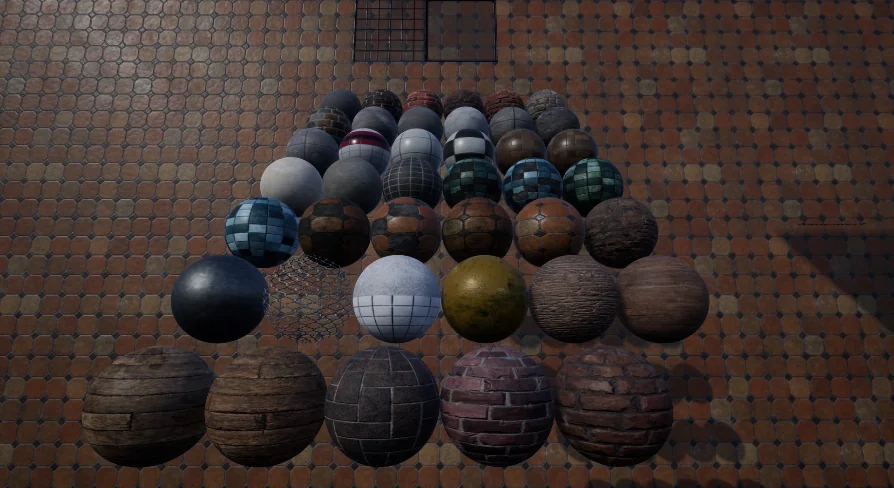
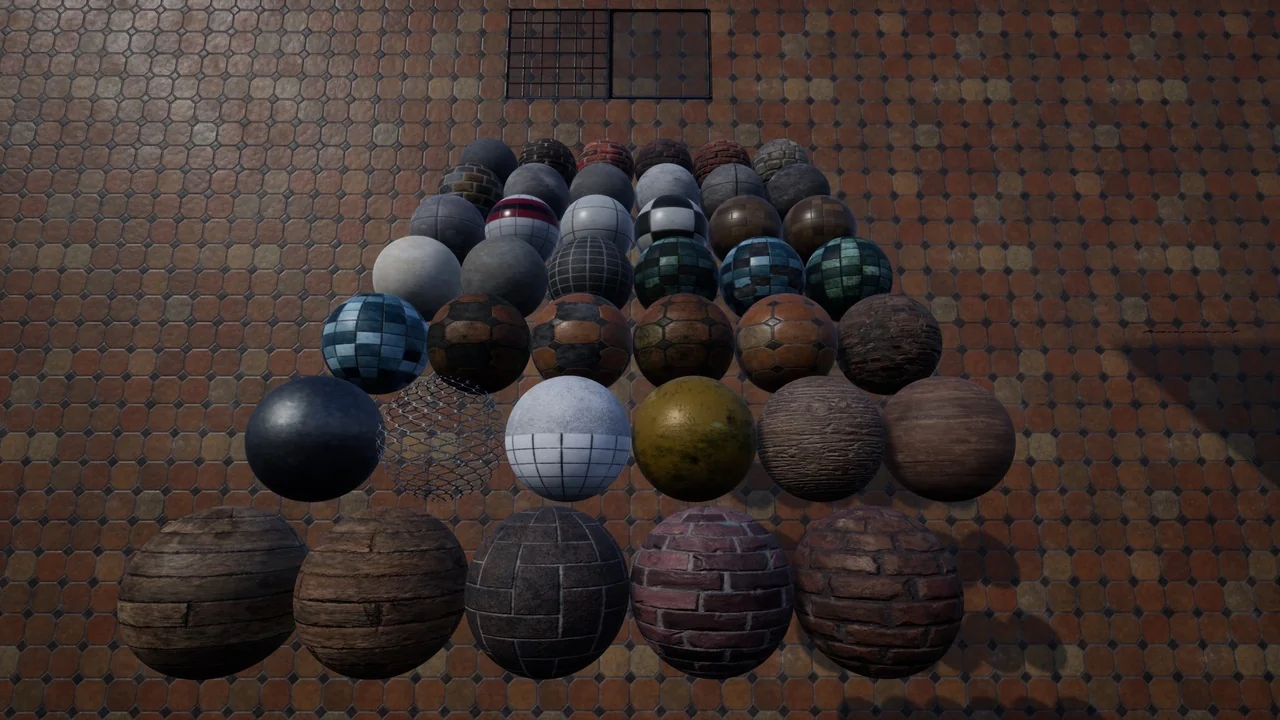
Walls, ground surfaces, window assemblies, and tile surfaces can all draw from one 41-material library. Urban Material Pack collects urban and downtown surfaces as PBR materials at 2048x2048, and each material includes base color, normal, roughness, and a combined AO/height map. Brick, concrete, cobblestone and pavement, plaster, metal, wood, tile, window glass, window frames, and asphalt cover the surface roles a downtown scene tends to need.
41 materials across brick, concrete, tile, and glass
The texture breakdown gives the pack its shape: 1 asphalt, 8 brick, 2 cobblestone or pavement, 6 concrete, 14 tile, 2 window glass, 2 window frame, 2 plaster, 3 metal, and 4 wood. Tile carries the largest count, brick follows at 8, and concrete sits at 6. The smaller groups are specific: glass and frames for windows, plaster for wall finishes, metal and wood for the remaining hard surfaces, and a single asphalt material for ground.
1 asphalt
8 brick
2 cobblestone or pavement
6 concrete
14 tile
2 window glass
2 window frame
2 plaster
3 metal
4 wood
The breakdown matters when planning a scene. A downtown block can lean on tile for patterned surfaces, brick for walls, concrete for structural surfaces, and the window categories for glazing and frames. Asphalt, plaster, metal, and wood fill the rest, with asphalt taking the dedicated ground role.
2048x2048 maps with a combined AO/height pass
Resolution is 2048x2048 across the set. Each material includes a base color map, a normal map, roughness, and a combined AO/height map. Base color, normal, and roughness stand as their own maps; ambient occlusion and height arrive together in one combined map.
The map set is consistent from asphalt to wood, which keeps surface construction predictable when materials from different categories meet in the same scene. A brick wall, a concrete panel, and a tile floor all carry the same map types at the same resolution. The combined AO/height map is one of the listed map slots; it does not replace the normal, roughness, or base color maps.
Tiling, rotation, normal intensity, AO power, and roughness intensity
Each material instance exposes texture tiling, texture rotation, normal intensity, AO power, and roughness intensity. Those controls let a surface change scale, orientation, normal strength, occlusion strength, and roughness at the instance level. A brick material can be tiled at a different scale or rotated; a concrete material can take a stronger or weaker normal; AO power and roughness intensity adjust the surface response without changing the base maps.
Every material instance includes those controls, so repeated surfaces can be adjusted individually while the same underlying material stays in use.
Glass opacity and distance-based tessellation fades
Glass material instances include adjustable opacity. Distance-based tessellation material instances include adjustable tessellation and displacement start and end fade. The start and end fade controls set where tessellation and displacement begin and end across distance, and the controls sit on the instances themselves.
Paintable cracks and wave-animated puddles on the asphalt
The asphalt ground material supports paintable cracks and water puddles with wave animation. Wave tiling, wave speed, and wave intensity are adjustable. The cracks can be painted into the asphalt surface, and the puddles animate with waves rather than staying as a fixed patch. Asphalt is the only ground material in the texture breakdown, so this single entry carries the set's dedicated road and ground variation.
3-way vertex instances and the downtown surface mix
The set includes 3-way vertex material instances alongside the standard material instances, glass instances, and distance-based tessellation instances. A downtown block can combine asphalt for ground, cobblestone or pavement for walking surfaces, brick and concrete for walls, plaster for wall finishes, window glass and frames for openings, and metal, wood, and tile for the remaining surfaces. Those categories come from the same 41-material library, with instance-level tiling and rotation available for repeated surfaces.
For architectural work, the categories apply to building surfaces, ground treatments, and window assemblies. Game environments can use the same mix for an urban downtown setting. The 3-way vertex instances are a separate option from the standard material instances, giving the pack a different material setup to call on when the surface mix requires it.
Who gets the most from Urban Material Pack
Environment artists building a downtown block, architectural teams producing urban building surfaces, and game or architectural projects that need a broad surface library will find the most use here. The concrete scope is 41 urban and downtown PBR materials at 2048x2048, with base color, normal, roughness, and combined AO/height maps.
Material instances carry tiling, rotation, normal intensity, AO power, and roughness intensity; glass instances add opacity; distance-based tessellation instances add tessellation and displacement start and end fade; 3-way vertex instances are included; and the asphalt material adds paintable cracks plus wave-animated puddles with adjustable wave tiling, speed, and intensity. Teams weighing it for a downtown scene can check those surface categories and instance controls against the work in front of them.
 Variety
 Variety
 Variety
 Variety