"7b46a695175d8694"{"id":"1001496","slug":"ultimate-multiplayer-fps-kit","title":"Ultimate Multiplayer FPS Kit","category":"Shooter","engine":"5.3+","assetVersion":"","engineVersion":"Engine Version: 5.3+","tag":"Shooter","accent":"blue","visual":"mech","summary":"Explore the Ultimate Multiplayer FPS Kit, featuring replicated mechanics, modular weapons, dynamic locomotion, and flexible objective frameworks.","platform":"Unreal Engine","publishedAt":"2026-10-09T05:55:05.138Z","updatedAt":"2026-10-09T05:55:05.138Z","sourceNotes":[],"fileContents":[],"compatibility":["Unreal Engine","Engine Version: 5.3+"],"featuredImage":{"alt":"Ultimate Multiplayer FPS Kit","src":"/wp-content/uploads/published/2026/10/391e1644e6fa-13c21395-24cd-4606-b1ed-a04edd06457c-0245a33139.webp"},"hasDownloadLink":true,"downloads":1,"terms":[{"taxonomy":"category","slug":"shooter","name":"Shooter"}],"galleryImages":[{"src":"/wp-content/uploads/published/2026/10/10024b5b655a-0d97c57b-bf94-422e-90cf-9d51726439d6-7ac5b8f075.webp","alt":"Ultimate Multiplayer FPS Kit"},{"src":"/wp-content/uploads/published/2026/10/6d8c5a38df52-85b793bf-0cdf-40a9-a322-63842bb2ce6c-74b741fced.webp","alt":"Ultimate Multiplayer FPS Kit"},{"src":"/wp-content/uploads/published/2026/10/a4ec139977f9-d5d5a37d-5183-47ce-aa33-778f28a85c7d-4ea7f79236.webp","alt":"Ultimate Multiplayer FPS Kit"},{"src":"/wp-content/uploads/published/2026/10/91235ce17901-1bcb6e8c-441a-49db-b39b-e40e2c2420ea-ac69a2865a.webp","alt":"Ultimate Multiplayer FPS Kit"},{"src":"/wp-content/uploads/published/2026/10/8bfef0eb3cff-e2aa348c-ecef-4d11-82e5-574dc80bac0a-16baaf06c6.webp","alt":"Ultimate Multiplayer FPS Kit"},{"src":"/wp-content/uploads/published/2026/10/d13ae6099f27-fdc0b6d1-26bd-4838-a401-6b7068c9cc5e-efb5500156.webp","alt":"Ultimate Multiplayer FPS Kit"},{"src":"/wp-content/uploads/published/2026/10/ccfeb42424d9-35275203-7543-4d6d-9b7e-3861346ffaad-e3beb7970d.webp","alt":"Ultimate Multiplayer FPS Kit"},{"src":"/wp-content/uploads/published/2026/10/a9b0d3f3cdb0-fcd3f7bb-e35a-40fc-a40e-b01c02da6426-8327807de4.webp","alt":"Ultimate Multiplayer FPS Kit"},{"src":"/wp-content/uploads/published/2026/10/7e828d3d9818-176a57d3-eb30-4251-923d-fb4fb389d978-1709164c56.webp","alt":"Ultimate Multiplayer FPS Kit"},{"src":"/wp-content/uploads/published/2026/10/4ded0154d811-636666a9-488d-4f96-a47d-170767570a9e-4b6386d7a5.webp","alt":"Ultimate Multiplayer FPS Kit"}],"accessPanel":{"kind":"resource","title":"Download this resource","eyebrow":"Free Download","message":"Log in or create a free account to start your download.","fileName":"UltimateMultiplayerFPSKit.7z","safetyNote":"Resources are manually reviewed before listing to improve quality and reduce obvious risks.","actionLabel":"Download Free","resourceType":"Resource archive"},"contentHtml":"\u003cp\u003eCreating a responsive first-person combat environment requires tight synchronization between player movement, weapon behavior, and networked state replication. The Ultimate Multiplayer FPS Kit approaches modern shooter design by layering high-impact mechanics over the free AGR V plugin. Designed to scale from rapid mechanics testing into complete production pipelines, the architecture organizes player movement, handling feel, weapon management, and objective structures into modular, clean Unreal Engine Blueprints.\u003c/p\u003e \u003ch2\u003eAdvanced Locomotion and Animation Dynamics in the Ultimate Multiplayer FPS Kit\u003c/h2\u003e\n\u003cp\u003eMovement responsiveness sets the baseline for competitive and tactical gameplay. The kit incorporates an advanced locomotion system built to mimic the fluid, snappy feel of modern first-person titles. Players can maneuver across levels using omnidirectional sprint and omnidirectional prone movement, giving them full directional agency while remaining low to the ground or maneuvering through tight choke points. Smooth crouch-to-prone transitions maintain visual and mechanical continuity without abrupt stance snaps.\u003c/p\u003e \u003cp\u003eTraversing vertical environments relies on dedicated world-interaction mechanics. The kit features ladder climbing alongside three distinct types of vaulting, allowing characters to scramble across low cover, clamber onto elevated perches, or clear waist-height barriers dynamically. Movement is paired with dedicated character audio systems, including surface-sensitive footsteps that feed situational awareness. A comprehensive animation overhaul refines the weight and responsiveness of the player pawn, ensuring that sprinting, aiming, and transitional stances blend cleanly across the viewmodel and third-person perspectives.\u003c/p\u003e \u003ch2\u003eData-Driven Weapon Customization and Ballistics Handling\u003c/h2\u003e\n\u003cp\u003eCombat depth in the kit centers on a modular arsenal supported by an extensive, data asset-driven weapon customization pipeline. The foundation ships with five customizable base weapons, including support for akimbo dual-wield configurations. By routing attachment logic through dedicated data assets, developers can easily swap attachments, alter core performance stats, and configure appearances without modifying base actor code. The system supports scopes, sights, grips, and distinct cosmetic skins, integrating each attachment directly into the user interface and active viewmodel.\u003c/p\u003e \u003cp\u003eShooting mechanics use client-sided line traces paired with authoritative server hit validation, preserving responsive trigger response for the player while preventing synchronization discrepancies. Gun handling is further enhanced by procedural sight alignment and procedural grip positioning, which automatically orient viewmodels to match equipped accessories. Recoil mechanics feature smoothed impulse recoil and realistic recoil resets, keeping weapon climbs predictable yet challenging. Additional combat details include aiming-down-sights (ADS) reload animations and a revised damage calculation pipeline that dictates combat lethality across engagements.\u003c/p\u003e \u003cp\u003eManaging equipment configurations takes place inside a specialized loadout menu. The interface features procedurally generated weapon foam, rendering a sleek gun-case presentation for selected builds. When paired with the automated equipment image generation system, weapon variants and tactical items populate the UI with accurate visuals directly derived from their configured assets.\u003c/p\u003e \u003ch2\u003eTactical Equipment, Upgrades, and Player Progression Systems\u003c/h2\u003e\n\u003cp\u003eTactical encounters rely on utility items that dictate battlefield flow. The toolkit includes four standard tactical equipment items, including stun grenades, alongside four special utility devices:\u003c/p\u003e\n\u003cul\u003e\n\u003cli\u003e\u003cstrong\u003eHeartbeat Sensor:\u003c/strong\u003e A handheld tactical scanner for detecting nearby threats.\u003c/li\u003e\n\u003cli\u003e\u003cstrong\u003eAirstrike:\u003c/strong\u003e High-impact area-of-effect support for clearing contested ground.\u003c/li\u003e\n\u003cli\u003e\u003cstrong\u003eMines:\u003c/strong\u003e Deployable ground traps for area denial and flank defense.\u003c/li\u003e\n\u003cli\u003e\u003cstrong\u003eC4:\u003c/strong\u003e Remote-detonated explosives suited for deliberate ambushes.\u003c/li\u003e\n\u003cli\u003e\u003cstrong\u003eBarricades:\u003c/strong\u003e Deployable physical cover used to secure open firing angles.\u003c/li\u003e\n\u003c/ul\u003e \u003cp\u003eEquipment items support rechargeable mechanics, enabling cooldown-based tactical pacing across match rounds. Accompanying the hardware is a roster of ten distinct character upgrades that modify base operative attributes. These perks include faster reload cycles, expanded health pools, and accelerated vaulting animations, allowing players to refine specific combat roles.\u003c/p\u003e \u003cp\u003ePlayer progression ties these systems together via an integrated experience point and leveling system. As players accumulate score across matches, they unlock new weapons, functional attachments, and equipment slots. Combat survivability is governed by an integrated health regeneration system that manages recovery delays between fire exchanges.\u003c/p\u003e \u003ch2\u003eObjective Game Modes, Vehicle Possession, and Server-Validated Multiplayer\u003c/h2\u003e\n\u003cp\u003eNetworking across the kit is fully replicated out of the box, ensuring that movement states, bullet registration, vehicle interactions, and UI markers remain in sync across server instances. The framework includes a vehicle possession system that supports multi-seat vehicles, enabling synchronized vehicular transport and combined-arms combat scenarios across larger maps.\u003c/p\u003e \u003cp\u003eMatches run on an expandable, component-based Game Mode and Objective Framework. Standard game modes included out of the box are:\u003c/p\u003e\n\u003cul\u003e\n\u003cli\u003e\u003cstrong\u003eTeam Deathmatch (2 Teams):\u003c/strong\u003e A streamlined, competitive elimination mode focused on squad kill tallies.\u003c/li\u003e\n\u003cli\u003e\u003cstrong\u003eKing of the Hill (3 Teams):\u003c/strong\u003e A multi-faction objective-control format generating chaotic three-way territory battles.\u003c/li\u003e\n\u003c/ul\u003e \u003cp\u003eScaling these modes requires minimal overhead: adding a new team requires dropping in a team component, while custom objectives activate through simple event triggers. For matches with larger player counts, an automatic squad assignment system divides large teams into smaller tactical fireteams. Combat coordination is tracked on the HUD through a lightweight minimap, a directional compass, and persistent menu settings featuring local save support. Developers seeking further character progression logic can also integrate the systems directly with the Ultimate Skill Tree.\u003c/p\u003e \u003cp\u003eWhether assembling an urban tactical shooter, a vehicular skirmish arena, or a fast-paced arena duel, the Ultimate Multiplayer FPS Kit offers an organized, production-ready foundation with fully replicated core mechanics.\u003c/p\u003e\n\n\u003ch2\u003eMore From The Same Workflow\u003c/h2\u003e\n\u003cul\u003e\n\u003cli\u003e\u003ca href=\"https://3dcghub.com/zombie-shooter-kit-v2-12-unreal-engine-5-starter-pack/\" title=\"Zombie Shooter Kit v2.12 - UNREAL ENGINE 5 Starter Pack\"\u003eZombie Shooter Kit v2.12 - UNREAL ENGINE 5 Starter Pack\u003c/a\u003e\u003c/li\u003e\n\u003cli\u003e\u003ca href=\"https://3dcghub.com/fps-multiplayer-shooter-v3/\" title=\"FPS Multiplayer shooter v3\"\u003eFPS Multiplayer shooter v3\u003c/a\u003e\u003c/li\u003e\n\u003cli\u003e\u003ca href=\"https://3dcghub.com/fps-multiplayer-controller/\" title=\"FPS Multiplayer Controller\"\u003eFPS Multiplayer Controller\u003c/a\u003e\u003c/li\u003e\n\u003cli\u003e\u003ca href=\"https://3dcghub.com/ultimate-shooter-kit/\" title=\"Ultimate Shooter Kit\"\u003eUltimate Shooter Kit\u003c/a\u003e\u003c/li\u003e\n\u003cli\u003e\u003ca href=\"https://3dcghub.com/tactical-shooter-kit-v1/\" title=\"Tactical Shooter Kit V1\"\u003eTactical Shooter Kit V1\u003c/a\u003e\u003c/li\u003e\n\u003c/ul\u003e","contentTextLength":6560,"navigation":{"current":49,"total":3481,"previous":{"id":"1001497","slug":"101-everyday-props","title":"101+ Everyday Props","category":"Musical","platform":"Unreal Engine","updatedAt":"2026-10-09T07:25:07.885Z"},"next":{"id":"23276","slug":"feel","title":"Feel","category":"Particles \u0026 Effects","platform":"Unity","updatedAt":"2026-10-09T05:54:10.435Z"}},"relatedResources":[{"id":"1001097","slug":"zombie-shooter-kit-v2-12-unreal-engine-5-starter-pack","title":"Zombie Shooter Kit v2.12 - UNREAL ENGINE 5 Starter Pack","category":"Shooter","engine":"5.7+","assetVersion":"Asset Version: 2.11","engineVersion":"Engine Version: 5.7+","tag":"Shooter","accent":"blue","visual":"mech","summary":"Blueprint-based UE5 starter for survival shooters: replicated multiplayer, zombies and human AI, jigsaw inventory, crafting, vehicles, weather, and G.A.S.P. Loc","platform":"Unreal Engine","publishedAt":"2026-09-06T02:45:34.766Z","updatedAt":"2026-09-06T02:45:34.766Z","sourceNotes":[],"fileContents":[],"compatibility":["Unreal Engine","Asset Version: 2.11","Engine Version: 5.7+"],"featuredImage":{"alt":"Zombie Shooter Kit v2.12 - UNREAL ENGINE 5 Starter Pack","src":"/wp-content/uploads/published/2026/09/1d7d8e00baab-vqwonz-9f5e01b28f.webp"},"hasDownloadLink":true,"downloads":10},{"id":"1001091","slug":"fps-multiplayer-shooter-v3","title":"FPS Multiplayer shooter v3","category":"Shooter","engine":"5.1+","assetVersion":"Asset Version: v2","engineVersion":"Engine Version: 5.1+","tag":"Shooter","accent":"blue","visual":"mech","summary":"Restore missing plugin folders first, then v3 adds an assault rifle, shotgun, sniper, prone, team chat, and a LAN/Steam team deathmatch loop.","platform":"Unreal Engine","publishedAt":"2026-09-05T18:08:15.901Z","updatedAt":"2026-09-05T18:08:15.901Z","sourceNotes":[],"fileContents":[],"compatibility":["Unreal Engine","Asset Version: v2","Engine Version: 5.1+"],"featuredImage":{"alt":"FPS Multiplayer shooter v3","src":"/wp-content/uploads/published/2026/09/f2dcbef3e7d9-5605e15c-6edf-460f-a056-8f457e7fd1a3-a371fb4696.webp"},"hasDownloadLink":true,"downloads":2},{"id":"1001436","slug":"fps-multiplayer-controller","title":"FPS Multiplayer Controller","category":"Shooter","engine":"5.4+","assetVersion":"","engineVersion":"Engine Version: 5.4+","tag":"Shooter","accent":"blue","visual":"mech","summary":"Build networked first-person shooters in Unreal Engine 5 with replicated weapons, MetaHuman animation support, dynamic gun handling, and loadout benches.","platform":"Unreal Engine","publishedAt":"2026-10-07T08:29:53.920Z","updatedAt":"2026-10-07T08:29:53.920Z","sourceNotes":[],"fileContents":[],"compatibility":["Unreal Engine","Engine Version: 5.4+"],"featuredImage":{"alt":"FPS Multiplayer Controller","src":"/wp-content/uploads/published/2026/10/541757ac162a-b8b106b4-85dc-43f2-b340-a4517862fe57-13e6e45d73.webp"},"hasDownloadLink":true,"downloads":0}]}
Shooter
Ultimate Multiplayer FPS Kit
Explore the Ultimate Multiplayer FPS Kit, featuring replicated mechanics, modular weapons, dynamic locomotion, and flexible objective frameworks.
Category:Unreal Engine,ShooterPlatform: Unreal EngineEngine Version: 5.3+Published: Oct 9, 2026
Shooter
Resource overview
Creating a responsive first-person combat environment requires tight synchronization between player movement, weapon behavior, and networked state replication. The Ultimate Multiplayer FPS Kit approaches modern shooter design by layering high-impact mechanics over the free AGR V plugin. Designed to scale from rapid mechanics testing into complete production pipelines, the architecture organizes player movement, handling feel, weapon management, and objective structures into modular, clean Unreal Engine Blueprints.
Advanced Locomotion and Animation Dynamics in the Ultimate Multiplayer FPS Kit
Movement responsiveness sets the baseline for competitive and tactical gameplay. The kit incorporates an advanced locomotion system built to mimic the fluid, snappy feel of modern first-person titles. Players can maneuver across levels using omnidirectional sprint and omnidirectional prone movement, giving them full directional agency while remaining low to the ground or maneuvering through tight choke points. Smooth crouch-to-prone transitions maintain visual and mechanical continuity without abrupt stance snaps.
Traversing vertical environments relies on dedicated world-interaction mechanics. The kit features ladder climbing alongside three distinct types of vaulting, allowing characters to scramble across low cover, clamber onto elevated perches, or clear waist-height barriers dynamically. Movement is paired with dedicated character audio systems, including surface-sensitive footsteps that feed situational awareness. A comprehensive animation overhaul refines the weight and responsiveness of the player pawn, ensuring that sprinting, aiming, and transitional stances blend cleanly across the viewmodel and third-person perspectives.
Data-Driven Weapon Customization and Ballistics Handling
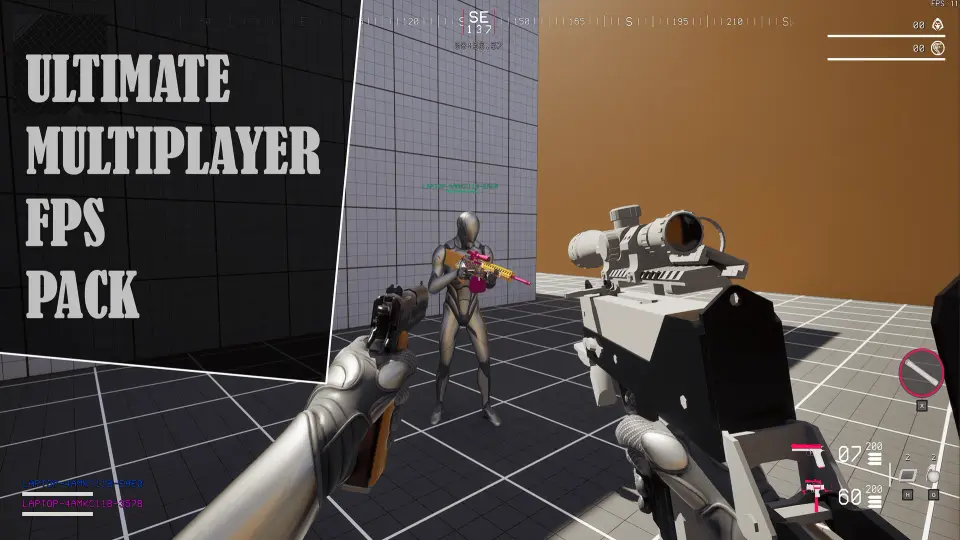
Combat depth in the kit centers on a modular arsenal supported by an extensive, data asset-driven weapon customization pipeline. The foundation ships with five customizable base weapons, including support for akimbo dual-wield configurations. By routing attachment logic through dedicated data assets, developers can easily swap attachments, alter core performance stats, and configure appearances without modifying base actor code. The system supports scopes, sights, grips, and distinct cosmetic skins, integrating each attachment directly into the user interface and active viewmodel.
Shooting mechanics use client-sided line traces paired with authoritative server hit validation, preserving responsive trigger response for the player while preventing synchronization discrepancies. Gun handling is further enhanced by procedural sight alignment and procedural grip positioning, which automatically orient viewmodels to match equipped accessories. Recoil mechanics feature smoothed impulse recoil and realistic recoil resets, keeping weapon climbs predictable yet challenging. Additional combat details include aiming-down-sights (ADS) reload animations and a revised damage calculation pipeline that dictates combat lethality across engagements.
Managing equipment configurations takes place inside a specialized loadout menu. The interface features procedurally generated weapon foam, rendering a sleek gun-case presentation for selected builds. When paired with the automated equipment image generation system, weapon variants and tactical items populate the UI with accurate visuals directly derived from their configured assets.
Tactical Equipment, Upgrades, and Player Progression Systems
Tactical encounters rely on utility items that dictate battlefield flow. The toolkit includes four standard tactical equipment items, including stun grenades, alongside four special utility devices:
Heartbeat Sensor: A handheld tactical scanner for detecting nearby threats.
Airstrike: High-impact area-of-effect support for clearing contested ground.
Mines: Deployable ground traps for area denial and flank defense.
C4: Remote-detonated explosives suited for deliberate ambushes.
Barricades: Deployable physical cover used to secure open firing angles.
Equipment items support rechargeable mechanics, enabling cooldown-based tactical pacing across match rounds. Accompanying the hardware is a roster of ten distinct character upgrades that modify base operative attributes. These perks include faster reload cycles, expanded health pools, and accelerated vaulting animations, allowing players to refine specific combat roles.
Player progression ties these systems together via an integrated experience point and leveling system. As players accumulate score across matches, they unlock new weapons, functional attachments, and equipment slots. Combat survivability is governed by an integrated health regeneration system that manages recovery delays between fire exchanges.
Objective Game Modes, Vehicle Possession, and Server-Validated Multiplayer
Networking across the kit is fully replicated out of the box, ensuring that movement states, bullet registration, vehicle interactions, and UI markers remain in sync across server instances. The framework includes a vehicle possession system that supports multi-seat vehicles, enabling synchronized vehicular transport and combined-arms combat scenarios across larger maps.
Matches run on an expandable, component-based Game Mode and Objective Framework. Standard game modes included out of the box are:
Team Deathmatch (2 Teams): A streamlined, competitive elimination mode focused on squad kill tallies.
King of the Hill (3 Teams): A multi-faction objective-control format generating chaotic three-way territory battles.
Scaling these modes requires minimal overhead: adding a new team requires dropping in a team component, while custom objectives activate through simple event triggers. For matches with larger player counts, an automatic squad assignment system divides large teams into smaller tactical fireteams. Combat coordination is tracked on the HUD through a lightweight minimap, a directional compass, and persistent menu settings featuring local save support. Developers seeking further character progression logic can also integrate the systems directly with the Ultimate Skill Tree.
Whether assembling an urban tactical shooter, a vehicular skirmish arena, or a fast-paced arena duel, the Ultimate Multiplayer FPS Kit offers an organized, production-ready foundation with fully replicated core mechanics.
 Shooter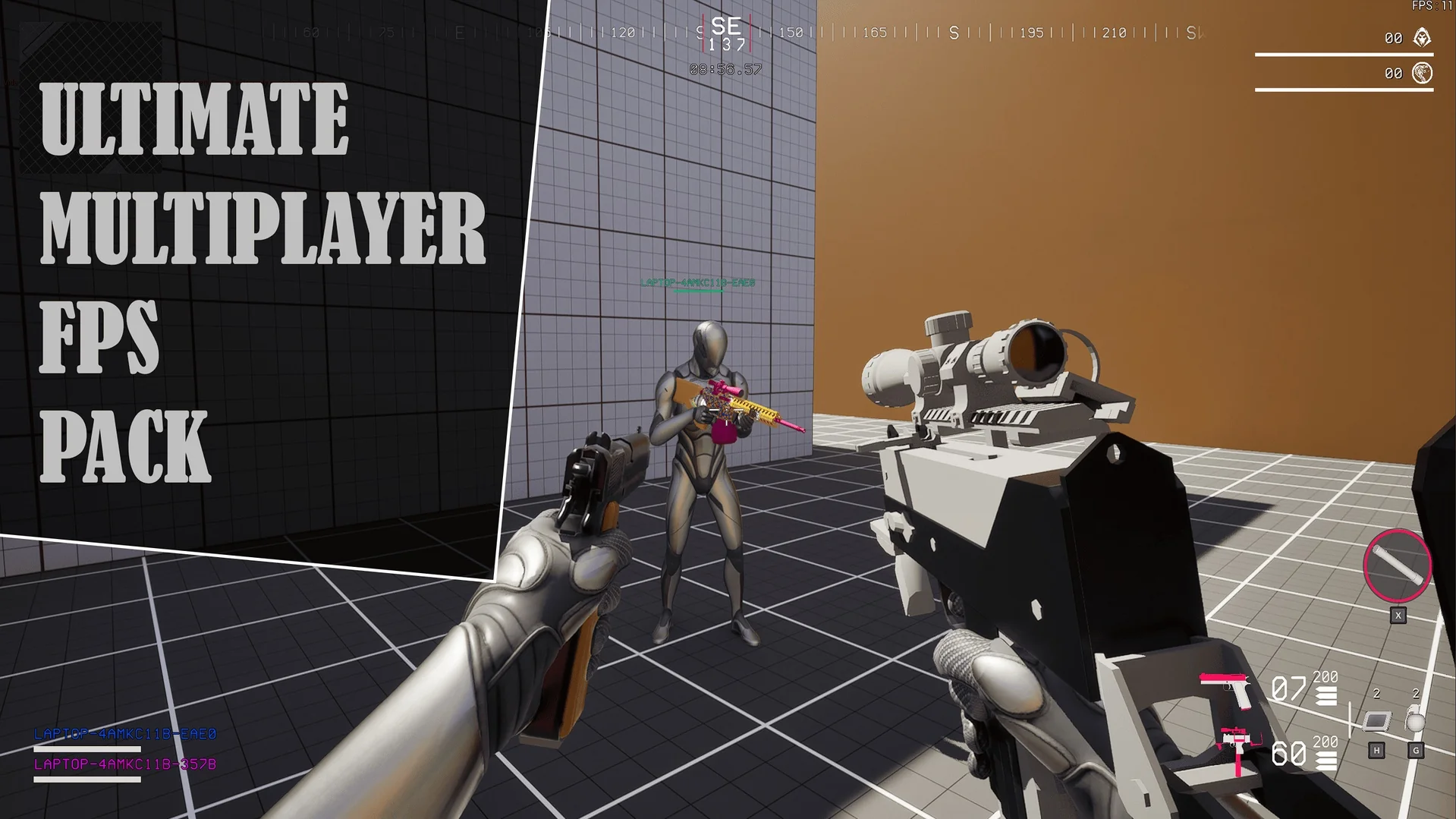
 Shooter
 Shooter
 Shooter