"1a0e4ac4dc71d030"{"id":"1001245","slug":"the-immersive-template","title":"The Immersive Template","category":"Action-Adventure","engine":"5.0+","assetVersion":"","engineVersion":"Engine Version: 5.0+","tag":"Action-Adventure","accent":"blue","visual":"mech","summary":"Explore The Immersive Template, a Blueprint system featuring dynamic pickups, Hand IK, interactive doors, chairs, beds, and locomotion in Unreal Engine.","platform":"Unreal Engine","publishedAt":"2026-09-23T15:01:06.039Z","updatedAt":"2026-09-23T15:01:06.039Z","sourceNotes":[],"fileContents":[],"compatibility":["Unreal Engine","Engine Version: 5.0+"],"featuredImage":{"alt":"The Immersive Template","src":"/wp-content/uploads/published/2026/09/4da98abe5112-2bcd5738-ab2e-4ef6-9512-8332b4c165ea-ac9125931b.webp"},"hasDownloadLink":true,"downloads":0,"terms":[{"taxonomy":"category","slug":"action-adventure","name":"Action-Adventure"}],"galleryImages":[{"src":"/wp-content/uploads/published/2026/09/77ac949fcbbc-93016dbb-335f-46c8-b58b-84c9c72633ff-65d7f69ed2.webp","alt":"The Immersive Template"},{"src":"/wp-content/uploads/published/2026/09/8dc3cd0ff521-fbb03a64-2fb3-403c-a840-5a57ff12f510-61728e6147.webp","alt":"The Immersive Template"},{"src":"/wp-content/uploads/published/2026/09/83bf6f7d1e45-0b2ef14a-b708-43bd-926a-02e1221c9f51-66bf7c2cab.webp","alt":"The Immersive Template"},{"src":"/wp-content/uploads/published/2026/09/d714fd4f2a31-db288eea-32ed-48bb-9dc5-d6022b37723d-76d117a64f.webp","alt":"The Immersive Template"},{"src":"/wp-content/uploads/published/2026/09/7c9df87adee7-52b2c6b1-2bba-4724-8300-f4c9c9942199-7791b177e0.webp","alt":"The Immersive Template"},{"src":"/wp-content/uploads/published/2026/09/35a2fc8d8abf-cee97da0-5e94-4fae-94f2-87746ffd38b0-6a7ef63fac.webp","alt":"The Immersive Template"}],"accessPanel":{"kind":"resource","title":"Download this resource","eyebrow":"Free Download","message":"Log in or create a free account to start your download.","fileName":"Content.7z","safetyNote":"Resources are manually reviewed before listing to improve quality and reduce obvious risks.","actionLabel":"Download Free","resourceType":"Resource archive"},"contentHtml":"\u003cp\u003eA character approaches a table, reaches downward with an adaptive arm pose, and takes a flashlight without snapping or breaking stride. Dropping, throwing, or slotting that same item onto a specific target alters player movement, changes IK points, and triggers dynamic world highlights. The Immersive Template organizes these detailed physical interactions through pure Blueprint architecture, offering a prebuilt foundation for interactive first- or third-person projects in Unreal Engine.\u003c/p\u003e \u003ch2\u003eHandling Props Through Hand IK and Height Checks\u003c/h2\u003e\n\u003cp\u003eInteraction in character-driven games often falls apart at the point of contact. If an item rests on a high shelf, reaching forward with a generic mid-torso grab looks broken. The Immersive Template solves this by splitting pick-up routines into high, mid, and low height thresholds. Traces read the elevation of the targeted object relative to the character, triggering the appropriate pick-up sequence dynamically.\u003c/p\u003e \u003cp\u003eOnce grabbed, items make direct use of left hand, right hand, or dual-handed IK. Gripping a two-handed rifle or a heavy crate locks both hands to designated points on the mesh, while single-handed tools allow one hand to track an orientation socket while leaving the off-hand free. Carrying these objects adapts to whether the character is sprinting across an open yard or standing perfectly still. The animation tree splits between full-body motion when stationary and upper-body blending while moving, preventing held objects from freezing the legs or causing the torso to slide unnaturally across the ground.\u003c/p\u003e \u003cp\u003eCharacters can run additional actions while holding objects, allowing for flexible gameplay loops such as turning on a handheld light, checking tools, or executing context-specific tasks. When releasing an item, players are not locked into pre-scripted placement. Items can be tossed with standard throw physics or set down anywhere in physical space. For puzzles and organized inventories, target locations highlight objects in distinct blue, red, or gold states to signal valid alignment, invalid positions, or locked slots before the player releases the mesh.\u003c/p\u003e \u003ch2\u003eLocomotion Bounds, Postures, and Footstep Audio\u003c/h2\u003e\n\u003cp\u003eMoving through an environment requires constant awareness of space. The included locomotion system covers sprinting, rolling, crouching, and crawling. Both crouching and crawling integrate dedicated overhead clearance checks. If a player crawls under a fallen beam or crouches within a low vent, the system prevents standing up until the collision capsule detects sufficient vertical clearance, protecting against mesh clipping and broken physics.\u003c/p\u003e \u003cp\u003eFootstep management functions through a lite version of the Footstep Sound Component. Ground textures and surfaces trigger audio cues synced to character strides, giving physical weight to running, walking, and crawling transitions. Because the template includes 65 dedicated animations, basic traversal postures hook directly into locomotion logic without requiring third-party animation libraries right away. These stock animations handle rolling recoveries, transitional stops, and stance drops that tie directly into the underlying state machines.\u003c/p\u003e \u003ch2\u003eInteractive Furnishings, Beds, and Sliding Doors\u003c/h2\u003e\n\u003cp\u003eEnvironmental interactions extend beyond loose handheld props into stationary architecture and world objects. The template incorporates three distinct chair setups capable of handling both sitting and lying down positions, along with fully functional beds. Engaging with these props shifts the player out of standard locomotion and mounts the character safely into place using predetermined interaction points.\u003c/p\u003e \u003cp\u003eAccess control operates through dedicated door Blueprints and key card mechanics. Sliding automatic doors monitor approaching pawns and query an integrated key card counter. If the character carries the required number of cards, the door slides open; if the inventory check fails, the door remains shut. Standard swing doors and interactive entry points function alongside these clearance systems, presenting complete room-to-room navigation out of the box.\u003c/p\u003e \u003ch2\u003eBlueprint Architecture, Character Rigs, and Network Setup\u003c/h2\u003e\n\u003cp\u003eEverything in the framework is built strictly with Blueprints, avoiding C++ dependencies and allowing rapid modification inside the standard Unreal Engine editor graph. While animations serve primarily to demonstrate functionality and are continually refined, the core logic handles retargeting across diverse character models. Dedicated tutorials outline integration paths for standard skeletons, Paragon characters, and MetaHumans, as well as setups bridging the asset with Advanced Locomotion System via the ALS x Immersive demonstration pipeline.\u003c/p\u003e \u003cp\u003eNetwork replication is wired throughout the interaction logic to coordinate item states, door movements, and seating across client-server environments to the extent of the framework's native architecture. The template also integrates cleanly alongside dialogue frameworks such as Dialogue Component, allowing narrative events to run parallel to physical item inspections. Basic UI elements, example meshes, functional props, and demo sound effects ship in the package to verify mechanics before dropping production-ready assets into the project.\u003c/p\u003e \u003ch2\u003eProduction Considerations for Integration\u003c/h2\u003e\n\u003cp\u003eOfficial engine support spans from Unreal Engine 4.27 through current releases, though official updates for UE4 have formally ended. Development moving forward targets modern Unreal workflows, making it important for teams on legacy 4.x branches to maintain their existing local checkouts. Because the template leans heavily on clear component layouts rather than deep code inheritance, stripping out unwanted elements—such as replacing the lite footstep sound system with a studio-wide audio manager or substituting custom UI for the basic interface—involves minimal graph rewiring. Teams seeking a structured starting point for hands-on, tactically responsive object manipulation can treat the package as an operational blueprint for physical interaction.\u003c/p\u003e\n\n\u003ch2\u003eRelated Resources Worth Checking\u003c/h2\u003e\n\u003cul\u003e\n\u003cli\u003e\u003ca href=\"https://3dcghub.com/thief-simulator-starter-kit/\" title=\"Thief Simulator Starter Kit\"\u003eThief Simulator Starter Kit\u003c/a\u003e\u003c/li\u003e\n\u003cli\u003e\u003ca href=\"https://3dcghub.com/dynamic-ragdoll/\" title=\"Dynamic Ragdoll\"\u003eDynamic Ragdoll\u003c/a\u003e\u003c/li\u003e\n\u003cli\u003e\u003ca href=\"https://3dcghub.com/hyper-multiplayer-survival-template-pro-mst-v4/\" title=\"Hyper Multiplayer Survival Template Pro [MST] V4\"\u003eHyper Multiplayer Survival Template Pro [MST] V4\u003c/a\u003e\u003c/li\u003e\n\u003cli\u003e\u003ca href=\"https://3dcghub.com/hyper-multiplayer-survival-template-plus-mst-v4/\" title=\"Hyper Multiplayer Survival Template Plus [MST] v4\"\u003eHyper Multiplayer Survival Template Plus [MST] v4\u003c/a\u003e\u003c/li\u003e\n\u003cli\u003e\u003ca href=\"https://3dcghub.com/simple-procedural-asset-creator/\" title=\"Simple Procedural Asset Creator\"\u003eSimple Procedural Asset Creator\u003c/a\u003e\u003c/li\u003e\n\u003c/ul\u003e","contentTextLength":6261,"navigation":{"current":13,"total":3200,"previous":{"id":"1001246","slug":"visual-novel-framework-full-system","title":"Visual Novel Framework - Full System","category":"Action-Adventure","platform":"Unreal Engine","updatedAt":"2026-09-23T15:22:43.488Z"},"next":{"id":"1001244","slug":"simple-procedural-asset-creator","title":"Simple Procedural Asset Creator","category":"Action-Adventure","platform":"Unreal Engine","updatedAt":"2026-09-23T14:59:34.190Z"}},"relatedResources":[{"id":"11678","slug":"thief-simulator-starter-kit","title":"Thief Simulator Starter Kit","category":"Action-Adventure","engine":"5.6+","assetVersion":"Engine version: 5.6+","engineVersion":"5.5","tag":"Action-Adventure","accent":"blue","visual":"luts","summary":"The Thief Simulator Starter Kit provides a fundamental framework for building immersive stealth and simulation games. It includes support for multiplayer, first-person perspectives, and cooperative gameplay.","platform":"Unreal Engine","publishedAt":"2026-03-05T18:14:02.000Z","updatedAt":"2026-04-19T15:48:08.000Z","sourceNotes":[],"fileContents":[],"compatibility":["Unreal Engine","Engine version: 5.6+"],"featuredImage":{"alt":"Thief Simulator Starter Kit","src":"https://3dcghub.com/wp-content/uploads/2026/03/cc4d8d18-0c62-4639-ac9a-c32d8ee52c4b.webp"},"hasDownloadLink":true,"downloads":0},{"id":"1001234","slug":"dynamic-ragdoll","title":"Dynamic Ragdoll","category":"Action-Adventure","engine":"5.0+","assetVersion":"","engineVersion":"Engine Version: 5.0+","tag":"Action-Adventure","accent":"blue","visual":"mech","summary":"Explore the Dynamic Ragdoll component for Unreal Engine, blending physics-driven movement with capsule navigation, grabbing, and static mesh grappling.","platform":"Unreal Engine","publishedAt":"2026-09-21T03:43:09.332Z","updatedAt":"2026-09-21T03:43:09.332Z","sourceNotes":[],"fileContents":[],"compatibility":["Unreal Engine","Engine Version: 5.0+"],"featuredImage":{"alt":"Dynamic Ragdoll","src":"/wp-content/uploads/published/2026/09/6824929db97d-78b6c3bc-6964-4151-a8be-5208c1911bd3-2af4fd9652.webp"},"hasDownloadLink":true,"downloads":2},{"id":"1001152","slug":"hyper-multiplayer-survival-template-pro-mst-v4","title":"Hyper Multiplayer Survival Template Pro [MST] V4","category":"Action-Adventure","engine":"5.3+","assetVersion":"","engineVersion":"Engine Version: 5.3+","tag":"Action-Adventure","accent":"blue","visual":"mech","summary":"Explore Hyper Multiplayer Survival Template Pro [MST] V4, a fully replicated Unreal Engine framework for open-world, co-op PvE, and survival projects.","platform":"Unreal Engine","publishedAt":"2026-09-10T17:56:18.119Z","updatedAt":"2026-09-10T17:56:18.119Z","sourceNotes":[],"fileContents":[],"compatibility":["Unreal Engine","Engine Version: 5.3+"],"featuredImage":{"alt":"Hyper Multiplayer Survival Template Pro [MST] V4","src":"/wp-content/uploads/published/2026/09/6060550226b8-0f2946eb-0653-4ed7-a160-e35859e9e5e9-61232ad933.webp"},"hasDownloadLink":true,"downloads":1}]}
Action-Adventure
The Immersive Template
Explore The Immersive Template, a Blueprint system featuring dynamic pickups, Hand IK, interactive doors, chairs, beds, and locomotion in Unreal Engine.
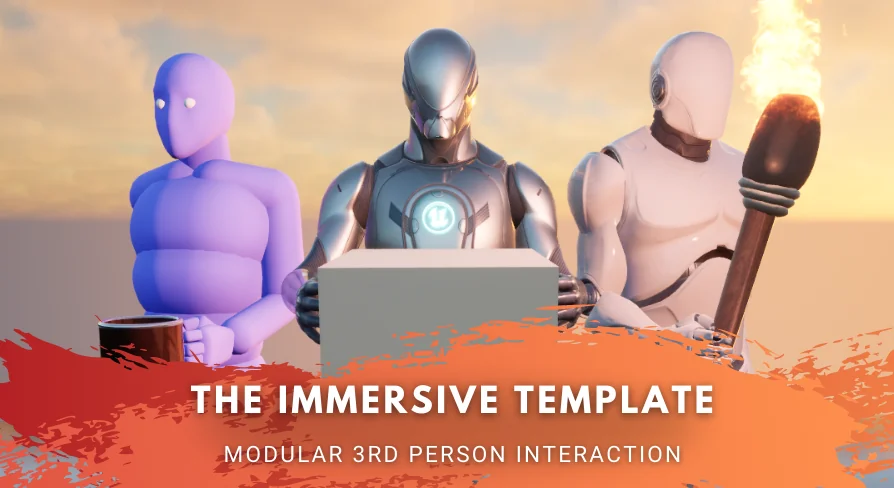
A character approaches a table, reaches downward with an adaptive arm pose, and takes a flashlight without snapping or breaking stride. Dropping, throwing, or slotting that same item onto a specific target alters player movement, changes IK points, and triggers dynamic world highlights. The Immersive Template organizes these detailed physical interactions through pure Blueprint architecture, offering a prebuilt foundation for interactive first- or third-person projects in Unreal Engine.
Handling Props Through Hand IK and Height Checks
Interaction in character-driven games often falls apart at the point of contact. If an item rests on a high shelf, reaching forward with a generic mid-torso grab looks broken. The Immersive Template solves this by splitting pick-up routines into high, mid, and low height thresholds. Traces read the elevation of the targeted object relative to the character, triggering the appropriate pick-up sequence dynamically.
Once grabbed, items make direct use of left hand, right hand, or dual-handed IK. Gripping a two-handed rifle or a heavy crate locks both hands to designated points on the mesh, while single-handed tools allow one hand to track an orientation socket while leaving the off-hand free. Carrying these objects adapts to whether the character is sprinting across an open yard or standing perfectly still. The animation tree splits between full-body motion when stationary and upper-body blending while moving, preventing held objects from freezing the legs or causing the torso to slide unnaturally across the ground.
Characters can run additional actions while holding objects, allowing for flexible gameplay loops such as turning on a handheld light, checking tools, or executing context-specific tasks. When releasing an item, players are not locked into pre-scripted placement. Items can be tossed with standard throw physics or set down anywhere in physical space. For puzzles and organized inventories, target locations highlight objects in distinct blue, red, or gold states to signal valid alignment, invalid positions, or locked slots before the player releases the mesh.
Locomotion Bounds, Postures, and Footstep Audio
Moving through an environment requires constant awareness of space. The included locomotion system covers sprinting, rolling, crouching, and crawling. Both crouching and crawling integrate dedicated overhead clearance checks. If a player crawls under a fallen beam or crouches within a low vent, the system prevents standing up until the collision capsule detects sufficient vertical clearance, protecting against mesh clipping and broken physics.
Footstep management functions through a lite version of the Footstep Sound Component. Ground textures and surfaces trigger audio cues synced to character strides, giving physical weight to running, walking, and crawling transitions. Because the template includes 65 dedicated animations, basic traversal postures hook directly into locomotion logic without requiring third-party animation libraries right away. These stock animations handle rolling recoveries, transitional stops, and stance drops that tie directly into the underlying state machines.
Interactive Furnishings, Beds, and Sliding Doors
Environmental interactions extend beyond loose handheld props into stationary architecture and world objects. The template incorporates three distinct chair setups capable of handling both sitting and lying down positions, along with fully functional beds. Engaging with these props shifts the player out of standard locomotion and mounts the character safely into place using predetermined interaction points.
Access control operates through dedicated door Blueprints and key card mechanics. Sliding automatic doors monitor approaching pawns and query an integrated key card counter. If the character carries the required number of cards, the door slides open; if the inventory check fails, the door remains shut. Standard swing doors and interactive entry points function alongside these clearance systems, presenting complete room-to-room navigation out of the box.
Blueprint Architecture, Character Rigs, and Network Setup
Everything in the framework is built strictly with Blueprints, avoiding C++ dependencies and allowing rapid modification inside the standard Unreal Engine editor graph. While animations serve primarily to demonstrate functionality and are continually refined, the core logic handles retargeting across diverse character models. Dedicated tutorials outline integration paths for standard skeletons, Paragon characters, and MetaHumans, as well as setups bridging the asset with Advanced Locomotion System via the ALS x Immersive demonstration pipeline.
Network replication is wired throughout the interaction logic to coordinate item states, door movements, and seating across client-server environments to the extent of the framework's native architecture. The template also integrates cleanly alongside dialogue frameworks such as Dialogue Component, allowing narrative events to run parallel to physical item inspections. Basic UI elements, example meshes, functional props, and demo sound effects ship in the package to verify mechanics before dropping production-ready assets into the project.
Production Considerations for Integration
Official engine support spans from Unreal Engine 4.27 through current releases, though official updates for UE4 have formally ended. Development moving forward targets modern Unreal workflows, making it important for teams on legacy 4.x branches to maintain their existing local checkouts. Because the template leans heavily on clear component layouts rather than deep code inheritance, stripping out unwanted elements—such as replacing the lite footstep sound system with a studio-wide audio manager or substituting custom UI for the basic interface—involves minimal graph rewiring. Teams seeking a structured starting point for hands-on, tactically responsive object manipulation can treat the package as an operational blueprint for physical interaction.
 Action-Adventure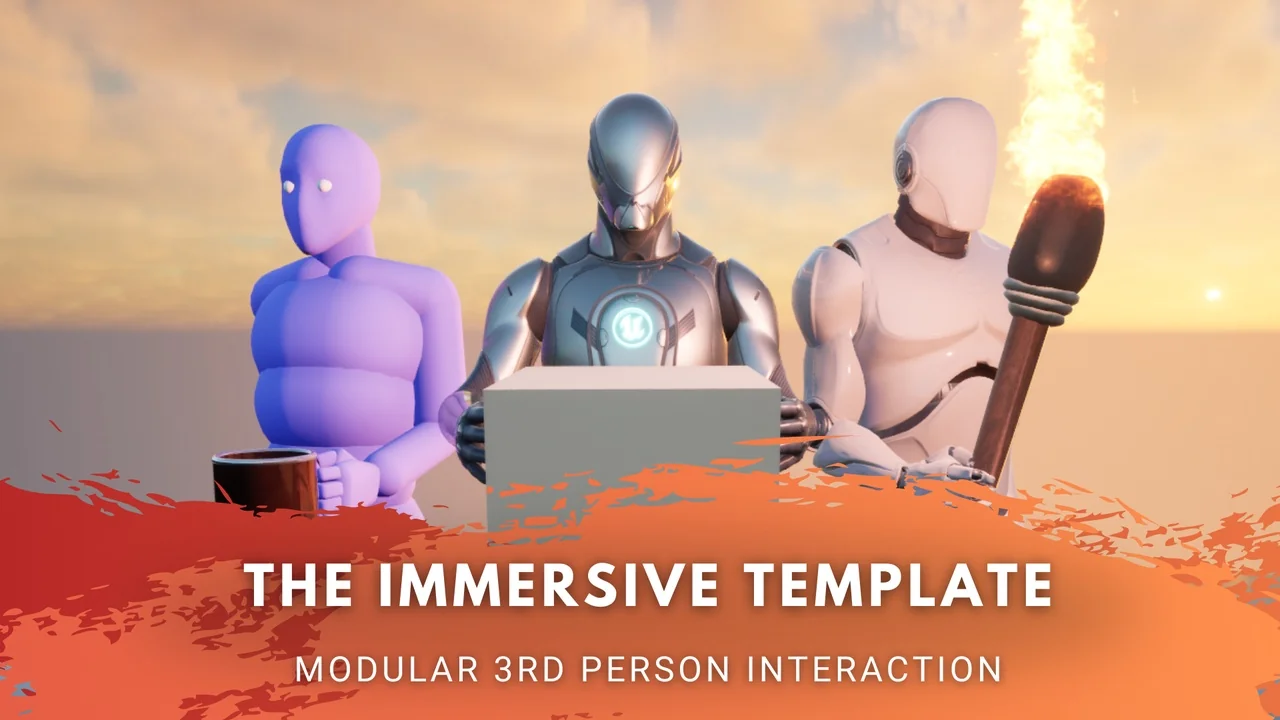
 Action-Adventure
 Action-Adventure
![Hyper Multiplayer Survival Template Pro [MST] V4](/wp-content/uploads/published/2026/09/6060550226b8-0f2946eb-0653-4ed7-a160-e35859e9e5e9-61232ad933.webp) Action-Adventure
Action-Adventure